2027 Online Homeland Security Degrees That Help Build Operational Decision-Making Skills

Co-Founder and Chief Data Scientist
Emergency response coordinators often confront critical moments demanding rapid interpretation of incomplete intelligence and immediate resource prioritization. Decision-making missteps in homeland security can cascade into widespread operational failures, impacting public safety and national stability. Yet, balancing professional obligations with educational advancement remains a major hurdle, as the National Center for Education Statistics reports a 15% surge since 2022 in online enrollment among working adults pursuing degrees precisely for career flexibility and accessibility.
This trend reveals shifting workforce demands where timing and delivery mode directly influence skill acquisition and employability. This article evaluates online homeland security degrees that cultivate operational decision-making skills and guides prospective students in choosing programs aligned with real-world professional imperatives.
Key Things You Should Know
- In 2024, 42% of homeland security bachelor's graduates took over five years to complete degrees due to extensive operational simulations, adding significant financial and opportunity costs for career switchers.
- Employers alongside DHS increasingly prioritize candidates from programs with embedded real-world intelligence analysis labs, pressing students to choose curricula with sanctioned simulation partnerships to avoid market-entry hurdles.
- The workforce demand for analysts with cybersecurity and crisis management dual skills outpaces program availability by 35%, creating a strategic tension where graduates face higher competition without multi-disciplinary credentials.
What is an online homeland security degree and how does it build operational decision-making skills?
Operational decision-making skills taught in online homeland security degree programs for operational skills shape the capacity to manage high-pressure scenarios that require rapid, evidence-based responses. For instance, professionals leading multi-agency incident commands during natural disasters rely heavily on simulation-based curricula that cultivate prioritization and coordination across diverse teams. This level of practical training bridges the gap between theory and dynamic field conditions, especially in roles within federal agencies, emergency management, or private security firms.
The focus on intelligence analysis, cybersecurity defense, and crisis leadership requires students to analyze extensive data sets swiftly to identify emerging threats and allocate resources effectively. These programs emphasize applied learning through virtual labs and scenario planning, allowing professionals to enhance judgements without exposing lives or assets to risk. Such practical immersion addresses shortcomings frequently found in conventional educational models.
Key skills graduates gain include managing emergency supply chains and countering cyber threats to critical infrastructure. However, evaluating program accreditation and the inclusion of technologies like AI and geospatial analytics is essential to maintain relevance in a market growing at a 7.4% compound annual rate and valued at $546 billion in 2025. Individuals curious about how much is a criminal justice degree should consult reliable sources like how much is a criminal justice degree to contextualize investment against workforce outcomes.
Programs that develop homeland security degrees decision-making abilities prepare graduates to operate confidently in volatile settings, but prospective students must weigh curriculum rigor, technological integration, and real-world applicability when selecting pathways to ensure alignment with employer expectations.
Which online homeland security degrees are available, and what levels of study can you pursue?
Enrolling in online homeland security degree options requires clear awareness of practical tradeoffs tied to each academic level and employment outcomes. Associate and bachelor's degrees focus on foundational knowledge such as risk assessment, emergency management, and cybersecurity basics, preparing students for entry-level roles in federal agencies or private firms where security clearances have surged by over 300% from 2015 to 2025. Bachelor's curricula often integrate applied simulations reflecting actual threat scenarios, enabling graduates to support national defense or infrastructure protection teams immediately.
At the graduate level, online homeland security programs for undergraduate and graduate degrees include master's degrees emphasizing strategic leadership, intelligence analysis, and crisis management. Candidates frequently face operational realities like coordinating multi-agency responses to biological threats. These programs favor asynchronous coursework and cohort learning, though they lack hands-on labs seen in hybrid formats, requiring students to balance convenience against the absence of experiential practice.
Doctoral studies concentrate on research, policy, and operational strategy developments relevant to federal policymaking or academia but present barriers such as limited fully online availability and prerequisites for clearance-required experience.
Professionals must analyze their career goals, operational readiness, and training preferences. Complementing these considerations, understanding the broader landscape of cybersecurity education also enhances strategic positioning; resources like online cyber security degrees may provide valuable comparative insight for those intersecting Homeland Security and IT roles.
How do online homeland security programs compare with campus-based programs for flexibility and outcomes?
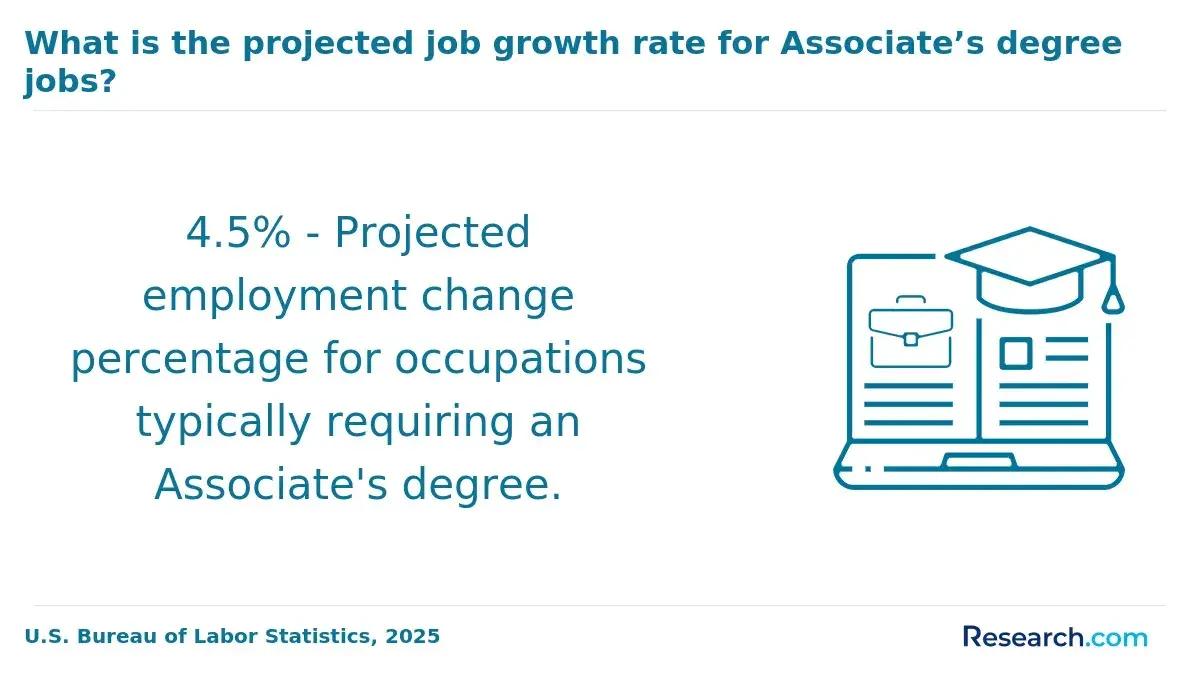
Flexibility remains a defining advantage of an online homeland security degree, especially for law enforcement officers or emergency management personnel who face irregular schedules. Unlike campus-based programs, online formats accommodate these challenges by allowing learners to engage with operational decision-making coursework at their own pace. However, this flexibility tradeoff includes reduced opportunities for in-person networking and hands-on experiences, which can slow career progress in sectors dependent on strong local professional relationships.
Outcomes between campus-based vs online homeland security program outcomes are narrowing as online curricula increasingly integrate interactive simulations, virtual labs, and scenario-based exercises that mirror real-world incident response. These components are essential for refining decision-making under pressure, a quality prioritized by federal and state recruiters who focus more on applied competencies than degree delivery format.
As homeland security graduate programs have expanded by 85% over the last decade, prospective students must scrutinize whether their online program offers accredited certifications and tangible fieldwork placements. Campus programs often provide easier access to local internships, while online options may rely on regional or virtual partnerships, underscoring the need to balance educational flexibility with practical training.
For working professionals assessing pathways, understanding this operational landscape is critical. Additionally, those exploring affordable educational frameworks might consider cheapest paralegal certificate online options as part of a broader workforce skill diversification strategy.
What accreditation and institutional quality standards should online homeland security programs meet?
The hiring reality for professionals pursuing online homeland security degrees hinges heavily on meeting rigorous accreditation standards for online homeland security degrees. Institutional accreditation from agencies like the Middle States Commission on Higher Education or the Southern Association of Colleges and Schools signals foundational quality and credit transfer validity. However, programmatic endorsements-such as those from the Department of Homeland Security's Center of Excellence or ABET-serve as critical differentiators, especially for federal employment and roles demanding applied expertise.
For instance, a candidate aiming for federal homeland security positions must hold a degree embedding coursework in risk analysis, emergency management, and cyber threat mitigation aligned with recognized benchmarks. Programs lacking this level of curricular rigor and institutional quality criteria for homeland security online programs often face employer skepticism, limiting hiring prospects and eligibility for federally funded roles.
Operational preparedness in these programs is also vital. Practical components like simulations, case studies, and agency partnerships cultivate decision-making under pressure, a skill prioritized in intelligence and disaster response roles. The absence of such experiential learning risks producing graduates with theoretical knowledge insufficient for field demands.
Looking forward, workforce data projects that 42% of new U.S. jobs by 2031 will demand minimum bachelor's credentials. This trend heightens the importance of selecting accredited, decision-centric programs to safeguard against credential obsolescence and to foster employability in a shifting security landscape. Prospective students should also consider financial trade-offs by investigating marketing graduate programs for comparative cost insights linked to advanced professional education.
What core courses and learning experiences develop operational decision-making in homeland security programs?
Operational decision-making skills in homeland security degrees focus on navigating complex, high-pressure scenarios that demand rapid, informed judgments. For instance, training in critical infrastructure protection involves prioritizing interventions when multiple systems fail simultaneously, a situation mirroring real emergencies where officials must allocate scarce resources effectively.
Core coursework integrates practical exercises such as simulations of cyberattacks or natural disasters, forcing students to balance limited personnel and equipment while preserving public safety. These scenarios reveal the inherent tradeoff between compliance with legal and ethical standards and the urgent need for effective response, skills essential in politically sensitive contexts.
Students also gain expertise in communication strategies vital for coordinating across diverse agencies, reducing information bottlenecks that can hinder response times. Advanced geographic information system (GIS) training supports the visualization of threat landscapes and logistical constraints, enabling data-driven decisions.
Workforce data from the U.S. Bureau of Labor Statistics, O*NET Online, USAJOBS, PayScale, and Glassdoor indicate that leadership roles in this field command salaries ranging from $70,000 to $140,000 annually, placing a premium on the ability to apply knowledge swiftly and accurately in diverse environments. Such compensation reflects employer demand for professionals who combine theoretical understanding with practical operational leadership.
What are typical admission requirements and prerequisites for online homeland security degrees?
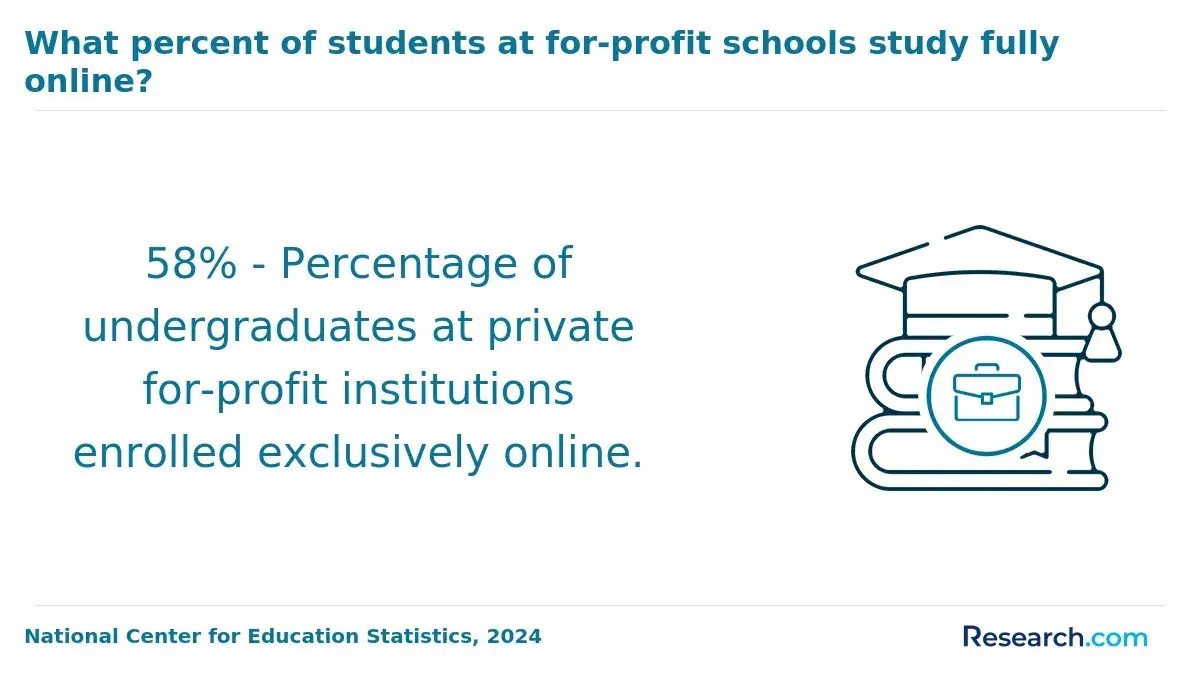
Admission to online homeland security degrees demands more than basic academic credentials; practical experience and specific skill verification substantially influence acceptance and future employability. Bachelor's applicants typically need a high school diploma with a GPA between 2.5 and 3.0, but some programs waive standardized test scores for relevant professional backgrounds or prior college coursework. Master's programs require a completed bachelor's degree, generally in a related field, with GPA expectations above 3.0, and often ask for professional documents such as recommendation letters and statements of purpose to validate specialized experience in law enforcement, emergency management, IT, or operations.
Prerequisites frequently include foundational coursework in criminal justice, emergency management, or cybersecurity, and may extend to statistics or IT skills necessary for assessing complex risk scenarios. For example, a public safety official aiming to transition into private-sector cybersecurity risk roles might confront additional IT-oriented prerequisites before admission, reflecting the sector's operational demands.
Background checks are standard, especially for programs incorporating secure or classified content, screening out candidates with legal issues incompatible with sensitive homeland security responsibilities. This reflects employer priorities for integrity in operational contexts that involve classified or critical infrastructure protection.
Demand for homeland security professionals grows due to increasing natural disasters, cyber threats, and shifts in workforce demographics, pushing employers to favor candidates with cross-sector experience and adaptable technical skills. Prospective students must prepare for meticulous documentation and prerequisite verification processes, as gaps in education or relevant experience can delay or preclude program entry, impacting long-term career trajectories.
How long do online homeland security degrees take, and what tuition and fees can students expect?
Degree completion timelines in homeland security programs directly affect employability, particularly for professionals pivoting into mission-critical roles. Associate degrees typically require about two years, while bachelor's degrees range from three to four years of full-time study, with accelerated options potentially reducing that to roughly two and a half years. Master's degrees span 18 to 24 months. Part-time learners should anticipate extended durations, often adding six to twelve months due to work-study balance.
Cost variation across public, private, and residency categories significantly impacts net investment. Public in-state tuition generally lies between $7,000 and $12,000 annually; private and out-of-state programs escalate to $15,000-$30,000 or more. Additional expenses such as technology fees, course materials, and exam proctoring can add $1,000 to $2,500 over the degree. Financial aid and employer tuition support can offset these, but students must contend with these predictable hidden costs.
Employers value programs emphasizing applied decision-making and operational knowledge aligned with cybersecurity, intelligence, and emergency management fields. For example, an IT professional aiming to qualify as a cybersecurity analyst must target a bachelor's completion within three years to meet hiring benchmarks, highlighting the tradeoff between the time invested and entry-level readiness. Prospective students should carefully assess credit transfer policies, experiential learning opportunities, and program length against cost to optimize long-term workforce outcomes.
What homeland security careers can graduates pursue, and which roles rely on strong operational decisions?
Operational decision-making defines careers stemming from online homeland security degrees, requiring professionals to assess and act on complex, time-sensitive information. For example, emergency management directors coordinate multi-agency disaster responses where resource allocation impacts public safety and logistics simultaneously. Intelligence analysts, conversely, prioritize threats and validate data credibility under pressure to preempt terrorist acts, illustrating the critical, high-stakes judgment central to these roles.
Positions within the Department of Homeland Security, FEMA, Customs and Border Protection, and state emergency services depend on the ability to navigate interagency complexity and apply flexible, scenario-based risk assessments. These operational demands extend beyond tactical decisions to include nuanced tradeoffs between enforcing security and preserving civil liberties, particularly in surveillance and cybersecurity fields where privacy laws constrain permissible actions.
Practical challenges persist for graduates without relevant field experience; hiring trends favor candidates with internships or direct agency exposure, underscoring a pipeline bottleneck for senior operational leadership roles. Educational expansion, with 16 online national security degrees catalogued by Educations.com for 2025, provides increased access for professionals to engage in substantive career pivots. However, prospective students must weigh program scope against employer expectations for demonstrated operational competence in complex environments.
Key competencies emerging from these online programs include:
- Rapid synthesis of evolving threat intelligence
- Coordinated multi-jurisdictional response planning
- Risk assessment within legal and ethical constraints
- Strategic resource allocation under pressure
What salaries, advancement opportunities, and job outlook are associated with homeland security careers?
Career progression in homeland security involves navigating complex tradeoffs between hands-on operational roles and broader interagency coordination responsibilities. For example, professionals transitioning into intelligence analysis or emergency management must weigh increased responsibility and decision-making pressure against potential compensation gains-mid-level salaries range from $60,000 to over $120,000, with intelligence analysts earning around $85,000 and emergency management specialists near $75,000. Corporate security managers and business continuity planners in private sectors often exceed six figures due to their expanded organizational risk duties.
Advancement requires not only experience but specialized skills such as fusion center operations or critical infrastructure coordination, which can accelerate movement into supervisory or cross-agency liaison positions. Career trajectories typically shift from data and logistics roles to strategic planning and leadership, demanding the ability to make critical decisions under pressure.
The field's projected 10% growth through 2032 reflects persistent threats from terrorism, cyber attacks, and infrastructure vulnerabilities. Graduates prepared for roles including intelligence analyst, critical infrastructure coordinator, and risk resilience consultant demonstrate versatility across government and private sectors.
Successful candidates must maintain technical competence alongside adaptability to evolving threats and technologies. The balancing act between operational rigor and coordination complexity underscores the importance of targeted education that enables both immediate impact and sustained career momentum.
Are there professional certifications or clearances that homeland security graduates should plan for?
Obtaining professional certifications and security clearances is a fundamental gatekeeper in homeland security careers, shaping both eligibility and operational authority. Certifications such as the Certified Protection Professional (CPP), Certified Homeland Protection Professional (CHPP), and Certified Information Systems Security Professional (CISSP) serve as vital proof of expertise in security management, emergency response, and cybersecurity. For many federal agency or contractor roles, these credentials alone are insufficient without clearances ranging typically from Confidential to Top Secret, reflecting the sensitive nature of the work.
Consider a homeland security analyst within the Department of Defense or the Cybersecurity and Infrastructure Security Agency: to influence defense strategies or cyber incident responses, a Secret clearance is mandatory. The background checks for these clearances may introduce significant employment delays, a practical challenge candidates must weigh when timing a career transition.
Lacking either certification or clearance markedly limits access to decision-making roles affecting national safety or intelligence operations. Candidates should analyze associated costs-including certification fees and investigation expenses-and evaluate employer sponsorship options early. Those targeting less classified emergency management at state or local levels might face fewer clearance demands but still need certifications aligned with their scope.
Strategizing education with certification preparation and clearance timelines is essential given homeland security's complex, intelligence-driven environment. This approach mitigates workforce friction and better positions graduates for roles where operational trust is non-negotiable.
Other Things You Should Know About Homeland Security
Many online homeland security programs demand significant self-discipline due to compressed schedules and blended asynchronous formats. Intensive workloads can hinder deep engagement with operational decision-making scenarios if students rush through content. Choosing programs with balanced pacing and applied project work improves skill retention and better aligns with employer expectations for critical thinking under pressure.
Specialized homeland security degrees prioritize threat-specific frameworks, intelligence analysis, and federal policy application, offering a narrower but deeper focus on decision-making relevant to national security. Broader degrees provide flexibility for diverse roles but may dilute operational readiness in homeland security contexts. Prospective students should prioritize specialized programs if targeting federal agencies or roles requiring nuanced threat assessment expertise.
Employer recognition varies significantly; federal agencies typically require degrees from accredited institutions with demonstrated practical training, while some state and local employers may value experience over degree specificity. Graduates should assess program reputations and articulation with agency hiring standards. Selecting programs with strong alumni networks in target agencies increases likelihood of employment and advancement.
References
- Homeland Security Degree Online | Find Top Programs & Information https://www.firescience.org/homeland-security-degree-programs-online/
- Choosing a bachelor's in homeland security | edX https://www.edx.org/resources/how-to-choose-a-bachelors-in-homeland-security
- Types of Homeland Security Degrees | Compare Schools https://www.criminaljusticeprograms.com/specialty/homeland-security-degrees/
- Online Homeland Security Degrees: Explore Top Programs https://www.degreesforgood.org/online-degrees/homeland-security-programs/
- Department of Homeland Security (DHS) https://obamaadministration.archives.performance.gov/agency/department-homeland-security.html
- Accreditation | CAEMHSE https://www.caemhse.education/accreditation
- Homeland Security Career And Salary Information https://www.criminaljusticedegreeschools.com/careers/homeland-security/
- Certified Homeland Protection Professional (CHPP) https://www.sheriffs.org/homeland-security-2/chpp/
- Differences Between a Criminal Justice and Homeland Security Degree https://www.nec.edu/news/criminal-justice-vs-homeland-security-degree