2027 Employers Hiring Most Aggressively for Supply Chain Talent

Co-Founder and Chief Data Scientist
Facing a surge in demand for supply chain expertise, employers struggle to secure professionals who combine strategic agility with technical skills. The average job opening time for supply chain roles has increased by 30% over the past two years, signaling a tightening labor market and sharper competition for talent.
This trend mirrors a broader shift: the U.S. Bureau of Labor Statistics projects a 22% growth in supply chain-related positions by 2032, emphasizing the urgency for quick, targeted workforce development.
Candidates balancing current roles with educational commitments must navigate program flexibility and practical outcomes carefully. This article identifies the employers hiring most aggressively and analyzes how to align training choices with their evolving talent requirements.
Key Things You Should Know
- Employers prioritize candidates with data analytics integration skills, as 62% of supply chain roles in 2025 required proficiency in predictive modeling-significantly narrowing hiring pools and elevating specialized credential value.
- The median time-to-hire for supply chain talent dropped to 27 days in 2024, pressuring candidates to demonstrate immediate operational impact, forcing education providers to compress curriculum without compromising core competencies.
- Despite wage premiums averaging 18% above related fields, 40% of employers rank cost of upskilling new hires as a barrier, making partnerships with workforce agencies critical yet challenging due to uneven geographic program quality.
Which industries are hiring the most supply chain talent right now, and why?
Industries hiring the most supply chain talent in North America face distinct operational pressures that shape workforce demands. Manufacturing, for instance, contends with semiconductor supply delays impacting automotive production. Companies seek professionals adept at redesigning supplier networks to reduce vulnerability and maintain just-in-time schedules. This tradeoff involves balancing cost efficiency against exposure to global disruptions.
Retail's aggressive recruitment of supply chain professionals reflects challenges in omnichannel fulfillment, requiring integrated inventory visibility and rapid last-mile delivery. Candidates with skills in advanced analytics and warehouse automation are essential to prevent costly stockouts and optimize delivery networks. This sector's priorities underline the need for digital fluency alongside traditional logistics expertise.
Healthcare's demand centers on managing critical supplies amid regulatory complexity and variable demand. Expertise in cold chain logistics and traceability is increasingly vital for pharmaceuticals and vaccines, illustrating how supply chain roles here prioritize compliance and product integrity over volume-driven metrics common elsewhere.
Federal labor projections anticipate 17% growth for logisticians through 2034, creating roughly 26,400 openings annually. Such expansion stresses persistent talent shortages that elevate competition for candidates with practical digital skills and cross-functional communication abilities.
Professionals pursuing this path should analyze how diverse sector requirements influence educational choices. Manufacturing demands supplier negotiation and production planning know-how, retail emphasizes inventory optimization, and healthcare requires regulatory knowledge. Those seeking a strategic pivot might explore an operations management MBA online as a versatile credential aligned with employer needs and market realities.
Which companies are currently hiring most aggressively for supply chain roles?
Hiring demand from Amazon, Walmart, and FedEx illustrates a sharp rebound in supply chain roles nationwide, with a 73% rise in appointments compared to the prior year. These top companies recruiting supply chain management talent nationwide prioritize candidates able to navigate distinct operational contexts-Amazon's e-commerce scale, Walmart's retail omnichannel shifts, and FedEx's freight logistics challenges-each demanding specialized skills and certifications.
Operational managers and data analysts at Amazon must excel in automation and data-driven tools, while Walmart values expertise in vendor relations and last-mile delivery strategies. FedEx seeks professionals focused on transportation efficiency and compliance amid fluctuating freight volumes. Success in these roles depends on hybrid skill sets combining technical software proficiency, such as ERP platforms, with lean inventory knowledge and cross-functional collaboration ability.
Employers hiring aggressively for supply chain roles in the US often require candidates without formal degrees to compensate through targeted certifications and practical internships. Demonstrating measurable impacts like cost reductions or process improvements is essential, not merely participating in supply chain functions.
Prospective professionals should consider tailored educational pathways aligned with these expectations, including options like an affordable online MBA, which offers flexibility while addressing core competencies relevant to diverse employer demands.
What supply chain job titles are most in demand for new and mid-career professionals?
Employment demand in supply chain coordinator jobs in the United States will increasingly focus on experienced planners, demand analysts, and procurement specialists, driven by salary increases of 3-5% reported in recent market forecasts. These roles critically influence operational efficiency and cost controls, especially in sectors like manufacturing, retail, and logistics.
Mid-career supply chain analyst roles typically require mastery over inventory flow, production scheduling, and supplier coordination. For example, in automotive manufacturing, planners reduce downtime risks by synchronizing component deliveries exactly with assembly line requirements.
Demand analysts interpret volatile market trends and forecasting data, essential in fast-product-cycle industries such as consumer electronics. Procurement specialists manage supplier contracts and compliance, navigating complex regulatory environments like pharmaceuticals.
Strong proficiency in data analytics tools and ERP platforms such as SAP and Oracle remains a baseline expectation. The intersection of these technical skills with supply chain domain knowledge is where compensation growth has exceeded industry averages. Candidates lacking hands-on expertise risk underperformance in roles driven by data-based decision-making and supplier relationship management.
Professionals considering a career shift should evaluate programs that emphasize applied analytics and real-world supplier engagement. For those aiming to balance practical training with academic credentials, an AACSB-accredited online MBA offers a pathway combining recognized accreditation with relevant skill development.
What education and skills do employers look for in entry-level supply chain hires?
Employers hiring entry-level supply chain professionals prioritize candidates with a bachelor's degree in supply chain management, logistics, business administration, or industrial engineering, with strong emphasis on measurable outcomes and relevant coursework. Approximately 75% of successful hires hold four-year degrees, a reflection of the technical demands and complexity inherent in modern supply chains.
Practical mastery of data analysis tools such as Excel and SQL, along with proficiency in emerging supply chain software, directly affects inventory accuracy and cost management in settings ranging from retail distribution to aerospace manufacturing, illustrating critical workforce implications.
Key qualifications reducing onboarding time and operational risks include a firm grasp of demand forecasting, transportation logistics, and procurement processes, which are especially vital in regulated industries like defense and energy.
Employers also expect problem-solving capabilities demonstrated through internships or co-op experiences, bridging the gap between theoretical knowledge and real-world execution. For example, entry-level hires capable of managing supplier relationships or conducting root cause analyses help eliminate bottlenecks and improve cycle times with minimal managerial oversight.
Soft skills-particularly communication and teamwork-remain indispensable for coordinating cross-functional activities between procurement, production, and customer service teams to achieve deadlines and quality standards. According to Deloitte's Talent Solutions report, 62% of companies weigh these interpersonal abilities as equally important as technical skills in entry-level roles.
Students strategically evaluating essential education and certifications for supply chain roles should find balance between technical training and experiential learning.
Given the depth of technical and soft skill integration, those seeking accelerated alternatives might explore 12-month MBA programs that refine business acumen while accommodating career pivots. Recognizing these entry-level supply chain skills and qualifications informs educational pathways and long-term career planning, acknowledging that executive roles commanding salaries between $220,000 and $350,000+ annually derive from sustained skill development initiated early in one's career.
How do supply chain management degrees prepare graduates for today's hiring needs?
Graduates with a supply chain management degree enter an industry marked by persistent labor turnover nearing 12%, demanding more than theoretical knowledge to thrive. While curricula prioritize data analysis, process optimization, and technology fluency-skills aligned with roles in distribution and logistics-real workplace challenges often pivot on managing workforce volatility and navigating regional wage disparities.
For example, warehouses experiencing a 3-4% forecast wage growth through 2026 must balance labor costs against operational continuity. Graduates adept in demand planning and warehouse management systems can reduce stockouts and improve inventory accuracy, crucial in retail and manufacturing sectors where fulfillment speed directly affects profitability.
However, academic programs frequently fall short in preparing students for frontline workforce management intricacies such as retention strategies and compliance with labor regulations. Practical experience through internships or certifications focused on labor relations is often necessary to bridge this gap.
Ultimately, supply chain management degrees provide a solid analytical foundation but rarely equip graduates fully for the people-management demands inherent to high-turnover environments. Navigating evolving wage pressures and turnover requires adaptability beyond standard curricula.
How do online supply chain programs compare to campus-based options for employer demand?
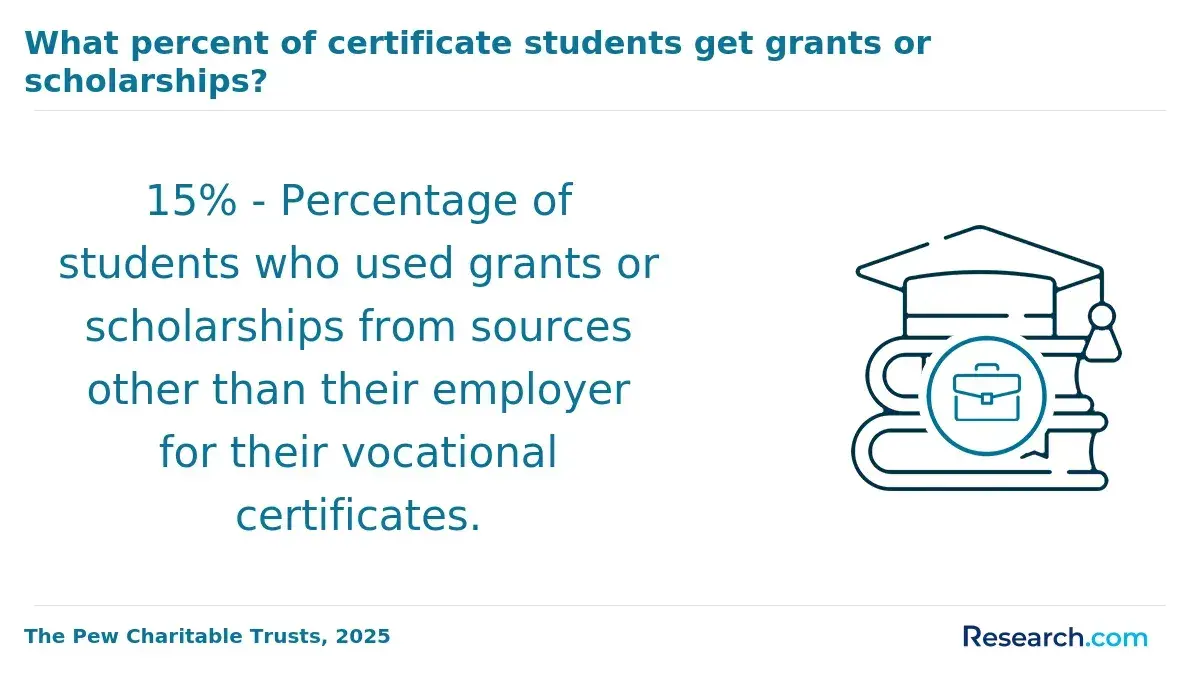
Online supply chain programs now offer viable routes into operational roles, especially for those targeting entry-level positions where practical skills outweigh formal credentials. Over seven years, the number of graduates from technical and two-year supply chain programs has more than doubled, signaling employer preference for candidates who can demonstrate applicable competencies rather than traditional four-year degrees.
Campus-based programs maintain an edge for leadership pipeline roles by delivering in-depth theory, extensive networking, and internship opportunities-elements crucial in complex sectors like pharmaceuticals and manufacturing. In contrast, online programs excel at quickly building job-ready skills for sectors such as retail logistics and e-commerce.
Consider a professional completing an online certificate focused on supply chain software and data analytics. This individual can gain immediate access to roles supporting distribution centers without the time or expense of a bachelor's degree. However, this path may limit exposure to collaborative projects and employer networking typical of campus cohorts.
Employers generally prioritize proof of competency through certifications and real-world projects over degree type. As a result, candidates and institutions must align educational choices with career goals: online credentials suit operational roles demanding agility, while advanced management positions still require traditional academic rigor.
Which supply chain certifications most improve hiring prospects and employer interest?
Demand for supply chain professionals with data analytics skills increasingly reshapes employer expectations and hiring outcomes. Certifications that integrate predictive analytics and demand planning-such as the Certified Supply Chain Professional (CSCP) with analytics focus or the Certified in Production and Inventory Management (CPIM)-offer a competitive edge by validating mastery of quantitative models and analytics software like SQL, Tableau, and Python.
This combination is essential for roles like demand planners and supply chain analysts, which dominate job openings according to 2026 research data.
For example, a retail supply chain analyst holding both CPIM and a data analytics credential can optimize inventory turnover through precise demand forecasts, directly reducing costly stockouts and surplus inventory. Conversely, certifications lacking this analytics dimension often limit candidate appeal for these evolving, data-driven roles.
Applicants must weigh time and cost between broad supply chain certifications and specialized analytics credentials. Logistics-focused candidates might pursue Certified Logistics Professional (CLP), but those targeting planning or analyst tracks should prioritize programs offering practical exposure to predictive models and data visualization projects. Employers increasingly filter out candidates without demonstrable analytics competence alongside supply chain fundamentals.
Successful navigation of this credential landscape requires strategic decisions balancing foundational knowledge with applied analytics experience to align with high-growth sector demands and secure sustained employability.
How can prospective students evaluate accredited supply chain programs that align with hiring trends?
Programs that fail to integrate current sustainability and ESG demands limit graduates' access to the fastest-growing supply chain roles. Candidates targeting environmentally focused industries must ensure curricula cover carbon footprint tracking, sustainable procurement, and compliance with emerging regulatory frameworks. Accreditation alone offers no guarantee these elements are present or up to date.
For instance, a student aiming at consumer goods firms investing heavily in ethical sourcing needs evidence of strong employer relationships and graduate placement in sustainability roles. This contrasts with traditional manufacturing sectors where ESG integration often remains secondary.
Students face tradeoffs between programs emphasizing green supply chain specialization versus broader operational fundamentals. Those pivoting rapidly into sustainability-driven positions may encounter fewer traditional logistics electives, while logistics-heavy roles might deprioritize ESG education altogether.
Program flexibility also matters: hybrid or part-time formats enable current professionals to maintain industry ties while acquiring relevant expertise. In all cases, students should evaluate verifiable employment outcomes linked explicitly to ESG supply chain competencies rather than relying on generic accreditation claims or outdated program descriptions.
Labor market data from government and reputable industry sources provide critical benchmarks to gauge alignment with evolving employer expectations, emphasizing the value of measurable, practical skills in sustainable supply chain management.
What salary ranges and career advancement paths do top supply chain employers offer?
Supply chain roles offer a wide salary range, from approximately $65,000 for entry-level analysts to over $150,000 for senior managers, with specialized positions in manufacturing or life sciences exceeding $170,000. This disparity echoes the fragmented skill demands within the field.
Additionally, interim and project-based roles-particularly in transformation or network redesign-pay hourly rates that equate to annual earnings between $80,000 and $130,000, rewarding flexibility and niche expertise valued by employers in 2026 markets.
Progression is often non-linear. Employees frequently move laterally into specialized functions like demand planning or procurement analytics rather than climbing a traditional ladder. For example, a supply chain planner in FMCG typically invests 3-5 years building tactical skills before switching to interim project management roles that command significant responsibility for multi-million dollar cost savings-an experience that often precedes senior leadership opportunities.
Job stability contrasts sharply between permanent roles and project assignments. Professionals must rapidly upskill in digital tools and cross-functional collaboration to maintain career momentum. Success hinges on measurable impact rather than tenure, with executive focus shifting to agility and domain-specific accomplishments. This dynamic demands a strategic evaluation of employment type as it influences long-term career resilience and financial reward.
How is the long-term job outlook for supply chain careers across major U.S. sectors?
Supply chain roles across healthcare, manufacturing, retail, and technology sectors are growing unevenly but predictably, driven by automation, regulatory complexity, and evolving logistics demands. For example, healthcare providers require professionals competent in managing sensitive medical inventories under strict compliance frameworks, contrasting with manufacturing's emphasis on lean inventory practices and waste reduction.
Such distinctions highlight the necessity for candidates to tailor skills to sector-specific operational realities rather than pursue generic credentials.
Labor projections indicate a 19% increase in supply chain manager positions from 2023 to 2033, outpacing average occupational growth. This surge aligns with expanded adoption of data analytics and real-time tracking.
Employers increasingly prioritize candidates with practical experience in supply chain software and vendor management over theoretical knowledge alone. Professionals must therefore invest in applied technical competence, including ERP system fluency and supply chain software proficiency, to remain competitive.
Early talent engagement strategies targeting Gen Z through high school and college internships improve recruitment outcomes by enabling employers to influence practical skill development and reduce workforce readiness gaps.
However, candidates should recognize that long-term career trajectories depend on adaptability-economic fluctuations cause sector demand to shift, for instance, with automotive manufacturing contracting while e-commerce logistics expand. Flexibility to transition between industries is a critical strategic consideration for sustainable employability.
Other Things You Should Know About Supply Chain Management
Certifications like Certified Supply Chain Professional (CSCP) and Certified in Production and Inventory Management (CPIM) enhance employability in 2027. These credentials demonstrate proficiency and commitment, appealing to employers actively recruiting for modern supply chain roles.
In 2027, employers prioritize skills like data analytics, demand forecasting, and proficiency in supply chain software systems. Familiarity with technologies such as AI and blockchain is increasingly important for candidates aiming to secure supply chain roles.
Demand is strongest for logistics analysts, procurement specialists, demand planners, and supply chain data analysts. Employers are also adding inventory control and transportation planning roles as they expand automation, improve service levels, and reduce disruptions across sourcing, warehousing, and distribution networks.
References
- CourseCareers https://coursecareers.com/blog-posts/supply-chain-credentials-compared
- Supply Chain Careers in 2026: Market Trends and Skills in Demand | DSJ Global https://www.dsjglobal.com/en-us/industry-insights/career-advice/supply-chain-careers-in-2026-market-trends-and-skills-in-demand
- Supply Chain Career Paths: What Each Role Actually Leads To https://www.scoperecruiting.com/blog/supply-chain-career-paths
- Supply Chain Certification: What Recruiters Value Most https://cpscp.org/supply-chain-certification-what-recruiters-value-most/
- How to Get Your First Logistics & Supply Chain Job https://www.logisticsbureau.com/how-to-secure-your-first-supply-chain-or-logistics-job/
- 10 In-Demand Supply Chain Jobs You Should Know https://www.controlhub.com/blog/10-in-demand-supply-chain-jobs
- Supply Chain Jobs: Why Demand Is Surging and What It Means for Your Career https://rwr.com/2026/03/19/supply-chain-jobs-trends/
- 4 Reasons Why Supply Chain Management is a Good Career Path https://www.michiganstateuniversityonline.com/resources/supply-chain/4-reasons-to-choose-career-in-supply-chain/
- CA25 - Supply Chain & Logistics https://www.pgcareers.com/pl/en/supply-chain-logistics
- Online vs. On-Campus: Choosing the Right Format for Your Supply Chain Degree https://www.ucumberlands.edu/blog/online-vs-on-campus-choose-your-supply-chain-degree-format