2027 Online Homeland Security Degrees That Help Build Strategic Security Planning Skills

Co-Founder and Chief Data Scientist
Midlevel homeland security professionals frequently confront the urgent need to design multi-agency strategic plans that adapt rapidly to evolving threats, yet lack formal training in integrated security frameworks.
According to the National Center for Education Statistics, online enrollment for adult learners increased over 8% from 2023 to 2024, signaling a decisive shift toward flexible, skills-focused education that accommodates full-time work schedules. This shift matters because access to accredited, practice-oriented programs online can accelerate career pivots without sacrificing on-the-job experience.
This article examines online homeland security degrees offering targeted strategic security planning skills and evaluates how these programs align with workforce demands and professional mobility imperatives.
Key Things You Should Know
- Homeland security degree graduates face credential inflation: a 2024 DHS workforce study shows 62% of mid-career professionals require advanced degrees for strategic roles, pressuring candidates to invest extra time and cost beyond bachelor's level.
- Employers prioritize applied simulation and cyber risk management skills, with 71% of federal hiring managers in 2024 rating these as critical, forcing programs to balance theoretical content against practical training tradeoffs.
- Remote online degree access reduces geographic barriers but correlates with 15% lower post-graduation federal security clearance attainment, indicating workforce integration challenges that affect career trajectory timing.
What is an online homeland security degree and how does it prepare strategic security planners?
An online homeland security degree programs in the United States develop specialized skills essential for professionals managing threat landscapes across sectors. For example, strategic security planning skills development through online homeland security education enables planners in transportation to assess infrastructure vulnerabilities, federal mandates, and interagency coordination.
Conversely, corporate security strategists concentrate on supply chain risks and insider threats, necessitating integration of public and private security protocols.
This education format offers flexibility, allowing working professionals to implement data-driven risk modeling and communication strategies in real time while advancing their knowledge of resource allocation and compliance audits. These competencies address operational demands within federal and state regulatory frameworks.
The Department of Homeland Security's investment of $176.18 billion in fiscal year 2024 signals persistent market need. Graduates gain access to roles where strategic planning is pivotal to national and organizational resilience. Yet, candidates face the ongoing challenge of keeping pace with evolving technologies and threat paradigms to remain effective. Careful consideration of these tradeoffs is critical before enrollment.
Prospective students should also evaluate affordability and program value metrics. For comparative insight on cost-effective options, examining the cheapest online criminal justice degree data may offer relevant benchmarks to balance investment and outcomes.
How do online homeland security programs compare to campus-based options for flexibility and outcomes?
Choosing between campus and online options for a homeland security degree involves assessing distinct practical tradeoffs related to flexibility, networking, and real-world readiness. Online homeland security degree flexibility and outcomes notably benefit professionals balancing ongoing employment with study. The asynchronous nature of online formats eliminates fixed class times and commuting, allowing students to integrate learning directly into active work environments.
This alignment supports employers' preference for candidates who demonstrate both continuous professional experience and current academic development. Job growth requiring security clearances increased over 300% between 2015 and 2025, emphasizing demand for skills developed through adaptable online pathways.
Conversely, campus vs online homeland security program benefits weigh heavily toward immersive, experiential learning in physical settings. Campus students gain access to specialized faculty, simulated exercises, and government-focused site visits that strengthen situational judgment and trust, critical in security-related roles with clearance requirements.
These interactions often cultivate deeper professional networks unavailable to remote learners, which can influence hiring and advancement.
Decision-making should consider how each mode affects immediate applicability and long-term career impact. Working professionals embedded in security sectors may prefer online degrees for scheduling and integration advantages, while those pursuing foundational, hands-on experience might prioritize campus programs.
For candidates exploring accelerated options, resources like the fast track cyber security degree highlight pathways to expedite credentialing within the homeland security field.
Which accredited U.S. schools offer credible online homeland security degrees and certificates?
Employers in federal and local security sectors increasingly expect homeland security graduates to combine strategic understanding with practical, scenario-driven skills. Accredited online homeland security degree programs in the U.S. like the University of Maryland Global Campus (UMGC) leverage direct federal ties to enhance internship access and classified project involvement, critical for roles requiring security clearance.
In contrast, institutions such as Arizona State University blend cybersecurity with emergency management, addressing integrated threat environments, while Northeastern University's curriculum emphasizes strategic planning linked to Department of Homeland Security standards.
The divergence between programs often aligns with career focus. Students pursuing urban emergency planning benefit from curricula emphasizing GIS and crisis communication, whereas those targeting intelligence roles must ensure deep coverage of counterterrorism and interagency coordination frameworks.
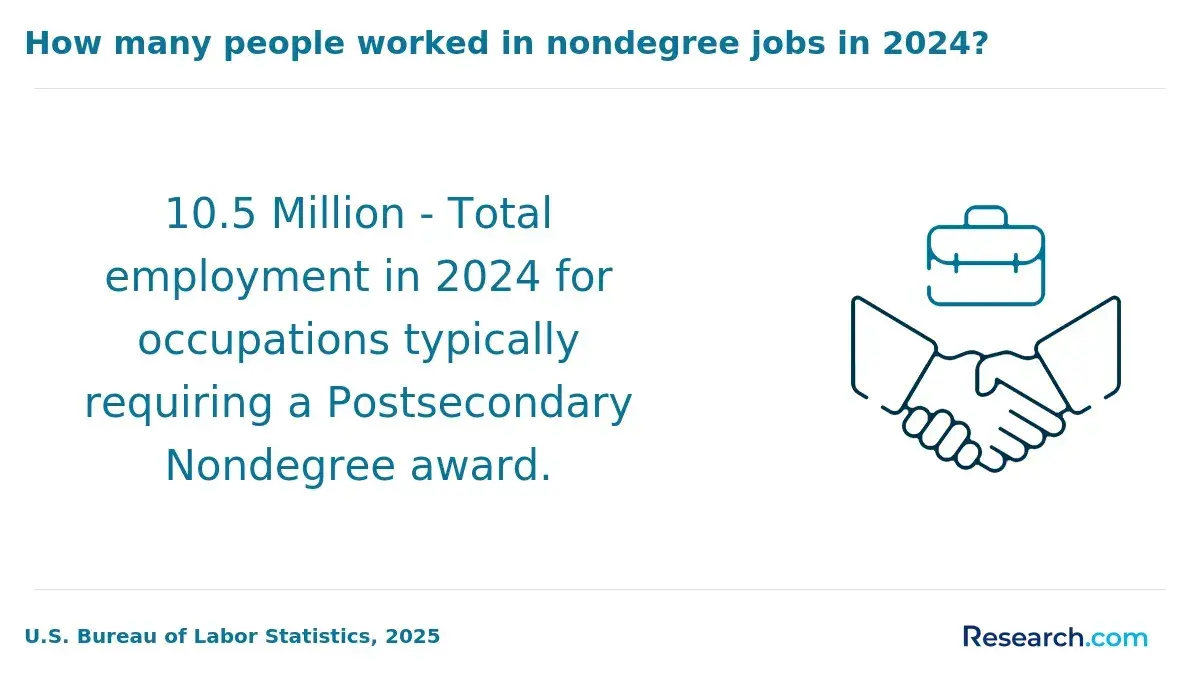
Key workforce projections indicate that by 2031 nearly half of new jobs will require at least a bachelor's degree, intensifying the competition for homeland security graduates in analytical and policy-driven roles.
Logistical challenges remain significant. Working professionals must manage synchronous sessions and on-site requirements which can limit accessibility. Prospective students evaluating top U.S. schools offering online homeland security certificates should prioritize programs with verified government connections and relevant hands-on training to navigate these barriers effectively.
For broader professional context, exploring options beyond homeland security, such as a paralegal school online, may provide alternative pathways in compliance and regulatory fields linked to security operations.
What strategic security planning skills and homeland security topics are covered in typical curricula?
The practical value of strategic security planning skills in homeland security degree programs is evident in how graduates navigate real constraints such as budget limits and multi-agency coordination.
Coursework equips students to manage complex scenarios, from cyberattacks on financial sectors to orchestrating disaster response across jurisdictions. These demands require actionable intelligence integration with security strategies tailored to fields like critical infrastructure protection and counterterrorism.
Key homeland security topics covered in strategic security curricula include operational planning under realistic pressures and legal frameworks balancing intelligence sharing with civil liberties. Students engage in scenario-based simulations emphasizing risk management methodologies and leadership principles for effective crisis oversight in interagency settings.
Such proficiency meets employer expectations where professionals earn a median salary of $106,660 and face a modest 3.8% job growth. Decision-making in this field often involves balancing strategy with operational flexibility to address rapidly evolving threats while managing limited resources.
For those considering related fields, exploring an online forensic psychology masters can complement security expertise by enhancing capabilities in behavioral analysis and threat assessment within homeland security contexts.
What admission requirements and prior experience do online homeland security programs expect?
Online homeland security programs generally require a high school diploma or GED, with undergraduate tracks often asking for a GPA between 2.5 and 3.0. For applicants without direct security sector experience, foundational courses in risk analysis and crisis management are mandatory before advancing to strategic planning modules, effectively extending program length and workload.
Candidates with military, law enforcement, or emergency management backgrounds may bypass certain entry-level requirements, yet this substitution rarely applies to advanced coursework, underscoring the persistent need for formal academic credentials amid operational experience.
The practical realities of these programs also include technological readiness, as consistent internet connectivity and reliable devices are essential for managing a blend of synchronous and asynchronous learning activities. Letters of recommendation and documented supervisory experience weigh more heavily for working professionals, signaling employer expectations for leadership in crisis scenarios rather than merely academic achievement.
Annual tuition for comparable online bachelor's in homeland security can vary widely; for example, Georgia Military College's online Bachelor of Applied Science in Homeland Security & Emergency Management charges around $8,415, notably lower than many on-campus equivalents. This cost-effectiveness may appeal to mid-career professionals seeking skill upgrades without major income disruption.
How long do online homeland security degrees take and what do they typically cost?
Completing an online homeland security degree typically demands about four years of full-time study, with flexibility for part-time or accelerated pacing. This timeline reflects a tradeoff between faster completion and increased financial and academic pressures.
For example, Strayer University's 40-course Bachelor of Science in Criminal Justice, Homeland Security & Emergency Management illustrates the financial scale involved, with tuition alone reaching $62,200 at $1,555 per course, excluding fees and materials. Such costs can become a barrier unless offset by employer tuition assistance, residency discounts, or credit transfers.
Professionals considering a career pivot, such as a municipal emergency manager moving toward strategic homeland security roles, must weigh not only tuition costs but also the impact of program structure on their work-life balance and income. Accelerated programs increase per-credit expense and risk burnout, while extended timelines may delay job transitions and salary improvements.
Key considerations when assessing programs include:
- Availability of asynchronous learning to accommodate full-time employment.
- Robust academic support to navigate rigorous course demands.
- Transfer policies that recognize prior relevant credits.
Balancing these factors is essential for aligning educational investment with realistic workforce outcomes, especially given the volatility of homeland security labor markets and evolving employer expectations.
What homeland security careers can graduates pursue and what roles use strategic planning?
Strategic planning expertise remains a defining factor for roles emerging from online homeland security degrees, with employers demanding advanced skills that integrate multidomain threat analysis and coordinated responses.
For example, an emergency management director in a major urban center must synthesize cyber threat intelligence with public health contingencies like pandemics, crafting operational plans that address overlapping crises. Such roles require more than procedural knowledge. They demand capacity in cross-agency collaboration, scenario modeling, and resource allocation under uncertainty.
Graduates positioned for intelligence analysis, cybersecurity, or policy advising will confront a workforce reality that prioritizes proficiency in predictive analytics and geopolitical threat assessment, which differs significantly from tactical or enforcement-focused careers. Professionals must interpret complex threat vectors and align them with evolving policy frameworks, often via scenario-based training rooted in government data and best practices.
Navigating hiring hurdles often involves demonstrating mastery of risk assessment methodologies and the interplay of security domains through practicums or capstone experiences. Career decisions hinge on tradeoffs between specialization, for instance, deep cyber expertise, and broader emergency management capabilities, necessitating careful alignment with labor market data and employer expectations.
What salary ranges and earning potential exist for homeland security and security planning jobs?
Salary outcomes in homeland security roles vary dramatically depending on clearance status, specialization, and sector. Entry-level positions typically offer $50,000 to $70,000 annually, but roles requiring top-secret or TS/SCI clearances, common in federal agencies and defense contractors, can command premiums exceeding $20,000 above regional averages.
For example, a cyber defense planner holding TS/SCI clearance often surpasses $130,000 yearly, reflecting the elevated demand for expertise in digital threat mitigation.
Private sector security planners working in critical infrastructure often face lower base salaries but make up the difference through performance bonuses or consulting fees ranging from $15,000 to $30,000 annually.
Mid-career professionals commonly earn $80,000 to $110,000, but advancement hinges less on online degrees alone and more on experience and specialized certifications linked to cybersecurity or intelligence analysis.
Security planning intersects with fields like emergency management and cyber threat analysis, each with unique progression ceilings. For instance, emergency operations managers might cap near $90,000, whereas cleared cyber analysts with technical skills can reach six figures within five years, revealing a strategic premium on digital threat expertise amid a 300% surge in clearance hiring since 2015.
Professionals must weigh regional job availability and clearance processing delays as practical barriers impacting career timelines and remuneration.
How strong is the job outlook and demand for homeland security and strategic security planners?
The persistent 10% growth projection for homeland security and strategic security planners through 2034 reflects more than just demand. It signals a shifting landscape where specialized interdisciplinary expertise drives hiring and compensation.
Federal agencies, state and local governments, and critical infrastructure operators increasingly seek professionals able to assess risk, manage emergencies, and integrate cybersecurity effectively under complex threat environments.
For working professionals, online master's programs priced around $1,037 per credit or $12,448 per semester offer flexible options that mitigate career interruptions and geographic relocation, crucial for maintaining income streams while upgrading qualifications. However, decision-makers should evaluate tuition costs relative to realistic post-degree salary gains and the 5-7 years of combined experience typically required to access mid- and senior-level roles.
Operationally, public safety agencies manage layered threats, from terrorism to cyberattacks, necessitating curricula aligned with federal and industry standards and proficiency in multi-agency coordination. The scarcity of candidates with such multifaceted skills justifies a premium on compensation but also means program selection must emphasize practical outcomes and employer recognition to affect long-term job stability.
How can students evaluate and choose a reputable online homeland security program?
Choosing an online homeland security program requires a focus on accreditation recognized by the U.S. Department of Education to ensure the credential is respected by employers. Curriculum must match career objectives. Federal roles demand expertise in policy and intelligence analysis, while private sector jobs prioritize risk management and cybersecurity.
For example, a professional targeting the Department of Homeland Security needs coursework emphasizing regulatory frameworks and threat assessment rather than only technical skills.
Practical outcomes give deeper insight than program descriptions alone. Metrics like graduation rates, employment placement, and internship access define real-world value. Programs integrated with agencies such as the National Guard often create stronger employment pipelines. With just 14 online national security-related degrees available nationwide as of 2025, comparing specialization options and responsiveness to emerging threats like cyberterrorism is essential.
Delivery format affects learning quality. Asynchronous courses may suit working adults yet reduce opportunities for collaborative simulations critical to strategic planning skill development. Faculty expertise and resources, such as secure databases and simulation software, directly influence tangible skill acquisition.
Employer recognition manifests in alumni career trajectories and advisory board composition, serving as practical indicators of industry alignment. Without these, students risk investing in degrees offering limited advancement potential in homeland security careers.
Other Things You Should Know About Homeland Security
Whether a master's degree in homeland security provides a meaningful career boost depends on your current role and goals. For mid-level professionals targeting federal agencies or specialized security leadership, this advanced degree often opens doors to strategic planning positions that require analytical and managerial expertise. However, if you aim for entry-level or generalist roles, practical experience combined with relevant certifications might yield better returns faster. Prioritize a program that emphasizes applied skills and connections to government or private-sector employers over purely theoretical coursework.
Certifications in homeland security often focus on narrow skill sets such as risk management or emergency response protocols and can be completed in a shorter time with less financial cost. These credentials enhance specific competencies valuable to certain positions but lack the strategic depth and broad policy knowledge a degree provides. For professionals aiming to lead security planning initiatives or influence organizational strategy, a degree is more appropriate. Choose certifications as complementary tools rather than substitutes if long-term leadership or federal-level roles are the goal.
Online homeland security programs demand significant time for reading, assignments, and research, which may compound stress for professionals working full-time, particularly in high-responsibility positions. Selecting programs with flexible deadlines and asynchronous content can mitigate conflicts, but rigorous self-discipline remains essential. Prioritize programs that integrate practical assignments into your work environment to leverage dual learning and minimize extra workload. Underestimating workload leads to burnout and delays in completion, which impacts career timelines and financial planning.
References
- Homeland Security Career And Salary Information https://www.criminaljusticedegreeschools.com/careers/homeland-security/
- Types of Homeland Security Degrees | Compare Schools https://www.criminaljusticeprograms.com/specialty/homeland-security-degrees/
- Online Homeland Security Degrees: Explore Top Programs https://www.degreesforgood.org/online-degrees/homeland-security-programs/
- Homeland Security Requirements (Degrees, Jobs & Salary) https://www.allcriminaljusticeschools.com/federal-law-enforcement/homeland-security/
- Homeland Security Degree Online | Find Top Programs & Information https://www.firescience.org/homeland-security-degree-programs-online/
- Search icon https://waldorf.edu/degree-programs/bachelors/ba-homeland-security/
- Homeland Security Market Size, Growth Forecasts 2035 https://www.gminsights.com/industry-analysis/homeland-security-market
- Online Bachelor's Degree: Homeland Security https://www.umgc.edu/online-degrees/bachelors/homeland-security
- Bachelor of Science in Homeland Security https://www.trident.edu/bachelors-online/homeland-security-degree/