2027 Homeland Security Roles Growing Fast in Intelligence and Infrastructure Protection

Co-Founder and Chief Data Scientist
Facing escalating threats across critical infrastructure sectors, homeland security professionals confront a surge in demand for advanced intelligence analysis and resilience planning skills.
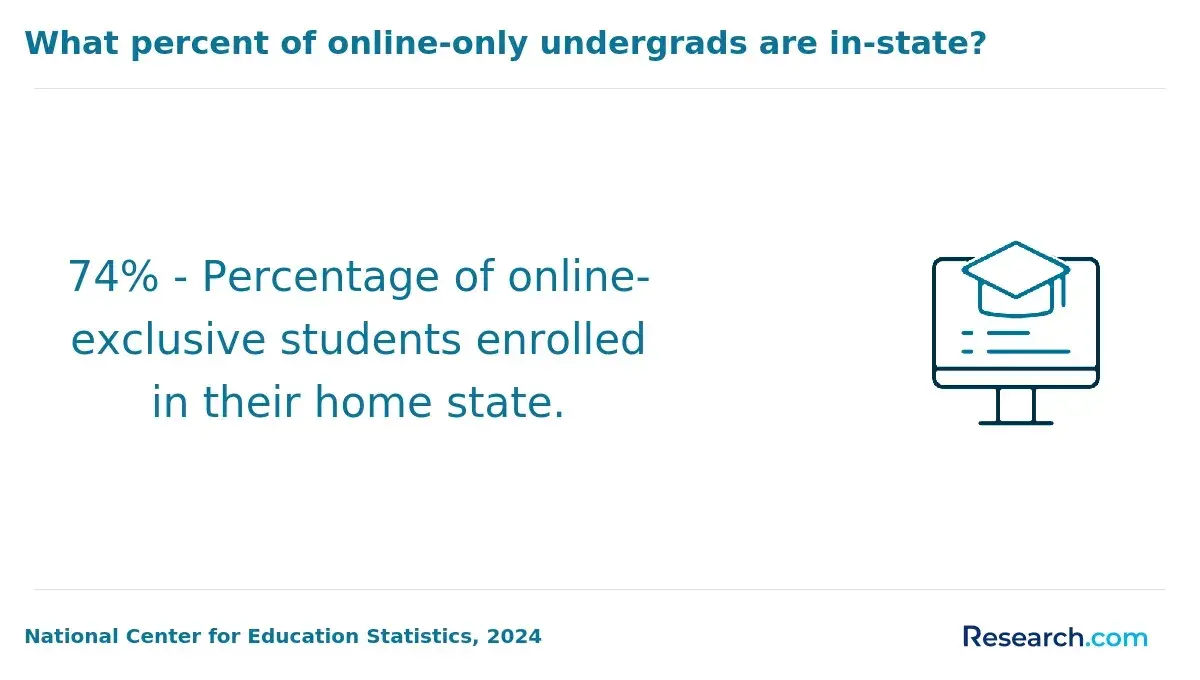
The Department of Homeland Security reports a 15% workforce growth in cybersecurity and infrastructure protection roles over the past two years, driven by complex attack vectors and evolving geopolitical risks. Meanwhile, the expansion of flexible online learning options, which increased by nearly 25% in adult enrollment nationwide according to the National Center for Education Statistics, reshapes how practitioners upgrade qualifications amid full-time jobs.
This article examines evolving homeland security roles and offers targeted guidance for selecting educational pathways aligned with urgent operational needs and career mobility.
Key Things You Should Know
- Federal workforce data from 2024 shows intelligence analysis roles in homeland security grew 18% faster than infrastructure protection, pressuring applicants to prioritize specialized cyber-forensic skills over broad-sector experience.
- Employers increasingly favor certifications tied to DHS policy updates, raising entry barriers and reshaping recruitment pipelines. This prolongs time-to-hire by 25%, impacting strategic readiness in volatile threat environments.
- Average program costs surged 12% in 2025 for accredited homeland security degrees emphasizing infrastructure resilience, creating access tradeoffs for mid-career professionals balancing training investment versus immediate operational deployment.
How are homeland security careers evolving in intelligence and infrastructure protection roles?
Growth in homeland security career growth in intelligence analysis for the United States reflects a broader shift from reactive to anticipatory roles.
The FY 2026 President's Budget increases funding by 12% to $1.7 billion for Intelligence, Analysis, and Operations Coordination, creating demand for analysts proficient in big data and cybersecurity integration. These professionals must fuse diverse data streams, including human intelligence, cyber threat feeds, and critical infrastructure sensors, to deliver real-time actionable insights.
Infrastructure protection job trends in U.S. homeland security sectors emphasize network behavior analytics over traditional physical security, especially when specialists collaborate with utilities to preempt vulnerabilities. This evolution requires skill sets aligned with AI-assisted threat detection and predictive modeling, shifting focus toward proactive threat anticipation.
Workforce realities include mandatory security clearances, continual upskilling in emerging technologies, and fluency in complex regulatory landscapes. Communication skills bridging public and private sectors managing transportation, energy, and water infrastructures are essential for effective coordination.
Educational programs aligned with Department of Homeland Security competencies and certifications in cybersecurity and critical infrastructure risk assessment enhance employability but do not guarantee readiness for lifelong adaptability demands. Prospective students evaluating the cost of criminal justice degree and other credentials must weigh practical outcomes against evolving job requirements and entry barriers.
What degrees and education pathways prepare you for homeland security intelligence jobs?
Landscaping a career toward Homeland Security intelligence increasingly demands degrees that blend technical acumen with actionable policy insight, particularly within critical infrastructure protection.
By 2025, over 80% of sectors in this space will deploy AI-driven tools for threat detection and risk assessment, shifting employer expectations to prioritize candidates with integrated knowledge of AI governance and analytic frameworks. A bachelor's degree in cybersecurity, computer science, data science, or intelligence studies directly serves this need by grounding students in both foundational tech skills and analytic reasoning essential to operational roles.
For professional roles supporting complex environments like energy grid security, dual expertise becomes practical necessity. Understanding AI algorithms that detect anomalies must align with navigating regulatory constraints governing system responses. Such cross-disciplinary competencies rarely emerge from isolated technical programs, underscoring the value of courses that combine AI ethics, data governance, and information assurance.
Educational pathways for careers in homeland security and infrastructure protection favor programs offering hands-on AI experience coupled with policy integration. Incorporating internships or cooperative education within federal agencies or specialized firms bridges academic theory and workplace realities. For working professionals targeting swift credential alignment, targeted certificates in AI applications or intelligence analysis recalibrate experience toward evolving DHS demands without the extensive investment of full degrees.
Choosing accredited programs connected to government entities further strengthens employment prospects, particularly those demonstrating project-based work in AI-enabled threat modeling. Prospective students can explore a range of cybersecurity courses online with certificates to find options that best suit their objectives.
Which homeland security roles focus on critical infrastructure protection, and what do they require?
Effective homeland security critical infrastructure protection roles require a hybrid skill set that merges cybersecurity expertise with physical asset safeguarding. Positions demand competencies in risk assessment, threat analysis, and incident response tailored to vital sectors such as energy grids and transportation.
A typical scenario involves securing a regional power grid where professionals must understand SCADA system vulnerabilities while coordinating on-site with local law enforcement. This dual-domain focus underscores the nuanced complexity of such roles.
Requirements for homeland security infrastructure protection careers extend beyond technical training. Employers typically expect certifications like CISSP or CISA combined with practical emergency management or cybersecurity operations experience. Candidates who can interpret and act on intelligence swiftly to mitigate evolving threats maintain critical operational continuity during both cyberattacks and natural disasters.
The Department of Homeland Security's FY 2026 budget increase for CISA to $3.1 billion from $2.7 billion reflects growing federal prioritization of integrated cyber-physical infrastructure defense initiatives. This fiscal trend suggests a competitive advantage for students engaging in programs that blend hands-on cyber skills with infrastructure risk management, although navigating regulatory compliance remains an ongoing challenge.
Decision-makers must evaluate program deliverables for balanced skill acquisition relevant to diverse employers in utilities, government, and transportation sectors.
Those considering career shifts or advancement should also review diverse educational pathways. For example, alongside technical degrees, exploring paralegal online programs may enhance understanding of legal frameworks impacting critical infrastructure protection roles, increasing workforce versatility.
What are the typical admission requirements for homeland security degree and certificate programs?
Admission requirements for homeland security degree programs in the United States reveal a clear preference for candidates whose academic credentials align closely with security industry demands, including readiness for clearance processes. Most bachelor's degree tracks mandate a high school diploma or GED with a competitive GPA, typically between 2.5 to 3.0, serving as a baseline metric.
For certificate programs admission criteria for homeland security and intelligence studies increasingly recognize operational experience in fields such as law enforcement or military service as equivalent to formal academic prerequisites, enabling working professionals to leverage relevant expertise effectively.
Admission committees place significant emphasis on credential verification and background checks, anticipating the federal security clearance landscape as affected by the 2024 National Security Memorandum. Those lacking clearance pathways may encounter hiring delays or rejection despite program completion, illustrating a critical operational tradeoff when selecting a program without clear clearance alignment.
Analytical skills and foundational knowledge in risk management are essential given biennial national risk management plans focused on infrastructure resilience. Candidates outside related fields should evaluate bridge courses in cybersecurity or policy analysis to meet employer expectations and maintain competitiveness.
Students must also realistically assess logistical challenges, as balancing full-time employment with demanding online or hybrid schedules tests time management and commitment, factors strongly correlated with program success and sustained career performance.
Students reviewing pathways should consider practical financial implications as well, comparing tuition and outcomes with other fields. For those curious about advanced digital fields, exploring masters in digital marketing may provide worthwhile cost-to-benefit benchmarks.
How do online homeland security programs compare to campus options for career preparation?
Online homeland security programs provide valuable schedule flexibility but often cannot replicate the immersive, hands-on training essential for roles demanding practical skills, such as infrastructure protection or cybersecurity analysis. Candidates entering these fields benefit significantly from on-campus resources like advanced cybersecurity labs and live simulations, which align more closely with employer expectations for skill application in real threat environments.
For instance, an information security analyst preparing for fast-growing job markets, projected to increase by 33% through 2033, gains critical experience by engaging directly with controlled lab scenarios unavailable in many online formats. Campus programs also deliver direct faculty mentorship and peer networking events that facilitate connections necessary for internships and early-career placement.
Online offerings, while less hands-on, often serve working professionals by accommodating complex schedules and incorporating broader case studies, such as emergency response intelligence or energy infrastructure risks. Yet, students must weigh these benefits against the potential delay in cultivating practical detection and mitigation skills without consistent lab access.
What core courses and specializations are offered in homeland security programs?
Homeland security programs demand students navigate a complex balance between broad operational knowledge and niche specialization, a challenge that shapes workforce readiness and employability. Intelligence-focused tracks prioritize skills in analytical techniques for deciphering classified information, supporting anticipatory law enforcement actions.
However, this focus often limits exposure to critical infrastructure resilience, which is essential in other specialized pathways.
Hands-on training in command systems and interagency communication prepares candidates for environments where timely crisis decisions affect national outcomes. Cybersecurity emphases concentrate on protecting non-governmental infrastructure such as energy grids and transportation networks from increasingly sophisticated cyber threats. This entails developing expertise in malware analysis, network defense, and security policy formulation.
Emergency management paths equip graduates with knowledge on hazard mitigation, logistics, and recovery strategy implementation. The field's median salary recently reached $83,960, indicating robust demand for these skill sets in public agencies contending with climate-driven disasters. Employers value candidates who combine technical knowledge with practical experience, often acquired through internships or realistic simulations.
How long do homeland security programs take, and what tuition and financial aid can you expect?
Completing a homeland security program requires navigating credential levels, timelines, and delivery modes with clear career implications. Associate degrees, lasting 18 to 24 months, mainly qualify candidates for entry-level roles in emergency management or infrastructure support, but may limit advancement without further study.
Bachelor's degrees typically take around four years yet grant access to higher responsibility areas like intelligence analysis and cybersecurity. Accelerated online or hybrid formats can shorten study by up to 25%, which benefits mid-career professionals seeking rapid transitions.
Tuition costs vary significantly. Public in-state options average $5,500-$8,000 annually, while private institutions charge $15,000-$25,000. Online programs may appear cost-effective but often include extra fees such as technology charges. Additionally, certification exams and security clearances add $500 to $1,200, often overlooked in budget considerations.
Financial support commonly involves Pell Grants, state scholarships, and loans, with employer tuition reimbursement offering substantial aid for those already in related positions. Veterans and active-duty service members can leverage GI Bill benefits, often covering full tuition.
Practically, balancing part-time study over 2-3 years is realistic for working adults relying on employer support, whereas full-time attendance expedites entry into growth areas prioritized by the U.S. Department of Homeland Security's FY 2026 hiring initiatives.
Programs embedding practical training or federal internships enhance employability by aligning academic outcomes with employer expectations in cybersecurity, intelligence, emergency management, and infrastructure protection, sectors experiencing accelerated workforce demand.
What are the salary ranges for homeland security professionals in intelligence and infrastructure protection?
Salary trajectories for homeland security professionals in intelligence and infrastructure protection reflect significant variation tied to sector, experience, and technical expertise. Entry-level analysts in government roles typically earn $55,000-$75,000, while mid-career specialists with advanced clearances or technical skills range from $80,000 to $100,000. Senior-level strategists and managers within agencies or private contractors often exceed $110,000 annually, with some surpassing $125,000.
Practical workforce dynamics reveal that salary premiums cluster in critical infrastructure sectors such as energy, where interruptions risk national impact. Employers tend to offer 10-15% higher salaries here compared to local government roles, the latter providing broader strategic responsibilities but often lower pay.
This creates a balancing act for professionals evaluating where to focus their career progression between specialized, higher-paying technical roles and broader leadership pathways with diverse operational scope.
The Department of Homeland Security's Strategic Plan for FY 2023-2027 demands evolving risk management every two years, anchoring infrastructure protection as a data-driven priority. Success relies heavily on applicants combining intelligence analysis capabilities with operational fluency and regulatory navigation, emphasizing continuous skill growth.
Advancement links directly to acquiring pertinent certifications and proven interagency collaboration experience. Sustained funding aimed at strengthening preparedness drives competitive compensation reflecting increasing responsibilities and risk exposure, as evidenced by federal workforce studies from 2024.
What is the job outlook for homeland security analysts and infrastructure protection specialists?
The shift in homeland security priorities redefines the analyst role from traditional border-focused tasks to a nuanced intelligence-driven mandate centered on infrastructure protection. Over half of recent DHS strategic initiatives prioritize safeguarding critical systems like energy, transportation, and communications through advanced threat analysis, demanding a sophisticated skill set beyond basic security measures.
Practitioners must develop cross-sector expertise, as mitigation strategies for urban transit differ substantially from those relevant to rural utilities. This sector-specific intelligence approach influences hiring preferences, favoring candidates with practical experience in cybersecurity, risk management, and interagency communication. Candidates without hands-on training or domain-specific practicum risk diminished employability.
Federal, state, and private organizations are expanding their workforce, necessitating credentials that balance technical coursework with experiential learning. However, balancing rigorous technical training with real-world application can challenge students and working professionals, particularly in career pivots. Programs failing to embed infrastructure-specific intelligence frameworks often limit career growth, reflecting escalating DHS standards and industry diversification.
How can you verify accreditation and select a reputable homeland security program in the U.S.?
Choosing a homeland security criminal justice program without verifying accreditation risks investing in credentials that lack recognition by employers or federal agencies.
Confirm that programs hold regional accreditation recognized by the U.S. Department of Education or the Council for Higher Education Accreditation (CHEA), alongside endorsements from bodies such as the National Center for Cybersecurity and Communications Integration (NCCIC) or alignment with the Department of Homeland Security's National Centers of Excellence.
These distinctions matter because federal agencies and infrastructure protection employers expect graduates to have current, practical intelligence analysis and compliance skills embedded in their training.
Programs that do not transparently disclose graduate employment rates or median salaries may mask poor market alignment. For example, relevant career paths like information security analyst and emergency management director offer median wages of $120,250 and $83,960 respectively, indicating workforce demand.
Candidates should also assess whether curricula emphasize hands-on regulatory compliance, technical training, and effective integration of federal and state security policies, which are often validated through internships or lab work.
Choosing programs lacking partnerships with homeland security agencies or employers can hinder access to internships and security clearances essential for many intelligence positions.
Furthermore, flexible online formats might appeal to working professionals but may fall short where in-person labs or physical simulations are critical to mastering infrastructure protection competencies. Evaluating these trade-offs against your target role will directly impact workforce readiness and career viability.
Other Things You Should Know About Homeland Security
The tension between effective intelligence gathering and protecting civil liberties requires homeland security professionals to navigate complex legal and ethical frameworks. Professionals must prioritize intelligence rigor while ensuring compliance with privacy laws and oversight mechanisms, which often means slower operational processes and increased administrative workloads. Employers expect candidates to understand this balance deeply, as failure to manage it can lead to legal consequences and damage public trust, constraining agency capabilities.
The growth in homeland security roles is driven by increasing cyber threats, infrastructure modernization needs, and evolving terrorist tactics. These trends necessitate advanced intelligence gathering and critical infrastructure protection, prompting a demand for skilled professionals in these areas.
Early specialization in intelligence or infrastructure protection can accelerate advancement by developing targeted expertise highly valued by employers, but it may limit flexibility if market demands shift. Conversely, a generalist approach offers adaptability and entry to a wider range of employer types, though it may delay attaining advanced roles requiring deep subject matter knowledge. For most professionals, a hybrid model-gaining foundational general skills then focusing on specialization after initial experience-balances employability with advancement potential.
Promotions in these sectors depend heavily on demonstrated operational impact and security clearances, which can add months to the timeline. Entry-level positions may require 3 to 5 years of experience before advancement to mid-level analyst or specialist roles, with senior operational or leadership roles typically taking 7 to 10 years. Candidates should plan for a gradual progression supported by continuing education and clearance maintenance, understanding that rapid advancement is rare and tied to performance and situational opportunities rather than tenure alone.
References
- Critical Infrastructure Security and Resilience https://www.cisa.gov/topics/critical-infrastructure-security-and-resilience
- Homeland Security Market Size, Share, and Trends Analysis 2033 https://www.databridgemarketresearch.com/reports/global-homeland-security-market
- The evolving role of homeland security in a dynamic world https://ack3.eu/evolving-role-of-homeland-security-in-a-dynamic-world/
- Homeland Security Requirements (Degrees, Jobs & Salary) https://www.allcriminaljusticeschools.com/federal-law-enforcement/homeland-security/
- Homeland Security https://www.riohondo.edu/areas-of-study/homeland-security/
- Explore DHS I&A career fields https://www.intelligencecareers.gov/dhsia/career-fields
- Cybersecurity and Infrastructure Security Agency (CISA) | Emerging Technology Policy Careers https://emergingtechpolicy.org/institutions/executive-branch/cybersecurity-and-infrastructure-security-agency/
- Accreditation | CAEMHSE https://www.caemhse.education/accreditation