2027 Homeland Security Careers That Reward Strong Leadership Skills

Co-Founder and Chief Data Scientist
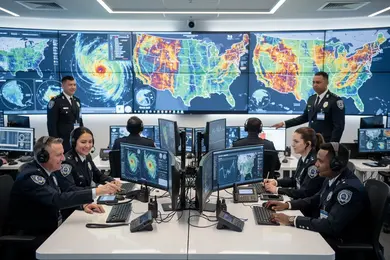
Facing rapidly evolving threats and increasingly complex crisis scenarios, homeland security professionals often must lead teams in high-pressure environments where hesitation risks lives and infrastructure. Navigating sudden emergencies or coordinating multiagency responses demands leadership skills grounded in real-world experience and decisive judgment.
Recent data from the U. S. Department of Education highlights a 20% rise in adult learners enrolling in online programs designed for working professionals, signaling growing demand for flexible, accelerated pathways that accommodate current job responsibilities without sacrificing practical leadership development.
This article examines career options where leadership aptitude translates directly into advancement opportunities in homeland security roles, guiding readers through decision factors critical to strategic career moves and effective education choices.
Key Things You Should Know
- Federal data from 2024 reveal leadership roles in homeland security grow 8% slower than technical positions, forcing candidates to balance advanced degrees against on-the-ground operational experience for career acceleration.
- High demand for crisis management skills means employers prioritize proven multi-agency coordination experience; 72% of senior hires reported by DHS in 2024 resulted from demonstrated interdepartmental leadership.
- Extended training timelines and security clearance delays, averaging 6-12 months per recent GAO analysis, create entry barriers that disproportionately impact mid-career pivots, requiring strategic planning beyond education alone.
What homeland security careers most rely on strong leadership skills and decision-making?
Leadership voids among senior executive roles within the Department of Homeland Security (DHS) and affiliated agencies will intensify as over half of the current Senior Executive Service (SES) workforce becomes eligible for retirement by 2028. These positions demand nuanced decision-making skills under pressure, particularly in coordinating rapid responses and managing multi-agency operations.
Careers requiring strong decision-making skills in homeland security, such as emergency management directors or intelligence division chiefs, illustrate this reality through scenarios that include real-time judgments during crises-balancing evacuation orders against resource allocation while liaising with diverse stakeholders.
The consequences of leadership gaps extend beyond operational delays, potentially increasing security risks and eroding public trust.
Advancement into these roles is contingent not just on experience but on mastering crisis communication, interagency negotiation, and data-driven approaches-skills that directly affect outcomes in high-stakes environments. This creates a competitive landscape where candidates must develop both tactical expertise and strategic foresight.
For those considering educational pathways, understanding practical workforce demands is crucial. While exploring how much is criminal justice school can help map anticipated costs and program lengths, candidates should weigh these factors against the need for specialized skills that meet employer expectations in homeland security leadership roles in the United States. The link between education cost and employability outcomes must be analyzed for effective career planning.
What degrees and majors prepare students for leadership roles in homeland security?
Leadership roles in homeland security demand more than technical skills; they require the integration of strategic competencies, organizational acumen, and interagency coordination. Bachelor's and master's degrees in emergency management, homeland security, public administration, or criminal justice offer a targeted route-particularly when combined with programs emphasizing risk assessment and crisis communication.
For instance, someone with a public administration degree focused on emergency services will better manage complex budgets and navigate regulations critical during multi-agency disaster responses. In contrast, degrees solely in cybersecurity require supplemental leadership and policy training to prepare for executive positions.
The job market for homeland security leadership reflects this dual focus. Employers seek candidates combining technical knowledge with demonstrated organizational and decision-making skills, often developed through hands-on exercises, internships with federal or state bodies, and leadership theory coursework.
Practical experience, such as directing evacuation logistics or managing communications in cyber incidents, significantly increases a candidate's effectiveness beyond theoretical learning. Employment for emergency management directors is projected to grow steadily, with a median wage above the national average, underscoring demand for these hybrid skill sets.
Proficiency in domain expertise without leadership education risks stalling upward mobility. Programs focusing narrowly on technical skills may leave gaps in critical areas like organizational behavior, public policy, and negotiation, which are essential for senior-level roles.
Professionals pivoting from unrelated fields must often deepen both domain knowledge and leadership credentials, balancing educational timelines with employer expectations for measurable leadership outcomes.
Prospective students evaluating homeland security leadership degree programs in the US should weigh practical relevance over brand recognition, identifying curricula that align with operational realities.
For those considering career shifts, comparing the educational path to other government or security roles, such as types of paralegals, clarifies distinct workforce competencies and advancement trajectories.
How do online homeland security programs compare to campus options for future leaders?
Choosing between campus and online homeland security degree programs for leadership development requires weighing practical skill acquisition against scheduling flexibility. Campus programs provide critical access to simulation labs, on-site internships, and face-to-face mentorship that cultivate hands-on abilities essential for managing emergencies or cyber incidents.
These tangible experiences carry weight with employers in federal agencies and critical infrastructure sectors, where decision-making under pressure and demonstrated practical training often determine leadership readiness.
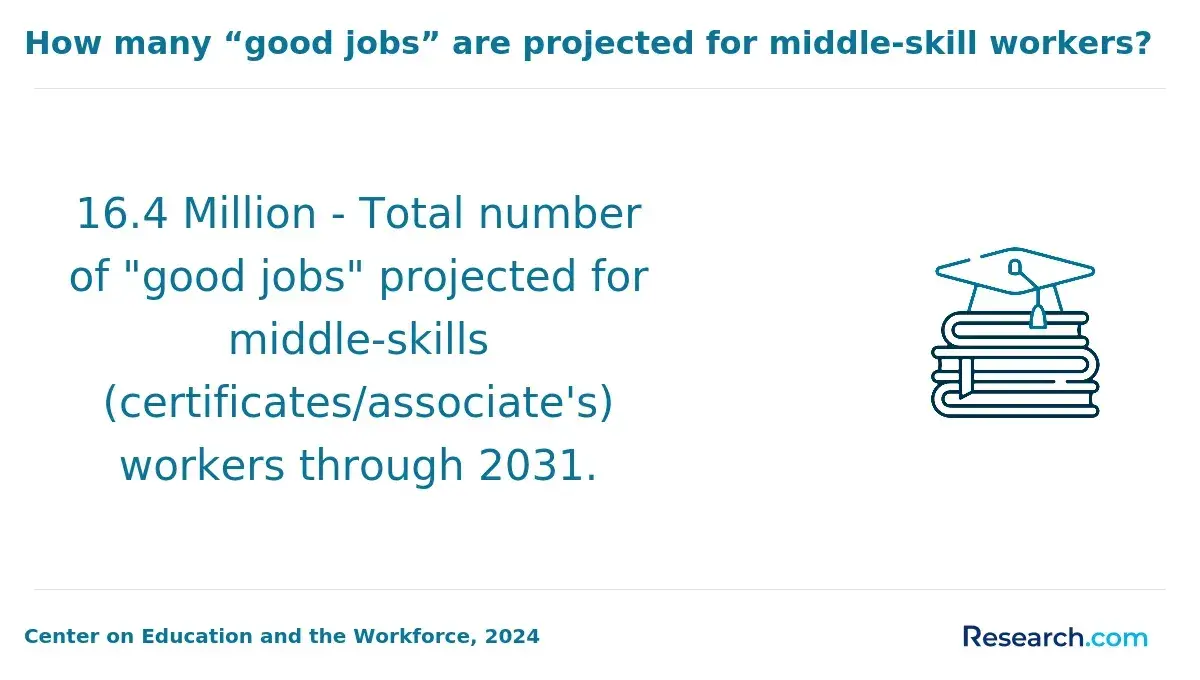
Conversely, online homeland security training for future leaders offers adaptability suited to working professionals, especially those targeting information security analyst roles projected to grow 32% through 2032.
This format allows the immediate application of leadership concepts without interrupting employment but demands proactive networking beyond the virtual classroom to compensate for limited peer interaction.
Employers increasingly accept accredited online credentials but tend to prefer campus graduates for leadership roles requiring rapid judgment and physical presence in high-stakes scenarios. Prospective students should align their choice with career aims, considering factors such as:
- Access to specialized labs and simulation exercises for practical skill development.
- Opportunities for live mentorship and professional networking in security-focused cohorts.
- Program flexibility aligned with current work responsibilities and career timelines.
- Employer emphasis on hands-on experience versus theoretical knowledge in target security sectors.
Those pursuing cyber leadership paths can supplement online programs with certifications and practical projects to enhance employability. This approach parallels other applied fields like forensic science, where advanced training linked to real-world experience significantly impacts career progression, as seen in resources such as the forensic science career guides.
What courses and learning experiences build leadership competencies in homeland security programs?
Leadership training programs for homeland security professionals must go beyond theory to develop decision-making skills crucial under crisis conditions. For example, incident command system training that focuses on resource allocation and interagency coordination mirrors the operational demands federal and state agencies face in cyber threat responses or joint counterterrorism efforts.
This experiential approach cultivates adaptive leadership and collaborative problem-solving, essential for managing multifaceted emergency scenarios.
Essential courses to develop leadership skills in homeland security careers combine crisis management, intelligence analysis, and ethical command with hands-on tools like leadership labs. Programs lacking robust analytic components risk leaving graduates unprepared for evolving threat landscapes, where data-driven decisions enhance both policy and field operations.
The Department of Homeland Security's FY 2024 budget increase of 14% for intelligence and analysis funding signals growing employer demand for leaders with strong analytic capabilities and strategic communication aptitude.
Practical exposure through mentorships and internships in government or private sector homeland security units is critical to understanding operational command complexities often missing from classroom learning. Prospective students should evaluate curriculum flexibility, allowing specialization in areas like cyber defense or emergency management, reflecting diverse leadership requirements across homeland security disciplines.
Many candidates also benefit from programs integrating interdisciplinary insights, such as environmental health, which can enhance situational awareness and risk mitigation strategies, as found in environmental health and safety bachelor degree online options highlighted by research.com.
What admission requirements do homeland security leadership-focused programs typically have?
Admission for homeland security leadership programs demands more than academic credentials; operational experience and demonstrated leadership in complex environments are critical. Candidates typically present a bachelor's degree in areas like criminal justice or public administration, but the real differentiator is often two to five years in relevant roles such as law enforcement or emergency management.
This requirement reflects real workforce constraints: for example, U.S. Customs and Border Protection saw Border Patrol staffing drop over 17% from FY 2011 to FY 2023, intensifying the demand for leaders who can stretch resources effectively.
Applicants must provide evidence of leadership under pressure, documented supervisory or strategic decision-making experience, and skills in risk assessment and interagency coordination. These factors are non-negotiable given the increasing operational scope and shrinking personnel.
Programs often expect candidates to juggle intense study and professional responsibilities simultaneously, with employer endorsement often a practical necessity.
Hiring agencies favor candidates matching these criteria, meaning those lacking frontline experience must compensate through strong academics or specialized security certifications. International security clearances add another layer of complexity, particularly for federal roles. Choosing programs without such prerequisites risks limiting senior-level employability in a field tightening around demonstrated operational readiness and leadership capacity.
How long do homeland security degree programs take and what do they cost?
Choosing a homeland security degree program involves balancing duration, cost, and career impact, especially for mid-career professionals juggling work and education. Most associate degrees require two years, bachelor's degrees typically four, but accelerated and online options can reduce these to 18 months and three years respectively, demanding disciplined time management alongside existing commitments.
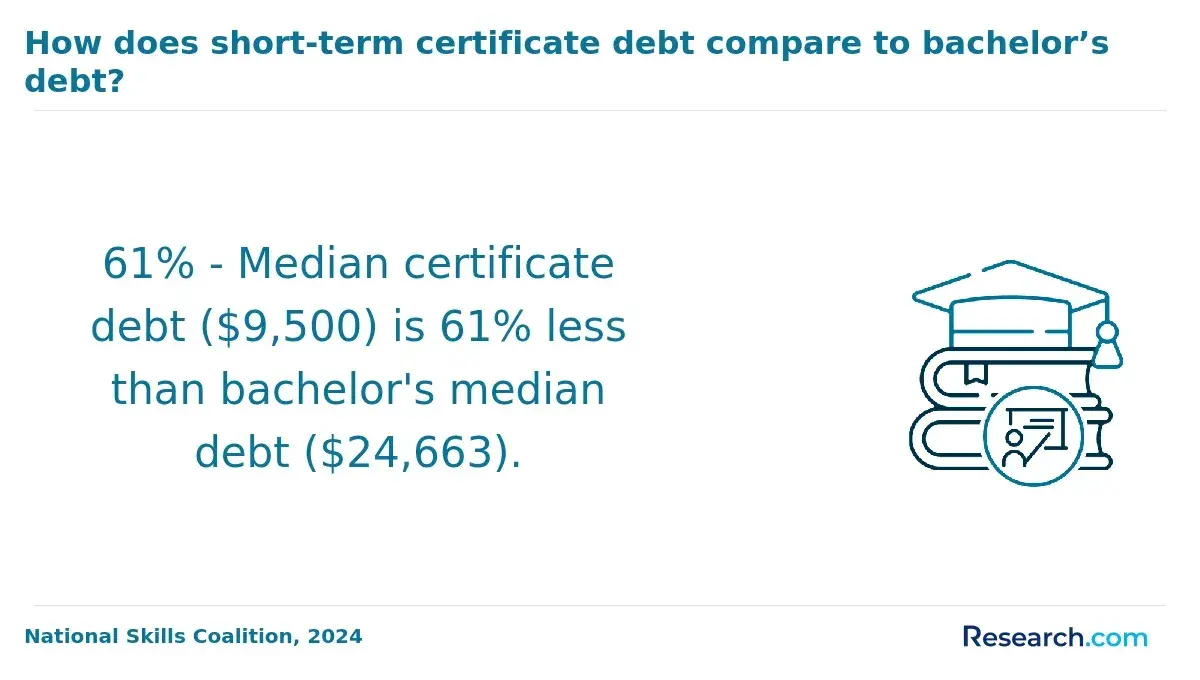
Tuition varies considerably: public in-state institutions generally cost $7,000 to $12,000 annually for a bachelor's degree, while private schools often charge over $30,000. Online programs may lower base tuition but introduce technology and material fees.
Professionals pursuing leadership roles should evaluate employer tuition reimbursement schemes and factor in indirect costs like lost income and mandatory certifications beyond the degree.
For example, a TSA supervisor advancing through a part-time bachelor's program must weigh the affordability and flexibility of the curriculum against operational demands-screening 2.8 million passengers daily in fiscal year 2024-amid staffing pressures. Without a bachelor's, advancement into strategic federal roles is limited, given the increasing operational complexities affecting agencies like TSA.
Decisions on homeland security education must consider:
- How compressed schedules affect mastery of specialized skills and certification readiness.
- Financial tradeoffs between out-of-pocket expenses and employer support.
- Long-term eligibility for leadership that often mandates formal credentials.
How can students verify accreditation and quality of homeland security programs?
Choosing a homeland security program without verified accreditation risks investing time and resources in credentials that federal agencies and critical infrastructure employers may not recognize. Regional accreditation from bodies like the Middle States Commission or Higher Learning Commission confirms institutional legitimacy, while specialized accreditations such as ABET ensure program-specific rigor.
This distinction is crucial because employers increasingly prioritize candidates with degrees aligned to recognized academic and industry standards.
The practical value of a program hinges on graduate outcomes and employer relationships. For example, the Cybersecurity and Infrastructure Security Agency's Infrastructure Security Division allocated over $2.2 billion in resilience and security grants during FY 2024, nearly an 18% rise.
Students trained in managing grant compliance and infrastructure risk will find greater demand in sectors like energy, transportation, and public safety. Programs that emphasize applied leadership skills tied to frameworks such as the Emergency Management Accreditation Program (EMAP) or National Initiative for Cybersecurity Education (NICE) also better prepare graduates for cross-jurisdictional coordination.
Internships or cooperative education partnerships with government bodies or private critical infrastructure firms provide essential experiential learning beyond theory. This exposure to real-world grant oversight and resilience initiatives often differentiates job candidates in a complex homeland security job market shaped by growing federal investment and intersector dependencies.
What are the typical salary ranges for homeland security professionals in leadership positions?
Leadership compensation in homeland security commands reflects the complexity and scope of operational responsibility. Senior federal roles may surpass $170,000 annually, driven largely by the need to direct interagency efforts-such as those seen in Joint Terrorism Task Forces, which coordinated responses to 4,000 terrorism-related incidents involving over 180 state and local agencies.
Mid-level supervisory salaries in local and state agencies typically range from $90,000 to $110,000, while specialized federal leadership positions offer between $120,000 and $180,000 depending on clearance levels and operational demands.
Workforce dynamics strongly influence these figures. Candidates with security clearances and counterterrorism experience command higher salaries but face expectations of continuous readiness, crisis management, and robust interagency collaboration. Urban areas offer up to 20% salary premiums to offset living costs but bring intensified competition and increased workload.
For professionals pivoting into homeland security leadership, credentialing-such as CISSP certification or advanced degrees-can enhance earning potential by $10,000 to $20,000, but require 1-3 years of focused study.
The FBI's emphasis on multi-agency task forces underscores how operational results and adaptability are critical to securing and maintaining these higher-paying assignments. Such roles reward demonstrated practical leadership and resilience under pressure rather than credentials alone.
What is the job outlook and promotion potential in homeland security leadership careers?
Leadership roles in homeland security increasingly demand skills that extend beyond technical expertise to managing complex interagency initiatives. Between FY 2020 and FY 2024, a 25% rise in the Department of Homeland Security's (DHS) cross-agency goals required leaders who can synthesize diverse priorities and navigate multi-department projects.
For example, a mid-level analyst focused on cybersecurity risk management might advance by leading integrated threat assessments that influence policy across several federal entities. Success in such positions hinges on abilities in interagency negotiation, resource optimization, and delivering measurable outcomes that support broad strategic objectives rather than siloed functions.
Key competencies valued by organizations include:
- Strategic vision aligning multiple agency missions without redundancy.
- Management of logistical and bureaucratic complexities inherent in cross-agency agreements.
- Political acumen crucial for sustaining influence in varied agency cultures.
Tradeoffs are significant: increased authority comes with elongated decision-making cycles and accountability burdens. Advancement depends not only on merit but also on understanding organizational culture and stakeholder dynamics.
Professionals should target credentials and experience that concretely demonstrate collaborative project leadership and policy implementation to stand out in this competitive environment.
Are certifications or clearances needed to advance into homeland security leadership roles?
Leadership roles in homeland security demand security clearances that cannot be bypassed by professional certifications alone. Most senior federal positions require a minimum of Secret clearance, with higher-tier leadership roles needing Top Secret or SCI clearances due to sensitive information access.
Securing these clearances involves extensive background checks and ongoing evaluations, emphasizing a significant time and procedural commitment that directly impacts career timing.
Certifications like Certified Protection Professional (CPP) or Certified Homeland Security Professional (CHSP) offer supplementary credibility but rarely substitute clearance prerequisites. The weight placed on certifications versus clearances varies by employer-state and local agencies often value certifications more, while federal organizations prioritize clearances as non-negotiable.
Practical tradeoffs arise: professionals aiming for cybersecurity leadership must initiate clearance processes early to avoid project and promotion delays, as clearance vetting timelines often range from several months to years. Meanwhile, certificates enhance tactical expertise and marketability but do not accelerate clearance eligibility.
Growing emphasis on formal leadership development programs adds complexity; from FY 2021 to FY 2024, enrollment increased by 41%, with over 11,000 employees completing courses in FY 2024. This shift indicates that mastering leadership skills is becoming as essential as obtaining security clearances for progression in the field.
Other Things You Should Know About Homeland Security
Leaders in homeland security agencies face complex coordination challenges across multiple jurisdictions with differing priorities, which can lead to fragmented decision-making and operational delays. Balancing intelligence sharing with privacy and legal constraints requires strong judgment and risk management skills, especially during crises. Effective leaders must prioritize clear communication and adaptability to align diverse teams without compromising security objectives.
Specialized training offers deep knowledge in areas like cyber defense or emergency management but can limit flexibility in leadership roles that demand cross-functional oversight. Conversely, broad training enhances strategic thinking and interdepartmental collaboration but may dilute technical expertise valued by employers. Professionals should prioritize training that matches their target leadership role's scope, focusing on versatile skills for senior management and specialized skills for technical leadership tracks.
Employers prioritize candidates with demonstrable field experience managing complex security operations alongside formal education credentials. Real-world experience sharpens decision-making under pressure and builds credibility with multidisciplinary teams, which formal education alone cannot fully replicate. For career advancement, integrating practical assignments or internships with academic learning is advisable to meet employer expectations for leadership readiness.
References
- Differences Between a Criminal Justice and Homeland Security Degree https://www.nec.edu/news/criminal-justice-vs-homeland-security-degree
- Your Guide to Homeland Security Certification - ARES Security https://aressecuritycorp.com/2025/01/30/homeland-security-certification/
- Accreditation | CAEMHSE https://www.caemhse.education/accreditation
- Choosing a bachelor's in homeland security | edX https://www.edx.org/resources/how-to-choose-a-bachelors-in-homeland-security
- Homeland Security Career And Salary Information https://www.criminaljusticedegreeschools.com/careers/homeland-security/
- FLETC Hosts 22nd Department of Homeland Security Leadership Academy https://www.fletc.gov/fletc-hosts-22nd-department-homeland-security-leadership-academy
- What Can You Do With A Homeland Security Degree? https://www.criminaljusticeprograms.com/articles/what-can-you-do-with-a-homeland-security-degree/