
2027 Best Accelerated Online Women's Health Nurse Practitioner DNP Programs

Co-Founder and Chief Data Scientist
Many highly skilled nurses reach a point where their clinical expertise outpaces their formal authority. They see opportunities to improve patient care on a larger scale but lack the credentials to lead systemic change. This frustration is common, especially considering that fewer than 3% of nurses in the U.S. hold a doctoral degree, creating a clear gap between on-the-ground experts and executive leadership.
The Doctor of Nursing Practice (DNP) is the terminal degree designed to bridge this exact gap. It equips clinical experts with the skills in leadership, data analysis, and health policy needed to transform healthcare systems.
This guide, created by career planning experts, provides a comprehensive overview of top online women's health nurse practitioner DNP programs to help you plan your strategic career advancement.
What are the benefits of getting an accelerated online women's health nurse practitioner DNP program?
- You gain the authority and skills in evidence-based practice to move beyond treating individual patients and start leading systemic changes in care delivery.
- You unlock the potential to earn at the top of the pay scale, with some WHNPs making up to $168,000 annually.
- You can access top-tier national programs from home, thanks to the flexibility and quality of online education for working nurses.
What can I expect from an accelerated online women's health nurse practitioner DNP program?
You should expect a rigorous and fast-paced curriculum. It’s essential to understand that “accelerated” refers to the timeline, not the difficulty; these programs condense a substantial amount of learning into a shorter period, resulting in an intense workload. The curriculum in online women’s health nurse practitioner DNP programs blends advanced clinical training in women’s health with entirely new skills in leadership, data analysis, health policy, and quality improvement.
Everything builds toward the DNP project. This isn’t a theoretical research paper; it’s a major, hands-on project where you’ll identify a real clinical problem in a healthcare setting and implement a data-driven solution. Many students find this project serves as a long-term job interview, proving their leadership value to a potential employer before they even graduate.
Where can I work with an accelerated online women's health nurse practitioner DNP degree?
A DNP prepares you to work in all the clinical settings you'd expect—hospitals, private practices, and community clinics—but it also qualifies you for leadership roles that exist far beyond the exam room. This degree creates career optionality.
Graduates are highly sought after in hospital administration, public health departments, academic institutions, and health policy organizations. The critical nursing faculty shortage also creates a stable and rewarding career path in university settings.
States with the highest employment rates for nurse practitioners, such as Florida, Texas, and California, have a strong demand for these DNP-level leaders who can manage teams, direct service lines, and shape healthcare from within. This allows you to pivot between direct patient care, teaching, and executive leadership throughout your career.
How much can I make with an accelerated online women's health nurse practitioner DNP degree?
The average salary for a Women's Health Nurse Practitioner is around $124,362, and the DNP is the key that unlocks the upper end of that pay scale, which can reach up to $168,000. However, the real financial benefit isn't just a raise for the same clinical work.
The DNP qualifies you for a different class of jobs. It provides access to salaried leadership, administrative, and academic positions that come with a distinct and often higher compensation structure. That's the true ROI of the degree.
- List of the Best Accelerated Online Women's Health Nurse Practitioner DNP Programs for 2027 List of Programs
- How long does it take to complete an accelerated online women's health nurse practitioner DNP program? Completion Time
- How does an online accelerated women's health nurse practitioner DNP program compare to an on-campus program? How does an online accelerated women's health nurse practitioner DNP program compare to an on-campus program?
- What is the average cost of an accelerated online women's health nurse practitioner DNP program? Program Cost
- What are the financial aid options for students enrolling in an accelerated online women's health nurse practitioner DNP program? Financial Aid
- What are the prerequisites for enrolling in an accelerated online women's health nurse practitioner DNP program? What are the prerequisites for enrolling in an accelerated online women's health nurse practitioner DNP program?
- What courses are typically in an accelerated online women's health nurse practitioner DNP program? What courses are typically in an accelerated online women's health nurse practitioner DNP program?
- What types of specializations are available in an accelerated online women's health nurse practitioner DNP program? What types of specializations are available in an accelerated online women's health nurse practitioner DNP program?
- How to choose the best accelerated online women's health nurse practitioner DNP program? How to choose the best accelerated online women's health nurse practitioner DNP program?
- What career paths are available for graduates of an accelerated online women's health nurse practitioner DNP program? What career paths are available for graduates of an accelerated online women's health nurse practitioner DNP program?
- What is the job market for graduates with an accelerated online women's health nurse practitioner DNP program? Job Market
- How can I maximize affordability and ROI in my accelerated online DNP program? How can I maximize affordability and ROI in my accelerated online DNP program?
- What unique benefits does a nurse practitioner direct entry pathway offer? What unique benefits does a nurse practitioner direct entry pathway offer?
- What challenges should I anticipate in an accelerated online DNP program? What challenges should I anticipate in an accelerated online DNP program?
- How does technology enhance learning in an accelerated online DNP program? How does technology enhance learning in an accelerated online DNP program?
Best Accelerated Online Women’s Health Nurse Practitioner DNP Programs for 2027
Choosing an accelerated online women’s health nurse practitioner DNP program is not just a school decision. It affects your clinical scope, certification readiness, doctoral project, cost, timeline, and ability to complete required clinical hours while working as a nurse. The right program can help you move into advanced women’s and gender-related health practice, leadership, quality improvement, education, policy, or specialized care. The wrong fit can create delays, placement stress, unnecessary debt, or licensure complications.
This guide is designed for BSN-prepared and MSN-prepared nurses comparing online or hybrid DNP pathways with a women’s health nurse practitioner focus. You will find ranked program options, timeline and cost comparisons, admissions expectations, curriculum details, career paths, common mistakes, and practical questions to ask before enrolling.
Quick answer: What is the best accelerated online WHNP DNP program?
The best accelerated online women’s health nurse practitioner DNP program is the one that is properly accredited, fits your entry point, supports clinical placement, prepares you for WHNP certification, and aligns with your intended practice area. A shorter program is not always better if it offers limited faculty access, weak preceptor support, or insufficient flexibility for your work schedule.
For most applicants, the most important factors are accreditation, clinical placement support, total tuition, program length, required campus visits, certification outcomes, and whether the curriculum fits BSN-to-DNP or MSN-to-DNP students.
How this ranking was developed
This ranking is intended to be a practical starting point, not the only tool you use to select a doctoral nursing program. Research.com reviewed institutional and program information using trusted higher education data sources, including the federal National Center for Education Statistics, the IPEDS database, and the College Scorecard. These sources provide information related to institutional quality, costs, and student outcomes.
To evaluate online and distance-accessible program delivery, the analysis also uses Peterson's database, which includes specialized information on distance education. The ranking process follows Research.com’s published methodology, but students should still confirm current tuition, clinical requirements, certification eligibility, and state authorization directly with each school.
Program comparison at a glance
| School | Program | Program length | Credits | Cost per credit | Accreditation |
| Georgetown University | DNP Women’s Health Nurse Practitioner (WHNP) | 8 to 11 terms | 69 | $2,652 | Commission on Collegiate Nursing Education (CCNE) |
| University of Alabama at Birmingham | DNP Women’s Health Care Nurse Practitioner (WHNP) Specialty | 3 years | 79 | $723 | Commission on Collegiate Nursing Education (CCNE) |
| Herzing University | MSN to DNP-WHNP | 2 years | 65 | $755 | Commission on Collegiate Nursing Education (CCNE) |
| University of Colorado Anschutz Medical Campus | BS to Doctor of Nursing Practice Women's Health Nurse Practitioner | 4 years | 76 | $785 (in-state); $1,273 (out-of-state) | Commission on Collegiate Nursing Education (CCNE) |
| University of Missouri-Kansas City | Women’s Health Nurse Practitioner (WHNP) Track | 3.5 years | 74 | $779.50 | Commission on Collegiate Nursing Education (CCNE) |
| Vanderbilt University | Advanced Practice Specialty Women's Health/Gender-Related Nurse Practitioner | 4 semesters | 63 | $2,057 | Commission on Collegiate Nursing Education (CCNE) |
| Loyola University Chicago | Women's Health/Gender Related Nurse Practitioner | 3 years | 70 | $1,240 | Commission on Collegiate Nursing Education (CCNE) |
| University of Utah | Women’s Health Nurse Practitioner Track | 8 semesters | 74 | $3,630.06 (in-state); $7,102.32 (out-of-state) | Commission on Collegiate Nursing Education (CCNE) |
| Tennessee Technological University | Women's Health Nurse Practitioner MSN-to-DNP | 4 semesters | 32 | $649.80 (in-state); $817.80 (out-of-state) | Commission on Collegiate Nursing Education (CCNE) |
| Carlow University | Online Post-Graduate Certificate in Women's Health | 2 years | 35 | $918 | Commission on Collegiate Nursing Education (CCNE) |
1. Georgetown University - DNP Women’s Health Nurse Practitioner (WHNP)
Georgetown University offers a WHNP-focused DNP pathway for nurses who already hold a BSN and want preparation for advanced women’s health practice and system-level leadership. The curriculum combines advanced clinical science with ethics, economics, and evidence-based practice so graduates can contribute to care improvement, team leadership, and health system change.
- Program Length: 8 to 11 terms
- Required Credits to Graduate: 69
- Cost per Credit: $2,652
- Accreditation: Commission on Collegiate Nursing Education (CCNE)
2. University of Alabama at Birmingham - DNP Women’s Health Care Nurse Practitioner (WHNP) Specialty
The University of Alabama at Birmingham provides a part-time, distance-accessible DNP option for working nurses preparing for primary care roles in women’s health. The program blends online coursework with on-campus intensives and emphasizes assessment and management of common and chronic health concerns.
- Program Length: 3 years
- Required Credits to Graduate: 79
- Cost per Credit: $723
- Accreditation: Commission on Collegiate Nursing Education (CCNE)
3. Herzing University - MSN to DNP-WHNP
Herzing University offers an MSN-to-DNP pathway for master’s-prepared nurses who want to add the WHNP specialty while earning a practice doctorate. The program emphasizes improvement science, telehealth, and practical leadership skills that can be used in modern nursing and advanced practice settings.
- Program Length: 2 years
- Required Credits to Graduate: 65
- Cost per Credit: $755
- Accreditation: Commission on Collegiate Nursing Education (CCNE)
4. University of Colorado Anschutz Medical Campus - BS to Doctor of Nursing Practice Women's Health Nurse Practitioner
The University of Colorado Anschutz Medical Campus offers a BS-to-DNP structure that pairs MS and DNP preparation for nurses entering with a BSN. The program is designed for students interested in sexual health, gender-affirming care, and independent advanced practice, and it organizes over 1,100 clinical hours for students.
- Program Length: 4 years
- Required Credits to Graduate: 76
- Cost per Credit: $785 (in-state); $1,273 (out-of-state)
- Accreditation: Commission on Collegiate Nursing Education (CCNE)
5. University of Missouri-Kansas City - Women’s Health Nurse Practitioner (WHNP) Track
The University of Missouri-Kansas City offers a practice-oriented DNP for nurses who want a clinical doctorate rather than a research doctorate. Its hybrid format combines online coursework with limited on-campus intensives and prepares WHNP students to use evidence-based guidelines in outpatient, community, and primary care settings.
- Program Length: 3.5 years
- Required Credits to Graduate: 74
- Cost per Credit: $779.50
- Accreditation: Commission on Collegiate Nursing Education (CCNE)
6. Vanderbilt University - Advanced Practice Specialty Women's Health/Gender-Related Nurse Practitioner
Vanderbilt University provides an intensive advanced practice specialty for highly motivated learners who can manage a rigorous pace. Students work in small, collaborative learning environments and study current issues in women’s and gender-related health, cultural humility, and expert clinical practice.
- Program Length: 4 semesters
- Required Credits to Graduate: 63
- Cost per Credit: $2,057
- Accreditation: Commission on Collegiate Nursing Education (CCNE)
7. Loyola University Chicago - Women's Health/Gender Related Nurse Practitioner
Loyola University Chicago offers a WHNP and gender-related nurse practitioner pathway grounded in ethics, social justice, and individualized student support. The program is structured for nurses who want advanced clinical preparation along with a values-based approach to team care and patient advocacy.
- Program Length: 3 years
- Required Credits to Graduate: 70
- Cost per Credit: $1,240
- Accreditation: Commission on Collegiate Nursing Education (CCNE)
8. University of Utah - Women’s Health Nurse Practitioner Track
The University of Utah offers a hybrid WHNP track focused on clinical reasoning, health policy, healthcare finance, and leadership. The program reports a 100% national certification pass rate and prepares graduates to collaborate across healthcare teams and influence care delivery.
- Program Length: 8 semesters
- Required Credits to Graduate: 74
- Cost per Credit: $3,630.06 (in-state); $7,102.32 (out-of-state)
- Accreditation: Commission on Collegiate Nursing Education (CCNE)
9. Tennessee Technological University - Women's Health Nurse Practitioner MSN-to-DNP
Tennessee Technological University offers a 32-credit MSN-to-DNP option for nurses who want an efficient doctoral route. The curriculum emphasizes scholarly writing, population health, and evaluation of practice-focused projects that can strengthen primary care for women.
- Program Length: 4 semesters
- Required Credits to Graduate: 32
- Cost per Credit: $649.80 (in-state); $817.80 (out-of-state)
- Accreditation: Commission on Collegiate Nursing Education (CCNE)
10. Carlow University - Online Post-Graduate Certificate in Women's Health
Carlow University provides an online post-graduate certificate route for licensed nurse practitioners seeking WHNP certification preparation. The program can be completed in as few as three semesters and emphasizes evidence-based care for high-risk and medically underserved populations.
- Program Length: 2 years
- Required Credits to Graduate: 35
- Cost per Credit: $918
- Accreditation: Commission on Collegiate Nursing Education (CCNE)
How long does it take to complete an accelerated online women's health nurse practitioner DNP program?
Your completion time depends mainly on whether you enter with a BSN or an MSN. BSN-to-DNP programs usually take three to four years of full-time study because they combine advanced practice preparation with doctoral-level leadership, policy, and evidence-based practice coursework. MSN-to-DNP programs are shorter because students have already completed graduate nursing preparation; many post-master’s DNP pathways can be finished in 18 to 24 months.
Part-time options are common in online WHNP DNP programs. They can be a better fit for nurses who need to keep working, maintain family responsibilities, or avoid an overly compressed clinical schedule. The trade-off is a longer time to graduation.
BSN-to-DNP vs. MSN-to-DNP timeline
| Pathway | Typical applicant | Common timeline | What the program usually includes | Best fit |
| BSN-to-DNP | Registered nurse with a BSN | Three to four years full time | Graduate-level NP coursework, WHNP specialty courses, clinical hours, and DNP leadership core | Nurses who want to move directly from BSN preparation into doctoral advanced practice study |
| MSN-to-DNP | Master’s-prepared nurse or current NP | 18 to 24 months in many post-master’s programs | DNP-level leadership, systems, evidence-based practice, informatics, policy, and project work | Nurses who already have graduate nursing preparation and want doctoral-level advancement |
| Post-graduate WHNP certificate | Licensed NP adding women’s health specialization | Varies by program | Women’s health specialty courses and required clinical experiences | NPs seeking WHNP certification eligibility without completing a second full degree |
Why program length varies so much
A BSN-to-DNP program must teach both advanced practice nursing and doctoral practice competencies. Students first build the clinical base needed to function as nurse practitioners, including assessment, pathophysiology, pharmacology, and population-specific management. Later coursework usually shifts toward leadership, policy, quality improvement, informatics, and a DNP project.
An MSN-to-DNP program assumes that students have already completed much of the advanced clinical foundation. That is why post-master’s pathways can focus more narrowly on doctoral practice, systems leadership, and evidence translation.
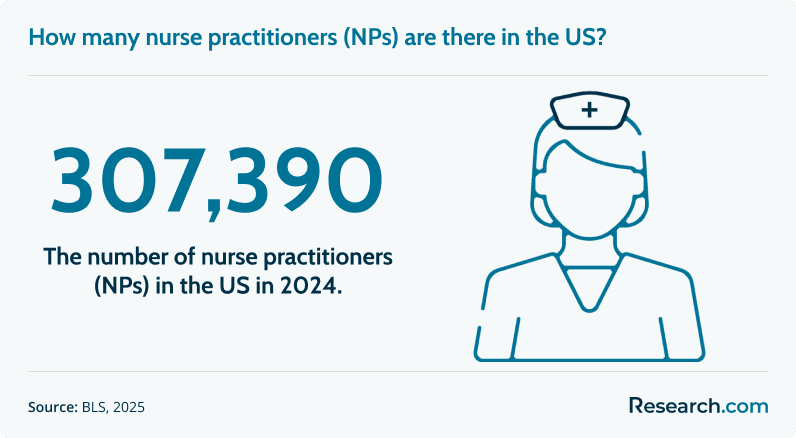
Both options can lead to a terminal practice degree. Understanding the relationship between an advanced practice registered nurse vs nurse practitioner can help clarify how APRN licensure, NP certification, and DNP education fit together. As of 2024, there are over 300,000 nurse practitioners in the U.S., which reflects the large and expanding role NPs play in healthcare access.
How does an online accelerated women's health nurse practitioner DNP program compare to an on-campus program?
An accredited online WHNP DNP program can lead to the same degree as an accredited campus-based program. The important issue is not whether lectures are delivered online or in person. The key questions are whether the program is accredited, whether it meets certification and licensure expectations, whether clinical experiences are appropriate, and whether the school provides enough support for online learners.
Online programs are usually built for working nurses who need flexibility. Campus programs may provide more predictable in-person interaction, structured schedules, and easier access to physical campus resources. Hybrid programs fall between the two, using online coursework with required intensives, simulations, or clinical check-ins on campus.
| Factor | Online or hybrid DNP | On-campus DNP | Decision point |
| Flexibility | Often easier to combine with work and family responsibilities | Usually requires more fixed attendance | Choose online if schedule control is essential |
| Clinical placement | Support varies widely by school | May have stronger local placement networks | Ask exactly who finds clinical sites and preceptors |
| Faculty access | Depends on virtual office hours, advising model, and cohort design | May offer more spontaneous in-person access | Ask about response times and faculty advising loads |
| Learning environment | Requires self-direction, strong organization, and comfort with technology | Provides more in-person accountability | Be honest about your learning style |
| Employer perception | Strong when the program is accredited and reputable | Strong when the program is accredited and reputable | Accreditation and outcomes matter more than format |
Online healthcare education can make career mobility more realistic for working adults. For example, accelerated medical assistant to RN online programs can help some healthcare workers enter nursing while continuing employment. At the DNP level, however, the stakes are higher because students must also complete advanced clinical experiences and a doctoral project.
Before choosing an online WHNP DNP, ask whether the school assigns placement coordinators, maintains preceptor partnerships, verifies state authorization, and supports students if a clinical site falls through. Weak clinical placement support is one of the most common reasons online NP students experience delays.
What is the average cost of an accelerated online women's health nurse practitioner DNP program?
Costs vary sharply by school, residency status, program length, and whether the institution is public or private. Based on the programs included in this guide, the average total tuition is approximately $94,500 for in-state students and $124,400 for out-of-state students. Across the listed options, total tuition can range from about $21,000 to over $268,000.
Tuition is only one part of the full cost. Students should also account for fees, travel to campus intensives, clinical onboarding costs, technology requirements, books, certification preparation, licensure-related expenses, and any lost income from reducing work hours.
| Cost category | Why it matters | Question to ask |
| Tuition per credit | Large differences in credit price can change total cost substantially | Is tuition the same for online, in-state, and out-of-state students? |
| Required credits | A lower per-credit price can still become expensive if the program requires more credits | How many credits are required for my specific entry pathway? |
| Campus visits | Hybrid intensives may require travel, lodging, and time away from work | How many campus visits are required, and when do they occur? |
| Clinical placement expenses | Students may need background checks, immunization documentation, drug screening, or onboarding fees | Which clinical-related costs are not included in tuition? |
| Work schedule impact | Reduced shifts can affect income and benefits | Can I complete clinical hours without cutting my hours significantly? |
A DNP should be evaluated as a professional investment, but students should avoid assuming that any degree automatically produces a salary increase. ROI depends on your current compensation, local NP demand, ability to complete the program on time, debt level, employer support, and the career path you pursue after graduation.
Some nurses reduce long-term educational costs by entering the profession through lower-cost pathways first. For example, fast track EMT to RN online programs may help some healthcare workers transition into nursing before pursuing higher degrees later.
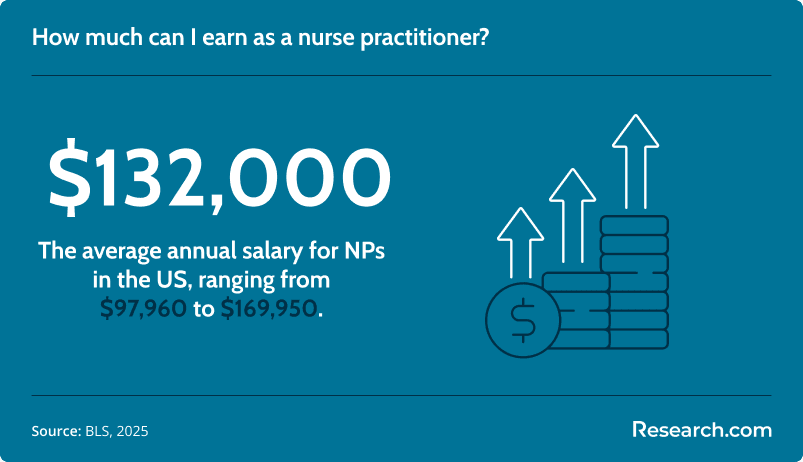
The average salary for nurse practitioners can be a useful benchmark when estimating return on investment, but salary outcomes vary by state, employer, specialty, experience, and practice authority. Build a budget using conservative assumptions rather than best-case earnings.
What are the financial aid options for students enrolling in an accelerated online women's health nurse practitioner DNP program?
DNP students may use several funding sources, including federal loans, institutional aid, outside scholarships, employer tuition benefits, military or service-based programs, and private loans. The best approach is usually to combine multiple funding sources while minimizing high-interest borrowing.
- Complete the FAFSA first. The Free Application for Federal Student Aid is the starting point for federal graduate aid, including Direct Unsubsidized Loans and Grad PLUS Loans. Many schools also use FAFSA information when awarding institutional grants or scholarships.
- Ask the nursing school about internal scholarships. Some universities offer awards for doctoral nursing students, advanced practice students, or students serving high-need communities. Deadlines may occur before admission decisions, so ask early.
- Look for nursing organization scholarships. Professional associations and local nursing groups may fund doctoral nursing education. These awards are competitive, but they do not need to be repaid.
- Use employer tuition assistance when available. Hospitals and health systems may offer reimbursement or tuition support for employees advancing into high-need clinical or leadership roles. Ask HR about annual caps, grade requirements, work commitments, and repayment obligations if you leave the employer.
- Borrow privately only after comparing options. Private loans can fill funding gaps, but terms vary. Compare interest rates, repayment protections, deferment rules, and cosigner requirements before signing.
Ways to reduce out-of-pocket cost
| Strategy | How it can help | Risk to watch |
| Choose a program with a lower total tuition | Reduces debt before interest accumulates | A cheaper program is not a bargain if it lacks clinical support or accreditation |
| Stay employed while enrolled | Preserves income and may allow employer reimbursement | Too many work hours can slow academic progress |
| Transfer eligible credits | May reduce required coursework | Transfer policies vary and may be limited at the doctoral level |
| Plan clinical hours around work early | Prevents last-minute schedule conflicts | Clinical sites may have daytime availability only |
| Apply for scholarships every year | Increases chances of reducing borrowing | Students often stop applying after the first year |
What are the prerequisites for enrolling in an accelerated online women's health nurse practitioner DNP program?
Admissions requirements depend on the entry route. BSN-to-DNP applicants generally need a strong undergraduate nursing record and active RN licensure. MSN-to-DNP applicants typically need graduate nursing preparation and may need current advanced practice certification, depending on the program.
| Requirement | BSN-to-DNP applicants | MSN-to-DNP applicants |
| Nursing degree | BSN from a CCNE or ACEN-accredited program | MSN from a CCNE or ACEN-accredited program |
| License | Active, unencumbered RN license | Active, unencumbered RN license |
| GPA | Minimum GPA, typically 3.0 or higher on a 4.0 scale | Minimum GPA, typically 3.2 or higher |
| Experience | One to two years of direct patient care experience as a registered nurse; some programs may prefer women’s health experience | Graduate nursing experience requirements vary by program |
| Certification | Usually not required at entry | Many programs require active advanced practice certification, such as WHNP or FNP |
Some nurses reach advanced practice education after completing earlier bridge pathways. For example, a fastest paramedic to RN bridge program online may help paramedics become licensed RNs before later pursuing BSN, MSN, or DNP study.
What makes a WHNP DNP application stronger?
Meeting the minimum requirements is only the baseline. Competitive applicants show that they understand advanced practice, can manage doctoral-level work, and are ready to lead improvement in women’s health. Admissions committees often look for evidence of leadership, clinical maturity, and a clear reason for pursuing the WHNP role.
Useful examples include charge nurse experience, precepting, shared governance participation, quality improvement work, community health involvement, research assistance, policy advocacy, or experience in obstetrics, gynecology, reproductive health, sexual health, or related settings.
Your personal statement should connect your clinical background to a focused career goal. If you are asking, Is a DNP required for nurse practitioners?, the answer may depend on the employer, state, specialty, and role. However, doctoral preparation can be especially valuable for nurses targeting leadership, academic, systems improvement, or highly autonomous practice roles.
What courses are typically in an accelerated online women's health nurse practitioner DNP program?
WHNP DNP programs usually combine three areas of study: advanced nursing science, women’s and gender-related health specialty preparation, and doctoral-level practice leadership. BSN-to-DNP students take more foundational NP courses, while MSN-to-DNP students may focus more heavily on DNP competencies, depending on prior coursework and certification status.
Many nurses build the academic base for advanced practice through earlier degree pathways. For instance, one of the shortest online LVN to BSN programs may help licensed vocational or practical nurses move toward RN and BSN preparation before graduate study.
Common course areas in WHNP DNP programs
| Course area | What students learn | Why it matters in WHNP practice |
| Advanced pathophysiology | Complex disease processes across the lifespan | Supports diagnostic reasoning and management decisions |
| Advanced pharmacology | Medication selection, prescribing principles, safety, and monitoring | Essential for advanced practice prescribing responsibilities |
| Advanced health assessment | Comprehensive assessment, history-taking, and physical exam skills | Builds the clinical foundation for NP-level care |
| Women’s health management | Reproductive, gynecologic, prenatal, postpartum, menopausal, and preventive care topics | Forms the core of WHNP specialty preparation |
| Evidence-based practice | How to evaluate research and apply evidence to clinical protocols | Prepares students to improve care standards and outcomes |
| Health policy and advocacy | How policy affects access, equity, reimbursement, and care delivery | Supports advocacy for women’s and gender-related health needs |
| Informatics and data analytics | Use of health data, technology, and information systems | Helps graduates lead quality improvement and patient safety initiatives |
| DNP project courses | Project planning, implementation, evaluation, and dissemination | Demonstrates ability to solve a practice problem using evidence |
The DNP core is what separates the degree from a master’s program
The DNP is not only about seeing patients. It prepares nurses to improve how care is delivered. Students learn to evaluate evidence, lead practice change, interpret clinical data, advocate for policy improvements, and manage quality initiatives. These are the same capabilities discussed in guides explaining what does a DNP do.
The chart below lists the states with the highest employment levels for NPs, as published by the BLS in 2025.
What types of specializations are available in an accelerated online women's health nurse practitioner DNP program?
The formal specialty is usually women’s health nurse practitioner or women’s health/gender-related nurse practitioner. Within that broader field, students can often shape a professional niche through clinical placements, electives, faculty mentorship, and the DNP project.
Examples of WHNP focus areas
- High-risk obstetrics: Care models, screening, referral coordination, and follow-up for patients with complex pregnancy-related needs.
- Menopause and midlife health: Symptom management, preventive care, patient education, and long-term wellness planning.
- Adolescent gynecology: Developmentally appropriate reproductive and sexual health care for adolescents.
- Fertility and reproductive health: Education, assessment, referral pathways, and support for patients navigating fertility concerns.
- Perinatal mental health: Screening, care coordination, and practice improvement related to postpartum and pregnancy-associated mental health concerns.
- Gender-affirming care: Patient-centered care approaches for gender-diverse populations, depending on program scope and clinical opportunities.
How the DNP project can build your niche
A DNP project gives you a concrete way to develop expertise. Instead of selecting a narrow sub-specialty from a fixed menu, many students define a clinical problem, design an evidence-based intervention, implement it in a practice setting, and evaluate outcomes. When your project, clinical hours, and electives all point toward the same area, you graduate with a stronger professional story.
This is different from broader primary care training described in resources such as What is a family nurse practitioner? WHNP preparation is more focused on women’s and gender-related health, while the DNP project can make that focus even more specific.
The chart below lists the states with the highest wages for NPs.
How to choose the best accelerated online women's health nurse practitioner DNP program?
The best program is one that is CCNE-accredited, appropriate for your state and license goals, realistic for your schedule, transparent about costs, and strong in clinical placement and DNP project support. Rankings can narrow your list, but they should not replace a detailed program review.
Questions to ask before applying
| Question | Why it matters | What a strong answer sounds like |
| Is the program accredited? | Accreditation affects quality assurance, certification eligibility, and employer confidence | The school clearly identifies current CCNE accreditation and provides verification information |
| Will this program meet requirements in my state? | Online programs may not be authorized or appropriate for every state | The school confirms state authorization and advises students on licensure and certification steps |
| Who secures clinical placements? | Clinical delays can postpone graduation | The program provides dedicated placement support or clearly documented placement assistance |
| How many campus visits are required? | Travel can affect cost, work schedules, and family responsibilities | The school lists required intensives, timing, and estimated expectations in advance |
| Who are the WHNP faculty? | Faculty expertise affects mentorship and DNP project fit | Faculty have relevant women’s health, gender-related health, leadership, or research/practice backgrounds |
| What recent DNP projects have students completed? | Project examples show the program’s practice focus | The program can describe recent projects in relevant clinical areas |
| What support exists for online students? | Online success depends on advising, library access, technology help, and faculty responsiveness | The school provides structured advising, virtual support, and clear communication expectations |
Who should choose an accelerated online WHNP DNP?
- Nurses who are confident they want advanced women’s or gender-related health practice.
- Working RNs or NPs who need online flexibility but can manage a demanding workload.
- Students who want doctoral-level preparation in leadership, quality improvement, policy, and evidence-based practice.
- Nurses who have access to strong clinical networks or are applying to programs with strong placement support.
Who may want a different path?
- Nurses who are unsure whether they want women’s health or a broader NP role.
- Students who need extensive in-person support and do not learn well online.
- Applicants who cannot adjust work hours for clinical rotations.
- Nurses primarily interested in research careers, who may want to compare DNP and PhD pathways.
- Applicants who want the fastest credential but have not confirmed certification and state requirements.
Common mistakes when choosing a WHNP DNP program
| Mistake | Why it can hurt you | Better approach |
| Choosing based only on school name | A recognizable university may still be a poor fit for your schedule, cost limit, or clinical goals | Compare accreditation, placement support, faculty fit, cost, and outcomes |
| Looking only at tuition per credit | Total cost also depends on credits, fees, travel, and work disruption | Build a full program budget before applying |
| Assuming online means fully remote | Many programs require campus intensives, simulations, or in-person clinical experiences | Ask for a calendar of all required in-person activities |
| Ignoring clinical placement support | Finding preceptors alone can be difficult and may delay graduation | Prioritize programs that explain placement processes clearly |
| Not checking state authorization | A program may not meet requirements where you live or plan to practice | Confirm state eligibility with both the school and your nursing board |
| Assuming salary outcomes are guaranteed | Pay varies by market, role, employer, and experience | Use conservative salary estimates and compare local job postings |
What career paths are available for graduates of an accelerated online women's health nurse practitioner DNP program?
Graduates can work in advanced clinical practice, but the DNP also supports roles in leadership, education, quality improvement, informatics, and healthcare administration. Career options depend on state scope of practice, certification, experience, employer needs, and the graduate’s clinical niche.
| Career path | Typical work | Why the DNP helps |
| Women’s Health Nurse Practitioner | Provides advanced care related to reproductive, gynecologic, preventive, prenatal, postpartum, and midlife health needs | Combines specialty clinical preparation with evidence-based practice skills |
| Director of Nursing for Women's Services | Oversees nursing operations, staffing, quality initiatives, and service-line performance | Doctoral training supports systems leadership and care improvement |
| Clinical Assistant or Associate Professor | Teaches nursing students and mentors future clinicians | DNP preparation may support practice-focused academic roles |
| Quality Improvement Lead | Designs and evaluates initiatives to improve outcomes, safety, and consistency of care | DNP coursework emphasizes data, evidence translation, and implementation |
| Clinical Informatics Specialist | Helps optimize clinical technology, workflows, documentation, and patient safety tools | DNP graduates often understand both clinical practice and system-level process improvement |
| Consultant or practice owner | Develops specialized services, protocols, training, or care models | The DNP project and specialty expertise can support niche authority |
Building a career beyond direct patient care
Some WHNP DNP graduates stay in full-time clinical practice. Others move into leadership, program development, teaching, consulting, or specialized services. A graduate with a DNP project in postpartum mental health screening, for example, may use that experience to lead similar initiatives across clinics or health systems.
DNP preparation can also overlap with informatics and systems roles. A clinical informatics job description often includes clinical workflow knowledge, data use, and technology implementation—areas that align closely with doctoral nursing practice coursework.
What is the job market for graduates with an accelerated online women's health nurse practitioner DNP program?
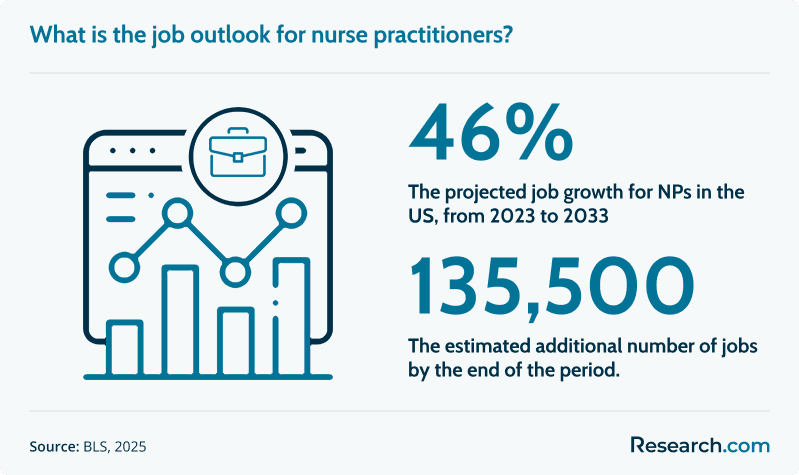
The broader nurse practitioner labor market is very strong. According to the U.S. Bureau of Labor Statistics, nurse practitioner employment is projected to grow by 46% between 2023 and 2033. That projection represents an estimated 135,500 new jobs.
WHNP graduates operate within that larger advanced practice market, but local demand can vary. Some areas have strong demand for reproductive health, OB-GYN, outpatient women’s health, gender-related care, and primary care access. Other regions may have fewer WHNP-specific postings, which is why students should review job openings in their target state before enrolling.
Current trends affecting WHNP DNP graduates
- Telehealth is now part of many care models. WHNPs may need comfort with virtual visits, remote patient education, and digital follow-up workflows.
- Employers increasingly value quality improvement skills. DNP graduates who can use evidence and data to improve outcomes may be competitive for leadership roles.
- Clinical placement competition remains a concern. Online NP students should confirm placement support before enrolling.
- Technology skills are becoming more important. EHR optimization, informatics, analytics, and patient communication tools are part of many advanced practice environments.
- Credential expectations can differ by employer. Some leadership, academic, and Magnet hospital roles may prefer or require doctoral preparation, while many clinical NP positions still hire master’s-prepared candidates.
How can I maximize affordability and ROI in my accelerated online DNP program?
To evaluate affordability, compare total tuition with fees, required travel, clinical placement expenses, technology costs, books, certification preparation, and the income you may lose if you reduce work hours. A low tuition rate is helpful, but it does not guarantee strong value if the program lacks clinical support or delays graduation.
For broader affordability comparisons, you can review Research.com’s guide to the cheapest nursing programs. Use those benchmarks carefully because undergraduate, RN, MSN, and DNP programs have different costs, outcomes, and licensure implications.
ROI checklist for WHNP DNP applicants
- Calculate total program cost, not just tuition per credit.
- Ask whether your employer offers tuition reimbursement and whether it requires a work commitment.
- Confirm that the program supports your state licensure and certification goals.
- Compare local job postings for WHNP, NP, DNP leadership, and women’s health roles.
- Estimate repayment using conservative income assumptions.
- Choose the shortest program only if it still provides strong advising, clinical support, and certification preparation.
- Consider whether the DNP is necessary for your target role or whether an MSN, certificate, or different NP specialty would meet your goals.
In competitive environments and some top-tier institutions, including Magnet hospitals, the DNP may be preferred for certain clinical leadership and administrative roles. Still, students should avoid treating the degree as a guaranteed promotion. The strongest ROI comes when the program’s specialty, cost, timeline, and career outcomes match your actual goals.
What graduates say about accelerated online WHNP DNP programs
- Ines: "I expected the online format to feel disconnected, but my cohort became one of the strongest parts of the experience. Everyone brought different clinical backgrounds, and the discussions helped me see women’s health challenges from a national perspective. That peer network helped me stay grounded while I balanced work, family, and doctoral study."
- Adeola: "I already had an MSN and years of practice experience, but I wanted to move into a role where I could influence care across departments. The DNP gave me the evidence-based practice and quality improvement background to do that. I now help lead women’s services initiatives across three hospitals."
- Laila: "My DNP project centered on postpartum mental health screening, which was the issue that brought me back to school. The online structure let me partner with a clinical site doing meaningful work in that area. By graduation, I had more than a degree—I had a focused area of expertise that shaped my next career step."
What unique benefits does a nurse practitioner direct entry pathway offer?
Direct entry pathways can allow BSN-prepared nurses to move into advanced doctoral study without completing a separate traditional master’s program first. This structure may shorten the overall path for nurses who are certain they want NP preparation and doctoral-level practice training.
The benefit is integration: students build advanced clinical skills, specialty knowledge, leadership capacity, and evidence-based practice competencies in one planned sequence. The trade-off is intensity. Students should be prepared for a demanding academic and clinical schedule. To compare related options, review Research.com’s information on nurse practitioner direct entry programs.
What challenges should I anticipate in an accelerated online DNP program?
Accelerated online DNP programs are demanding because they combine graduate-level clinical content, doctoral leadership coursework, clinical hours, and a practice project. The format offers flexibility, but it also requires disciplined time management and proactive communication.
- Heavy workload: Students may need to balance papers, clinical logs, readings, exams, project milestones, and patient care responsibilities.
- Clinical placement pressure: Even strong students can fall behind if preceptors or sites are hard to secure.
- Limited in-person connection: Online students may need to work harder to build relationships with faculty, peers, and mentors.
- Technology demands: Learning platforms, telehealth tools, virtual simulations, and remote collaboration systems require comfort with digital workflows.
- Work-life strain: Clinical hours may not align neatly with full-time nursing schedules.
Students who are still exploring entry routes into advanced practice may also compare direct-entry nurse practitioner programs for non nurses, especially if their background or learning needs differ from traditional RN-to-DNP pathways.
How does technology enhance learning in an accelerated online DNP program?
Technology can strengthen online DNP learning when it is used intentionally. Virtual simulations, telehealth modules, digital case studies, learning management systems, and remote collaboration tools can help students practice clinical reasoning, receive feedback, and engage with faculty and peers outside a physical classroom.
Technology does not replace clinical experience with real patients, but it can prepare students for modern care environments where telehealth, EHR documentation, clinical decision support, and data dashboards are routine. Students comparing program formats can also review options in online DNP programs to understand how different schools structure accelerated doctoral nursing education.
References
- American Association of Colleges of Nursing. (2025). Nursing faculty shortage fact sheet. Retrieved July 14, 2025, from https://www.aacnnursing.org/news-data/fact-sheets/nursing-faculty-shortage
- American Association of Nurse Practitioners. (2023, November 13). Nurse practitioner profession grows to 385,000 strong. Retrieved July 14, 2025, from https://www.aanp.org/news-feed/nurse-practitioner-profession-grows-to-385-000-strong
- Bureau of Labor Statistics, U.S. Department of Labor. (2025). Occupational Outlook Handbook, Medical and health services managers. Retrieved July 14, 2025, from https://www.bls.gov/ooh/management/medical-and-health-services-managers.htm
- Bureau of Labor Statistics, U.S. Department of Labor. (2025). Occupational Outlook Handbook, Nurse anesthetists, nurse midwives, and nurse practitioners. Retrieved July 14, 2025, from https://www.bls.gov/ooh/healthcare/nurse-anesthetists-nurse-midwives-and-nurse-practitioners.htm
- Bureau of Labor Statistics, U.S. Department of Labor. (2025). Occupational Outlook Handbook, Registered nurses. Retrieved July 14, 2025, from https://www.bls.gov/ooh/healthcare/registered-nurses.htm
- Bureau of Labor Statistics, U.S. Department of Labor. (2025). Occupational employment and wage statistics. Retrieved July 14, 2025, from https://data.bls.gov/oesprofile/
- Data USA. (2025). Nursing practice. Retrieved July 14, 2025, from https://datausa.io/profile/cip/nursing-practice
- Data USA. (2025). Registered nursing. Retrieved July 14, 2025, from https://datausa.io/profile/cip/registered-nursing
- National Council of State Boards of Nursing. (2025). 2024 study highlights. Retrieved July 14, 2025, from https://www.ncsbn.org/research/recent-research/workforce/2024-workforce-pn.page
- National Council of State Boards of Nursing. (2025). Active RN licenses. Retrieved July 14, 2025, from https://www.ncsbn.org/nursing-regulation/national-nursing-database/licensure-statistics/active-rn-licenses.page
- Payscale. (2025). Master of Science in Nursing (MSN) degree salary. Retrieved July 14, 2025, from https://www.payscale.com/research/US/Degree=Master_of_Science_in_Nursing_(MSN)/Salary
- U.S. Census Bureau. (2021, April 5). Who are our health care workers? Retrieved July 14, 2025, from https://www.census.gov/library/stories/2021/04/who-are-our-health-care-workers.html
- University of St. Augustine for Health Sciences. (2024). Nursing shortage: A 2024 data study reveals key insights. Retrieved July 14, 2025, from https://www.usa.edu/blog/nursing-shortage/
- ZipRecruiter. (2025). Acute care nurse practitioner salary. Retrieved July 14, 2025, from https://www.ziprecruiter.com/Salaries/Acute-Care-Nurse-Practitioner-Salary#Yearly
- ZipRecruiter. (2025). Primary care nurse practitioner salary. Retrieved July 14, 2025, from https://www.ziprecruiter.com/Salaries/Primary-Care-Nurse-Practitioner-Salary
- ZipRecruiter. (2025). Women's health nurse practitioner salary. Retrieved July 14, 2025, from https://www.ziprecruiter.com/Salaries/Womens-Health-Nurse-Practitioner-Salary
Key Insights
- The best accelerated online WHNP DNP program is not automatically the shortest or most famous option. Accreditation, state eligibility, clinical placement support, and fit with your career goal matter most.
- BSN-to-DNP students should expect a longer path because the program combines NP preparation with doctoral practice training. MSN-to-DNP students may finish faster because they already have graduate nursing preparation.
- Cost differences are substantial. The programs reviewed show an average total tuition of approximately $94,500 for in-state students and $124,400 for out-of-state students, with listed totals ranging from about $21,000 to over $268,000.
- Online format can work well for nurses who are organized and self-directed, but clinical placement support is critical. Ask exactly how the school helps students secure sites and preceptors.
- The DNP adds value beyond direct clinical practice by preparing nurses for evidence-based leadership, quality improvement, informatics, policy, education, and specialized program development.
- Before enrolling, confirm certification eligibility, licensure requirements, campus visit expectations, total cost, faculty expertise, and whether the program supports your intended WHNP practice niche.
Other Things You Should Know About Accelerated Online Women's Health Nurse Practitioner DNP Programs
The 2027 best accelerated online Women's Health Nurse Practitioner DNP programs typically require around 1,000 clinical hours. These hours are crucial for gaining hands-on experience in women’s health settings and are mandated by nursing accrediting bodies for program completion.
CCNE accreditation ensures that the DNP program meets rigorous academic and professional standards, guaranteeing the quality of education. For 2027's top programs, this accreditation signifies excellence in curriculum design, faculty qualifications, and student outcomes, essential for future nurse practitioners.
Graduates can usually sit for the NCC Women’s Health Care Nurse Practitioner certification exam from the National Certification Corporation. Eligibility typically requires an accredited graduate WHNP program, advanced practice clinical coursework, and completion of the program’s required clinical hours, often before state licensure as an APRN.


