2027 Nursing Certification vs State Licensure vs Employer Competency Validation
Audited and Verified:
Our Editorial and Data Verification Process
Research.com uses government datasets, official education statistics and primary institutional information to support its career and degree guides. Our review process checks factual accuracy, occupational definitions, source dates and the requirements associated with the credentials discussed.
How This Article Was Fact-Checked
Our editorial team verifies salary estimates, employment projections, education requirements and program information against original data providers and official organizations. Salary figures are checked against the relevant occupational definitions and reporting periods. Information about licensure, accreditation and required in-person training is reviewed separately.
Fact-checked and verified on:

Co-Founder and Chief Data Scientist
A nursing degree, a specialty credential, and a successful skills check can all appear on a nurse's record, but they answer different questions. Confusing them can lead students to choose the wrong program or new nurses to assume they are ready for duties they have not yet demonstrated.
This guide explains who grants each qualification, what it does - and does not - authorize, and how education, exams, clinical training, and orientation fit together. Use it to identify the requirement that applies to your next role before paying for another program or certification.
Key Things You Should Know
- State licensure establishes legal practice authority: Initial RN and LPN/LVN applicants generally need qualifying education, the applicable NCLEX exam, and a licensing-board decision.
- Certification recognizes defined specialty qualifications: Its certifying organization sets eligibility and renewal rules; it does not ordinarily replace a nursing license or expand legal scope.
- Employer validation is job-specific: Orientation and observed skills checks determine readiness for assigned work. Even a licensed, certified nurse may need additional supervised training.
What is the difference between nursing certification, state licensure, and employer competency validation?
Licensure answers whether a person is legally authorized to practice nursing in a jurisdiction. Certification addresses whether a person meets a certifying body's standards for a defined specialty or role. Employer competency validation addresses whether the employee can perform particular duties safely under that organization's policies. The three can overlap, but none is a substitute for the others.
This comparison identifies the decision-maker and practical effect of each requirement. Start with the column that matches the question you need answered.
| Requirement | Who decides | What it establishes | What it does not establish |
| State licensure | State nursing regulator | Legal authority to practice under applicable law | Readiness for every unit, procedure, or specialty assignment |
| Professional certification | Named certifying organization | Eligibility and achievement against its credential standards | A new license or permission to practice beyond legal scope |
| Employer competency validation | Employer, using its policies and evaluators | Documented readiness for specified workplace tasks | A portable license or independent professional certification |
A degree is a fourth, separate item: an academic award. For example, graduate nursing routes for associate-degree nurses can advance education, but the award itself neither renews an RN license nor validates competence in a new workplace assignment.
What education and exam requirements lead to state nursing licensure?
For initial US RN licensure, applicants generally complete a board-accepted prelicensure nursing program, meet the state's application and eligibility requirements, pass the NCLEX-RN, and receive a license from the board. Qualifying routes can include an associate degree, nursing diploma, or prelicensure BSN, depending on the jurisdiction and program. Passing an exam is not the same event as the board issuing a license.
Initial LPN/LVN applicants follow a distinct practical-nursing education and licensing route and take the NCLEX-PN, not the NCLEX-RN. Someone considering a guide to fast-track practical nursing programs should check whether the specific program meets the intended state board's eligibility rules and how its supervised clinical instruction is delivered. A postlicensure RN-to-BSN program, by contrast, assumes an existing RN license rather than preparing a non-nurse for an initial RN license.
APRN practice involves further role- and population-focused education, applicable national certification, and state licensure or recognition requirements. Before enrolling, ask the relevant board which program preparation, examinations, background checks, and documents it requires for the specific license sought.
Does nursing certification replace a state license or nursing degree?
Usually, no. An RN specialty certification commonly requires an active nursing license plus specified experience or education. It recognizes specialty achievement but does not independently authorize RN practice, expand a nurse's legal scope, or erase an employer's orientation requirements. A school-issued course certificate is also not necessarily professional board certification.
For advanced practice, the distinction is especially consequential: national certification may be required for state APRN recognition, but the certification exam does not replace qualifying graduate education or the state's authorization decision. An RN exploring postgraduate FNP certificates organized by duration must verify that the particular track supplies the required family-population preparation and supervised experiences. A short certificate is not a shortcut around those requirements.
If your goal is a legal change in practice authority, begin with the state regulator and the relevant certifier's eligibility guide. If your goal is stronger performance in your existing role, targeted continuing education or employer training may be more direct than another degree.
Prelicensure programs teach foundational nursing knowledge, clinical judgment, and patient safety through coursework, laboratory work, simulation, and supervised clinical practice. Programs may use practice questions and assessments to identify learning gaps, but graduation alone does not confer NCLEX eligibility or guarantee a passing result; the board controls eligibility and the examination has its own standards.
Admissions information matters before exam preparation begins. An applicant comparing GPA requirements in accelerated BSN programs should also confirm prerequisites, clinical scheduling, and whether the exact program is a board-accepted prelicensure route. Easier entry, where available, says little by itself about exam preparation or a student's eventual eligibility.
Postlicensure specialty education can help a working nurse prepare for certification, but eligibility may also depend on current licensure, practice experience, or supervised hours. Compare the program's curriculum with the named certifier's current exam outline and eligibility guide rather than assuming a degree title qualifies every graduate.
Online lectures can reduce travel, but prelicensure nursing education still requires approved hands-on learning. Hybrid programs may schedule labs, simulation, and supervised clinical placements on site; campus-based programs also require clinical experiences beyond classroom attendance. Neither format turns simulated participation into proof of independent clinical competence.
For a useful comparison, request each program's actual clinical calendar, site locations, placement responsibilities, on-campus visit dates, and rules for missed experiences. This is particularly important when reviewing online and hybrid LPN-to-RN pathways: prior practical-nursing employment does not automatically satisfy an RN program's clinical requirements. The less flexible element may be a weekday clinical shift even when lectures are asynchronous.
Check three different questions: whether the institution has recognized institutional accreditation; whether the specific nursing program holds applicable programmatic accreditation, such as ACEN or CCNE; and whether the intended state board accepts or approves that program for the license sought. Also confirm that the school may enroll students in your location and arrange required clinical learning there. One favorable answer does not establish the others.
Track purpose matters as much as accreditation status. When examining online DNP leadership pathways for graduate nurses, verify whether a program is non-APRN leadership education rather than preparation for a new advanced practice role. Its accreditation cannot turn a non-APRN curriculum into eligibility for NP certification.
Ask the school for the exact program name and accreditor's stated scope, then confirm the information with the accreditor and intended licensing board. A published NCLEX pass rate is useful context only when you know its reporting year and cohort; it is not a personal prediction.
Requirements depend on the starting credential and intended outcome. Prelicensure ADN and BSN applicants may need specified science courses, grades, entrance assessments, and clinical-placement clearances. Accelerated BSN routes generally build on an existing bachelor's degree but still require the school's nursing prerequisites. RN-to-BSN study requires prior RN preparation and typically an active license; APRN tracks require graduate preparation aligned with their role and population focus.
Program length varies with prerequisites, course sequence, enrollment pace, and clinical availability. Compare a school's stated time to completion with your own degree audit, not its shortest advertised schedule. For costs, request a written estimate covering tuition and fees, books and equipment, screenings, travel to clinical sites or campus, examination and license fees, and earnings you may forgo during required placements.
An RN comparing budget-friendly psychiatric NP programs should compare total costs alongside population-specific clinical placement support and certification eligibility. A lower tuition figure can be misleading if required travel, extended enrollment, or lost work hours differ substantially.
Employers usually verify license status and required credentials separately from assessing workplace performance. During orientation, a nurse may complete policy training, supervised practice, chart review, simulation, or directly observed skills checks. A preceptor or designated evaluator documents performance against the organization's criteria; an unmet competency may call for further training or reassessment rather than an assumption of readiness.
Validation should fit the assignment. A nurse moving into a specialty unit needs support with its patient population, equipment, escalation procedures, and documentation workflows even if the nurse has years of RN experience. Likewise, an RN interested in accelerated mental health NP certificate study cannot use favorable employer skills evaluations in place of required APRN education, supervised clinical preparation, certification, and state authorization.
Before accepting a specialty role, ask which skills are checked, who observes them, how long supervised progression lasts, and what happens if more practice is needed. Orientation completion should reflect documented performance - not simply time served.
An LPN/LVN license supports practical-nursing roles within state scope and employer policy. An RN license opens registered-nursing roles across settings, although specialty units may require substantial orientation and sometimes prefer or require certification. APRN roles require the applicable advanced education, certification, and state authority. Certification can strengthen a qualified applicant's evidence of specialty knowledge; it does not guarantee a particular job or pay increase.
US Bureau of Labor Statistics occupation-wide median annual pay figures provide context, not a salary offer: in May 2024, the medians were $62,340 for LPNs/LVNs and $93,600 for RNs. These figures include workers with different experience, locations, schedules, and credentials. Compare a prospective employer's actual pay range and differential policies instead of treating a national median as the return on a degree or certification.
For an experienced RN considering advanced practice, family NP programs organized by duration can be a starting point for comparing schedules - not evidence that a particular RN can qualify for an NP job within that time. First verify admission standing, clinical requirements, certification eligibility, and state authorization.
What is the job outlook for licensed and certified nurses?
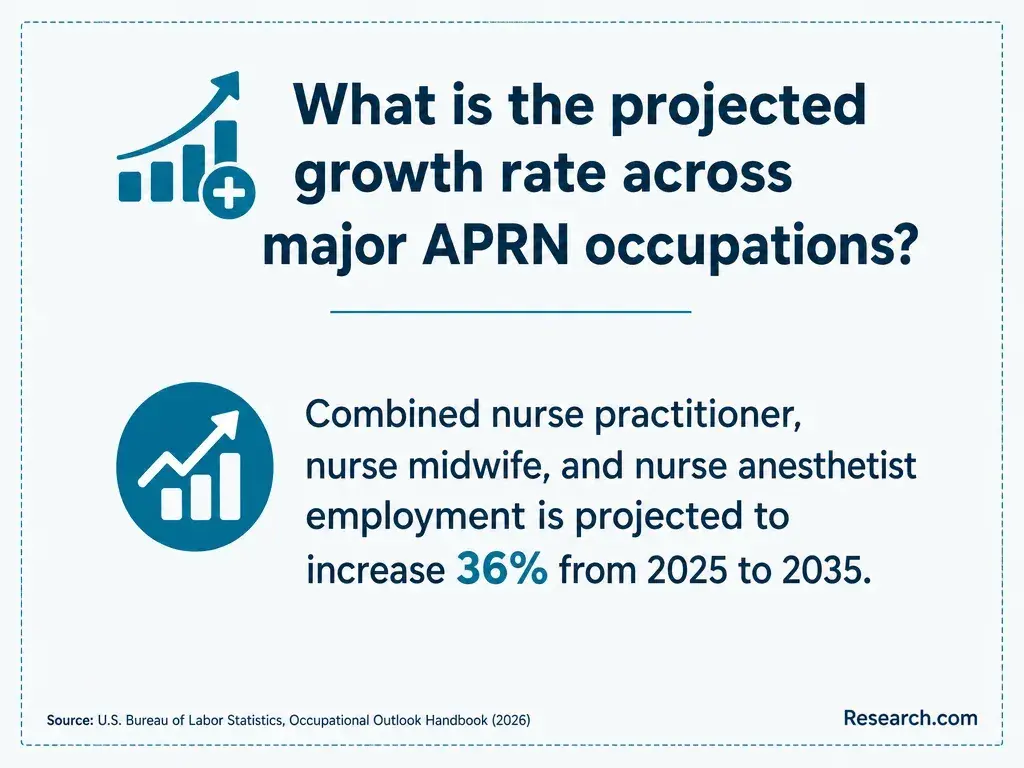
BLS projects employment for registered nurses, LPNs/LVNs, and nurse practitioners as separate occupations. Those projections describe broad national demand, not openings for a particular specialty certificate, unit, or new graduate. Local staffing needs, experience requirements, and an employer's capacity to provide orientation are more useful when deciding where to apply.
Do not interpret occupational growth as a reason to buy the fastest qualification available. For instance, accelerated DNP admissions and requirements deserve evaluation against a specific role: a shorter DNP may suit an already-qualified nurse's goal, but it does not by itself create an APRN vacancy or establish a new population focus. Check current local job postings for the exact license, certification, experience, and workplace competencies employers request.
Other Things You Should Know About Nursing
Use the relevant state board's license-verification service and confirm the license type, status, and any publicly reported limitations. An employer may have additional verification procedures.
No. Compact practice privileges depend on applicable compact rules and state law. They do not override the practice state's scope rules or an employer's job qualifications.
Many do. Check the awarding organization's current renewal cycle, continuing-education or practice requirements, fees, and rules for an inactive credential.
It may, if it meets the certifier's definitions, documentation standards, and eligibility period. Ask the certifier how it counts your specific role and hours before applying.
- Scope of Practice / Minnesota Board of Nursing | mn.gov https://mn.gov/boards/nursing/practice/nursing-practice-topics/scope-of-practice.jsp
- Virginia Board of Nursing - Nurse Licensure Compact https://www.dhp.virginia.gov/Boards/Nursing/ApplicantResources/NurseLicensureCompact/
- APRN Practice FAQ - Texas Board of Nursing https://www.bon.texas.gov/faq_practice_aprn.asp.html
- Competency in nursing practice: a concept analysis - PMC - NIH https://pmc.ncbi.nlm.nih.gov/articles/PMC10255110/
- Nurse Licensure Compact | Department of State https://www.pa.gov/agencies/dos/department-and-offices/bpoa/boards-commissions/nursing/nlc
- Nursing (RN & LPN) | Florida Board of Nursing https://floridasnursing.gov/nurse-rn-lpn/
- Examples of Credentialing and Privileging Documentation | hrsa.gov https://bphc.hrsa.gov/compliance/site-visits/site-visit-protocol/credentialing-privileging
- Do LVNs Take the NCLEX? Here's What You Need to Know | American Career College https://americancareercollege.edu/blog/do-lvns-take-nclex-pn-exam-requirements-guide
- What are Nursing Board Certifications? | University of Bridgeport https://www.bridgeport.edu/glossary/nursing-board-certification
- Licensure versus APRN Certification Basics and Continuing Education Requirements - OAAPN https://oaapn.org/2023/08/licensure-versus-aprn-certification-basics-and-continuing-education-requirements/