2027 Best Homeland Security Degrees for Federal Career Preparation

Co-Founder and Chief Data Scientist
Faced with tightening federal hiring standards and evolving threat landscapes, aspiring homeland security professionals must choose degrees that align precisely with agency expectations and operational demands. Yet, navigating program accreditation, curriculum relevance, and flexible delivery amidst a workforce where 45% of adult learners enroll part time-a trend documented by the National Center for Education Statistics-complicates decisions, especially for working students balancing career shifts.
This enrollment behavior signals growing demand for adaptable learning that maintains rigor without sacrificing soon-to-be-essential practical skills, influencing how federal career candidates prioritize program formats and specialization tracks.
This article examines the top homeland security degrees that address these challenges, focusing on program attributes that directly support federal career preparation and strategic educational investment.
Key Things You Should Know
- Federal hiring data from the Office of Personnel Management reveals a 15% surge in demand for cybersecurity-specialized homeland security graduates between 2023 and 2025, making concentration choice critical for direct job placement.
- Employers prioritize candidates with practical incident response experience; programs lacking integrated simulation labs reportedly reduce graduates' immediate operational readiness, impacting starting salary negotiations negatively.
- Graduate programs averaging 24 months can delay time-to-employment, raising opportunity costs by 18%, especially without tuition assistance, a key factor for mid-career professionals balancing family and financial constraints.
What is a homeland security degree and how does it prepare you for federal careers?
A homeland security degree offers targeted preparation aligned with federal hiring standards, integrating risk assessment, cybersecurity, and policy implementation skills critical for agencies like the Department of Homeland Security, which employed around 83,000 civilian workers in FY 2024.
Candidates who grasp threat mitigation, interagency coordination, and compliance with federal regulations increase their employability in roles such as border protection, where understanding immigration law alongside security technology is essential. This focus on specialized operational readiness is a distinct advantage compared to broader criminal justice or public administration degrees, which often lack this precise federal orientation.
Programs emphasize scenario-based learning and case studies to enhance decision-making under pressure, while addressing federal grant processes and operational funding roles often overlooked by non-degree holders. Graduates should be aware of practical hurdles, including the necessity of security clearances and certifications not guaranteed by a degree alone.
Aligning coursework with specific federal job announcements and engaging in internships or cooperative education programs within federal agencies can substantially improve the transition from academic credentials to federal employment.
This focused approach moderates common risks such as misalignment with agency missions or insufficient operational experience. The practical benefits of a homeland security degree for federal jobs hinge on acquiring applied knowledge and real-world exposure rather than purely theoretical study.
For those charting government careers, understanding these nuances is critical. Salary expectations and career outlooks can be further explored through resources like the FBI profiler salary guide, providing insight into compensation trends within federal roles.
Which types of homeland security degrees best align with federal employment pathways?
Federal employment pathways in homeland security demand technical mastery beyond traditional emergency management or policy degrees. Degrees focused on cybersecurity and information assurance align directly with the 32% projected growth for information security analysts from 2022 to 2032, making these the most practical choice for candidates targeting agencies like DHS, FBI, or NSA.
Cyber-focused graduates are competitive for roles centered on threat detection, incident response, and vulnerability assessments, which usually command higher pay scales and quicker advancement.
In contrast, programs emphasizing emergency management often lead to administrative or coordination positions, limiting upward mobility within federal agencies that expect hands-on skills. Employers seek candidates fluent in SIEM tools, encryption protocols, and federal frameworks such as FISMA and NIST, with programs incorporating labs and simulations meeting these criteria offering stronger federal job pipelines.
A relevant example is a candidate with practical cybersecurity experience and certifications like CISSP securing roles requiring security clearance and technical agility, blending legal and policy understanding with operational expertise.
Degrees integrated with intelligence analysis or counterterrorism widen eligibility for interagency positions demanding cross-disciplinary knowledge.
Students navigating best homeland security degrees for government career paths should weigh technical depth against clearance prerequisites and networking opportunities tied to veteran or federal connections. For those considering accessible options, cyber security schools online offer pathways that balance cost with critical industry relevance.
How do you choose an accredited homeland security program recognized by federal agencies?
Successfully entering federal roles in homeland security demands degrees from programs recognized by agencies directly aligned with federal hiring standards. Programs accredited by the Department of Homeland Security's Center of Excellence or the Council for Homeland Defense and Security Educational Excellence offer distinct advantages, including curricula tailored to federal competency frameworks and practical elements like internships or federal partnerships.
For instance, candidates graduating from DHS-approved programs typically demonstrate readiness for operational duties at agencies such as FEMA or the Transportation Security Administration.
When evaluating top homeland security programs approved for federal career preparation, prioritize those with regional accreditation combined with specialized homeland security endorsement. This dual validation is often a prerequisite for security clearances and federal employment eligibility. Graduates from such programs frequently show higher placement rates in federal careers focused on emergency management, cybersecurity, and intelligence analysis.
Program delivery format and duration also impact alignment with federal hiring schedules and eligibility. Online or part-time programs should still maintain recognized federal accreditation to avoid disqualification during background investigations. Confirming a program's facilitation of security clearance readiness and access to federal internships is a critical step for ensuring competitive positioning in the federal hiring process.
Emergency management directors earn a median annual wage of around $79,180, with federal roles generally paying above this benchmark. This salary data underscores why determining how to choose an accredited homeland security degree recognized by federal agencies is vital for maximizing long-term career and compensation outcomes.
Additionally, applicants interested in related fields might explore high paying jobs in forensics, which similarly demand accredited credentials and federal recognition.
What are the key differences between online and campus-based homeland security degrees?
Choosing between online vs campus-based homeland security degree programs hinges on balancing flexibility with practical engagement. Campus-based degrees provide live exercises, fieldwork collaborations, and direct interaction with faculty embedded in government or law enforcement, which enhances operational readiness-a decisive factor for many federal agencies.
In contrast, online programs offer asynchronous learning suited to working professionals but generally lack hands-on components such as simulations or in-person internships, potentially limiting real-world skill acquisition.
Federal employers, particularly those hiring management analysts-who earn a median annual salary of $95,290 with projected 10% job growth-prioritize candidates demonstrating applied skills alongside academic credentials.
Students pursuing the differences between online and traditional homeland security degrees must ensure that online formats include mandated internships or cooperative education to replicate essential on-site experiences and fulfill federal hiring expectations.
Logistical considerations also affect student decisions. Campus programs require relocation or commuting, which can limit accessibility, whereas online options eliminate geographic constraints but demand strong self-discipline to prevent attrition.
Those targeting tactical or field operations roles typically benefit more from immersive, campus-based training. Conversely, policy, analysis, or administrative career trajectories align better with online study if experiential elements are incorporated.
For professionals exploring degree options, evaluating practical tradeoffs between delivery modes is critical. Those interested in interdisciplinary routes may also review forensic psychology master's programs online to understand complementary analytical skill sets.
What courses and skill areas are typically covered in homeland security degree curricula?
Homeland security degree programs are practically designed to meet the operational demands of federal agencies, blending analytical rigor with applied skills.
Graduates must demonstrate not only understanding of policy and legal frameworks but also proficiency in tools and protocols such as the National Incident Management System (NIMS) or specialized data analytics platforms used by intelligence units. Without hands-on experience in these systems, candidates often struggle to transition into roles at FEMA, DHS, or the FBI.
Programs divide curricula between technical subjects, cybersecurity, intrusion detection, cryptography, and emergency management areas like disaster logistics and resource coordination. This creates distinct career trajectories: one highly specialized in digital defense, the other grounded in field operations and recovery planning.
Students should carefully assess whether program components align with agency certification requirements and geographic hiring trends, considering that 33 different U.S. degree paths exist as identified by Educations.com in 2025.
Federal employers prioritize applicants who can operationalize policy under pressure, combining communication, cultural competency, and crisis leadership with technical knowledge.
Practical challenges include navigating security clearances and variable state licenses, which influence employability beyond academic credentials. Degree programs incorporating practicum or simulation-based training offer a clear advantage for those targeting competitive positions in homeland security.
What admission requirements and prior experience do homeland security programs expect?
Admission to homeland security programs hinges on more than just academic qualifications; practical experience and alignment with federal requirements disproportionately shape outcomes.
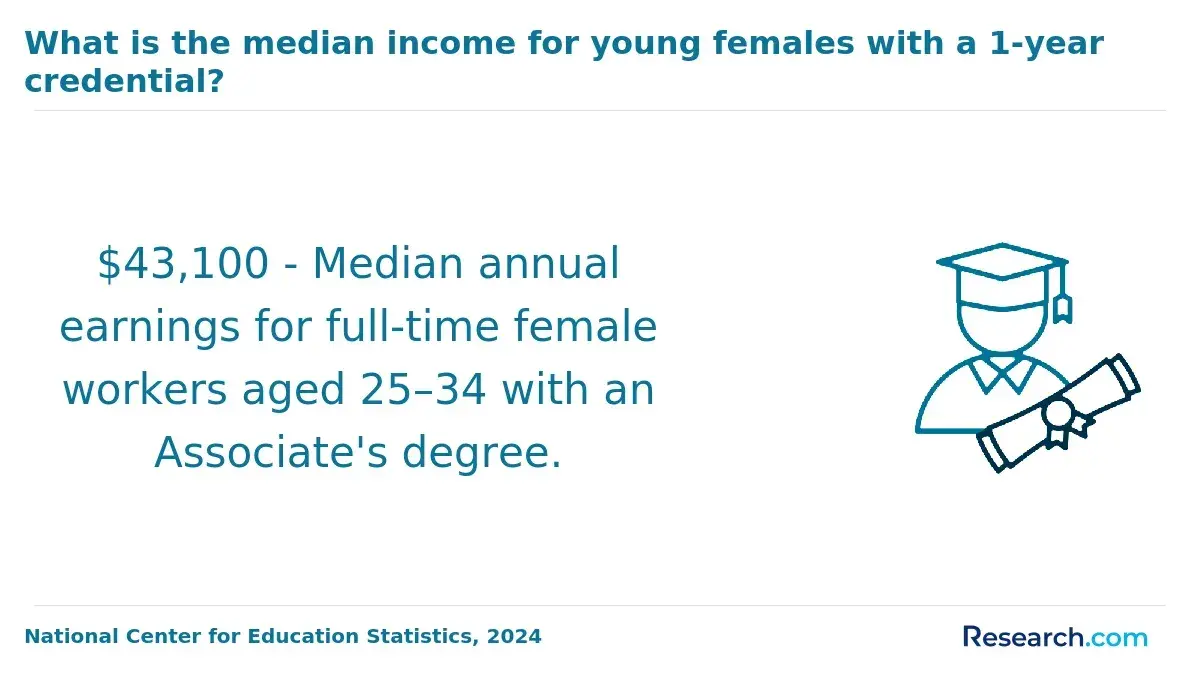
While a high school diploma or equivalent with a 2.5-3.0 GPA is the minimum baseline, candidates with associate degrees or military backgrounds often receive credit for prior learning, accelerating degree completion. For example, veterans transitioning into federal emergency management roles can leverage this to bypass redundant coursework, offering a tactical advantage.
Standardized tests like the SAT or ACT remain factors but increasingly waive for working adults or online students, signaling programs' acknowledgement of professional experience as a meaningful indicator of readiness.
Many pipelines into federal agencies mandate personal statements that illustrate critical thinking and leadership in public safety contexts, underscoring that a clear academic record alone won't suffice.
Mid-career applicants should demonstrate 1-3 years' relevant work-law enforcement, cybersecurity, crisis management-with concrete documentation linking job duties to homeland security competencies. Failure to clearly map experience to program outcomes usually impedes admission or effective credential evaluation.
Tuition for online bachelor's pathways typically ranges from $450 to $485 per credit, placing total costs near $54,000 to $58,000. This investment demands careful weighing against long-term employability within federal or state agencies, where security clearance eligibility further complicates admission and career feasibility. Prospective students must anticipate thorough background vetting aligned with federal standards, which remains a significant gatekeeping factor.
How long do homeland security degrees take, and what do they cost to complete?
Selecting between a two-year associate and a four-year bachelor's degree in homeland security hinges on distinct workforce entry points and cost-benefit tradeoffs. While an associate degree can suffice for some administrative or technician roles, many federal positions-such as contracting officers-mandate a bachelor's credential.
This divergence impacts the timeline and financial outlay: associate programs often take about two years, whereas bachelor's degrees require four years of full-time study, with annual in-state tuition ranging roughly from $6,000 to $15,000 and out-of-state or private options climbing to $40,000.
Master's degrees tailored for working professionals typically compress into 18 to 24 months via part-time or accelerated formats, but tend to exceed $30,000 annually at private institutions. Candidates targeting leadership or specialized roles at DHS headquarters, especially in intelligence or IT management, face the challenge of aligning program length and curriculum rigor with real-world security clearance prerequisites and competitive exams.
Key considerations include:
- The balance between faster entry via an associate degree versus broader eligibility with a bachelor's.
- Employer preference for applied skills and federal compliance knowledge, which can extend program length due to electives or certifications.
- Multidisciplinary overlaps demanding careful program selection to avoid prolonging education unnecessarily.
Ultimately, investing time and resources in a degree aligned with DHS career categories directly affects employability and advancement potential within federal homeland security roles.
What federal job roles can you pursue with a homeland security degree, and what are typical salaries?
Federal roles linked to a homeland security degree vary widely in responsibilities and compensation, demanding distinct skill sets that align with agency priorities. Intelligence analysts, for example, focus on threat evaluation and support counterterrorism through detailed assessments, earning median salaries typically between $70,000 and $105,000 depending on agency and geography.
Border patrol agents, earning $50,000 to $85,000, contend with physically intense duties and shift unpredictability, which significantly shapes work-life balance.
Cybersecurity roles within homeland security offer notably stronger wage potential and job market growth. According to 2024 Bureau of Labor Statistics data, information security analysts have a median annual salary near $112,000, driven by urgent federal needs to secure critical infrastructure and intelligence networks.
Candidates with combined homeland security knowledge and technical cybersecurity certifications-such as CISSP or Security+-are positioned favorably for federal employment, especially at agencies like the Department of Defense or the Cybersecurity and Infrastructure Security Agency (CISA).
Practical hiring realities include navigating federal clearance requirements and securing relevant experience through internships or contract roles, which heavily influence eligibility and long-term employability. Without a cyber focus, graduates face slower salary progression and intense competition for operational or emergency management positions.
What is the job outlook for homeland security professionals in federal agencies and contractors?
Federal and contractor demand for homeland security professionals is projected to grow 5-7% over five years, outpacing overall federal employment trends. This growth hinges on candidates who combine technical expertise with strong policy knowledge-particularly in cybersecurity, emergency management, and border protection.
Applicants with bachelor's degrees supported by military tuition assistance, such as bursaries offering $250 per credit for active-duty personnel, can reduce financial barriers while gaining credentials aligned with federal hiring priorities. However, acquiring a degree alone does not guarantee employability. Candidates must clear stringent background checks and demonstrate applied skills suited to agency missions.
For example, emergency management professionals shifting between federal and contractor roles need current certifications to stay competitive. Cybersecurity practitioners face continuous pressure to update skills through practical labs or simulations due to rapidly evolving threats, making programs that integrate hands-on experience more valued by employers.
Contractor employment tends to be more sensitive to budget cycles, so workers with security clearances and cross-sector experience improve their job stability and promotion potential. Prospective students should therefore weigh the tradeoffs of program cost, hands-on opportunities, and clearance pathways to navigate this competitive niche effectively.
Are there security clearances, certifications, or licensing requirements for homeland security careers?
Security clearances are fundamental gatekeepers in federal homeland security careers, directly influencing employability and career trajectory. Roles such as intelligence analysts or border protection officers rarely bypass the requirement for at least a Secret clearance, which entails exhaustive background reviews covering financial records, criminal history, and foreign associations.
The clearance process can delay hiring anywhere from three months to over a year, demanding unbroken adherence to strict personal conduct standards by candidates.
Certifications function as practical proof of role-specific expertise. For example, the Certified Protection Professional (CPP) credential aligns with security management positions, while the Certified Information Systems Security Professional (CISSP) targets cybersecurity roles within homeland security contexts.
Meanwhile, federal law enforcement spots often require peace officer certification or equivalent federally recognized training. Without such certifications, professional growth is frequently limited.
Keiser University's 2024 data reveals a substantial pay spread-from about $40,000 in basic patrol roles up to $144,000+ for senior officers with high-level clearances. This disparity reflects that clearance status and certifications substantially dictate compensation and access to sensitive assignments. Applicants should anticipate multi-phase screening including fingerprinting and polygraph testing, along with continuous evaluation even after hiring.
Those pursuing these pathways must balance educational requirements with proactive credentialing to prevent costly interruptions or job terminations caused by lapsed or missing qualifications-a critical operational consideration for anyone planning a pivot or advancement in federal homeland security.
Other Things You Should Know About Homeland Security
In 2027, students should weigh career goals when deciding between specialization and a general degree. Specializations can provide expertise in areas like cybersecurity, valuable for targeted roles, while a general degree offers broader knowledge applicable to various federal positions.
Federal agencies prioritize candidates with demonstrated practical experience alongside relevant academic credentials. Degrees that incorporate internships, cooperative education, or direct partnerships with government entities provide a clear advantage by bridging theory with operational realities. Solely holding a degree without applicable experience can limit advancement opportunities, especially in competitive fields like intelligence or counterterrorism, where real-world problem-solving skills are key.
Program intensity varies widely, with some accelerated or online formats compressing coursework into shorter timeframes at the cost of heavier weekly workloads. Prospective students must evaluate their current life responsibilities; programs that demand 20+ hours per week of study may negatively affect job performance or family commitments. Selecting a program offering flexible pacing or part-time enrollment options can mitigate burnout and enhance learning retention, particularly for working professionals.
While degrees from military-affiliated institutions may lend credibility for veterans transitioning to federal roles, civilian university programs with robust federal partnerships and up-to-date curricula hold equal weight. Employers focus on program accreditation, relevance of coursework, and the applicant's demonstrated competencies rather than institutional affiliation alone. Candidates should prioritize programs that emphasize current federal standards, interagency collaboration, and skills aligned with evolving homeland security priorities.
References
- Types of Homeland Security Degrees | Compare Schools https://www.criminaljusticeprograms.com/specialty/homeland-security-degrees/
- Homeland Security Career And Salary Information https://www.criminaljusticedegreeschools.com/careers/homeland-security/
- What Is a Homeland Security Degree? https://www.trident.edu/articles/what-is-a-homeland-security-degree/
- Choosing a bachelor's in homeland security | edX https://www.edx.org/resources/how-to-choose-a-bachelors-in-homeland-security
- Homeland Security Degree | Programs & Career Options https://www.learnhowtobecome.org/best-online-bachelors-in-homeland-security-degree-programs/
- High-demand jobs for people with security clearances https://jobs.boeing.com/top-industries-hiring-security-cleared-professionals
- What Can You Do With a Homeland Security Studies Degree? https://sopa.tulane.edu/blog/what-can-you-do-homeland-security-studies-degree
- Intelligence Community security clearance process https://www.intelligencecareers.gov/security-clearance-process