2027 How to Choose an Online Food Industry Management Degree as a Working Adult

Co-Founder and Chief Data Scientist
Choosing an online food industry management degree is really a career-and-schedule decision: Will the program help you move from shift work, kitchen operations, retail food, or hospitality into management without pausing your income? The stakes are practical. The U. S. Bureau of Labor Statistics reported a $65,310 median annual wage for food service managers in May 2024, but outcomes vary by employer, region, and experience. This guide helps working adults compare program formats, costs, accreditation, courses, career paths, and red flags before enrolling.
Key Things You Should Know
- An online food industry management degree is usually best for adults aiming at food service operations, quality assurance, supply chain, retail food, or hospitality leadership rather than clinical nutrition licensure.
- College Board's 2024 pricing report lists average published 2024-25 tuition and fees at $11,610 for in-state public four-year colleges and $43,350 for private nonprofit four-year colleges, before aid.
- Check institutional accreditation, transfer-credit rules, internship requirements, employer tuition benefits, and career alignment before applying; BLS reported $65,310 as the May 2024 median wage for food service managers.
What is an online food industry management degree and who is it designed for?
An online food industry management degree is a business-focused program that applies management, operations, safety, supply chain, marketing, and finance concepts to food businesses. Depending on the school, it may be called food industry management, food business management, food systems management, food service management, hospitality management with a food concentration, or agribusiness with a food enterprise focus.
For working adults, the best-fit programs usually connect classroom concepts to the environments they already know: restaurants, institutional dining, grocery operations, food manufacturing, catering, distribution, school nutrition, hotels, convenience retail, or corporate food service.
If your goal is to become a registered dietitian or provide clinical nutrition care, a nutritionist degree online may be more relevant than a general food management degree, because dietetics pathways can have different accreditation, supervised practice, and exam requirements.
This degree can make sense if you want to move from hands-on operations into roles that require broader business judgment. It is less likely to be the right investment if you only need a short credential for a narrow task, such as a food handler card, ServSafe preparation, HACCP training, or a single supervisory skill.
The table below compares common academic routes so you can match the credential level to your current experience and career target.
| Credential type | Typical fit for working adults | Best use case | Limitations to check |
| Certificate | Employees who need targeted training quickly | Food safety, supervision, purchasing, compliance, or hospitality operations | May not satisfy degree requirements for corporate advancement |
| Associate degree | Adults entering food operations or moving into first-line supervision | Restaurant, catering, retail food, or institutional food service roles | Transferability varies widely by school |
| Bachelor's degree | Adults seeking broader management, corporate, or multi-unit roles | Operations management, quality assurance, supply chain, food retail, or hospitality leadership | Requires a larger time and cost commitment |
| Master's degree | Experienced professionals targeting senior leadership or specialized business strategy | Corporate food systems, analytics, sustainability, or executive operations roles | Often expects prior professional experience |
How does an online food industry management program compare to a campus-based program?
Online and campus-based food industry management programs can cover similar academic content, but the learning experience is different. For working adults, the biggest differences are scheduling, access to labs or hospitality facilities, networking style, and how internships or field experiences are handled.
Online programs are strongest when they are built for adult learners rather than simply recorded from campus lectures. Look for asynchronous coursework, mobile-friendly learning systems, evening support hours, clear assignment calendars, and instructors with food business experience. Campus programs may offer more immediate access to teaching kitchens, food labs, sensory evaluation rooms, student-run dining operations, or local employer events.
The table below summarizes the decision points that matter most when choosing between online and campus formats.
| Factor | Online program | Campus-based program | What it means for working adults |
| Schedule | Often asynchronous or low-residency | Usually fixed class times | Online is often easier for shift workers, parents, and employees with rotating schedules |
| Hands-on learning | May use local placements, simulations, projects, or employer-based assignments | May include campus labs, kitchens, and on-site food service operations | Ask how the school verifies practical skill development online |
| Networking | Virtual cohorts, discussion boards, employer projects, and remote advising | In-person clubs, career fairs, faculty access, and local industry events | Online students should confirm access to the same career services as campus students |
| Cost structure | May avoid relocation and commuting costs | May require transportation, parking, or reduced work hours | Total cost is more important than tuition alone |
| Best fit | Self-directed adults with work experience and strong time management | Students who want in-person labs, local networking, and structured schedules | The better format is the one you can finish while meeting your career goals |
If you are comparing food industry management with broader business degrees, consider whether you need a food-specific curriculum or a more general online business administration degree. A business administration program can be more flexible across industries, while a food-focused program may be more persuasive for employers in food service, manufacturing, retail food, or hospitality.
What careers can a food industry management degree prepare working adults for?
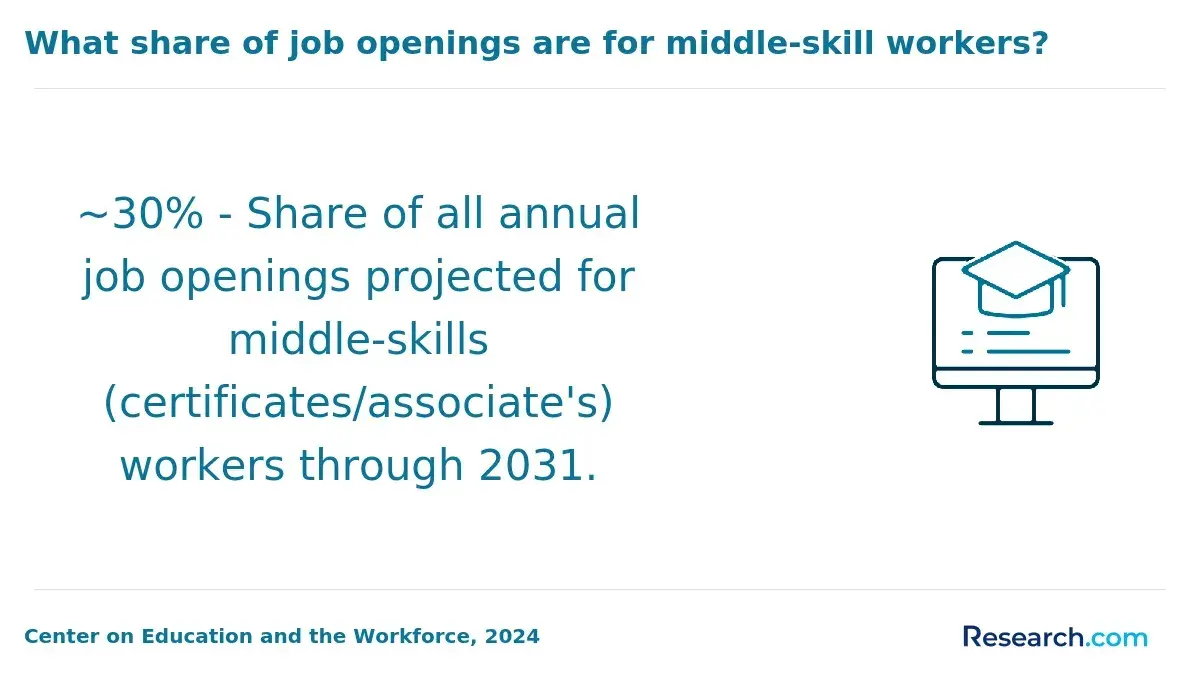
A food industry management degree can prepare working adults for roles that sit between frontline operations and executive decision-making. The degree is most useful when paired with practical experience, because many food employers value managers who understand labor scheduling, safety compliance, customer service, cost control, inventory, and quality standards.
Career outcomes vary by program emphasis. A hospitality-heavy curriculum may lead toward restaurants, hotels, catering, and event food service. A food systems or agribusiness curriculum may lead toward supply chain, procurement, wholesale distribution, or food manufacturing. A quality-focused curriculum may support roles tied to food safety, regulatory documentation, and production standards.
The table below connects common roles to typical responsibilities so you can evaluate whether the degree matches the kind of work you actually want to do.
| Career path | Typical responsibilities | Helpful program emphasis | Experience that strengthens employability |
| Food service manager | Manage staff, budgets, customer service, food safety, purchasing, and daily operations | Operations, accounting, labor management, hospitality law | Restaurant, catering, institutional dining, or hotel food service experience |
| Quality assurance coordinator | Monitor food safety procedures, documentation, audits, and production standards | Food safety, quality systems, microbiology basics, regulatory compliance | Food production, warehouse, sanitation, or compliance experience |
| Food retail or grocery manager | Oversee departments, merchandising, shrink control, inventory, and team performance | Retail management, supply chain, consumer behavior, analytics | Grocery, convenience, merchandising, or inventory roles |
| Supply chain or procurement specialist | Coordinate vendors, purchasing, distribution, forecasting, and product availability | Logistics, procurement, data analysis, food systems | Purchasing, warehouse, transportation, or vendor management experience |
| Food operations analyst | Use data to improve labor, purchasing, menus, throughput, pricing, and customer experience | Business analytics, finance, operations, information systems | Point-of-sale systems, spreadsheets, scheduling systems, or reporting experience |
Technology is changing these roles. Employers increasingly use inventory software, demand forecasting tools, delivery-platform data, automated ordering, digital food safety logs, and AI-assisted scheduling. A strong program should help you interpret these tools, not just describe them.
How do you evaluate accreditation and institutional quality for online food industry management degrees?
Accreditation is one of the most important quality checks for an online food industry management degree. At minimum, confirm that the college or university holds institutional accreditation from an accreditor recognized by the U.S. Department of Education or the Council for Higher Education Accreditation. Institutional accreditation affects federal financial aid eligibility, credit transfer, graduate school options, and employer trust.
Programmatic accreditation is less standardized in food industry management than in fields such as nursing, dietetics, engineering, or business. Some related programs may hold business, hospitality, nutrition, or food science accreditations, but the absence of a specialized accreditor is not automatically a red flag. The key question is whether the program's claims match its curriculum, faculty expertise, student support, and career outcomes.
Use the following checks before you submit an application or pay a deposit. These steps help you separate legitimate online programs from weak or poorly aligned options.
- Verify institutional accreditation on the school's official accreditation page and through a recognized accreditation database.
- Confirm that online students are eligible for the same degree title, transcript wording, library access, advising, tutoring, and career services as campus students.
- Ask whether credits transfer into and out of the program, especially if you already have an associate degree, military training, culinary coursework, or prior college credits.
- Review faculty backgrounds for food operations, food science, hospitality, supply chain, retail, agribusiness, or management experience.
- Request recent student outcome information, but treat salary and placement claims cautiously unless the school explains its methodology.
Common red flags include vague accreditation language, pressure to enroll immediately, unclear tuition totals, no named faculty, limited student support, and career claims that sound guaranteed. If a school cannot explain how its online program supports internships, capstones, or employer-based projects, keep comparing.
What courses and specializations are typically included in food industry management programs?
Food industry management programs combine business fundamentals with food-specific operations. The strongest programs do not treat food as a generic product; they address perishability, safety risk, customer experience, seasonality, supply chain disruption, labor intensity, and regulation.
Most bachelor's programs include general education, business core courses, major requirements, electives, and a capstone or applied project. Adult learners should pay close attention to how many credits are truly food-focused versus general business courses, because program names can sound similar while course content differs.
Typical coursework often falls into the categories below. These areas matter because they signal whether the program is preparing you for restaurant management, manufacturing, retail, supply chain, or broader food business leadership.
- Food service operations: Menu planning, purchasing, cost control, labor scheduling, sanitation, customer service, and facility management.
- Business management: Accounting, finance, marketing, human resources, organizational behavior, leadership, and business law.
- Food safety and quality: HACCP concepts, risk prevention, regulatory compliance, quality systems, food microbiology basics, and audit preparation.
- Supply chain and procurement: Sourcing, logistics, inventory management, vendor relationships, forecasting, and distribution.
- Food marketing and consumer behavior: Branding, pricing, retail strategy, customer analytics, product positioning, and menu or product development.
- Data and technology: Spreadsheet modeling, point-of-sale data, inventory platforms, operations analytics, and digital reporting tools.
Specializations can make a program more useful if they match your target role. For example, choose hospitality or food service management if you want to lead restaurants or institutional dining; choose supply chain if you want procurement or distribution; choose quality assurance if you want food safety and compliance; choose entrepreneurship if you plan to operate a food truck, catering company, packaged food brand, or restaurant concept.
If you are drawn to food systems because of public health, patient services, or administrative work in hospitals, compare this degree with a masters degree in healthcare management. Healthcare management may be a better fit for leadership in hospitals, long-term care, insurance, or health systems, while food industry management is usually better aligned with food operations and food businesses.
What admission requirements and prior experience do online food industry management programs expect?
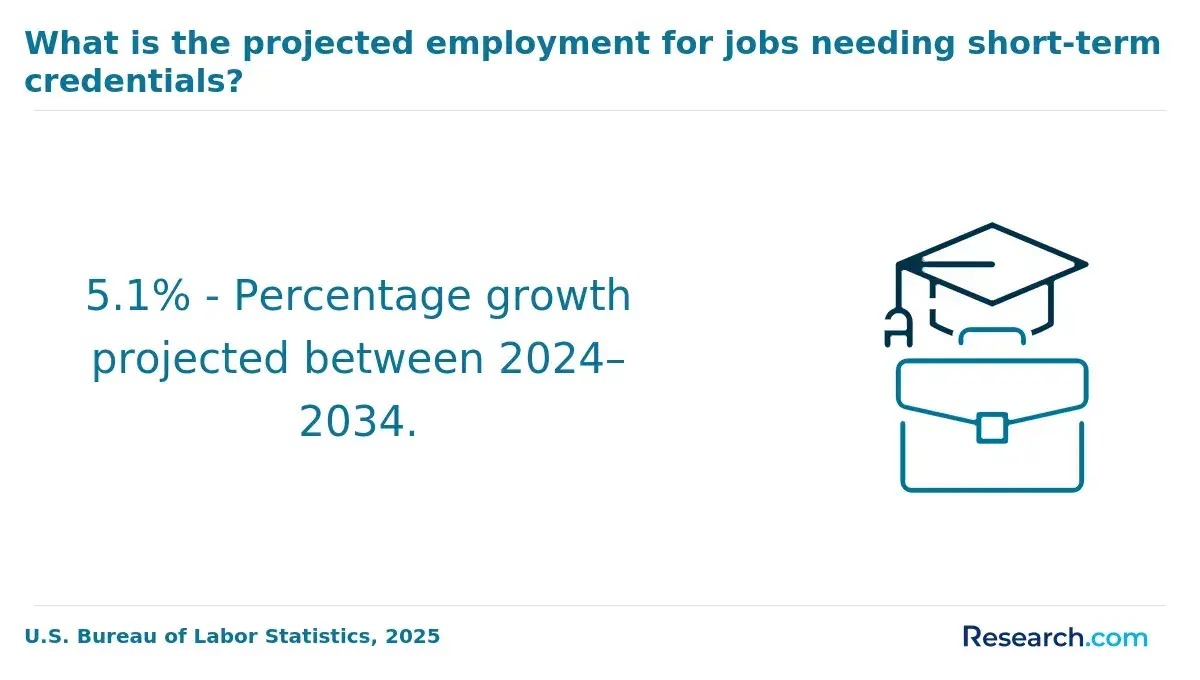
Admission requirements depend on the degree level and the selectivity of the institution. Online programs for working adults often emphasize transcripts, transfer credits, professional background, and readiness for independent study rather than standardized test scores, although policies vary by school.
For undergraduate programs, applicants usually need a high school diploma or equivalent, official transcripts, and sometimes a minimum GPA. Transfer students may need college transcripts from every institution attended. Some schools offer credit for prior learning, military training, industry certifications, culinary school coursework, or documented workplace training, but policies vary and should be confirmed in writing.
Graduate programs may ask for a bachelor's degree, resume, statement of purpose, recommendations, and evidence of quantitative or management readiness. A food-related undergraduate major is not always required, but relevant work experience can strengthen your application and help you make better use of the coursework.
Before applying, gather the documents and questions that will affect both admission and cost. This list is especially important for adults who have attended multiple schools or earned workplace credentials.
- Official transcripts from high school, community college, culinary school, technical college, or previous universities.
- Documentation of food safety, management, military, culinary, hospitality, or employer training that may qualify for prior-learning review.
- A current resume showing food service, retail, manufacturing, logistics, hospitality, supervision, or customer service experience.
- Questions about transfer-credit limits, residency requirements, course sequencing, and whether old credits expire.
- Questions about math, accounting, statistics, or science prerequisites that could delay graduation.
A common mistake is assuming that "adult-friendly" means "easy to finish." The better question is whether the program has predictable scheduling, responsive advising, and a realistic plan for students who work full time.
How long do online food industry management degrees take and how are they structured?
Program length depends on degree level, transfer credits, enrollment intensity, and course availability. A certificate may take a few months to a year. An associate degree often requires about 60 credits. A bachelor's degree usually requires about 120 credits, though transfer-friendly programs may let adults finish faster. Master's programs commonly require fewer credits than bachelor's programs but may be more intensive.
The structure matters as much as the advertised timeline. A program that says it can be completed quickly may still be difficult if courses are offered only once a year, internships require daytime availability, or prerequisites create bottlenecks. Working adults should ask for a degree plan before enrolling, not after the first semester starts.
The table below summarizes common structures and the trade-offs they create for adults balancing school, work, and family obligations.
| Structure | How it works | Advantages | Trade-offs |
| Part-time online | One or two courses at a time | Easier to balance with full-time work | Longer completion time |
| Full-time online | Three or more courses per term | Faster progress toward graduation | Harder for shift workers or caregivers |
| Accelerated terms | Shorter sessions, often 5 to 8 weeks | Focused schedule and faster course completion | Assignments move quickly and missed weeks are costly |
| Cohort model | Students move through courses together | More structure and peer connection | Less flexibility if you need to pause |
| Self-paced or competency-based | Progress depends on demonstrating mastery | Can benefit experienced adults | Requires strong self-discipline and clear employer or graduate school acceptance |
Ask whether the program includes internships, practicums, or capstones. For many working adults, the best option is an employer-based capstone that lets you solve a real problem at your workplace, such as reducing waste, improving scheduling, updating safety documentation, or analyzing purchasing patterns.
What are typical tuition costs, financial aid options, and employer tuition benefits?
Tuition varies widely by institution type, residency status, transfer credits, and program format. For context, College Board's 2024 Trends in College Pricing and Student Aid report lists average published 2024-25 tuition and fees at $11,610 for in-state students at public four-year colleges and $43,350 at private nonprofit four-year colleges. These are sticker prices, not net prices, so grants, employer aid, transfer credits, and scholarships can change the real cost substantially.
When comparing programs, estimate total cost rather than tuition per credit alone. Online students may avoid commuting and relocation costs, but they can still face technology fees, textbooks, lab kits, proctoring fees, graduation fees, and lost income if the workload forces them to reduce hours.
Common cost components include the following. Reviewing each one helps prevent the mistake of choosing the lowest advertised tuition but paying more overall.
- Tuition per credit or flat-rate tuition for each term.
- Required fees, including online learning, technology, student services, graduation, or assessment fees.
- Books, digital course materials, software, uniforms, lab kits, or food safety exam costs.
- Travel costs for any campus residencies, required labs, internships, employer site visits, or proctored exams.
- Opportunity costs, such as reduced overtime, fewer shifts, childcare, or schedule changes.
Financial aid may include federal grants, federal student loans, state grants, institutional scholarships, military education benefits, and employer tuition assistance. For the 2024-25 aid year, the maximum Federal Pell Grant was $7,395 for eligible students, which makes FAFSA completion important even for adults who assume they will not qualify.
Employer education assistance can also be valuable; under current federal tax rules, up to $5,250 in qualifying employer-provided educational assistance may be excluded from taxable income.
If your target role involves food data systems, compliance documentation, electronic records, or healthcare food service administration, you may also want to compare costs with a health information technology degree. That path is more focused on health data and records, while food industry management is more focused on food operations and business performance.
What salary ranges and job outlook can graduates in food industry management expect?
Salary outcomes depend on the role, location, employer size, experience, and whether you move into management, corporate, or technical functions. A degree can help you qualify for advancement, but it should not be viewed as a salary guarantee. The best way to evaluate ROI is to compare the program's total cost with realistic roles in your region and the experience you already have.
BLS reported a $65,310 median annual wage for food service managers in May 2024. That figure is useful because it reflects a common management destination for graduates, but it includes workers with different education levels and experience backgrounds. In practice, a graduate moving into a first supervisory role may start below the median, while an experienced multi-unit manager or corporate operator may exceed it.
The table below gives a practical view of related career directions rather than promising a single outcome. Use it to identify the labor market category that best matches your target job.
| Career direction | Relevant labor-market category | Salary context | Outlook considerations |
| Restaurant, catering, or institutional dining leadership | Food service managers | BLS May 2024 median wage: $65,310 | Advancement often depends on operations experience, scheduling skill, cost control, and staff leadership |
| Food manufacturing or production supervision | Production and operations roles | Pay varies by industry, shift, plant size, and technical requirements | Experience with safety systems, quality documentation, and continuous improvement can matter |
| Procurement, logistics, or distribution | Supply chain and logistics roles | Compensation varies based on analytics, vendor management, and transportation responsibilities | Food supply chains increasingly value forecasting, traceability, and technology skills |
| Quality assurance or compliance | Quality, safety, and inspection-related roles | Pay varies by regulatory responsibility and technical depth | HACCP knowledge, audit readiness, and documentation skills can strengthen prospects |
| Corporate food business roles | Business operations, retail, marketing, or category management | Salary depends heavily on employer scale and prior experience | Analytics, finance, merchandising, and communication skills are important differentiators |
Job outlook should also be interpreted carefully. Food is a large and essential industry, but not every management role grows at the same pace. Automation may reduce some routine scheduling, ordering, and reporting tasks, while increasing demand for managers who can interpret dashboards, control waste, protect margins, document compliance, and lead teams through technology change.
How can working adults choose the best online food industry management program for their goals?
The best online food industry management program is the one that fits your career target, budget, schedule, and prior experience. Rankings can be useful starting points, but they should not replace a careful program-by-program comparison.
Start by defining your intended outcome. If you want to manage restaurants, prioritize food service operations, labor management, and hospitality finance. If you want corporate roles, prioritize analytics, supply chain, marketing, and accounting. If you want quality assurance, look for food safety, compliance, documentation, and production-related coursework. If you want to start a business, evaluate entrepreneurship, finance, menu or product development, and local licensing support.
Use this step-by-step process before enrolling. It is designed to help working adults avoid expensive mismatches.
- Write down your target job titles and compare them with actual job postings in your area or preferred remote market.
- Check whether employers ask for a bachelor's degree, food safety credentials, supervisory experience, analytics skills, or a specific major.
- Verify institutional accreditation and confirm that online students receive the same credential as campus students.
- Request a transfer evaluation before committing, especially if you have prior college, culinary, military, or employer training.
- Ask for a full cost estimate that includes tuition, fees, books, travel, exams, and expected time to completion.
- Review course rotation and workload expectations to make sure the schedule works with your job shifts.
- Ask how internships, capstones, employer projects, or fieldwork are handled for online students.
- Compare career services, alumni networks, employer partnerships, and access to faculty with food industry experience.
Several mistakes are common. Do not choose a program only because it is accelerated; speed is not helpful if the structure causes you to stop out. Do not choose only the cheapest option if credits will not transfer or courses do not match your goal. Do not assume food management and nutrition licensure are the same pathway. Do not rely on broad salary claims without checking local job postings and your own experience level.
A good final test is simple: after reviewing the curriculum, cost, support services, and outcomes, you should be able to explain exactly how the degree helps you move from your current role to your next role. If that connection is vague, keep comparing.
Other Things You Should Know About Food Industry Management
It can be worth it if the degree helps you qualify for management, corporate, supply chain, quality assurance, or food business roles that you cannot realistically reach with experience alone. The value depends on total cost, transfer credits, employer support, accreditation, and whether the curriculum matches your target job.
Yes, many online programs are designed for working adults, but the workload can still be demanding. Part-time enrollment, asynchronous courses, clear course rotations, and employer-based projects can make completion more realistic.
Food industry management focuses on the broader scope of managing food systems and supply chains, while hospitality management centers on customer service and operations in hotels and restaurants. In 2027, both fields play distinct roles in the culinary world, crucial for those planning their educational path.
Undergraduate programs may accept students without food experience, but experience can help you apply course concepts and compete for better roles. Graduate or advanced programs may prefer applicants with professional background in food service, hospitality, retail, operations, logistics, or management.
References
- Online Master’s in Food Business - CIA School of Graduate and Professional Studies https://masters.culinary.edu/food-business-masters-degree/
- Master in Food & Beverage Management Online | Rome Business School https://romebusinessschool.com/master-online-in-food-and-beverage-management/
- How to choose a culinary and restaurant management course? https://insights.ehl.edu/choosing-culinary-and-restaurant-management-course
- Best LMS for Food & Beverage Industry Training Programs https://ekhool.com/industry/lms-for-food-and-beverages
- Hospitality Jobs Prospects with a Hospitality Management Degree https://hrc-international.com/blog/value-hospitality-management-degree-career-salary
- Member Support https://membersupport.commonapp.org/s/article/bachelors-degree-in-food-business-management-ca-dpqodiqi
- Food Industry Management https://www.niagara.edu/programs/food-industry-management/
- Study Food Industry Management in the USA https://www.studyusa.com/en/field-of-study/395/food-industry-management
- 15 Top Culinary Degree Careers | CIA Culinary School https://www.ciachef.edu/blog/what-can-you-do-with-a-culinary-degree/
- Food Science Degree Careers and Salary in Europe - StudyinEurope.eu https://www.studyineurope.eu/food-science/food-science-degree-careers-salary-europe/