2027 Online Food Industry Management Degrees With Quality Assurance Coursework

Co-Founder and Chief Data Scientist
Choosing an online food industry management degree is really a decision about where you want to work: restaurants, food manufacturing, supply chain, compliance, or quality assurance. The field matters because food businesses face tighter safety expectations, traceability rules, and pressure to control costs. The U. S. Bureau of Labor Statistics reported a May 2024 median wage of $80,190 for food scientists and technologists, showing why technical food quality skills can change career options. This guide helps students compare programs, coursework, costs, accreditation, and career outcomes before enrolling.
Key Things You Should Know
- Online food industry management degrees usually fit three tracks: hospitality and food service operations, food science and technology, or business management with food-sector electives.
- Quality assurance coursework is strongest in food science, food safety, supply chain, and operations-focused programs; it may be limited in general hospitality degrees unless electives are available.
- Recent BLS data show May 2024 median pay of $65,310 for food service managers and $80,190 for food scientists and technologists, but outcomes vary by role, employer, location, and technical training.
What is an online food industry management degree with quality assurance coursework?
An online food industry management degree prepares students to supervise food-related operations while understanding safety, quality, customer service, staffing, purchasing, compliance, and profitability. Depending on the school, the degree may be housed in hospitality management, food science, agricultural sciences, business, nutrition, or operations management.
Quality assurance coursework adds a more technical layer. Instead of focusing only on menu planning or restaurant operations, students learn how food products and services are monitored for safety, consistency, labeling, sanitation, traceability, and regulatory compliance. This matters for students who want to work in food manufacturing, distribution, quality control, corporate dining, grocery operations, school food service, or regulated production environments.
Most programs fall into one of these degree categories, and the best fit depends on whether the student wants a management-heavy or science-heavy career path.
| Program type | Best fit | Quality assurance depth | Common career direction |
| Food service or hospitality management | Students focused on restaurants, hotels, catering, campus dining, or food and beverage operations | Moderate; often covers sanitation, purchasing, service systems, and operations standards | Food service manager, catering manager, restaurant supervisor, dining services manager |
| Food science or food technology | Students who want technical food safety, processing, product development, or QA roles | High; usually includes microbiology, food chemistry, processing, safety systems, and quality control | Quality assurance technician, food safety specialist, product development assistant, food technologist |
| Business or operations management with food-sector electives | Working adults who want broader management training that can apply to food companies | Variable; depends on electives, internships, and employer experience | Operations coordinator, supply chain analyst, production supervisor, purchasing manager |
Students who want the broadest management foundation may also compare this path with a business management degree online, especially if they are not yet certain they want to specialize in food operations. The trade-off is that a general business program may require additional food safety certificates or food-sector experience to qualify for quality assurance roles.
How do online food industry management programs compare to campus-based options?
Online programs are often designed for working adults in restaurants, food manufacturing, retail food, hospitality, or military food service. Campus programs may offer more direct access to labs, sensory testing facilities, pilot plants, and in-person networking. The right choice depends less on the delivery format and more on whether the program includes the technical experiences required for the student's target job.
The table below compares the most important differences students should review before deciding between online and campus-based study.
| Factor | Online program | Campus-based program | Decision guidance |
| Schedule | Often asynchronous or evening-friendly | Usually follows fixed class and lab times | Online is better for employed students; campus may work better for full-time students seeking immersion |
| Food science labs | May use lab kits, local placements, short residencies, or transfer lab credits | Usually offers in-person labs and specialized facilities | Students targeting QA or product development should confirm how labs are completed |
| Internships | May allow students to complete experiences near home or at a current workplace | May connect students with local employers near campus | Online students should ask whether current employment can count toward experiential requirements |
| Networking | Depends on virtual events, faculty access, employer partnerships, and student initiative | May offer more frequent in-person employer visits | Students changing careers may need to be more intentional in an online format |
| Total cost | Can reduce relocation and commuting costs, but tuition varies widely | May include campus fees, housing, and transportation | Compare total cost, not tuition alone |
Online study can be a strong choice when the student already works in food service or food production and wants to move into supervision, QA, compliance, or operations. Campus study may be better when the student needs extensive lab training, wants a traditional internship pipeline, or is entering the field with no food industry experience.
A practical warning: some online hospitality programs teach food safety at a managerial level but do not provide enough science coursework for technical QA jobs. If a job posting asks for food microbiology, HACCP, sanitation verification, or laboratory experience, students should make sure the online program explicitly covers those areas.
What quality assurance and food safety courses are typically included in these degrees?
Quality assurance coursework teaches students how food companies prevent contamination, document controls, maintain product consistency, and respond to customer, regulatory, or supplier issues. In management programs, these topics may appear as standalone courses or as modules within operations, purchasing, sanitation, and compliance classes.
The most useful QA-related courses tend to cover both prevention and documentation. Students should look for courses like the following when comparing curricula.
- Food safety and sanitation, including cleaning procedures, contamination prevention, personal hygiene, and facility standards
- Hazard Analysis and Critical Control Points, commonly called HACCP, including hazard identification, critical limits, monitoring, corrective action, verification, and recordkeeping
- Food microbiology, especially for students interested in manufacturing, processing, testing, or food safety specialist roles
- Food chemistry or food analysis, which helps students understand ingredients, shelf life, texture, quality defects, and product stability
- Quality assurance and quality control systems, including audits, standard operating procedures, specifications, sampling, and corrective action plans
- Food laws and regulations, including labeling, allergen controls, recalls, traceability, and compliance documentation
- Supply chain and purchasing, including supplier approval, receiving standards, cold chain management, and inventory control
- Food production or processing, including packaging, preservation, processing technologies, and plant operations
Students interested in nutrition, labeling, menu development, or public health-oriented food roles may also compare this path with a nutrition masters degree. Nutrition programs can be valuable for dietetics, wellness, and food policy interests, but they do not always substitute for food manufacturing QA coursework.
A strong curriculum should connect classroom topics to workplace tools. For example, a student should leave a HACCP course able to read a process flow diagram, identify control points, understand monitoring logs, and explain why documentation matters during an audit.
Employer Confidence in Online vs. In-Person Degree Skills, Global 2024

Which U.S. schools offer accredited online food industry management or food service management degrees?
There is no single national list of "food industry management" degrees because schools use different names for related programs. Some are hospitality management degrees with food and beverage coursework, while others are food science or food technology degrees with stronger quality assurance content. Students should verify institutional accreditation, current online availability, tuition, transfer rules, and curriculum directly with each school before applying.
The examples below show the range of accredited U.S. options students may encounter when searching for online programs connected to food service, food industry operations, or food science.
| School | Example online program area | Why it may fit this topic | What to verify |
| Kansas State University | Food science and industry | Relevant for students interested in food science, processing, safety, and technical industry roles | Lab format, transfer credit rules, food safety course sequence, and online course availability |
| Oregon State University Ecampus | Food science and sustainable technologies | May fit students seeking a science-based food industry path with sustainability and processing context | Required science prerequisites, lab expectations, and whether QA electives match career goals |
| Johnson & Wales University Online | Food and beverage industry management | Relevant for students focused on food service leadership, hospitality operations, and food business management | Depth of QA coursework beyond sanitation and operations management |
| Fort Hays State University | Hospitality and tourism management-related study | May fit students seeking flexible preparation for food service, lodging, event, and hospitality operations | Food and beverage course availability, internship requirements, and industry placement support |
| East Carolina University | Hospitality management-related online or completion options | May fit transfer students or working adults interested in hospitality and food service management | Admission status for online students, major requirements, and food service-specific electives |
| University of Alabama | Hospitality management-related online study | May support students interested in food service operations, event management, and hospitality leadership | Whether the curriculum includes food safety, purchasing, and foodservice systems courses |
For students comparing these options, the key question is not simply "Is the degree online?" It is "Does the curriculum match the job I want?" A food and beverage management program can be excellent for restaurant leadership but may not be enough for a food plant QA role. A food science program may be stronger for QA but more demanding in chemistry, biology, and lab work.
What admission requirements and prior experience are needed for these online programs?
Admission requirements vary by degree level and school. Bachelor's programs usually require a high school diploma or equivalent, transcripts, and sometimes minimum GPA standards. Degree-completion programs may require previous college credits. Master's programs typically require a bachelor's degree and may prefer applicants with food science, nutrition, hospitality, business, agriculture, or professional food industry experience.
Students should prepare for requirements in three areas: academic readiness, professional fit, and technical readiness. These are especially important in programs with science-heavy quality assurance coursework.
- Academic readiness: food science programs may expect prior coursework in biology, chemistry, algebra, statistics, or microbiology, while hospitality programs may place more emphasis on business and communication preparation
- Professional fit: applicants with restaurant, grocery, culinary, manufacturing, military food service, school nutrition, or quality control experience may be better positioned for applied assignments and internships
- Technical readiness: online students need reliable internet access, comfort with learning management systems, and the ability to complete virtual labs, proctored exams, or local experiential requirements when required
Prior experience is helpful but not always mandatory. It matters most when the program is designed for working professionals or when students want to use workplace projects for assignments. A current food service employee, for example, may be able to connect coursework in purchasing, sanitation, and staffing directly to day-to-day operations.
Students without experience should look for programs with internships, career services, applied projects, or employer partnerships. They should also consider earning an entry-level food safety credential before or during the program to improve their readiness for part-time work or internships.
How long do online food industry management degrees take, and what do they cost?
Program length depends on degree level, transfer credits, enrollment intensity, and required labs or internships. A full bachelor's degree commonly takes about four years, but transfer students with an associate degree may finish faster. Graduate certificates may take less than a year, while master's programs often take one to two years of full-time study or longer part time.
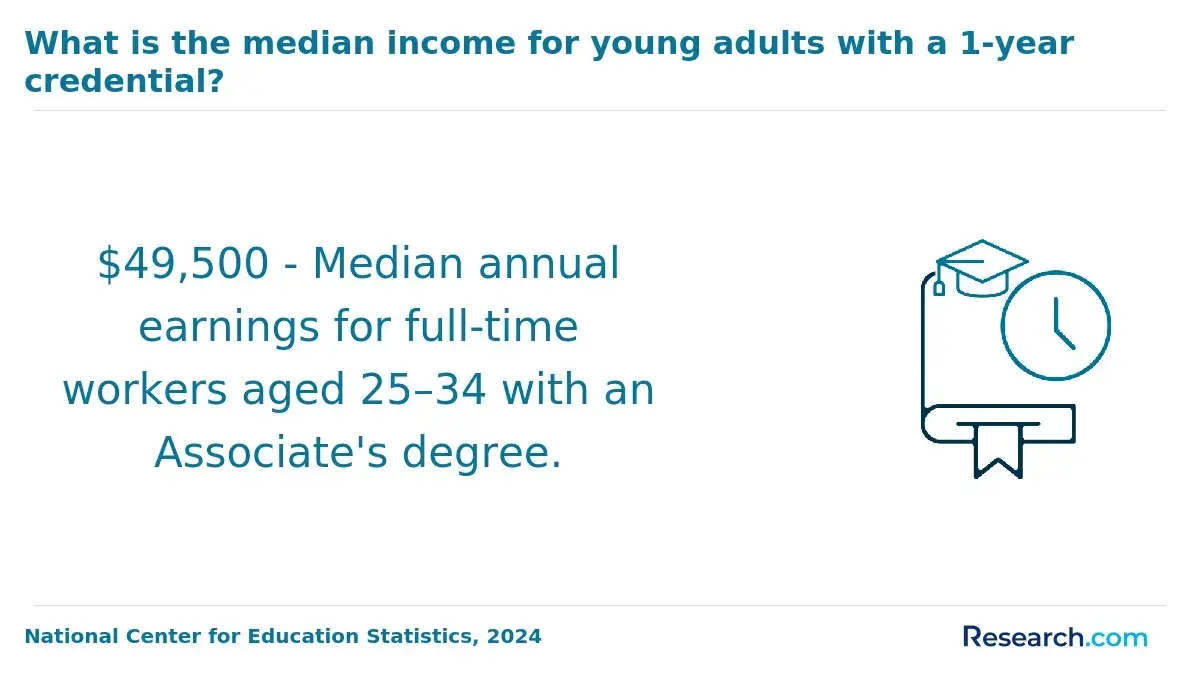
Cost can vary sharply by institution type and residency status. For context, College Board reported average published tuition and fees of $11,610 for in-state students at public four-year institutions and $43,350 at private nonprofit four-year institutions for the 2024-25 academic year. Online tuition may be lower, similar, or sometimes higher depending on the school, so students should calculate the full program cost rather than relying on a national average.
When estimating affordability, students should include these common cost categories.
- Tuition per credit or per term
- Online learning fees, technology fees, proctoring fees, and graduation fees
- Lab kits, science supplies, uniforms, knives, thermometers, or food safety materials when required
- Books, digital courseware, testing software, and certification exam fees
- Travel costs for any campus residencies, internships, practicums, or required lab sessions
- Opportunity cost if the student reduces work hours to complete labs, internships, or accelerated coursework
The table below summarizes typical timeline and cost considerations by credential type. It is meant to help students frame their comparison, not to replace school-specific tuition estimates.
| Credential | Typical time to complete | Cost factors | Best for |
| Undergraduate certificate | Several months to one year | Lower total credits, possible certification fees, limited financial aid depending on school | Workers who need focused food safety, hospitality, or operations training |
| Associate degree | About two years full time | Often lower tuition at community colleges, transfer planning is important | Entry-level supervisors, food service workers, or students planning to transfer |
| Bachelor's degree | About four years full time; shorter with transfer credits | Largest credit load, but widest access to management and technical roles | Students seeking long-term advancement in food service, operations, QA, or supply chain |
| Graduate certificate | Often less than one year to 18 months | Fewer credits than a master's degree, may not qualify for all aid options | Professionals adding food safety, QA, or operations credentials |
| Master's degree | Commonly one to two years full time; longer part time | Higher per-credit tuition, possible employer tuition assistance | Professionals aiming for leadership, technical management, compliance, or corporate roles |
Students can reduce costs by transferring credits, choosing an in-state online option, asking about credit for prior learning, using employer tuition assistance, and avoiding programs with required residencies they cannot afford. The lowest tuition is not always the best value if the program lacks the QA courses, labs, internship access, or career support needed for the student's goal.
What careers can graduates pursue in food industry management and quality assurance?
Graduates can pursue roles in restaurants, hotels, corporate dining, hospitals, schools, food manufacturing, grocery chains, distribution centers, commissaries, catering companies, and regulatory-adjacent operations. The best career fit depends on the balance of management, science, compliance, and hands-on food experience in the student's background.
The table below connects common roles with typical responsibilities and the kind of degree preparation that is most useful.
| Career path | Typical responsibilities | Helpful academic emphasis | Experience that strengthens employability |
| Food service manager | Supervise staff, control costs, manage purchasing, oversee sanitation, resolve customer issues, and meet service targets | Hospitality management, food service systems, accounting, human resources, sanitation | Restaurant, catering, campus dining, hotel, or institutional food service experience |
| Quality assurance technician | Inspect products, review records, collect samples, monitor sanitation, document nonconformances, and support audits | Food science, microbiology, HACCP, quality control, food processing | Plant experience, lab exposure, food safety certification, attention to documentation |
| Food safety coordinator | Maintain food safety programs, train staff, assist with audits, monitor corrective actions, and support recall readiness | Food safety regulation, HACCP, sanitation, auditing, supply chain | Experience with logs, inspections, standard operating procedures, and training |
| Production supervisor | Coordinate production lines, staffing, throughput, safety, quality checks, and shift performance | Operations management, food processing, quality systems, leadership | Manufacturing or warehouse experience, supervisory experience, process improvement exposure |
| Purchasing or supply chain coordinator | Manage vendors, inventory, receiving standards, costs, and product availability | Supply chain, procurement, food service operations, quality specifications | Inventory systems, supplier communication, receiving, and cost-control experience |
Graduates who want to move into multi-site operations, logistics, manufacturing leadership, or continuous improvement may eventually compare a food-focused bachelor's degree with an MBA operations management online. The MBA route is usually better after gaining professional experience, while a food-focused degree is often more practical for entering or advancing within the industry.
Technology is changing these roles. Food companies increasingly use digital temperature monitoring, enterprise resource planning systems, supplier databases, audit platforms, automated production equipment, and AI-assisted demand forecasting. Students who combine food safety knowledge with data literacy and process improvement skills may be better prepared for modern operations roles.
What salary ranges and job outlook can food industry management graduates expect?
Salary potential depends heavily on the role. A graduate managing a restaurant shift will face a different labor market than someone working in food manufacturing quality assurance, supply chain, or product development. Geography, company size, shift schedule, technical coursework, and prior experience also affect compensation.
The table below uses recent U.S. Bureau of Labor Statistics wage and outlook categories to help students compare related roles. These figures describe occupations, not guaranteed outcomes for degree graduates.
| Occupation | May 2024 median annual wage | Current outlook context | What it means for students |
| Food service managers | $65,310 | Employment is tied to restaurants, hospitality, institutional dining, and consumer spending | Management experience, scheduling skills, cost control, and sanitation knowledge are often as important as the degree title |
| Food scientists and technologists | $80,190 | Demand is connected to food safety, product development, processing, quality, and regulatory expectations | Students usually need stronger science coursework than a general hospitality degree provides |
| Quality control inspectors | $45,850 | Automation can reduce some inspection tasks, but regulated food environments still need documentation and verification work | QA roles may improve with HACCP, audit, sanitation, lab, or manufacturing experience |
| Industrial production managers | $121,440 | These roles are more senior and often require substantial production or supervisory experience | A food degree can help, but advancement usually depends on leadership record and plant operations experience |
The main takeaway is that "food industry management" is not one salary category. Students seeking higher-paying technical roles should prioritize food science, QA systems, manufacturing, supply chain, and data skills. Students focused on restaurants or hospitality should evaluate whether the degree helps them move into higher-volume, multi-unit, institutional, or corporate management roles.
Job outlook also varies. Some hands-on inspection tasks may be affected by automation, while compliance, documentation, supplier management, and audit readiness remain important in regulated food operations. Students should read job postings in their target region before choosing electives, because employers often reveal whether they prefer hospitality experience, HACCP training, food science coursework, or manufacturing experience.
Are there industry certifications or professional standards related to food quality assurance?
Certifications can strengthen a degree by showing practical knowledge of food safety, sanitation, auditing, or quality systems. They are especially useful when a student's degree is management-oriented and the target job requires technical QA or compliance skills. Requirements vary by employer and state, so students should confirm which credential is recognized in their intended workplace.
The table below summarizes common credentials and standards that appear in food safety and quality assurance job postings.
| Credential or standard | Common relevance | Best fit | Important limitation |
| ServSafe Food Protection Manager | Widely used for food service sanitation and manager-level food safety knowledge | Restaurant, catering, school food service, retail food, and hospitality roles | It is useful for operations but usually not enough for technical manufacturing QA roles |
| HACCP training | Focuses on hazard analysis, critical control points, monitoring, corrective action, verification, and records | Food manufacturing, seafood, meat, poultry, juice, and processing environments | Course depth varies, and some employers prefer industry-specific HACCP training |
| Preventive Controls Qualified Individual training | Relevant to FDA-regulated food facilities under preventive controls rules | Food safety coordinators, QA staff, compliance staff, and supervisors in manufacturing | Not every food service role requires it; it is more relevant to food facilities than restaurants |
| Certified Professional - Food Safety | Demonstrates broader food safety knowledge for inspection, compliance, and environmental health contexts | Food safety professionals, inspectors, trainers, and compliance-oriented roles | Eligibility requirements and employer recognition should be checked before investing |
| Global Food Safety Initiative-benchmarked schemes | Includes standards used by many manufacturers and retailers for food safety management systems | QA, auditing, supplier management, and food manufacturing roles | Students may not need full auditor credentials early, but familiarity is valuable |
Students should not collect certifications randomly. A better approach is to identify five to 10 job postings for the desired role, note which credentials appear repeatedly, and prioritize those. For many students, ServSafe plus HACCP is a practical starting point; for manufacturing-focused roles, preventive controls and audit-related training may be more relevant.
How can students evaluate and choose a reputable online food industry management program?
A reputable online program should be accredited, transparent about costs, clear about required labs or internships, and aligned with the student's target career. The strongest choice is not always the highest-ranked or cheapest program; it is the program with the right curriculum, support, flexibility, and industry relevance for the student's goals.
Students can use the following steps to compare programs before applying.
- Check institutional accreditation through the school's accreditor and confirm that the degree is offered by the accredited institution, not only by a third-party provider.
- Match the curriculum to the target role by looking for food safety, HACCP, sanitation, quality systems, food science, purchasing, operations, and supply chain coursework.
- Ask how online labs, practicums, internships, or field experiences are completed, especially if the program includes food science or production coursework.
- Calculate total cost using tuition, fees, books, lab materials, travel, certification exams, and the number of credits still required after transfer evaluation.
- Review transfer credit policies before enrolling, because generous transfer rules can significantly reduce time and cost for students with previous college credits.
- Ask about career support, employer connections, internship placement, alumni roles, and whether the school can share outcomes by program rather than institution-wide averages.
- Read current job postings in the student's region and compare employer requirements with the program's required courses and electives.
Students should also watch for red flags. Be cautious if a program will not clearly explain accreditation, total credits, online lab requirements, transfer credit decisions, or realistic career pathways. Also avoid assuming that any food-related degree automatically qualifies a graduate for QA, regulatory, or food scientist roles; technical requirements differ by employer.
If a student is more interested in data governance, compliance workflows, and regulated information systems than food operations, a health information management degree online may be a better comparison point. The industries are different, but both paths require careful documentation, quality standards, regulatory awareness, and process control.
The best next move is to choose a career target first, then evaluate programs backward from that target. For restaurant leadership, prioritize hospitality operations, finance, staffing, and sanitation. For food manufacturing QA, prioritize food science, microbiology, HACCP, preventive controls, and lab or plant exposure. For supply chain roles, prioritize operations, purchasing, inventory systems, supplier quality, and analytics.
Other Things You Should Know About Food Industry Management
It can be worth it if the curriculum matches your career goal and the total cost is manageable. The degree is most useful for students seeking supervisory, food service, QA, operations, or food business roles. It may be less valuable if you already have strong industry experience and only need a short certification for a specific promotion.
Online food science programs often include virtual labs or simulations as part of their curriculum. These digital resources provide students with realistic, interactive experiences that mimic traditional lab settings, ensuring they gain practical skills without needing physical lab access.
For food service management, ServSafe Food Protection Manager is a practical starting point. For manufacturing or quality assurance, HACCP training and preventive controls training may be more relevant. The best choice depends on the roles employers list in your target job market.
References
- Online Quality Assurance Training https://www.zosilearning.com/online-quality-assurance-training/
- Language Requirements For University Admission In Poland (2026) https://lang.com.pl/en/new-language-requirements-for-university-candidates-in-poland-2026-what-you-need-to-know/
- What salary can I expect from a graduate hospitality job? https://gradireland.com/careers-advice/hospitality-and-event-management/what-salary-can-i-expect-graduate-hospitality-job
- Qualifying as a Food Safety Practitioner https://www.cieh.org/professional-development/professional-registration/qualifying-as-a-food-safety-practitioner/
- FSQA (Food Safety & Quality Assurance) 2026 Guide https://www.alleratech.com/blog/food-safety-and-quality-assurance
- The Inside Scoop on Quality Assurance Manager: A Career Guide | Innopharma Education https://www.innopharmaeducation.com/blog/the-inside-scoop-on-quality-assurance-manager-a-career-guide
- Hospitality Jobs Prospects with a Hospitality Management Degree https://hrc-international.com/blog/value-hospitality-management-degree-career-salary
- Food Safety & Quality Assurance Management - FSQT https://www.lambtoncollege.ca/programs/international/fsqt
- Food Safety https://www.sggw.edu.pl/en/kierunki-sggw/food-safety/
- How to choose a culinary and restaurant management course? https://insights.ehl.edu/choosing-culinary-and-restaurant-management-course