2027 Online Food Industry Management Degrees That Prepare Students for Cross-Functional Food Industry Roles

Co-Founder and Chief Data Scientist
Choosing a food industry management degree is really a career-fit decision: do you want to manage people, products, safety, supply chains, or food service operations? The U.S. food economy is large enough to support many paths; USDA ERS reported that agriculture, food, and related industries supported 22.1 million U.S. jobs in 2023. This guide is for students, career changers, and working food professionals comparing online degree options. You will learn what these programs cover, how to judge quality and cost, and which roles they can realistically prepare you to pursue.
Key Things You Should Know
- Online food industry management degrees are best for students who want business, operations, food safety, supply chain, or food service leadership roles rather than clinical dietetics or lab-only food science careers.
- Cost varies widely: College Board's 2024 Trends in College Pricing reported average 2024-25 published tuition and fees of $11,610 for in-state public four-year colleges and $43,350 for private nonprofit four-year colleges, so transfer credit and employer tuition benefits can materially change ROI.
- BLS May 2024 salary data show broad outcomes by role, from $65,310 median pay for food service managers to $122,090 for industrial production managers, meaning the degree's value depends heavily on the function and industry you target.
What is an online food industry management degree?
An online food industry management degree is a business-oriented program focused on how food moves from suppliers and production facilities to retailers, restaurants, institutions, and consumers. It usually blends management, food safety, quality systems, purchasing, logistics, marketing, finance, and regulatory basics. The goal is not only to understand food products, but to coordinate teams across operations, compliance, procurement, customer experience, and profitability.
These degrees can appear under several names, so students should compare curriculum outcomes rather than relying only on the program title. A food industry management major may sit in a business school, agriculture college, hospitality department, or food science unit, and each location can shape the career direction.
| Program type | Best fit | Typical focus | When to be cautious |
| Bachelor's in food industry management | Students seeking broad operations or management roles | Food systems, business, safety, supply chain, retail, and food service | If the curriculum has few quantitative, technology, or compliance courses |
| Bachelor's in food business, agribusiness, or food systems | Students interested in supply chains, commodity markets, purchasing, or food entrepreneurship | Agricultural economics, distribution, marketing, sustainability, and business strategy | If the program is too agriculture-heavy for a restaurant, retail, or manufacturing goal |
| Hospitality or food service management degree | Students targeting restaurants, institutional dining, hotels, catering, or multi-unit food service | Menu planning, service operations, cost control, staffing, and customer experience | If you want manufacturing quality assurance or regulatory compliance roles |
| Food science with management electives | Students who want technical credibility plus leadership potential | Food chemistry, processing, sensory science, safety, and product development | If the science prerequisites are not a good fit for your academic strengths |
| Nutrition-focused business pathway | Students interested in wellness products, community food programs, or nutrition communication | Nutrition science, public health, consumer behavior, and program management | If your goal is to become a registered dietitian, because that requires a specific accredited pathway |
If your goal is clinical nutrition or dietetics rather than industry operations, compare food management programs with the best online registered dietitian programs because dietitian eligibility has distinct accreditation, supervised practice, and credentialing requirements.
This degree tends to make the most sense for people who like practical problem-solving: reducing waste, improving food safety processes, managing labor costs, coordinating vendors, launching new products, or using data to forecast demand. It may be less appropriate if you want a purely culinary, laboratory research, or clinical healthcare path.
Which accreditation matters for food industry management programs?
Accreditation matters because it affects credit transfer, graduate school eligibility, employer confidence, and access to federal financial aid. For online food industry management degrees, the most important starting point is institutional accreditation from an accreditor recognized by the U.S. Department of Education or the Council for Higher Education Accreditation.
Programmatic accreditation is more situational. A business-based program may carry AACSB, ACBSP, or IACBE accreditation; a hospitality program may align with hospitality accreditation standards; and food science programs may follow recognized food science curriculum expectations. These labels can be helpful, but they do not replace the need to inspect the actual courses and outcomes.
| Quality signal | Why it matters | How to verify it |
| Institutional accreditation | Supports financial aid access, credit transfer, and baseline academic legitimacy | Check the institution's accreditor in official federal or accreditor directories |
| State authorization for online learning | Confirms the school can enroll students in your state | Ask admissions whether your state is approved for the program |
| Programmatic business, hospitality, or food science recognition | May signal discipline-specific review and stronger employer relevance | Confirm the program name appears on the accreditor or recognizing body's list |
| Embedded food safety or compliance preparation | Can help with food safety manager, HACCP, or preventive controls training | Review syllabi for applied assignments, labs, case studies, or certification alignment |
| Transparent outcomes | Helps evaluate whether students reach relevant internships, promotions, or jobs | Ask for placement examples, internship partners, and graduate employer types |
Before enrolling, use a short verification process rather than relying on marketing language. This is especially important for online students who may never visit campus or meet program staff in person.
- Confirm institutional accreditation through an official accreditor or federal database, not only the school's homepage.
- Ask whether the program is authorized to enroll students in your state and whether any field experience has location restrictions.
- Request a degree plan showing required courses, electives, internship options, and transfer-credit limits.
- Ask which food industry roles recent graduates pursued and whether those outcomes match your goals.
- Check whether the program prepares students for industry certifications but does not imply that certification is automatic.
A common mistake is choosing the cheapest or fastest online option without confirming accreditation and transferability. A low tuition price is not a bargain if credits will not transfer, employers question the credential, or the curriculum does not support your intended role.
What jobs can food industry management graduates get?
Food industry management graduates can pursue roles across food manufacturing, distribution, retail grocery, restaurants, institutional dining, convenience stores, hospitality, food startups, and corporate food brands. The degree is most useful when paired with relevant work experience, internships, certification, or a concentration in operations, safety, supply chain, or analytics.
The table below summarizes common job directions. It is not a promise that a degree alone will qualify a graduate for every role; employers often consider experience, certifications, location, and technical skills.
| Career path | Typical responsibilities | Best preparation within the degree | Entry point to consider |
| Food service manager | Supervise staff, control food and labor costs, manage service quality, and maintain safety standards | Food service operations, cost control, HR, sanitation, customer experience | Shift supervisor, assistant manager, catering coordinator |
| Quality assurance coordinator | Monitor food safety procedures, documentation, audits, corrective actions, and supplier compliance | Food safety, HACCP, quality management, regulatory basics, statistics | QA technician, sanitation lead, compliance assistant |
| Production or operations supervisor | Coordinate production schedules, labor, equipment use, waste reduction, and process improvements | Operations management, lean methods, supply chain, data analysis | Line lead, production associate, operations trainee |
| Procurement or category analyst | Analyze suppliers, inventory, pricing, demand, and product performance | Purchasing, food marketing, analytics, finance, supply chain | Purchasing assistant, inventory analyst, merchandising assistant |
| Food product or brand coordinator | Support product launches, consumer insights, packaging, pricing, and cross-functional project timelines | Marketing, project management, product development, consumer behavior | Marketing coordinator, product development assistant, sales support specialist |
| Distribution or logistics coordinator | Track shipments, cold-chain requirements, warehouse performance, and customer service issues | Logistics, inventory management, food safety, ERP systems | Logistics clerk, warehouse supervisor trainee, transportation coordinator |
Students who like cross-functional work should pay close attention to project management skills because food launches, facility improvements, supplier transitions, and safety initiatives usually involve multiple departments. If you are comparing business-heavy alternatives, this guide to what jobs can you get with a project management degree can help you decide whether a broader project management path fits better than a food-specific major.
The strongest candidates usually combine three things: food industry context, measurable business skills, and evidence of execution. That evidence can come from internships, military logistics experience, restaurant leadership, grocery operations, manufacturing shifts, capstone projects, or employer-sponsored process-improvement work.
How do online and campus food industry programs differ?
Online and campus food industry programs can lead to similar academic credentials, but the learning experience and career-building opportunities differ. The right choice depends on your schedule, need for hands-on labs, access to local food employers, and whether you already work in the industry.
The comparison below highlights practical differences that matter more than the delivery label alone. A well-designed online program can be a strong option, but it should still provide interaction, applied assignments, and industry-relevant advising.
| Factor | Online program | Campus program | Best fit |
| Schedule | Often asynchronous or evening-friendly | Usually fixed meeting times | Online fits working adults and caregivers; campus fits students who want a traditional schedule |
| Hands-on learning | May use local internships, simulations, virtual labs, or employer-based projects | May offer teaching kitchens, labs, pilot plants, or campus dining operations | Campus can be stronger for lab-intensive food science; online can work well for management-heavy paths |
| Networking | Depends on online cohort design, employer partnerships, and career services access | Often easier to attend events, meet faculty, and join student organizations | Online students should ask specifically about remote networking and internship support |
| Cost control | Can reduce relocation, commuting, and lost-work costs | May offer more campus employment or residential scholarships | Compare total cost, not just tuition |
| Career pivot speed | Can allow students to keep working while studying | May support immersive internships or co-ops | Online is often better for promotion seekers; campus may be better for first-time students seeking broad exposure |
Online education is also changing as programs add analytics dashboards, virtual collaboration tools, remote proctoring, simulations, and AI-supported tutoring. For food industry students, the key question is whether technology improves applied learning or simply replaces interaction with recorded lectures.
If your priority is speed, compare food industry programs with broader business options such as the best accelerated project management degree programs online. Accelerated programs can be useful for experienced workers, but they may be a poor fit if you need internships, science prerequisites, or more time to build industry contacts.
Ask schools how online students complete applied work. Strong answers include employer-based projects, local field experiences, virtual case competitions, optional campus intensives, faculty feedback on industry deliverables, and access to the same career services as campus students.
What courses are included in food industry management degrees?
Food industry management degrees usually combine business fundamentals with food-specific applications. The best programs help students understand both the economics of food operations and the safety, quality, and regulatory constraints that make food different from other consumer products.
The curriculum should build cross-functional competence, not just general business knowledge. The table below shows common course areas and how they connect to workplace responsibilities.
| Course area | What students learn | Career relevance |
| Food safety and sanitation | Contamination risks, safe handling, cleaning systems, documentation, and inspection readiness | Supports food service, QA, production, and compliance roles |
| Food laws and regulations | Labeling, traceability, allergen control, recall basics, and federal/state oversight concepts | Useful for regulatory support, quality systems, and supplier management |
| Operations management | Scheduling, capacity, process flow, waste reduction, and performance metrics | Supports production supervision, restaurant operations, and continuous improvement |
| Supply chain and logistics | Purchasing, inventory, cold chain, supplier risk, and distribution decisions | Useful for procurement, warehouse, logistics, and retail grocery roles |
| Accounting and finance | Budgeting, food cost, labor cost, margin analysis, and capital decisions | Important for managers responsible for profitability |
| Food marketing and consumer behavior | Branding, product positioning, retail channels, and customer insights | Supports category management, sales, product launch, and entrepreneurship |
| Data analytics and information systems | Forecasting, dashboards, spreadsheets, ERP concepts, and performance reporting | Increasingly important as employers use data to manage inventory, demand, and quality |
Students should also look for electives that align with their target function. For example, someone aiming for institutional dining may need nutrition and menu planning, while someone targeting manufacturing should prioritize quality systems, process control, and food safety documentation.
- Choose food safety, HACCP, quality assurance, and regulatory electives if you want compliance or manufacturing roles.
- Choose purchasing, logistics, forecasting, and analytics electives if you want supply chain or retail grocery roles.
- Choose marketing, entrepreneurship, sensory evaluation, and product development electives if you want brand, sales, or startup roles.
- Choose finance, HR, leadership, and service operations electives if you want restaurant, catering, or multi-unit food service management.
Students interested in advanced nutrition leadership, wellness programs, or food policy may eventually compare this degree with a masters degree in nutrition. That route can make sense for nutrition-focused career goals, but it is not a substitute for dietetics licensure preparation unless the program is designed for that purpose.
A red flag is a curriculum that uses "food industry" language but offers only generic business courses with one or two food electives. A stronger program will show food-specific case studies, applied projects, industry software exposure, and assignments tied to real operational problems.
What admission requirements do these programs usually have?
Admission requirements vary by school and degree level, but online bachelor's programs in food industry management usually admit first-year students, transfer students, and adult learners. Some programs are completion degrees, meaning students enter after finishing general education or an associate degree.
Most applicants should prepare the following materials. Requirements can differ for first-year, transfer, international, and returning adult students, so confirm details before assuming eligibility.
- High school diploma, GED, or equivalent for first-year admission.
- Official transcripts from high school and any colleges previously attended.
- Minimum GPA, often with separate standards for transfer admission or major declaration.
- General education prerequisites such as composition, college algebra, statistics, economics, or introductory biology, depending on the program.
- Application form, fee or fee waiver, and identity or residency documentation.
- Resume, personal statement, or work-experience summary for adult, transfer, or competitive programs.
- English proficiency documentation for applicants whose prior education was not in English.
Applicants with restaurant, grocery, military logistics, agriculture, hospitality, or manufacturing experience should ask whether the school awards credit for prior learning. This can reduce time and cost, but policies vary widely and may require exams, portfolios, certifications, or faculty review.
Before applying, take a practical sequence of steps to avoid delays and unexpected costs. This is especially important for transfer students because not all credits apply directly to the major.
- Request an unofficial transfer-credit review before committing to the program.
- Ask which courses must be completed through the university and which can be transferred from a community college.
- Confirm whether science, statistics, or accounting prerequisites must be completed before upper-division courses.
- Ask whether internships are required and whether your current job can count as an approved learning site.
- Check technology requirements, proctored exam policies, and any travel or campus residency expectations.
A common mistake is assuming that food industry work experience automatically shortens the degree. Experience can strengthen an application and may support prior-learning credit, but schools decide credit based on documented learning outcomes, not simply years worked.
How long does an online food industry management degree take?
An online food industry management bachelor's degree commonly requires about 120 credits, while associate degrees, certificates, and master's programs vary by level and purpose. The actual timeline depends on transfer credits, course load, academic calendar, prerequisite sequencing, and whether the student studies year-round.
The table below gives realistic planning ranges. Use these as starting estimates, then ask each school for a personalized degree plan based on your transcripts and schedule.
| Pathway | Typical length | Who it fits | Key trade-off |
| Undergraduate certificate | Several months to 1 year | Workers who need targeted food safety, operations, or management skills | Faster and cheaper, but less powerful than a degree for long-term advancement |
| Associate degree | About 2 years full time | Students seeking entry-level roles or a lower-cost transfer path | Good stepping stone, but may not meet bachelor's-preferred management postings |
| Bachelor's degree | About 4 years full time, or shorter with transfer credit | Students seeking broad management, operations, or corporate roles | Stronger credential, but higher time and cost commitment |
| Bachelor's completion program | About 1 to 2 years after substantial transfer credit | Associate degree holders and working adults | Efficient if credits apply cleanly; frustrating if many credits transfer only as electives |
| Master's degree | About 1 to 3 years | Professionals targeting leadership, analytics, nutrition, supply chain, or specialized management roles | Best after clarifying the role that requires or rewards graduate education |
Full-time study can speed up completion, but it may reduce work hours and income. Part-time study can protect your job and allow you to apply course projects at work, but it may extend the timeline and delay career transitions.
To estimate your own timeline, focus on requirements that frequently slow students down. These include prerequisite math or science courses, limited course rotations, internship scheduling, capstone sequencing, and maximum transfer-credit rules.
- Ask whether major courses are offered every term or only once per year.
- Confirm whether accelerated sessions are available for general education or business core courses.
- Check whether internship or capstone courses require prior approval, minimum GPA, or completed prerequisites.
- Build a term-by-term plan that includes work, family, and peak industry seasons such as holidays or harvest cycles.
Students should be cautious about finishing too quickly if they are new to the industry. A slightly longer program with internships, employer projects, and certifications may produce a stronger career platform than a faster program with little applied experience.
How much do online food industry management degrees cost?
Online food industry management degree costs depend on school type, residency status, transfer credits, fees, books, technology, travel, and whether internships require unpaid time. Published tuition is only one part of the decision; total net cost after grants, scholarships, employer benefits, and transfer credit is the number that matters most.
College Board's 2024 Trends in College Pricing reported the following average published tuition and fee figures for 2024-25. These are broad national benchmarks, not program-specific prices, but they help students understand why comparing net cost is essential.
- $11,610 for in-state students at public four-year institutions.
- $30,780 for out-of-state students at public four-year institutions.
- $43,350 for students at private nonprofit four-year institutions.
The table below shows cost factors that often change the final price of an online program. Use it to ask better questions before you enroll.
| Cost factor | Why it matters | Question to ask |
| Transfer credit | Accepted credits can reduce both tuition and time to completion | How many of my prior credits apply to the major, not just electives? |
| Residency pricing | Some online public programs charge different rates for in-state and out-of-state students | Is the online tuition rate the same for all students? |
| Course and technology fees | Online, lab, proctoring, and software fees can add up | What fees apply each term or each credit? |
| Books, supplies, and software | Food safety, analytics, or operations courses may require paid materials or platforms | Are required materials included in tuition? |
| Internship costs | Students may need transportation, background checks, uniforms, or reduced work hours | Can I complete applied work through my current employer? |
| Employer tuition assistance | Food retailers, manufacturers, restaurants, and hospitality employers may subsidize education | Does my employer reimburse this specific school and program? |
To reduce costs, start with transfer strategy rather than scholarship hunting alone. Community college credits, prior-learning assessment, military credit, employer reimbursement, and choosing a school with a generous transfer policy can sometimes save more than a small institutional award.
- Complete the FAFSA if you are eligible for federal aid.
- Compare net price after grants and scholarships, not only sticker tuition.
- Ask for a written transfer-credit evaluation before paying a deposit.
- Estimate lost income if the program requires internships, labs, or daytime meetings.
- Calculate cost per completed credit, because a cheaper per-credit rate may not be cheaper if fewer credits transfer.
A major red flag is a school that cannot clearly explain total program cost, accreditation, fees, transfer rules, or refund policies. Transparent pricing is part of program quality because it helps students make a responsible ROI decision.
What salaries do food industry management careers offer?
Food industry management salaries vary by function, employer size, region, shift requirements, and level of responsibility. A bachelor's degree can help qualify candidates for management-track roles, but pay is strongly influenced by experience and the specific job family.
The BLS May 2024 median wage data below provide useful benchmarks for U.S. roles that commonly overlap with food industry management. These figures are national medians, so local wages may be higher or lower.
| Role or occupation | Median annual pay | How it connects to food industry management |
| Food service managers | $65,310 | Relevant to restaurants, institutional dining, catering, hospitality, and multi-unit service operations |
| Logisticians | $80,880 | Relevant to food distribution, inventory planning, cold chain, procurement, and supplier coordination |
| Food scientists and technologists | $85,590 | Relevant to product development, quality, processing, and technical food roles that may require stronger science preparation |
| General and operations managers | $102,950 | Relevant to plant, retail, distribution, restaurant group, and corporate operations leadership |
| Industrial production managers | $122,090 | Relevant to food manufacturing plants, processing facilities, packaging operations, and production leadership |
The most practical way to think about ROI is by target role. A student moving from hourly food service work into assistant management may value schedule flexibility and promotion potential, while a manufacturing professional may value a degree that supports movement into production supervision, quality assurance, or plant operations.
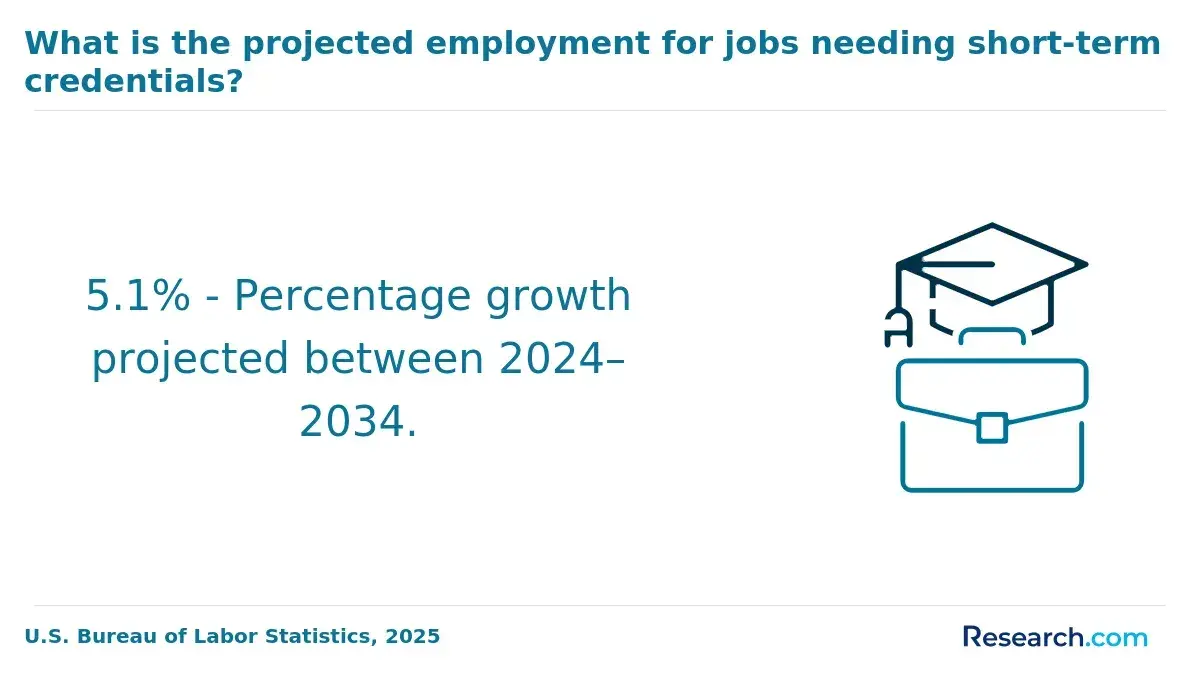
Career outlook also differs by occupation. BLS projections released for the 2024-34 period show faster growth for some supply chain and operations-related roles than for others, reflecting continued demand for efficiency, logistics coordination, and data-informed management. Students should use projections as directional information, not as a guarantee of local job openings.
Technology is reshaping food industry work. Employers increasingly use inventory analytics, demand forecasting, traceability software, self-ordering systems, robotics, automated production equipment, and AI-supported scheduling. This does not eliminate the need for managers, but it raises expectations: graduates should be comfortable reading dashboards, documenting processes, managing change, and communicating with technical teams.
- For higher earning potential, choose electives in analytics, operations, supply chain, finance, or quality systems rather than only general management.
- For faster entry, pair the degree with industry experience through internships, part-time work, apprenticeships, or employer-based projects.
- For technical roles, verify whether employers expect food science coursework, lab experience, or specific safety certifications in addition to management training.
- For leadership roles, build evidence of supervising people, improving processes, controlling costs, or managing audits.
A common mistake is treating median salary data as a personal forecast. Use salary figures to compare role families, then check local postings to see what employers in your region require and pay.
Which certifications help food industry management graduates?
Certifications can make a food industry management degree more practical by signaling job-ready knowledge in safety, quality, operations, or project execution. They are not always required, but they can help students stand out when the degree is broad and the target role is specific.
The table below lists credentials and training areas commonly valued in food-related management roles. Requirements vary by employer and state, so verify what is recognized in your target market.
| Certification or training area | Best for | Why it helps |
| Food Protection Manager or ServSafe Manager | Food service, retail food, catering, and institutional dining | Shows understanding of safe food handling, sanitation, and manager-level food safety responsibilities |
| HACCP training | Manufacturing, processing, seafood, meat, juice, and quality roles | Supports hazard analysis, critical control points, monitoring, corrective actions, and documentation |
| Preventive Controls Qualified Individual training | Food manufacturing and FSMA-related compliance roles | Useful for understanding preventive controls and food safety plans |
| SQF, BRCGS, or GFSI-related training | Supplier quality, audits, manufacturing, and retail supply chains | Helps with third-party audit expectations and customer compliance systems |
| Lean Six Sigma | Production, distribution, operations, and process improvement | Signals ability to reduce waste, analyze defects, and improve workflow |
| Project management certification | Product launches, facility projects, process changes, and cross-functional initiatives | Helps organize timelines, stakeholders, budgets, risks, and deliverables |
| Supply chain certifications | Procurement, planning, logistics, and inventory management | Supports roles involving forecasting, suppliers, distribution, and inventory control |
Choose certifications based on the job postings you actually want, not on a long list of credentials. The best sequence is usually degree coursework first, then one or two targeted certifications that match the function you plan to enter.
- Search current job postings for your target role and identify the certifications that appear repeatedly.
- Prioritize safety credentials first if you want food service, QA, manufacturing, or compliance roles.
- Add operations, project management, or supply chain credentials if you want supervisory, logistics, or process-improvement roles.
- Ask your employer whether it pays for certification exams, renewal fees, or required training hours.
- Track renewal requirements because food safety and professional certifications may expire.
A common mistake is collecting certifications without experience. Employers usually value credentials most when they are connected to real responsibilities, such as running a shift, preparing for an audit, managing inventory, reducing waste, or coordinating a supplier issue.
Other Things You Should Know About Food Industry Management
It can be worth it if you want management, operations, food safety, supply chain, or food service leadership roles and the program is accredited, affordable, and aligned with your target job. It may be less worthwhile if you need a clinical dietetics pathway, a culinary credential, or a lab-heavy food science degree.
Yes, many online programs are designed for working adults. Before enrolling, confirm whether courses are asynchronous, whether exams are proctored at fixed times, and whether internships or capstones can be completed through your current employer.
A 2027 online food industry management degree often requires courses in supply chain management, marketing, finance, and operations. While science courses are generally not mandatory, students might encounter modules related to food safety and technology if they align with certain aspects of the program.
Food industry management focuses on business, operations, safety systems, supply chains, and people leadership. Food science is more technical and emphasizes chemistry, microbiology, processing, product development, and laboratory-based analysis.
References
- Navigating Accreditation in the Food Industry: A Podcast Sub-Series https://iaf.news/2024/05/31/navigating-accreditation-in-the-food-industry-a-podcast-sub-series/
- How Long Does It Take to Get a Business Management Degree? | University of Phoenix https://www.phoenix.edu/blog/how-long-does-it-take-to-get-a-business-management-degree.html
- Food Sub-Series, Episode 02 - Accreditation Matters: The Importance of Accreditation for the Private Sector - IAF https://iaf.nu/podcast/food-sub-series-episode-02-accreditation-matters-the-importance-of-accreditation-for-the-private-sector/
- Online Restaurant & Culinary Management | Institute of Culinary Education https://www.ice.edu/online-programs/restaurant-culinary-management
- Why I chose to study Food Industry Management (FIM) instead of Food Science https://www.uoguelph.ca/oac/news/why-i-chose-study-food-industry-management-fim-instead-food-science
- World Food and Agribusiness Schools & Programs https://www.ifama.org/schools-and-programs
- Food-Related Jobs and Careers in the Food Industry https://www.ficsi.in/food-industry-job-portal
- Study Food Industry Management in the USA https://www.studyusa.com/en/field-of-study/395/food-industry-management
- Food Industry Careers & Jobs | General Mills Careers https://careers.generalmills.com/career-areas
- Admissions Criteria https://ed.wum.edu.pl/pl/admissions-criteria