2027 Best Online Bachelor's in Food Industry Management for Adults Over 30

Co-Founder and Chief Data Scientist
Choosing an online bachelor's in food industry management is a practical decision if you already work in restaurants, food production, retail grocery, distribution, or quality assurance and want a path into supervision. The U. S. Bureau of Labor Statistics reported a May 2024 median annual wage of $65,310 for food service managers, but higher-paying operations, logistics, and production roles often require stronger business, safety, and data skills. This guide explains program options, costs, accreditation, timelines, career outcomes, and red flags so adults over 30 can compare schools with confidence.
Key Things You Should Know
- Online food industry management is usually not one single major name; the best-fit accredited options often appear as food science and industry, agribusiness management, hospitality or food and beverage management, supply chain, or food entrepreneurship bachelor's programs.
- Cost varies widely: College Board's 2024 pricing data lists average published tuition and fees of $11,610 for in-state public four-year colleges and $43,350 for private nonprofit four-year colleges, so transfer credits and employer tuition benefits can materially change ROI.
- Career outcomes depend on the target role: BLS May 2024 data shows food service managers at a $65,310 median annual wage, logisticians at $80,880, and industrial production managers at $121,440, making curriculum fit more important than the degree title alone.
What is an online bachelor's in food industry management and who is it best for?
An online bachelor's in food industry management is a business-focused undergraduate degree that prepares students to manage people, processes, safety standards, costs, supply chains, and customer expectations in food-related organizations. Because colleges use different degree names, adults should look beyond the title and examine whether the curriculum covers food safety, operations, procurement, quality control, finance, leadership, and regulatory compliance.
This degree is best for working adults who already understand the pace and constraints of the food sector but need a bachelor's credential to move from shift-level or technical work into management. It can fit restaurant supervisors, grocery department managers, warehouse leads, production line coordinators, culinary professionals, military food service personnel, and food safety or QA technicians.
The degree is usually a strong fit when your goal is management rather than clinical nutrition. If your interests are more focused on human nutrition, wellness coaching, or dietetics prerequisites, a nutritional science degree online may be a better match than a food industry management program.
The table below summarizes common program directions. Use it to identify which academic path most closely matches the job you want, because a foodservice leadership program and a food science operations program may lead to different hiring conversations.
| Program direction | Best for | Typical focus | Watch for |
| Food science and industry | Quality assurance, production, product development, safety coordination | Food chemistry, processing, sanitation, regulatory standards, quality systems | May include lab requirements or science prerequisites |
| Food and beverage or hospitality management | Restaurant, catering, hotel food service, multi-unit operations | Service operations, cost control, menu planning, staffing, customer experience | May be less technical for manufacturing or QA roles |
| Agribusiness or food systems management | Procurement, supply chain, grocery, distribution, agricultural food companies | Commodity markets, logistics, finance, marketing, food supply networks | May focus more on upstream agriculture than finished food production |
| Business administration with operations or supply chain focus | Adults who want broader management mobility | Accounting, analytics, project management, process improvement, logistics | May need food safety electives or certifications to show industry specialization |
Adults over 30 should be especially careful about opportunity cost. If you already have strong industry experience, the most valuable program is often the one that accepts your transfer credits, lets you study around work, and fills specific gaps in finance, compliance, analytics, and leadership.
How do online food industry management degrees compare to on-campus programs for working adults?
For working adults, the main difference between online and on-campus programs is not academic quality by itself; it is access. A well-designed online program can let you keep earning income while completing the bachelor's credential, but it requires stronger self-management and a clear plan for hands-on requirements such as labs, internships, or field projects.
NCES' 2024 reporting on distance education shows that online learning is now a mainstream part of undergraduate education rather than a niche format. For adults over 30, that matters because employers are generally more focused on institutional accreditation, relevant skills, and experience than on whether every course met in a physical classroom.
The table below compares online and on-campus formats through the lens of an adult learner who may be balancing work, family, and previous college credits.
| Factor | Online bachelor's | On-campus bachelor's | Decision point for adults over 30 |
| Schedule | Often asynchronous or evening-friendly | Usually fixed class times | Online is usually better if work hours change weekly |
| Hands-on learning | May use local fieldwork, virtual labs, simulations, or short residencies | May offer campus labs, production kitchens, or student-run facilities | Ask how food safety, lab, or internship requirements are completed |
| Networking | Depends on cohort design, faculty access, and employer projects | Often easier for in-person career fairs and student clubs | Online students should look for employer-connected projects and active advising |
| Cost control | May reduce commuting, relocation, and schedule disruption costs | May provide local facilities and campus-based support | Total cost matters more than tuition alone |
| Learning fit | Best for disciplined students who can plan weekly work | Best for students who need face-to-face structure | Choose the format you can finish, not just the format that looks cheapest |
Online programs make the most sense when the school has clear advising, transfer-friendly policies, credible accreditation, and courses that match your career direction. On-campus study may be better if you need intensive lab access, culinary facilities, or local employer networking that is difficult to replicate online.
A common mistake is assuming "online" means easier. In reality, many online bachelor's programs require the same exams, projects, writing, and team assignments as campus programs. Before enrolling, ask for a sample course schedule and confirm how many hours per week students typically spend on readings, assignments, and group work.
Which accredited schools offer reputable online bachelor's programs in food industry management?
There are relatively few U.S. bachelor's programs named exactly "food industry management" online. The better search strategy is to compare accredited programs that prepare students for food operations, food systems, food and beverage leadership, or food-related supply chain roles. Start with institutional accreditation, then evaluate whether the curriculum aligns with the job family you want.
The table below lists examples of accredited U.S. schools with online or distance-friendly bachelor's options that can support food industry management goals. Program availability, names, and delivery formats can change, so verify details with the school before applying.
| School | Relevant online bachelor's option | Why adults may consider it | Best-fit career direction |
| Kansas State University | Online bachelor's in food science and industry | Strong fit for students who want technical food production, processing, safety, and quality knowledge | Food QA, production supervision, regulatory support, product development support |
| Penn State World Campus | Online bachelor's in agribusiness management | Useful for adults interested in the business side of food supply, procurement, distribution, and agricultural markets | Food supply chain, purchasing, sales, agricultural food business |
| Arizona State University Online | Online bachelor's in food and nutrition entrepreneurship | Helpful for students interested in food ventures, wellness products, consumer food markets, or business development | Food entrepreneurship, product marketing, wellness-oriented food business |
| Johnson & Wales University | Online food and beverage or hospitality-related bachelor's options | Relevant for adults with restaurant, culinary, hotel, catering, or service operations experience | Foodservice management, beverage operations, hospitality leadership |
| Fort Hays State University | Online agricultural business bachelor's options | Often considered by students seeking a public-university pathway into agribusiness and food-system roles | Agribusiness, food distribution, commodity-related business roles |
When comparing schools, do not rely on the program title alone. A bachelor's in agribusiness may be stronger than a hospitality program for procurement roles, while a food science and industry degree may be stronger for quality assurance than a general business degree.
Use a short verification process before you request information or submit an application. This helps you avoid programs that sound relevant but do not actually support your desired career path.
- Confirm the institution is accredited by an agency recognized by the U.S. Department of Education or CHEA.
- Review the major courses, not just the marketing page, for food safety, operations, finance, supply chain, and leadership content.
- Ask whether the program accepts transfer credits from community colleges, military training, industry certifications, or previous four-year coursework.
- Check whether any labs, internships, practicums, or residencies are required and whether they can be completed near your home.
- Request career-outcome examples for adult online students, especially those entering supervision, QA, logistics, or foodservice management.
Red flags include vague accreditation language, pressure to enroll immediately, unclear total cost, no published curriculum, limited faculty information, and promises of specific salaries. A reputable school should be willing to explain academic requirements, costs, transfer policies, and student support before you commit.
What courses and concentrations are typically included in a food industry management curriculum?
A food industry management curriculum usually blends business management with food-specific knowledge. The strongest programs help students understand both "how food is made or served" and "how food organizations make decisions." For adults with experience, the most valuable courses often translate existing workplace knowledge into formal management language.
Most programs include a mix of core education, business courses, food-sector requirements, and electives. The list below highlights common subject areas and why they matter in the workplace.
- Food safety and sanitation: Covers contamination prevention, hazard controls, facility sanitation, and compliance expectations.
- Operations management: Teaches scheduling, workflow, capacity planning, process improvement, and productivity measurement.
- Supply chain and procurement: Focuses on sourcing, vendor management, inventory, distribution, traceability, and cost control.
- Food quality assurance: Introduces specifications, inspection systems, documentation, audits, and corrective actions.
- Accounting and finance: Helps managers interpret budgets, margins, labor costs, purchasing decisions, and profitability.
- Marketing and consumer behavior: Explains how food products, menus, brands, and retail strategies respond to customer demand.
- Leadership and human resources: Builds skills in staffing, training, conflict resolution, safety culture, and performance management.
- Data analytics and technology: Supports forecasting, inventory analysis, production metrics, and digital reporting systems.
Adults who want broader leadership mobility should also pay attention to project and process courses. If your current role already involves scheduling, launches, audits, or cross-functional teams, a project management online degree can also be a relevant alternative or complementary path.
The current trend affecting curriculum is digital traceability. Food companies increasingly need managers who can document sourcing, monitor cold-chain procedures, work with enterprise resource planning systems, and respond quickly to recall or audit requests. This does not mean every student needs to become a programmer, but it does mean spreadsheet fluency, data interpretation, and comfort with operational software are becoming more valuable.
Concentrations vary by school, but common options include food science, foodservice management, agribusiness, supply chain, hospitality operations, entrepreneurship, or quality and safety. Choose a concentration based on the work setting you want after graduation, not just the courses that look most familiar.
What admission requirements and prior experience do online programs expect from adults over 30?
Admission requirements for online bachelor's programs are usually manageable for adults over 30, but they vary by whether you apply as a first-year student, transfer student, degree-completion student, or returning adult learner. Many adults enter with prior college credits, military education benefits, employer training, or an associate degree.
The table below shows typical expectations. It is not a universal rule for every school, but it can help you prepare questions before speaking with admissions.
| Applicant profile | Common requirements | What adults should ask |
| First-time college student | High school diploma or GED, transcripts, application, possible placement requirements | Can I start part time, and are there adult learner orientation supports? |
| Transfer student | College transcripts, minimum GPA, completed credits, general education review | How many credits will transfer into the major, not just as electives? |
| Associate degree holder | Official transcripts, articulation review, remaining major requirements | Does my associate degree satisfy lower-division general education requirements? |
| Industry-experienced adult | Standard academic documents, possible resume, prior learning review at some schools | Can certifications, military training, or employer training be evaluated for credit? |
| International or multilingual applicant | Credential evaluation and English proficiency documentation when required | What transcript evaluation service and language scores are accepted? |
Prior food industry experience can help you understand coursework faster, but it does not usually replace core degree requirements unless the school has a formal prior learning assessment policy. Adults should request a written transfer evaluation before enrolling, because an unofficial estimate may not show how credits apply to the major.
Prepare for admission by gathering documents early. The steps below are especially useful if you attended multiple schools or have been out of college for several years.
- Order official transcripts from every college you attended, even if you completed only one course.
- Create a simple resume listing foodservice, production, retail, military, logistics, or quality experience.
- Collect proof of certifications such as ServSafe, HACCP, OSHA, SQF training, or employer-sponsored leadership programs.
- Ask whether the school offers credit for prior learning and whether there is a fee for portfolio review or exams.
- Confirm minimum technology requirements, course pacing, and whether exams use proctoring software.
Avoid applying only to the school with the shortest advertisement. A program that accepts fewer transfer credits may take longer and cost more than a program with a longer stated curriculum but a better transfer policy.
How long does it take to complete an online food industry management bachelor's and how is it structured?
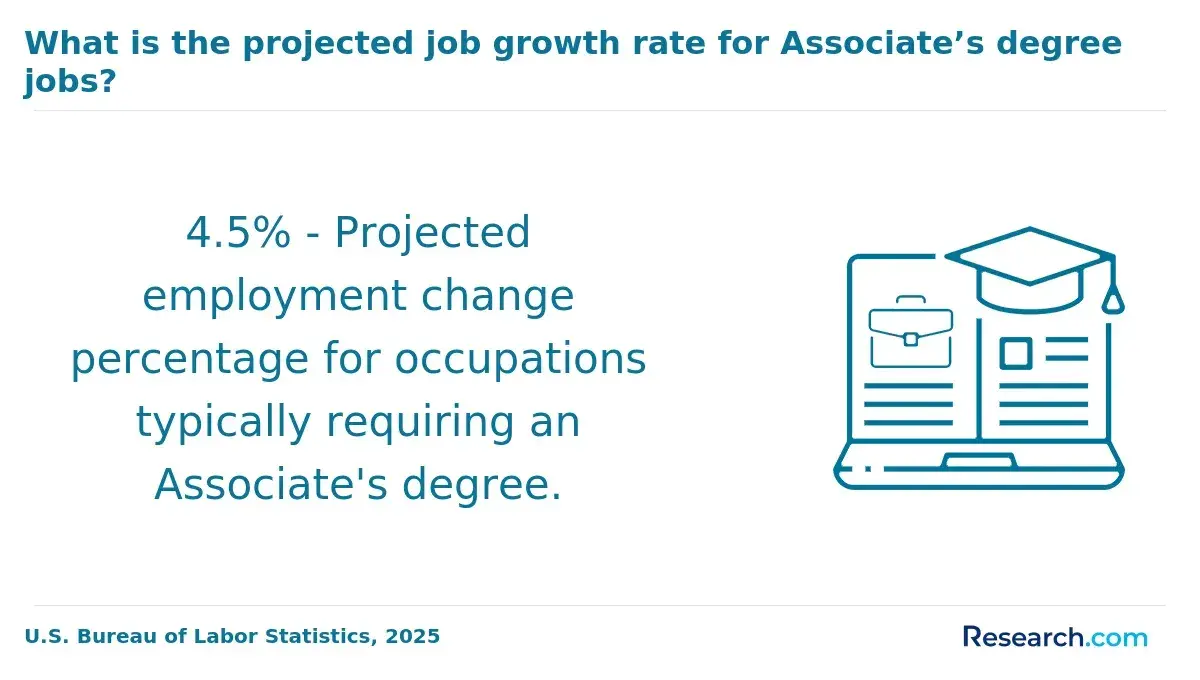
Most bachelor's degrees require about 120 semester credits, but your actual completion time depends on transfer credits, course load, term length, prerequisites, and whether the program is designed for full-time or part-time students. Adults over 30 often finish fastest when they enter with an associate degree or substantial prior credits that apply directly to the major.
The table below gives practical timeline scenarios. Use it to estimate workload, not as a promise, because each school's calendar and transfer policy will change the result.
| Starting point | Likely remaining credits | Typical pace | Practical timeline |
| No prior college credit | About 120 credits | Full time or part time | About four years full time; longer part time |
| Some prior college credit | Often 60 to 90 credits, depending on transfer evaluation | Part time while working | Commonly two to four years |
| Associate degree completed | Often about 60 credits, if well aligned | Part time or accelerated terms | Commonly 18 months to three years |
| Second bachelor's student | Major and prerequisite courses only in some cases | Varies by school | Can be shorter if general education is waived |
Online programs may use 8-week, 10-week, 12-week, or traditional semester formats. Shorter terms can help motivated students maintain momentum, but they compress assignments and can be difficult during peak work seasons, audits, holidays, or inventory periods.
Before choosing an accelerated path, adults should compare structure carefully. The best timeline is the one you can sustain without sacrificing job performance, family responsibilities, or course quality.
- Choose full-time study if you have stable work hours, strong support at home, and enough financial aid or savings to manage the workload.
- Choose part-time study if you work rotating shifts, manage caregiving responsibilities, or have been out of school for many years.
- Choose accelerated terms only if you can protect weekly study time and handle frequent deadlines.
- Choose a cohort model if you want predictable sequencing and peer connection.
- Choose a self-paced or flexible model only if you are highly disciplined and comfortable asking for help early.
A common mistake is underestimating non-class time. A three-credit online course can still require several hours per week for readings, discussions, assignments, and projects. If you are taking two compressed courses while working full time, plan your calendar before the term begins.
What does an online food industry management degree cost, and what financial aid options exist?
The cost of an online food industry management bachelor's depends on tuition, fees, transfer credits, residency rules, books, technology, lab kits, travel for any required residency, and lost work hours. Published tuition is only one part of the decision; the real comparison is total remaining cost to graduate.
College Board's 2024 pricing data gives a useful benchmark for four-year colleges. These figures are published tuition and fees, not total living costs, but they show why public in-state options and transfer pathways can matter for adult learners.
- Average published tuition and fees at public four-year in-state institutions: $11,610 for the 2024-25 academic year.
- Average published tuition and fees at public four-year out-of-state institutions: $30,780 for the 2024-25 academic year.
- Average published tuition and fees at private nonprofit four-year institutions: $43,350 for the 2024-25 academic year.
- Maximum federal Pell Grant for eligible students: $7,395 for the 2024-25 award year.
Those numbers do not mean the cheapest tuition automatically produces the best value. A slightly higher per-credit program can cost less overall if it accepts more transfer credits, offers a clear degree plan, includes strong advising, and reduces the chance of repeating courses.
The table below shows cost factors adults should compare before enrolling. It is designed to help you ask for the right numbers rather than relying on a single advertised tuition rate.
| Cost factor | Why it matters | Question to ask |
| Per-credit tuition | Determines the base instructional cost | Is online tuition different for in-state and out-of-state students? |
| Transfer credit acceptance | Can reduce the number of credits you must pay for | How many credits apply to the major and graduation requirements? |
| Fees | Technology, online course, graduation, lab, and proctoring fees add up | Can you provide a full fee schedule for online students? |
| Books and materials | Food safety, science, and business courses may require paid platforms | Are course materials included in tuition or charged separately? |
| Residency or field requirements | Travel can increase total cost | Can required hands-on work be completed near my location? |
| Time to completion | Extra terms can increase tuition and delay career mobility | What is my written plan to graduation after transfer evaluation? |
Financial aid may include federal grants, federal loans, state grants, institutional scholarships, military and veteran education benefits, employer tuition assistance, union education benefits, and payment plans. Complete the FAFSA if you are eligible, even if you expect to attend part time, because adult learners sometimes overlook grant eligibility.
To reduce cost, start with a transcript evaluation, compare degree-completion pathways, ask about employer partnerships, and avoid taking courses before you know whether they will count. If your employer offers tuition reimbursement, confirm grade requirements, annual limits, repayment clauses, and whether the degree must directly relate to your current position.
What careers can graduates pursue with an online bachelor's in food industry management?
Graduates can pursue roles across restaurants, hospitality, food manufacturing, grocery, distribution, institutional foodservice, agribusiness, and consumer packaged goods. The best career path depends on whether the degree emphasizes operations, science, hospitality, supply chain, or entrepreneurship.
The table below connects common job targets with the kind of preparation employers may value. It is useful because "food industry management" can lead to very different work environments.
| Career path | Typical responsibilities | Useful preparation |
| Food service manager | Supervise staff, control labor and food costs, manage service quality, ensure sanitation | Hospitality management, food safety, accounting, leadership |
| Production supervisor | Coordinate production schedules, monitor output, train line staff, address workflow issues | Operations, quality systems, food processing, safety culture |
| Quality assurance coordinator | Maintain documentation, support audits, monitor specifications, investigate deviations | Food science, HACCP, sanitation, regulatory compliance |
| Procurement or purchasing specialist | Evaluate suppliers, manage costs, coordinate inventory, support traceability | Agribusiness, supply chain, finance, negotiation |
| Distribution or logistics coordinator | Track shipments, manage warehouse flow, coordinate cold-chain or delivery timelines | Logistics, analytics, inventory systems, operations |
| Food entrepreneur or product manager assistant | Support product launches, market research, vendor coordination, pricing, and compliance | Entrepreneurship, marketing, food regulations, finance |
Adults with prior supervisory experience may be able to move into management faster than younger graduates entering the field for the first time. However, employers may still expect evidence of technical competence, such as food safety certification, experience with inventory or scheduling systems, or familiarity with audit documentation.
For longer-term advancement, some graduates later pursue graduate business education focused on process improvement, supply chain, or operations. An operations management MBA may make sense after you have several years of supervisory experience and want to compete for plant, regional, corporate operations, or senior supply chain roles.
This degree may not be the best investment if your only goal is to become a chef, earn a short-term food handler credential, or qualify for a clinical dietitian role. In those cases, culinary school, targeted certifications, or an accredited dietetics pathway may be more direct.
What salary ranges and job growth should food industry management majors expect?
Salary varies by role, region, employer size, shift expectations, and whether the job is in restaurants, manufacturing, logistics, retail, or corporate operations. A bachelor's degree can strengthen eligibility for management-track roles, but it does not guarantee a specific title or income.
BLS May 2024 wage data provides useful national benchmarks for several roles related to food industry management. Use these figures as context, then compare them with local job postings in your target city or state.
| Related occupation | May 2024 median annual wage | How to interpret it |
| Food service managers | $65,310 | Relevant for restaurant, catering, institutional dining, and hospitality food operations |
| Logisticians | $80,880 | Relevant for supply chain, inventory, distribution, and cold-chain coordination roles |
| Industrial production managers | $121,440 | Relevant for experienced manufacturing leaders, including food production environments |
Job growth also differs by track. BLS projections released for the 2024-2034 period show especially strong outlook for logisticians, with 19% projected employment growth, while some foodservice and production management roles are expected to grow more slowly. For adults, this means a degree with supply chain, analytics, and operations content may provide broader mobility than a program focused only on front-of-house foodservice.
Technology is changing the skill profile for these roles. Employers increasingly use scheduling software, inventory platforms, sensor data, digital quality records, and demand forecasting tools. AI and automation are unlikely to remove the need for human managers in food settings, but they are raising expectations for managers who can interpret data, train staff, document compliance, and improve processes.
To evaluate ROI, compare the total remaining cost of the degree with the roles you can realistically pursue after graduation. If you already supervise employees, a bachelor's may help you qualify for corporate, regional, or production leadership roles. If you are new to the industry, expect to build experience through coordinator, assistant manager, QA technician, or shift supervisor positions before moving higher.
Are certifications or professional standards important for food industry management careers?
Certifications and professional standards are important in food industry management because food employers operate under safety, sanitation, labeling, quality, and traceability expectations. A bachelor's degree can provide broad preparation, but certifications often show job-specific readiness.
The table below lists common credentials and standards that may be relevant. Requirements vary by employer, state, and role, so confirm what is expected in your target job postings.
| Credential or standard | Common relevance | Best for |
| ServSafe Manager | Food protection, sanitation, and safe service practices | Restaurant, institutional dining, catering, and hospitality managers |
| HACCP training | Hazard analysis, preventive controls, documentation, and corrective actions | Food manufacturing, QA, processing, and regulatory support roles |
| Preventive Controls Qualified Individual training | Supports compliance with FDA preventive controls expectations in many food facilities | Quality, safety, compliance, and production professionals |
| SQF, BRCGS, or similar GFSI-related training | Supports audit readiness and quality management systems | Food manufacturing and supplier quality roles |
| Lean Six Sigma | Process improvement, waste reduction, and operational efficiency | Production, distribution, and operations management roles |
If your goal is to become a registered dietitian, food industry management is not usually the correct standalone path. Dietitian eligibility has specific accredited education and supervised practice requirements, so compare best online registered dietitian programs if clinical nutrition is your intended career direction.
Professional standards are also evolving around traceability and documentation. FDA's Food Traceability Rule under FSMA Section 204 has pushed many food companies to improve recordkeeping for designated foods, which increases demand for managers who understand lot tracking, supplier documentation, recall procedures, and digital compliance systems.
A smart strategy is to pair the bachelor's degree with one or two role-specific credentials rather than collecting random certificates. For example, a restaurant manager may prioritize ServSafe Manager and cost-control training, while a QA coordinator may prioritize HACCP, preventive controls, and audit documentation.
Other Things You Should Know About Food Industry Management
Employers typically care most about institutional accreditation, relevant coursework, experience, and job-ready skills. An online degree from an accredited school is generally more credible than a low-cost program with unclear accreditation or weak career alignment.
Many adults do, especially in asynchronous or part-time programs. The key is choosing a course load that fits your work schedule and confirming in advance whether labs, internships, proctored exams, or group projects require fixed meeting times.
An online bachelor's in food industry management is worth it for adults over 30, offering flexibility to balance work and study. It equips students with management, marketing, and operational skills relevant to the food sector. This degree can enhance career prospects, salary potential, and job satisfaction for mature students in the growing food industry.
References
- Food Business Management https://www.ciachef.edu/cia-new-york-food-business-management-bachelors-degree-program/
- Most Important Food Safety Certifications & Qualifications - FSNS https://fsns.com/food-qualifications-and-certifications/
- Third-level courses and mature students https://www.citizensinformation.ie/en/education/third-level-education/applying-to-college/third-level-courses-for-mature-students/
- Food Industry Management https://www.niagara.edu/programs/food-industry-management/
- Business Management - Understanding Costs & Financial Aid Options - Cincinnati State https://www.cincinnatistate.edu/business-management-degree-understanding-costs-and-how-to-make-it-affordable/
- 2026 Food and Beverage Industry Salary Guide https://kinsa.com/2026-02-salary-guide-2026-compensation-trends-in-the-food-and-beverage-industry/
- Training & Certification Programs https://m.careersinfood.com/career-planning/education-and-training/training-and-certification-programs/
- How to choose a culinary and restaurant management course? https://insights.ehl.edu/choosing-culinary-and-restaurant-management-course
- Why I chose to study Food Industry Management (FIM) instead of Food Science https://www.uoguelph.ca/oac/news/why-i-chose-study-food-industry-management-fim-instead-food-science
- Study Food Industry Management in the USA https://www.studyusa.com/en/field-of-study/395/food-industry-management