2027 Online Food Industry Management Degrees With Consumer Packaged Goods Focus

Co-Founder and Chief Data Scientist
Choosing an online food industry management degree is really a career-fit decision: do you want to manage products, supply chains, brands, retail operations, or food safety systems? USDA ERS reported that U.S. food expenditures exceeded $2.6 trillion in 2024, which shows why employers need managers who understand both food operations and consumer packaged goods. This guide is for working adults, transfer students, and career changers, comparing online options. You will learn how these programs work, what they cost, which careers they support, and how to avoid choosing a degree that does not match your goals.
Key Things You Should Know
- Online food industry management programs are usually housed in business, agribusiness, hospitality, retail, or food systems departments; a true CPG focus is more often built through electives, internships, projects, or certificates than through a standalone major.
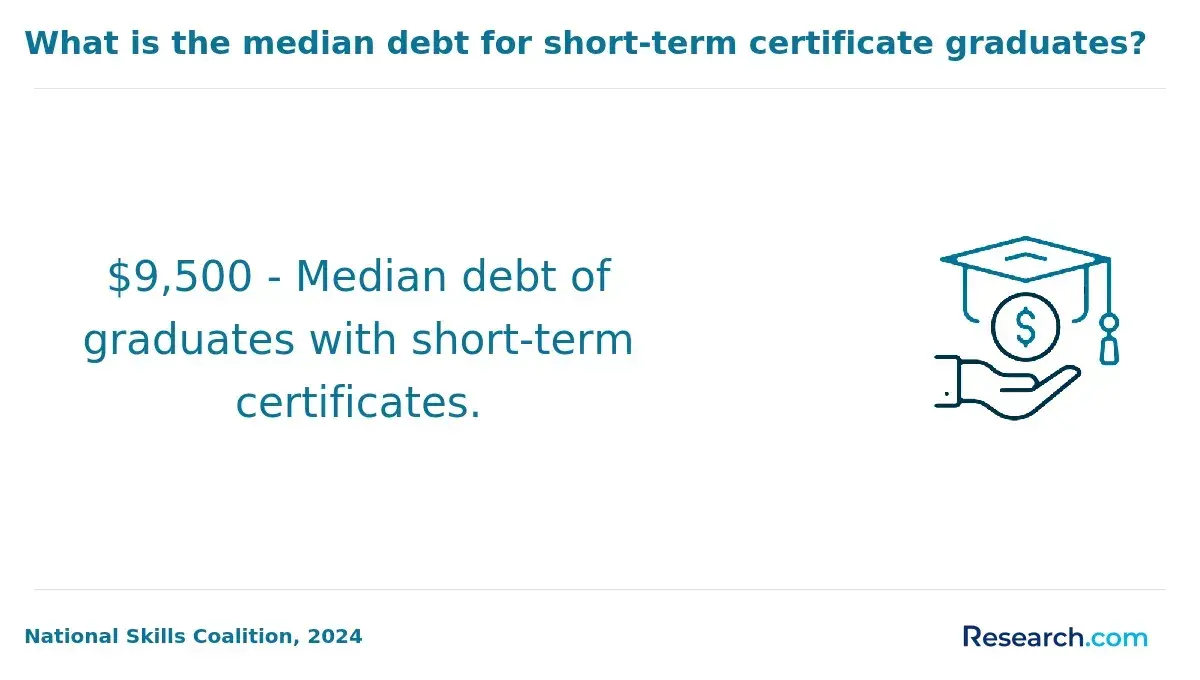
- For cost planning, College Board reported 2024-25 average published tuition and fees of $11,610 for in-state public four-year students and $43,350 for private nonprofit four-year students, before financial aid.
- BLS May 2024 wage data shows relevant roles vary widely: market research analysts had a median annual wage of $76,950, logisticians $80,880, and sales managers $138,060, so ROI depends heavily on the job track you pursue.
What is an online food industry management degree with a CPG focus?
An online food industry management degree with a consumer packaged goods focus prepares students to manage how food products are developed, sourced, priced, distributed, marketed, and sold. "Food industry management" is the broader business side of the food sector, while "CPG" refers to packaged products that consumers buy repeatedly, such as snacks, beverages, frozen meals, dairy products, condiments, and shelf-stable foods.
These degrees are a good fit if you want a business career connected to food but do not necessarily want to become a chef, registered dietitian, or laboratory food scientist. Typical students include grocery and food service employees seeking promotion, supply chain workers moving into management, sales professionals targeting national food brands, and business students who want a specialized industry angle.
The degree may appear under different names depending on the school. This matters because a program title alone does not tell you whether it fits a CPG career path. The table below summarizes common degree types and when each makes sense.
| Program type | Best fit | CPG relevance | Watch for |
| Food industry management | Students who want a direct path into food retail, distribution, brand operations, or category management | Usually the closest match if the curriculum includes merchandising, supply chain, sales analytics, and food marketing | Some programs focus more on grocery operations than packaged goods brand strategy |
| Agribusiness management | Students interested in food supply chains, sourcing, commodities, or agricultural inputs | Strong for upstream and midstream roles that connect producers, processors, distributors, and retailers | May have less coverage of consumer insights, packaging, and retail activation |
| Business administration with food, retail, or supply chain electives | Students who want flexibility across food and non-food employers | Useful if you add CPG internships, analytics courses, and food-focused capstone projects | May be too broad unless you intentionally build a food-sector portfolio |
| Hospitality or food and beverage management | Students targeting restaurants, hotels, catering, or food service operations | Relevant to prepared foods, food service brands, and customer experience | Often less focused on packaged goods manufacturing and retail shelf strategy |
| Food science or food safety management | Students interested in quality assurance, compliance, product development, or technical operations | Strong for regulatory, quality, and product roles in packaged food companies | May require more science prerequisites than business-focused programs |
If your goal is clinical nutrition, patient counseling, or dietetics licensure, this is not the same pathway. In that case, an online dietitian degree or a nutrition and dietetics program may be a better fit than food industry management.
Which schools offer accredited online food industry management programs?
Accredited online food industry management programs are available, but students should know that "CPG focus" is rarely a formal accreditation category. The most important baseline is institutional accreditation from a recognized accreditor. Depending on the school, additional business accreditation, such as AACSB or ACBSP, may strengthen the program's credibility for management roles.
Because program names change and online availability can vary by state authorization, use the following as a practical comparison framework rather than a fixed ranking. The table shows examples of accredited online or online-friendly programs that can support food industry, agribusiness, retail, or CPG-related goals.
| School or program type | Online fit | Why it may work for CPG-focused students | What to verify before applying |
| Arizona State University Online business or food industry management pathways | Online undergraduate options may support working adults and transfer students | Business, retail, supply chain, and food-sector coursework can align with brand, category, and grocery operations roles | Confirm the exact current major name, concentration requirements, and whether food industry courses are available online |
| Penn State World Campus agribusiness management pathways | Online bachelor's-level agribusiness options can support food supply chain and food systems careers | Useful for students interested in sourcing, distribution, agricultural markets, and food-company operations | Check how many electives can be tailored toward packaged foods, retail, analytics, or marketing |
| Kansas State University online agribusiness graduate pathways | Online graduate study can fit experienced professionals in food, agriculture, or distribution | Strong for mid-career students moving into management, procurement, sales, or supply chain leadership | Ask whether the curriculum includes CPG case work, food retail, or consumer analytics |
| Johnson & Wales University online food and beverage business pathways | Online food and beverage business programs may fit students focused on operations and entrepreneurship | Relevant to food brand creation, food service operations, and product commercialization | Confirm whether the program emphasizes packaged products, food service, entrepreneurship, or hospitality management |
| Business administration programs with supply chain, marketing, or analytics concentrations | Widely available online at accredited public and private institutions | Can be a smart route if you already work in food retail, distribution, manufacturing, or sales | Make sure you can complete food-focused internships, projects, or electives instead of a generic business plan |
A common mistake is assuming that any food-related online degree automatically prepares you for CPG brand management. Before enrolling, ask admissions advisors for the current course map, recent internship employers, capstone examples, and graduate job titles. If the answers mostly point to restaurant supervision or culinary operations, the program may not be the best match for packaged goods careers.
Also avoid confusing food industry management with healthcare information management. If your real interest is health data, medical records, coding, or healthcare analytics, compare best CAHIIM accredited HIM programs online instead of food business degrees.
How do online and campus food industry management degrees compare?
Online and campus food industry management degrees can lead to similar academic credentials when they are offered by accredited institutions, but the learning experience is different. The better option depends on your schedule, career stage, need for internships, and access to food companies near you.
The table below compares the main decision factors. Use it to decide whether online study gives you enough flexibility without sacrificing the hands-on experiences that food and CPG employers value.
| Factor | Online degree | Campus degree | Best choice when |
| Schedule | Often asynchronous or evening-friendly, which helps working adults | Usually follows fixed class times and campus calendars | Choose online if you need to keep full-time work or family responsibilities |
| Networking | Requires more intentional effort through virtual events, LinkedIn, employer projects, and local industry groups | May offer easier access to campus career fairs, faculty offices, and student organizations | Choose campus if you want structured networking and can relocate or commute |
| Internships | Can often be completed near your home or current employer | May be tied to local employers near the university | Choose online if you already work in food retail, distribution, sales, or manufacturing |
| Hands-on learning | Strong when courses use simulations, data tools, employer projects, and local fieldwork | May offer labs, store visits, product development facilities, or in-person team projects | Choose campus for technical product development or lab-heavy goals |
| Cost control | May reduce commuting, relocation, and lost-wage costs | May provide more campus-based scholarships or assistantships in some programs | Compare total cost, not tuition alone |
For CPG careers, online students should be proactive about building evidence of job readiness. A degree transcript matters, but employers also value category analyses, product launch plans, supply chain dashboards, retail audits, and internship outcomes. If the online program does not include applied projects, create them through your current job, a local grocery chain, a food manufacturer, or a student consulting project.
Online learning is also being shaped by AI and analytics. Food companies increasingly use demand forecasting, shelf-space analytics, automated replenishment, and consumer data platforms. That does not make human managers less important; it changes what "management-ready" means. Students should look for programs that teach Excel modeling, data visualization, pricing analysis, forecasting, and ethical use of consumer data.
What courses are in a consumer packaged goods focus?
A CPG focus should combine business fundamentals with food-sector knowledge. The goal is not only to understand packaged food products, but also to understand how those products move from idea to shelf to repeat purchase.
The table below shows course areas that are especially valuable for students targeting packaged food companies, grocery retailers, distributors, or food service suppliers.
| Course area | What you learn | Why it matters in CPG food careers |
| Food marketing and consumer behavior | How shoppers make purchase decisions, respond to promotions, and evaluate brands | Supports brand, category, sales, and shopper marketing roles |
| Retail and category management | Assortment planning, shelf placement, pricing, promotions, and vendor relationships | Directly relevant to grocery, mass retail, club, convenience, and e-commerce channels |
| Supply chain and logistics | Forecasting, inventory, warehousing, cold chain, transportation, and fulfillment | Food products are time-sensitive, regulated, and margin-sensitive, so operational skill matters |
| Food safety and regulatory basics | Labeling, traceability, sanitation, hazard controls, and compliance responsibilities | Managers need to understand risk even when they are not the technical food safety lead |
| Managerial accounting and pricing | Cost behavior, margins, trade spending, break-even analysis, and financial decision-making | CPG teams often make decisions based on margin, velocity, and promotional return |
| Data analytics for business | Spreadsheets, dashboards, forecasting, market data, and performance metrics | Helps students interpret sales trends, distribution gaps, and consumer demand patterns |
| Product development or commercialization | Concept testing, packaging, launch planning, and cross-functional coordination | Useful for students who want to work with innovation, private label, or emerging food brands |
When comparing curricula, look for applied assignments rather than only course titles. A strong CPG-focused program might ask students to analyze a grocery category, design a go-to-market plan for a packaged product, evaluate a supplier risk, or build a demand forecast. Those projects can become portfolio pieces for interviews.
Students should also know the difference between food business and nutrition credentials. An online dietician program is designed around nutrition, supervised practice, and dietetics requirements, while food industry management is designed around business, operations, sales, and product-market decisions.
What admission requirements do these programs usually have?
Admission requirements depend on degree level and school selectivity. Bachelor's programs usually focus on academic readiness and transfer credit, while master's programs often expect a bachelor's degree and may prefer applicants with professional experience in food, agriculture, retail, hospitality, logistics, or business.
Most applicants should prepare the following materials before contacting schools. These requirements are common, but students should always check the current catalog because online programs can update policies by term.
- High school transcript, GED, or prior college transcripts for undergraduate admission.
- Official transcripts from all colleges attended, especially if you want transfer credit.
- Minimum GPA requirement, which varies by institution and may be higher for business schools or graduate programs.
- Resume or work history for adult learners, degree-completion students, or graduate applicants.
- Statement of purpose explaining why you want food industry, CPG, agribusiness, retail, or supply chain management.
- Prerequisite courses in business, statistics, economics, accounting, or science for some programs.
- English language proficiency documentation for applicants whose prior education was not in English.
Transfer credit is especially important for online students. If you have an associate degree, military credit, industry training, or prior business coursework, ask for a written transfer evaluation before enrolling. A school with a lower tuition rate may cost more overall if it accepts fewer credits.
Applicants should also ask whether the program requires internships, field experiences, or in-person components. Online does not always mean "no campus visits" or "no scheduled meetings." If you work full time, confirm whether required activities can be completed locally or through your current employer.
If you are considering food industry management because you like structured data, compliance workflows, and operational systems, compare it with healthcare information paths as well. A health information technology associate degree online may be more appropriate if you want to work with medical coding, patient records, or healthcare data rather than food products.
How long does an online food industry management degree take?
The timeline depends on degree level, transfer credits, enrollment intensity, and whether the program uses traditional semesters or accelerated terms. A first-time bachelor's student usually needs about four academic years of full-time study, while transfer students may finish faster if credits apply cleanly to the major.
The table below gives a practical timeline comparison. Use it to estimate not only calendar time, but also the workload you can realistically sustain.
| Path | Typical completion time | Who it fits | Main trade-off |
| Full bachelor's degree from the start | About four years full time | First-time college students or students changing fields early | Longest path, but broadest foundation |
| Bachelor's degree completion | About one to three years, depending on accepted credits | Students with an associate degree or significant prior college coursework | Fastest undergraduate route if transfer policies are favorable |
| Online master's degree | Often one to three years | Working professionals seeking advancement into management, analytics, sourcing, or leadership | Usually not ideal for students with no business or food-sector experience unless the program includes bridge coursework |
| Graduate certificate | Often several months to one year | Professionals who already have a degree and need targeted skills | Lower commitment, but less comprehensive than a degree |
Accelerated programs can be useful, but they are not automatically better. A five-week or eight-week course format can be intense, especially when subjects include accounting, statistics, forecasting, or supply chain modeling. If you are working full time, ask how many hours per week students typically spend per course and whether group projects require scheduled meetings.
A smart timeline strategy is to map the degree against your career target. For example, a grocery department manager moving toward category management may benefit from a bachelor's completion program with retail analytics projects. A food manufacturing supervisor moving toward plant operations leadership may be better served by a master's or certificate with quality, logistics, and operations courses.
How much do online food industry management degrees cost?
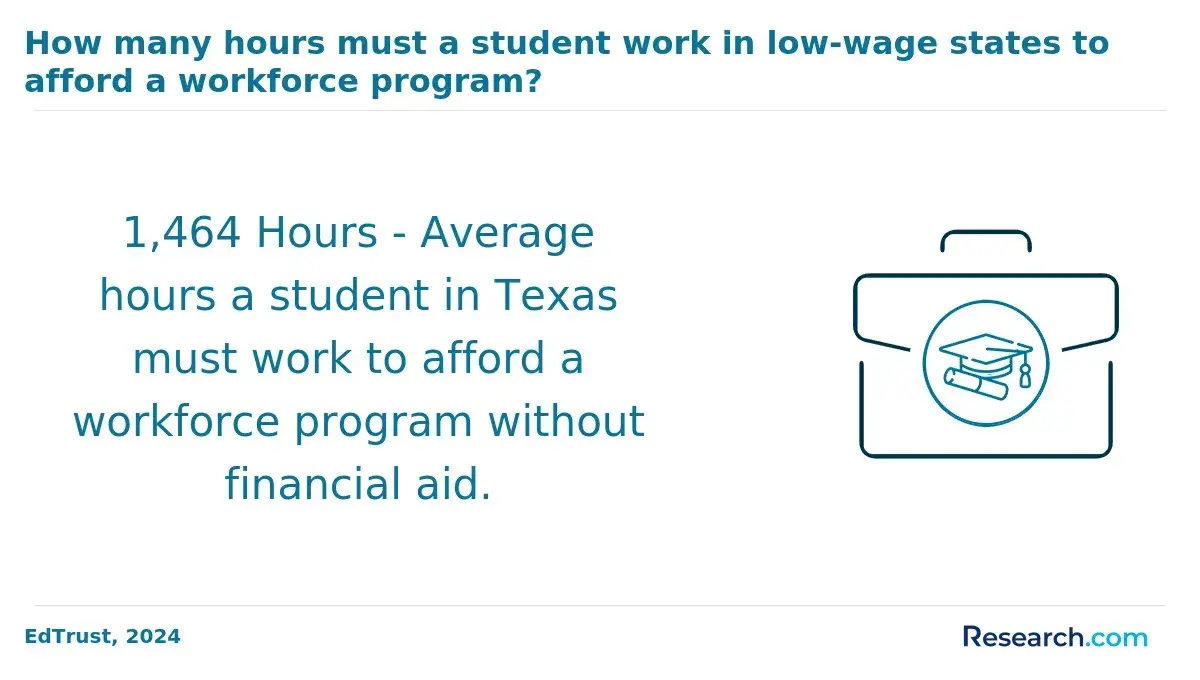
Costs vary widely by school, residency status, transfer credits, fees, books, technology requirements, and financial aid. College Board's 2024-25 figures are useful for context: average published tuition and fees were $11,610 for in-state students at public four-year institutions and $43,350 at private nonprofit four-year institutions. These are sticker prices, not what every student pays after grants, scholarships, employer assistance, or transfer credit.
When estimating the cost of an online food industry management degree, separate direct charges from hidden costs. Schools may advertise tuition per credit, but your real cost depends on how many credits you must complete and whether you pay additional online, course, graduation, or proctoring fees.
- Public in-state tuition may be the lowest advertised option when the online program charges resident rates.
- Public out-of-state tuition can be much higher unless the school offers a flat online rate.
- Private nonprofit tuition may be higher, but institutional scholarships or employer partnerships can reduce net cost.
- Transfer-friendly bachelor's completion programs can reduce total cost by accepting prior credits.
- Graduate certificates may cost less than master's degrees, but they may not carry the same career value for management roles requiring a degree.
Do not choose solely by the lowest tuition per credit. A program that accepts 75 transfer credits may be cheaper than a lower-priced program that accepts only 45. Similarly, a degree with strong employer projects, industry faculty, and internship support may produce better career value than a cheaper program with no food-sector network.
Before enrolling, ask each school for a total-cost estimate in writing. Good questions include: How many credits will I need after transfer evaluation? Are online students charged separate fees? Are textbooks included? Does financial aid apply to accelerated terms? Are internships paid or unpaid? Does the program qualify for employer tuition reimbursement?
What jobs can you get with a food industry management degree?
A food industry management degree can support several career paths, but the best options depend on the courses you choose and the experience you build while enrolled. CPG employers often look for a mix of business judgment, data literacy, communication, and understanding of food supply chains.
The table below summarizes common roles connected to food industry management and packaged goods. These are not guaranteed outcomes; they are realistic target areas when the degree is paired with relevant experience, internships, or industry projects.
| Job path | Typical responsibilities | Helpful degree emphasis | Entry point |
| Category management analyst | Analyze sales, assortment, pricing, promotions, and shelf performance for a product category | Retail analytics, consumer behavior, marketing, Excel, data visualization | Sales analyst, retail analyst, merchandising assistant |
| CPG sales representative or account manager | Manage retailer relationships, sell product lines, track promotions, and support distribution growth | Sales, negotiation, marketing, retail operations, financial analysis | Sales trainee, territory representative, broker support role |
| Supply chain or logistics coordinator | Coordinate inventory, transportation, supplier timelines, and order fulfillment | Logistics, forecasting, operations, cold chain, procurement | Logistics assistant, inventory coordinator, warehouse supervisor |
| Food retail or grocery operations manager | Manage store departments, labor, inventory, safety, merchandising, and customer experience | Retail management, food safety, accounting, leadership | Department manager, assistant store manager, shift supervisor |
| Product or brand coordinator | Support product launches, packaging updates, market research, and cross-functional projects | Marketing, consumer insights, product commercialization, project management | Marketing assistant, product coordinator, brand support specialist |
| Quality or compliance coordinator | Support documentation, audits, supplier compliance, traceability, and safety procedures | Food safety, regulatory basics, operations, quality systems | Quality technician, compliance assistant, production lead |
To improve your odds of landing a CPG-focused role, build proof of applied skill before graduation. Employers respond well to candidates who can show how they solved a product, pricing, inventory, or shopper problem, not just candidates who completed general business courses.
A practical career-building plan can include the following steps:
- Choose electives in analytics, supply chain, marketing, accounting, and food safety rather than only general management topics.
- Complete at least one project using real or realistic food retail, product, or sales data.
- Seek internships or part-time roles with grocery chains, distributors, food manufacturers, brokers, or food service suppliers.
- Learn common tools such as advanced Excel, Power BI, Tableau, ERP basics, and inventory or forecasting systems.
- Join food, retail, supply chain, or marketing associations to find mentors and job leads.
The biggest career mistake is waiting until the final term to think about employment. If you want CPG, your resume should show CPG language: category performance, sell-through, trade promotion, inventory turns, food safety, pricing, margin, shopper insights, and retailer relationships.
What salaries do food industry management graduates earn?
Salaries vary by role, region, employer size, experience, and whether the position is in retail operations, manufacturing, corporate sales, analytics, or supply chain. A food industry management degree does not lock you into one salary band because graduates may enter very different functions.
BLS May 2024 median annual wage data gives a useful benchmark for related occupations. These figures describe national occupational medians, not degree-specific outcomes, so use them as comparison points rather than promises.
| Related occupation | BLS May 2024 median annual wage | How it connects to food industry management |
| Market research analysts | $76,950 | Relevant to consumer insights, category analysis, shopper research, and brand decisions |
| Logisticians | $80,880 | Relevant to food distribution, forecasting, inventory, transportation, and supply chain planning |
| Industrial production managers | $122,870 | Relevant to food manufacturing operations, plant leadership, and production management |
| Sales managers | $138,060 | Relevant to CPG account leadership, regional sales management, and broker or distributor management |
The salary takeaway is that function matters. A graduate who enters store-level food retail management may start below a corporate analyst or supply chain role, while experienced sales and operations leaders may earn more after several years of performance. Location also matters because major food, retail, and CPG hubs may pay more but also have higher living costs.
To evaluate ROI, compare the degree's total net cost with the job family you are targeting. If you want a data-heavy role, prioritize analytics and internships. If you want sales leadership, prioritize account management, negotiation, and retail experience. If you want operations leadership, prioritize supply chain, food safety, and process improvement.
Do food industry management careers require certifications or licenses?
Most food industry management careers do not require a state license in the way nursing, teaching, or dietetics careers often do. However, certifications can improve credibility for roles involving food safety, supply chain, project management, analytics, or retail operations. Requirements vary by employer and job function.
The certifications below are commonly relevant in food business environments. They are not all required, and students should choose based on their target role rather than collecting credentials at random.
| Credential area | Common use | Best for | Important limitation |
| ServSafe or food protection manager certification | Food safety practices in retail, food service, and operations settings | Store managers, food service managers, department managers, operations supervisors | Requirements can vary by state, county, employer, and role |
| HACCP training | Hazard analysis and preventive controls in food production and processing | Quality, compliance, production, and operations roles | May not be necessary for sales or brand roles unless you work closely with manufacturing |
| Supply chain credentials | Inventory, logistics, planning, procurement, and operations improvement | Logistics coordinators, planners, procurement specialists, operations managers | Value depends on employer recognition and your experience level |
| Project management credentials | Structured planning, timelines, budgets, risk tracking, and cross-functional coordination | Product launch, commercialization, operations, and brand support roles | Usually more valuable after you have project experience |
| Analytics or business intelligence certificates | Dashboards, data cleaning, visualization, and decision support | Category analysts, sales analysts, demand planners, marketing analysts | Tools change quickly, so portfolio evidence matters as much as the certificate |
Licensure is most important if you move into a regulated profession outside general food business. For example, registered dietitian nutritionist requirements are different from CPG management requirements and may include accredited education, supervised practice, and credentialing exams. Food safety rules also vary by location, especially for managers responsible for handling food directly.
A practical approach is to earn the degree first, then add one targeted credential that matches your first job goal. For example, a grocery operations student may prioritize food protection certification, while a CPG analyst may prioritize analytics software and category management projects.
Other Things You Should Know About Food Industry Management
It can be worth it if you want management, sales, supply chain, retail, or brand roles in the food sector and the program includes applied business coursework. It is less useful if your goal is culinary training, clinical nutrition, or laboratory food science without business responsibilities.
Before enrolling in an online food industry management program in 2027, inquire about industry accreditation, faculty expertise, program curriculum relevance to CPG, networking opportunities, and alumni outcomes. Ensuring these aspects align with your career goals will maximize the program's value.
Ask whether the school is institutionally accredited, how many transfer credits will apply, whether food-focused electives are available online, what projects students complete, and which employers have hired recent graduates. Also request a full cost estimate before committing.
Many online students do, especially in asynchronous programs. The key is course load. One or two courses per term may be manageable for working adults, while accelerated full-time study can be difficult if classes include analytics, accounting, or group projects.
References
- Food Product (CPG) Deep Dive | JumpStart Inc. https://jumpstartinc.org/smallbiz/food-product
- What are Consumer Packaged Goods (CPG)? https://www.salesforce.com/consumer-goods/consumer-packaged-goods-software/guide/
- Online Master’s in Food Business - CIA School of Graduate and Professional Studies https://masters.culinary.edu/food-business-masters-degree/
- Why I chose to study Food Industry Management (FIM) instead of Food Science https://www.uoguelph.ca/oac/news/why-i-chose-study-food-industry-management-fim-instead-food-science
- Online Restaurant & Culinary Management | Institute of Culinary Education https://www.ice.edu/online-programs/restaurant-culinary-management
- Admission Requirements | Undergraduate Admissions + Programs https://www.ualberta.ca/en/admissions/how-to-apply/admission-requirements/index.html
- Master in Food & Beverage Management Online | Rome Business School https://romebusinessschool.com/master-online-in-food-and-beverage-management/
- Food Manager Certificate: Who, What, When, Where, Why, and How Much https://servingalcohol.com/food-manager-certificate-who-what-when-where-why-and-how-much/
- How Long Does It Take to Get a Business Management Degree? | University of Phoenix https://www.phoenix.edu/blog/how-long-does-it-take-to-get-a-business-management-degree.html
- Study Food Industry Management in the USA https://www.studyusa.com/en/field-of-study/395/food-industry-management