2027 Online Food Industry Management Degrees for Students Who Want Restaurant Group Management Careers

Co-Founder and Chief Data Scientist
Choosing an online food industry management degree is really a career investment decision. Will the program help you move from store-level operations into multi-unit restaurant leadership? The National Restaurant Association projected the U.S. restaurant industry would reach $1.5 trillion in sales and support 15.9 million jobs in 2025, making skilled managers central to growth, cost control, staffing, and guest experience.
This guide is for students, working restaurant employees, and career changers comparing online options. You'll learn what to study, what programs should include, how costs work, and how to judge career value.
Key Things You Should Know
- For restaurant group management, prioritize accredited bachelor's or master's programs that combine hospitality operations, food and beverage management, accounting, analytics, human resources, and multi-unit leadership rather than culinary technique alone.
- According to BLS wage data for May 2024, the median annual wage for food service managers was $65,310, but restaurant group roles can vary widely by company size, region, bonus structure, and whether the job includes district or regional oversight.
- Online formats can be especially practical for working restaurant employees, but the strongest programs still require applied projects, internship options, employer partnerships, transfer-credit flexibility, and clear evidence of graduate outcomes.
What is an online food industry management degree and how does it prepare restaurant group leaders?
An online food industry management degree is a business-focused hospitality program that prepares students to manage restaurants, food service brands, catering operations, franchises, and multi-location hospitality groups. It is different from a culinary arts program: culinary training focuses on food preparation, while food industry management focuses on profit and loss responsibility, labor planning, purchasing, service systems, safety compliance, brand standards, and team leadership.
For students aiming at restaurant group management, the most relevant degree is usually a bachelor's in hospitality management, food service management, restaurant management, or food and beverage management. Some students later add an MBA, hospitality master's, or operations-focused graduate certificate if they want district, regional, corporate, or ownership roles.
The best programs prepare restaurant group leaders by connecting classroom concepts to multi-unit decisions. A restaurant group manager needs to know why one location is profitable while another struggles, how to standardize service without making every restaurant feel robotic, and how to coach general managers who may each oversee dozens of employees.
Students who are still comparing broad hospitality pathways may also look at an online hospitality management course to understand how hospitality operations, lodging, events, food service, and customer experience overlap before committing to a full degree.
The core value of the degree is not just the credential. It is the structured exposure to business tools that many restaurant employees learn informally and unevenly on the job. That matters because restaurant group leadership requires consistent decisions across labor, food cost, guest satisfaction, vendor relationships, technology systems, and compliance.
Which accredited online food industry management programs best support restaurant group management careers?
The accredited online programs that best support restaurant group management careers usually share one feature: they are not limited to cooking, service, or general business. They connect hospitality operations with financial control, people management, food systems, and applied leadership. Institutional accreditation should be the first screen, and hospitality-specific accreditation or industry recognition can add value, although it is not always required by employers.
The table below summarizes the kinds of accredited online degree options students commonly compare. Use it to match the program type to your career stage rather than assuming that the most expensive or fastest option is automatically best.
| Program type | Best fit | Restaurant group management value | Potential limitation |
| Online associate degree in hospitality or food service management | Entry-level employees seeking shift lead, assistant manager, or transfer pathway | Builds fundamentals in service operations, sanitation, supervision, and basic accounting | May not be enough for district, corporate, or senior multi-unit roles |
| Online bachelor's in hospitality management with food and beverage coursework | Students targeting general manager, multi-unit manager, franchise operations, or brand leadership | Usually provides the strongest balance of business, operations, leadership, and applied hospitality content | Quality depends heavily on internship access, project design, and faculty industry experience |
| Online bachelor's in business administration with hospitality electives | Students who want broader business mobility beyond restaurants | Useful for finance, HR, marketing, analytics, and entrepreneurship within restaurant groups | May lack enough food cost, safety, service, and restaurant systems coverage |
| Online master's in hospitality, food service, or business management | Experienced managers seeking regional, corporate, consulting, or ownership roles | Can deepen strategic leadership, revenue management, analytics, and organizational decision-making | Less useful if the student lacks real restaurant operations experience |
| Graduate certificate in hospitality or food and beverage management | Professionals with a degree who need focused upskilling | Can be faster and cheaper than a second degree for targeted promotion goals | Usually has less labor-market signaling power than a full degree |
When comparing schools, look for evidence that restaurant operations are treated as complex businesses. Useful signals include case studies on multi-unit performance, food cost analysis, menu profitability, workforce scheduling, franchising, hospitality law, crisis management, supply chain disruptions, and hospitality technology platforms.
Be cautious with programs that use attractive food-related language but offer only a few hospitality courses inside a generic management degree. That can still be valuable, but it may not give you enough applied restaurant context unless you already have strong industry experience.
How do online food industry management degrees compare to campus-based programs for aspiring managers?
Online and campus-based food industry management programs can lead to similar academic credentials when they are offered by properly accredited institutions. The better choice depends on your schedule, need for in-person networking, local internship access, and whether you are already working in restaurants.
The table below compares the practical trade-offs. It is especially useful for students deciding whether to stay employed while studying or relocate for a campus hospitality program.
| Decision factor | Online program | Campus-based program | Best choice when |
| Work schedule | Often better for full-time restaurant employees with nights, weekends, or rotating shifts | May require fixed class times and commuting | Choose online if keeping your current restaurant job is central to affordability and career growth |
| Hands-on learning | Usually depends on local internships, employer-based projects, simulations, and capstones | May include teaching kitchens, campus dining operations, labs, and local hospitality partnerships | Choose campus if you need structured in-person practice and have limited industry experience |
| Networking | Can be strong if the program has live sessions, alumni groups, employer projects, and faculty access | Often easier for face-to-face networking with classmates and local recruiters | Choose the format with stronger restaurant employer connections in your target market |
| Cost control | May reduce commuting, housing, and lost-wage costs | May provide stronger campus services but can increase relocation or transportation costs | Choose online if opportunity cost is your largest expense |
| Career signal | Usually accepted when the school is accredited and the curriculum is relevant | May carry local brand recognition in hospitality markets | Choose based on accreditation, outcomes, and employer recognition rather than delivery mode alone |
For aspiring restaurant group managers, online learning can be a strength if you are applying course concepts directly at work. For example, a student managing shifts can test labor forecasting, inventory controls, guest recovery systems, or training plans in a real setting. That can make assignments more practical than hypothetical classroom exercises.
Campus learning may be better for students who are new to food service and need structured exposure to kitchens, dining rooms, lodging operations, and hospitality recruiters. The mistake is assuming one format is automatically superior. Employers usually care more about your experience, leadership record, business judgment, and the credibility of the institution.
What courses and specializations are included in food industry management degrees focused on restaurant groups?
Food industry management degrees focused on restaurant groups should include both hospitality-specific courses and broader business courses. Restaurant group leaders are judged on results across multiple variables: guest experience, labor cost, food cost, manager development, compliance, brand consistency, and local market performance.
Most strong programs include a version of the course areas below. These subjects matter because multi-unit managers must make decisions that affect several locations, not just one dining room.
- Restaurant and food service operations: how front-of-house, back-of-house, service timing, reservations, delivery, takeout, and guest recovery systems work together.
- Food and beverage cost control: recipe costing, inventory systems, purchasing, vendor negotiation, waste reduction, menu engineering, and contribution margin analysis.
- Hospitality accounting and finance: profit and loss statements, budgeting, cash controls, revenue forecasting, and capital planning for equipment or expansion.
- Human resources and labor management: recruiting, scheduling, retention, wage compliance, training, performance coaching, and conflict resolution.
- Food safety and sanitation: hazard prevention, regulatory compliance, allergen awareness, inspection readiness, and risk management.
- Hospitality marketing and revenue strategy: brand positioning, local store marketing, loyalty programs, digital ordering, reputation management, and customer data.
- Leadership and organizational behavior: motivating managers, setting standards, leading change, and building consistent culture across locations.
- Supply chain and purchasing: vendor selection, contract basics, shortages, substitutions, food quality standards, and distribution challenges.
- Franchising and entrepreneurship: franchise agreements, brand standards, owner-operator models, site selection, and growth planning.
- Hospitality technology and analytics: point-of-sale systems, scheduling software, inventory platforms, dashboards, customer feedback tools, and AI-assisted forecasting.
Specializations can help if they match your target role. A food and beverage concentration is useful for operations leadership. A hospitality analytics concentration can help students interested in corporate performance roles. An entrepreneurship track may fit future franchisees or restaurant owners. A nutrition or wellness emphasis may be relevant for institutional dining, healthcare food service, schools, senior living, or brands built around health-focused menus; students exploring that route may compare a nutritionist degree with hospitality management to see which credential better fits their goals.
AI and automation are also changing what managers need to understand. Restaurant groups increasingly use forecasting tools, automated inventory alerts, digital ordering data, labor optimization software, and customer sentiment analysis. A good degree does not need to turn you into a programmer, but it should teach you how to interpret dashboards, question flawed data, protect guest privacy, and make human-centered decisions from technology outputs.
What admission requirements and prerequisites do online food industry management programs typically have?
Admission requirements vary by school, degree level, and student status, but online food industry management programs generally evaluate academic readiness and, for some programs, professional experience. Students with restaurant work experience may be able to strengthen their application even if their earlier academic record is mixed.
Typical requirements differ by credential level. The table below gives a practical overview so you can estimate how prepared you are before contacting admissions offices.
| Program level | Common admission requirements | Helpful preparation | What to verify |
| Associate degree | High school diploma or GED, application, transcripts, placement assessment in some cases | Basic math, writing, computer skills, and any food service work experience | Whether credits transfer cleanly into a bachelor's program |
| Bachelor's degree for first-year students | High school transcript, application, possible GPA requirement, sometimes test-optional materials | Business, math, communication, and hospitality-related electives if available | Whether the program includes internships, career services, and food and beverage courses |
| Bachelor's degree completion program | Prior college credits, official transcripts, minimum transferable GPA, sometimes an associate degree | Completed general education courses and documented work experience | How many credits transfer and how many major credits must be completed at the school |
| Master's degree | Bachelor's degree, transcripts, resume, statement of purpose, recommendations in some programs | Management experience, hospitality background, accounting or statistics readiness | Whether applicants without hospitality experience receive enough operations foundation |
| Graduate certificate | Bachelor's degree or professional background, depending on the school | Clear promotion goal and existing management experience | Whether credits can later apply to a master's degree |
Before applying, gather official transcripts from every college attended, even if you left years ago. Transfer credit can significantly change cost and completion time, but schools evaluate it differently. Some accept prior hospitality, business, or general education credits generously, while others require more credits to be completed in residence.
Applicants should also ask whether ServSafe, alcohol service training, military training, corporate management programs, or prior learning portfolios can earn credit or waive requirements. Policies vary, so never assume workplace training will count until the registrar or academic department confirms it in writing.
How long do online food industry management degrees take, and what do they cost?
Completion time depends on degree level, transfer credits, enrollment intensity, and course availability. An associate degree often takes about two years of full-time study. A bachelor's degree usually requires about four years for first-time students, while degree-completion students with substantial transfer credit may finish faster. Master's programs commonly take one to two years, depending on whether the student studies full time or part time.
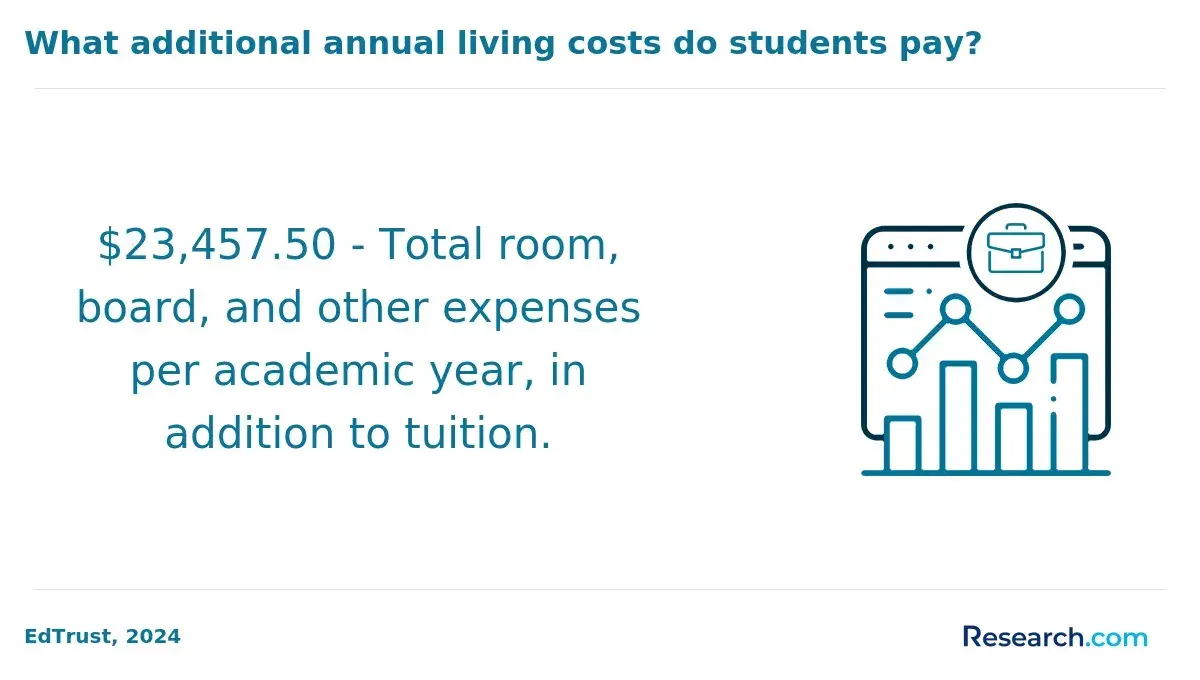
Cost should be evaluated as total price, not just tuition per credit. The College Board's 2024 pricing data reported average published tuition and fees of $11,610 for in-state students at public four-year institutions and $43,350 at private nonprofit four-year institutions for the 2024-2025 academic year. Online students may pay different rates, but the comparison shows why transfer credits, employer reimbursement, and program length can matter as much as sticker price.
When schools publish pricing, compare all required costs in one place. The most common cost categories include the following:
- Tuition charged per credit, per term, or as a flat online program rate.
- Mandatory online learning, technology, student service, or graduation fees.
- Books, digital access codes, case materials, uniforms, or food safety certification fees.
- Internship, travel, residency, or in-person orientation expenses if required.
- Lost wages if course schedules reduce work availability.
- Interest costs if you borrow and repay over time.
Students comparing accelerated options should be realistic about workload. A faster program can reduce time away from advancement, but it can also be difficult for restaurant employees whose schedules include nights, weekends, holidays, and unpredictable staffing emergencies. If you are comparing accelerated management degrees across fields, reviewing formats such as 1 year MHA programs online can help you understand the trade-off between speed, workload, and professional experience requirements.
To reduce cost, start with transfer evaluation before enrolling, not after. Then compare employer tuition assistance, community college transfer pathways, public university online rates, scholarships, military benefits, and federal financial aid eligibility. Avoid using private loans until you understand federal loan options, repayment terms, and whether your expected career path can reasonably support the debt.
What restaurant group management roles can graduates of food industry management programs pursue?
Graduates of food industry management programs can pursue roles across independent restaurant groups, franchises, fast casual brands, fine dining groups, hotels, contract food service companies, entertainment venues, healthcare dining, college dining, and corporate food service. The best role depends on experience level: a degree can support advancement, but multi-unit leadership usually also requires a track record of managing people, budgets, service standards, and operational problems.
The table below connects common restaurant group roles to typical responsibilities. Use it to identify which courses, internships, and work experiences should matter most for your target job.
| Role | Typical responsibilities | Degree relevance | Experience usually needed |
| Assistant restaurant manager | Supervise shifts, support scheduling, handle guest issues, monitor service standards, assist with inventory | Operations, HR, service management, food safety | Restaurant experience and frontline leadership |
| General manager | Own location-level P&L, staffing, training, guest satisfaction, vendor coordination, and compliance | Accounting, labor management, leadership, marketing, cost control | Several years of restaurant supervision or management |
| Multi-unit manager or area manager | Oversee multiple locations, coach general managers, compare performance metrics, implement brand standards | Analytics, leadership, financial management, operations strategy | Strong general manager performance and cross-location problem-solving |
| District or regional manager | Lead a territory, develop managers, support openings, monitor profitability, coordinate with corporate teams | Strategic management, organizational behavior, finance, franchise operations | Multi-unit leadership and measurable operational results |
| Food and beverage director | Manage menus, beverage programs, purchasing, service standards, events, and department profitability | Food and beverage management, purchasing, revenue strategy | Restaurant, hotel, club, or venue management experience |
| Franchise operations consultant | Support franchisees, audit brand standards, analyze sales and costs, train operators | Franchising, compliance, analytics, training design | Restaurant operations credibility and communication skills |
| Restaurant operations analyst | Analyze POS, labor, inventory, guest feedback, and sales data to recommend improvements | Hospitality technology, statistics, finance, data analysis | Analytical skills plus understanding of restaurant workflows |
Students should build career evidence while studying. That means documenting operational wins such as reducing waste, improving speed of service, training new shift leaders, improving guest review patterns, stabilizing schedules, or helping open a new location. Employers often respond better to measurable examples than to coursework lists alone.
A smart path is to pair the degree with progressive job responsibility. For example, a student might move from server or cook to shift lead, then assistant manager, then general manager, and later area manager. The degree can help explain the business side of those promotions, but the work record shows that the student can lead under real pressure.
What is the salary outlook for restaurant group managers with food industry management degrees?
Salary in restaurant group management varies by role, brand segment, geography, bonuses, benefits, and the number of locations supervised. A degree may improve competitiveness for management tracks, but it does not create a guaranteed salary. Employers still weigh experience, leadership performance, financial results, and ability to solve staffing and guest-service problems.
The BLS reported a median annual wage of $65,310 for food service managers in May 2024. That figure is useful as a national benchmark, but students aiming at restaurant group careers should treat it as a midpoint for a broad occupation, not as a prediction for a specific graduate. Multi-unit and regional roles may use different compensation structures, including performance bonuses, car allowances, equity opportunities, or profit-sharing in some companies.
The table below shows how salary potential often changes as responsibility expands. It does not promise earnings; it helps students understand why role scope matters when evaluating return on investment.
| Career stage | Common role examples | Compensation factors | What improves competitiveness |
| Early management | Shift lead, assistant manager, supervisor | Hourly or salary structure, local labor market, store volume | Reliable operations execution, scheduling skills, guest recovery, food safety knowledge |
| Location leadership | Restaurant general manager, food service manager | Store sales, profitability, bonus plan, brand segment, region | P&L ownership, retention, cost control, training outcomes, review performance |
| Multi-unit leadership | Area manager, multi-unit manager, franchise operations manager | Number of locations, travel requirements, bonus metrics, company size | Ability to coach managers, compare dashboards, standardize operations, fix underperforming stores |
| Regional or corporate operations | District manager, regional director, operations director | Territory size, revenue responsibility, executive bonus structure | Strategic planning, leadership pipeline development, financial analysis, cross-functional collaboration |
When judging degree ROI, compare expected total program cost with the next realistic promotion, not with an executive-level salary you may not reach for years. A lower-cost accredited program with strong transfer credit and employer reimbursement may produce a better financial fit than a prestigious program that requires heavy borrowing.
How strong is the job market and long-term demand for restaurant group management professionals?
The long-term job market for restaurant group management is shaped by two forces that seem to pull in different directions. Restaurant demand remains large, but employers are also using technology, tighter labor models, and standardized systems to control costs. That means the strongest candidates are not just "people persons"; they are operators who can manage teams, data, guest expectations, and financial performance at the same time.
BLS employment projections for 2024-2034 describe food service manager employment as showing little or no change overall, with openings still expected as workers transfer, retire, or leave the occupation. For students, the key takeaway is that replacement demand and turnover can create opportunities, but competition for the best multi-unit roles may favor candidates with both experience and formal business training.
Several trends are changing what restaurant group managers need to know. These trends do not eliminate the need for managers; they raise the standard for managers who want to advance.
- Labor optimization: Managers must balance service quality with scheduling, retention, wage pressure, and compliance.
- Digital ordering and delivery: Restaurant groups need leaders who understand off-premise operations, packaging, third-party platform costs, and order accuracy.
- AI-assisted forecasting: Inventory, sales, and labor tools can improve planning, but managers still need to question bad assumptions and respond to local conditions.
- Guest experience transparency: Online reviews, loyalty data, and social media make service failures visible across the brand quickly.
- Menu and supply chain pressure: Food cost volatility makes purchasing discipline, waste control, and menu profitability more important.
- Manager pipeline challenges: Restaurant groups need leaders who can train assistant managers and general managers, not just run one strong location.
This market favors students who can show adaptability. A useful degree program should therefore teach durable management skills, not only current tools. POS systems, delivery platforms, and scheduling software will change; financial literacy, coaching ability, ethical judgment, and operational discipline will remain valuable.
How can students evaluate and choose a reputable, accredited online food industry management program?
Choosing a reputable online food industry management program requires more than scanning rankings. The best program is the one that is accredited, affordable for your situation, aligned with restaurant group leadership, and realistic for your work schedule. A school can be well known and still be a poor fit if it lacks food and beverage depth, transfer flexibility, or applied career support.
Use the following steps before enrolling. They are designed to help you avoid the most common and expensive mistakes.
- Verify institutional accreditation through recognized accrediting bodies and confirm that the school is eligible for federal financial aid if you plan to use it.
- Review the curriculum course by course and confirm that it includes food and beverage operations, accounting, labor management, hospitality law, marketing, analytics, and leadership.
- Ask how online students complete internships, capstones, employer projects, or applied learning if they do not live near campus.
- Request a written transfer-credit evaluation before committing, especially if you have community college, military, business, or previous hospitality credits.
- Compare total program cost, including fees, books, technology, travel, certifications, and potential lost wages.
- Ask for career outcome information that is specific to hospitality, restaurant management, food service, or operations roles rather than broad schoolwide employment claims.
- Confirm faculty experience and employer connections in restaurant operations, franchising, food service, hotels, or hospitality analytics.
- Check whether courses are asynchronous, live, accelerated, or cohort-based, and match the format to your restaurant work schedule.
- Talk to current students or alumni if possible, especially those working in restaurant groups or food service leadership.
- Avoid schools that pressure you to enroll immediately, refuse to explain accreditation clearly, or cannot provide transparent cost and transfer policies.
Students comparing applied management degrees in other industries can borrow the same evaluation logic. For example, guides to the best online construction management degree often emphasize accreditation, cost transparency, applied projects, and employer relevance-the same core filters that matter when comparing restaurant-focused management programs.
Also decide whether a degree is the right credential at all. If you already have a bachelor's degree and need only food safety, beverage management, franchising, or analytics skills, a certificate may be enough. If you want long-term mobility into district, regional, corporate, or ownership roles, a bachelor's or master's program may provide a stronger foundation.
Other Things You Should Know About Food Industry Management
It can be worth it if the program is accredited, affordable, and aligned with your target role. It is most valuable for students who want to move beyond shift supervision into general manager, multi-unit, franchise, corporate operations, or ownership roles.
Many employers accept online degrees when they come from accredited institutions and the applicant has relevant experience. The delivery format usually matters less than accreditation, curriculum quality, leadership record, and evidence that you can manage people and financial results.
Choose hospitality or food industry management if your goal is restaurant operations leadership. Choose business administration if you want broader management flexibility. Choose culinary arts if your main goal is kitchen technique, chef development, or culinary production rather than multi-unit business leadership.
Pursuing an online food industry management degree in 2027 is beneficial for aspiring restaurant group managers. The program provides critical skills in business operations, strategic management, and hospitality, aligning well with industry needs. However, practical experience and networking are also vital for career advancement.
References
- Read a Hospitality and Restaurant Jobs Outlook | All Culinary Schools https://www.allculinaryschools.com/restaurant-management/hospitality-jobs-outlook/
- Beyond the Restaurant: Career Opportunities for Restaurant Managers - International Culinary Studio https://www.internationalculinarystudio.com/beyond-the-restaurant-career-opportunities-for-restaurant-managers/
- Food Industry Management https://www.niagara.edu/programs/food-industry-management/
- What Do Restaurant Managers Do? Pay & Career Path | CIA https://www.ciachef.edu/blog/restaurant-manager-career/
- Restaurant Management Training https://www.kitchenofpurpose.org/restaurant-management
- Master in Food & Beverage Management Online | Rome Business School https://romebusinessschool.com/master-online-in-food-and-beverage-management/
- Online Restaurant & Culinary Management | Institute of Culinary Education https://www.ice.edu/online-programs/restaurant-culinary-management
- Is the job market turning into an employer’s market? 10 Current Job Market Trends You Should Know | Antal.pl https://antal.pl/en/insights/article/is-the-job-market-turning-into-an-employer-s-market-10-current-job-market-trends-you-should-know
- Top 5 Foodservice Hospitality Jobs https://shfm-online.org/top-5-foodservice-hospitality-jobs/
- Study Food Industry Management in the USA https://www.studyusa.com/en/field-of-study/395/food-industry-management