2027 Food Industry Management Careers Most Resilient to Automation

Co-Founder and Chief Data Scientist
Automation is reshaping food production, restaurants, grocery, logistics, and institutional dining, but it is not replacing every management career equally. BLS employment projections released in 2024 show food service manager roles growing through 2033, while technology-heavy fields such as logistics are expanding faster. This guide is for students, career changers, and working food professionals who want roles where judgment, compliance, leadership, and customer trust still matter. You will learn which careers are most resilient, what to study, how salaries compare, and how to choose a program wisely.
Key Things You Should Know
- The most automation-resilient food industry management careers combine human accountability with technology oversight, especially food safety and quality assurance, supply chain management, nutrition services management, product development, and multi-unit operations leadership.
- May 2024 BLS wage data shows several related management and specialist tracks can exceed general restaurant management pay, with median wages such as $80,880 for logisticians and $81,160 for food scientists and technologists, depending on role, region, and employer.
- The strongest education strategy is not simply "get a food degree"; resilient candidates usually pair food systems knowledge with data literacy, regulatory compliance, people leadership, project management, and hands-on operational experience.
Which food industry management careers are most resilient to automation and why?
The food industry management careers most resilient to automation are the ones where the manager is responsible for decisions that technology can support but not fully own. Robots can portion ingredients, software can forecast demand, and AI can flag inspection risks, but employers still need people who can interpret exceptions, lead teams, manage vendors, protect customers, and make accountable decisions under pressure.
Automation resilience does not mean a job will never change. It means the role is less likely to be reduced to repetitive tasks and more likely to evolve into supervising systems, solving ambiguous problems, and translating operational data into decisions. The table below compares major food management pathways by why they are harder to automate and what the work usually involves.
| Career path | Why it is resilient | Typical responsibilities | Best fit for |
| Food safety and quality assurance manager | Requires regulatory judgment, root-cause analysis, documentation accountability, and cross-functional corrective action. | Oversee HACCP plans, audits, sanitation controls, supplier quality, recalls, and compliance records. | Detail-oriented professionals who like science, standards, and risk prevention. |
| Supply chain, procurement, or logistics manager | Automation improves forecasting, but humans still negotiate, manage disruption, qualify suppliers, and balance cost with risk. | Coordinate purchasing, distribution, inventory, cold chain performance, vendor relationships, and contingency planning. | Analytical problem-solvers who like data, operations, and vendor management. |
| Nutrition services or healthcare food service manager | Combines food operations with patient, resident, or student needs, compliance, staffing, and service quality. | Manage menus, therapeutic diets, sanitation, budgets, staff scheduling, and coordination with clinical or administrative teams. | People-focused managers interested in health, wellness, and institutional food systems. |
| Research and development or product commercialization manager | Innovation depends on consumer insight, sensory judgment, technical feasibility, brand strategy, and collaboration. | Lead product trials, reformulation, labeling coordination, scale-up, ingredient testing, and launch timelines. | Creative professionals who enjoy food science, market trends, and project work. |
| Multi-unit restaurant or hospitality operations manager | Ordering, scheduling, and kiosks can be automated, but guest experience, brand standards, crisis response, and team culture remain human-led. | Oversee store performance, labor planning, customer service, training, profitability, and compliance across locations. | High-energy leaders who like fast decision-making and direct team management. |
| Sustainability, compliance, or risk manager in food companies | Requires interpretation of policies, supplier practices, reporting expectations, and stakeholder concerns. | Track waste, sourcing practices, packaging initiatives, environmental documentation, and internal controls. | Professionals interested in food systems, ethics, reporting, and operational improvement. |
For most readers, the safest long-term bet is a role that sits at the intersection of operations and accountability. If a mistake could trigger a foodborne illness, supply shortage, audit failure, major customer complaint, or product launch delay, the employer is less likely to rely on automation alone.
What education and skills prepare you for automation-proof food management roles?
Automation-proof preparation starts with a broad understanding of food operations and then adds skills that machines cannot fully replace: judgment, communication, leadership, and contextual decision-making. A degree can help, but employers also look closely at internships, supervisory experience, certifications, and evidence that you can use technology rather than fear it.
The most useful skill stack for resilient food management roles includes both technical and managerial capabilities. Students should use this list to identify gaps before choosing a degree, certificate, or internship.
- Food safety and regulatory knowledge: Learn sanitation, HACCP principles, allergen controls, labeling basics, audit preparation, and documentation standards.
- Operations and financial management: Build competence in budgeting, labor planning, inventory control, purchasing, waste reduction, and performance dashboards.
- Data and automation literacy: Become comfortable with POS systems, inventory software, ERP tools, demand forecasting, quality management systems, and basic spreadsheet analysis.
- People leadership: Practice coaching, conflict resolution, shift leadership, training design, change management, and communication across hourly, salaried, and executive teams.
- Project execution: Learn how to manage timelines, stakeholders, risk, and implementation plans; an online project management degree can be useful for professionals moving into operations improvement, commercialization, or technology rollout roles.
Education requirements vary by role. Restaurant managers may advance from experience plus an associate or bachelor's degree, while food safety, R&D, nutrition, and healthcare food service roles may prefer or require more specialized coursework. For example, food science, nutrition, hospitality management, supply chain, business analytics, and healthcare administration can all lead to resilient food management careers, but they point toward different employers.
A practical preparation plan is to choose one industry lane first, then add complementary skills. A student aiming for food safety should prioritize microbiology, regulatory compliance, and audit experience. A future supply chain manager should emphasize analytics, procurement, and cold chain logistics. A restaurant operations leader should focus on hospitality financials, labor systems, and multi-unit leadership.
How does automation change career paths and job duties in food industry management?
Automation is changing food industry management by removing some routine monitoring and transaction tasks while increasing the value of managers who can interpret systems and lead people through change. In restaurants, kiosks, mobile ordering, kitchen display systems, automated scheduling, and inventory tools are common. In manufacturing and distribution, robotics, sensors, AI-assisted quality checks, and warehouse management systems are becoming part of daily operations.
The career impact is a shift from task supervision to systems supervision. Managers are less likely to spend all day manually counting inventory or building schedules from scratch and more likely to review exceptions, investigate data anomalies, coach staff, and decide when the system's recommendation does not fit reality.
Students and working professionals can prepare for that shift by taking deliberate steps rather than waiting for employers to train them after a system launches.
- Learn the technology used in your target workplace, such as POS analytics, ERP platforms, quality management software, digital temperature logs, or warehouse management systems.
- Ask for projects that connect technology to results, such as reducing waste, improving forecast accuracy, speeding audit preparation, or lowering overtime.
- Document outcomes using business language, including cost savings, compliance improvement, service speed, employee retention, customer satisfaction, or fewer quality incidents.
- Build change-management experience by helping teams adopt new tools, rewrite procedures, train new users, and troubleshoot early implementation problems.
- Keep one foot in operations; employers value managers who understand what happens on the kitchen line, production floor, receiving dock, dining room, or patient tray line.
A common mistake is assuming automation makes food management less human. In reality, poorly implemented automation often creates customer frustration, employee resistance, data errors, and compliance blind spots. Managers who can bridge frontline reality and digital systems are likely to remain valuable.
What degree programs in food industry management best align with high-resilience careers?
The best degree program depends on which resilient career you want. Food industry management is not a single academic pathway; it spans hospitality, food science, nutrition, supply chain, business, healthcare operations, and public health. Sometimes, the right degree may be a hotel and restaurant management degree online, especially if you already work in the field. Choosing the wrong major can add time and cost without improving access to your preferred role.
The table below summarizes degree options that align well with high-resilience food management careers. Use it to match your target role with the academic content employers are most likely to value.
| Program type | Best-aligned careers | Typical coursework | When it makes sense |
| Hospitality, restaurant, or food service management | Restaurant general manager, multi-unit manager, hotel food and beverage manager, catering operations manager | Hospitality finance, service operations, food production, purchasing, revenue management, leadership | Best for students who want guest-facing operations leadership. |
| Food science or food technology | Quality assurance manager, product development manager, regulatory specialist, plant operations leader | Food chemistry, microbiology, processing, sensory evaluation, quality systems, safety regulations | Best for students who want technical roles in manufacturing, packaged foods, ingredients, or R&D. |
| Nutrition, dietetics, or food and nutrition management | Nutrition services manager, school foods ervice director, healthcare food service manager, wellness program manager | Nutrition science, menu planning, community nutrition, food service systems, lifecycle nutrition | Best for students interested in health-focused food operations; some clinical roles may require dietetics-specific accreditation and supervised practice. |
| Supply chain, logistics, or operations management | Food logistics manager, procurement manager, demand planning manager, distribution operations manager | Procurement, inventory analytics, transportation, warehousing, forecasting, process improvement | Best for students who prefer data, vendor strategy, and distribution over direct restaurant or kitchen management. |
| Business administration with food industry experience | General operations manager, franchise manager, category manager, retail food manager | Accounting, marketing, management, analytics, organizational behavior, strategy | Best for students who already have food industry experience and want broader advancement flexibility. |
At the certificate level, short programs in food safety, HACCP, supply chain, project management, or hospitality supervision can help working adults move faster. However, certificates may not replace a bachelor's degree for corporate management tracks, technical food science roles, or graduate-level nutrition pathways. The stronger strategy is to compare job postings in your target region before committing to a credential.
How do online and campus food industry management programs compare for these careers?
Online and campus food industry management programs can both prepare students for resilient careers, but they work best for different learners. The right choice depends on your work schedule, need for labs or kitchens, access to internships, and whether your target role requires supervised practice or hands-on technical training.
The comparison below explains where each format tends to be strongest. It is especially important for food careers because some skills, such as sensory evaluation, food microbiology labs, culinary production, or clinical nutrition practice, may not be fully online.
| Program format | Strengths | Limitations | Best fit |
| Fully online | Flexible scheduling, easier for working adults, often strong for management, finance, supply chain, and leadership courses | May offer limited lab, kitchen, or supervised practice access; students must be proactive about internships | Working professionals in restaurant, grocery, distribution, or institutional food service who can apply coursework at work |
| Hybrid | Balances flexibility with campus labs, residencies, networking, and applied projects | May require travel or scheduled campus attendance | Students who need technical exposure but cannot attend campus full time |
| Campus-based | Strong access to labs, teaching kitchens, faculty, career fairs, student organizations, and local employer networks | Less flexible and may require relocation or reduced work hours | Students pursuing food science, culinary management, hospitality leadership, or supervised nutrition pathways |
Students considering nutrition-focused leadership should pay special attention to accreditation and experiential requirements. A nutrition masters degree may support careers in wellness, nutrition services, or management, but eligibility for dietitian credentials depends on meeting specific accredited program and supervised practice requirements.
Online programs are usually a strong fit when the student already has access to a relevant workplace. Campus programs may be better when the student needs structured internships, lab equipment, food production facilities, or employer introductions. The main mistake to avoid is choosing based only on convenience without confirming that the format supports the career outcome you want.
Which food industry management roles show the strongest long-term job outlook and demand?
The strongest long-term demand is likely to appear in roles connected to logistics, safety, healthcare, compliance, and technical food systems. These roles benefit from automation rather than being replaced by it because employers need managers who can make the technology useful, reliable, and compliant.
BLS projections released in 2024 show logisticians growing much faster than the average for all occupations from 2023 to 2033. For food industry professionals, that matters because groceries, restaurants, distributors, hospitals, schools, and manufacturers all depend on cold chain reliability, supplier continuity, and cost control.
The table below compares resilient food management tracks by labor-market strength and the type of demand behind them. The outlook is not a promise of job availability in every city, but it helps show where skills may remain transferable.
| Role cluster | Demand signal | Why employers need it | Transferability |
| Supply chain and logistics management | Strong projected national growth for logistics-related roles | Food companies need reliable sourcing, distribution, inventory planning, and disruption response. | High across food manufacturing, retail, distribution, restaurants, and healthcare. |
| Food safety and quality assurance | Stable need tied to regulation, brand protection, audits, and consumer safety | Errors can create recalls, illness risks, legal exposure, and reputational damage. | High across manufacturing, institutional food service, retail, and supplier management. |
| Healthcare and institutional food service management | Supported by aging population needs and healthcare operations complexity | Hospitals, long-term care facilities, and schools need compliant, cost-controlled, nutrition-aware food operations. | Moderate to high, especially with nutrition, sanitation, and staff leadership experience. |
| Product development and commercialization | Supported by changing consumer preferences and reformulation needs | Companies need products that meet taste, cost, labeling, nutrition, and manufacturing constraints. | Moderate to high in packaged foods, ingredients, food startups, and private label brands. |
| Multi-unit food service operations | Ongoing demand, but sensitive to local market conditions and consumer spending | Restaurants and hospitality groups need leaders who can manage labor, guest experience, margins, and brand consistency. | High across restaurants, hotels, catering, retail food, and franchise operations. |
Readers who want maximum resilience should avoid preparing for only one narrow job title. A stronger plan is to build a portable role cluster, such as "food safety plus operations," "nutrition plus healthcare management," or "supply chain plus analytics." That makes it easier to move between employers if automation, consolidation, or local market conditions change a specific workplace.
What are typical salaries for food industry management careers least affected by automation?
Salaries vary widely by employer, geography, education, experience, and level of responsibility. Management careers in food can range from unit-level restaurant supervision to corporate supply chain, food manufacturing, quality, or healthcare operations leadership, so the best comparison is by role family rather than by the broad phrase "food industry management."
May 2024 BLS wage data provides a useful baseline for several roles connected to automation-resilient food management. These figures are national medians, so they should be used as a planning benchmark rather than a personal salary prediction.
| Role or related occupation | May 2024 median annual wage | How to interpret it for food management careers |
| Food service managers | $66,090 | Relevant for restaurant, institutional dining, catering, and hospitality operations managers; pay can rise with multi-unit or corporate responsibility. |
| Logisticians | $80,880 | Useful benchmark for food supply chain, distribution, cold chain, procurement, and inventory planning roles. |
| Food scientists and technologists | $81,160 | Relevant for technical tracks in product development, food safety, quality systems, and commercialization. |
| Dietitians and nutritionists | $73,850 | Helpful for nutrition services pathways, though management pay depends on facility size, credentials, and administrative scope. |
| Industrial production managers | $122,860 | Relevant for food manufacturing plants, especially where managers oversee production, safety, quality, labor, and automation systems. |
The salary pattern is clear: roles that combine food knowledge with technical systems, regulatory responsibility, or larger operational scope often have stronger earning potential than frontline management alone. However, higher-paying roles may require more specialized education, longer experience, or willingness to work in manufacturing, distribution, healthcare, or corporate environments rather than a traditional restaurant setting.
To evaluate return on investment, compare the total cost of your program with the salary range for your target role, not the highest possible salary in the field. Also consider whether the program helps you access internships, employer partnerships, certifications, or promotion opportunities that would be difficult to secure on your own.
Are any licenses or certifications required or recommended for resilient food management roles?
Licenses and certifications vary by role, employer, and state. Most food industry management jobs do not require a state occupational license in the same way nursing or teaching often does, but food safety, alcohol service, nutrition, and healthcare settings may involve specific credentials or compliance requirements.
The credentials below are commonly relevant for automation-resilient food management careers. Before enrolling in a program or paying for an exam, verify which credentials appear in job postings for your target role and location.
| Credential or requirement | Most relevant roles | Why it matters |
| Food protection manager certification | Restaurant managers, catering managers, school food service managers, retail food managers | Many jurisdictions require a certified food protection manager or equivalent for food establishments. |
| HACCP training | Quality assurance managers, food safety coordinators, manufacturing supervisors, seafood or meat processing managers | Shows competence in hazard analysis, preventive controls, monitoring, corrective action, and documentation. |
| Preventive controls training | Food manufacturing safety, quality, and compliance roles | Can be important for facilities subject to Food Safety Modernization Act preventive controls expectations. |
| Registered Dietitian Nutritionist credential | Clinical nutrition leadership, healthcare nutrition services, some long-term care and medical nutrition roles | May be required for clinical dietetics roles and usually involves accredited education, supervised practice, and examination requirements. |
| Project management or supply chain credentials | Operations improvement, logistics, procurement, commercialization, technology implementation | Can strengthen credibility for managers leading cross-functional projects, system rollouts, or process improvement. |
Avoid assuming that a school certificate automatically satisfies employer, state, or industry requirements. Ask whether the program prepares students for a recognized third-party credential, whether exam fees are included, and whether the credential is accepted in your state or target industry.
Certifications can improve employability, but they rarely replace experience. The most competitive candidates can describe how they used food safety, quality, supply chain, or nutrition knowledge to solve a real operational problem.
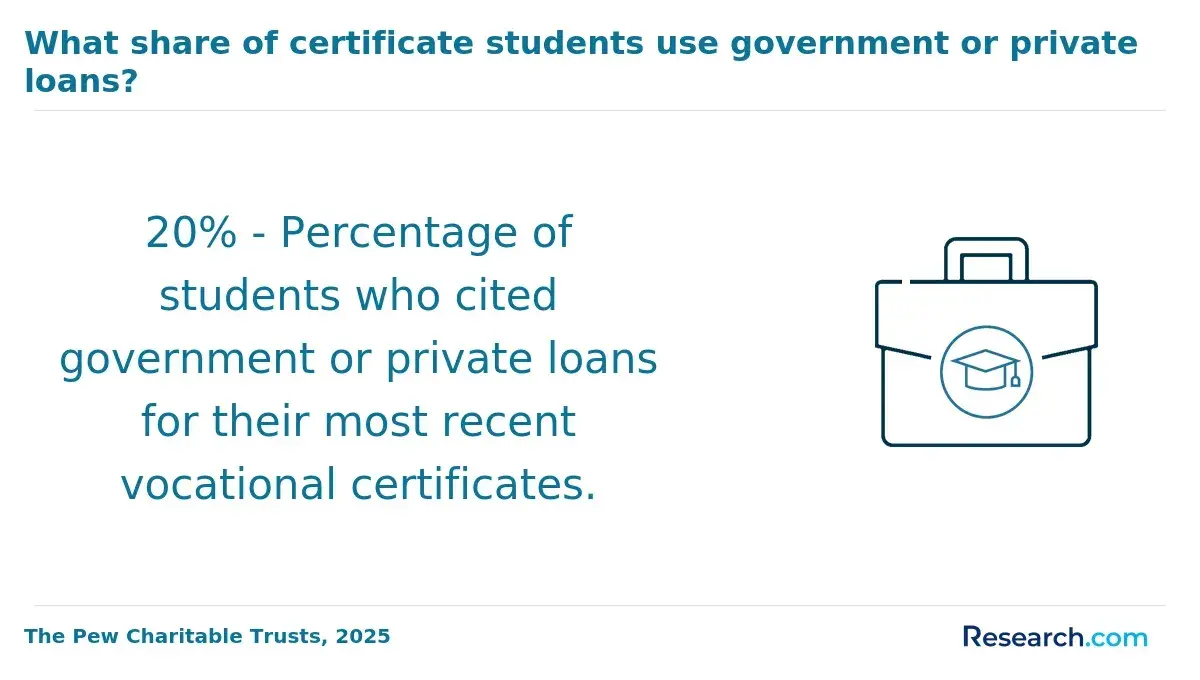
How much do food industry management programs cost, and what financial aid is available?
Program cost depends on degree level, institution type, residency status, delivery format, transfer credits, lab requirements, and whether the program includes internships or certification exams. Students should compare total cost of attendance, not only tuition, because fees, textbooks, travel, uniforms, knives, lab materials, software, and lost work hours can change the true price.
For federal financial aid planning, the U.S. Department of Education's 2024-25 maximum Pell Grant is $7,395 for eligible undergraduate students. That figure matters because it can substantially reduce out-of-pocket cost for qualifying students, but it usually does not cover the full cost of a bachelor's degree by itself.
Common cost factors include the following, and each one can affect whether a program is financially realistic.
- Tuition per credit and the total number of credits required after transfer evaluation.
- Mandatory online, technology, lab, culinary, clinical, or student services fees.
- Residency rules at public colleges, especially for out-of-state online students.
- Internship, practicum, supervised practice, or campus residency travel costs.
- Certification exam fees for food safety, HACCP, project management, supply chain, or nutrition-related credentials.
- Time to completion, because longer programs can increase both tuition and opportunity cost.
Students can usually reduce costs by transferring community college credits, using employer tuition assistance, choosing public in-state options, applying for departmental scholarships, asking about credit for prior learning, and comparing part-time versus full-time pacing. Working adults who want to pivot from food service into healthcare operations may also compare options such as an accelerated healthcare management degree online, but only if the curriculum supports their target role and the pace is manageable.
The biggest financial mistake is choosing the fastest or cheapest program without checking whether it leads to the desired career path. A low-cost program with weak career support, poor transfer acceptance, or limited employer recognition can be more expensive in the long run.
How can students evaluate and choose an accredited, reputable food industry management program?
Choosing a reputable food industry management program requires more than reading rankings. Accreditation, curriculum fit, faculty experience, employer connections, outcomes, and practical learning opportunities all matter. The best program for a future food safety manager may not be the best program for a restaurant operator, nutrition services director, or supply chain analyst.
Use the following steps to evaluate programs before applying. They will help you avoid common red flags and make a decision based on career fit rather than marketing language.
- Confirm institutional accreditation through recognized accreditation databases and make sure the school is eligible for federal financial aid if you plan to use it.
- Check program-specific accreditation or recognition when relevant, especially for dietetics, nutrition, culinary, hospitality, or food science pathways.
- Compare the curriculum with real job postings for your target role and look for required keywords such as HACCP, supply chain, food safety, ERP, procurement, menu planning, or hospitality finance.
- Ask how internships, practicums, labs, simulations, or employer projects work for online and campus students.
- Request transparent information on total cost, transfer credit, time to completion, withdrawal policies, and certification exam preparation.
- Review career support, employer partnerships, alumni outcomes, and whether the school has relationships with restaurants, food manufacturers, hospitals, schools, distributors, or hospitality groups.
- Speak with an advisor and ask what graduates with your background typically do next, but avoid treating any salary or placement statement as a guarantee.
Red flags include vague career claims, pressure to enroll immediately, unclear accreditation, limited information about internships, no transfer credit estimate before enrollment, and programs that promise a specific salary. Strong programs are usually willing to explain what they can and cannot control.
The smartest choice is the program that matches your target role, budget, schedule, and experience level. If you already work in food service, an online or hybrid management program may let you apply lessons immediately. If you need labs, supervised practice, or strong local employer networking, a campus or hybrid program may be worth the extra time and logistics.
Other Things You Should Know About Food Industry Management
In 2027, roles in food industry management focusing on strategic decision-making and human interaction, such as restaurant managers and supply chain managers, are the safest from automation. These roles require complex problem-solving and interpersonal skills, where technology primarily aids rather than replaces human involvement.
AI may automate scheduling, ordering, forecasting, and customer-service tools, but it is unlikely to replace managers who lead teams, solve guest problems, manage compliance, control costs, and make judgment-based decisions during daily operations.
It can be worth it if the program matches your target career, is accredited, offers practical experience, and fits your budget. It may not be worth it if you choose a broad program without checking job requirements, transfer policies, total cost, and employer recognition.
References
- Why I chose to study Food Industry Management (FIM) instead of Food Science https://www.uoguelph.ca/oac/news/why-i-chose-study-food-industry-management-fim-instead-food-science
- How to choose a culinary and restaurant management course? https://insights.ehl.edu/choosing-culinary-and-restaurant-management-course
- Have You Ever Considered a Career in Food Manufacturing? - Goodwin Recruiting https://www.goodwinrecruiting.com/have-you-ever-considered-a-career-in-food-manufacturing
- 2026 Supply Chain Job Market: What Job Seekers Need to Know https://www.scoperecruiting.com/blog/supply-chain-job-market-2026-job-seekers
- Food Manager Certification - Texas https://alwaysfoodsafe.com/en/food-manager-certification/texas
- the impact of automation on food production jobs: a guide for employers https://www.randstadusa.com/business/business-insights/workforce-management/impact-automation-food-production-jobs-guide-for-employers/
- Study Food Industry Management in the USA https://www.studyusa.com/en/field-of-study/395/food-industry-management
- Food for Thought: AI in Food Industry Talent Trends - Brunel https://www.brunel.net/en-us/blog/life-sciences/food-for-thought-ai-in-food-industry-talent-trends
- Skills That Will Matter Most In The Age Of Automation https://www.theemploymentlawsolicitors.co.uk/news/2026/03/07/skills/
- Sustainable Foods Career Outlook - NWF EcoLeaders https://www.nwfecoleaders.org/careercenter/sustainable-foods