2027 Online Food Industry Management Degrees That Maximize Community College Credits

Co-Founder and Chief Data Scientist
Choosing an online food industry management degree is often a transfer-credit decision as much as a career decision. The National Restaurant Association projected U. S. restaurant sales above $1.1 trillion in 2024, which keeps pressure on employers to find managers who understand operations, labor, safety, purchasing, and customer experience. This guide is for community college students, working food service employees, and associate degree graduates who want a bachelor's degree without repeating credits. You'll learn which program types fit, how transfer policies work, what costs to compare, and how to judge career value.
Key Things You Should Know
- Programs that maximize community college credit are usually bachelor's completion degrees in hospitality management, food and beverage entrepreneurship, restaurant management, or applied business; the strongest transfer options commonly allow about 60 to 90 credits, depending on residency rules and course equivalency.
- Cost matters because College Board's 2024-25 data shows average published tuition and fees of $4,050 at public two-year colleges versus $11,610 for in-state public four-year colleges, making the community-college-first route a practical way to lower bachelor's costs.
- The clearest labor-market benchmark is food service manager: BLS May 2024 wage data reports a $65,310 median annual wage, but outcomes vary by market, employer type, experience, and whether the degree supports advancement beyond front-line supervision.
What is an online food industry management degree, and how does it differ from food service and food science programs?
An online food industry management degree is a bachelor's program focused on the business side of food systems: restaurants, food and beverage operations, hospitality venues, institutional dining, catering, purchasing, food safety, revenue control, staffing, and customer experience. It is usually designed for students who want management roles rather than lab, clinical, or culinary-only careers.
The terminology can be confusing because colleges use overlapping names. A program called hospitality management may include restaurant, lodging, event, and tourism courses, while a food and beverage entrepreneurship degree may focus more directly on restaurant ownership, product concepts, and small-business launch.
A broader business degree can also work for students who want flexibility across industries; for example, students comparing food-specific programs with general management preparation may also want to review a best online business degree pathway before committing to a narrow major.
The table below separates closely related degree types so you can match the curriculum to your actual goal instead of choosing by program title alone.
| Program type | Main focus | Best fit | When it may not fit |
| Food industry or food and beverage management | Restaurant operations, menu strategy, purchasing, cost control, food safety, guest experience, entrepreneurship | Students aiming for restaurant, catering, food retail, or beverage operations leadership | Students who want clinical nutrition, dietetics licensure, or laboratory food science roles |
| Hospitality management with restaurant coursework | Food service plus hotels, events, tourism, service operations, revenue management | Students who want management mobility across restaurants, hotels, resorts, events, and institutional dining | Students who want a food-only curriculum with minimal lodging or tourism content |
| Food service management | High-volume meal operations, sanitation, staffing, inventory, institutional dining, regulatory compliance | Students targeting schools, hospitals, senior living, correctional facilities, or corporate dining | Students primarily interested in product development or food manufacturing science |
| Food science | Chemistry, microbiology, product development, quality assurance, processing, packaging | Students who want technical roles in food manufacturing, safety testing, or research and development | Students who dislike lab science or want primarily people-management roles |
| Nutrition or dietetics | Human nutrition, medical nutrition therapy, community nutrition, diet planning | Students interested in wellness, public health nutrition, or registered dietitian pathways | Students whose main goal is restaurant operations, purchasing, or hospitality leadership |
A good decision test is simple: if you want to manage food operations, choose management; if you want to formulate, test, or analyze food products, choose food science; if you want to counsel clients or pursue dietetics, choose nutrition.
Which accredited U.S. colleges offer online food industry or food service management degrees that accept the most community college transfer credits?
Accredited online options that work well for community college transfer students are typically degree-completion programs, applied bachelor's programs, or hospitality degrees with restaurant and food service concentrations. The best choice is not always the school with the largest advertised transfer maximum; it is the school that accepts the most of your completed credits into major, general education, and elective categories.
The table below highlights U.S. colleges with online or substantially online bachelor's pathways related to food industry, food service, or hospitality management. Transfer limits and requirements can change, so students should confirm the current catalog, residency requirement, and course-by-course evaluation before enrolling.
| College | Relevant online degree pathway | Institutional accreditation | Transfer-credit advantage for community college students | Best for |
| Johnson & Wales University Online | B.S. in Food & Beverage Entrepreneurship | New England Commission of Higher Education | Commonly positioned as a bachelor's completion option with transfer-friendly policies that may allow up to 90 credits toward a 120-credit degree, subject to evaluation | Students who want a food-specific management and entrepreneurship curriculum |
| SUNY Delhi | Online B.B.A. in Hospitality Management | Middle States Commission on Higher Education | Designed for transfer and applied associate graduates; upper-division completion structure can help students bring in substantial community college coursework | Associate degree graduates seeking hospitality leadership with food service applications |
| Northern Arizona University | Online hospitality-related bachelor's pathways, including applied options depending on catalog availability | Higher Learning Commission | Applied bachelor's structures can be useful for A.A.S. graduates because technical credits may have a clearer path into the degree plan | Students with career or technical community college credits that may not fit a traditional B.S. cleanly |
| Florida International University Online | B.S. in Hospitality Management | Southern Association of Colleges and Schools Commission on Colleges | Florida A.A. transfer pathways can be efficient because the associate degree often satisfies lower-division general education requirements within the state system | Students with an A.A. or transferable lower-division coursework who want a large public university option |
| Fort Hays State University | Online B.S. in Tourism and Hospitality Management | Higher Learning Commission | Public-university online structure and broad hospitality coursework may accommodate transfer students with general education and business courses | Students who want affordable online hospitality management with food service, tourism, and operations breadth |
| Kansas State University Global Campus | Online hospitality management-related bachelor's options, subject to current program catalog | Higher Learning Commission | Strong advising and transfer evaluation can help students map community college courses into business, hospitality, and elective requirements | Students who want a land-grant university environment and food service/hospitality operations coursework |
| University of Wisconsin-Stout | Online or hybrid hospitality and tourism management pathways, depending on current delivery format | Higher Learning Commission | Career-focused hospitality curriculum may work well for students transferring technical, business, and general education courses | Students seeking an applied hospitality program with industry-facing coursework |
Before treating any school as the "most transfer-friendly," ask for a written degree audit. A school may accept 90 credits overall but apply only 60 credits to degree requirements if too many courses duplicate electives, fall outside the major, or exceed lower-division limits.
How can community college students maximize transfer and articulation of credits into an online food industry management bachelor's degree?
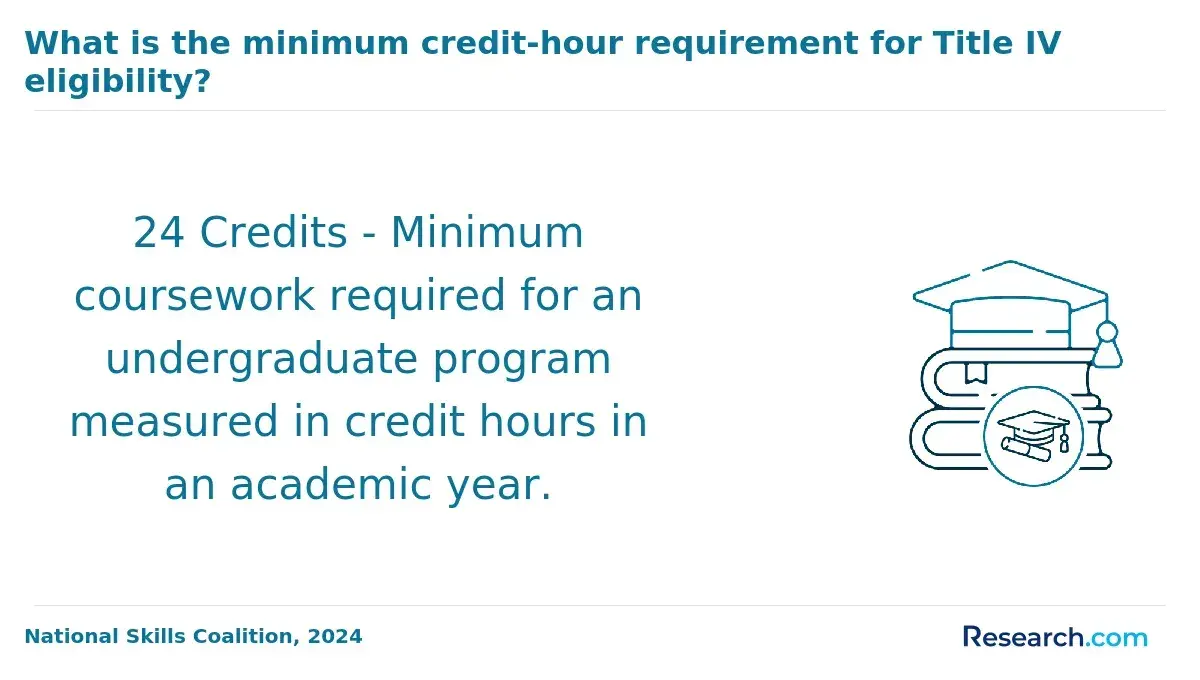
Community college students can maximize transfer credit by planning before they finish the associate degree. The biggest mistake is assuming that every course with a passing grade will apply to the bachelor's major. In reality, schools separate credits into general education, lower-division major prerequisites, free electives, and nonapplicable courses.
Use the following sequence before you enroll in your final community college terms. It can prevent repeated coursework and help you preserve financial aid eligibility at the bachelor's level.
- Choose your target bachelor's programs before your last 15 to 30 community college credits, because late course choices often determine whether credits apply as requirements or only as electives.
- Request official articulation guides, transfer equivalency databases, or pathway maps from each university, not just a general statement that credits are accepted.
- Prioritize transferable general education, accounting, economics, statistics, business law, management, marketing, hospitality, sanitation, and food safety courses when they appear in the bachelor's plan.
- Complete an associate degree if your state has a strong transfer framework, because an A.A. or A.S. can sometimes satisfy lower-division general education more cleanly than loose credits.
- Keep syllabi for culinary, hospitality, nutrition, purchasing, internship, and technical food service courses, since departments may need them to decide whether the courses meet major requirements.
- Ask whether ServSafe, work experience, military training, prior learning assessment, or industry credentials can earn elective credit, but confirm fees and limits before relying on them.
- Get a written preliminary transfer evaluation showing remaining credits, estimated time to graduation, residency requirements, and any courses that did not transfer.
Students with A.A.S. degrees should be especially careful. Applied associate credits can be valuable, but some traditional universities classify them as technical electives rather than major requirements. Applied bachelor's, bachelor of applied science, and completion programs are often better matches for these credits.
There is also a trade-off between maximizing credits and maximizing brand fit. A school that accepts more credits may save money, while a school with stronger industry connections in your region may offer better internship, alumni, or employer access. The right answer depends on your target job market and how many credits you would lose by choosing the more selective program.
What admission requirements and transfer GPA do online food industry management programs typically expect from community college applicants?
Online food industry management programs generally use transfer-friendly admissions standards, especially when they are designed for working adults. Requirements vary by institution, but applicants usually need a high school transcript or GED, official college transcripts, and proof that they meet minimum academic standing requirements.
The table below summarizes common requirements so you can estimate whether you are ready to apply or need one more community college term to strengthen your record.
| Requirement | Typical expectation | Why it matters |
| Transfer GPA | Many programs look for roughly a 2.0 minimum, while more selective majors or universities may expect higher | A stronger GPA can improve admission odds and may affect scholarship eligibility |
| Completed credits | Degree-completion programs may prefer applicants with 45 to 60 transferable credits, while full bachelor's programs may admit students with fewer | More completed credits can shorten time to graduation if they match degree requirements |
| Prerequisite courses | General education, college algebra or statistics, English composition, introductory business, accounting, economics, or hospitality courses may be required or recommended | Missing prerequisites can delay upper-division coursework even if you are admitted |
| Professional experience | Usually helpful but not always required; some programs value restaurant, catering, hotel, retail food, or institutional dining experience | Experience can strengthen career fit and may support internships, capstones, or prior learning review |
| Technology readiness | Reliable internet, learning-management-system access, spreadsheet skills, and the ability to attend occasional synchronous sessions if required | Online success depends on weekly participation, not just logging in before deadlines |
If your GPA is below the preferred threshold, ask whether the school offers conditional admission, academic renewal, or admission after completing additional transferable coursework. Do not hide weak grades; admissions and transfer evaluators will require official transcripts from every college attended.
Applicants should also check whether the program requires an internship, practicum, or field experience. Online students can often complete these locally, but approval may require a suitable employer, supervisor, documented hours, and liability or background-check steps.
How do online and campus-based food industry management programs compare in format, flexibility, and student support services?
Online and campus-based food industry management programs can lead to similar degrees, but the experience is different. Online programs usually serve working adults who need schedule flexibility, while campus programs may offer more built-in access to labs, dining facilities, student clubs, employer visits, and in-person recruiting.
The comparison below shows where format affects learning, cost, and support. Use it to decide whether online convenience is worth any trade-offs in hands-on access.
| Factor | Online program | Campus-based program | Decision point |
| Schedule | Often asynchronous or evening-friendly, with weekly deadlines | Set class times and campus attendance | Online is usually better for full-time workers; campus may suit students who want daily structure |
| Hands-on learning | May use local internships, simulations, case studies, and employer-based projects | May include teaching kitchens, dining labs, events, or hospitality facilities | Choose online only after confirming how practical requirements are completed |
| Transfer fit | Completion programs often market directly to associate degree graduates | Traditional programs may have stricter sequencing | Online can be more transfer-friendly, but only a degree audit confirms this |
| Networking | Depends on virtual events, alumni access, employer partnerships, and internship support | Often includes on-campus recruiting, clubs, competitions, and local employer visibility | Campus may be stronger for students changing careers with no food industry experience |
| Student services | Remote advising, tutoring, library, career services, and technical support | In-person advising, labs, faculty office hours, and campus services | Ask online programs whether career services are equally available to distance learners |
Online education is also being shaped by technology. Many programs now use point-of-sale data exercises, inventory software, labor scheduling tools, digital menu analysis, and AI-supported market research assignments. That is useful because employers increasingly expect managers to interpret dashboards, forecast staffing, and respond to online reviews, not just supervise shifts.
The main red flag is an online program that sounds convenient but cannot explain internships, transfer evaluation, faculty access, or career support. Flexibility should not mean being left alone to navigate the degree.
What core courses and specialized food industry management classes can students expect in an online curriculum?
An online food industry management curriculum usually combines business fundamentals with food-specific operations. Students learn how to control costs, manage people, comply with safety rules, purchase supplies, analyze revenue, and improve customer service in environments where margins, labor shortages, and quality control are constant challenges.
Most programs include a mix of the following course areas. These categories are important because they show whether the degree is preparing you for management decisions or only giving a broad overview of hospitality.
- Business core: Accounting, economics, marketing, business law, organizational behavior, human resource management, finance, analytics, and strategic management.
- Food and beverage operations: Restaurant management, menu planning, beverage management, food production systems, service design, purchasing, inventory control, and cost control.
- Safety and compliance: Sanitation, food safety, risk management, regulatory issues, allergen awareness, and quality assurance.
- Hospitality and service leadership: Guest experience, events, lodging or tourism electives, revenue management, leadership, conflict resolution, and customer relationship management.
- Applied learning: Internship, practicum, capstone, business plan, consulting project, or operations improvement project based on a real food service setting.
Students who are more interested in diet, wellness, or clinical food systems should compare this curriculum with a nutrition degree online. Nutrition programs usually require more science and may connect to dietetics pathways, while food industry management focuses on running food operations.
Common course-selection mistakes include taking too many culinary electives when the bachelor's degree requires business courses, skipping statistics because it feels unrelated, or assuming a food safety certificate replaces a college sanitation requirement. The best plan balances operational credibility with accounting, analytics, and leadership skills.
How long do online food industry management degrees take to complete, and what are typical tuition, fees, and total program costs?
Completion time depends mostly on how many credits transfer and whether they apply to degree requirements. A 120-credit bachelor's degree can take about four years from the start, but a community college graduate transferring 60 credits may finish in roughly two years of full-time study. Students bringing in closer to 90 applicable credits may need about one year, although residency requirements usually force them to complete a minimum number of credits at the university.
Cost comparisons should include more than tuition. College Board's 2024-25 pricing data reported average published tuition and fees of $4,050 at public two-year colleges, $11,610 for in-state students at public four-year colleges, and $43,350 at private nonprofit four-year colleges. For transfer students, the practical lesson is that the cheapest credit is often the credit that transfers cleanly and counts toward graduation.
The table below outlines the major cost drivers that affect online food industry management students. It can help you compare two programs that appear similar on tuition but differ in hidden costs or lost credits.
| Cost factor | What to check | Why it changes total cost |
| Accepted credits | How many community college credits apply to requirements, not just how many are accepted | Lost credits can add terms of tuition and delay graduation |
| Tuition structure | Per-credit rate, flat-rate term tuition, in-state online rate, out-of-state surcharge, and military or employer rates | Online public universities may or may not charge the same rate to all distance learners |
| Fees | Online course fees, technology fees, graduation fee, internship fee, assessment fee, and prior learning fee | Fees can narrow the difference between a low-tuition and mid-priced program |
| Books and materials | Digital textbooks, software, food safety materials, uniform or kitchen requirements if applicable | Hospitality and food courses may require specialized resources |
| Practicum or internship | Whether you can use your current workplace and whether unpaid hours are required | Unpaid or schedule-restricted fieldwork can create opportunity costs |
| Financial aid and scholarships | FAFSA eligibility, transfer scholarships, employer tuition assistance, state grants, and association scholarships | A higher sticker price may be less expensive after aid, but only the aid offer confirms this |
Do not compare programs only by per-credit tuition. A $450-per-credit program that accepts 84 useful credits can cost less than a $325-per-credit program that accepts only 60 credits toward the degree. Ask each school for the number of remaining credits and the estimated total cost to completion.
What food industry and food service management careers can graduates pursue, and which roles most value bachelor's degrees?
Graduates can pursue management and supervisory roles in restaurants, hotels, resorts, catering companies, contract food service, colleges, hospitals, senior living facilities, entertainment venues, grocery prepared-food departments, and food startups. The bachelor's degree is most valuable when it helps a worker move from shift execution into budgeting, hiring, compliance, procurement, training, and multi-unit operations.
The table below connects common roles with the responsibilities that typically make a bachelor's degree useful. Job titles vary widely by employer, so focus on the scope of responsibility rather than the title alone.
| Career path | Typical responsibilities | Where the bachelor's degree helps most |
| Food service manager | Supervises staff, controls inventory, monitors sanitation, manages service quality, handles scheduling, and tracks costs | Preparing for higher-volume operations, formal budgeting, human resources, and compliance accountability |
| Restaurant general manager | Oversees daily restaurant performance, labor, sales, guest satisfaction, vendors, and training | Moving from assistant manager to full profit-and-loss responsibility |
| Food and beverage manager | Manages dining outlets, banquet beverage service, menu pricing, purchasing, and guest experience in hotels, clubs, or resorts | Combining hospitality service standards with cost control and revenue management |
| Catering or events operations manager | Coordinates menus, staffing, logistics, client expectations, food safety, and event execution | Handling complex planning, contracts, budgeting, and cross-functional teams |
| Institutional dining manager | Runs meal service in schools, hospitals, senior living, corrections, or corporate dining | Understanding compliance, nutrition coordination, high-volume production, procurement, and safety documentation |
| Food entrepreneur or owner-operator | Develops concepts, manages vendors, prices menus, hires teams, oversees marketing, and tracks cash flow | Building a business plan and avoiding common cost, labor, and compliance mistakes |
| Operations analyst or project coordinator in food service | Supports process improvement, technology rollouts, vendor transitions, training systems, or expansion projects | Applying data, project management, and operations coursework to multi-location food businesses |
Students who discover they are more interested in workflow improvement, systems implementation, or expansion projects than daily food service supervision may also compare this degree with the quickest online project management degree options. That route can be more portable across industries, while food industry management is more targeted to restaurants and hospitality.
A bachelor's degree is not always required for entry-level restaurant management, especially for candidates with strong experience. It becomes more useful for corporate tracks, multi-unit roles, hotel and resort food and beverage leadership, institutional dining management, and employers that use degrees as a promotion screen.
What salary ranges, promotion potential, and long-term earning outlook are associated with food industry management careers?
Salary potential in food industry management depends heavily on location, employer size, segment, bonus structure, and responsibility level. A quick-service assistant manager, a hospital food service director, and a resort food and beverage manager can all work in the same broad field but face very different pay scales and schedules.
BLS May 2024 wage data reports a $65,310 median annual wage for food service managers in the United States. That figure is best used as a midpoint benchmark, not a promise: early-career supervisors may earn less, while experienced managers in high-volume, multi-unit, hotel, corporate, or institutional settings may have stronger compensation opportunities.
The table below shows how advancement often works in this field. It is not a guaranteed timeline, but it helps students understand where a bachelor's degree may support promotion.
| Career stage | Common roles | What employers often look for | Degree value |
| Entry-level operations | Shift lead, supervisor, assistant manager, catering coordinator | Reliability, customer service, food safety, scheduling basics, team communication | Helpful but often secondary to experience |
| Unit management | Restaurant manager, food service manager, dining manager, banquet operations manager | Cost control, hiring, training, sanitation accountability, guest recovery, inventory management | Useful for formal management preparation and promotion readiness |
| Advanced operations | General manager, food and beverage manager, executive stewarding or catering operations leader | Profit-and-loss responsibility, vendor negotiation, forecasting, leadership, compliance | Often valuable, especially in corporate, hotel, and institutional settings |
| Multi-unit or corporate pathway | Area manager, district manager, operations specialist, training manager, procurement coordinator | Data analysis, standardization, change management, scalable training, financial reporting | Can help candidates compete for roles beyond a single location |
Technology is changing what promotion-ready managers need to know. Employers increasingly use labor forecasting systems, automated inventory tools, online ordering platforms, kitchen display systems, digital reputation management, and AI-assisted reporting. Students should look for coursework that builds spreadsheet fluency, data interpretation, and systems thinking, because those skills can separate candidates from managers who rely only on shift experience.
The degree is usually most financially defensible when it preserves transfer credits, fits a promotion path, and does not require excessive debt. Students should compare the remaining program cost with realistic local salary ranges and ask employers whether tuition assistance or promotion pathways are available.
How can students evaluate accreditation, industry recognition, and alignment with certifications when choosing an online food industry management program?
Accreditation is the first quality screen. At minimum, choose a college that holds institutional accreditation from an agency recognized by the U.S. Department of Education. This affects federal financial aid eligibility, credit transfer, graduate school options, and employer confidence. Program-specific recognition can also help, but it is not always required for food industry management jobs.
Use the following checklist when comparing programs. It focuses on evidence you can verify before you apply, not marketing language.
- Confirm institutional accreditation through the college's accreditation page and federal databases, then make sure the online program is included under that institution.
- Ask whether the hospitality, food service, or business program has specialized accreditation, industry advisory boards, employer partnerships, or curriculum alignment with recognized food safety and hospitality standards.
- Check whether the degree supports certifications such as ServSafe Manager, Certified Food Protection Manager, Certified Dietary Manager pathways, hospitality certifications, or project and operations credentials relevant to your target role.
- Review faculty backgrounds for restaurant, hospitality, institutional dining, food entrepreneurship, purchasing, or operations experience, not only academic credentials.
- Request career outcome information specific to online or transfer students when available, including internship support, employer connections, and alumni roles.
- Verify that internship or practicum requirements can be completed in your state and at your current workplace if you plan to keep working while enrolled.
- Compare the final degree audit, total remaining cost, and graduation timeline before making a deposit.
Program alignment matters in adjacent fields, too. For example, students comparing food service management with records, compliance, and healthcare operations may want to understand how accreditation expectations differ in health information management programs online, where industry credentials and employer requirements can be more formalized.
Red flags include unclear accreditation claims, pressure to enroll before receiving a transfer evaluation, no written explanation of remaining credits, vague internship requirements, unusually high fees for prior learning, or career claims that sound guaranteed. A trustworthy program should be able to explain exactly how your community college record becomes a bachelor's degree plan.
Other Things You Should Know About Food Industry Management
Most online food industry management programs do not require cooking classes. These programs focus more on the operational, financial, and managerial aspects of the food industry, allowing students to maximize their community college credits without needing hands-on kitchen experience.
An A.A. or A.S. in business, hospitality, restaurant management, culinary management, or general studies with business prerequisites often transfers well. A.A.S. degrees can also transfer, but students should choose applied bachelor's or completion programs that accept technical credits efficiently.
Yes, many food service managers advance through experience, especially in restaurants. A bachelor's degree is more useful for competitive corporate tracks, larger employers, multi-unit leadership, institutional dining, and roles requiring stronger business, compliance, and analytics preparation.
References
- Why I chose to study Food Industry Management (FIM) instead of Food Science https://www.uoguelph.ca/oac/news/why-i-chose-study-food-industry-management-fim-instead-food-science
- Top Online Schools That Accept Transfer Credits https://www.edvisorly.com/student-guides/online-schools-that-accept-transfer-credits
- College Credit Transfer Requirements https://www.ciachef.edu/transfer-credit-policies/
- Community college transfer processes discourage degree completion https://journalistsresource.org/education/community-college-transfer-bachelors-degree-barriers-research/
- Community college students don’t always benefit from transferring to a 4-year college | Brookings https://www.brookings.edu/articles/community-college-students-dont-always-benefit-from-transferring-to-a-4-year-college/
- Food Industry Management https://www.niagara.edu/programs/food-industry-management/
- GSTC Certification | GSTC https://www.gstc.org/certification/
- Scaling Online Education for State University Systems https://changinghighered.com/scaling-online-education-for-state-university-systems/
- How to make transferring from community college easier - EdNC https://www.ednc.org/perspective-a-case-for-community-college-transfer-how-do-we-transform-transfer/
- World Food and Agribusiness Schools & Programs https://www.ifama.org/schools-and-programs