2027 Food Business Careers Growing Fast in Operations, Quality, and Supply Chain

Co-Founder and Chief Data Scientist
Choosing a food business career now means weighing stability, technology, regulation, and education cost. Food companies need people who can keep products safe, plants efficient, and supply chains resilient. The U.S. Bureau of Labor Statistics projects logisticians to grow 19% from 2023 to 2033, showing how strongly employers value supply chain talent.
This guide is for students, career changers, and food workers considering advancement. You will learn which roles are growing, what training fits each path, how much programs may cost, and how to compare options before enrolling.
Key Things You Should Know
- Supply chain roles show the strongest national growth signal. BLS projects 19% employment growth for logisticians from 2023 to 2033, much faster than the average for all occupations.
- Food industry management pathways can start with certificates, associate degrees, bachelor's degrees, or graduate programs. The best choice depends on whether your target is plant operations, food safety, procurement, analytics, or executive leadership.
- For 2024-25, College Board reported average published tuition and fees of $4,050 at public two-year colleges, $11,610 for in-state public four-year colleges, and $43,350 at private nonprofit four-year colleges, so format and transfer credit can strongly affect ROI.
What food business careers are growing fastest in operations, quality, and supply chain?
The fastest-growing food business careers are not limited to cooking, restaurant management, or food science alone. Growth is strongest where food companies face complexity: sourcing ingredients, meeting safety rules, reducing waste, forecasting demand, automating plants, and moving products through cold-chain and retail networks.
The table below compares high-opportunity career areas that connect directly to operations, quality, and supply chain work. The growth figures use broad U.S. BLS occupational categories, so they should be treated as national benchmarks rather than food-company-specific guarantees.
| Career area | Common food business roles | Why demand is rising | Relevant BLS outlook signal |
| Supply chain and logistics | Logistics coordinator, supply planner, distribution analyst, cold-chain coordinator | Food companies need tighter inventory control, faster fulfillment, and better risk planning for perishable products. | Logisticians are projected to grow 19% from 2023 to 2033. |
| Operations analytics | Demand planning analyst, operations analyst, continuous improvement analyst | AI-enabled forecasting, production scheduling, and waste reduction require employees who can interpret data and redesign workflows. | Operations research analysts are projected to grow 23% from 2023 to 2033. |
| Food safety and quality assurance | QA technician, food safety coordinator, sanitation compliance specialist, SQF assistant | Regulatory expectations, retailer audits, recalls, allergen controls, and traceability systems keep quality roles central even when routine inspection tasks are automated. | Food scientist and technician roles show steadier demand than routine inspection-only jobs. |
| Plant and production operations | Production supervisor, packaging supervisor, shift manager, operations manager | Manufacturers need leaders who can manage labor, equipment, sanitation windows, safety, yield, and downtime. | Industrial production manager employment is projected to grow more slowly than logistics, but experienced supervisors remain important for promotion pipelines. |
| Procurement and supplier management | Buyer, ingredient sourcing analyst, supplier quality coordinator | Volatile commodity costs and supplier risk push companies to hire people who understand contracts, specifications, and quality standards. | These roles often map to purchasing, logistics, or management analyst categories depending on duties. |
If you want the strongest growth profile, combine food-industry knowledge with supply chain analytics, quality systems, or operations technology. A narrow role built only around manual inspection or routine scheduling may be more vulnerable to automation than a role involving problem-solving, compliance judgment, and cross-functional coordination.
What is food industry management, and how does it prepare you for these roles?
Food industry management is the business discipline focused on how food is produced, processed, distributed, sold, and kept safe. It sits between food science, business administration, logistics, quality assurance, and operations management. A good program teaches students to understand both the product and the system around it.
This field prepares students for roles where decisions affect cost, safety, shelf life, customer satisfaction, and regulatory compliance. It is different from culinary training because the emphasis is not recipe execution; it is managing people, processes, facilities, suppliers, data, and risk.
The table below shows how core management knowledge connects to job functions in food companies. This can help you decide whether you need a specialized food program, a broader business degree, or a technical credential.
| Management focus | What students learn | Food business application |
| Operations management | Capacity, workflow, scheduling, lean systems, production metrics | Improving plant throughput, reducing downtime, and coordinating labor across shifts |
| Quality and food safety | Hazard analysis, sanitation, documentation, audits, corrective actions | Maintaining safe production and preparing for regulatory or customer inspections |
| Supply chain | Procurement, warehousing, transportation, forecasting, inventory control | Reducing stockouts, managing perishability, and improving supplier performance |
| Business and finance | Cost control, budgeting, pricing, performance reporting | Evaluating yield loss, labor cost, waste, margins, and equipment investments |
| Leadership | Communication, supervision, training, conflict resolution | Leading production teams, quality teams, route operations, or cross-functional projects |
Students who already work in food production, grocery distribution, restaurants, or hospitality may use this degree to move from task-based work into supervisory or analytical roles. Those comparing regulated service industries may also look at an MBA healthcare pathway, but food industry management is usually the better fit when the target career involves plants, packaging, suppliers, retail food operations, or food safety systems.
What degrees and training pathways lead to food operations, quality, and supply chain careers?
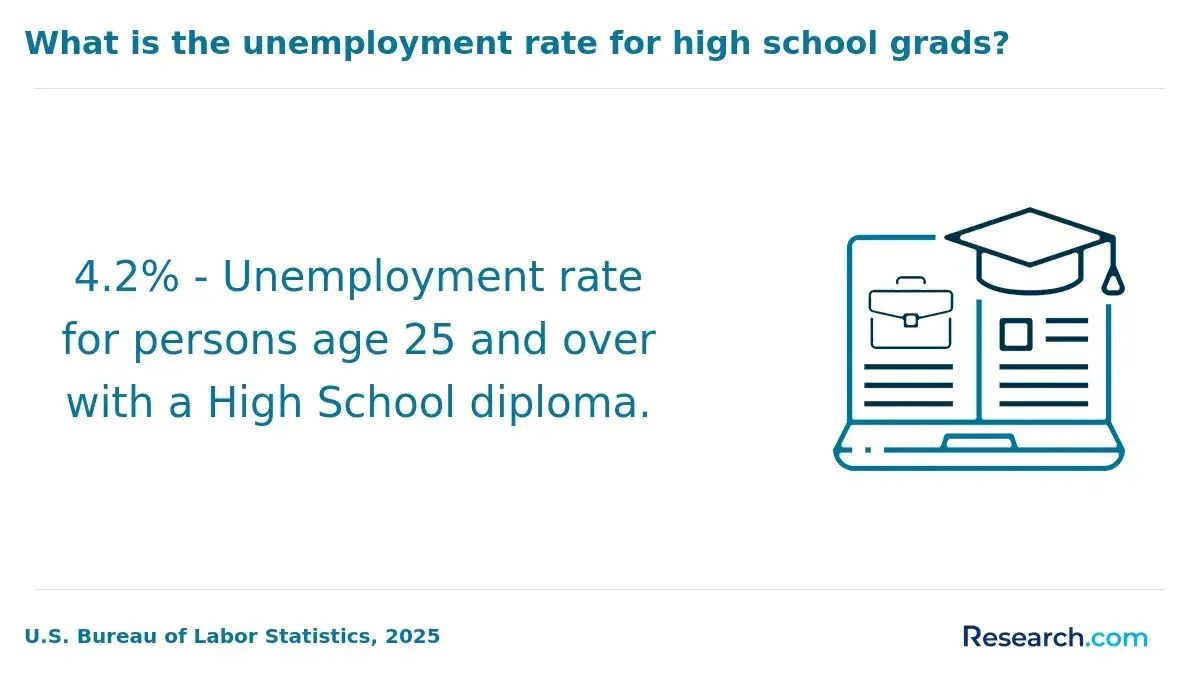
There is no single required degree for food operations, quality, and supply chain careers. Employers often evaluate a mix of education, food-industry experience, technical certifications, software skills, and leadership ability. The smartest pathway depends on the role you want first, not just the degree title.
The table below compares common education routes. Use it to match your current background with the fastest realistic next step.
| Pathway | Best fit | Typical career direction | Key trade-off |
| Certificate or short course | Current food workers or career changers testing the field | HACCP assistant, QA technician, sanitation lead, warehouse coordinator | Lower cost and faster completion, but may not qualify you for management roles by itself |
| Associate degree | Students seeking an affordable entry route | Production lead, food safety technician, inventory coordinator | Good for entry roles, but bachelor's completion may be needed for advancement |
| Bachelor's degree | Students aiming for management, analytics, or corporate roles | Operations supervisor, supply chain analyst, quality assurance coordinator | Higher cost and longer timeline, but broader employer recognition |
| Master's degree or MBA | Experienced professionals pursuing senior leadership | Plant manager, quality manager, category manager, director of supply chain | Best ROI when paired with work experience and clear advancement goals |
| Industry certifications | Workers needing proof of job-specific competency | Food safety, auditing, lean, procurement, logistics, or project coordination roles | Useful signal to employers, but not a substitute for degree requirements when those are stated |
Students interested in product development, public health nutrition, labeling, or wellness-focused food companies may benefit from a nutritional science degree online. That route is usually more science- and health-oriented than operations management, so it fits best when your target role involves nutrition programs, product claims, consumer education, or ingredient functionality.
Before choosing a path, map your target job postings. Look for repeated requirements in education level, software, certifications, shift expectations, and industry experience. If most postings ask for SAP, ERP, Power BI, HACCP, SQF, or supervisory experience, your program should help you build those skills rather than only offering general business courses.
What does the curriculum in a food industry management program typically include?
A strong food industry management curriculum should connect business decisions with food-specific constraints. Perishable inventory, sanitation downtime, allergen controls, temperature abuse, packaging defects, and supplier documentation all create management problems that look different from those in non-food industries.
The table below summarizes curriculum areas that matter most for operations, quality, and supply chain roles. It can help you evaluate whether a program is practical enough for the jobs you want.
| Curriculum area | What it should cover | Why it matters in food business careers |
| Food safety systems | HACCP principles, preventive controls, sanitation, allergens, traceability, recall procedures | Quality and operations leaders must protect consumers while keeping production compliant and efficient. |
| Operations and process improvement | Lean, Six Sigma basics, line balancing, bottleneck analysis, downtime tracking | Plant and warehouse roles require measurable improvements in yield, speed, safety, and cost. |
| Supply chain management | Procurement, inventory, warehousing, cold chain, transportation, forecasting | Food supply chains are time-sensitive and vulnerable to spoilage, shortages, and demand swings. |
| Quality management | Audits, specifications, sampling, documentation, corrective and preventive action | QA teams must translate standards into daily routines that operators can follow. |
| Data and business analytics | Spreadsheets, dashboards, ERP concepts, demand planning, KPI interpretation | Employers increasingly expect managers to support decisions with data, not only experience. |
| Leadership and communication | Supervision, training, conflict management, cross-functional communication | Food operations depend on hourly teams, shift handoffs, vendors, quality staff, and maintenance crews working together. |
Project management is especially useful because food companies run audits, packaging changes, facility upgrades, ERP rollouts, new product launches, and supplier transitions. If you want a broader operations credential that can apply beyond food, an online project management degree may be worth comparing with a food-specific program.
When reviewing a curriculum, look for applied assignments. Useful examples include mock recall exercises, supplier approval files, production scheduling projects, sanitation standard operating procedures, cost-of-quality analysis, and capstone work with real or simulated food business data.
How do online food industry management programs compare to campus-based options?
Online and campus-based food industry management programs can both lead to good outcomes, but they serve different learners. The right format depends on your work schedule, access to food labs or plants, learning style, and need for internships or employer partnerships.
The comparison below highlights the practical differences that matter most for food operations, quality, and supply chain students. It is especially important to check how each program handles hands-on requirements.
| Factor | Online program | Campus-based program | Best choice when |
| Schedule flexibility | Often better for working adults and shift workers | More fixed class times and commuting requirements | Choose online if you need to keep working while studying. |
| Hands-on learning | May use simulations, local placements, employer projects, or limited residencies | May offer food labs, pilot plants, campus equipment, and in-person demonstrations | Choose campus if lab access is central to your goals. |
| Networking | Can be strong if the program has active cohorts, faculty access, and employer partnerships | Often easier for local internships, student organizations, and career fairs | Choose based on the employer network, not just format. |
| Cost control | May reduce commuting and relocation costs | May provide access to campus jobs, labs, and local recruiters | Compare total cost, not tuition alone. |
| Career fit | Strong for supply chain, management, analytics, and working professionals | Strong for students needing lab-heavy preparation or local industry immersion | Match the format to the skills your target employers request. |
Students interested in management across physical, regulated, and project-heavy industries sometimes compare food programs with construction management degrees. Both can build scheduling, vendor, compliance, and cost-control skills, but food programs are better aligned with safety systems, perishability, labeling, sanitation, and cold-chain operations.
Online programs are not automatically easier, and campus programs are not automatically more valuable. A reputable online program should still require serious writing, data analysis, group projects, instructor feedback, and evidence that students can apply food business concepts in realistic settings.
What admission requirements and prior experience are needed for food industry management programs?
Admission requirements vary by school and degree level, but most food industry management programs evaluate academic readiness, career intent, and sometimes relevant work experience. Programs designed for working adults may be more flexible than traditional campus programs, especially for applicants with military, manufacturing, hospitality, grocery, or logistics backgrounds.
Common requirements usually include the items below. Check each school's catalog because requirements can differ for transfer students, international applicants, graduate applicants, and certificate students.
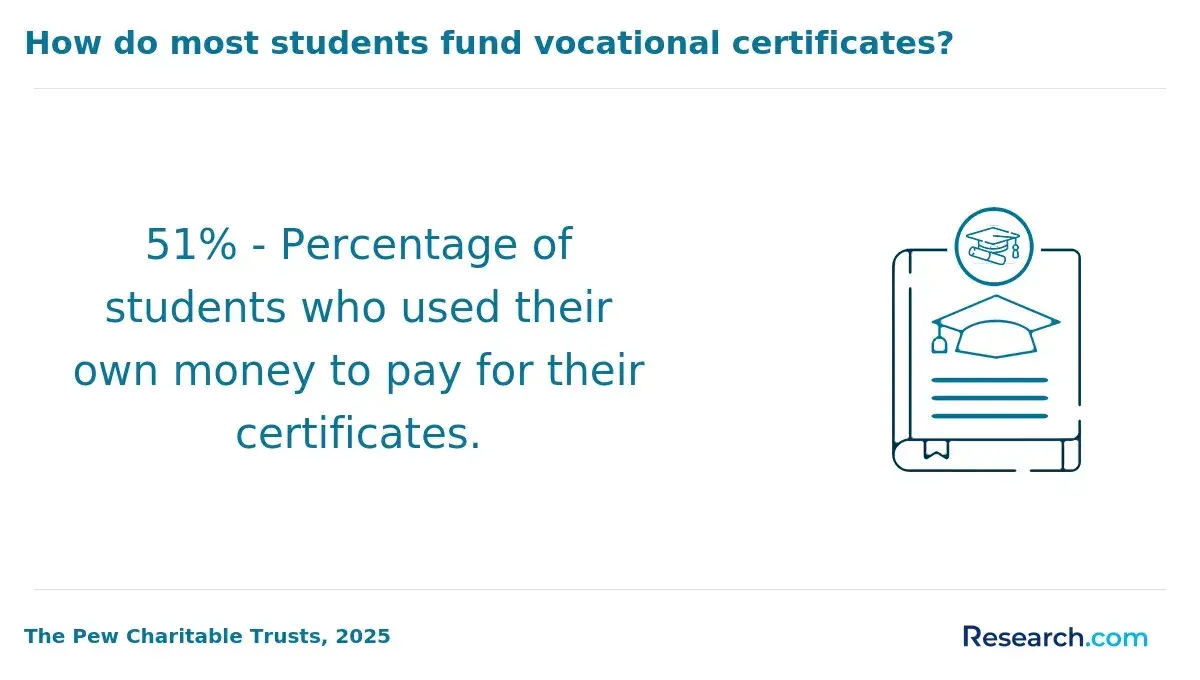
- High school diploma or equivalent for undergraduate certificates, associate degrees, and bachelor's programs.
- Prior college transcripts for transfer applicants or bachelor's-completion programs.
- Bachelor's degree for master's programs, often from an accredited institution.
- Resume or work history for programs aimed at food industry professionals.
- Statement of purpose explaining career goals in operations, quality, supply chain, food safety, or management.
- Prerequisite coursework in statistics, biology, chemistry, accounting, or business for some programs.
- English proficiency documentation when required by the institution.
Prior experience is helpful but not always required. A student with grocery, restaurant, warehouse, manufacturing, or military logistics experience may already understand scheduling, safety, inventory, teamwork, and customer pressure. That experience can make class projects more meaningful and may help in interviews.
If you do not have food-industry experience, build it before or during the program. Practical exposure can come from internships, part-time work in food production or distribution, student consulting projects, food safety volunteering, or entry-level QA and warehouse roles. Employers often value applicants who understand the pace and discipline of real food operations.
How long do food industry management degrees take, and what do they cost in the U.S.?
Program length and cost depend on credential level, transfer credits, residency status, school type, and whether you study full time or part time. For working adults, the biggest hidden cost may be time away from paid work, not only tuition.
The table below gives realistic planning ranges by credential type. Exact tuition and fees should always be verified with the school because food labs, technology fees, internships, and textbooks can change the final cost.
| Credential | Typical full-time length | Common cost factors | Best financial fit |
| Certificate | A few months to 1 year | Course fees, exam fees, employer reimbursement eligibility | Workers who need targeted skills quickly |
| Associate degree | 2 years | Community college tuition, transferability, local fees | Students seeking the lowest-cost entry route |
| Bachelor's degree | 4 years, or less with transfer credit | Residency status, online fees, lab fees, transfer credits, internship costs | Students targeting management-track or analyst roles |
| Master's degree | 1 to 2 years full time, longer part time | Graduate tuition, employer tuition assistance, opportunity cost | Experienced professionals pursuing senior leadership or specialization |
For 2024-25, College Board reported average published tuition and fees of $4,050 at public two-year colleges, $11,610 for in-state students at public four-year colleges, $30,780 for out-of-state students at public four-year colleges, and $43,350 at private nonprofit four-year colleges. Those figures are not food-program-specific, but they show why transfer planning and residency status can change the value of a degree.
To control cost, compare the full price before enrolling. Include tuition, fees, books, software, transportation, housing, lost work hours, internship travel, certification exams, and whether credits will transfer into a future bachelor's or master's program.
What entry-level and advanced job titles can graduates pursue in food business operations?
Graduates can enter food business operations through production, quality, logistics, procurement, or analytics. The best first job is usually one that gives direct exposure to how food moves through a facility or supply chain, because that experience supports advancement into supervision and management.
The table below shows common entry-level and advanced titles. Job titles vary widely by employer, so focus on duties and required skills rather than title alone.
| Career stage | Operations titles | Quality titles | Supply chain titles |
| Entry level | Production coordinator, shift lead, packaging lead, operations assistant | QA technician, food safety assistant, sanitation coordinator, lab technician | Inventory coordinator, logistics assistant, warehouse coordinator, transportation scheduler |
| Early career | Production supervisor, continuous improvement associate, operations analyst | QA supervisor, food safety coordinator, supplier quality assistant | Supply planner, demand planning analyst, procurement analyst, distribution analyst |
| Mid-career | Operations manager, production manager, plant scheduler, lean coordinator | Quality assurance manager, food safety manager, audit manager | Supply chain manager, category manager, sourcing manager, logistics manager |
| Advanced | Plant manager, director of operations, regional operations leader | Director of quality, regulatory affairs leader, corporate food safety manager | Director of supply chain, director of procurement, network planning leader |
Day-to-day work often includes coordinating people, equipment, materials, and documentation. A production supervisor may manage shift staffing and output; a QA coordinator may investigate deviations and prepare audit records; a supply planner may balance forecast demand against ingredient availability and warehouse capacity.
Promotion usually requires more than a degree. Employers look for measurable results such as lower waste, fewer quality holds, better on-time delivery, safer work practices, stronger audit scores, and improved labor planning. Keep a record of projects and outcomes so you can show evidence of impact during interviews.
What are typical salaries and long-term earnings for food operations, quality, and supply chain roles?
Salaries in food operations, quality, and supply chain vary by region, company size, shift schedule, union environment, commodity category, and level of responsibility. National occupational data is useful for benchmarking, but it does not predict what a specific employer will offer.
The table below uses U.S. BLS May 2024 wage benchmarks for broad occupations that commonly overlap with food business careers. Treat these figures as comparison points, not guaranteed earnings for graduates.
| Relevant occupation benchmark | Common food business connection | May 2024 median annual pay | How to interpret the number |
| Logisticians | Supply planning, distribution, inventory, cold-chain coordination | $80,880 | This is one of the strongest salary-growth combinations for students interested in supply chain roles. |
| Operations research analysts | Demand planning, network optimization, production analytics, forecasting | $91,290 | Data-heavy roles may pay more when they require analytics software, modeling, and business decision support. |
| Quality control inspectors | Inspection, sampling, line checks, documentation support | About $46,000 | Routine inspection roles can be a useful entry point, but advancement often requires food safety systems knowledge and leadership ability. |
| Food service managers | Restaurant, catering, institutional food operations, multi-unit supervision | About $67,000 | Pay can rise with multi-site responsibility, volume, and financial accountability. |
| Industrial production managers | Plant management, production leadership, packaging operations | About $122,000 | These roles usually require substantial experience managing people, equipment, safety, cost, and output. |
Long-term earnings tend to improve when workers move from execution roles into roles that own budgets, people, systems, or cross-functional decisions. For example, a QA technician who becomes a food safety manager may gain responsibility for audits, training, investigations, supplier documentation, and regulatory readiness.
AI and automation are changing the earnings picture. Roles based only on repetitive inspection, manual data entry, or routine scheduling may face pressure, while roles involving analytics, exception handling, process improvement, supplier risk, and compliance judgment may become more valuable. Students should therefore build both technical fluency and food-specific judgment.
How can students evaluate accredited, reputable food industry management programs and certifications?
Program quality matters because food business careers involve safety, compliance, expensive operations, and employer trust. A low-quality program may still teach general business concepts, but it may not give you the applied food systems knowledge employers expect.
Start with accreditation. In the U.S., institutional accreditation from an agency recognized by the U.S. Department of Education or the Council for Higher Education Accreditation is the baseline. Specialized accreditation may be less common for food industry management than for fields like nursing or engineering, so also evaluate curriculum depth, employer partnerships, faculty background, and career outcomes.
The table below summarizes credentials and quality signals worth checking. Use it to separate reputable options from programs that are merely convenient.
| Quality signal | What to verify | Why it matters |
| Institutional accreditation | The school is accredited by a recognized institutional accreditor | Accreditation affects credit transfer, financial aid eligibility, and employer confidence. |
| Food safety content | Courses cover HACCP, preventive controls, sanitation, allergens, traceability, and audits | Generic management programs may not prepare students for food-specific risk. |
| Applied experience | Internships, capstones, employer projects, labs, simulations, or workplace-based assignments | Employers value evidence that students can solve operational problems, not just pass exams. |
| Faculty and industry ties | Instructors have food manufacturing, retail, distribution, QA, logistics, or regulatory experience | Industry-aware faculty can connect coursework to current employer expectations. |
| Certification alignment | Preparation for HACCP, PCQI, SQF, ServSafe, lean, Six Sigma, APICS, or related credentials where relevant | Certifications can strengthen employability when they match the target role. |
| Career transparency | The school can explain job titles, internship employers, placement support, and typical outcomes without guarantees | Transparent programs help students judge fit and ROI realistically. |
Before enrolling, ask targeted questions rather than relying only on rankings or advertising. The following steps can help you avoid common mistakes.
- Confirm institutional accreditation through an official accreditor or federal database, not only the school's marketing page.
- Compare the curriculum with 10 to 15 real job postings for your target roles.
- Ask whether online students receive the same career services, internship support, and faculty access as campus students.
- Check transfer credit rules before starting an associate degree or certificate that you may later apply toward a bachelor's degree.
- Ask which certifications are included, which require separate fees, and which are actually valued by employers in your target area.
- Request total cost details, including fees, books, software, lab requirements, exam costs, and travel.
- Avoid programs that imply guaranteed salaries, guaranteed promotions, or vague "industry recognition" without evidence.
The strongest program is not always the most expensive or the fastest. It is the one that matches your target job, documents practical learning, fits your schedule, and leaves you with a manageable financial commitment.
Other Things You Should Know About Food Industry Management
Not always. Food science is valuable for product development, quality, and technical roles, but many operations and supply chain jobs accept degrees in business, logistics, operations management, industrial technology, or related fields, especially when paired with food-industry experience.
Useful certifications depend on the role. HACCP, PCQI, SQF-related training, ServSafe, lean, Six Sigma, and supply chain credentials can help when they match job postings. Certifications are most valuable when they support practical experience.
In 2027, pursuing a career in food industry management is promising due to the sector's rapid growth. Opportunities in operations, quality, and supply chain are expanding, driven by increased demand for efficient, safe, and sustainable food production and distribution.
References
- The Most Demanded Certificates in the Food Industry https://keyqualityglobal.com/en/blog/the-most-demanded-certificates-in-the-food-industry
- Study Food Industry Management in the USA https://www.studyusa.com/en/field-of-study/395/food-industry-management
- Search Food & Consumer Jobs. https://www.thepeopleco.com/jobs
- The Ultimate Guide to Kitchen Job Titles: How to Get Qualified for Each Role (And the Costs Involved) https://www.internationalculinarystudio.com/the-ultimate-guide-to-kitchen-job-titles-how-to-get-qualified-for-each-role-and-the-costs-involved/
- Food Industry Management https://www.niagara.edu/programs/food-industry-management/
- Salary in Logistics and Supply Chain Management Guide https://transorze.com/salary-in-logistics-and-supply-chain-management/
- Supply Chain Salaries by Experience Level 2026 | SCOPE Salary Guide https://www.scoperecruiting.com/blog/highest-paying-supply-chain-jobs-2026-salary-guide
- Careers at Post Consumer Brands https://jobs.postholdings.com/postconsumerbrands-home
- Career Paths in the Food Service Industry https://hattori-project.net/wsj/en/employment/career-path.php
- Foodcareers professional certifications https://www.foodcareers.eu/professional-certifications