2027 Online Food Industry Management Degrees That Help Build Career-Ready Food Business Skills

Co-Founder and Chief Data Scientist
Choosing an online food industry management degree is really a decision about where you want to work in the food economy: restaurants, retail grocery, manufacturing, supply chain, hospitality, or corporate operations. The stakes are high because food businesses face tighter margins, technology-driven operations, and stricter safety expectations. The U.S. Bureau of Labor Statistics reported a mid-$60,000 median pay for food service managers in May 2024, showing that management roles can offer meaningful advancement beyond entry-level food jobs. This guide explains program types, costs, courses, admissions, careers, and how to choose a credible online option.
Key Things You Should Know
- Online food industry management degrees usually combine business courses with food safety, purchasing, operations, hospitality, supply chain, and people-management training, making them most useful for students who want leadership roles rather than purely culinary work.
- Cost varies widely by school and residency status; College Board's 2024-25 pricing data lists average published tuition and fees at $11,610 for in-state public four-year institutions and $43,350 for private nonprofit four-year institutions, so transfer credit and employer tuition benefits can materially change ROI.
- The labor market is mixed: BLS 2024 data shows food service manager pay in the mid-$60,000s, while faster-growing adjacent roles such as logisticians and operations analysts may reward students who add analytics, supply chain, and project management skills.
What is an online food industry management degree and who is it designed for?
An online food industry management degree is a college program that teaches students how food businesses operate, make money, comply with safety standards, manage teams, control inventory, serve customers, and move products through supply chains. It is different from a culinary arts degree because the focus is less on cooking technique and more on business decisions: staffing, procurement, menu profitability, quality control, food law, marketing, distribution, and operations.
These programs are commonly offered as associate, bachelor's, bachelor's-completion, graduate certificate, master's, or MBA concentration options. The right level depends on your current education, work experience, and career target. A working restaurant supervisor may choose a bachelor's-completion program to qualify for district management. A food manufacturing employee may prefer a program with supply chain and quality assurance. A hospitality professional may look for coursework in revenue, guest experience, and multi-unit operations.
The degree is generally a strong fit for learners who want to move from hands-on food work into leadership, or for business students who want a food-sector specialization. It may not be the best first choice for someone whose goal is to become a chef, registered dietitian, food scientist, or licensed health inspector unless the program also meets the specific prerequisites for those paths.
The table below summarizes common online degree levels so you can match the credential to your starting point and career goal.
| Program type | Typical student profile | Best-fit goal | Important limitation |
| Associate degree | New college student or food service worker seeking a first credential | Assistant manager, shift leader, food retail supervisor | May not be enough for corporate management roles that prefer a bachelor's degree |
| Bachelor's degree | Student seeking a full undergraduate business or hospitality pathway | Restaurant manager, food operations manager, buyer trainee, hospitality manager | Requires more time and general education coursework |
| Bachelor's-completion program | Adult learner with transfer credits or an associate degree | Promotion into multi-unit, corporate, or operations roles | Transfer-credit policies can strongly affect cost and time to graduation |
| Graduate certificate | Professional who already has a degree | Targeted upskilling in food safety, supply chain, or hospitality operations | Usually narrower than a full degree |
| Master's or MBA concentration | Experienced professional pursuing senior management | Director, general manager, procurement leader, operations strategist | Better ROI when connected to clear advancement opportunities |
How do online food industry management programs compare to campus-based options?
Online and campus-based food industry management programs can cover similar academic content, but they differ in schedule, networking style, hands-on access, and how easily students can keep working. For many adult learners already employed in restaurants, food retail, hospitality, or manufacturing, the biggest advantage of online study is the ability to apply class concepts immediately at work.
The trade-off is that online students must be more intentional about building professional relationships and gaining practical experience. Campus programs may offer easier access to teaching kitchens, labs, career fairs, and local employer partnerships, while online programs may rely on internships, capstones, simulations, employer-based projects, or optional residencies.
The comparison below can help you decide whether flexibility or in-person immersion matters more for your situation.
| Decision factor | Online format | Campus format | Best choice when |
| Schedule | Often asynchronous or evening-friendly | More fixed class times | Online is stronger if you need to keep a job or manage family responsibilities |
| Hands-on learning | May use workplace projects, virtual tools, or local internships | May include labs, demonstration spaces, and campus events | Campus is stronger if you need structured in-person practice |
| Networking | Depends on discussion boards, faculty access, alumni networks, and virtual events | Often easier through campus clubs, employer visits, and peer interaction | Campus may help students with little industry experience build a network faster |
| Cost control | May reduce commuting, relocation, and work-disruption costs | May provide more bundled campus services | Online may be better if total cost and income continuity are priorities |
| Career fit | Good for working professionals in food service, retail, supply chain, and operations | Good for students seeking immersive student life or campus recruiting | The better option is the one with relevant internships, employer ties, and career outcomes |
Students comparing food management with other operational leadership tracks should also think about industry mobility. For example, someone more interested in jobsite logistics, contractors, and built-environment operations may find construction management degrees online more aligned than a food-focused business program.
Which types of accredited colleges and universities offer food industry management online?
Accredited online food industry management programs may be offered by public universities, private nonprofit colleges, community colleges, hospitality schools, business schools, and continuing education divisions. Accreditation matters because it affects credit transfer, employer recognition, graduate school eligibility, and access to federal financial aid.
At minimum, students should verify institutional accreditation through the U.S. Department of Education or the Council for Higher Education Accreditation. Programmatic accreditation is less universal in this niche, but some business, hospitality, culinary, or dietetics-related programs may hold specialized recognition. The key is not to assume that a food-related title automatically signals quality.
The table below shows where online food industry management programs commonly appear and what to check before applying.
| Institution type | Common strengths | What to verify |
| Public universities | Broader business curriculum, transfer pathways, potentially lower in-state tuition | Whether online students receive the same faculty access and career services |
| Private nonprofit colleges | Specialized hospitality or food business identity, smaller cohorts, alumni networks | Total tuition, scholarship availability, and employer recognition in your region |
| Community colleges | Lower-division coursework, associate degrees, workforce partnerships | Transfer agreements with bachelor's programs and whether credits apply to your major |
| Business schools | Management, finance, marketing, analytics, entrepreneurship | Whether food-sector electives or projects are available |
| Hospitality or culinary institutions | Food service operations, customer experience, menu economics, restaurant management | Whether the program is management-focused enough for corporate roles |
If you are still comparing broad business foundations before choosing a food specialization, reviewing online business degree programs accredited can help you benchmark accreditation, affordability, and transfer-friendly options.
What curriculum and courses are typically included in online food industry management degrees?
Most online food industry management degrees blend business administration with applied food-sector coursework. A strong curriculum should help students understand both the financial side of food businesses and the operational realities of safety, spoilage, inventory, labor scheduling, customer demand, and compliance.
Common courses usually fall into several skill categories. Review these categories carefully because two programs with similar names can prepare students for very different jobs.
- Business core: accounting, managerial finance, business law, organizational behavior, marketing, economics, and strategic management.
- Food operations: purchasing, inventory control, menu or product cost analysis, production planning, labor scheduling, and service systems.
- Food safety and compliance: sanitation, HACCP principles, allergen awareness, quality assurance, regulatory requirements, and risk management.
- Supply chain and procurement: vendor relations, distribution, logistics, cold-chain considerations, forecasting, and sustainability.
- Leadership and people management: supervision, training, conflict resolution, employee retention, and communication across hourly and salaried teams.
- Technology and analytics: point-of-sale data, inventory software, enterprise systems, dashboards, forecasting, and increasingly AI-supported decision tools.
Current food businesses increasingly expect managers to use data, not just experience. For that reason, students should look for capstones or projects that involve pricing decisions, waste reduction, demand forecasting, supplier evaluation, or operational improvement. If a program is light on analytics, students may want to strengthen that gap with electives or a complementary credential such as a project management bachelor degree pathway when their goal is broader operations leadership.
Technology is also changing the curriculum. AI-assisted scheduling, automated inventory alerts, digital ordering platforms, robotics in food production, and traceability systems are becoming more common. A good program does not need to turn students into software engineers, but it should prepare them to evaluate technology, manage implementation, and understand the human impact of automation.
What admission requirements and prior experience do these programs usually expect?
Admission requirements depend on degree level and institution, but most online food industry management programs evaluate academic readiness, transfer credits, and sometimes work experience. Many programs are designed for working adults, so prior food service, retail, hospitality, military logistics, or operations experience may strengthen an application even when it is not required.
Students should expect the following requirements to vary by school. Checking them early prevents delays, especially for applicants trying to transfer credits or enter an accelerated format.
- Associate or bachelor's admission usually requires a high school diploma or GED, transcripts, an application form, and sometimes placement testing or minimum GPA standards.
- Bachelor's-completion programs often require prior college credits, and some may prefer an associate degree in business, hospitality, culinary arts, or a related field.
- Graduate certificates and master's programs usually require a bachelor's degree, transcripts, a resume, and sometimes a statement of purpose or professional experience.
- Standardized tests are less common than they used to be in many online adult-focused programs, but requirements vary by school and program level.
- International credentials, military training, employer certifications, and prior learning may be evaluated differently, so students should ask about formal credit-review policies before enrolling.
Applicants should also distinguish between admissions requirements and career requirements. For example, a degree program may admit students without food safety certification, but employers may still expect ServSafe-style credentials, alcohol service training, allergen training, or state-specific compliance knowledge for certain jobs. Requirements can vary by state, county, employer, and facility type.
A practical way to prepare is to gather transcripts, document supervisory experience, list food safety or management certifications, and ask admissions advisors how many credits are likely to transfer before submitting a deposit. Transfer-credit clarity is especially important because losing credits can add semesters and significantly raise total cost.
How long do online food industry management degrees take and what do they cost?
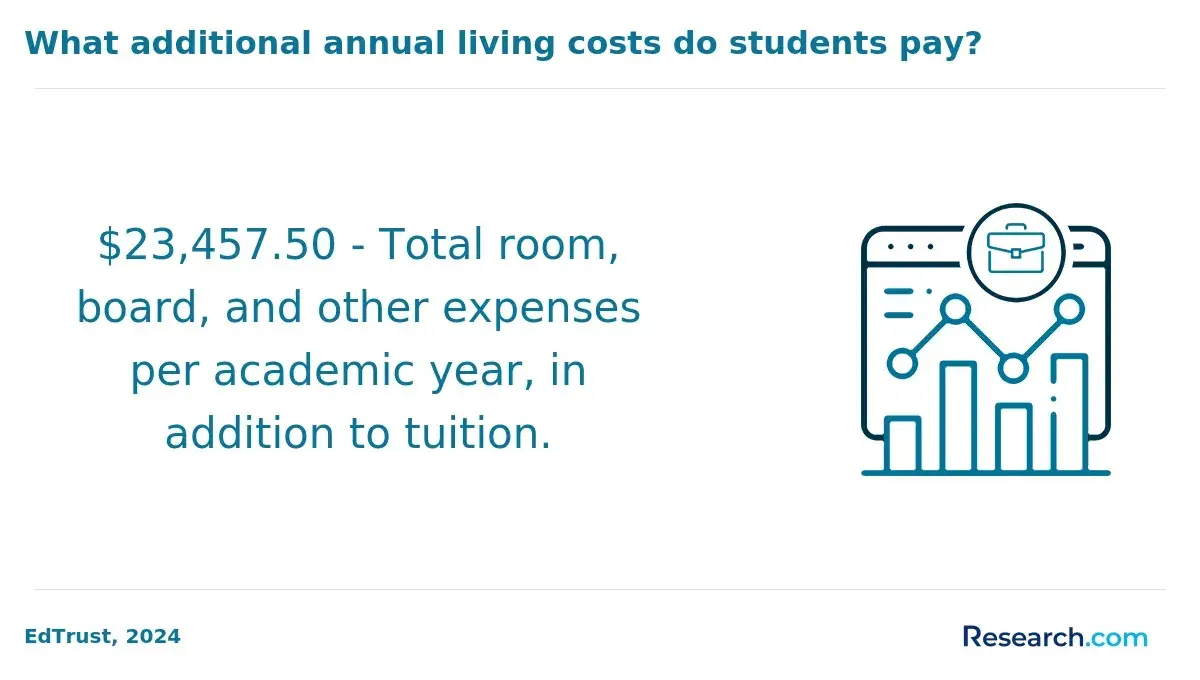
Online food industry management degrees can take anywhere from several months to four years or more, depending on the credential and how many credits a student transfers. An associate degree commonly takes about two years of full-time study, a bachelor's degree about four years, a bachelor's-completion program one to three years, and a graduate certificate less time than a full master's degree. Part-time study extends the timeline but may make it easier to keep earning income.
Cost should be evaluated as total attendance cost, not just tuition. College Board's 2024-25 data lists average published tuition and fees at $11,610 for in-state public four-year colleges and $43,350 for private nonprofit four-year colleges. Those figures are not food-program prices, but they are useful benchmarks: an online program that looks affordable per credit may still become expensive if it accepts few transfer credits or charges significant fees.
The table below highlights major cost drivers so students can compare programs more realistically.
| Cost factor | Why it matters | Question to ask |
| Tuition model | Some schools charge per credit, while others use flat-rate terms or cohort pricing | What is the total tuition for the credits I still need? |
| Transfer credits | Accepted credits can shorten time and reduce cost | How many of my prior credits apply to the major, not just electives? |
| Online fees | Technology, course, and distance-learning fees can add up | What mandatory fees apply to every term? |
| Books and materials | Business and food safety courses may require platforms, cases, or certification materials | Are textbooks, software, or exam fees included? |
| Residencies or internships | Some programs may require travel, local placement, or unpaid fieldwork | Can I complete practical requirements near where I live or work? |
| Opportunity cost | Full-time study may reduce work hours, while part-time study may delay promotion | Which pace gives me the best balance of income, debt, and completion speed? |
To reduce cost, students should compare public in-state online options, ask about employer tuition assistance, maximize transfer credits, complete prerequisites at lower-cost institutions when allowed, and avoid borrowing for living expenses unless necessary. Federal financial aid may be available for eligible students in accredited degree programs, but certificates and nondegree options do not always qualify.
What careers can graduates pursue with a food industry management degree?
Graduates can pursue roles across food service, hospitality, grocery, food manufacturing, distribution, procurement, and corporate operations. The best career fit depends on whether the program emphasizes restaurant leadership, food business strategy, supply chain, quality assurance, or general management.
The table below connects common roles with responsibilities and the type of student who may be a good fit.
| Career path | Typical responsibilities | Good fit for students who like |
| Food service manager | Overseeing staff, budgets, service quality, scheduling, purchasing, and customer experience | Fast-paced operations and people leadership |
| Restaurant or multi-unit manager | Managing sales, labor cost, training, standards, and performance across one or more locations | Retail-style accountability and measurable business targets |
| Food retail or grocery manager | Supervising departments, merchandising, inventory, shrink control, and customer service | Product movement, local demand, and store operations |
| Food production supervisor | Coordinating employees, safety, production schedules, quality checks, and process efficiency | Manufacturing environments and structured workflows |
| Purchasing or procurement coordinator | Working with vendors, pricing, product availability, contracts, and inventory needs | Negotiation, data, supplier relationships, and cost control |
| Quality assurance or compliance coordinator | Supporting food safety systems, documentation, audits, and corrective actions | Detail-oriented work and risk reduction |
| Food business entrepreneur | Building or managing a restaurant, catering company, packaged food brand, or franchise | Ownership, marketing, finance, and customer development |
Career outcomes are strongest when students pair the degree with relevant experience. A graduate with no food-sector background may need to start in assistant management or operations coordinator roles, while someone already supervising teams may be able to use the degree to compete for general manager, district manager, or corporate support roles.
Food management also overlaps with healthcare, senior living, schools, and institutional dining. If your target is hospital food service or broader healthcare operations rather than restaurants or manufacturing, comparing food-focused degrees with cheapest online MBA healthcare options can help you decide whether a specialized MBA offers a better long-term path.
What salary ranges and earning potential are common in food industry management roles?
Salary potential in food industry management depends on role, employer size, region, responsibility level, and experience. A degree can help qualify a candidate for management tracks, but it does not guarantee a specific salary. Students should use salary data as a planning tool, then compare it with local job postings and employer expectations.
BLS May 2024 wage data places food service manager median pay in the mid-$60,000s, while some adjacent business and operations roles report higher medians. That gap matters because students who add supply chain, analytics, procurement, or production-management skills may have more career options than students who focus only on restaurant operations.
The table below provides salary context for roles related to food industry management. These figures describe occupational medians, not guaranteed outcomes for degree holders.
| Occupation | Recent U.S. salary context | How to interpret it |
| Food service managers | BLS May 2024 data reports median annual pay in the mid-$60,000s | Useful benchmark for restaurant, dining, and institutional food service leadership |
| Logisticians | BLS May 2024 data reports median annual pay around the low-$80,000s | Relevant for students targeting food distribution, cold chain, or supply planning |
| Industrial production managers | BLS May 2024 data reports median annual pay above $120,000 | More relevant to manufacturing leadership and usually requires substantial experience |
| General and operations managers | BLS May 2024 data reports median annual pay above $100,000 | Applies broadly, but seniority, employer scale, and profit-and-loss responsibility matter |
Students evaluating ROI should compare expected debt with realistic first-step roles, not only senior-level salaries. A useful rule of thumb is to identify three target job postings before enrolling, note the required degree, preferred experience, software skills, certifications, and salary range, then choose the program that closes the most important gaps at the lowest reasonable total cost.
What is the job outlook for food industry management professionals in the United States?
The U.S. job outlook for food industry management is steady but not uniform. BLS projections for food service managers show modest growth for 2024-2034, with many openings driven by replacement needs rather than rapid expansion. For students, this means experience, flexibility, and specialized skills can matter as much as the degree title.
Several current trends are shaping hiring in food management. Employers are looking for managers who can control labor costs, use digital ordering and inventory systems, maintain food safety documentation, reduce waste, and train teams in high-turnover environments. Supply chain disruption during recent years also made procurement and vendor-risk skills more valuable in grocery, food service, and manufacturing settings.
Regulation is another reason management training matters. FDA traceability requirements for certain high-risk foods are pushing businesses to improve recordkeeping and supplier visibility. Managers who understand traceability, lot tracking, recall procedures, and documentation can be more valuable in roles that connect operations, quality assurance, and compliance.
AI and automation are changing the work rather than eliminating the need for managers. Scheduling software, demand forecasting, robotic food preparation, self-order kiosks, and automated replenishment tools can improve efficiency, but people still need to interpret data, handle exceptions, coach staff, manage customer experience, and make judgment calls when systems fail or demand changes unexpectedly.
How can students evaluate and choose a reputable online food industry management program?
Choosing a reputable online food industry management program requires more than comparing rankings or tuition. The best program is the one that is accredited, affordable for your circumstances, aligned with your target role, and structured so you can actually finish.
Use the following steps before applying or enrolling. They are designed to prevent the most common mistakes students make when choosing online management degrees.
- Verify institutional accreditation through recognized accreditation databases, and confirm that the school is eligible for federal financial aid if you plan to use it.
- Ask for a written transfer-credit evaluation before committing, especially if you already have an associate degree, culinary credits, military training, or prior business coursework.
- Compare the full cost to completion, including tuition, fees, books, certification costs, residency travel, and the cost of taking longer than planned.
- Match the curriculum to your target job: restaurant leadership, grocery management, food manufacturing, procurement, hospitality, quality assurance, or entrepreneurship.
- Review faculty background and employer connections to see whether the program has practical food-business expertise rather than only generic business coursework.
- Ask how online students access internships, capstones, career coaching, alumni networks, and job boards.
- Check whether courses teach current tools such as inventory systems, data dashboards, food safety documentation, supply chain platforms, and project-based operations improvement.
- Look for transparent student outcomes, but be cautious with salary claims that do not explain sample size, job type, geography, or graduate experience level.
Red flags include vague accreditation language, pressure to enroll immediately, unclear total pricing, limited transfer policies, no career support for online students, and a curriculum that sounds like general business with only one or two food-related electives. Institution type alone does not determine ROI; a public, private nonprofit, or specialized school can be a strong option if it fits your goals and budget.
Students who are not fully committed to the food sector should compare related management pathways before choosing. A broader business, hospitality, supply chain, or operations program may provide more flexibility if you want to move across industries later.
Other Things You Should Know About Food Industry Management
It can be worth it if you want to move into management and the program is accredited, affordable, transfer-friendly, and aligned with your target role. It is less likely to be worth it if you only need a short food safety credential or if the degree would create debt without improving your job options.
Not always. Many programs admit students without restaurant experience, but relevant work experience can make coursework more useful and improve your competitiveness for management roles after graduation.
Yes, if the curriculum includes food safety, compliance, quality systems, documentation, and operations coursework. For technical food science or laboratory roles, employers may prefer a food science, biology, chemistry, or related STEM degree.
Students often overlook accreditation and industry partnerships when selecting an online food industry management degree in 2027. These factors are crucial for ensuring the program meets industry standards and provides valuable networking opportunities, which are vital for building a career-ready skill set.
References
- Explore UM | University of Manitoba - Undergraduate admission requirements https://umanitoba.ca/explore/undergraduate-admissions/requirements
- How Long Does It Take to Get a Business Management Degree? | University of Phoenix https://www.phoenix.edu/blog/how-long-does-it-take-to-get-a-business-management-degree.html
- Food Industry Jobs | Miller Resource Group https://millerresource.com/news-resources/food-industry-jobs/
- Study Food Industry Management in the USA https://www.studyusa.com/en/field-of-study/395/food-industry-management
- Master in Food & Beverage Management Online | Rome Business School https://romebusinessschool.com/master-online-in-food-and-beverage-management/
- Food Industry Management https://www.niagara.edu/programs/food-industry-management/
- Nutrition and Culinary Arts | OUS Academy In Switzerland https://www.academy.zuerich/nutrition-and-culinary-arts
- World Food and Agribusiness Schools & Programs https://www.ifama.org/schools-and-programs
- Food Business Management https://www.ciachef.edu/cia-new-york-food-business-management-bachelors-degree-program/
- How to choose a culinary and restaurant management course? https://insights.ehl.edu/choosing-culinary-and-restaurant-management-course