2027 Food Industry Management Specializations With the Strongest Salary Growth

Co-Founder and Chief Data Scientist
Choosing a food industry management specialization now means weighing salary upside against automation, safety regulation, supply chain pressure, and rising education costs. The U. S. Bureau of Labor Statistics reported a 2024 median pay of $80,880 for logisticians and projects much faster-than-average growth for that field, making food supply chain management especially relevant. This guide is for students, career changers, and working food professionals comparing degrees, certificates, and advancement paths. You will learn which specializations show the strongest salary momentum and how to choose a program with better career return.
Key Things You Should Know
- Food supply chain, analytics, and food safety management show the strongest salary momentum because they connect food operations to high-demand roles such as logisticians, operations research analysts, quality managers, and production managers.
- Recent BLS wage data shows wide variation across related roles: food service managers had a 2024 median pay of $65,310, while industrial production managers had a median pay of $122,690, so specialization matters as much as the degree title.
- The best ROI usually comes from programs that combine business, food safety, data analysis, internships, and recognized accreditation rather than programs focused only on general hospitality or culinary operations.
Which food industry management specializations currently offer the fastest-growing salaries?
Food industry management covers the business, operational, safety, and people-management side of food production, distribution, retail, restaurants, institutional dining, and nutrition services. Because there is no single federal category called "food industry management specialization salary growth," the most useful way to compare options is to look at related U.S. occupations with current median pay, projected job growth, and employer demand.
The table below compares specializations by the roles they most commonly feed into. Use it as a directional guide, not a salary guarantee, because actual pay varies by region, employer size, prior experience, shift responsibilities, and whether the job is in restaurants, manufacturing, healthcare, retail, or corporate operations.
| Specialization | Common related roles | 2024 U.S. median pay for closest BLS role | Projected job growth signal | Why salary momentum is strong |
| Food supply chain and logistics management | Logistics coordinator, supply chain analyst, distribution manager, procurement manager | $80,880 for logisticians | Much faster than average in BLS 2023-2033 projections | Food companies need managers who can control cold-chain costs, prevent shortages, manage vendors, and respond to disruptions. |
| Food operations analytics | Operations analyst, demand planning analyst, inventory optimization specialist | $91,290 for operations research analysts | Much faster than average in BLS 2023-2033 projections | Employers increasingly use forecasting, pricing data, labor models, and AI-supported planning to improve margins. |
| Food safety and quality assurance management | Quality assurance supervisor, food safety manager, compliance manager, audit coordinator | $85,520 for food scientists and technologists | Faster-than-average growth for related technical food science roles | Regulatory compliance, recalls, allergen control, and supplier verification make this specialization valuable beyond entry-level food operations. |
| Food manufacturing and plant operations management | Production supervisor, plant manager, continuous improvement manager | $122,690 for industrial production managers | Moderate growth, with strong replacement and advancement opportunities | Pay can rise quickly when managers oversee labor, equipment, safety, throughput, and multimillion-dollar production targets. |
| Nutrition, wellness, and institutional food service management | Dietary manager, nutrition services director, wellness program manager | $73,850 for dietitians and nutritionists | Faster-than-average growth in BLS projections | Aging populations, healthcare food service, and preventive health programs support demand for nutrition-aware managers. |
| Restaurant, hospitality, and multi-unit food service management | Restaurant manager, district manager, catering director, franchise operations manager | $65,310 for food service managers | Slower than high-growth analytical roles, but broad hiring volume | Salary growth depends heavily on multi-unit responsibility, revenue size, bonuses, and brand scale. |
The fastest salary growth potential is usually not in traditional restaurant supervision alone. It is more often found where food management overlaps with analytics, compliance, supply chain systems, production technology, and profit-and-loss responsibility.
What high-paying food management roles can graduates qualify for today?
Graduates can qualify for roles across restaurants, food manufacturing, grocery, healthcare, schools, corporate dining, distribution, and food technology companies. The highest-paying paths usually require more than frontline experience; they reward measurable responsibility for budgets, safety, inventory, labor, vendors, or production output.
The table below shows common roles and what graduates typically do in each one. It helps clarify the difference between entry-level management jobs and roles that usually require experience, certifications, or specialized technical knowledge.
| Role | Typical responsibilities | Best-fit specialization | Career level |
| Food service manager | Supervises staff, scheduling, purchasing, customer service, sanitation, and daily operations | Restaurant or hospitality management | Entry to mid-level |
| Quality assurance manager | Oversees inspections, hazard controls, audits, documentation, supplier standards, and corrective actions | Food safety and quality management | Mid-level |
| Supply chain analyst or logistics manager | Manages inventory, transportation, warehousing, demand planning, vendor performance, and cold-chain coordination | Food supply chain management | Entry to mid-level, advancing to senior roles |
| Production supervisor or plant operations manager | Coordinates production lines, staffing, safety, maintenance, yields, and continuous improvement projects | Food manufacturing operations | Mid-level to advanced |
| Nutrition services manager | Plans menus, manages dietary staff, controls food costs, and supports compliance in healthcare or institutional settings | Nutrition and food service systems | Entry to mid-level |
| Category or procurement manager | Negotiates suppliers, evaluates product performance, controls purchasing costs, and supports merchandising strategy | Supply chain, retail food management, or business analytics | Mid-level to advanced |
For many graduates, the smart first step is not to chase the highest title immediately. A realistic path might start with assistant manager, production coordinator, inventory analyst, or quality technician, then move into management after the candidate can show results with labor cost, waste reduction, compliance, or throughput.
How does salary potential vary across food industry management career paths?
Salary potential varies because food management is not one career ladder. A manager running one quick-service restaurant, a quality manager in a USDA-regulated plant, and a logistics manager overseeing refrigerated distribution solve different problems and are paid from different labor markets.
When comparing career paths, focus on the kind of responsibility attached to the role. These factors usually have the biggest effect on pay:
- Scope of operation, such as one unit, multiple locations, a regional distribution network, or a production facility
- Technical risk, including food safety compliance, allergen control, recall prevention, and regulated documentation
- Financial responsibility, such as inventory value, labor budgets, procurement contracts, or production targets
- Data intensity, including forecasting, pricing analysis, waste analytics, scheduling models, and ERP systems
- Work setting, because manufacturing, corporate supply chain, and healthcare food service often pay differently from small independent restaurants
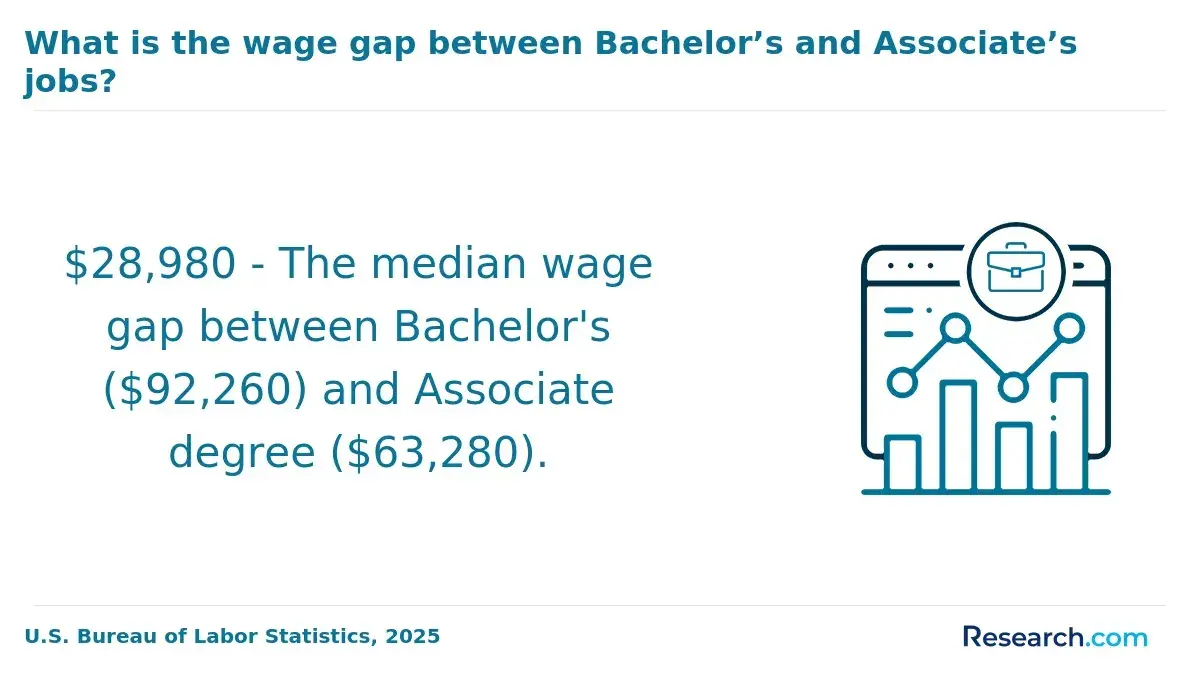
The salary difference between related roles can be substantial. BLS 2024 data places food service managers at a median of $65,310, while general and operations managers had a median pay of $103,650, showing why advancement into broader operations leadership can change the long-term payoff of a food management background.
Students who want the strongest compensation upside should look for programs that do not lock them into one narrow setting. A curriculum that combines food operations with finance, analytics, logistics, safety systems, and leadership can support movement across restaurants, manufacturing, retail, institutional food service, and corporate operations.
What degrees and training prepare you for top food management roles?
Food industry management roles can be entered through several education paths. The right option depends on whether the reader wants a frontline supervisory role, a technical food safety role, a nutrition-related career, or a corporate operations track.
The table below compares common credentials by length, career fit, and trade-offs. Use it to match the credential to the level of responsibility you want, not just the fastest program you can find.
| Credential | Typical length | Best for | Main limitation |
| Certificate in food safety, hospitality, or supply chain | A few months to 1 year | Working adults who need targeted skills or promotion support | May not meet degree requirements for corporate management roles |
| Associate degree in hospitality, culinary management, or food service management | About 2 years | Entry-level supervisors, restaurant managers, and transfer students | Lower ceiling for roles requiring bachelor's-level business or technical training |
| Bachelor's degree in food industry management, hospitality management, agribusiness, supply chain, nutrition, or business | About 4 years, less with transfer credits | Students seeking management, operations, procurement, quality, or corporate roles | Requires a larger time and cost commitment |
| Master's degree or MBA with food, analytics, supply chain, or operations focus | 1 to 3 years | Experienced professionals pursuing senior operations, plant, procurement, or strategy roles | Best ROI usually requires prior work experience |
A business foundation can be especially useful for students who want flexibility beyond restaurants. For example, affordable business degrees online may fit students who want accounting, management, marketing, and analytics training while adding food-specific internships or certificates separately.
Students interested in wellness, dietetics, or healthcare food service may need a more specialized academic route. A nutritionist degree online can be a better match when the goal involves nutrition counseling, institutional menus, community wellness, or preparation for dietetics-related requirements that vary by state and credential.
Before enrolling, students should ask whether the program includes applied projects, internships, ServSafe or HACCP preparation, supply chain software exposure, and career advising tied to food employers. A general management degree can work well, but only if the student deliberately adds food-specific experience.
How do online food industry management programs compare with campus-based options?
Online and campus-based food industry management programs can both lead to strong outcomes, but they serve different kinds of students. The best format depends on schedule, local employer access, hands-on course needs, and whether the student already works in food operations.
The table below compares online and campus options from a practical decision standpoint. It focuses on fit, not assumptions about quality, because strong and weak programs exist in both formats.
| Factor | Online programs | Campus-based programs |
| Best fit | Working adults, military students, rural students, and career changers needing flexibility | Students who want in-person labs, campus recruiting, residential experience, or local internships |
| Scheduling | Often asynchronous or evening-friendly | Usually follows fixed class and lab schedules |
| Hands-on learning | May use local internships, workplace projects, simulations, or short residencies | May provide teaching kitchens, food labs, sensory labs, or on-campus dining operations |
| Networking | Depends heavily on virtual career services and employer partnerships | Often stronger for local employer events and peer networking |
| Cost control | Can reduce relocation and commuting costs | May provide stronger access to campus jobs, labs, and nearby employers |
Online learning can be a strong choice for students already employed in restaurants, production, retail, distribution, or healthcare food service because workplace projects can become evidence of promotion readiness. Students changing careers from outside food should check whether the online program helps them secure field experience, not just complete coursework.
Some readers comparing management-heavy programs may also look at adjacent operations fields. For example, an online masters in construction management is not a food management credential, but it may be relevant for professionals moving toward food facility projects, plant expansion, or capital improvement leadership.
What accreditation should food industry management programs have for strong career outcomes?
Accreditation is one of the clearest safeguards against wasting money on a weak program. At minimum, students should confirm that the college or university is institutionally accredited by an agency recognized by the U.S. Department of Education or the Council for Higher Education Accreditation.
Programmatic accreditation depends on the specialization. Food industry management does not have one universal accreditor, so students should evaluate accreditation based on their intended career path:
- Hospitality or food service management students should look for business, hospitality, or institutional quality indicators, employer partnerships, and internship placement data.
- Nutrition or dietetics-focused students should verify requirements with the relevant dietetics accreditor, state rules, and professional credentialing pathway before enrolling.
- Business-focused students may benefit from schools with recognized business accreditation, especially if they want corporate operations, procurement, or management roles.
- Food science or safety-focused students should prioritize programs with strong science coursework, lab access, HACCP training, regulatory content, and industry-recognized faculty or employer ties.
Students pursuing healthcare-adjacent food operations should also understand the difference between food management credentials and health information credentials. An accredited online health information management degree CAHIIM is designed for health data and information management, not food service leadership, but it illustrates why specialized accreditation matters when a career path is regulated or credential-sensitive.
A common mistake is assuming that "accredited" automatically means "right for my career." Institutional accreditation helps with transfer credit and financial aid eligibility, but students still need to verify internships, certification preparation, licensure relevance, employer recognition, and graduate outcomes.
What core courses and skills are emphasized in food industry management majors?
Strong food industry management programs blend business management with the realities of perishable products, safety risk, labor scheduling, customer expectations, and cost control. The best programs prepare students to make decisions under operational pressure, not just memorize hospitality concepts.
Core coursework often includes a mix of business, food systems, and applied management topics. These courses matter because they map directly to the problems managers are paid to solve:
- Food safety and sanitation, including HACCP principles, allergen control, contamination prevention, and inspection readiness
- Food service operations, including purchasing, receiving, storage, menu planning, production flow, and service systems
- Accounting and food cost control, including budgeting, pricing, variance analysis, inventory valuation, and labor cost management
- Supply chain and procurement, including vendor selection, cold-chain logistics, distribution, forecasting, and contract basics
- Leadership and human resources, including scheduling, training, conflict management, retention, and compliance with workplace policies
- Business analytics, including spreadsheet modeling, dashboard interpretation, demand planning, waste analysis, and performance metrics
- Marketing and customer experience, including brand positioning, digital ordering behavior, loyalty programs, and service recovery
AI and automation are changing the skill mix. Food employers increasingly use automated ordering, labor forecasting, kitchen display systems, sensors, robotics, and inventory analytics, but these tools still require managers who can interpret outputs, train staff, protect food safety, and make judgment calls when the data is incomplete.
Students should build a portfolio of measurable projects. Examples include reducing waste in a campus dining operation, analyzing sales by menu category, building a supplier scorecard, documenting a mock recall process, or designing a labor schedule that meets service standards without overspending.
What are typical tuition costs and financial aid options for these programs?
Tuition varies widely by institution type, residency, delivery format, and transfer credit. The most important ROI lesson is to compare total cost, not just advertised tuition per credit, because fees, housing, transportation, books, uniforms, lab supplies, and lost work hours can change the real price of a degree.
Recent national pricing data helps set expectations. College Board's 2024-25 figures reported the following average published tuition and fees before grants and scholarships:
- $4,050 for public two-year in-district colleges
- $11,610 for public four-year in-state colleges
- $30,780 for public four-year out-of-state colleges
- $43,350 for private nonprofit four-year colleges
These are published prices, not necessarily what a student will pay after aid. Food industry management students should calculate net price using the school's net price calculator and compare whether internships, employer tuition assistance, transfer credits, or accelerated terms reduce the final cost.
Common financial aid and cost-control options include federal grants, state grants, institutional scholarships, employer reimbursement, military education benefits, community college transfer pathways, paid internships, and prior learning credit. Students should complete the FAFSA if eligible and ask whether scholarships are available through hospitality associations, food manufacturers, grocers, agricultural organizations, or local restaurant groups.
A practical affordability strategy is to complete lower-division general education courses at an accredited community college, then transfer into a bachelor's program with strong food industry connections. This can preserve access to management-level roles while reducing the amount borrowed.
What is the job outlook for food industry management professionals in the United States?
The U.S. job outlook for food industry management professionals is uneven but healthy for people who choose the right specialization. Traditional food service management remains broad, but the strongest growth signals are in logistics, analytics, nutrition, and technical operations roles connected to food systems.
The table below summarizes the outlook by career direction using BLS occupational categories that closely align with food industry management paths. It is most useful for comparing direction, not predicting an individual job offer.
| Career direction | Closest BLS occupation | 2024 median pay | Outlook interpretation |
| Restaurant and food service operations | Food service managers | $65,310 | Large employment base, but advancement often depends on multi-unit management, brand scale, and performance bonuses. |
| Supply chain and distribution | Logisticians | $80,880 | Strong growth signal because employers need resilient procurement, transportation, warehousing, and inventory systems. |
| Operations analytics | Operations research analysts | $91,290 | Very strong growth signal as companies use data to improve scheduling, demand planning, pricing, and efficiency. |
| Food science and quality | Food scientists and technologists | $85,520 | Steady opportunity where safety, product development, regulation, and quality systems intersect. |
| Plant leadership | Industrial production managers | $122,690 | High median pay, but advancement often requires experience with production systems, safety, maintenance, and labor leadership. |
| Nutrition-related management | Dietitians and nutritionists | $73,850 | Growth is supported by healthcare, aging populations, wellness programs, and chronic disease prevention needs. |
Students should also consider geographic concentration. Food manufacturing, logistics hubs, hospital systems, school districts, grocery headquarters, and restaurant corporate offices are not distributed evenly across the country. A program with strong local employer ties may outperform a better-known program with weak placement in the student's target market.
The most resilient candidates will combine people management with technology literacy. Employers increasingly expect managers to understand scheduling software, point-of-sale data, traceability systems, digital ordering, inventory platforms, and dashboards used to monitor profitability and compliance.
How can students choose a reputable food industry management program with strong ROI?
A reputable program should help students reach a specific career outcome, not just complete a credential. The strongest ROI usually comes from matching the program's curriculum, employer network, accreditation, and cost to the student's target role.
Before applying, students should use a structured checklist. These questions help reveal whether a program is likely to support salary growth and career mobility:
- Does the program have institutional accreditation and, where relevant, recognized programmatic accreditation or industry alignment?
- Does the curriculum include food safety, finance, operations, analytics, supply chain, and leadership rather than only introductory hospitality courses?
- Are internships, co-ops, practicums, or employer-based projects required or strongly supported?
- What job titles do recent graduates actually obtain, and are outcomes reported by program rather than only by the whole college?
- Can students earn or prepare for relevant credentials such as ServSafe, HACCP training, Certified Dietary Manager pathways, or supply chain certificates?
- How many transfer credits are accepted, and will the school provide a written degree plan before enrollment?
- What is the full net price after grants, scholarships, fees, books, labs, travel, and lost work time?
- Does the program have employer relationships in the student's preferred sector, such as manufacturing, healthcare, grocery, restaurants, or logistics?
Watch for red flags. These include unclear accreditation, vague career promises, no internship support, no faculty industry experience, poor transfer-credit transparency, pressure to enroll quickly, and salary claims that are not tied to verifiable occupational data.
Students interested in facility-heavy career paths should also consider whether their target role is truly food management or broader project and operations leadership. In some cases, pairing food operations experience with project management, engineering management, or facilities training may produce a better fit than another hospitality credential.
The best next step is to choose a target role first, then work backward. If the goal is plant management, prioritize production, safety, analytics, and leadership. If the goal is healthcare food service, prioritize nutrition, institutional compliance, and supervised experience. If the goal is corporate supply chain, prioritize logistics, analytics, procurement, and internships with food distributors or manufacturers.
Other Things You Should Know About Food Industry Management
In 2027, careers in food industry management are increasingly lucrative, particularly in specializations like supply chain management, food technology innovation, and sustainability management. Professionals in these areas are seeing some of the strongest salary growth due to rising industry demands and evolving market trends.
Food manufacturing operations, supply chain management, and operations analytics generally offer stronger salary potential because they connect to higher-paying occupational categories and larger business responsibilities. Food safety and quality management can also be valuable for students with strong science and compliance interests.
Not always. Some restaurant and food service supervisors advance through experience, certificates, or associate degrees. However, bachelor's degrees are more often preferred for corporate operations, supply chain, quality assurance, procurement, plant leadership, and management-track roles.
The biggest mistake is choosing a program based only on title or tuition without checking accreditation, employer connections, internships, transfer policies, and career outcomes. A lower-cost program is not a good deal if it does not match the student's target role.
References
- Beyond the Restaurant: Career Opportunities for Restaurant Managers - International Culinary Studio https://www.internationalculinarystudio.com/beyond-the-restaurant-career-opportunities-for-restaurant-managers/
- Study Food Industry Management in the USA https://www.studyusa.com/en/field-of-study/395/food-industry-management
- The 9 Must Do Courses in Hospitality https://www.globaledulink.co.uk/blog-old/the-9-must-do-courses-on-hospitality/
- What are the highest salaries in US Food Production?|The Sterling Choice https://thesterlingchoice.com/blog/the-top-paying-positions-in-us-food-production/
- Training & Certification Programs https://m.careersinfood.com/career-planning/education-and-training/training-and-certification-programs/
- Six Sigma Certification in Food Service: Overview & Career Options https://www.sixsigmaonline.org/six-sigma-certification-in-food-service/
- Food Industry Management https://www.niagara.edu/programs/food-industry-management/
- Food Business Management https://www.ciachef.edu/cia-new-york-food-business-management-bachelors-degree-program/
- Hospitality & Culinary Management Degree: Learning to Lead in Today's Restaurant Industry https://www.lci.edu/blog/hospitality-culinary-management-degree-learning-to-lead
- World Food and Agribusiness Schools & Programs https://www.ifama.org/schools-and-programs