2027 Online Food Industry Management Degrees With the Best Financial Aid Guidance

Co-Founder and Chief Data Scientist
Choosing an online food industry management degree means weighing career fit, cost, accreditation, and aid before you enroll. The decision matters because the National Restaurant Association projected U.S. food service sales at about $1.5 trillion in 2025, signaling a large but competitive market for managers who understand operations, supply chains, safety, and finance. This guide is for working adults, transfer students, hospitality employees, and food-sector career changers. You will learn how programs work, what they cost, how to compare financial aid, and which outcomes are realistic.
Key Things You Should Know
- Online food industry management degrees usually combine business, food systems, operations, safety, purchasing, and leadership; the exact title may be food industry management, food and beverage entrepreneurship, hospitality management, agribusiness management, or food science with a business track.
- College Board's 2024 Trends in College Pricing reported average published tuition and fees of $11,610 for in-state public four-year students and $43,350 for private nonprofit four-year students in 2024-25, so net price after grants is often more important than sticker tuition.
- BLS May 2024 wage data reported median pay of $66,340 for food service managers and $81,760 for food scientists and technologists, but outcomes vary by role, region, experience, employer size, and whether the program builds both management and technical food-industry skills.
What is an online food industry management degree and how does it work?
An online food industry management degree is a business-focused program for students who want to manage food-related operations, products, services, supply chains, or teams. Because colleges use different titles, the best match may not always be called "food industry management." Relevant programs can sit in business, hospitality, agriculture, food science, nutrition, or entrepreneurship departments.
At the undergraduate level, these programs often prepare students for entry-level or mid-level roles in food service operations, food production, procurement, quality assurance coordination, retail food management, catering, distribution, or product-focused business roles. At the graduate level, they may serve professionals moving into strategy, operations leadership, food systems management, regulatory affairs, or product innovation.
Online delivery usually includes asynchronous weekly modules, recorded lectures, discussion boards, case studies, group projects, proctored exams, and applied assignments based on real food businesses. Some programs also require internships, field experiences, labs, or capstone projects. If a program includes food science or nutrition labs, ask whether the lab is fully online, completed through at-home kits, scheduled on campus, or fulfilled through an approved local site.
The table below summarizes common degree types so you can match the credential to the role you want rather than choosing by program name alone.
| Degree path | Typical focus | Best fit | Watch for |
| Associate degree | Food service operations, hospitality basics, supervision, sanitation, purchasing | Students seeking faster entry into restaurant, catering, institutional dining, or retail food roles | May not meet bachelor's-degree preferences for corporate management roles |
| Bachelor's degree | Management, finance, marketing, food systems, supply chain, safety, quality, leadership | Students seeking broader management mobility in food service, manufacturing, distribution, or agribusiness | Program title may be hospitality, agribusiness, food science, or entrepreneurship rather than food industry management |
| Master's degree | Strategic leadership, analytics, food policy, product development, advanced operations, nutrition or food science specialization | Professionals pursuing advancement, consulting, corporate roles, or specialized technical leadership | Some programs expect prior coursework or professional experience |
| Graduate certificate | Narrow skill area such as food safety, supply chain, hospitality leadership, nutrition business, or project management | Professionals who already have a degree and need targeted skills | May not carry the same labor-market signal as a full degree |
The degree is most useful when it fills a specific gap: business skills for food technicians, food-sector knowledge for business majors, leadership skills for hospitality workers, or supply-chain fluency for operations employees. It is less useful if you want a licensed clinical nutrition career, a culinary arts career centered mainly on cooking technique, or a highly technical food science role that requires in-person laboratory depth.
How do online food industry management programs compare to campus-based options?
Online programs can be a strong fit for working adults in restaurants, grocery, food production, logistics, agriculture, or hospitality because the schedule is usually more flexible. Campus programs may be better for students who need intensive labs, culinary facilities, food product development spaces, face-to-face recruiting, or structured peer interaction.
The best choice depends on how much hands-on work your target career requires. A student aiming for restaurant district management may do well online with local work experience, while a student aiming for sensory science, food chemistry, or product development should carefully examine lab access.
This comparison shows the practical trade-offs that matter most before choosing an online or campus format.
| Factor | Online program | Campus-based program | Decision tip |
| Schedule | Often asynchronous or evening-friendly | Class times are usually fixed | Online is better if you need to keep working while studying |
| Hands-on learning | May use local internships, simulations, employer projects, or limited residencies | May offer labs, kitchens, research facilities, and food production spaces | Campus may be stronger for technical food science or culinary-heavy goals |
| Networking | Often built through virtual teams, alumni platforms, and local work experience | Often easier through student organizations, career fairs, and faculty access | Online students should ask about employer partnerships and virtual career services |
| Cost control | May reduce relocation, commuting, and schedule disruption costs | May include added housing and transportation costs | Compare total cost, not tuition alone |
| Student discipline | Requires strong time management and self-direction | Provides more built-in structure | Online is risky if you need frequent in-person accountability |
Technology is also changing the online experience. More programs now use analytics dashboards, virtual collaboration tools, supply-chain simulations, digital menu engineering exercises, and AI-supported business analysis. These tools can be useful, but they do not replace accreditation, qualified faculty, field experience, or a curriculum that maps to your career goal.
Online education is a smart option when it lets you study without leaving a relevant job. If your employer can provide food operations exposure while your program provides management theory, the combination may be stronger than a campus program without industry experience.
Which accredited schools offer strong online food industry management degrees?
Few U.S. colleges use the exact phrase "online food industry management degree," so students should search across related accredited programs. Strong options generally combine food-sector context with management, finance, operations, regulation, or entrepreneurship.
The table below is not a ranking. It highlights examples of institutionally accredited online programs that can fit different food industry management goals; always confirm current delivery format, tuition, transfer policy, and program requirements directly with the school.
| School | Example online program area | Institutional accreditation | Best for |
| Kansas State University Global Campus | Food science and industry-related online study | Higher Learning Commission | Students who want a stronger technical food systems or food production foundation with industry relevance |
| Penn State World Campus | Agribusiness management | Middle States Commission on Higher Education | Students interested in food supply chains, agricultural markets, retail food systems, sales, and commodity-linked business roles |
| Johnson & Wales University Online | Food and beverage entrepreneurship or hospitality-related online study | New England Commission of Higher Education | Students focused on food service, restaurant concepts, catering, beverage operations, or food business ownership |
| Arizona State University Online | Food, nutrition, entrepreneurship, or business-related online pathways | Higher Learning Commission | Students interested in food ventures, consumer-facing products, wellness-oriented food business, or interdisciplinary study |
| Oregon State University Ecampus | Agricultural sciences or food systems-related online study | Northwest Commission on Colleges and Universities | Students interested in food systems, agriculture-connected management, sustainability, or supply-chain context |
| University of Massachusetts Amherst | Hospitality and tourism management-related online study | New England Commission of Higher Education | Students targeting restaurant, lodging, events, institutional food service, or hospitality operations leadership |
If your main goal is broad business management at the lowest possible cost, compare food-specific programs with a cheapest online business management degree and add food-sector experience, internships, or certificates. That route can work well for students who already work in food service or food distribution and need a flexible business credential.
When comparing schools, prioritize institutional accreditation first. Then look for curriculum alignment: food safety, operations, purchasing, financial controls, people management, analytics, marketing, and supply-chain coursework. A program with a recognizable school name but little food-sector content may be less useful than a less famous program with stronger industry fit.
What admission requirements and prior experience do these programs typically expect?
Admission requirements vary by degree level and school, but most online bachelor's programs are designed to accept first-year students, transfer students, and working adults. Prior food industry experience is helpful but usually not mandatory for undergraduate admission. For master's programs, schools may expect a bachelor's degree, professional experience, prerequisite coursework, or a statement showing a clear food, hospitality, agriculture, nutrition, or business goal.
Students should treat admission as both an eligibility check and a fit check. A school may admit you academically, but the program may still be a poor match if it lacks the technical, business, or experiential component your target role requires.
These are the most common materials and expectations applicants should prepare before applying.
- High school transcript, GED documentation, or prior college transcripts for undergraduate admission
- Minimum GPA requirements, which vary by school and may be more flexible for adult or transfer applicants
- Transfer-credit evaluation for prior college, military, industry, or community college coursework
- Personal statement or goal statement explaining interest in food industry management, hospitality, agribusiness, food systems, or operations
- Resume for programs that value work experience in restaurants, retail food, manufacturing, logistics, nutrition, agriculture, or business
- Prerequisite coursework for some food science, nutrition, or graduate-level programs, especially in biology, chemistry, statistics, accounting, or management
- English proficiency documentation for applicants whose prior education was not completed in English
Prior experience can matter even when it is not required. A student who works as a shift lead, assistant manager, line cook, production associate, grocery department lead, catering coordinator, or quality assistant can use the degree immediately in class projects and may build a stronger resume by graduation.
A common mistake is applying only to the most familiar school brand without checking the transfer policy. If you have prior credits, ask for a written transfer evaluation before committing. Losing a year of credits can erase the value of a lower tuition rate.
How long do online food industry management degrees take and what do they cost?
Program length depends on degree level, transfer credits, course load, and whether the school offers accelerated terms. A full bachelor's degree commonly requires about 120 credits, while transfer students may finish faster if prior coursework applies to the major and general education requirements.
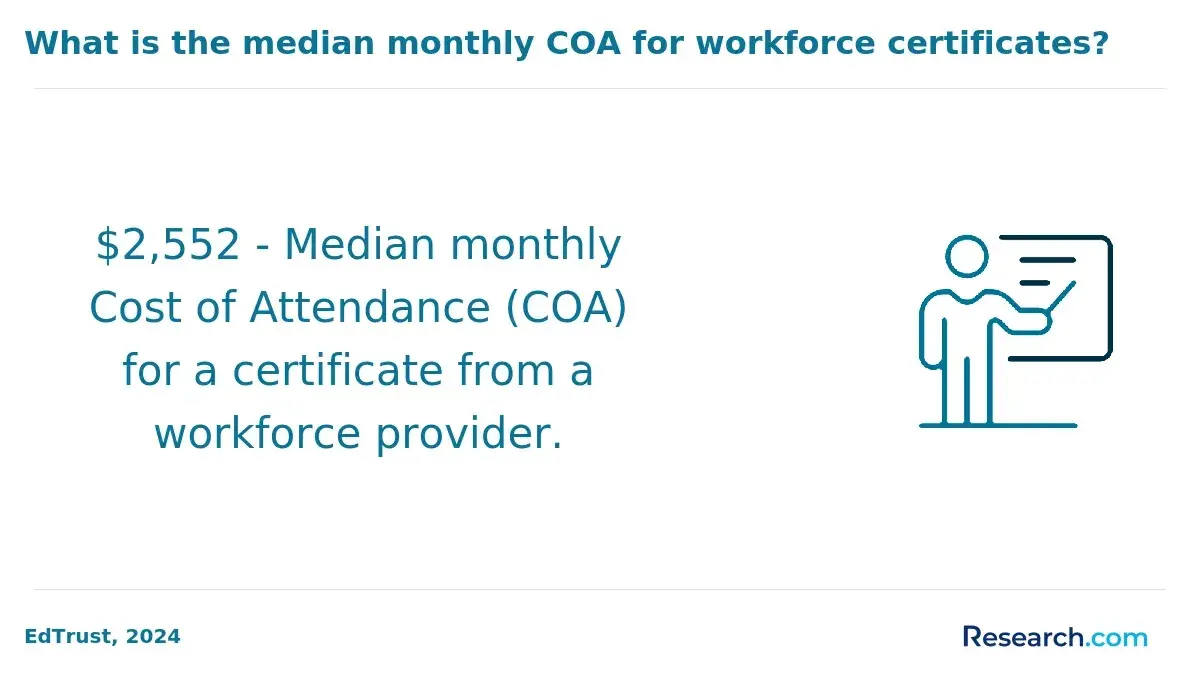
Cost should be evaluated as total net price, not just tuition per credit. College Board's 2024 Trends in College Pricing reported average published tuition and fees of $11,610 for in-state public four-year students and $43,350 for private nonprofit four-year students in 2024-25. Those figures are broad averages, but they show why grants, transfer credits, employer tuition benefits, and residency rules can change the real price substantially.
Use these time and cost benchmarks as a starting point, then request a program-specific degree plan from each school.
| Credential | Typical time online | Main cost drivers | Best cost-control strategy |
| Associate degree | About 2 years full time | Community college tuition, online fees, books, industry certifications | Choose a transfer-oriented program with an articulation agreement |
| Bachelor's degree | About 4 years full time; faster with transfer credits | Tuition per credit, residency status, transfer acceptance, internship costs, technology fees | Maximize accepted credits and compare net price after grants |
| Master's degree | About 1 to 3 years depending on pace | Graduate tuition, employer reimbursement, required residencies, software or lab fees | Use employer support and choose a program tied to advancement goals |
| Certificate | Several months to about 1 year | Credit count, professional exam fees, stackability into a degree | Pick a certificate that can later apply to a degree if possible |
When schools quote prices, ask whether the estimate includes tuition, mandatory fees, books, software, exam proctoring, travel for residencies, lab kits, uniforms, internship insurance, and graduation fees. The lowest tuition is not always the lowest total cost if the program accepts fewer transfer credits or requires travel.
For students comparing speed across business operations fields, a quickest online project management degree can be a useful benchmark. Food industry management students should be careful, however: the fastest option is not always best if it sacrifices internships, food safety training, or supply-chain coursework.
Before enrolling, calculate affordability in a simple sequence. This keeps the decision grounded in cash flow rather than marketing language.
- Request the official cost of attendance and program tuition sheet from each school.
- Ask for a written transfer-credit estimate before you apply or immediately after admission.
- Complete the FAFSA and compare grants, scholarships, work-study, and loans separately.
- Subtract gift aid from total cost to estimate net price before borrowing.
- Compare monthly loan repayment scenarios against realistic entry-level salaries in your target role.
What core courses and specializations are included in food industry management curricula?
Food industry management curricula vary because programs may come from business, hospitality, agriculture, food science, or nutrition departments. The best programs do more than teach generic management; they connect management decisions to food safety, perishability, labor scheduling, inventory, consumer behavior, regulation, and supply-chain risk.
A typical bachelor's-level program may include a mix of general education, business core, food-sector courses, electives, and an internship or capstone. Students should compare course descriptions carefully because two programs with similar names can prepare students for different careers.
The table below shows common curriculum areas and why each matters in food-related management roles.
| Curriculum area | Common course examples | Why it matters |
| Business foundation | Accounting, finance, marketing, business law, organizational behavior | Managers need to control costs, read financial reports, hire effectively, and understand customer demand |
| Food operations | Food service systems, purchasing, menu management, inventory control, production planning | Food businesses depend on margins, labor efficiency, waste control, and consistent service quality |
| Food safety and regulation | Sanitation, HACCP concepts, food law, quality assurance, risk management | Compliance failures can create safety, legal, financial, and reputational consequences |
| Supply chain and logistics | Procurement, distribution, forecasting, cold chain, supplier management | Food managers must handle perishability, shortages, traceability, and vendor performance |
| Analytics and technology | Business analytics, point-of-sale analysis, data visualization, operations technology | Employers increasingly expect managers to use data for staffing, purchasing, pricing, and forecasting |
| Leadership and strategy | Human resources, project management, entrepreneurship, strategic planning | Advancement often depends on leading teams, launching initiatives, and managing change |
Specializations can sharpen the degree's value if they match your target role. A student interested in restaurant ownership may choose food and beverage entrepreneurship, while a student aiming for distribution or procurement may prioritize agribusiness, supply chain, or operations analytics.
Common specialization themes include food and beverage entrepreneurship, hospitality operations, agribusiness management, food safety and quality, supply-chain management, nutrition business, sustainability, retail food management, and product development. If you are unsure, choose a broader management track with electives that let you test several areas.
Do not overlook certifications and embedded credentials. Some programs include or prepare students for food protection manager certification, HACCP training, project management coursework, alcohol service training, or hospitality credentials. These are not substitutes for a degree, but they can make your skills easier for employers to verify.
What types of financial aid, scholarships, and funding exist for these online programs?
Financial aid for online food industry management students usually comes from the same major sources available to campus students, as long as the school is eligible for federal aid and the student meets enrollment requirements. The key is to compare aid quality, not just admission offers.
The federal Pell Grant maximum for the 2025-26 award year is $7,395. That amount is a ceiling, not a promise; eligibility depends on the FAFSA, enrollment intensity, cost of attendance, and federal rules. Still, it shows why completing the FAFSA matters even for online students who assume they will not qualify.
The major funding sources below should be reviewed in this order because grants and scholarships reduce cost more safely than loans.
- Federal grants such as Pell Grants for eligible undergraduate students
- State grants, especially for residents attending public institutions or approved online programs
- Institutional scholarships based on need, merit, transfer status, adult learner status, military affiliation, or major
- Departmental scholarships from hospitality, agriculture, food science, business, or nutrition units
- Employer tuition assistance or reimbursement from restaurants, grocery chains, food manufacturers, distributors, hospitals, school districts, or hospitality companies
- Federal work-study, if offered and practical for the student's schedule
- Federal student loans, used only after gift aid and lower-cost funding are considered
- Private scholarships from food industry associations, local hospitality groups, agricultural organizations, and community foundations
Students considering nutrition-oriented food business roles may also compare degree costs against a cheapest online master's in nutrition, especially if their long-term goal involves wellness programs, food policy, product labeling, or dietetics-adjacent leadership. Be careful, though: nutrition degrees and food management degrees can lead to different credentialing expectations.
Good financial aid guidance should be proactive and transparent. Before enrolling, ask the financial aid office and admissions team for specific answers, not general reassurances.
- Ask whether the online program is eligible for federal financial aid.
- Request the full cost of attendance for your enrollment pace, not just tuition per credit.
- Ask which scholarships online students can actually receive.
- Confirm whether transfer credits will reduce both time and cost.
- Ask how aid changes if you study part time, stop out, repeat a course, or take summer classes.
- Request a loan estimate that separates subsidized, unsubsidized, Parent PLUS, graduate PLUS, and private loans if applicable.
- Ask whether employer reimbursement can be deferred until after grades post.
Red flags include vague scholarship promises, pressure to borrow before seeing a full aid package, unwillingness to provide net price estimates, unclear accreditation, and programs that advertise low tuition but charge high mandatory fees. A reputable school should help you understand both affordability and borrowing risk before you commit.
What careers can a food industry management degree lead to in the U.S.?
A food industry management degree can support several career paths, but it is not a single-track credential. Outcomes depend on your concentration, work experience, internships, technical skills, and the type of food employer you target.
Graduates may work in restaurants, hotels, catering, grocery and retail food, food manufacturing, distribution, agriculture-connected businesses, institutional dining, school nutrition, healthcare food service, corporate food brands, convenience retail, or food startups. The most realistic entry point is often assistant manager, supervisor, coordinator, analyst, or trainee rather than senior manager.
The table below connects common career directions with the type of preparation that tends to matter most.
| Career direction | Possible roles | Useful preparation | Best-fit student profile |
| Food service operations | Assistant restaurant manager, food service manager, catering manager, dining services supervisor | Scheduling, cost control, sanitation, guest service, labor management | Students with restaurant, hospitality, or institutional dining experience |
| Food manufacturing and quality | Quality assurance coordinator, production supervisor, compliance assistant, operations trainee | Food safety, HACCP concepts, quality systems, production planning, data tracking | Students interested in plant operations, safety, and process improvement |
| Supply chain and procurement | Purchasing coordinator, inventory analyst, logistics coordinator, category assistant | Forecasting, supplier management, analytics, distribution, cold-chain awareness | Students who like numbers, systems, vendors, and operational problem solving |
| Food business and entrepreneurship | Food startup operator, product coordinator, retail food manager, beverage program manager | Marketing, finance, product development, consumer behavior, regulation | Students planning to launch or manage food brands, concepts, or retail operations |
| Agribusiness and food systems | Agribusiness sales representative, operations associate, food systems coordinator, commodity marketing assistant | Agricultural markets, food systems, economics, sustainability, supply-chain context | Students interested in the farm-to-market side of the food economy |
Project-based work is common across food businesses, from opening a new location to implementing inventory software or improving supplier performance. If you want to understand adjacent business roles, reviewing project management degree jobs can help you see how scheduling, budgeting, stakeholder communication, and risk management transfer into food operations.
This degree is often worth considering if you already have food-sector experience and want to move from hourly work to supervision, from supervision to management, or from operations to corporate support roles. It may be less efficient if your goal is to become a chef, registered dietitian, laboratory food scientist, or licensed health professional, because those paths may require different training, supervised practice, or science prerequisites.
What salary ranges and job outlook can graduates expect in the food industry?
Salary outcomes in the food industry vary widely because the field includes restaurants, hotels, manufacturing plants, grocery chains, logistics firms, agriculture businesses, hospitals, schools, corporate brands, and startups. A degree can help qualify a student for management-track roles, but salary is still shaped by location, experience, responsibility level, employer size, and technical specialization.
BLS May 2024 wage data gives useful national reference points, but it should not be read as a promise for new graduates. Many graduates start below median pay, especially if they are entering a new field, while experienced professionals in high-responsibility roles may exceed the median.
The table below summarizes selected U.S. roles related to food industry management and the salary context readers can use when evaluating return on investment.
| Occupation | May 2024 median annual wage | Typical relevance to the degree | Outlook context |
| Food service managers | $66,340 | Directly relevant for restaurant, catering, institutional dining, and hospitality operations | BLS 2024-34 projections show slower-than-average growth, so experience and operational results matter |
| Food scientists and technologists | $81,760 | Relevant when the program includes stronger science, product, safety, or quality coursework | More technical roles may require science-heavy preparation or graduate study |
| Logisticians | $80,880 | Relevant for procurement, distribution, inventory, and food supply-chain roles | BLS 2024-34 projections show much faster-than-average growth, reflecting broad supply-chain demand |
| Industrial production managers | $125,900 | Relevant for experienced professionals moving into food manufacturing plant leadership | These roles usually require substantial operations experience, not just a degree |
| General and operations managers | $103,350 | Relevant for broader business leadership in multi-unit, corporate, retail, or distribution settings | Competition can be strong because applicants come from many business backgrounds |
The salary takeaway is practical: the highest-paying paths usually require either technical specialization, multi-unit responsibility, supply-chain expertise, manufacturing experience, or measurable profit-and-loss accountability. If a program is expensive, make sure it prepares you for one of those higher-responsibility directions or helps you advance with your current employer.
AI and automation are also changing job expectations. Food managers increasingly use scheduling software, inventory forecasting, digital ordering data, kitchen display systems, quality tracking platforms, and analytics dashboards. Students who combine food operations knowledge with data literacy may be better positioned than those who study management in a purely general way.
How can students evaluate and choose a reputable online food industry management program?
The best online food industry management program is the one that is accredited, affordable after aid, realistic for your schedule, and aligned with your target role. Do not choose solely from rankings, tuition ads, or the word "management" in the title.
Start by defining the job you want after graduation. Then work backward to the curriculum, faculty expertise, required experience, career services, and financial aid package. This approach prevents a common mistake: enrolling in a program that sounds food-related but lacks the coursework employers in your target area value.
Use this checklist when comparing programs and speaking with admissions or financial aid staff.
- Verify institutional accreditation through the school's accreditor and confirm the program is offered by the accredited institution.
- Ask whether the program is fully online or includes campus visits, labs, internships, practicums, or local-site requirements.
- Match required courses to your goal, such as restaurant operations, food safety, supply chain, agribusiness, hospitality finance, or product development.
- Request a written transfer-credit evaluation and a personalized graduation timeline.
- Compare total net price after grants and scholarships, not just tuition per credit.
- Ask what financial aid is available to online, part-time, transfer, adult, military, and out-of-state students.
- Review faculty backgrounds for food industry, hospitality, agribusiness, food science, operations, or entrepreneurship experience.
- Ask about internship support, employer partnerships, alumni outcomes, and career coaching for online students.
- Check whether certifications, food safety training, or applied projects are embedded in the curriculum.
- Read withdrawal, refund, satisfactory academic progress, and loan repayment policies before enrolling.
The table below highlights common red flags and stronger alternatives so you can avoid costly enrollment mistakes.
| Red flag | Why it matters | Better alternative |
| No clear institutional accreditation information | Credits, aid eligibility, and employer recognition may be affected | Choose a school with recognized institutional accreditation and transparent disclosures |
| Only generic business courses with no food-sector application | The program may not differentiate you for food industry roles | Look for food safety, operations, hospitality, agribusiness, or supply-chain content |
| Low advertised tuition but unclear fees | Total cost may be higher than expected | Request the full cost of attendance and a sample billing statement |
| No transfer-credit clarity | You may pay for courses you already completed | Get a written transfer evaluation before committing |
| Weak online career services | Online students may receive less job-search support | Ask for virtual coaching, internship help, employer events, and alumni networking access |
| Salary claims that sound guaranteed | Education can support opportunity but does not ensure a specific income | Use BLS data, employer postings, and local wage information to evaluate realistic outcomes |
A reputable program should make it easy to understand what you will study, how much you will pay, how long it will take, what support you will receive, and what kinds of roles the curriculum is designed to support. If those answers are vague, keep comparing.
Other Things You Should Know About Food Industry Management
It can be worth it if you want management roles in food service, hospitality, supply chain, agribusiness, food manufacturing, or food entrepreneurship and the program is affordable after aid. It is less likely to pay off if it does not match your target role or requires heavy borrowing without a clear advancement plan.
Food industry management focuses on supply chain, operations, and business strategies within food production and distribution. Hospitality management emphasizes guest services, hotel operations, and event planning. While they share certain skills, each field targets different industry segments and career paths.
Some do and some do not. If you are new to the food industry, an internship or employer-based project can be very valuable because it gives you practical experience to discuss in interviews.
References
- A Step-by-Step Guide to Applying to U.S. Universities | ECE® https://www.ece.org/Blogs/how-to-apply-to-us-university-international-students.htm
- Food Science Degree Careers and Salary in Europe - StudyinEurope.eu https://www.studyineurope.eu/ko/food-science/food-science-degree-careers-salary-europe/
- Guide to Financial Aid for Online Students https://www.onlineu.com/resources/financial-planning/financial-aid
- Online Master’s in Food Business - CIA School of Graduate and Professional Studies https://masters.culinary.edu/food-business-masters-degree/
- Food Industry Management https://www.niagara.edu/programs/food-industry-management/
- Food Business Management https://www.ciachef.edu/cia-new-york-food-business-management-bachelors-degree-program/
- How to choose a culinary and restaurant management course? https://insights.ehl.edu/choosing-culinary-and-restaurant-management-course
- Master in Food & Beverage Management Online | Rome Business School https://romebusinessschool.com/master-online-in-food-and-beverage-management/
- Study Food Industry Management in the USA https://www.studyusa.com/en/field-of-study/395/food-industry-management
- Financial Aid For Online Colleges https://www.affordablecollegesonline.org/financial-aid/financial-aid-for-online-colleges/