2027 Online Food Industry Management Degrees for Students Who Want Broad Food Business Preparation

Co-Founder and Chief Data Scientist
Choosing an online food industry management degree is really a decision about how broadly you want to work across restaurants, food manufacturing, retail food, supply chains, hospitality, or product-driven food businesses. The timing matters because USDA Economic Research Service data published in 2024 shows U.S. food expenditures exceeded $2.6 trillion, creating demand for managers who understand operations, safety, finance, marketing, and people leadership. This guide explains degree types, costs, online formats, admissions, careers, and salary context so you can decide whether this path fits your goals.
Key Things You Should Know
- Online food industry management programs are best for students who want broad business preparation for food service, food retail, hospitality, supply chain, purchasing, quality, or operations roles rather than a narrow culinary-only path.
- Recent federal labor data shows food service manager employment is projected to grow 2% from 2023 to 2033, while related business roles such as logisticians and market research analysts are projected to grow faster, making curriculum breadth important.
- Cost varies widely: College Board data for 2024-25 lists average published tuition and fees at $11,610 for in-state public four-year institutions and $43,350 for private nonprofit four-year institutions, so transfer credit, employer tuition aid, and program length can strongly affect ROI.
What is an online food industry management degree and how does it prepare students for food business careers?
An online food industry management degree is a business-focused academic program that applies management, finance, marketing, supply chain, safety, and leadership concepts to food-related organizations. Depending on the school, the program may be housed in a business, hospitality, agriculture, food systems, or professional studies department.
The main value of this degree is breadth. A student may learn how to manage a restaurant's profit-and-loss statement, evaluate food safety controls, coordinate purchasing, supervise staff, analyze consumer trends, and understand the regulatory environment around food products. That makes it different from a culinary arts program, which usually emphasizes cooking technique, menu execution, and kitchen production.
For students new to the field, the degree can provide a structured entry point into food business roles. For workers already in restaurants, catering, grocery, distribution, food manufacturing, or hospitality, it can help translate hands-on experience into management-ready credentials.
The degree is usually a good fit if you want to work that connects food with business decisions. It may not be the best fit if your primary goal is to become a registered dietitian, food scientist, chef, or licensed health professional, because those paths often require different accredited coursework, lab science, supervised practice, or licensure-specific preparation.
Students should think of food industry management as an applied business degree. The strongest programs help learners connect classroom concepts to workplace decisions such as staffing, inventory, supplier selection, sanitation, customer experience, pricing, menu engineering, and compliance.
How do online food industry management programs compare to campus-based options in flexibility and outcomes?
Online and campus-based food industry management programs can lead to similar academic credentials when they come from accredited institutions, but the learning experience can differ substantially. The best choice depends on your schedule, location, learning style, need for hands-on experiences, and access to local food employers.
The comparison below shows how the two formats usually differ for students who are trying to balance flexibility with career outcomes.
| Factor | Online food industry management program | Campus-based food industry management program |
| Schedule flexibility | Often better for working adults, military learners, parents, and students with irregular shifts | Often better for students who can attend fixed class times and campus activities |
| Hands-on learning | May rely on local internships, workplace projects, virtual simulations, or employer-based assignments | May offer teaching kitchens, labs, campus dining projects, or in-person employer events |
| Networking | Depends heavily on discussion boards, faculty access, alumni networks, and local placements | Can provide more immediate peer, faculty, and recruiter interaction |
| Best fit | Students who need location independence or want to keep working while studying | Students who want a traditional college environment or intensive in-person practice |
Online study can be especially useful for food workers because many industry jobs involve evenings, weekends, rotating shifts, or seasonal demand. A fully online or low-residency program lets students complete coursework without leaving the workforce, which can protect income and help them apply course concepts immediately.
Campus programs may be stronger when the school has specialized facilities, active employer partnerships, or required production-based experiences. If you are comparing practical business fields beyond food, reviewing an online bachelor's in construction management can also show how applied management programs structure internships, operations courses, and project-based assignments in another industry.
Outcomes depend less on the delivery format and more on accreditation, curriculum relevance, faculty experience, internship access, employer recognition, and the student's prior work history. A well-designed online program with strong career support can be a better investment than a campus program with weak industry connections.
What types of food industry management degrees and concentrations are available online at the undergraduate and graduate levels?
Online food industry management programs are not always labeled the same way. Some schools use names such as food service management, hospitality management, restaurant and food service management, food business management, agribusiness with food systems coursework, or culinary management.
The table below summarizes common online degree levels and the students they typically serve.
| Credential level | Typical purpose | Best for | Common limitation |
| Certificate | Short-term skill building in food service, safety, hospitality, or operations | Workers who already have experience and need targeted knowledge | May not qualify students for roles requiring a bachelor's degree |
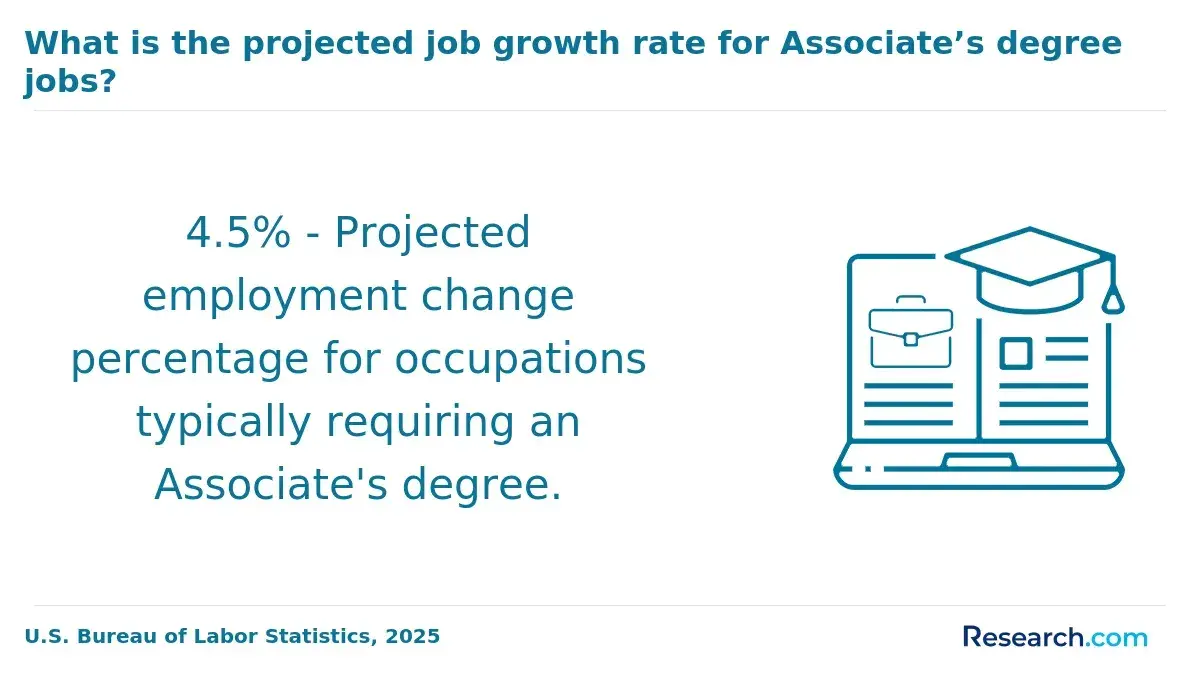
| Associate degree | Foundation in food service operations, supervision, accounting, and customer service | Students seeking entry-level management or transfer to a bachelor's program | Career mobility may be more limited than with a bachelor's degree |
| Bachelor's degree | Broad preparation in management, finance, marketing, operations, food safety, and leadership | Students seeking supervisory, management-trainee, purchasing, retail food, or hospitality roles | Requires a larger time and cost commitment |
| Master's degree | Advanced leadership, strategy, analytics, food systems, or hospitality administration | Professionals aiming for senior management, consulting, corporate roles, or specialized leadership | Usually expects prior academic or professional preparation |
Common concentrations include restaurant management, food service management, hospitality management, food and beverage operations, food safety, supply chain management, agribusiness, retail food management, culinary entrepreneurship, and sustainable food systems. Students who want clinical nutrition, community nutrition, or dietetics-adjacent roles should compare this path with a nutrition masters degree, because nutrition programs usually serve different professional goals.
A bachelor's degree is often the broadest option for students who want general food business preparation. A certificate can make sense if you already work in the field and need a faster credential. A graduate degree is most useful when it clearly connects to leadership, corporate advancement, food systems strategy, or a specialized role your current resume does not yet support.
What core courses and specialized food business subjects are typically included in online food industry management curricula?
A strong curriculum should combine general business training with food-specific applications. Students should not choose a program based only on the degree title; they should inspect the course list to see whether the program prepares them for the part of the food industry they actually want to enter.
Most broad food industry management curricula include several categories of courses. These categories matter because they show whether the program is teaching only hospitality basics or a wider food business skill set.
- Business core: accounting, economics, business law, finance, marketing, organizational behavior, human resources, and strategic management.
- Food operations: purchasing, inventory control, menu management, cost control, kitchen or service systems, vendor relations, and revenue management.
- Food safety and compliance: sanitation, hazard prevention, food handling standards, quality assurance, labeling awareness, and risk management.
- Customer and market strategy: consumer behavior, hospitality sales, brand management, digital marketing, retail food trends, and product positioning.
- Leadership and analytics: supervision, team communication, data-informed decision-making, scheduling, forecasting, and process improvement.
Students interested in corporate or multi-unit roles should look for stronger coursework in analytics, supply chain, finance, and strategy. Students interested in restaurants or hospitality should prioritize labor management, service design, revenue management, and food cost control. Students interested in food manufacturing or quality roles should look for more explicit food safety, quality assurance, regulatory, and supply chain content.
Technology is becoming more important across the food sector. Programs that discuss point-of-sale analytics, inventory platforms, delivery systems, digital ordering, labor scheduling software, artificial intelligence in demand forecasting, and automation in food production may better reflect current employer expectations. The goal is not to become a software engineer; it is to understand how data and technology change food business decisions.
What admission requirements and prior experience do schools expect for online food industry management programs?
Admission requirements vary by school and degree level, but most online food industry management programs evaluate whether students are academically prepared and likely to succeed in a business-oriented curriculum. Many programs are designed for adult learners, so prior work experience can be useful even when it is not formally required.
Typical undergraduate admission requirements include the following items. Students should confirm requirements directly with each school because selective programs, transfer pathways, and adult-completion programs may differ.
- High school diploma, GED, or equivalent credential for first-year admission.
- Official transcripts from high school and any colleges previously attended.
- Minimum GPA requirement, which may be flexible for adult learners or transfer students.
- Placement, prerequisite, or general education requirements in math, writing, and business foundations.
- Application form, fee, and sometimes a personal statement or resume.
Graduate programs usually expect a bachelor's degree from an accredited institution. Some may prefer applicants with work experience in food service, hospitality, supply chain, business, agriculture, retail, or management, while others admit career changers who can show strong academic preparation.
Before applying, students can reduce delays by taking a practical sequence. This is especially helpful for transfer students who want to avoid losing credits.
- Request unofficial transcript reviews from target schools before submitting a final decision.
- Ask whether culinary, military, industry, or professional training can count for credit.
- Check whether the program requires an internship and whether your current workplace can qualify.
- Confirm whether math, accounting, statistics, or food safety prerequisites must be completed before upper-level courses.
- Compare start dates, application deadlines, and document processing timelines.
Prior experience in food service can strengthen a student's application and improve classroom performance, but it is not always necessary. Career changers should look for programs with introductory food systems courses, advising support, and career services that understand nontraditional pathways into the industry.
How long do online food industry management degrees take to complete, and what program formats are offered?
Program length depends on credential level, transfer credit, enrollment intensity, and course scheduling. Online programs may offer asynchronous classes, synchronous evening sessions, accelerated terms, competency-based formats, or hybrid requirements such as short residencies or local internships.
The table below gives typical completion ranges. These are planning ranges, not promises, because individual timelines depend on credit requirements and how many courses a student can handle while working.
| Program type | Typical completion time | Format considerations |
| Certificate | Several months to 1 year | Best for targeted skills or career add-ons |
| Associate degree | About 2 years full time | May be used as a transfer pathway to a bachelor's degree |
| Bachelor's degree | About 4 years full time, less with transfer credit | Adult-completion programs may require prior college credits |
| Master's degree | About 1 to 2 years | May be full time, part time, cohort-based, or executive-style |
Accelerated online formats can be valuable if you already have transfer credits, predictable study time, and strong self-management skills. They can be risky if you work long food service shifts, have caregiving responsibilities, or struggle with condensed coursework. Students comparing speed-focused options may find it useful to review how an accelerated business program structures shorter terms and heavier course loads.
Part-time study usually takes longer but may be more realistic for working food professionals. Full-time study may reduce time to completion but can increase short-term financial pressure if it requires cutting work hours. The best timeline is the one you can complete without sacrificing grades, health, or essential income.
What are the tuition costs, fees, and financial aid options for online food industry management students?
Tuition for online food industry management degrees depends on institution type, residency rules, credit requirements, fees, transfer policies, and whether the program is undergraduate or graduate level. The sticker price is only one part of the decision; students should calculate total cost to completion.
College Board's 2024-25 pricing data provides a useful benchmark for understanding the broader U.S. tuition environment. Average published tuition and fees were:
- $4,050 at public two-year colleges.
- $11,610 for in-state students at public four-year institutions.
- $30,780 for out-of-state students at public four-year institutions.
- $43,350 at private nonprofit four-year institutions.
These averages are not specific to food industry management, but they help students recognize why program structure matters. A public online bachelor's completion program that accepts substantial transfer credit may cost far less than a four-year program with limited transfer acceptance, even if the per-credit rate looks similar.
Students should also account for fees that may not be obvious at first. Online course fees, technology fees, proctoring fees, books, software, uniforms, food safety certification exams, internship travel, and graduation fees can change the true cost of attendance.
Federal aid can reduce upfront cost but may increase long-term debt. For the 2024-25 academic year, federal Direct Loan interest rates were 6.53% for undergraduate loans and 8.08% for graduate unsubsidized loans. That means borrowing should be tied to a realistic career plan, not just enrollment eligibility.
To reduce cost, students should take a deliberate approach before committing.
- Use the school's net price calculator and ask for a written estimate of total program cost.
- Confirm transfer credit before enrollment, not after the first term starts.
- Ask employers about tuition reimbursement, especially if you work for a restaurant group, hotel, grocery chain, distributor, manufacturer, or food service contractor.
- Compare public in-state online options with private nonprofit and private for-profit options based on total cost, not institution type alone.
- Prioritize scholarships, grants, and pay-as-you-go plans before relying heavily on loans.
A degree is more likely to make financial sense when the program is affordable, the curriculum matches a target role, the student can keep working, and the credential supports advancement beyond what experience alone can provide.
What careers can graduates of online food industry management programs pursue across the food and beverage sector?
Graduates can pursue roles across food service, hospitality, retail food, food distribution, corporate dining, institutional food service, food startups, purchasing, sales, operations, and quality-focused environments. The best-fit career path depends on prior experience, internships, location, and whether the degree includes specialized coursework.
The table below connects common career directions with the responsibilities students should expect. It can help you identify which curriculum features matter most for your goal.
| Career direction | Typical responsibilities | Useful preparation |
| Food service or restaurant manager | Supervise staff, control costs, manage service quality, schedule labor, handle customer issues | Food cost control, labor management, sanitation, leadership, revenue management |
| Food and beverage manager | Oversee beverage programs, purchasing, menus, inventory, events, and service standards | Hospitality operations, supplier management, pricing, customer experience |
| Retail food or grocery department manager | Manage inventory, merchandising, shrink, staffing, food safety, and sales performance | Retail operations, analytics, food safety, merchandising, supervision |
| Purchasing or supply chain coordinator | Work with vendors, track inventory, monitor costs, support distribution and procurement | Supply chain, accounting, forecasting, negotiation, food systems |
| Quality assurance or food safety coordinator | Support compliance, documentation, sanitation processes, audits, and corrective actions | Food safety, quality systems, regulatory awareness, operations |
| Food business entrepreneur | Develop products or services, manage finances, market offerings, coordinate operations | Entrepreneurship, marketing, finance, food law basics, operations planning |
Entry-level students may begin in supervisor, assistant manager, management trainee, catering coordinator, purchasing assistant, or operations coordinator roles. Experienced food workers may use the degree to compete for general manager, district manager, corporate training, food and beverage director, procurement, or operations roles.
Some students may discover that their desired role is more project-driven than food-specific. If you are drawn to timelines, budgets, cross-functional teams, and process improvement across industries, reviewing whether is a project management degree worth it may help you compare a broader management credential with a food-focused one.
Certifications can complement the degree. Depending on the role, employers may value food protection manager certification, alcohol service training, allergen awareness training, hospitality credentials, supply chain credentials, or project management training. Requirements vary by employer, state, county, and job function, so students should verify local rules before assuming one credential is enough.
What salary ranges and job outlook can food industry management graduates expect in the U.S. food service and food business fields?
Salary outcomes in food industry management vary widely by role, region, employer size, experience, and whether the job is in restaurants, hotels, corporate food service, food manufacturing, grocery, distribution, or a headquarters function. Students should use salary data as a planning tool, not a guaranteed outcome.
The latest BLS Occupational Outlook Handbook data published in 2024 lists the median annual pay for food service managers at $63,060 using May 2023 wage data. This figure is useful because it reflects a common management destination for food business graduates, but it does not capture every related role in food manufacturing, procurement, analytics, or corporate operations.
Job outlook also differs by occupation. BLS projects food service manager employment to grow 2% from 2023 to 2033, which is slower than the average for all occupations. That makes differentiation important: graduates with stronger finance, technology, supply chain, safety, and people-management skills may be better positioned than candidates with only general service experience.
Related roles can have different growth profiles. For example, BLS projects much faster growth for logisticians from 2023 to 2033, reflecting demand for supply chain expertise. For a food industry management student, that suggests value in coursework that covers procurement, distribution, forecasting, and inventory systems, especially if restaurant management is not the only career target.
Students should evaluate salary potential by asking three practical questions: What role am I targeting? What experience do employers require for that role? Does this degree add skills I cannot easily gain on the job? A degree can improve mobility when it fills a real gap, but it is less valuable if it duplicates skills the student already has and does not connect to advancement opportunities.
How can students evaluate accreditation, curriculum quality, and industry alignment to choose a reputable online food industry management program?
Program quality matters more than the label on the degree. A reputable online food industry management program should be institutionally accredited, transparent about costs, clear about curriculum, realistic about career outcomes, and connected to food or hospitality employers in meaningful ways.
Students should start with accreditation. In the U.S., institutional accreditation from an agency recognized by the U.S. Department of Education or the Council for Higher Education Accreditation is the baseline indicator that a school meets accepted academic standards. Programmatic accreditation may also exist in hospitality, business, culinary, or nutrition-related areas, but its importance depends on the exact program and career goal.
Use the following checklist when comparing programs. These steps can help you avoid choosing a program that looks convenient but does not support your intended outcome.
- Confirm institutional accreditation through official accreditation databases, not only the school's marketing pages.
- Review the full curriculum and identify whether it covers finance, operations, food safety, leadership, technology, and the food sector you care about.
- Ask how online students complete internships, capstones, labs, simulations, or workplace projects.
- Request transfer credit policies in writing and ask how many credits must be completed at the institution.
- Compare total cost, not just per-credit tuition, including fees, books, certifications, and any travel.
- Ask career services for examples of employer relationships, internship support, alumni outcomes, and job-search resources for online students.
- Look for faculty with food business, hospitality, supply chain, retail, safety, or operations experience.
Common red flags include vague curriculum descriptions, unclear accreditation language, aggressive enrollment pressure, limited transfer transparency, no explanation of online internship support, and salary claims that sound guaranteed. Be cautious if a program emphasizes speed more than learning quality or if advisors cannot explain how the degree connects to specific food industry roles.
The best program is not always the cheapest, fastest, or highest ranked. It is the program that matches your career goal, fits your schedule, keeps debt manageable, accepts appropriate transfer credit, and provides enough applied learning to help you compete in the food business segment you want to enter.
Other Things You Should Know About Food Industry Management
It can be worth it if you want management, operations, purchasing, hospitality, retail food, or food business roles and the program is affordable, accredited, and aligned with your target job. It may not be worth it if you only need a short certification or if your goal requires a different credential, such as dietetics, culinary arts, or food science.
Yes, some programs are fully online, while others require internships, practicums, local fieldwork, or occasional campus visits. Before enrolling, ask how hands-on requirements are completed and whether your current workplace can satisfy any applied learning component.
No specific restaurant experience is required to enroll in a 2027 online food industry management degree program. However, a background in business or food-related fields may be beneficial. Programs typically focus on providing a broad understanding of food business management, suitable for students from diverse backgrounds.
Food industry management usually focuses more directly on food service, food businesses, supply chains, safety, purchasing, and food operations. Hospitality management may include food and beverage but often covers hotels, events, tourism, lodging, and guest services more broadly.
References
- Accreditation as a Strategic Driver of Alignment Across Higher Education and Industry https://acbspjournal.org/2026/05/22/accreditation-as-a-strategic-driver-of-alignment-across-higher-education-and-industry/
- Careers in Food and Beverage https://www.tourismtoday.com/tourism-careers/about-industry/careers-food-and-beverage
- Tuition Fees | Online Programs | Institute of Culinary Education https://www.ice.edu/tuition-financial-aid/tuition-fees-discounts/online
- Food-Related Jobs and Careers in the Food Industry https://www.ficsi.in/food-industry-job-portal
- The Impact Of Online MBAs On Traditional Business Education https://elearningindustry.com/the-impact-of-online-mbas-on-traditional-business-education
- Restaurant management online course https://www.bculinary.com/en/cursos-online/restaurant-management-online
- World Food and Agribusiness Schools & Programs https://www.ifama.org/schools-and-programs
- 20 High-Paying Careers in the Food Industry | CIA https://www.ciachef.edu/blog/top-careers-in-food/
- How Online Degrees Are Reshaping Competition in Higher Education - ProMarket https://www.promarket.org/2026/02/09/how-online-degrees-are-reshaping-competition-in-higher-education/
- Study Food Industry Management in the USA https://www.studyusa.com/en/field-of-study/395/food-industry-management