2027 Food Industry Management Roles Growing Fast in Quality, Retail, and Distribution

Co-Founder and Chief Data Scientist
Choosing a food industry management path now means comparing careers that sit at the center of safety, supply chains, retail operations, and consumer demand. The U. S. Bureau of Labor Statistics reported a 2024 median pay of $102,010 for transportation, storage, and distribution managers, showing why logistics leadership can be a high-value track. This guide is for students, career changers, and working food professionals who want to understand degree options, job duties, salaries, outlook, costs, online programs, and practical steps for choosing a strong education path.
Key Things You Should Know
- Distribution and logistics roles are among the strongest growth paths: BLS projects 19% growth for logisticians from 2024 to 2034, much faster than the 3% average for all occupations.
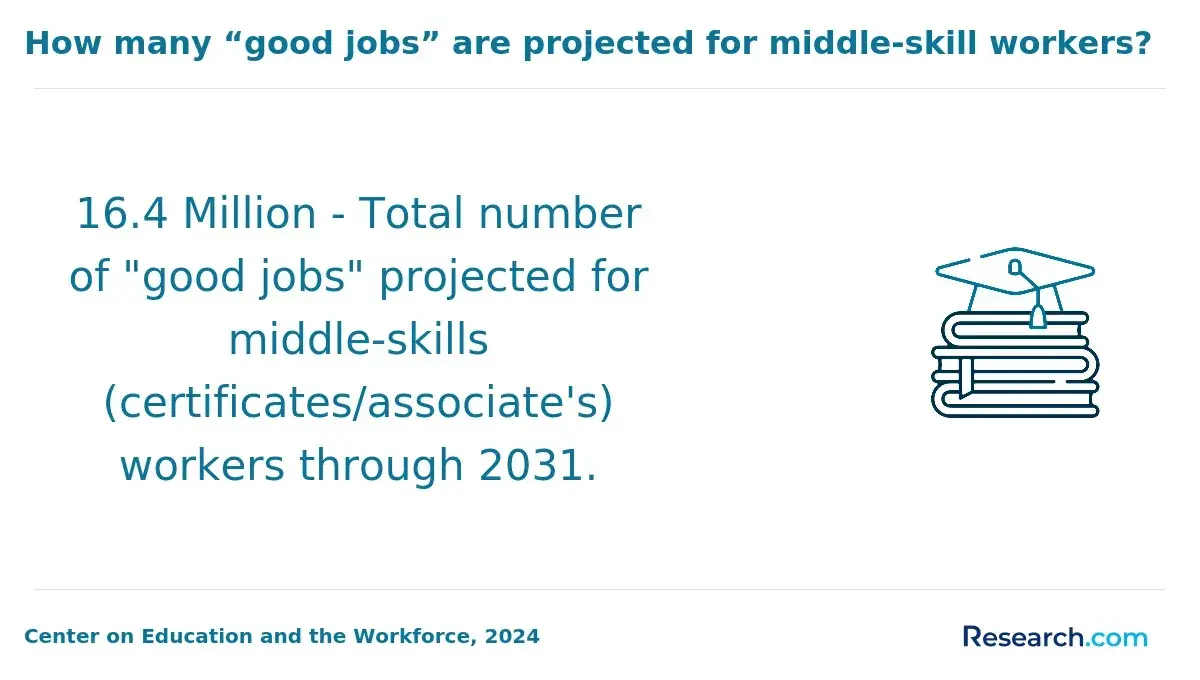
- A bachelor's degree in food industry management, supply chain management, business, food science, agribusiness, or hospitality can prepare students for entry-level supervisory roles, while certificates can help workers add focused food safety or operations skills.
- Program cost varies sharply by school type; College Board reported average 2024-25 published tuition and fees of $11,610 for in-state public four-year colleges and $43,350 for private nonprofit four-year colleges.
What is food industry management and which roles are growing fastest in quality, retail, and distribution?
Food industry management is the business and operations discipline behind how food is produced, inspected, transported, stocked, sold, and served. It connects food safety, quality assurance, inventory control, retail merchandising, labor scheduling, supplier relationships, cold-chain logistics, and regulatory compliance.
The fastest-growing opportunities are not all in the same part of the industry. Distribution and logistics are expanding because retailers, wholesalers, food manufacturers, and e-commerce grocery operations need managers who can keep products moving despite labor shortages, weather disruptions, recalls, and changing consumer demand. Quality roles are also becoming more important as companies invest in traceability, audit readiness, allergen controls, and preventive food safety systems. Retail management remains broad, but the strongest opportunities tend to be in multi-unit operations, fresh departments, private-label programs, and omnichannel grocery fulfillment.
The table below compares common food industry management tracks so readers can see how quality, retail, and distribution roles differ in focus, employer type, and growth logic.
| Management track | Typical employers | Main focus | Why demand is rising |
| Food quality management | Food manufacturers, processors, warehouses, commissaries, laboratories | Food safety systems, audits, specifications, sanitation, supplier quality, corrective actions | Companies face stricter customer requirements, faster recall expectations, and greater pressure to document safety controls. |
| Retail food management | Grocery stores, supermarkets, club stores, specialty food retailers, convenience chains | Store operations, staffing, merchandising, fresh food departments, shrink reduction, customer experience | Retailers need managers who can balance labor cost, online ordering, fresh inventory, and local consumer preferences. |
| Food distribution management | Foodservice distributors, wholesalers, cold-storage firms, logistics providers, grocery distribution centers | Warehouse operations, routing, inventory accuracy, cold-chain compliance, supplier and carrier coordination | Food companies need resilient supply chains and better visibility from supplier to shelf. |
The best fit depends on what kind of work environment you want. Quality roles are more documentation-heavy and compliance-focused. Retail roles are people-facing and fast paced. Distribution roles are operationally intense and often involve metrics, scheduling, safety, and technology systems.
What degree programs prepare students for management careers in the food industry?
Students can prepare for food industry management through several degree pathways. The right choice depends on whether the goal is to supervise store teams, manage food production quality, coordinate logistics, or move into broader business leadership.
The comparison below summarizes common academic options and the career situations they fit best.
| Program type | Best for | Common focus areas | Typical career direction |
| Certificate in food safety, supply chain, or retail management | Working adults who already have experience and need targeted skills | HACCP, sanitation, inventory, purchasing, logistics software, supervision | Shift lead, quality technician, assistant department manager, warehouse lead |
| Associate degree | Students seeking an affordable entry point or transfer pathway | Business fundamentals, food operations, accounting, supervision, purchasing | Assistant manager, inventory coordinator, production supervisor trainee |
| Bachelor's degree | Students aiming for management-track roles with stronger advancement potential | Food science, operations management, marketing, supply chain, quality systems, finance | Quality supervisor, retail manager, distribution supervisor, category analyst |
| Master's degree or MBA | Professionals pursuing senior management, analytics, consulting, or corporate roles | Strategic management, analytics, finance, leadership, procurement, enterprise systems | Operations manager, quality manager, supply chain manager, director-level roles |
A food industry management major is not the only route. Many employers also value business administration, supply chain management, food science, agribusiness, hospitality management, industrial technology, and operations management. Students who want a faster business foundation may compare a food-focused program with an accelerated business management degree, especially if they already have transfer credits or work experience.
Before choosing a major, match the curriculum to the target job. A student interested in food quality should look for food microbiology, food safety regulations, statistics, and quality systems. A student aiming for distribution should prioritize supply chain, warehouse operations, transportation, analytics, and enterprise resource planning. A retail-focused student should look for merchandising, consumer behavior, accounting, leadership, and labor management.
What are the key responsibilities in food quality, retail, and distribution management roles?
Food industry managers translate business goals into daily operational performance. Their responsibilities vary by setting, but most roles require a mix of technical knowledge, people management, compliance awareness, and financial discipline.
The following responsibilities are especially important because they directly affect safety, customer trust, profit margins, and career readiness.
- Food quality management: Maintain food safety plans, verify sanitation records, manage supplier specifications, investigate nonconforming products, prepare for audits, and coordinate corrective actions after customer complaints or inspection findings.
- Retail food management: Schedule teams, manage fresh inventory, reduce shrink, review sales and margin reports, train employees, maintain department standards, and coordinate in-store and online grocery fulfillment.
- Distribution management: Oversee receiving, storage, picking, loading, temperature control, routing, warehouse safety, inventory accuracy, and communication between suppliers, carriers, and customers.
- Cross-functional leadership: Use data dashboards, standard operating procedures, budget targets, and employee coaching to improve service levels, safety performance, and productivity.
Technology is changing these responsibilities. Managers increasingly work with warehouse management systems, electronic temperature monitoring, demand forecasting, traceability tools, automated picking systems, and AI-assisted analytics. These tools do not remove the need for human judgment; they raise the value of managers who can interpret data, investigate exceptions, and lead teams through process changes.
How do online food industry management programs compare to campus-based options?
Online and campus-based food industry management programs can both be effective, but they serve different students. The main trade-off is flexibility versus hands-on access to labs, facilities, employers, and campus-based networking.
The table below shows when each format tends to make the most sense for students pursuing food quality, retail, or distribution management.
| Format | Best fit | Strengths | Limitations to check |
| Online program | Working adults, military learners, transfer students, parents, and students already employed in food operations | Flexible scheduling, lower relocation cost, easier access for rural students, ability to apply coursework at work | May have fewer lab experiences, limited local employer pipelines, or required in-person practicums |
| Campus-based program | Recent high school graduates and students who want labs, internships, student organizations, and direct faculty access | More hands-on learning, campus recruiting, food labs, peer networks, and structured advising | Less scheduling flexibility and higher housing or commuting costs |
| Hybrid program | Students who want flexibility but still need occasional labs, residencies, or employer visits | Balances online coursework with applied experiences | Travel requirements can add cost and scheduling complexity |
Online programs are especially useful for students already working in grocery, manufacturing, warehousing, foodservice, or quality assurance. Those students can often connect assignments to real problems such as inventory shrink, labor planning, sanitation records, or supplier performance.
Students comparing flexible management options may also review a project management degree online fast if their long-term goal is operations improvement, implementation leadership, or supply chain project coordination rather than food-specific management.
Before enrolling online, confirm whether the program requires proctored exams, campus visits, internships, labs, or daytime meetings. A program that looks flexible on paper may still be difficult for shift workers if courses require synchronous attendance during work hours.
What courses and skills are taught in food industry management majors?
Food industry management majors blend business, science, operations, and leadership. The strongest programs help students understand both the product and the system: how food quality is controlled, how teams are managed, how inventory flows, and how financial decisions affect operations.
Students should expect coursework that builds both technical and managerial ability. These subject areas matter because employers often expect entry-level managers to read reports, coach employees, solve operational problems, and understand compliance risk.
- Food safety and quality: HACCP principles, preventive controls, sanitation, allergen management, food microbiology, traceability, audits, and corrective action systems.
- Operations and supply chain: Purchasing, inventory control, transportation, warehouse management, demand planning, cold-chain logistics, and process improvement.
- Retail and merchandising: Category management, pricing, consumer behavior, store operations, fresh food management, shrink control, and omnichannel fulfillment.
- Business fundamentals: Accounting, finance, marketing, business law, human resources, analytics, and management communication.
- Leadership and problem solving: Team supervision, conflict resolution, project planning, safety culture, data interpretation, and change management.
Project management deserves special attention because food companies frequently run cross-functional initiatives: new product launches, recall simulations, warehouse redesigns, technology rollouts, supplier transitions, and audit preparation. Students wondering is project management a good degree should compare it with food industry management based on whether they want a broad project career or a food-sector-specific path.
The most useful skills are not always the most technical. Employers often value managers who can communicate clearly across shifts, make decisions with incomplete information, document problems accurately, and keep teams focused when production volume or customer demand changes quickly.
What education level and experience are needed for entry-level management jobs in the food industry?
Entry-level management jobs in the food industry usually require a combination of education, practical experience, and evidence of reliability in high-pressure settings. A bachelor's degree can help candidates qualify for management trainee programs, but many supervisors start in hourly or technical roles and move up after proving they can lead teams and meet performance targets.
The table below outlines common entry points by education level. Requirements vary by employer, state, product category, and whether the role involves regulated production, cold-chain logistics, or customer-facing retail operations.
| Education or experience level | Likely starting roles | What employers usually look for | Good next step |
| High school diploma plus food or warehouse experience | Shift lead, department lead, receiving lead, assistant supervisor | Attendance record, safety awareness, team communication, basic inventory or production knowledge | Add a certificate in food safety, supervision, logistics, or retail management |
| Associate degree | Assistant manager, quality technician, inventory coordinator, production lead | Foundational business skills, applied coursework, customer or operations experience | Transfer into a bachelor's program or pursue employer-sponsored training |
| Bachelor's degree | Management trainee, quality supervisor trainee, retail department manager, distribution supervisor | Internships, leadership experience, data skills, food safety awareness, communication ability | Build experience in one operating environment before moving into corporate or multi-site roles |
| Graduate degree plus experience | Operations manager, quality manager, supply chain analyst, category manager | Strategic thinking, analytics, budget ownership, cross-functional leadership | Target senior management, consulting, analytics, or specialized sector roles |
Students interested in hospital foodservice, nutrition operations, senior living, or regulated healthcare supply environments may also compare food management credentials with an MBA in healthcare management. That path can make more sense when the goal is broader healthcare administration rather than grocery, manufacturing, or food distribution.
For entry-level candidates, experience matters. Part-time work in grocery, restaurants, warehouses, production facilities, catering, or foodservice can strengthen a resume if the student can describe measurable responsibilities such as ordering, training, receiving, quality checks, cash handling, sanitation, or inventory control.
How long do food industry management programs take, and what do they typically cost?
Food industry management program length depends on the credential, enrollment status, transfer credits, and whether the program includes internships, labs, or co-op requirements. Cost depends on tuition, fees, books, housing, commuting, technology, and lost work hours.
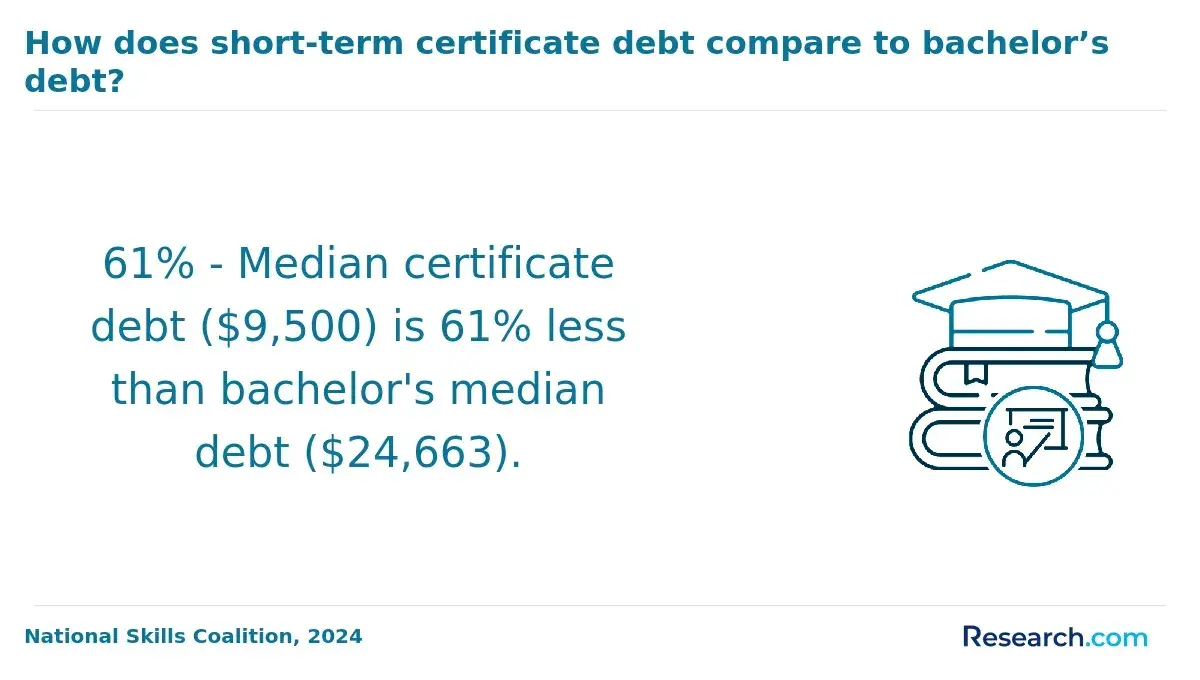
For a broad cost benchmark, College Board reported the following average published tuition and fees for 2024-25. These figures are not the net price after grants and scholarships, but they help students understand the scale of the decision.
- Public two-year in-district college: $4,050
- Public four-year in-state college: $11,610
- Public four-year out-of-state college: $30,780
- Private nonprofit four-year college: $43,350
The timeline below summarizes common completion patterns. Students with transfer credits, prior learning credit, employer training, or year-round enrollment may finish faster, while part-time students may take longer.
| Credential | Typical full-time length | Typical part-time length | Best use case |
| Certificate | Several months to 1 year | 1 to 2 years | Adding food safety, logistics, retail, or supervisory skills without committing to a full degree |
| Associate degree | 2 years | 3 to 4 years | Starting affordably, preparing for assistant management roles, or building transfer credits |
| Bachelor's degree | 4 years | 5 to 6 years or more | Qualifying for management trainee, quality, operations, retail, or supply chain roles |
| Master's degree or MBA | 1 to 2 years | 2 to 3 years | Advancing into senior operations, analytics, corporate management, or strategic roles |
To reduce total cost, compare net price rather than sticker price. Ask each school about transfer credit, credit for prior learning, employer tuition assistance, scholarships, internship pay, online course fees, and whether required materials include costly lab supplies or specialized software.
What are the typical salaries for food quality, retail, and distribution management careers?
Salaries in food industry management vary by role, region, employer size, shift, union environment, product category, and level of responsibility. National wage data should be used as a benchmark, not a promise of what any individual graduate will earn.
The table below uses BLS 2024 median annual wage data for closely related U.S. occupations. These categories do not map perfectly to every food-sector job title, but they provide useful salary context for quality, retail, and distribution career planning.
| Related occupation | 2024 median annual wage | How it connects to food industry management |
| Transportation, storage, and distribution managers | $102,010 | Relevant to food distribution centers, grocery logistics, cold storage, and wholesale operations |
| Logisticians | $80,880 | Relevant to supply planning, procurement support, inventory flow, carrier coordination, and distribution analytics |
| Industrial production managers | $122,090 | Relevant to food manufacturing plants, processing facilities, production lines, and operations leadership |
| Food service managers | $63,060 | Relevant to prepared food operations, institutional foodservice, hospitality, and some retail food environments |
| Quality control inspectors | $45,850 | Relevant as an entry point into food quality, though management roles usually require more experience and responsibility |
Quality management can pay more than entry-level inspection work once a professional supervises audits, employees, supplier programs, or regulatory documentation. Retail food management compensation can also rise with store volume, bonus eligibility, multi-unit responsibility, and specialized fresh department expertise. Distribution roles often reward candidates who can manage safety, labor, throughput, inventory accuracy, and service-level targets at the same time.
What is the job outlook for food industry management roles across manufacturing, retail, and logistics?
The job outlook is strongest where food companies need measurable operational improvement: logistics resilience, inventory visibility, food safety documentation, labor productivity, and data-driven planning. Automation and AI are changing tasks, but they are also increasing demand for managers who can implement systems, train employees, and investigate exceptions.
The table below summarizes BLS 2024-2034 projections for related occupations. These projections are national estimates, so local hiring can differ depending on population growth, warehouse concentration, retail consolidation, and food manufacturing activity.
| Related occupation | Projected employment change, 2024-2034 | What it means for students |
| Logisticians | 19% | Supply chain, analytics, purchasing, and distribution coursework can be especially valuable for students who want growth-oriented roles. |
| Transportation, storage, and distribution managers | 9% | Distribution leadership is a strong option for students comfortable with operations metrics, safety, scheduling, and warehouse systems. |
| Industrial production managers | 3% | Food manufacturing management can still be attractive, but advancement may depend on technical knowledge, lean operations, and plant experience. |
| Food service managers | 1% | Growth is slower nationally, so candidates should look for differentiated skills in cost control, institutional operations, compliance, and multi-site leadership. |
Retail food management is being reshaped by online grocery, labor scheduling systems, self-checkout, fresh meal programs, and customer data. Students should not assume that traditional store management is the only path. Corporate grocery operations, category management, fulfillment operations, retail analytics, and private-label quality programs may offer stronger long-term fit for candidates with business and data skills.
A practical career strategy is to combine sector knowledge with portable skills. Food safety expertise, Excel or analytics ability, supervisory experience, bilingual communication, logistics software familiarity, and project leadership can help candidates move across grocery, manufacturing, distribution, and foodservice employers.
How can students choose an accredited, reputable food industry management program in the U.S.?
Choosing a reputable food industry management program requires more than checking whether the major sounds relevant. Students should verify accreditation, curriculum fit, employer connections, cost, transfer policies, and real career support before enrolling.
Use the following steps to compare programs in a practical way. This process helps avoid common mistakes such as choosing only by tuition, relying only on rankings, or enrolling in a program that does not match the target role.
- Confirm institutional accreditation through a recognized accreditor listed by the U.S. Department of Education or the Council for Higher Education Accreditation.
- Review the curriculum for your target track: food safety and microbiology for quality roles, supply chain and analytics for distribution roles, or merchandising and operations for retail roles.
- Ask whether the program includes internships, co-ops, employer projects, labs, simulations, or supervised field experience in food businesses.
- Compare net price, not only tuition, by including fees, books, housing, commuting, lost work time, technology costs, and expected financial aid.
- Check transfer-credit rules before enrolling, especially if you plan to start at a community college or return with prior credits.
- Ask career services for examples of employers that recruit students for food manufacturing, grocery, distribution, quality assurance, or supply chain roles.
- Look for faculty or advisors with food industry, logistics, retail, quality, or agribusiness experience.
- Review graduation, retention, and career-outcome information when available, but remember that outcomes vary by student experience, location, and job market conditions.
Red flags include vague career promises, unclear accreditation, very limited faculty access, no explanation of internship support, pressure to enroll quickly, and programs that advertise management outcomes without teaching accounting, operations, analytics, leadership, or compliance.
The best program is not always the most expensive or the most specialized. It is the one that gives you credible credentials, relevant coursework, practical experience, manageable debt, and a clear route into the type of food industry role you actually want.
Other Things You Should Know About Food Industry Management
Not always, but food science, microbiology, quality assurance, or food safety coursework can help. Some professionals start as quality technicians, sanitation leads, or production supervisors and advance after gaining audit, documentation, and regulatory experience.
Yes, if the school is properly accredited and the program teaches relevant business, operations, food safety, or supply chain skills. For quality-focused roles, check whether the online program includes labs, internships, or applied projects that employers recognize.
Yes, food industry management is a promising career path in 2027, with increasing opportunities in quality, retail, and distribution sectors. Growth in sustainable practices and technological advancements further enhance career prospects in this dynamic field. Individuals interested in leadership roles will find this path rewarding.
References
- Food Industry Careers & Jobs | General Mills Careers https://careers.generalmills.com/career-areas
- Career Path in Hospitality Jobs: Entry-Level to Management https://hrc-international.com/blog/career-progression-hospitality-jobs
- From Farm to Table: The Role of Food Distributors in the Supply Chain https://www.quirchfoods.com/from-farm-to-table-the-role-of-food-distributors-in-the-supply-chain/
- Salaries by positions - Pensjometr https://www.pensjometr.pl/en/salaryinfo
- Food and Beverage Manager https://www.developingexperts.com/career-builder/1042
- Food Industry Management https://www.niagara.edu/programs/food-industry-management/
- Foodservice Distribution Careers | The Comprehensive Guide https://ifdaonline.org/food-distributor-jobs/
- Food and Beverage Manufacturing Jobs Report | November https://www.theplanetgroup.com/blog/food-beverage-manufacturing-jobs-report-november-2024
- The Food & Beverage Industry: A Comprehensive Overview https://insights.ehl.edu/food-and-beverage-industry
- 2026 Supply Chain Job Market: What Job Seekers Need to Know https://www.scoperecruiting.com/blog/supply-chain-job-market-2026-job-seekers