2027 How to Compare Online Food Industry Management Degrees by Industry Preparation

Co-Founder and Chief Data Scientist
Choosing an online food industry management degree is really a question about career fit: restaurant leadership, food manufacturing, quality assurance, supply chain, retail food, or hospitality operations. The stakes are practical because the U.S. Bureau of Labor Statistics reported a May 2024 median salary of $65,310 for food service managers, with pay varying by setting and responsibility.
This guide helps prospective students compare programs by accreditation, courses, cost, online format, certifications, and job outcomes so they can choose a degree that builds the right industry preparation.
Key Things You Should Know
- Prioritize industry preparation over program name alone: the strongest online food industry management degrees include food safety, operations, finance, supply chain, leadership, and a supervised internship, capstone, or employer-connected project.
- Check accreditation before comparing tuition: institutional accreditation is the baseline for federal aid and transferability, while business, hospitality, food science, nutrition, or culinary accreditation can matter depending on the career path.
- BLS May 2024 data shows food service managers at a $65,310 national median, while College Board's 2024 pricing data places average in-state public four-year tuition and fees at $11,610 before housing, fees, books, and aid.
What is a food industry management degree?
A food industry management degree is a business-focused program that prepares students to manage people, processes, safety standards, customer experience, purchasing, and profitability in food-related organizations. Depending on the school, it may be offered as food industry management, food service management, hospitality management, restaurant management, agribusiness, food systems management, culinary management, or food and beverage management.
The right degree depends on which part of the food industry you want to enter. A student who wants to manage a restaurant group needs different preparation than someone aiming for food manufacturing, regulatory compliance, or grocery supply chain operations. If your interests include hotels, resorts, and broader service operations, an online hospitality management degree may be a stronger match than a narrowly food-focused program.
The main degree types differ in level, transferability, and career use. This comparison shows how each option usually fits into a student's plan.
| Degree type | Typical focus | Best fit | Watch for |
| Associate degree | Food service supervision, sanitation, purchasing, and basic business | Students seeking entry-level supervisory roles or transfer credit toward a bachelor's | Limited access to higher-level corporate or manufacturing roles without additional education |
| Bachelor's degree | Operations, food safety, accounting, leadership, marketing, supply chain, and capstone work | Students who want management-track roles in restaurants, hospitality, retail food, food production, or distribution | Programs vary widely in hands-on requirements, so check internships and applied projects |
| Master's degree | Strategic leadership, analytics, finance, global food systems, or advanced hospitality operations | Working professionals seeking advancement into regional, corporate, consulting, or executive roles | Not always necessary for frontline management unless the role requires advanced leadership or analytics |
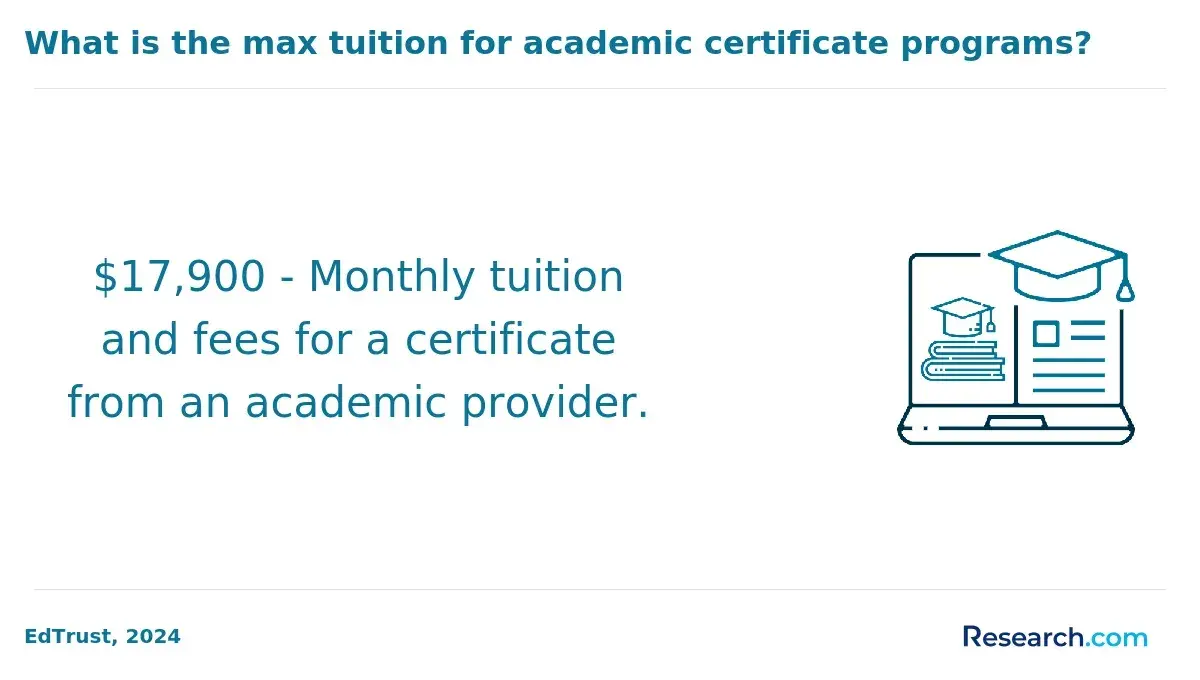
| Certificate | Focused skills such as food safety, event operations, nutrition, purchasing, or project management | Career changers or current workers who need targeted skills quickly | May not substitute for a degree when employers require a bachelor's |
For most students, the strongest choice is a bachelor's degree that combines business fundamentals with food-specific applied learning. A certificate can make sense if you already have a degree or substantial work experience and need a narrower credential.
Which accreditation matters for food industry management programs?
Accreditation matters because it affects financial aid eligibility, credit transfer, graduate school admission, and employer confidence. For online students, the first requirement is institutional accreditation from an agency recognized by the U.S. Department of Education or the Council for Higher Education Accreditation.
Programmatic accreditation is more specialized. It may not be required for every food industry management job, but it can signal stronger alignment with a particular field. Use the table below to match accreditation type to your intended career path.
| Accreditation or approval type | Where it matters most | How to use it when comparing programs |
| Institutional accreditation | All degree levels and online formats | Treat it as nonnegotiable; avoid schools without recognized institutional accreditation |
| AACSB, ACBSP, or IACBE business accreditation | Management, entrepreneurship, finance, operations, and corporate food roles | Helpful if the curriculum is housed in a business school or emphasizes leadership and analytics |
| Hospitality-related accreditation | Restaurant, lodging, event, food and beverage, and resort operations | Useful when the program is positioned as hospitality or food service management |
| Food science or nutrition-related recognition | Product development, quality assurance, food systems, and health-oriented food careers | Important if you want science-heavy preparation rather than primarily business training |
| State, employer, or industry certification alignment | Food safety, alcohol service, sanitation, and compliance-heavy roles | Check whether courses prepare you for widely used credentials such as ServSafe or HACCP training |
A common mistake is assuming that "online" means "less legitimate." Format is not the issue; accreditation, faculty qualifications, curriculum depth, student support, and employer-connected learning are the real indicators. Another red flag is a school that advertises management careers but does not clearly show required courses, internship options, transfer policies, total cost, or student outcome information.
Before applying, verify accreditation directly with the school and recognized accreditation directories. Do not rely only on marketing pages, rankings, or paid lead forms.
How do online and campus food industry management degrees compare?
Online and campus food industry management degrees can lead to similar academic credentials, but they prepare students differently. The best choice depends on your work schedule, access to local food employers, learning style, and need for hands-on practice.
The comparison below focuses on preparation rather than convenience alone, because a flexible program still needs to build industry-ready skills.
| Factor | Online degree | Campus degree | Best decision rule |
| Schedule flexibility | Usually stronger for working adults, parents, and students with irregular shifts | Often better for students who can attend classes at fixed times | Choose online if maintaining employment is essential to affordability |
| Hands-on learning | May use local internships, simulations, virtual labs, employer projects, or approved work experience | May offer teaching kitchens, campus dining labs, sensory labs, or on-site events | Choose the format with the strongest verified applied learning, not the one that sounds easiest |
| Networking | Can be strong if the program has active employer partnerships, virtual career fairs, and alumni events | Can be strong through campus events, local employers, and faculty introductions | Ask how students connect with employers before assuming one format is better |
| Technology preparation | Often emphasizes digital collaboration, online reporting, data dashboards, and remote project management | May provide more immediate practice with physical operations and in-person supervision | Online can be a plus for students targeting corporate, multi-unit, or hybrid operations roles |
| Student discipline | Requires consistent self-management and communication | Provides more built-in structure | Choose campus if you need routine in-person accountability to stay on track |
Online learning is especially practical for students already working in restaurants, grocery, hospitality, distribution, or food production because the workplace can become a living laboratory. For example, a student may connect coursework in inventory control, labor scheduling, or food safety audits to real problems at work.
Campus learning may be better for students who need direct access to teaching kitchens, food science labs, or local hospitality events. If a program claims to be hands-on but does not require a practicum, portfolio, simulation, internship, or operations project, ask how students prove job-ready skills before enrolling.
What courses are included in food industry management degrees?
Food industry management programs are interdisciplinary. They usually combine business, hospitality, food safety, customer service, supply chain, and leadership. Some programs are more culinary or hospitality oriented, while others are more science, agriculture, or operations focused.
Students comparing curricula should look beyond course titles and ask what each course trains them to do. The table below shows common courses and the industry preparation they should provide.
| Course area | What students usually study | Why it matters in the industry |
| Food safety and sanitation | Hazard prevention, safe storage, cleaning systems, allergen awareness, inspection readiness | Food businesses operate under safety expectations that affect customers, liability, and brand reputation |
| Food service operations | Menu planning, service flow, labor scheduling, kitchen coordination, purchasing | Managers need to balance quality, speed, staffing, and cost under daily pressure |
| Accounting and finance | Budgets, food cost, labor cost, pricing, profit and loss analysis | Many promotions depend on understanding margins, not just leading shifts |
| Supply chain and procurement | Vendor relations, inventory, distribution, forecasting, waste reduction | Food costs and availability can change quickly, so managers need practical sourcing skills |
| Marketing and consumer behavior | Branding, menu positioning, promotions, customer loyalty, digital reviews | Food businesses compete on experience, convenience, value, and reputation |
| Human resource management | Hiring, training, conflict resolution, scheduling, compliance, performance coaching | High-turnover environments require managers who can build stable teams |
| Quality assurance | Standards, audits, documentation, corrective actions, continuous improvement | Critical for manufacturing, commissary, grocery, and multi-unit food operations |
| Capstone or internship | Applied project, supervised work, case analysis, or operational improvement plan | This is often the strongest evidence that the program builds workplace-ready judgment |
Students interested in health, wellness, menu planning, or food systems may also compare a food management curriculum with a nutrition online degree. Nutrition programs usually go deeper into human health and dietetics, while food industry management programs usually emphasize business operations and organizational leadership.
When reviewing courses, watch for outdated programs that lack technology, analytics, or compliance content. Current food employers increasingly use scheduling platforms, point-of-sale data, inventory software, delivery analytics, digital ordering systems, and quality tracking tools. A strong program does not need to teach every platform, but it should train students to use data for decisions.
What admission requirements do these programs usually have?
Admission requirements depend on degree level and school selectivity. Online food industry management programs are often designed for both first-time students and working adults, so many offer multiple entry paths, including transfer admission and credit for prior learning.
Applicants should compare requirements early because missing documents can delay admission, financial aid, or transfer evaluation. The most common requirements include the following:
- High school diploma, GED, or equivalent credential for undergraduate admission.
- Official transcripts from high school and any previously attended colleges.
- Minimum GPA requirement, which varies by school and may be flexible for adult learners.
- Application form and fee, though some online programs waive the fee.
- Placement information or prior college credit for math and writing readiness.
- Resume or work history for degree-completion, adult learner, or graduate programs.
- Statement of purpose for some bachelor's-completion and master's programs.
- Proof of English proficiency for applicants whose prior education was not in English.
Some programs also require food service experience, but many do not. Experience can still help because students with workplace context often understand operations courses more quickly. If you are a career changer, look for programs with introductory courses, career coaching, and internship placement support.
Transfer credit policy is one of the biggest decision points. A school may accept credits from community colleges, culinary schools, military training, workforce programs, or prior accredited institutions. Before enrolling, ask for a written transfer evaluation so you know how many credits apply to the degree and how many you still need to complete.
How long does a food industry management degree take to finish?
Completion time depends on degree level, transfer credits, course load, academic calendar, and internship requirements. Online programs can be flexible, but flexible does not always mean faster. A student taking one or two courses while working full time may need longer than a full-time campus student.
The table below gives typical timelines and the practical trade-offs students should consider.
| Program type | Common completion time | When it makes sense | Main trade-off |
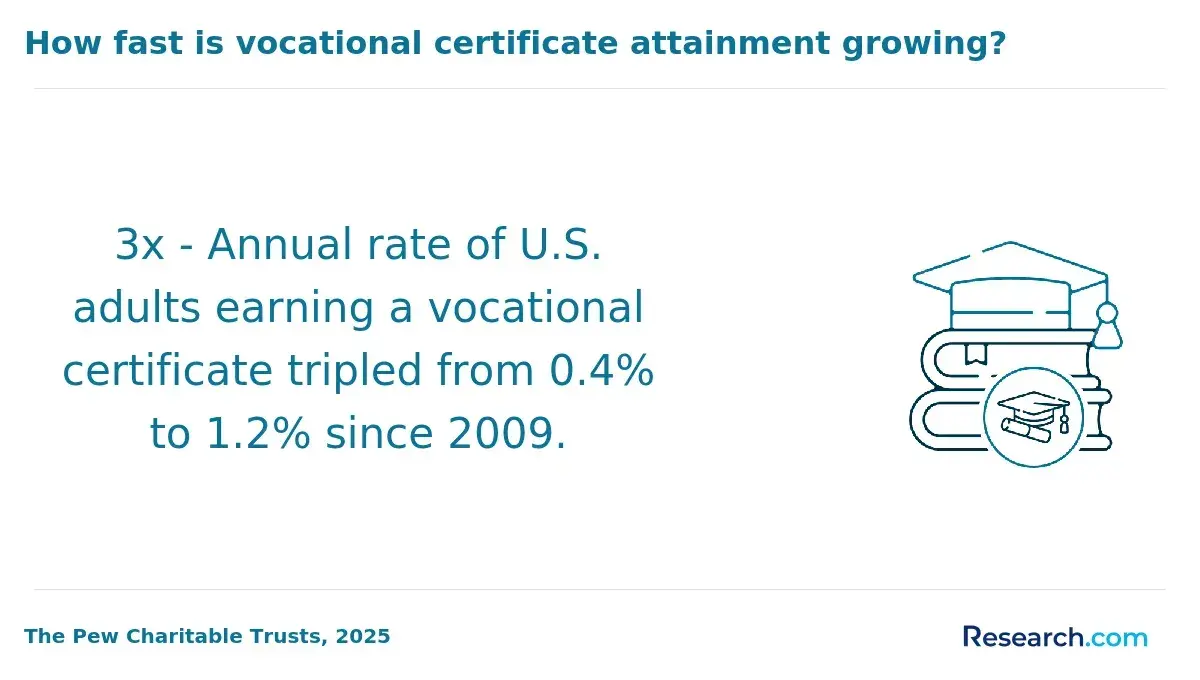
| Certificate | Several months to one year | You need a focused credential in food safety, hospitality, purchasing, or supervision | May not meet employer degree requirements |
| Associate degree | About two years full time | You want a lower-cost starting point or plan to transfer | Management advancement may require a bachelor's later |
| Bachelor's degree | About four years full time, or less with transfer credits | You want broader career mobility and management-track preparation | Higher total cost and time commitment |
| Bachelor's-completion program | Often one to two years after sufficient transfer credits | You already have an associate degree or substantial prior college credit | Course sequencing can still delay graduation if requirements are not offered often |
| Master's degree | About one to two years | You are targeting corporate leadership, analytics, consulting, or advanced operations roles | Best ROI usually depends on prior experience and employer demand |
Accelerated formats can be useful, but they require honest planning. Short terms may help motivated students finish faster, yet they can be difficult for workers in food service, where evenings, weekends, and holidays are common.
If speed matters more than food-specific preparation, compare alternatives carefully. For example, a student seeking broader operations leadership might research a project management degree online fast, while a student committed to restaurants, food safety, or food systems should prioritize food-focused coursework and applied industry experiences.
Before choosing an accelerated program, ask these questions:
- Are courses asynchronous, scheduled live, or a mix of both?
- How often are required major courses offered?
- Can internships or capstones be completed at your current workplace?
- Will transfer credits shorten the degree, or only count as electives?
- What happens if you need to pause for work or family reasons?
How much do online food industry management degrees cost?
The cost of an online food industry management degree depends on tuition, fees, transfer credits, technology costs, books, internship expenses, and whether you attend a public, private nonprofit, or private for-profit institution. Online students may save on relocation and commuting, but they should still calculate the full cost of attendance.
College Board's 2024 Trends in College Pricing reported these average published tuition and fee figures for full-time undergraduates, which are useful benchmarks when comparing school prices:
- $11,610 for in-state students at public four-year institutions.
- $30,780 for out-of-state students at public four-year institutions.
- $43,350 for students at private nonprofit four-year institutions.
These figures are not the same as your final bill. Grants, scholarships, employer tuition assistance, transfer credits, military benefits, and part-time enrollment can change what you actually pay. The key is to compare net price and time to completion, not sticker price alone.
Use the table below to identify cost factors that can change the real value of an online program.
| Cost factor | Why it matters | What to ask the school |
| Per-credit tuition | Online programs may charge different rates for in-state, out-of-state, or fully online students | Is online tuition flat-rate or residency-based? |
| Transfer credit | Accepted credits can reduce both tuition and time in school | How many credits will apply to the major, not just electives? |
| Fees | Technology, online learning, graduation, lab, and course fees can add up | What mandatory fees apply each term? |
| Books and materials | Some courses use paid software, food safety materials, or digital platforms | Are open educational resources or inclusive access materials available? |
| Internship requirements | Travel, unpaid hours, uniforms, testing, or background checks may create hidden costs | Can I complete applied work near my home or at my current employer? |
| Time away from work | Course intensity can affect income, especially for students in shift-based jobs | Can I study part time without losing financial aid eligibility? |
Students who want operations training but are not committed to the food sector should compare adjacent business programs as well. A cheap project management degree online may offer a broader path into scheduling, budgeting, logistics, and team leadership, while food industry management provides more direct preparation for food safety, service, and food operations.
Avoid three common cost mistakes: choosing the lowest tuition without checking accreditation, ignoring how many transfer credits apply, and assuming a faster program is cheaper. A compressed schedule can cost less if it reduces total terms, but it can cost more if it forces you to reduce work hours or retake courses.
What jobs can you get with a food industry management degree?
A food industry management degree can prepare graduates for roles across restaurants, catering, hotels, grocery, food manufacturing, distribution, corporate dining, schools, healthcare food service, and food startups. Job fit depends heavily on the program's emphasis and the student's experience.
The table below connects common roles to the type of preparation employers may value.
| Career path | Typical responsibilities | Helpful preparation |
| Restaurant or food service manager | Supervise staff, control labor and food costs, manage service quality, handle customer issues, maintain safety standards | Operations, accounting, sanitation, leadership, scheduling, and internship experience |
| Food and beverage manager | Oversee dining outlets, beverage programs, catering, banquets, or hotel food service | Hospitality operations, purchasing, event coordination, cost control, and service management |
| Quality assurance coordinator | Monitor standards, documentation, audits, corrective actions, and process consistency | Food safety, quality systems, HACCP concepts, compliance, and data tracking |
| Purchasing or inventory coordinator | Order products, manage vendors, track inventory, reduce waste, support forecasting | Procurement, supply chain, analytics, accounting, and vendor communication |
| Food production supervisor | Coordinate production teams, sanitation schedules, throughput, safety, and quality checks | Operations management, safety, leadership, process improvement, and manufacturing exposure |
| Catering or event operations manager | Plan service logistics, staffing, menus, setup, client communication, and event execution | Event management, budgeting, customer service, menu planning, and team supervision |
| Retail food or grocery department manager | Manage prepared foods, bakery, deli, inventory, merchandising, staffing, and compliance | Retail operations, food safety, merchandising, labor planning, and customer analytics |
Entry-level graduates may start as assistant managers, shift supervisors, management trainees, inventory coordinators, catering coordinators, or quality technicians. Advancement often depends on performance metrics such as cost control, staff retention, inspection results, guest satisfaction, and operational consistency.
This degree is usually worth considering if you want to lead food-related operations and are comfortable with schedules that may include nights, weekends, holidays, audits, and high-pressure service periods. It may be a poor fit if you want a standard desk schedule immediately, dislike people management, or want a science-heavy laboratory career without business responsibilities.
AI and automation are changing the field, but they are not replacing the need for managers who understand people and food systems. Digital ordering, labor forecasting, inventory software, automated temperature logs, and customer analytics are becoming more common. Programs that teach data-informed decision-making can better prepare students for modern operations than programs focused only on traditional service management.
What salaries are common in food industry management careers?
Salaries in food industry management vary by role, employer size, region, schedule, bonus structure, and level of responsibility. National medians are useful for context, but they should not be read as personal guarantees.
The BLS May 2024 median annual wage for food service managers was $65,310. That figure is a helpful baseline for restaurant and food service leadership, but corporate, manufacturing, logistics, and multi-unit roles may use different occupational categories and compensation models.
The table below summarizes how salary expectations often differ across related career tracks.
| Role category | Salary context | Factors that may increase earning potential |
| Restaurant and food service management | Often tied to unit volume, location, employer type, and bonus eligibility | Multi-unit responsibility, strong profit and loss results, brand experience, and staff development skills |
| Hospitality food and beverage management | Can vary widely between independent venues, hotels, resorts, casinos, and event operations | Banquet experience, beverage knowledge, revenue management, and high-volume service leadership |
| Food manufacturing supervision | May pay more when roles involve production targets, safety compliance, and shift leadership | Quality systems, lean operations, HACCP knowledge, and experience with regulated environments |
| Quality assurance and compliance | Compensation often depends on technical depth and responsibility for audits or documentation | HACCP training, PCQI knowledge, regulatory familiarity, and data reporting skills |
| Supply chain, procurement, and inventory | Pay may rise with purchasing authority, vendor complexity, and analytics responsibility | Forecasting, negotiation, ERP or inventory software, and cost-saving results |
When evaluating return on investment, compare the degree cost with the roles you are realistically targeting in your region. A student already working in food service who can move into assistant manager or general manager roles may see a different value proposition than a student entering the field with no experience.
Ask schools for career outcome information, but interpret it carefully. Strong questions include which employers hire graduates, what roles alumni enter, whether outcomes are self-reported, and whether salary data includes only students who responded to surveys.
Which certifications help food industry management graduates advance?
Certifications can strengthen a food industry management graduate's resume by proving job-specific knowledge. They are not always substitutes for a degree, but they can help with hiring, promotion, compliance duties, or specialization.
The most useful certification depends on your career target. The table below shows credentials and training areas commonly relevant to food industry management careers.
| Certification or training area | Best for | Why it helps |
| ServSafe Food Protection Manager | Restaurant, catering, hospitality, grocery, and institutional food service managers | Shows knowledge of food safety practices that many employers expect for supervisory roles |
| HACCP training | Food manufacturing, quality assurance, seafood, meat, juice, and regulated production settings | Supports hazard analysis, preventive controls, documentation, and audit readiness |
| Preventive Controls Qualified Individual training | Food production, compliance, and quality roles under food safety plans | Relevant for employees involved in preventive controls and facility food safety systems |
| Certified Dietary Manager or foodservice management credentials | Healthcare, senior living, schools, and institutional food service | Can support advancement in settings where nutrition, menus, and regulated meal service intersect |
| Alcohol service certification | Restaurants, hotels, bars, events, and beverage operations | May be required by employer or state/local rules for alcohol service supervision |
| Project management certification or training | Corporate food operations, openings, renovations, menu rollouts, technology implementation | Helps managers coordinate timelines, budgets, vendors, and cross-functional teams |
Certification requirements can vary by state, locality, employer, and job setting. For example, food protection manager rules are not identical everywhere, and alcohol service requirements are often local. Before paying for a credential, confirm that it is recognized in the state or industry segment where you plan to work.
A practical sequence is to earn food safety certification first, then add specialized credentials based on your role. Students targeting restaurants may prioritize ServSafe and beverage training, while students targeting manufacturing may prioritize HACCP, preventive controls, quality systems, and data documentation.
Other Things You Should Know About Food Industry Management
Yes, if it comes from an institutionally accredited school and includes relevant coursework, applied projects, and industry preparation. Employers usually care more about accreditation, experience, skills, and performance than whether the classes were online or on campus.
Not always. Many bachelor's programs accept students without prior industry experience, but work experience can make the coursework more meaningful. If you are new to the field, choose a program with internships, career services, and introductory operations courses.
The biggest mistake to avoid in 2027 is neglecting to evaluate a program's industry connections and partnerships. Ensure the program offers practical opportunities like internships and networking with food industry professionals, which are crucial for preparation and job placement after graduation.
The biggest mistake is choosing based only on tuition or speed. First verify accreditation, then compare curriculum, transfer credit, applied learning, certification alignment, total cost, and career outcomes for the specific food industry role you want.
References
- Food Industry Jobs in Ireland: Your Ultimate Guide to Careers and Salaries https://qsp.ie/page/news/82/Food-Industry-Jobs-in-Ireland-Your-Ultimate-Guide-to-Careers-and-Salaries-
- Un an à l'étranger avec MBS https://www.mbs-education.com/international/mbs-en/mbs-a-truly-international-business-school/international-accreditations-and-labels/
- Requirements for Admission â CODE https://code.berlin/en/study/bachelor/admissions/requirements/
- Navigating Accreditation in the Food Industry: A Podcast Sub-Series https://iaf.news/2024/05/31/navigating-accreditation-in-the-food-industry-a-podcast-sub-series/
- Food Industry Management https://www.niagara.edu/programs/food-industry-management/
- Certificate in Food Processing and Management Course https://iisdt.in/product/certificate-in-food-processing-and-management/
- Study Food Industry Management in the USA https://www.studyusa.com/en/field-of-study/395/food-industry-management
- Why I chose to study Food Industry Management (FIM) instead of Food Science https://www.uoguelph.ca/oac/news/why-i-chose-study-food-industry-management-fim-instead-food-science
- Qualifications and Accreditation https://foodbev.co.za/what-we-do/qualifications-and-accreditation/
- Certificate in Fundamentals of Food Production Management | DkIT https://www.dkit.ie/courses/certificate-in-fundamentals-of-food-production-management