2027 Online Food Industry Management Degrees With Scholarships for Working Professionals

Co-Founder and Chief Data Scientist
Choosing an online food industry management degree is really a career investment decision: will the credential help you move from shift, production, quality, supply chain, or foodservice work into higher-responsibility roles? The stakes are real. USDA reported that U. S. food expenditures reached about $2.6 trillion in 2024, making food one of the country's largest and most operationally complex industries. This guide is for working adults comparing accredited online programs, scholarships, schedules, costs, and career outcomes so they can choose a degree that fits their time, budget, and promotion goals.
Key Things You Should Know
- Online food industry management degrees are usually built around food business, agribusiness, hospitality foodservice, supply chain, quality systems, or food science operations rather than culinary training alone.
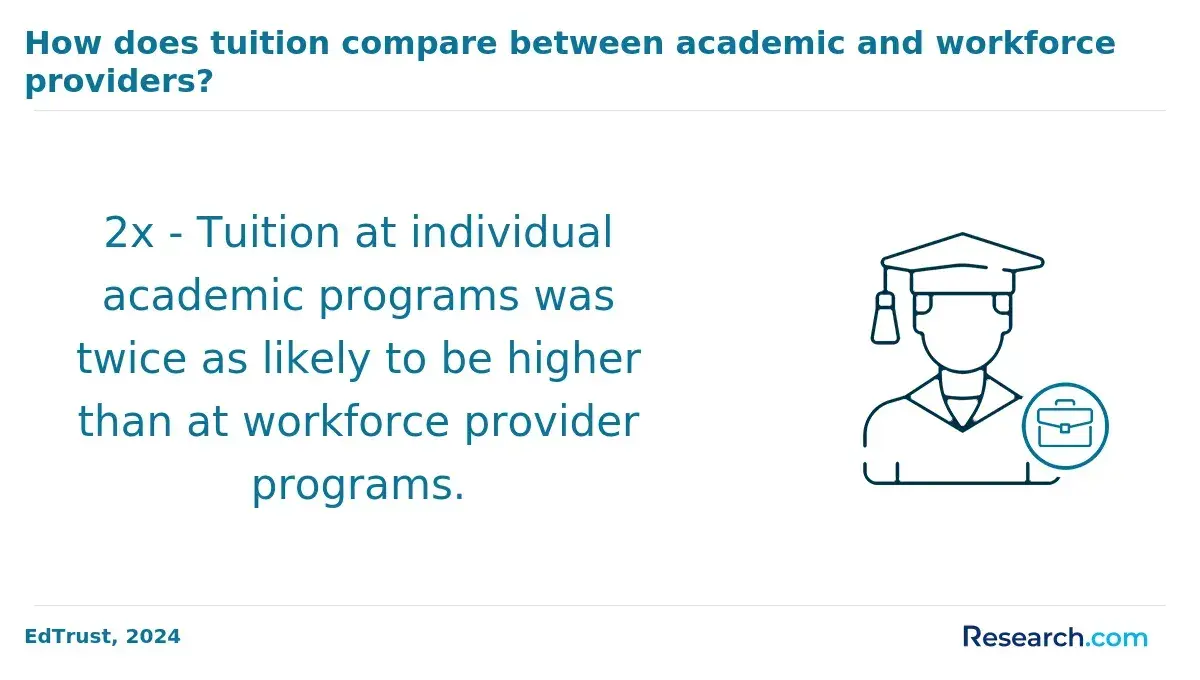
- Costs vary widely, but College Board's 2024-25 data shows average published tuition and fees of $11,610 for in-state public four-year colleges, $30,780 for out-of-state public colleges, and $43,350 for private nonprofit four-year colleges.
- Career outcomes depend on role and experience: BLS 2024 median pay was $65,310 for food service managers, $80,880 for logisticians, and $122,090 for industrial production managers.
What is an online food industry management degree and who is it best suited for?
An online food industry management degree is an undergraduate or graduate program that prepares students to manage people, processes, budgets, compliance, and supply chains across food-related businesses. Depending on the school, the degree may be named food industry management, food business management, agribusiness management, food science and industry, hospitality management with food and beverage coursework, or supply chain management with food-sector applications.
The best fit is usually a working adult who already understands part of the food system and wants stronger business credentials. That could include a restaurant assistant manager, grocery department lead, food production supervisor, quality assurance technician, distribution coordinator, catering manager, farm-to-market business employee, or military veteran with logistics experience.
For someone without industry experience, the degree can still work, but internships, part-time food operations work, or employer projects become more important.
These programs are different from culinary arts programs. Culinary training focuses on cooking technique, menu execution, kitchen workflow, and hospitality craft. Food industry management focuses more on operations, procurement, labor planning, safety systems, financial decisions, product movement, and customer or retail strategy.
Students who want to run a restaurant group, manage a manufacturing line, lead a grocery category, supervise quality systems, or coordinate cold-chain logistics usually need management depth more than kitchen technique.
This degree makes the most sense when your goal is to move into supervisory, operational, procurement, compliance, or business-development roles in food-related organizations. It may be less useful if your goal is to become a chef, registered dietitian, laboratory researcher, or licensed health professional, because those paths often require different credentials, lab-heavy coursework, supervised practice, or licensure preparation.
Students who want a broader business foundation before specializing may also compare food-focused programs with business administration courses online. A general business degree can be more flexible across industries, while a food industry management degree can be more targeted for employers in restaurants, grocery, manufacturing, agribusiness, and supply chain.
How do online food industry management programs compare to traditional on-campus options?
Online and on-campus food industry management programs can lead to similar academic credentials when they come from properly accredited institutions, but the learning experience is different. The biggest trade-off for working professionals is flexibility versus immediate in-person access to labs, campus recruiting, and hands-on facilities.
The table below compares the main differences that affect adult learners. Use it to identify which format fits your work schedule, learning style, and career target.
| Factor | Online food industry management degree | Traditional on-campus degree |
| Schedule fit | Often better for full-time workers because courses may be asynchronous or offered in shorter terms. | Better for students who can attend classes during fixed daytime or evening blocks. |
| Hands-on learning | May use virtual simulations, local internships, employer-based projects, or limited residencies. | Often easier to access teaching kitchens, pilot plants, food labs, campus farms, or live hospitality facilities. |
| Networking | Works best when programs include online cohorts, employer projects, faculty access, and active career services. | Can provide more spontaneous networking through campus events, student organizations, and local recruiters. |
| Cost control | May reduce relocation, commuting, and lost-work costs; tuition policies vary by school. | May provide stronger access to campus employment or local internships, but commuting or relocation can add cost. |
| Best for | Working adults seeking advancement while staying employed. | Students who want immersive campus learning or lab-heavy preparation. |
Online study is not automatically easier. In many accredited programs, the same faculty, assessments, and outcomes apply. The difference is that online students must manage deadlines around unpredictable shifts, peak seasons, family responsibilities, and rotating schedules.
A program with recorded lectures, clear weekly modules, responsive advising, and flexible internship options is usually a better match for working adults than one that simply streams campus classes at fixed times.
On-campus learning can be worth the disruption for students who need extensive lab access, want a traditional college experience, or are switching into the food field with little prior exposure. For example, a student targeting product development or food science research may benefit from in-person laboratories more than a student targeting retail category management or restaurant operations leadership.
Which U.S. schools offer accredited online food industry management degrees for working adults?
There are not hundreds of degree programs named exactly "food industry management" online, so prospective students should search by both exact and adjacent program names. Accredited online options may sit in colleges of business, agriculture, hospitality, food science, or professional studies.
The schools below are examples of U.S. institutions that have offered online degrees closely aligned with food industry management for adult learners. Program names, delivery formats, and curriculum details can change, so always verify current availability, accreditation, tuition, and transfer policies directly with the school before applying.
| School | Example online degree area | Accreditation type to verify | Best fit |
| Arizona State University Online | Food industry management or related food business study | Institutional accreditation through the Higher Learning Commission | Students seeking a business-oriented food industry bachelor's pathway. |
| Oregon State University Ecampus | Agricultural and food business management | Institutional accreditation through the Northwest Commission on Colleges and Universities | Students interested in food systems, agribusiness, markets, and supply chains. |
| Penn State World Campus | Agribusiness management | Institutional accreditation through the Middle States Commission on Higher Education | Working adults who want a broad food, agriculture, and business foundation. |
| Kansas State University Online | Food science and industry | Institutional accreditation through the Higher Learning Commission | Students who want stronger science, quality, safety, and processing preparation. |
| Fort Hays State University Online | Agricultural business | Institutional accreditation through the Higher Learning Commission | Cost-conscious students interested in food production, agribusiness, and rural enterprise operations. |
When comparing schools, look beyond the title. A food science and industry degree may be more technical and science-heavy, while an agribusiness management degree may emphasize markets, finance, commodity systems, and supply chains. A hospitality or food and beverage management program may be better for restaurants, hotels, catering, venues, and institutional foodservice.
A business administration degree with electives in operations, supply chain, or analytics may be the best option if you want to keep your career portable outside the food sector.
For working adults, the strongest programs usually combine accredited coursework with transfer-friendly policies, part-time pacing, career advising, industry-relevant projects, and transparent tuition. If a school cannot clearly explain how online students complete internships, labs, capstones, or experiential requirements, treat that as a serious question to resolve before enrolling.
What concentrations, courses, and skills are typically included in food industry management curricula?
Food industry management curricula blend business decision-making with the realities of perishable products, safety rules, labor-intensive operations, and complex supply chains. The exact course mix depends on whether the program is housed in business, agriculture, hospitality, or food science.
Most programs include a combination of core business, food-sector context, and applied management courses. The following areas are common because they map directly to real employer needs:
- Food business fundamentals, including food systems, retailing, food distribution, agricultural markets, restaurant operations, or food manufacturing environments.
- Operations management, including scheduling, inventory, process improvement, capacity planning, purchasing, and cost control.
- Food safety and quality systems, including sanitation, hazard prevention, regulatory awareness, traceability, and quality assurance practices.
- Supply chain and logistics, including procurement, cold-chain coordination, warehousing, transportation, forecasting, and vendor relationships.
- Marketing and consumer behavior, including branding, menu strategy, retail merchandising, customer analytics, and food trends.
- Finance and accounting, including budgeting, margins, labor cost, food cost, pricing, and profitability analysis.
- Leadership and human resources, including supervision, training, labor relations, conflict resolution, and team performance.
- Data and technology, including spreadsheets, enterprise systems, point-of-sale data, production metrics, inventory platforms, and reporting dashboards.
Current food industry managers increasingly need to understand technology, not just people and product flow. AI-assisted demand forecasting, automated ordering, robotics in manufacturing and warehousing, digital food safety logs, traceability systems, and data dashboards are changing how managers make decisions. A strong curriculum should help students interpret operational data and ask better questions, even if it does not train them to become software engineers.
Concentrations vary by school, but common pathways include food business, agribusiness, supply chain, hospitality food and beverage, food safety and quality, entrepreneurship, or operations management. If your goal is to manage a processing facility, prioritize food safety, quality, production, and operations.
If your goal is grocery, distribution, or consumer packaged goods, prioritize supply chain, marketing, analytics, and category management. If your goal is restaurants or institutional dining, prioritize foodservice operations, labor planning, finance, and customer experience.
Students whose long-term goals involve cross-functional leadership should also consider electives in project planning, process improvement, and team coordination.
Professionals comparing shorter or faster alternatives may find useful benchmarks in the best accelerated project management degree programs online, especially if their food industry role involves launches, facility upgrades, compliance projects, or supply chain implementation work.
What are the admission requirements, prerequisites, and work experience expectations for these programs?
Admission requirements depend on degree level. Bachelor's programs usually serve first-time college students, transfer students, and adult learners returning to school. Master's programs, when available in food business, hospitality management, supply chain, or agribusiness, may expect a completed bachelor's degree and some evidence of professional readiness.
The most common undergraduate requirements are straightforward, but working adults should pay close attention to transfer credit, prior learning assessment, and math or science prerequisites. These details can change the total cost and time to graduation.
- High school diploma, GED, or equivalent completion documentation.
- Official transcripts from high school and any colleges previously attended.
- Minimum GPA requirement, which varies by institution and may be more flexible for transfer or adult applicants.
- College-level writing and math placement, especially for students entering business, statistics, chemistry, or food science coursework.
- Transfer credit evaluation for prior college courses, military training, professional certifications, or employer training where accepted.
- English language proficiency documentation for applicants whose prior education was not completed in English.
Food science-oriented programs may require more lab science, such as chemistry, biology, microbiology, or nutrition-related coursework. Business- or hospitality-oriented programs may require accounting, economics, statistics, or management prerequisites instead. If you have been out of school for several years, ask whether the program offers math refreshers, online tutoring, or bridge courses.
Work experience is often not required for bachelor's admission, but it can be valuable. A student who already works in a restaurant, food plant, grocery chain, warehouse, farm operation, school nutrition program, or hospital foodservice department can use workplace examples in assignments and may complete capstone projects tied to real operational problems. For graduate programs, experience may matter more, especially if the degree is designed for managers or professionals.
Before applying, working adults should complete a document check. The most useful sequence is:
- Request unofficial transcript reviews from each school before paying multiple application fees.
- Ask how many credits will transfer into the major, not only into general electives.
- Confirm whether any lab, internship, practicum, or residency requirement must be completed in person.
- Ask whether employer training, ServSafe, military training, or industry credentials can reduce elective requirements.
- Verify whether courses are offered every term or only once per year, because limited course rotation can delay graduation.
How long do online food industry management degrees take, and what schedules fit professionals?
Most online bachelor's degrees require about 120 semester credits, although transfer students may need far fewer credits at the new institution. Associate-to-bachelor's completers, military learners, and adults with prior college credits can often finish faster than first-time students, but only if the program accepts enough credits toward major and general education requirements.
Timeline depends less on "online" versus "campus" and more on credit load, transfer credit, course availability, and how many terms the school offers each year. The table below summarizes common pacing choices for working professionals.
| Enrollment pattern | Typical student profile | Approximate bachelor's completion logic | Main trade-off |
| Full-time online | Student working part-time or with a flexible employer | Often closest to a traditional four-year plan for first-time students | Faster progress but heavier weekly workload. |
| Part-time online | Full-time employee, parent, or shift worker | Often extends the timeline but can reduce burnout risk | More manageable schedule but longer time before degree completion. |
| Accelerated terms | Experienced learner comfortable with fast deadlines | Can help students complete more courses per year | Less recovery time if work or family demands spike. |
| Transfer-completion pathway | Student with an associate degree or prior college credits | May focus mainly on upper-division major requirements | Depends heavily on transfer acceptance and course sequencing. |
| Employer-based project pathway | Student already working in food operations | Capstones or projects may align with current job responsibilities | Requires supervisor support and careful boundary setting. |
For working adults, two courses per term is often more realistic than a full-time load, especially in programs that include accounting, statistics, chemistry, or operations analytics. Students working variable shifts should ask whether assignments are due weekly, whether exams require live proctoring, and whether group projects require synchronous meetings.
Accelerated online schedules can be useful, but they are not always the best choice for food industry workers during peak business periods, holidays, harvest cycles, inventory resets, or production launches. A slower program that you can finish is better than an aggressive plan that forces withdrawals. Before enrolling, map your busiest work months against the school's academic calendar.
What do online food industry management programs cost, and what scholarships aid working professionals?
Online food industry management program costs include more than tuition. Working professionals should compare tuition, fees, books, technology requirements, lab kits, proctoring costs, travel for any required residency, lost overtime, and the number of credits that actually transfer into the degree.
College Board's 2024-25 pricing data provides a useful national benchmark for four-year tuition and fees. These are published averages, not online-program guarantees, but they help students understand why in-state public options and transfer pathways can materially affect total cost.
- Average published tuition and fees at public four-year in-state institutions: $11,610.
- Average published tuition and fees at public four-year out-of-state institutions: $30,780.
- Average published tuition and fees at private nonprofit four-year institutions: $43,350.
Those figures do not mean an online student will pay exactly those amounts. Some public universities charge online students a separate per-credit rate, some waive out-of-state premiums for online programs, and some add distance-learning fees. The only reliable comparison is total estimated cost to degree after transfer credits, scholarships, employer benefits, and required fees.
Scholarships and aid for working professionals usually come from several sources rather than one large award. The most practical funding categories include:
- Federal Pell Grants for eligible undergraduate students; the maximum award has been $7,395 in recent aid years, but individual eligibility depends on FAFSA results, enrollment intensity, and federal rules.
- Employer tuition assistance or reimbursement; under federal tax rules, up to $5,250 per year in qualifying employer educational assistance may be excluded from taxable income.
- Institutional scholarships for online, transfer, adult, military, first-generation, or high-achieving students.
- Industry scholarships from food science, restaurant, grocery, agriculture, hospitality, supply chain, or manufacturing associations.
- State grants and workforce funds for eligible residents, especially students in public institutions or high-demand career pathways.
- Military and veteran education benefits, when applicable.
Food-related scholarship sources may include organizations such as Feeding Tomorrow through the Institute of Food Technologists, the National Restaurant Association Educational Foundation, state restaurant associations, grocery and retail foundations, agricultural associations, and local employer foundations. Eligibility can depend on major, GPA, membership, state residency, career goals, financial need, or enrollment level.
To reduce net cost, take these steps before committing to a program:
- Submit the FAFSA even if you are unsure you qualify for grants, because many schools use it for institutional aid decisions.
- Ask your employer whether tuition reimbursement applies to online degrees and whether you must earn a minimum grade or stay employed for a set period.
- Request a written transfer evaluation showing exactly which credits apply to the major, general education, and electives.
- Compare total cost to graduation, not just cost per credit.
- Apply for industry scholarships early, because deadlines may fall months before the academic year begins.
- Avoid borrowing for credits that may not apply to your degree plan.
The common mistake is choosing the lowest advertised tuition without checking transfer loss, fees, course availability, and time to completion. A slightly higher per-credit program can be cheaper overall if it accepts more prior credits, offers every required course online, and helps you finish sooner without pausing your career.
What careers, job titles, and industry sectors can graduates pursue with this degree?
Graduates can pursue careers across restaurants, grocery retail, food manufacturing, distribution, hospitality, institutional dining, agriculture-related businesses, consumer packaged goods, and food startups. The degree is most valuable when paired with relevant experience, because many management roles require proof that you can supervise teams, manage costs, maintain safety standards, and solve operational problems under pressure.
The table below connects common job titles with the type of work graduates may pursue. Actual qualifications vary by employer, region, facility type, and years of experience.
| Career path | Common job titles | Typical responsibilities | Useful preparation |
| Foodservice and hospitality operations | Restaurant manager, food and beverage manager, catering operations manager, dining services manager | Labor scheduling, service quality, cost control, vendor coordination, guest experience, sanitation oversight | Foodservice operations, finance, HR, safety certification, customer analytics |
| Food manufacturing and processing | Production supervisor, operations coordinator, plant shift manager, continuous improvement coordinator | Production workflow, staffing, quality checks, safety procedures, throughput, waste reduction | Operations management, food safety, quality systems, statistics, lean or process improvement |
| Quality and food safety | Quality assurance technician, food safety coordinator, compliance specialist, sanitation supervisor | Documentation, audits, hazard controls, training, supplier records, corrective actions | Food microbiology, HACCP concepts, regulatory awareness, data documentation |
| Supply chain and logistics | Inventory analyst, procurement coordinator, distribution supervisor, demand planning associate | Purchasing, forecasting, transportation coordination, cold-chain monitoring, supplier communication | Supply chain, analytics, procurement, enterprise systems, spreadsheet skills |
| Retail and grocery management | Department manager, category coordinator, merchandising analyst, store operations manager | Assortment planning, shrink control, pricing, vendor programs, staffing, customer trends | Retail management, marketing, finance, consumer behavior, data analysis |
| Agribusiness and food systems | Agribusiness manager, food systems coordinator, market development associate, cooperative manager | Producer relationships, commodity markets, distribution, budgeting, contracts, business development | Agricultural economics, food business, supply chain, finance, policy awareness |
Working professionals should think in career stages. An early-career student may use the degree to qualify for assistant manager, coordinator, analyst, or supervisor roles. A midcareer professional may use it to move from frontline supervision into plant, district, category, procurement, or operations management. A senior professional may combine the degree with certifications, an MBA, or specialized training to move into director-level leadership.
Some food industry careers overlap with healthcare, especially hospital foodservice, long-term care dining, nutrition services operations, and medical supply chains. Students comparing food operations with broader healthcare leadership may want to understand how an MBA in healthcare management differs from a food-focused degree; healthcare management is usually broader and more regulated, while food industry management is more specialized in food operations, safety, cost, and supply flow.
A degree alone may not be enough for certain roles. Food safety positions may prefer HACCP training, Preventive Controls Qualified Individual training, ServSafe certification, SQF or BRCGS exposure, or audit experience. Supply chain roles may value ERP systems, Excel, SQL, forecasting tools, or APICS-related preparation. Restaurant and hospitality roles often reward demonstrated leadership, strong labor control, and guest-service results.
What salary ranges and job outlook can food industry management graduates expect in the U.S.?
Salary outcomes vary by role, location, employer size, shift expectations, union environment, and prior experience. Food industry management is not a single occupation, so it is more useful to compare likely job families than to look for one "degree salary."
The table below uses 2024 U.S. Bureau of Labor Statistics median pay and 2024-34 job outlook data for roles commonly connected to food industry management pathways. These figures describe occupations, not guaranteed outcomes for any specific graduate.
| Occupation | 2024 median annual pay | 2024-34 job outlook | How it relates to food industry management |
| Food service managers | $65,310 | 2% growth | Relevant for restaurants, catering, hotels, venues, schools, hospitals, and institutional dining. |
| Logisticians | $80,880 | 19% growth | Relevant for food distribution, cold-chain logistics, inventory planning, procurement, and supply networks. |
| Industrial production managers | $122,090 | 3% growth | Relevant for food manufacturing plants, processing facilities, packaging operations, and production leadership. |
| Management analysts | $101,190 | 9% growth | Relevant for operations improvement, cost reduction, process redesign, and consulting work in food businesses. |
| Agricultural and food scientists | $81,750 | 7% growth | Relevant for students whose programs include stronger food science, quality, product, or safety coursework. |
The strongest outlook in this group is for logisticians, reflecting employer demand for supply chain resilience, inventory visibility, and efficient distribution. For food businesses, this matters because perishable products, temperature controls, supplier disruptions, and demand volatility make logistics performance central to profitability.
Food service management shows slower projected growth than logistics, but it remains a large occupation with ongoing replacement needs. The career can still be attractive for workers who enjoy fast-paced people management, but it may involve nights, weekends, holidays, and high-pressure service environments. Students who want more predictable schedules may prefer supply chain, quality assurance, category management, or corporate operations roles.
Higher-paying management roles often require more than the degree: several years of experience, measurable operational results, leadership ability, and sometimes technical knowledge of production systems, food safety frameworks, or enterprise software. Students should evaluate return on investment by asking whether the program helps them reach a specific next role, not just whether the average salary sounds appealing.
How can prospective students evaluate program quality, accreditation, and industry alignment before enrolling?
Program quality matters because food industry management sits at the intersection of business, safety, regulation, supply chain, and people leadership. A weak program can cost time and money without improving your qualifications, while a strong program can help you translate existing work experience into recognized academic preparation.
Start with accreditation. In the U.S., the baseline is institutional accreditation from an accreditor recognized by the U.S. Department of Education or the Council for Higher Education Accreditation. Institutional accreditation affects credit transfer, federal financial aid eligibility, graduate school recognition, and employer confidence.
Depending on the curriculum, you may also see programmatic business, hospitality, nutrition, or food science recognition, but not every legitimate food industry management program has specialized accreditation.
Use this checklist when speaking with admissions advisors, department staff, or enrollment counselors:
- Verify institutional accreditation and confirm that the online program is covered by the same accredited institution.
- Ask for a degree plan showing every required course, prerequisite, elective, internship, lab, and capstone.
- Request current online tuition, mandatory fees, estimated books, technology costs, and any travel requirements in writing.
- Confirm how transfer credits apply to the major and whether old science or business credits expire.
- Ask whether online students receive the same career services, faculty access, tutoring, library access, and internship support as campus students.
- Review faculty experience in food business, hospitality, supply chain, food science, agribusiness, or operations management.
- Ask what employers, advisory boards, capstone partners, or industry projects are connected to the program.
- Check whether the curriculum includes current topics such as traceability, food safety systems, analytics, automation, sustainability, labor planning, and supply chain risk.
- Ask for examples of roles recent graduates or adult learners have pursued, while remembering that outcomes are not guaranteed.
- Confirm whether the program supports part-time enrollment without delaying required courses for a full year.
Red flags include vague accreditation language, pressure to enroll before transfer evaluation, unclear total cost, limited student support for online learners, no explanation of internships or labs, and curriculum that appears disconnected from current food industry technology or safety expectations. Be cautious with programs that advertise fast completion but do not explain course load, credit requirements, or prerequisite sequencing.
Also compare the food industry management degree with adjacent credentials. If you want broad executive leadership, a general MBA or operations-focused master's may be stronger later. If you want healthcare data, coding, compliance, or records systems rather than hospital dining or foodservice operations, a HIM degree online may be a better match. If you want a faster skill upgrade, a certificate in food safety, supply chain, project management, or restaurant supervision may be enough before committing to a full degree.
The best decision is the one that connects your current experience to a realistic next job. Choose the program only after you can answer three questions clearly: what role you want, what credential employers in that role value, and what the degree will cost after aid and transfer credit.
Other Things You Should Know About Food Industry Management
It can be worth it if you already work in foodservice, grocery, manufacturing, logistics, agribusiness, or quality assurance and need a bachelor's credential for promotion. It is less compelling if your target role mainly requires a short certification, culinary training, or a different licensed credential.
In 2027, numerous scholarships such as the James Beard Foundation Scholarships and the National Restaurant Association Educational Foundation Scholarships support working professionals studying online for a food industry management degree. These scholarships help alleviate financial burdens and offer various opportunities to eligible individuals.
Start with FAFSA-based aid, employer tuition reimbursement, institutional transfer or adult learner scholarships, and industry scholarships from food science, restaurant, grocery, hospitality, agriculture, or supply chain organizations. Apply early because many awards have annual deadlines.
Yes, especially if the curriculum includes food safety, quality systems, sanitation, microbiology, regulatory topics, and documentation. Some employers may also prefer specific training such as HACCP, preventive controls, ServSafe, audit preparation, or direct facility experience.
References
- Online Master’s in Food Business - CIA School of Graduate and Professional Studies https://masters.culinary.edu/food-business-masters-degree/
- Hospitality Jobs Prospects with a Hospitality Management Degree https://hrc-international.com/blog/value-hospitality-management-degree-career-salary
- What Work Experience Do You Need For an MBA? | Articles | Unimy https://www.unimy.com/article/blog-mba-preparation-admissions-mba-work-experience
- Accreditation processes for technical programs https://edquip.co/blog/accreditation-processes-for-technical-programs
- Online BBA vs. On-Campus BBA: What You Should Know Before You Choose | CourseCompare.ca https://www.coursecompare.ca/online-bba-vs-on-campus-bba/
- Beyond the Bench: Building Business Skills Into Food Science Curricula https://www.ift.org/publications/food-technology-magazine/2024/may/features/beyond-the-bench-building-business-skills-into-food-science-curricula/
- The Higher Education Accreditation Guide for Small and Mid-Sized Schools https://corecampus.com/higher-education-accreditation-guide/
- 20 High-Paying Careers in the Food Industry | CIA https://www.ciachef.edu/blog/top-careers-in-food/
- Online Degree vs. Traditional: Choosing the Right Path https://beal.edu/online-degree-vs-traditional/
- Scholarship Finder | CareerOneStop https://www.careeronestop.org/Toolkit/Training/find-scholarships-detail.aspx