2027 How to Choose an Online Food Industry Management Degree With Strong Outcomes

Co-Founder and Chief Data Scientist
Choosing an online food industry management degree is really a decision about career fit, cost, and employer value. The field matters because food service, retail food, supply chain, safety, and production systems remain major parts of the U. S. economy; USDA Economic Research Service data shows food-away-from-home accounts for more than half of U. S. food spending, at 58.5% in the latest annual data. This guide is for prospective students comparing online programs, costs, accreditation, and outcomes so they can choose a degree that supports a realistic career path.
Key Things You Should Know
- Strong programs combine business, food systems, operations, safety, finance, marketing, and supply chain coursework; a general hospitality degree may not be enough if your goal is food production, quality assurance, or food retail management.
- Cost varies widely: College Board reported 2024-25 average published tuition and fees of $11,610 for in-state public four-year colleges, $30,780 for out-of-state public colleges, and $43,350 for private nonprofit four-year colleges, before aid and online-specific fees.
- Outcome fit matters more than the program name alone: BLS reported 2024 median pay of $66,660 for food service managers, while related operations and production management roles can require broader business, analytics, and supervisory experience.
What is an online food industry management degree?
An online food industry management degree is a business-focused program that prepares students to manage people, products, processes, and compliance in food-related organizations. Depending on the school, it may be called food industry management, food business management, foodservice management, food and agribusiness management, restaurant management, hospitality management with a food concentration, or food systems management.
The core idea is broader than cooking or nutrition. Students learn how food moves from suppliers to customers, how restaurants or food companies control costs, how managers comply with sanitation and safety rules, and how teams use data to improve quality and service. Some programs lean toward restaurants and hospitality, while others focus on manufacturing, retail grocery, food distribution, or agribusiness.
The table below shows how common program types differ. This comparison is useful because two degrees with similar names can lead to different career outcomes.
| Program type | Best fit | Typical focus | Potential limitation |
| Associate degree | Students seeking entry-level supervisory roles or transfer credit | Foodservice operations, sanitation, purchasing, basic accounting, customer service | May not be enough for corporate management, analyst, or upper-level operations roles |
| Bachelor's degree | Students who want broader management options | Business, food systems, supply chain, marketing, finance, human resources, quality control | May still require work experience for higher-level management roles |
| Master's degree or MBA concentration | Working professionals moving into leadership | Strategy, analytics, operations, finance, organizational leadership, food business strategy | Best value usually comes after you already have industry experience |
| Certificate | Career changers or workers filling a skill gap | Food safety, restaurant management, supply chain, procurement, quality assurance | Usually narrower than a degree and may not meet degree requirements for some employers |
Choose this degree if you want a management career connected to food, but not necessarily a culinary role. If your goal is to become a registered dietitian, a nutrition science or dietetics path is usually more appropriate; students comparing that direction can review options for the best online nutrition degree instead.
How do accredited online food industry programs differ from campus programs?
Accredited online and campus food industry management programs can cover the same academic content, but they often differ in schedule, delivery, networking, and hands-on experience. The degree format matters because food industry employers often value both technical knowledge and real workplace judgment.
Online programs are often best for working adults, transfer students, military learners, caregivers, and foodservice employees who cannot pause employment to attend daytime classes. Campus programs may be stronger for students who want in-person labs, student clubs, local internships, or direct access to faculty and career fairs.
This comparison highlights the practical differences that affect learning experience and career preparation.
| Factor | Online program | Campus program | What to check before enrolling |
| Schedule | Often asynchronous or evening-based | Usually follows set class times | Whether courses are fully online, hybrid, synchronous, or self-paced |
| Hands-on learning | May use local internships, simulations, projects, or employer-based assignments | May offer labs, foodservice facilities, and campus-based experiential learning | Whether the school helps online students secure local field experience |
| Networking | Often virtual, cohort-based, or employer-connected | Often in-person through events, clubs, and campus recruiting | Whether online students receive equal access to career services |
| Cost structure | May reduce commuting and housing costs but include technology or distance-learning fees | May include campus fees, transportation, and housing costs | Total cost of attendance, not just tuition per credit |
| Learning fit | Requires self-direction and time management | Provides more face-to-face structure | Your ability to study independently while meeting deadlines |
Online learning can be a strong choice when the program is accredited, clearly connected to industry roles, and designed for remote students rather than simply recording campus lectures. It may be a weaker fit if you need daily structure, cannot arrange required fieldwork locally, or are entering the industry with no work experience and limited access to internships.
What accreditation should online food industry management programs have?
The first accreditation checkpoint is institutional accreditation from an agency recognized by the U.S. Department of Education or the Council for Higher Education Accreditation. This matters because institutional accreditation affects federal financial aid eligibility, credit transfer, graduate school admission, and whether employers view the degree as legitimate.
Programmatic accreditation is less standardized for food industry management than it is for fields such as nursing, engineering, or dietetics. However, depending on the program's emphasis, useful quality signals may include business accreditation, hospitality accreditation, food safety credentials embedded in the curriculum, or partnerships with recognized industry organizations.
Use the following checklist before you apply. These steps help you avoid programs that look convenient online but may create problems later.
- Search the school in the U.S. Department of Education's Database of Accredited Postsecondary Institutions and Programs and confirm that the institution is currently accredited.
- Check whether the program is housed in a business, hospitality, agriculture, nutrition, or professional studies department because that usually indicates its career emphasis.
- Ask whether credits transfer to public universities, graduate programs, or related business programs if you decide to continue your education.
- Review whether the curriculum includes food safety, sanitation, quality management, supply chain, accounting, and operations courses rather than only general hospitality topics.
- Confirm whether any required internship, practicum, or field experience can be completed in your local area if you are an online student.
A major red flag is a school that discusses "national recognition" or "industry approval" but does not clearly identify institutional accreditation. Another warning sign is a program that promises fast promotion, guaranteed salary outcomes, or automatic eligibility for roles that actually depend on employer experience, state rules, or separate certifications.
What courses are included in a food industry management curriculum?
A strong curriculum should connect food knowledge with business decision-making. The best programs help students understand how food businesses make money, protect customers, manage employees, control inventory, meet regulations, and use data to improve operations.
Course names vary by school, but most reputable programs include several of the following areas. Review these categories when comparing curricula because missing coursework can limit your readiness for certain roles.
- Foodservice operations and restaurant management, including staffing, service systems, customer experience, and facility workflows
- Food safety, sanitation, and quality assurance, including hazard prevention, inspection readiness, traceability, and regulatory compliance
- Managerial accounting and finance, including food cost control, budgeting, purchasing, pricing, and profit analysis
- Supply chain, logistics, and procurement, including vendor management, inventory systems, forecasting, and distribution
- Marketing and consumer behavior, including menu strategy, brand positioning, retail food trends, and digital customer engagement
- Human resources and leadership, including scheduling, training, labor relations, performance management, and workplace safety
- Data analytics and technology, including point-of-sale systems, inventory platforms, dashboards, demand forecasting, and automation tools
- Capstone, internship, or applied project that connects academic work to a restaurant, grocery, manufacturing, catering, or distribution setting
Technology is becoming more important across food businesses. Employers increasingly use inventory software, labor scheduling tools, delivery platforms, food safety documentation systems, and analytics dashboards. A program that still treats management as purely supervisory may leave students underprepared for data-informed operations roles.
If you want to work in cross-functional teams, launch operational improvement projects, or manage implementation timelines, coursework in budgeting and team coordination is valuable. Students who want stronger project execution skills may also compare food business programs with project management degrees.
What admissions requirements do these online programs usually ask for?
Admissions requirements depend on degree level and selectivity. Most online bachelor's programs are accessible to students with a high school diploma or transfer credits, while master's programs usually expect a completed bachelor's degree and may prefer professional experience in foodservice, business, hospitality, supply chain, or operations.
Before applying, prepare the materials schools commonly request. Having these ready helps you compare programs on fit instead of delaying decisions because of missing documents.
- Online associate or bachelor's programs usually ask for an application, official high school transcript or GED documentation, college transcripts if applicable, and proof of English proficiency when required.
- Transfer-friendly bachelor's programs may request course descriptions or syllabi to evaluate prior credits in business, hospitality, culinary arts, agriculture, or nutrition.
- Graduate programs commonly require a bachelor's degree, official transcripts, resume, statement of purpose, and sometimes recommendation letters.
- Some programs may ask applicants with lower GPAs to submit additional materials, complete prerequisite courses, or begin with conditional admission.
- Programs with internships or field placements may require background checks, food handler training, immunization documentation, or employer approval depending on the site.
Test-optional admissions are common in many online undergraduate programs, but do not assume every school has the same policy. Also check whether the program offers credit for prior learning, military training, culinary credentials, ServSafe certification, or workplace training. These credits can reduce time and cost, but policies vary significantly by institution.
How long does an online food industry management degree take?
Program length depends on degree level, transfer credits, course load, and whether the school uses traditional semesters or accelerated terms. For many students, the biggest time-saver is not taking more classes at once; it is transferring usable credits into a program that accepts them toward major and general education requirements.
The table below summarizes common timelines. Use it as a planning tool, not a guarantee, because part-time enrollment, prerequisite gaps, and internship availability can change completion time.
| Credential | Typical full-time timeline | Common part-time timeline | Best for |
| Certificate | Several months to 1 year | 1 year or longer | Workers adding food safety, management, or operations skills |
| Associate degree | About 2 years | 3 years or longer | Entry-level supervisors or students planning to transfer |
| Bachelor's degree | About 4 years from the start | 5 to 6 years or longer | Students seeking broader management and corporate options |
| Bachelor's completion program | About 1 to 2 years with substantial transfer credit | 2 to 4 years | Adults with prior college credit or an associate degree |
| Master's degree | About 1 to 2 years | 2 to 3 years | Experienced professionals seeking advancement |
Accelerated formats can be useful, especially for working adults who already have transfer credits and clear goals. The trade-off is intensity: shorter terms often require more weekly reading, assignments, and discussion deadlines. If speed is a priority, compare food industry programs with broader accelerated business programs to see whether a general business path with food-related electives might offer more flexibility.
A practical rule is to choose the fastest program that you can complete without weakening your grades, internship quality, or ability to keep working. Finishing quickly helps only if the degree is accredited, affordable, and aligned with your target role.
How much does an online food industry management degree cost?
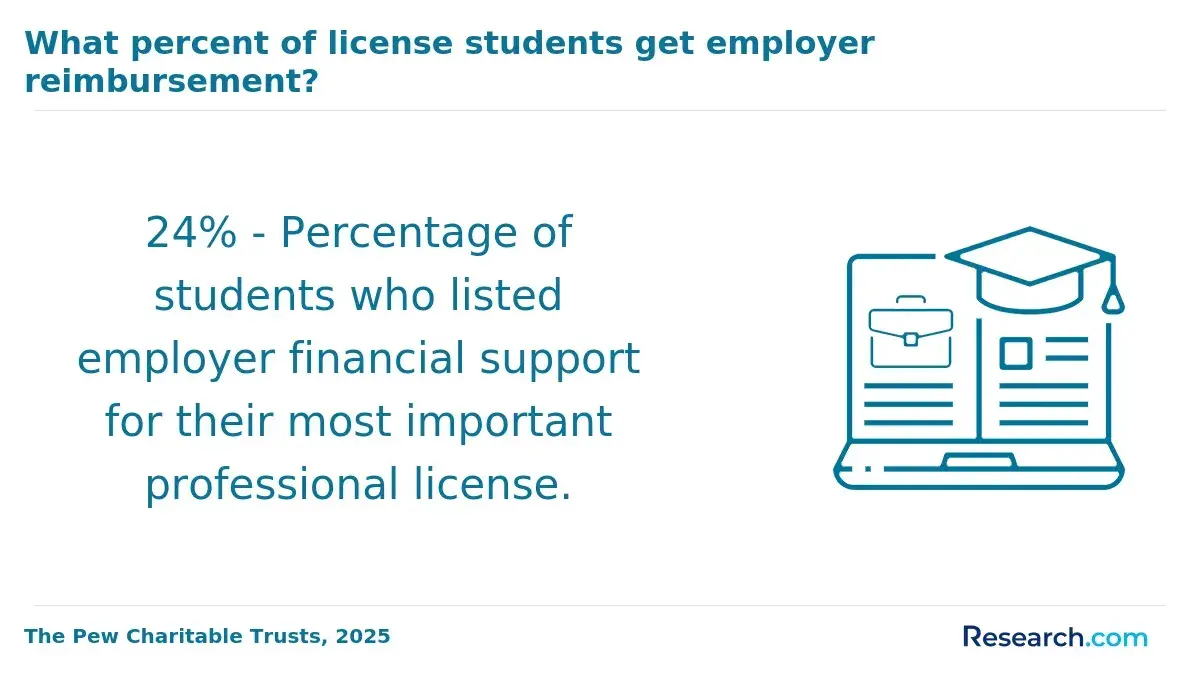
The cost of an online food industry management degree depends on tuition, fees, transfer credits, textbooks, software, practicum expenses, and whether you qualify for in-state tuition or employer assistance. Published tuition can be misleading because grants, scholarships, transfer credits, and employer reimbursement can change your actual out-of-pocket cost.
College Board's 2024 Trends in College Pricing and Student Aid provides a useful benchmark for comparing tuition levels before financial aid. These figures are published tuition and fees, so they should be treated as starting points rather than net prices.
- $11,610 average published tuition and fees for in-state students at public four-year colleges in 2024-25
- $30,780 average published tuition and fees for out-of-state students at public four-year colleges in 2024-25
- $43,350 average published tuition and fees for students at private nonprofit four-year colleges in 2024-25
Online students should also look beyond tuition per credit. Some programs charge distance-learning fees, proctoring fees, course material fees, graduation fees, or internship-related expenses. On the other hand, online learners may save on housing, commuting, parking, and relocation.
Use these steps to estimate your real cost before enrolling. This process is especially important if you are comparing a low tuition program with a higher tuition program that accepts more transfer credit.
- Ask for a degree audit showing exactly how many credits you still need after transfer evaluation.
- Multiply remaining credits by tuition and required fees, then add books, software, certification exams, and practicum expenses.
- Compare net price after grants, scholarships, military benefits, employer tuition assistance, and tax benefits if applicable.
- Check loan terms carefully; Federal Student Aid set 2024-25 undergraduate Direct Loan interest at 6.53%, which makes borrowing cost part of the ROI calculation.
- Estimate likely career use of the degree, but avoid assuming immediate promotion or a specific salary increase.
The lowest advertised tuition is not always the best value. A slightly more expensive accredited program may be better if it accepts more transfer credit, has stronger employer connections, includes industry-recognized credentials, or offers better advising for online students.
What jobs can you get with a food industry management degree?
A food industry management degree can support roles in restaurants, catering, hotels, grocery and retail food, food manufacturing, distribution, school foodservice, healthcare foodservice, corporate dining, and food startups. The degree is most useful when paired with practical experience, because many management roles require judgment developed through shift leadership, budgeting, vendor coordination, or compliance responsibilities.
The table below connects common job paths with typical responsibilities. This helps you judge whether a program's curriculum matches the work you actually want to do.
| Career path | Typical responsibilities | Degree value | Additional preparation that may help |
| Food service manager | Manage staff, scheduling, purchasing, customer service, budgets, and food safety procedures | Strong fit for restaurant, catering, dining, and hospitality-focused programs | ServSafe or food protection manager certification, supervisory experience |
| Restaurant or multi-unit manager | Oversee sales, labor cost, service standards, training, and performance across one or more locations | Useful when paired with operations, accounting, and leadership coursework | Prior restaurant leadership and profit-and-loss experience |
| Food production supervisor | Coordinate workers, production schedules, quality standards, safety procedures, and output targets | Best supported by operations, quality, and supply chain coursework | Manufacturing experience and safety training |
| Quality assurance coordinator | Support inspections, documentation, corrective actions, audits, and compliance systems | Useful if the curriculum includes food safety and quality management | HACCP, SQF, or other employer-preferred food safety training |
| Procurement or purchasing coordinator | Work with vendors, compare prices, manage inventory, and support contract decisions | Strong fit when the program includes supply chain and finance | Spreadsheet, ERP, and negotiation skills |
| Food retail or grocery manager | Manage departments, inventory, merchandising, staffing, shrink, and customer experience | Useful for students interested in retail food operations | Retail analytics and category management exposure |
Students who want corporate operations roles should consider whether a specialized food degree or a broader business credential is better. For example, an operations management degree may be a stronger match for supply chain, process improvement, logistics, or multi-site leadership roles that extend beyond the food sector.
Common entry points include shift supervisor, assistant manager, catering coordinator, inventory coordinator, quality technician, purchasing assistant, and food safety coordinator. Advancement often depends on measurable results, such as reducing waste, improving service speed, passing audits, controlling labor costs, or training teams effectively.
What is the salary potential in food industry management careers?
Salary potential depends on role, industry segment, location, employer size, and experience. A degree can help candidates qualify for management tracks, but compensation is not guaranteed and often rises with operational responsibility, budget authority, and proven leadership results.
BLS reported 2024 median annual pay of $66,660 for food service managers. That figure is useful as a benchmark for restaurant, dining, and foodservice leadership roles, but it does not represent every food industry management career. Corporate, manufacturing, logistics, and operations roles may follow different pay scales and may require stronger analytical, finance, or production experience.
The table below shows how responsibilities often relate to salary context. It does not predict individual earnings, but it can help you compare career paths by level of responsibility.
| Role category | Typical responsibility level | Salary context | What can improve prospects |
| Entry-level supervisory roles | Lead shifts, support scheduling, monitor service or production tasks | Often lower than mid-level management because budget authority is limited | Reliable performance, food safety credentials, cross-training |
| Department or unit management | Manage staff, costs, vendors, inventory, and customer outcomes | Closer to food service management benchmarks when responsibilities align | Profit-and-loss experience, leadership skills, cost control results |
| Quality, procurement, or production coordination | Support compliance, purchasing, manufacturing, or distribution systems | Varies by technical skill level and industry segment | Data skills, audit experience, supply chain knowledge |
| Multi-unit or corporate operations | Oversee multiple sites, budgets, processes, or strategic initiatives | Often tied to scale of responsibility and employer size | Advanced business skills, analytics, project leadership, strong track record |
The job outlook is steady rather than explosive. BLS projects employment for food service managers to grow 3% from 2024 to 2034, which is about a modest growth environment. For students, that means program choice should be based on employable skills and experience, not simply on the existence of demand.
To improve ROI, look for programs that help you build evidence of results before graduation: a capstone tied to a real employer, internship evaluations, food safety credentials, analytics projects, or documented cost-saving and process-improvement work. Employers often care less about the degree title and more about whether you can manage people, compliance, cost, and execution.
How do you choose a reputable online food industry management program?
Choosing a reputable program means matching accreditation, curriculum, cost, format, and career outcomes to your goal. The best program for a restaurant supervisor may not be the best program for someone targeting food manufacturing, grocery operations, procurement, or corporate supply chain roles.
Start by defining your target role, then compare programs against that role. The following steps give you a practical sequence for narrowing your list.
- Identify your target career path: Restaurant management, foodservice administration, food manufacturing, retail grocery, quality assurance, procurement, distribution, or corporate operations.
- Confirm institutional accreditation and verify that online students qualify for the same degree, transcript language, and student services as campus learners.
- Review the curriculum for food safety, accounting, operations, supply chain, leadership, marketing, and analytics rather than relying on the program title.
- Ask for transfer credit evaluation before committing, especially if you have prior college, culinary, military, or workplace training.
- Compare total cost after aid, fees, and transfer credits instead of choosing based only on tuition per credit.
- Ask how online students complete internships, capstones, field projects, or employer-based assignments.
- Request career outcomes information, but treat it carefully; ask what roles graduates pursue, what employers recruit from the program, and how outcomes are collected.
- Evaluate support services, including academic advising, tutoring, library access, career coaching, internship help, and technical support for online learners.
It also helps to recognize common mistakes before you enroll. These red flags often lead to wasted credits, higher debt, or a degree that does not match the student's intended career.
- Choosing a program without verifying institutional accreditation through an official database
- Assuming a hospitality management degree automatically prepares you for food manufacturing, quality assurance, or supply chain roles
- Focusing only on tuition while ignoring transfer credit acceptance, fees, internship costs, and time to completion
- Choosing the fastest program even if it lacks applied projects, employer connections, or enough major-specific coursework
- Assuming online means easier when the format actually requires strong self-management and weekly discipline
- Relying only on rankings instead of checking curriculum, faculty background, student support, and local fieldwork options
- Believing salary averages are guaranteed outcomes rather than broad labor market benchmarks
A strong final test is simple: after reading the program plan, can you explain exactly what role the degree prepares you for and what evidence you will show employers? If the answer is unclear, keep comparing. A reputable program should help you graduate with a credible degree, practical work samples, relevant skills, and a realistic career story.
Other Things You Should Know About Food Industry Management
It can be worth it if you want management roles in foodservice, retail food, production, procurement, or food operations and the program is accredited, affordable, and tied to practical experience. It may not be worth it if your target job does not require a degree or if a shorter certificate would meet your goal.
A food industry management degree focuses on the business, operational, and managerial aspects of the food industry, including supply chain management, marketing, and finance. Culinary arts, on the other hand, emphasizes cooking skills, food preparation techniques, and culinary creativity. These programs cater to different career paths within the food sector.
Some do, and some use capstones, employer-based projects, simulations, or local field experiences instead. If you are an online student, ask whether you can complete requirements near where you live and whether the school helps arrange approved sites.
Choose a specialized food management degree if you are committed to foodservice, food retail, production, or food operations. Choose a general business degree if you want more flexibility across industries or are unsure whether you want to stay in the food sector long term.
References
- FAQs About Undergraduate Admissions Requirements for Online Programs https://www.umassglobal.edu/blog-news/faqs-undergraduate-admissions-requirements-online-programs
- Food Industry Management https://www.niagara.edu/programs/food-industry-management/
- How to choose a culinary and restaurant management course? https://insights.ehl.edu/choosing-culinary-and-restaurant-management-course
- Food Science Degree Careers and Salary in Europe - StudyinEurope.eu https://www.studyineurope.eu/food-science/food-science-degree-careers-salary-europe/
- Online Master’s in Food Business - CIA School of Graduate and Professional Studies https://masters.culinary.edu/food-business-masters-degree/
- Food Business Management https://www.ciachef.edu/cia-new-york-food-business-management-bachelors-degree-program/
- Study Food Industry Management in the USA https://www.studyusa.com/en/field-of-study/395/food-industry-management
- Online Degree vs. Traditional: Choosing the Right Path https://beal.edu/online-degree-vs-traditional/
- Pardon Our Interruption https://www.coloradotech.edu/degrees/bachelors/management/food-service-management
- Online Restaurant & Culinary Management | Institute of Culinary Education https://www.ice.edu/online-programs/restaurant-culinary-management