2027 Online Food Industry Management Degrees With the Best Cost Transparency

Co-Founder and Chief Data Scientist
Choosing an online food industry management degree is really a cost-and-career decision: Will the program prepare you for foodservice, retail food, supply chain, or operations roles without hiding the true price? The timing matters because the National Restaurant Association projects U. S. restaurant and foodservice sales to exceed $1.5 trillion, keeping demand high for managers who understand operations, safety, labor, and margins. This guide helps working adults, transfer students, and career changers compare transparent-cost programs, avoid red flags, and choose a degree that fits their goals.
Key Things You Should Know
- The clearest online food industry management programs publish tuition by credit hour, required credit totals, fee rules, and transfer-credit policies; opaque "request information for tuition" pages are a red flag for cost comparison.
- Foodservice manager roles had a U.S. median annual wage of $63,060 in May 2024, according to the U.S. Bureau of Labor Statistics, but pay varies widely by employer type, region, experience, and responsibility level.
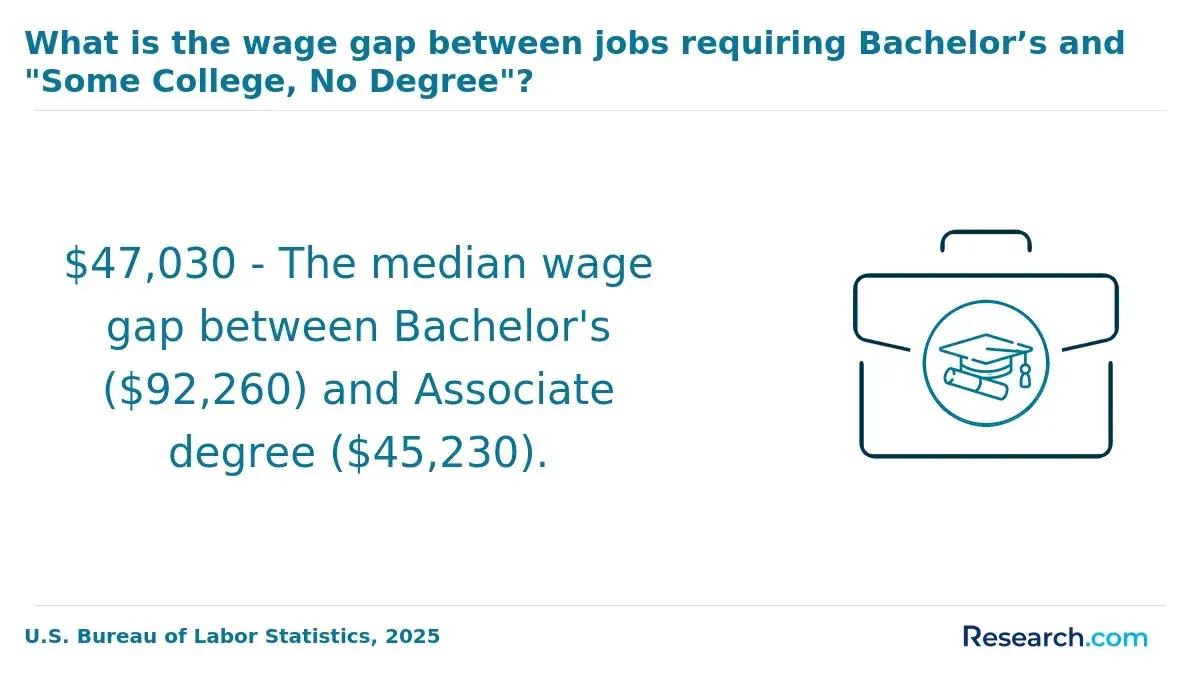
- A bachelor's program usually requires about 120 credits; using 2024 College Board published tuition averages, public four-year in-state pricing is often far lower than private nonprofit sticker pricing, but online transfer credit can change the real ROI.
What is an online food industry management degree and who is it best suited for?
An online food industry management degree is a business-focused or applied science degree that prepares students to manage food operations, foodservice teams, restaurant units, retail food departments, food production workflows, purchasing, safety compliance, and customer-facing service systems. Depending on the school, the degree may be titled food industry management, food and beverage management, foodservice management, hospitality management, restaurant management, food science and industry, or food business.
The best fit is usually someone who wants to move beyond entry-level foodservice work into supervisory, operations, purchasing, quality, compliance, or multi-unit management roles. It can also fit students who already work in restaurants, grocery, institutional dining, catering, food manufacturing, school nutrition, or healthcare foodservice and need a bachelor's credential for promotion.
This degree may make sense if your career target involves managing people, food costs, inventory, sanitation standards, vendor relationships, guest experience, or operational performance. It may be less useful if your main goal is to become a registered dietitian, chef, food scientist, or health inspector, because those paths may require different coursework, supervised practice, science prerequisites, state rules, or graduate-level preparation.
Before you enroll, identify the job family you want. Food industry management is not one single career track; it sits at the intersection of business, hospitality, retail, supply chain, and food safety. That flexibility can be valuable, but it also means you should choose a program that matches your intended work environment.
| Student goal | Degree fit | What to check before enrolling |
| Restaurant or foodservice management | Strong fit | Look for operations, cost control, labor management, purchasing, and sanitation coursework. |
| Grocery, retail food, or food distribution | Good fit | Prioritize supply chain, merchandising, food safety, analytics, and leadership courses. |
| Food manufacturing or quality support | Conditional fit | Check whether the program includes food science, HACCP, quality assurance, and regulatory content. |
| Registered dietitian pathway | Usually not enough by itself | Confirm ACEND-accredited dietetics requirements separately before assuming eligibility. |
| Culinary entrepreneurship | Possible fit | Choose programs with entrepreneurship, menu costing, accounting, and small business planning. |
How do online food industry management degrees compare with on-campus programs?
Online and on-campus food industry management degrees can lead to similar academic credentials when they come from the same accredited institution, but the student experience can be very different. The right format depends on your work schedule, need for hands-on labs, transfer credits, and access to local food industry experience.
Online programs are often strongest for working adults who already have industry exposure. If you are managing shifts, working in institutional dining, or employed in food retail, your workplace may become a practical learning environment for projects in operations, purchasing, staffing, and safety. On-campus programs may be better if you want daily access to teaching kitchens, student-run restaurants, labs, career fairs, and in-person employer networks.
Students who want broader management preparation may also compare food-focused degrees with a business administration degree online, especially if they want flexibility to work outside foodservice later. A general business degree can be more portable, while a food industry degree can be more targeted for employers that value industry-specific knowledge.
The table below summarizes the practical trade-offs. Use it to decide whether online delivery supports your goals or whether a campus-based program offers experiences you cannot easily replace.
| Comparison point | Online food industry management degree | On-campus food industry management degree |
| Best for | Working adults, transfer students, military students, and people already employed in food-related roles | Traditional students, lab-focused learners, and students seeking immersive campus networking |
| Schedule | Often asynchronous or low-residency, with more flexibility | Usually fixed class times and campus attendance |
| Hands-on learning | May rely on local internships, employer-based projects, simulations, or case studies | May include teaching kitchens, labs, campus dining operations, or student-run venues |
| Cost control | Can reduce relocation, commuting, and lost-wage costs | May offer stronger campus scholarships or residential experiences |
| Networking | Depends heavily on virtual career services, alumni access, and your local employer connections | Often easier through in-person events, faculty contact, and local employer recruiting |
A common mistake is assuming online always means cheaper. The tuition may be lower, higher, or similar depending on the school. Compare total program cost, not just the delivery format.
Which online food industry management degrees offer the clearest, upfront program costs?
The "best cost transparency" programs are not necessarily the cheapest. They are the programs that make it easy to estimate your actual bill before you apply: tuition per credit, required credits, online fees, transfer-credit limits, residency requirements, and course-material costs are visible without a long sales process.
Because schools update tuition annually, treat the programs below as a cost-transparency shortlist rather than a permanent ranking. The key question is whether you can calculate a realistic cost before speaking with admissions.
| Program to review | Relevant online degree area | Why it stands out for cost transparency | Best-fit student |
| Arizona State University Online | Food industry management or food-related business pathway | Publishes online undergraduate tuition as a per-credit range and explains that total cost depends on credits, fees, and program requirements. | Students who want a large public university brand and a business-oriented food industry pathway. |
| Kansas State University Online | Food science and industry with business, operations, or food systems relevance | Uses program pages and online tuition information that help students connect credit requirements with cost planning. | Students interested in food production, food safety, quality, and industry operations rather than only restaurant management. |
| Oregon State University Ecampus | Food science, sustainable food systems, or related applied food pathways | Provides centralized Ecampus tuition and fee information, making it easier to compare online study with transfer-credit options. | Students who want food systems, sustainability, science, and operations content. |
| Johnson & Wales University Online | Food and beverage, hospitality, culinary business, or entrepreneurship pathways | Online program pages emphasize per-credit tuition and degree requirements, which can help adult learners estimate remaining cost. | Students with culinary, hospitality, restaurant, or food entrepreneurship goals. |
To compare schools fairly, use the same checklist for every program. A school with a slightly higher per-credit tuition may still be a better value if it accepts more transfer credits, includes strong internship support, or reduces time to completion.
- Find the total credits required for the degree and the number you still need after transfer evaluation.
- Multiply remaining credits by the published online tuition rate, then add required fees, course materials, technology fees, and any campus visit costs.
- Ask whether tuition differs by residency, college, course level, or term.
- Confirm whether prior learning, military training, culinary credentials, or associate degree credits can reduce the total.
- Request a written cost estimate before enrolling, not only a verbal explanation from admissions.
Red flags include tuition pages that require a phone call for basic numbers, unclear fee language, aggressive enrollment deadlines, vague transfer-credit answers, and "estimated total cost" figures that do not state what is included.
What types of food industry management degrees and specializations can you earn online?
Online food industry management programs vary more than many students expect. Some are business degrees with a food industry concentration, while others are hospitality, food science, agriculture, or culinary entrepreneurship degrees with management coursework.
The degree type matters because employers read these credentials differently. A restaurant group may value hospitality operations and cost control, while a food manufacturer may prefer food safety, quality systems, and production knowledge.
| Online degree type | Typical focus | Best for | Potential limitation |
| Bachelor's in food industry management | Food business, operations, leadership, retail food, and industry strategy | Students seeking broad food industry management roles | Availability is limited compared with general business degrees. |
| Bachelor's in hospitality or restaurant management | Guest service, restaurant operations, events, lodging, food and beverage control | Restaurant, catering, hotel, and venue foodservice careers | May be less focused on food manufacturing or retail grocery operations. |
| Bachelor's in food science and industry | Food safety, processing, quality, regulations, and product systems | Quality assurance, production support, food safety, and technical operations | May require stronger science preparation than business-focused programs. |
| Bachelor's in business with food-related electives | Accounting, marketing, management, analytics, and supply chain | Students who want career flexibility beyond food | May lack specialized food safety or restaurant operations depth. |
| Certificate or minor in foodservice management | Shorter credential focused on supervision, sanitation, or operations | Working adults who need targeted upskilling | Usually not a substitute for a bachelor's when employers require one. |
Specializations can help you align the degree with a specific career lane. Common online or hybrid concentration areas include the following:
- Restaurant and foodservice operations, including labor scheduling, purchasing, menu costing, and service systems.
- Food safety and quality assurance, including HACCP concepts, sanitation, audits, and regulatory compliance.
- Food supply chain and procurement, including vendor management, inventory control, distribution, and forecasting.
- Hospitality entrepreneurship, including business planning, brand development, cost controls, and customer experience.
- Institutional foodservice, including school nutrition, healthcare dining, corrections, senior living, and corporate dining.
If you want to move into hospitals, clinics, or healthcare administration rather than food operations specifically, you may eventually compare foodservice leadership with online MBA programs healthcare management. That route is usually more appropriate for broader healthcare operations leadership than for entry-level restaurant or retail food management.
How can you verify accreditation and quality for online food industry management programs?
Accreditation is the first quality filter. At minimum, choose an institution recognized by a U.S. Department of Education-approved accreditor. Institutional accreditation affects federal financial aid eligibility, transfer credit acceptance, graduate school admission, and employer confidence.
Programmatic accreditation is less standardized in food industry management than it is in fields such as nursing, dietetics, or health information. Hospitality, business, agriculture, and food science programs may follow different quality frameworks, so you should evaluate both accreditation and program evidence.
Use the following checks before applying. They help you separate legitimate online degrees from programs that look convenient but may not support your career goals.
- Confirm institutional accreditation directly through the school's accreditation page and the U.S. Department of Education or CHEA-recognized accreditor listings.
- Check whether the program sits in a business, hospitality, agriculture, food science, or continuing education college, because that affects curriculum depth.
- Ask whether online students receive the same diploma wording as campus students.
- Review faculty backgrounds for foodservice operations, food safety, supply chain, hospitality, retail food, or food science experience.
- Request recent internship, practicum, capstone, employer partnership, or career services examples for online students.
- Verify transfer-credit policies before enrolling, especially if you have an associate degree, culinary coursework, military credit, or prior college credits.
Do not assume that every career-connected program has the same accreditation rules. For example, students comparing healthcare data careers should look specifically for an accredited online health information management degree CAHIIM, but food industry management does not use that same accreditation standard.
Quality also shows up in transparency. Strong programs clearly explain curriculum maps, online course delivery, credit transfer, internship expectations, advising access, and student support. If a school cannot answer these questions in writing, keep comparing.
What is the typical curriculum in an online food industry management bachelor's program?
A bachelor's in food industry management usually blends general education, business foundations, food systems knowledge, and applied management. The exact balance depends on whether the program is housed in business, hospitality, agriculture, or food science.
The curriculum should help you read financial reports, manage food and labor costs, lead teams, understand safety obligations, and use data to improve operations. In stronger programs, assignments are practical: menu cost analysis, supplier evaluation, food safety plans, staffing models, customer service recovery, and operations improvement projects.
| Curriculum area | Common course topics | Why it matters |
| Business core | Accounting, economics, marketing, management, business law, analytics | Builds the management foundation needed for budgeting, pricing, staffing, and decision-making. |
| Food operations | Foodservice systems, restaurant management, purchasing, menu management, cost control | Connects business theory to real food industry workflows. |
| Food safety and compliance | Sanitation, HACCP principles, risk management, regulations, quality control | Prepares students for safety-sensitive environments where mistakes can affect customers and liability. |
| Supply chain and retail food | Procurement, logistics, inventory, merchandising, forecasting | Supports grocery, distribution, manufacturing, and multi-unit operations careers. |
| Leadership and people management | Human resources, training, conflict resolution, organizational behavior | Food industry managers often supervise high-turnover, shift-based teams. |
| Capstone, internship, or applied project | Consulting project, practicum, business plan, operations audit | Helps translate coursework into employer-relevant evidence. |
Technology is becoming more important in the curriculum. Food operations increasingly use point-of-sale analytics, digital inventory tools, scheduling software, delivery-platform data, demand forecasting, and AI-assisted customer insights. A strong online program should help students understand these tools without implying that software replaces management judgment.
One mistake is choosing a program only because the course titles sound interesting. Instead, read course descriptions and outcomes. A course called "Food Management" could mean restaurant service, institutional dining, manufacturing operations, or general hospitality, depending on the school.
How long do online food industry management degrees take and what do they really cost?
Most online bachelor's degrees in food industry management require about 120 credits. First-time students often take four years of full-time study, while transfer students may finish faster if prior credits apply cleanly. Part-time students commonly take longer because they balance coursework with employment and family responsibilities.
Cost depends on tuition, fees, transfer credits, course load, financial aid, and time away from work. College Board's 2024 Trends in College Pricing reports average published tuition and fees of $11,610 for in-state students at public four-year institutions and $43,350 at private nonprofit four-year institutions for the 2024-25 academic year. Those figures are not specific to food industry management, but they show why online students should compare public, private nonprofit, and transfer-friendly options carefully.
The table below shows the main cost drivers. It is more useful than comparing tuition alone because two students in the same program can pay very different totals after transfer credits and aid.
| Cost factor | How it affects total cost | What to ask the school |
| Per-credit tuition | The base price multiplied by remaining credits | Is the online rate fixed, residency-based, program-based, or course-level-based? |
| Transfer credits | Can reduce both cost and time to completion | How many credits will apply to major, elective, and general education requirements? |
| Fees | May include technology, distance education, graduation, lab, or course fees | Which fees are required for online students every term? |
| Books and materials | Can vary by course, especially if software, certification exams, or lab kits are required | Are digital materials included or billed separately? |
| Internship or residency requirements | May create travel, scheduling, or unpaid-work costs | Can requirements be completed near my home or current employer? |
| Time to degree | Longer enrollment can increase fees and opportunity costs | What is the realistic completion timeline for a working adult taking two courses per term? |
To estimate your real cost, follow a simple sequence before you submit a deposit. This prevents the common mistake of comparing advertised tuition without knowing how many credits you actually need.
- Request an unofficial transfer review before making a final decision.
- Calculate remaining credits in general education, major, electives, and upper-division requirements.
- Add required fees, materials, exam fees, and any travel or internship costs.
- Compare your net price after grants, scholarships, employer tuition assistance, military benefits, and payment plans.
- Ask whether withdrawing, changing pace, or taking a term off affects tuition, aid, or readmission.
If your main priority is a lower-cost healthcare operations credential rather than food industry management, comparing health information management programs online can help you understand how tuition transparency differs across career-focused online degrees.
What admission requirements and prerequisites do online food industry management programs have?
Admission requirements vary by school, but online bachelor's programs usually admit first-year students, transfer students, or degree-completion students. Some programs are open to students with a high school diploma or GED, while others expect prior college credits or an associate degree.
Food industry management programs are usually less prerequisite-heavy than engineering or clinical healthcare degrees, but science-oriented food industry programs may require biology, chemistry, microbiology, nutrition, or college algebra. Business-oriented programs are more likely to emphasize accounting, economics, statistics, and communication.
Expect admissions teams to ask for some or all of the following materials. Requirements can vary, so always verify the current checklist for your applicant type.
- High school transcript, GED documentation, or official college transcripts from every prior institution.
- Minimum GPA, often with separate standards for transfer admission or upper-division major admission.
- English composition and math readiness, especially for programs with accounting, statistics, or science requirements.
- Resume or work-history information for adult learners, particularly in degree-completion programs.
- Personal statement or short admissions questions explaining goals and fit.
- Proof of English proficiency for applicants whose prior education was not in English.
Some programs may not require standardized tests, especially for transfer or adult learners, but test-optional does not mean admission is automatic. Your transcript still needs to show readiness for college-level writing, quantitative reasoning, and upper-division coursework.
The biggest admissions mistake is applying before checking how credits transfer. A student may be admitted but later discover that many credits count only as electives. Ask for a degree audit that shows exactly which requirements are already satisfied and which remain.
What careers, job titles, and industries can an online food industry management degree lead to?
An online food industry management degree can support roles in restaurants, hospitality groups, grocery and retail food, food manufacturing, distribution, school nutrition, senior living, corporate dining, corrections, healthcare foodservice, and catering. The degree is most useful when paired with industry experience, because many management roles require proof that you can handle real-time operations, staffing, customer issues, safety standards, and cost pressure.
Career outcomes depend on the program emphasis. A hospitality-heavy degree may point toward restaurant and event operations, while a food science and industry degree may support quality, production, or regulatory-adjacent roles. A business-oriented program may fit purchasing, sales, category management, or operations leadership.
| Job title or career path | Typical responsibilities | Helpful preparation |
| Foodservice manager | Oversees daily operations, staffing, purchasing, customer service, safety, and financial performance | Operations, cost control, sanitation, leadership, scheduling |
| Restaurant general manager | Manages unit performance, guest experience, labor, inventory, training, and profit targets | Restaurant operations, HR, accounting, service management |
| Food and beverage manager | Supervises dining outlets, beverage programs, events, menus, vendors, and service teams | Hospitality management, purchasing, menu analysis, guest service |
| Grocery or retail food department manager | Manages merchandising, inventory, safety, shrink, staff, and sales in food departments | Retail operations, supply chain, food safety, analytics |
| Food production supervisor | Coordinates production schedules, workers, quality checks, and safety procedures | Food science basics, quality systems, operations management |
| Quality assurance coordinator | Supports documentation, audits, sanitation checks, supplier standards, and regulatory readiness | Food safety, HACCP concepts, documentation, attention to detail |
| Purchasing or procurement coordinator | Works with vendors, pricing, inventory, contracts, and supply availability | Accounting, supply chain, negotiation, forecasting |
To improve employability while enrolled, build evidence that goes beyond the degree name. Employers often care about whether you can solve operational problems, reduce waste, train staff, maintain safety standards, and interpret performance data.
- Earn a recognized food safety credential if it is relevant to your state, employer, or role.
- Use class projects to create portfolio examples, such as a food cost analysis, staffing plan, supplier comparison, or sanitation audit.
- Seek internships, promotions, shift-lead roles, or employer-based capstone projects while studying.
- Learn common tools used in the industry, including POS reporting, inventory systems, scheduling platforms, spreadsheets, and basic data dashboards.
- Track measurable accomplishments at work, such as training completion, waste reduction, customer satisfaction improvement, or inventory accuracy.
One important limitation: a bachelor's degree may help you qualify for management consideration, but it does not replace experience in high-pressure food operations. The strongest candidates usually combine education with supervised responsibility.
What are the salary ranges and job outlook for food industry management professionals?
Salary outcomes vary by job title, region, employer size, schedule, bonuses, and experience. The most directly relevant national benchmark is food service manager. The U.S. Bureau of Labor Statistics reported a median annual wage of $63,060 for food service managers in May 2024. That median is a midpoint, not a promise; multi-unit managers, corporate roles, and specialized operations positions may differ substantially from single-site roles.
The outlook is steady rather than explosive. BLS projections for food service managers show modest employment growth, with openings also driven by replacement needs as workers retire or move into other occupations. For students, this means experience, location, and operational skill may matter as much as the credential itself.
The table below gives a realistic view of related career lanes. Use it to compare the type of work and earning context rather than assuming all food industry management roles pay the same.
| Career lane | Salary context | Outlook and decision notes |
| Restaurant and foodservice management | BLS median wage for food service managers was $63,060 in May 2024. | Good fit for students who want operations leadership and can handle nights, weekends, staffing pressure, and customer-facing work. |
| Food production supervision | Pay can rise with manufacturing experience, technical knowledge, shift responsibility, and plant size. | Stronger fit for students who prefer process, safety, quality, and production environments over front-of-house service. |
| Retail food management | Compensation often depends on department size, store volume, union environment, and bonus structure. | Can be a practical path for students with grocery, merchandising, inventory, or fresh-food experience. |
| Quality assurance and food safety support | Salary depends heavily on technical requirements, certifications, documentation duties, and regulatory exposure. | May require more food science, microbiology, HACCP, or audit training than a general management program provides. |
| Purchasing, sales, or supplier management | Compensation may include incentives, commissions, or advancement into category management or supply chain roles. | Best for students with communication, analytics, negotiation, and vendor-management strengths. |
Current trends that may influence salaries and hiring include automation in ordering and inventory, AI-assisted forecasting, delivery-platform economics, higher consumer expectations for transparency, and continued pressure on labor costs. These trends do not eliminate the need for managers; they change what managers are expected to know. Programs that include analytics, technology, safety, and financial decision-making may be more useful than programs focused only on traditional service supervision.
To evaluate ROI, compare your likely next job, not only your dream job. If the degree helps you move from hourly work into assistant manager, department manager, production supervisor, or quality coordinator roles, the value may build over time. If you already hold a strong management role, a certificate, employer training, or targeted graduate credential may be a better next step than starting another bachelor's degree.
Other Things You Should Know About Food Industry Management
It can be worth it if you want management roles in restaurants, retail food, institutional dining, food production, or food operations and you need a bachelor's credential to advance. It may not be worth it if your target job requires a different credential, such as dietetics, culinary certification, or a science-heavy food safety background.
Some programs can be completed fully online, while others require internships, applied projects, labs, or local field experiences. Always ask whether any in-person requirement, proctored exam, practicum, or campus visit is mandatory before enrolling.
In 2027, leading programs for cost transparency include Arizona State University's online Bachelor of Science in Food Industry Management and Purdue University Global's online Bachelor of Science in Nutrition. These programs provide clear fee structures upfront, helping students plan their finances effectively.
Employers are more likely to respect an online degree when it comes from an accredited institution, has the same academic standards as the campus program, and is supported by relevant work experience. The delivery format matters less than accreditation, curriculum quality, and your ability to show practical skills.
References
- Study Food Industry Management in the USA https://www.studyusa.com/en/field-of-study/395/food-industry-management
- Job Titles https://careerpath.chooserestaurants.org/job-titles.html
- Food Certification, Supplier Audits | QIMA - Food Quality Certification https://www.qima.com/food/certifications
- 10 Best Careers With a Business Management Degree https://www.ncchomelearning.co.uk/blog/10-best-careers-with-a-business-management-degree/
- What is SQF https://www.sqfi.com/our-program/what-is-sqf
- MSc in Food Industry Management - UNISG - University of Gastronomic Sciences https://www.unisg.it/en/course/msc-in-food-industry-management/
- Food Industry Management https://www.niagara.edu/programs/food-industry-management/
- Quality Control in the Food Industry: Best Practices & Tools https://goaudits.com/blog/food-quality-assurance-and-quality-control/
- Member Support https://membersupport.commonapp.org/s/article/bachelors-degree-in-food-business-management-ca-dpqodiqi
- Food Business Management https://www.ciachef.edu/cia-new-york-food-business-management-bachelors-degree-program/