2027 Online Food Industry Management Degrees That Prepare Students for Graduate Study in Food Business or Operations

Co-Founder and Chief Data Scientist
Choosing an online food industry management degree is really a decision about where you want to work in a $2.6 trillion U. S. food economy, according to USDA Economic Research Service food expenditure data published in 2024. These programs matter for students aiming at food business, supply chain, food safety, retail, hospitality, or operations leadership. This guide explains degree options, accreditation, coursework, costs, career outcomes, and graduate-school fit so you can compare programs with clearer ROI expectations and avoid choosing a degree that does not match your career path.
Key Things You Should Know
- Online food industry management degrees are best for students who want business and operations roles in food service, food retail, manufacturing, distribution, procurement, quality assurance, or food entrepreneurship rather than clinical nutrition or laboratory-heavy food science alone.
- For cost planning, College Board's 2024 pricing data lists average published tuition and fees at $11,610 for in-state public four-year colleges, $30,780 for out-of-state public four-year colleges, and $43,350 for private nonprofit four-year colleges for 2024-25.
- Career outcomes vary by role: BLS 2024 wage data places food service managers at roughly the mid-$60,000 median range, while operations and production management roles can pay more but usually require stronger experience, analytics, and supervisory responsibility.
What are online food industry management degrees?
An online food industry management degree is a business-oriented program focused on how food moves from suppliers to customers. It typically blends management, accounting, marketing, food safety, supply chain, purchasing, operations, hospitality, retail, and quality systems. Some programs sit in business schools, while others are offered through agriculture, hospitality, food science, or applied professional studies departments.
The degree is most useful when your target role requires both business judgment and food-sector knowledge. For example, a general business major may understand budgeting and management, but a food industry management student is more likely to study perishability, food safety documentation, vendor specifications, menu or category performance, distribution constraints, and regulatory risk.
Students comparing this path with a broader online degree business administration should think carefully about specialization. A business administration degree is more flexible across industries, while food industry management can be stronger for applicants who already know they want food retail, restaurants, manufacturing, grocery, supply chain, or agribusiness-related work.
The table below summarizes common program types so you can match the credential to your career stage instead of choosing based only on the program title.
| Program type | Best fit | Typical academic focus | Graduate-study value |
| Associate degree | Entry-level food service, retail, or supervisory-track students | Basic management, sanitation, purchasing, customer service, and operations | Can support transfer into a bachelor's program if credits are accepted |
| Bachelor's degree | Students seeking management-track roles or graduate-school preparation | Business core, food systems, supply chain, marketing, finance, food safety, and leadership | Usually the strongest undergraduate option for MBA, food business, or operations master's programs |
| Graduate certificate | Working professionals who already hold a degree | Focused topics such as food safety, supply chain, analytics, or hospitality leadership | May strengthen a graduate application but usually does not replace a full degree |
| Master's degree | Professionals targeting senior management, consulting, entrepreneurship, or specialized operations roles | Strategy, analytics, logistics, finance, innovation, risk management, and leadership | Can be useful for advancement, especially when paired with work experience |
A food industry management degree may not be the best fit if your goal is to become a registered dietitian, a research food scientist, or a culinary arts specialist. Those paths often require different accreditation, science prerequisites, supervised practice, laboratory work, or culinary training.
Which accreditation matters for food industry management programs?
Accreditation is one of the most important quality checks for an online food industry management degree. At minimum, the college or university should hold institutional accreditation from an agency recognized by the U.S. Department of Education or the Council for Higher Education Accreditation. Without recognized institutional accreditation, transfer credits, federal financial aid eligibility, employer recognition, and graduate-school admission can become much harder.
Programmatic accreditation is more nuanced. Food industry management is often interdisciplinary, so there may not be one required programmatic accreditor for every legitimate program. However, the right specialized review can strengthen fit depending on your goal.
The table below explains which accreditation or approval signals matter most for different food-related education paths. Use it to avoid assuming that one accreditation label covers every career outcome.
| Goal | Accreditation or approval to check | Why it matters |
| General food business or operations management | Recognized institutional accreditation; business accreditation such as AACSB, ACBSP, or IACBE may be a plus | Supports transferability, graduate admission, and employer confidence in the business curriculum |
| Food science or product development | Institutional accreditation; food science program recognition or strong lab-based curriculum | Employers may expect chemistry, microbiology, quality systems, and product testing experience |
| Dietetics or registered dietitian preparation | ACEND-accredited pathway | Food industry management alone usually does not meet dietetics credentialing requirements |
| Hospitality or restaurant management | Institutional accreditation; hospitality-specific industry alignment can be helpful | Internships, employer partnerships, and operations coursework may matter more than a single specialized accreditor |
Before enrolling, ask the school whether the program's credits have transferred to graduate programs in business, food systems, hospitality, or operations management. Also ask whether online students receive the same transcript notation as campus students, because some applicants prefer programs that do not distinguish delivery format on the transcript.
A common mistake is choosing a program because it uses the words "food," "nutrition," or "management" without checking whether it fits the intended credential. If your long-term plan involves dietetics, food science research, or licensure, verify requirements with the relevant accreditor or state board before you apply.
What careers can food industry management graduates pursue?
Food industry management graduates can pursue roles across restaurants, grocery chains, food manufacturing, distribution, institutional dining, hospitality groups, food startups, and supplier networks. The degree is not tied to one job title; it is a platform for roles that combine people management, cost control, compliance, inventory, customer demand, and operational performance.
The table below connects common career paths with the responsibilities employers may expect. This can help you choose electives, internships, and certifications that align with your target role.
| Career path | Typical responsibilities | Skills to build during the degree |
| Food service manager | Oversee staff, budgets, scheduling, inventory, sanitation, guest experience, and daily operations | Leadership, labor planning, cost control, safety compliance, conflict resolution |
| Food retail or grocery manager | Manage departments, purchasing, merchandising, shrink, supplier coordination, and customer service | Retail analytics, category management, forecasting, vendor communication |
| Quality assurance coordinator | Support food safety procedures, documentation, audits, corrective actions, and supplier specifications | HACCP, sanitation, traceability, technical writing, root-cause analysis |
| Supply chain or logistics analyst | Track inventory, distribution, demand patterns, transportation issues, and supplier performance | Spreadsheet modeling, ERP systems, procurement, forecasting, data interpretation |
| Production or operations supervisor | Coordinate production schedules, labor, equipment use, safety practices, and process improvements | Lean operations, supervision, quality systems, metrics, communication |
| Food business entrepreneur | Develop a food product, restaurant concept, catering operation, retail brand, or distribution model | Finance, marketing, food law basics, sourcing, pricing, business planning |
Technology is changing these roles. Employers increasingly use digital inventory platforms, point-of-sale analytics, supplier portals, demand forecasting tools, and AI-assisted scheduling. That does not remove the need for managers; it raises the value of managers who can interpret data, communicate decisions, and understand food-specific operational risk.
The smartest path is to pair the degree with experience before graduation. Students should look for internships, part-time food operations work, co-ops, employer projects, or capstone courses with real companies. A degree can help open doors, but food businesses often promote candidates who can prove they understand pace, margins, compliance, and frontline execution.
How do online and campus programs differ in food industry management?
Online and campus food industry management programs can lead to similar academic outcomes, but the experience is different. Online programs usually offer more flexibility for working adults, transfer students, military students, caregivers, and employees already in food service or retail. Campus programs may offer easier access to labs, tasting facilities, student clubs, employer events, and local internships.
The comparison below shows the practical trade-offs. Use it to decide which format fits your schedule, learning style, and need for hands-on experience.
| Factor | Online program | Campus program | Best choice when |
| Schedule | Often asynchronous or evening-friendly | Usually follows set class times | Online fits students balancing work or family; campus fits students who want a traditional schedule |
| Hands-on learning | May use local internships, virtual simulations, case studies, or employer projects | May offer labs, kitchens, facilities, or in-person demonstrations | Campus may be better for lab-heavy goals; online can work well for management-focused roles |
| Networking | Depends on virtual events, faculty access, alumni networks, and employer partnerships | Often easier through clubs, career fairs, and local employers | Online students should verify career services before enrolling |
| Cost control | May reduce relocation, commuting, parking, and lost-work costs | May include housing, transportation, and campus fees | Online can be more affordable if tuition is comparable and the student can keep working |
| Learning style | Requires self-direction, writing discipline, and time management | Provides more face-to-face structure | Choose the format that matches how you actually complete work, not just how flexible it sounds |
One mistake is assuming online means easier. Strong online programs still require accounting, analytics, management writing, group projects, and applied case analysis. Another mistake is assuming campus is always better for operations fields. Some working students learn more because they can immediately apply coursework to their current food business job.
Students comparing applied management fields can also look at how other online programs handle hands-on requirements. For example, reviews of the best online schools for construction management can show how project-based, operations-focused disciplines adapt field experience and technical management training to online formats.
What coursework is typical in food industry management degrees?
Coursework in food industry management usually combines a business core with food-sector applications. The strongest programs do not simply add one food elective to a general business curriculum; they help students understand how perishability, safety, seasonality, supplier risk, consumer demand, and cost pressure affect decisions.
Common courses often fall into the categories below. When comparing schools, look beyond course names and read descriptions to see whether assignments use food business cases, real operational data, or generic examples.
- Business foundation: Accounting, managerial finance, economics, marketing, business law, organizational behavior, and strategic management.
- Food operations: Purchasing, inventory control, menu or category analysis, facility operations, production planning, service systems, and process improvement.
- Food safety and quality: Sanitation, HACCP principles, regulatory compliance, audit preparation, traceability, and quality assurance documentation.
- Supply chain and analytics: Forecasting, logistics, procurement, data analysis, enterprise systems, and supplier performance measurement.
- Leadership and communication: Supervision, human resources, negotiation, professional writing, conflict management, and team leadership.
- Capstone or experiential learning: Internship, consulting project, business plan, applied research project, or operations improvement proposal.
Graduate-study preparation depends on rigor. If you plan to apply for an MBA, master's in food business, supply chain management, hospitality management, or operations program, prioritize quantitative courses such as accounting, statistics, analytics, and finance. Graduate programs often value applicants who can handle data-driven decision-making, not just broad management theory.
Course sequencing matters in any applied management degree. Reviewing examples from fields with similarly practical curricula, such as construction management courses, can help students understand why operations programs often combine finance, project planning, risk, compliance, and leadership instead of teaching management in isolation.
What admission requirements do food industry management programs usually have?
Admission requirements vary by degree level and institution, but online food industry management programs are usually designed for both traditional students and working adults. Selective universities may require stronger academic records, while transfer-friendly or adult-completion programs may place more emphasis on prior credits and work experience.
The table below summarizes common admission expectations. Always confirm details with the school because requirements can change by campus, state authorization rules, and applicant type.
| Program level | Common requirements | What applicants should prepare |
| Associate degree | High school diploma or GED; placement testing may be required | Transcripts, basic math readiness, interest in food service or business |
| Bachelor's degree | High school transcript or transfer transcript; minimum GPA may apply; some programs request test scores but many are test-optional | Completed application, transcripts, prior college credits, resume if work experience is relevant |
| Bachelor's completion program | Prior college credits or associate degree; minimum transferable credits may be required | Transfer evaluation, syllabi for older courses, plan for remaining general education requirements |
| Master's degree | Accredited bachelor's degree; GPA threshold; resume; statement of purpose; recommendations may be requested | Evidence of leadership potential, quantitative readiness, professional goals, and relevant work experience |
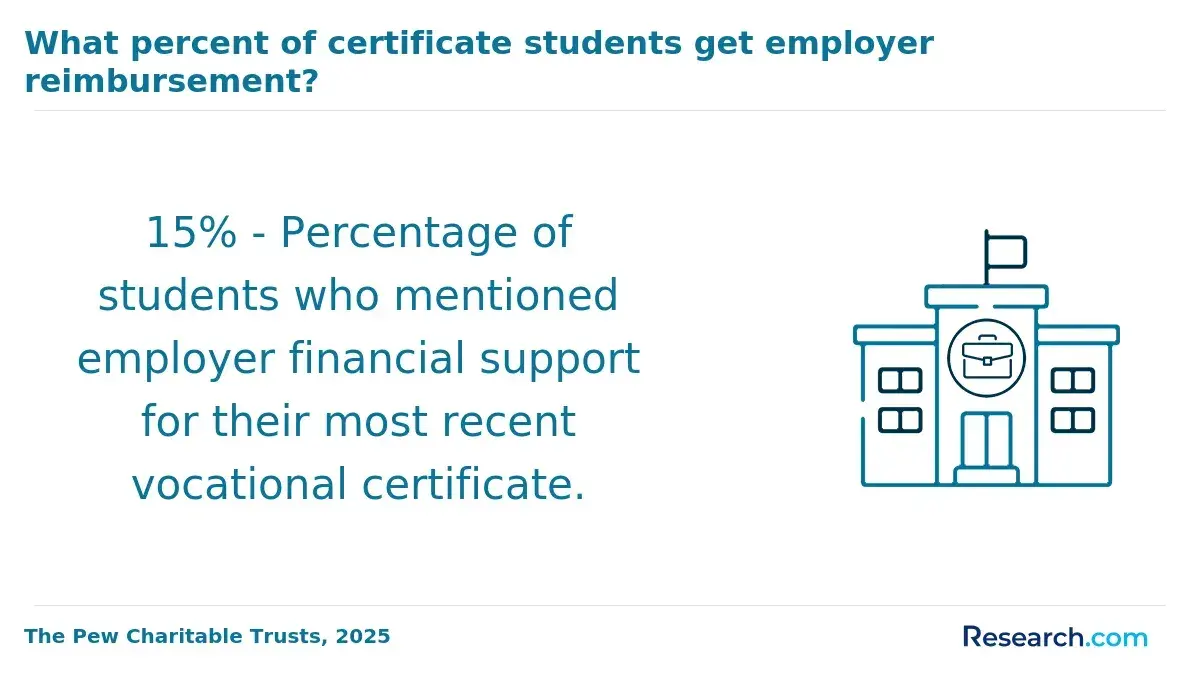
| Graduate certificate | Bachelor's degree or professional experience, depending on the school | Clear reason for the certificate, employer support if using tuition benefits, plan for whether credits apply to a master's degree |
Transfer credit is especially important for affordability. Ask whether the school accepts community college credits, military training, prior learning assessment, industry certifications, or completed business courses. A generous transfer policy can shorten time to graduation, but only if the accepted credits apply to degree requirements rather than becoming unused electives.
Applicants should also ask admissions advisors practical questions before committing. The most useful questions are not about marketing claims; they are about curriculum fit, cost, outcomes, and support.
- How many credits are required after my transfer evaluation, and which credits apply directly to the major?
- Are online students eligible for the same internships, career services, tutoring, library access, and faculty advising as campus students?
- Does the program include food safety, supply chain, analytics, or operations coursework that matches my target role?
- Have graduates been admitted to MBA, food business, hospitality, supply chain, or operations graduate programs?
- Are there required campus visits, proctored exams, labs, field experiences, or internship hours?
How long does an online food industry management degree take?
The length of an online food industry management degree depends on the credential, transfer credits, course load, and whether classes run in traditional semesters or accelerated terms. A first-time bachelor's student should generally plan for about four years of full-time study. Transfer students with an associate degree may finish faster if most credits apply to the major and general education requirements.
The table below gives realistic planning ranges. These are not guarantees; they are a starting point for asking schools for a personalized degree plan.
| Credential | Common full-time timeline | Part-time considerations | What can shorten the timeline |
| Associate degree | About two years | Often three or more years if taking one or two courses per term | Summer courses, prior credits, placement into college-level math and writing |
| Bachelor's degree | About four years for first-time students | May extend if balancing full-time work | Transfer credits, dual enrollment, prior learning credit, year-round enrollment |
| Bachelor's completion program | Often about 18 months to three years | Depends heavily on accepted transfer credits | Completed associate degree, clear course map, no repeated prerequisites |
| Graduate certificate | Often less than one year to about one year | Flexible if designed for working professionals | Stackable credits that apply to a master's degree |
| Master's degree | Often one to two years | May take longer for professionals taking one course at a time | Relevant prerequisites, employer-sponsored study time, accelerated terms |
Accelerated programs can be attractive, but speed is not always the best measure of value. A faster program may require heavier weekly workload, fewer internship opportunities, or less time to build relationships with faculty and employers. Students preparing for graduate study should make sure acceleration does not come at the cost of quantitative preparation, writing quality, or capstone experience.
A practical way to compare timelines is to request a term-by-term plan from each school after transfer evaluation. Do not rely only on the advertised "finish in" claim, because that estimate may assume full-time enrollment, maximum transfer credits, or no remedial prerequisites.
How much do online food industry management degrees cost?
The cost of an online food industry management degree depends on tuition, fees, books, technology requirements, transfer credits, residency rules, and whether you attend a public, private nonprofit, or private for-profit institution. Online students may save on housing and commuting, but they can still pay online course fees, proctoring fees, internship expenses, or equipment costs.
College Board's 2024 pricing data offers a useful benchmark for comparing published tuition and fees at four-year institutions. These figures are not specific to food industry management, but they help you judge whether a school's price is above or below broad U.S. averages.
- Public four-year, in-state average published tuition and fees: $11,610 for 2024-25.
- Public four-year, out-of-state average published tuition and fees: $30,780 for 2024-25.
- Private nonprofit four-year average published tuition and fees: $43,350 for 2024-25.
For ROI, focus on total program cost rather than per-credit tuition alone. A lower per-credit rate may not save money if the school accepts fewer transfer credits or requires more credits to graduate. Conversely, a higher tuition rate may be more reasonable if the program offers strong transfer acceptance, employer partnerships, relevant internships, and clear graduate-school preparation.
Use the following checklist before choosing the lowest advertised price. It can help you identify hidden costs and funding options.
- Ask for the total estimated cost to complete the degree after your transfer credits are evaluated.
- Confirm whether tuition differs for in-state, out-of-state, and online students.
- Check whether food safety labs, internship placements, software, textbooks, proctoring, or graduation fees add to the cost.
- Complete the FAFSA if eligible and compare grants, scholarships, federal loans, work-study, and employer tuition assistance.
- Ask whether industry certifications are included in tuition or paid separately.
- Compare monthly payment plans, but avoid stretching payments in a way that creates fees or delays registration.
Be cautious with programs that pressure you to enroll quickly, avoid giving a written cost estimate, or make salary claims that sound guaranteed. A legitimate program should be able to explain tuition, fees, credit transfer, financial aid, refund policies, and academic requirements clearly.
What salary and job outlook apply to food industry management careers?
Salary and job outlook depend on the role, location, employer size, experience, and whether the position is in food service, manufacturing, retail, logistics, or corporate operations. A degree can support advancement, but it does not guarantee a specific salary. Employers often weigh experience, leadership ability, food safety knowledge, analytics skills, and schedule flexibility alongside education.
BLS wage data published for 2024 places food service managers around the mid-$60,000 median annual wage range. That figure is useful because many food industry management graduates begin in or move through service, hospitality, or retail operations, but corporate supply chain and production management positions may follow different pay patterns and often require more experience.
The table below shows how to interpret common career outcomes without overgeneralizing salary expectations.
| Role category | Salary context | Outlook considerations | How to improve competitiveness |
| Food service and hospitality management | Often aligns with BLS food service manager data, with variation by restaurant group, institution, region, and bonus structure | Demand is tied to consumer spending, hospitality recovery, labor management, and multi-unit operations | Build scheduling, cost control, guest service, sanitation, and staff leadership experience |
| Food retail and grocery operations | Pay varies by store size, department, union environment, and management level | Grocery, e-commerce fulfillment, prepared foods, and inventory control remain important operational areas | Learn category management, shrink reduction, vendor relations, and retail analytics |
| Food manufacturing operations | Supervisory and production roles may pay more with technical process knowledge and shift leadership experience | Automation, quality documentation, and safety systems are increasing skill expectations | Study lean operations, quality assurance, HACCP, and production metrics |
| Supply chain and procurement | Compensation depends heavily on analytics ability, ERP experience, supplier responsibility, and company scale | Food companies need managers who can handle volatility, forecasting, traceability, and supplier risk | Strengthen Excel, data visualization, forecasting, negotiation, and logistics knowledge |
| Food entrepreneurship | Income is highly variable and may be low during startup stages | Success depends on capital, compliance, product-market fit, distribution, and operational discipline | Use the degree to build pricing, sourcing, food safety, marketing, and financial planning skills |
Job growth should be read carefully. A national projection does not tell you whether a specific city, employer, or role will be easy to enter. For students, the better question is whether the program helps you build evidence of readiness: internship outcomes, employer projects, supervisor references, certifications, and measurable operations results.
AI and automation are likely to change tasks rather than remove the need for food managers. Inventory forecasting, ordering suggestions, labor scheduling, customer analytics, and quality monitoring can be software-assisted, but managers still need to make judgment calls about safety, staffing, service, cost trade-offs, and supplier issues.
Which certifications help food industry management graduates advance?
Certifications can help food industry management graduates show job-specific competence, especially when a degree title is broad. They are not a substitute for experience, but they can strengthen applications for food safety, quality, restaurant management, supply chain, and operations roles.
The most useful certifications depend on your target job. The table below summarizes options that commonly align with food business and operations careers.
| Certification or training area | Best for | Why it can help |
| ServSafe Manager or comparable food protection manager certification | Restaurant, institutional dining, catering, and food service management | Shows understanding of safe food handling, sanitation, and manager-level responsibility |
| HACCP training | Quality assurance, production, food manufacturing, and safety roles | Supports knowledge of hazard analysis, critical controls, monitoring, and corrective action |
| Preventive Controls Qualified Individual training | Food manufacturing and regulatory compliance environments | Can be useful for roles involving food safety plans and preventive controls |
| Lean Six Sigma | Operations, production, process improvement, and distribution roles | Helps demonstrate process improvement and waste-reduction skills |
| Supply chain certifications | Procurement, logistics, inventory planning, and supplier management | Can strengthen business operations credentials when paired with analytics experience |
| Project management training | Implementation, expansion, facility, technology, or continuous improvement projects | Helps managers plan timelines, budgets, risks, and cross-functional work |
If your interests lean toward nutrition leadership, wellness programming, or food policy rather than operations, compare food management programs with an online nutrition degree. Nutrition programs may be a better academic fit for students who want advanced study in diet, public health nutrition, or nutrition science, while food industry management is stronger for business and operations roles.
Choose certifications strategically. A student targeting food service management may benefit from food protection manager certification early, while a student targeting manufacturing quality may prioritize HACCP or preventive controls training. Avoid collecting credentials without a career plan, because certification fees and renewal requirements can add up.
Other Things You Should Know About Food Industry Management
It can be worth it if you want management-track work in food service, retail, manufacturing, supply chain, or food entrepreneurship and the program is accredited, affordable, and career-aligned. It may be less worthwhile if you need a licensure-specific path such as dietetics or a lab-heavy food science degree.
Yes, if the degree comes from a properly accredited institution and includes the prerequisites expected by your target graduate program. For MBA, operations, or food business programs, courses in accounting, statistics, finance, analytics, and management can be especially helpful.
Many online food industry management programs in 2027 offer internships as an elective component to provide practical experience but do not require them. Students can benefit from engaging in real-world industry settings, which can enhance their skills and graduate school applications.
References
- Food Industry Careers & Jobs | General Mills Careers https://careers.generalmills.com/career-areas
- Certificate in Food Processing and Management Course https://iisdt.in/product/certificate-in-food-processing-and-management/
- Un an à l'étranger avec MBS https://www.mbs-education.com/international/mbs-en/mbs-a-truly-international-business-school/international-accreditations-and-labels/
- 20 High-Paying Careers in the Food Industry | CIA https://www.ciachef.edu/blog/top-careers-in-food/
- Food Industry Management https://www.niagara.edu/programs/food-industry-management/
- Qualifications and Accreditation https://foodbev.co.za/what-we-do/qualifications-and-accreditation/
- Sustainable Foods Career Outlook - NWF EcoLeaders https://www.nwfecoleaders.org/careercenter/sustainable-foods
- Certificate in Fundamentals of Food Production Management | DkIT https://www.dkit.ie/courses/certificate-in-fundamentals-of-food-production-management
- Online Restaurant & Culinary Management | Institute of Culinary Education https://www.ice.edu/online-programs/restaurant-culinary-management
- Master in Food & Beverage Management Online | Rome Business School https://romebusinessschool.com/master-online-in-food-and-beverage-management/