2027 Best Online Food Industry Management Degrees for Food Operations Careers

Co-Founder and Chief Data Scientist
Choosing an online food industry management degree is really a career decision: do you want to supervise food operations, improve supply chains, manage safety systems, or move into corporate foodservice leadership? Recent BLS wage data shows food service managers have a median annual wage of $63,060, which makes program cost, accreditation, and career fit worth comparing carefully. This guide explains degree options, online formats, admissions, costs, certifications, and job paths so you can choose a program that supports your target role instead of simply picking the fastest or cheapest option.
Key Things You Should Know
- For food service managers, the BLS reported a May 2024 median annual wage of $63,060, but pay varies widely by employer, region, experience, and whether the role is in restaurant operations, institutional foodservice, manufacturing, or distribution.
- The best online food industry management degree is usually a regionally accredited business, hospitality, food systems, agribusiness, or operations-focused program with food safety, supply chain, finance, and people-management coursework.
- Students comparing programs should check total cost, transfer credit rules, internship or practicum options, ServSafe or HACCP preparation, and whether the curriculum fits operations leadership rather than nutrition licensure or culinary training alone.
What is an online food industry management degree?
An online food industry management degree is a college program that prepares students to manage the business, safety, staffing, logistics, and quality-control side of food operations. Depending on the school, the degree may be labeled food industry management, foodservice management, hospitality management, agribusiness, restaurant management, supply chain management, or business administration with a food operations concentration.
The core idea is management, not cooking alone. Students learn how food moves from suppliers to production facilities, restaurants, institutions, distributors, and consumers. That makes the degree relevant for people who want to supervise teams, control costs, enforce safety standards, manage vendors, improve workflows, and use operational data to make decisions.
Because dedicated food industry management majors are less common online than broader business or hospitality degrees, many students compare related options. A student who wants the broadest management foundation may consider an online BA business administration and add food safety, supply chain, or hospitality electives when available.
This table summarizes common degree routes and when each one makes the most sense. Use it to match the program title to the kind of food operations career you want, rather than assuming every food-related degree leads to the same jobs.
| Degree path | Best fit | Typical focus | Watch for |
| Food industry management | Students targeting food operations, food distribution, retail food, or production management | Food systems, operations, food safety, supply chains, finance, supervision | May be less widely available online than general business programs |
| Foodservice or hospitality management | Students targeting restaurants, hotels, institutional dining, catering, or hospitality groups | Service operations, staffing, guest experience, purchasing, cost control | Some programs emphasize lodging or tourism more than food operations |
| Agribusiness or food systems management | Students interested in food production, procurement, distribution, or agricultural supply chains | Commodity markets, logistics, agricultural economics, food systems | May be less focused on restaurants or consumer-facing foodservice |
| Business administration with operations electives | Students who want flexibility across food, retail, logistics, or general operations | Accounting, management, marketing, analytics, operations | Food-specific preparation may depend on electives, certificates, or work experience |
A good online program fits students who are already working in restaurants, grocery, manufacturing, catering, distribution, or campus dining and need a credential to move into supervision. It may be less ideal for someone whose main goal is to become a registered dietitian, chef, food scientist, or licensed health professional, because those paths often require different coursework, labs, supervised practice, or accreditation.
Which accreditation should food industry management programs have?
The first accreditation checkpoint is institutional accreditation. In the U.S., students should confirm that the college or university is accredited by a recognized institutional accreditor because this affects federal financial aid eligibility, transfer credit acceptance, graduate school options, and employer confidence.
Programmatic accreditation is more specialized. Food industry management programs do not have one universal accreditation requirement the way nursing, dietetics, or health information programs often do. Still, related fields may carry specialized recognition, and that matters if your goal crosses into a regulated or credential-driven area.
This table shows how accreditation differs by academic path. The goal is to prevent a common mistake: choosing a food-related degree that sounds relevant but does not meet the standards for the career you actually want.
| Program type | Accreditation priority | Why it matters |
| Food industry, foodservice, hospitality, or business management | Recognized institutional accreditation is usually the key baseline | Supports aid eligibility, transferability, and employer credibility |
| Nutrition and dietetics | ACEND accreditation may be required for registered dietitian pathways | Management coursework alone generally does not qualify students for dietetics credentialing |
| Health information management in food-related healthcare settings | CAHIIM accreditation may be important for HIM credentials | Useful when the career goal is healthcare records, compliance, or data governance rather than food operations |
| Culinary programs | Institutional accreditation plus culinary-focused recognition may matter | Best for production and culinary leadership, not necessarily corporate operations |
If your interest is hospital foodservice, senior living dining, or food operations connected to healthcare compliance, compare management programs with adjacent healthcare education pathways. For example, students focused on healthcare data and compliance rather than kitchen or dining operations may be better served by an accredited online health information management degree CAHIIM pathway.
Before enrolling, verify accreditation directly on the school's website and through the accreditor's official directory. Also ask whether credits transfer, whether the program is eligible for federal aid, and whether any required internship, practicum, or lab component can be completed near your location.
What careers can you get with food industry management degrees?
Food industry management degrees can lead to supervisory and operations roles across restaurants, institutional dining, food retail, food manufacturing, distribution, hospitality, and corporate foodservice. The best path depends on whether you want to manage people, facilities, supply chains, compliance, sales, or financial performance.
The BLS reported a May 2024 median annual wage of $63,060 for food service managers. That number is useful as a benchmark, but it should not be treated as a guarantee because compensation can differ sharply between a small restaurant, a hotel group, a university dining contractor, a food manufacturer, and a regional distribution company.
This table connects common roles to their responsibilities and the type of preparation that tends to help. It can help you decide whether a food industry management degree aligns with your preferred work environment.
| Career path | Typical responsibilities | Helpful preparation |
| Food service manager | Supervise staff, manage schedules, control costs, enforce food safety, handle customer or client issues | Foodservice management, accounting, HR, food safety, purchasing |
| Restaurant or multi-unit manager | Oversee store performance, train managers, manage budgets, monitor service quality | Hospitality management, leadership, analytics, labor management |
| Institutional dining manager | Run food operations for schools, hospitals, senior living, correctional facilities, or corporate campuses | Menu planning, procurement, compliance, vendor management |
| Food production supervisor | Coordinate production lines, monitor quality, train staff, track safety procedures | Operations management, quality assurance, HACCP, lean process concepts |
| Purchasing or supply chain coordinator | Source products, manage vendor relationships, track inventory, support distribution planning | Supply chain, logistics, food systems, data analysis |
| Quality assurance or food safety coordinator | Support audits, documentation, sanitation programs, traceability, and corrective actions | Food safety, HACCP, regulatory basics, documentation skills |
Some students discover that their real goal is nutrition counseling, clinical dietetics, or community nutrition rather than operations management. In that case, compare food management degrees with online registered dietitian programs, because dietitian credentialing has specific academic and supervised-practice requirements that a management degree may not satisfy.
Technology is changing these roles. Employers increasingly use inventory platforms, point-of-sale analytics, labor scheduling systems, food traceability tools, and AI-supported demand forecasting. A strong program should help students interpret operational data, not just memorize service procedures.
Employer Confidence Share in Online vs. In-Person Degree Skills, Global 2024

How do online and campus food management programs compare?
Online and campus food management programs can cover similar academic material, but the experience differs in scheduling, networking, hands-on learning, and access to local employers. The right choice depends on your work schedule, location, learning style, and whether you need structured in-person support.
The table below compares the practical differences that most affect adult learners and working food industry employees. Use it to identify which format reduces friction while still giving you access to applied learning.
| Factor | Online program | Campus program | Best choice when |
| Schedule | Often asynchronous or evening-friendly | Typically fixed class meeting times | Online works better for shift workers and managers with variable schedules |
| Hands-on learning | May use local practicums, simulations, case studies, or workplace projects | May offer labs, campus dining operations, or local employer partnerships | Campus may be stronger if you need frequent in-person practice |
| Networking | Can connect students across regions and employers | Often stronger for local employer relationships | Choose based on where you plan to work after graduation |
| Cost control | May reduce commuting, housing, and schedule-disruption costs | May provide more bundled campus services | Compare total cost, not tuition alone |
| Career services | Quality varies; online students should confirm access | Often more visible on campus | Either can work if advising, internships, and employer connections are strong |
Online education is especially practical for students already employed in food operations because current workplaces can sometimes become applied-learning sites. For example, a student may analyze inventory waste, redesign a purchasing workflow, or build a labor-cost dashboard using real operational challenges, as long as the school approves the project format.
The main risk with online programs is assuming flexibility means less planning. Students should confirm exam requirements, group project expectations, internship rules, time zones for live sessions, and whether the program supports students outside the school's home state.
What courses are in food industry management programs?
Food industry management programs combine business fundamentals with food operations knowledge. The strongest curricula help students understand both the numbers and the systems behind safe, profitable, and consistent food operations.
The table below groups common courses by the capability they build. This is useful because course titles vary widely across schools, but the underlying skill areas are more consistent.
| Course area | What students learn | Why it matters in food operations |
| Food safety and sanitation | Safe handling, sanitation systems, regulatory basics, contamination prevention | Managers are responsible for reducing risk and enforcing consistent procedures |
| Operations management | Workflow design, capacity, scheduling, process improvement, performance metrics | Food operations depend on speed, quality, safety, and cost control happening together |
| Purchasing and inventory control | Vendor selection, ordering systems, receiving, storage, inventory turnover | Small purchasing mistakes can affect waste, margins, and product availability |
| Accounting and finance | Budgets, profit margins, labor cost, food cost, financial reports | Supervisors often need to explain performance using numbers |
| Human resources and leadership | Hiring, training, labor law basics, conflict management, team motivation | Food operations are labor-intensive and require consistent supervision |
| Marketing and customer experience | Consumer behavior, promotions, service quality, brand positioning | Useful for restaurant, catering, retail food, and hospitality roles |
| Supply chain and logistics | Distribution, transportation, supplier risk, traceability, forecasting | Food businesses must manage freshness, timing, compliance, and cost |
| Data analytics for managers | Dashboards, forecasting, POS data, inventory reports, KPI interpretation | Technology-supported decision-making is increasingly expected in operations roles |
Look for applied assignments, not just textbook coverage. Case studies, simulations, capstone projects, and workplace-based projects can help you translate coursework into decisions about staffing, menu profitability, spoilage, vendor performance, and service bottlenecks.
A common mistake is choosing a program with many culinary or nutrition courses but too little accounting, supervision, and operations content. That may be fine for some goals, but it can leave management-focused students underprepared for budgeting, labor planning, and performance reporting.
What are typical admission requirements for these programs?
Admission requirements depend on degree level and school selectivity. Online associate and bachelor's programs are often designed for working adults, while master's programs may expect previous college coursework, professional experience, or a business-related background.
This table summarizes typical requirements by level. Always confirm details with the school because minimum GPA, transfer limits, and prerequisite policies vary.
| Program level | Common requirements | Good fit for |
| Certificate | High school diploma or equivalent; sometimes current industry employment | Workers who need targeted food safety, supervision, or hospitality management training |
| Associate degree | High school diploma or equivalent; placement testing or prior college transcripts may be requested | Entry-level workers seeking a faster academic credential or transfer pathway |
| Bachelor's degree | High school diploma or equivalent, transcripts, application form; transfer students submit college records | Students seeking supervisory, corporate, or long-term advancement opportunities |
| Bachelor's completion program | Prior college credits or associate degree; minimum GPA may apply | Adults who want to finish a degree using previous credits |
| Master's degree | Bachelor's degree, transcripts, resume, statement of purpose; some programs prefer work experience | Professionals targeting senior operations, consulting, corporate foodservice, or leadership roles |
Applicants should also ask how food industry experience is evaluated. Some schools offer prior learning assessment, credit for military or corporate training, or transfer credit for completed coursework in business, hospitality, culinary arts, agriculture, or supply chain.
Before applying, prepare the documents and questions that affect both admission and affordability. The most useful steps are:
- Request an unofficial transfer credit review before committing to a program.
- Ask whether industry certifications, military training, or employer training can count toward elective credit.
- Confirm whether online students pay different tuition than campus students.
- Check whether any internship, practicum, or capstone must be completed in person.
- Ask admissions and career services which employers commonly recruit or partner with the program.
How long does an online food industry management degree take?
The time required depends on degree level, transfer credits, course load, and term structure. Online programs can be flexible, but flexibility does not always mean faster; a working student taking one or two courses per term may take longer than a full-time student.
This table gives typical completion ranges. Use it as a planning tool, then ask each school for a personalized degree plan based on your transfer credits and weekly availability.
| Credential | Typical full-time timeline | Typical part-time timeline | Notes |
| Undergraduate certificate | Several months to 1 year | 1 year or more | Best for targeted skill building, not broad management preparation |
| Associate degree | About 2 years | 3 years or more | Can be a lower-cost pathway into a bachelor's program |
| Bachelor's degree | About 4 years | 5 to 6 years or more | Transfer credits can shorten the timeline significantly |
| Bachelor's completion program | About 1 to 2 years after transfer | 2 to 3 years or more | Depends heavily on how many credits are accepted |
| Master's degree | About 1 to 2 years | 2 to 3 years | Often useful for experienced professionals seeking advancement |
Accelerated programs can be attractive, especially for adults who already have college credits. The trade-off is workload: shorter terms may require weekly assignments, group projects, quizzes, and discussion participation while you are also working shifts or managing operations.
A practical rule is to estimate study time before choosing full-time enrollment. If you work unpredictable foodservice hours, a part-time plan with year-round courses may be more sustainable than overloading one semester and stopping out later.
How much do online food industry management degrees cost?
Costs vary by institution, residency status, degree level, transfer credits, and whether online students pay campus fees. Published tuition can also differ from net price after grants, scholarships, employer tuition assistance, and transfer credit savings.
College Board's 2024 Trends in College Pricing reported average published tuition and fees of $11,610 for in-state students at public four-year institutions and $43,350 at private nonprofit four-year institutions for the 2024-25 academic year. These figures are not online food management prices specifically, but they give a useful benchmark for comparing whether a program's tuition is unusually high or competitive.
- Public in-state bachelor's programs may offer the lowest tuition, especially if online students qualify for resident rates.
- Public out-of-state programs can become expensive unless the school offers a special online tuition rate.
- Private nonprofit programs may cost more at sticker price, but scholarships and transfer credit policies can change the net cost.
- Community college associate pathways can lower total bachelor's cost when credits transfer cleanly.
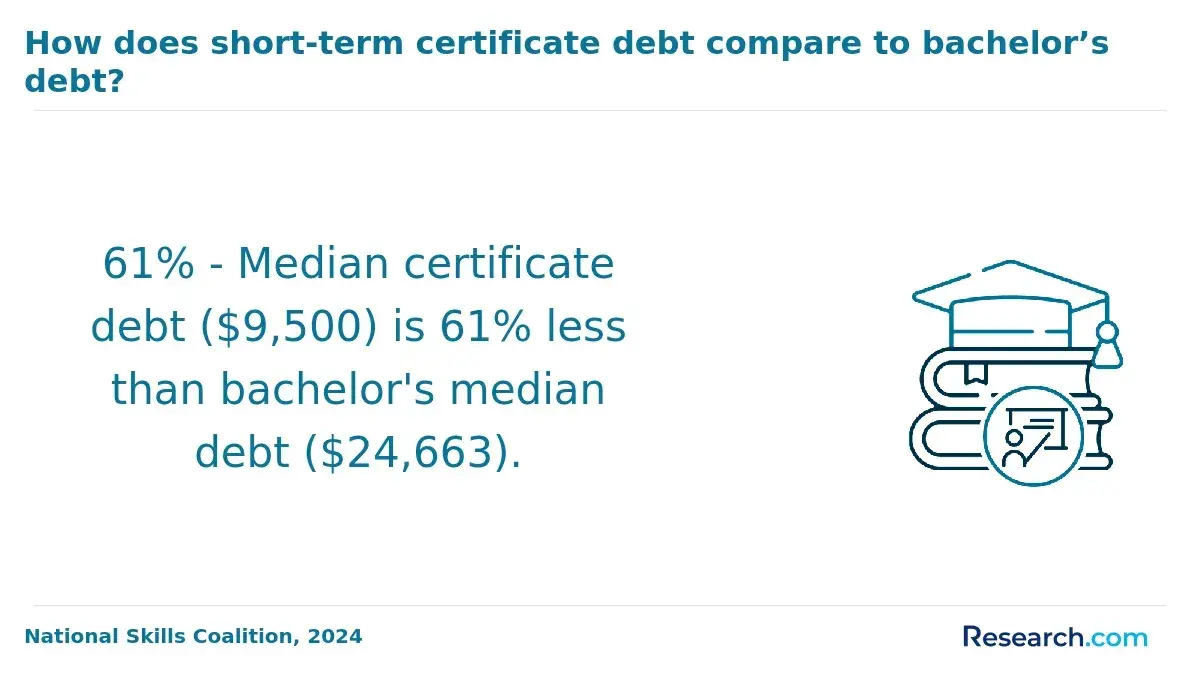
- Certificates are usually cheaper than degrees, but they may not carry the same advancement value for management roles.
Beyond tuition, students should compare fees, books, software, exam proctoring, travel for any required residency, lost work hours, and certification exam costs. For online students, the largest hidden cost is often time: a program that does not accept transfer credits may require additional terms and more tuition.
To evaluate ROI, compare total estimated cost against your target role, not against the highest salary you find online. A degree may make more sense if it helps you move from hourly or shift-supervisor roles into salaried management, corporate operations, procurement, compliance, or multi-unit leadership. It may make less sense if a short certificate plus employer training would qualify you for the same immediate promotion.
What certifications help food operations careers?
Certifications can strengthen a food operations resume because they show specific knowledge in food safety, sanitation, quality systems, or project execution. They do not replace a degree, but they can make your preparation more job-specific.
The table below highlights widely recognized certification areas for food operations careers. Requirements, renewal rules, and employer preferences vary, so confirm which credentials are valued in your local market or target industry.
| Certification or training area | Best for | Career value |
| ServSafe Food Protection Manager | Restaurant, institutional dining, catering, and retail food managers | Shows knowledge of food safety practices commonly expected in foodservice supervision |
| HACCP training | Food manufacturing, quality assurance, distribution, and institutional operations | Supports roles involving hazard analysis, controls, documentation, and audit readiness |
| Certified Dietary Manager pathway | Healthcare, senior living, and institutional foodservice | Can be relevant where nutrition services and regulated dining operations overlap |
| Project management training | Operations improvement, openings, vendor transitions, systems rollouts, and process redesign | Helps managers coordinate timelines, budgets, teams, and measurable deliverables |
| Lean or Six Sigma training | Food production, distribution, quality improvement, and cost reduction | Supports process improvement and waste-reduction projects |
Food operations increasingly involves cross-functional projects: launching a new inventory system, redesigning a receiving process, reducing waste, or coordinating a new vendor rollout. Students who want a broader operations leadership toolkit may compare food management coursework with a project manager degree, especially if their long-term goal is process improvement or multi-site operations.
Do not collect certifications randomly. Choose credentials that match a target role: ServSafe for foodservice supervision, HACCP for manufacturing and safety systems, dietary management for healthcare dining, and project management for operational change initiatives.
How do you choose the best food industry management program?
The best online food industry management program is the one that fits your career goal, schedule, budget, and experience level while meeting basic quality standards. A highly ranked program is not automatically the best choice if it lacks the food operations coursework, transfer flexibility, or employer connections you need.
Use the following steps to compare programs in a disciplined way. This sequence helps you avoid choosing based on marketing language alone.
- Define your target role first, such as food service manager, production supervisor, procurement coordinator, quality assurance assistant, or multi-unit restaurant manager.
- Confirm institutional accreditation and, when relevant, specialized accreditation for adjacent fields such as dietetics or health information management.
- Map the curriculum to your target role by checking for food safety, accounting, operations, supply chain, leadership, and data analytics coursework.
- Request a transfer credit evaluation before you apply or deposit, especially if you have prior college, military, culinary, or business coursework.
- Compare total cost after fees, transfer credits, aid, employer reimbursement, and any required travel or certification expenses.
- Ask how online students access career services, internships, employer networks, faculty advising, and capstone support.
- Review student support details, including tutoring, technology help, library access, disability services, and academic advising availability outside standard business hours.
The most important red flags are vague accreditation claims, pressure to enroll quickly, unclear total cost, weak transfer policies, no food safety or operations coursework, limited career services for online students, and promises of guaranteed jobs or salaries. Treat those as signs to slow down and ask more questions.
Also consider whether a degree is more than you need right now. If you already have a bachelor's degree and only need food safety knowledge, a certificate may be sufficient. If you have years of foodservice experience but no degree, a bachelor's completion program may unlock more advancement options. If you are new to the industry, an associate degree or entry-level certificate can reduce risk before committing to a longer program.
Other Things You Should Know About Food Industry Management
It can be worth it if your goal is supervisory or operations advancement in foodservice, hospitality, food retail, production, or distribution. The value depends on total cost, transfer credits, employer recognition, and whether the curriculum matches your target role.
Yes, an online degree can support food service management careers, especially when combined with industry experience and food safety credentials. Employers often consider practical experience, leadership ability, scheduling skills, cost control, and safety knowledge alongside education.
No. Food industry management focuses on operations, staffing, safety, purchasing, finance, and business performance. Nutrition and dietetics programs prepare students for nutrition science and, in some cases, registered dietitian pathways with specific accreditation and supervised-practice requirements.
References
- Admission Requirements | Undergraduate Admissions + Programs https://www.ualberta.ca/en/admissions/how-to-apply/admission-requirements/index.html
- Food Industry Management https://www.niagara.edu/programs/food-industry-management/
- Most Important Food Safety Certifications & Qualifications - FSNS https://fsns.com/food-qualifications-and-certifications/
- Food Business Management https://www.ciachef.edu/cia-new-york-food-business-management-bachelors-degree-program/
- Training & Certification Programs https://m.careersinfood.com/career-planning/education-and-training/training-and-certification-programs/
- Foodcareers professional certifications https://www.foodcareers.eu/professional-certifications
- Study Food Industry Management in the USA https://www.studyusa.com/en/field-of-study/395/food-industry-management
- The Most Demanded Certificates in the Food Industry https://keyqualityglobal.com/en/blog/the-most-demanded-certificates-in-the-food-industry
- How Long Does It Take to Get a Business Management Degree? | University of Phoenix https://www.phoenix.edu/blog/how-long-does-it-take-to-get-a-business-management-degree.html
- How to choose a culinary and restaurant management course? https://insights.ehl.edu/choosing-culinary-and-restaurant-management-course