2027 How to Choose an Online Food Industry Management Degree for Supply Chain Careers

Co-Founder and Chief Data Scientist
Choosing an online food industry management degree is really a career strategy question: will the program prepare you for logistics, procurement, food safety, and operations roles in a complex supply chain? The timing matters because the U. S. Bureau of Labor Statistics projects logisticians to grow 19% from 2023 to 2033, much faster than average. This guide is for students, working adults, and career changers who want a practical way to compare programs, costs, timelines, accreditation, and job outcomes before enrolling.
Key Things You Should Know
- An online food industry management degree is strongest for supply chain careers when it combines business, logistics, food safety, procurement, data analysis, and operations coursework rather than focusing only on culinary or hospitality topics.
- Accreditation matters at two levels: institutional accreditation for financial aid and transferability, and programmatic business accreditation such as AACSB, ACBSP, or IACBE when available.
- BLS data shows logisticians had a 2024 median annual wage of $80,880, but food supply chain pay varies by role, employer, region, experience, certifications, and whether the job involves people management.
What is an online food industry management degree for supply chain careers?
An online food industry management degree for supply chain careers is a business-oriented program that teaches students how food moves from producers and processors to warehouses, distributors, retailers, restaurants, and consumers. The best fit is usually not a purely culinary degree. It is a management, agribusiness, food systems, hospitality business, or supply chain-focused degree with enough food-specific coursework to address safety, perishability, traceability, demand planning, and regulatory risk.
For students comparing degree paths, the key question is whether the curriculum connects food operations to measurable business outcomes: lower waste, safer handling, better inventory control, reliable suppliers, and faster response to disruptions. A general business management degree online may also work if it offers electives or certificates in supply chain, operations, analytics, or food systems.
The table below shows how common degree options compare. Use it to identify which academic route best matches your current background and target role.
| Program type | Best fit | Supply chain value | Potential limitation |
| Food industry management bachelor's degree | Students who want food-sector business roles | Connects food safety, operations, purchasing, and distribution | May have fewer advanced analytics courses unless electives are available |
| Supply chain management bachelor's degree | Students targeting logistics, procurement, or inventory roles | Strong foundation in transportation, sourcing, forecasting, and operations | May not cover food safety or perishability in depth |
| Agribusiness or food systems degree | Students interested in farm-to-market supply chains | Useful for commodity sourcing, processing, sustainability, and food policy | May be less focused on corporate logistics software or warehouse systems |
| Hospitality or restaurant management degree | Students targeting food service operations | Helpful for purchasing, menu cost control, vendor management, and multi-unit operations | May be too service-focused for distribution or manufacturing roles |
| Graduate certificate or master's degree | Working professionals seeking advancement | Can add analytics, leadership, safety, or supply chain specialization | Usually not necessary for many entry-level roles |
This degree is a good fit if you want to manage inventory, suppliers, production schedules, warehouses, food safety documentation, cold chain processes, or distribution networks. It may be a weaker fit if your primary goal is to become a chef, dietitian, food scientist, or regulatory attorney, because those paths usually require different training or credentials.
Which accreditation matters for online food industry management programs?
Accreditation is one of the first things to verify because it affects financial aid eligibility, credit transfer, employer recognition, and graduate school options. For U.S. students, the baseline requirement is institutional accreditation from an agency recognized by the U.S. Department of Education or the Council for Higher Education Accreditation.
Programmatic accreditation is not always required for food industry management or supply chain roles, but it can add credibility. Business schools may hold AACSB, ACBSP, or IACBE accreditation. Food science or engineering-heavy programs may have different forms of program review, but many food industry management degrees sit inside business, agriculture, hospitality, or applied science colleges rather than a single standardized accrediting category.
Before applying, verify accreditation directly instead of relying only on marketing language. A practical review process includes the following steps:
- Confirm the college or university has current institutional accreditation through the school's accreditation page and the U.S. Department of Education database.
- Check whether the business, agriculture, hospitality, or technology department lists programmatic accreditation and whether it applies to the specific online program.
- Ask admissions whether online students earn the same diploma as campus students and whether the transcript identifies the program as online.
- Review transfer credit policies, especially if you have associate degree credits, military training, prior business courses, or food safety certifications.
- Ask employers or industry contacts whether the school is known in your region's food manufacturing, grocery, restaurant, distribution, or agribusiness market.
A common mistake is choosing a low-cost program without checking whether its credits will transfer or whether it qualifies for federal financial aid. Another red flag is a school that avoids direct answers about accreditation status, graduation outcomes, or total program cost.
How do online and campus food industry management degrees compare?
Online and campus food industry management degrees can lead to similar academic outcomes when the school is accredited and the curriculum is comparable. The difference is usually in delivery, networking, scheduling, lab access, internships, and how much structure you need to stay on track.
Online study is often better for working adults already employed in food service, manufacturing, grocery, agriculture, or logistics. Campus study can be better for students who want a traditional college experience, direct access to labs, in-person recruiting events, or stronger peer networking.
If your goal is operations leadership, a bachelor degree in project management can also be worth comparing because many supply chain jobs depend heavily on scheduling, risk control, vendor coordination, and process improvement.
The comparison below summarizes the practical trade-offs. Focus on the format that helps you finish the degree while building relevant experience.
| Factor | Online degree | Campus degree | Decision tip |
| Schedule | More flexible for working adults and caregivers | More fixed class times and campus commitments | Choose online if stopping work would increase debt or delay experience |
| Hands-on learning | May use local internships, simulations, projects, or employer-based assignments | May offer easier access to labs, campus facilities, and in-person demonstrations | Ask how online students complete applied projects and internships |
| Networking | Requires intentional outreach through virtual events, LinkedIn, faculty, and local employers | Often has more spontaneous networking and campus recruiting | Choose the school with stronger employer connections in your target food sector |
| Cost control | Can reduce commuting and relocation costs | May include campus fees, housing, and transportation | Compare total cost, not just tuition per credit |
| Learning style | Requires self-direction and consistent time management | Provides more face-to-face structure | Be honest about how much accountability you need |
Do not assume online automatically means easier or lower quality. Strong online programs often require weekly deliverables, group projects, data analysis, case studies, and proctored assessments. The better question is whether the program gives online students the same academic support, career services, library access, internship help, and faculty interaction as campus students.
What courses are included in food industry management programs?
Food industry management programs typically combine business fundamentals with food-sector applications. For supply chain careers, the most valuable courses are the ones that teach you to make operational decisions under real constraints: short shelf life, temperature control, supplier variability, food safety documentation, demand swings, and transportation delays.
When reviewing curricula, look for a balance across these course areas. A program does not need every course title below, but it should cover most of these competencies through required courses, electives, concentrations, or capstone projects.
- Supply chain management, logistics, transportation, warehousing, and distribution
- Operations management, process improvement, lean systems, and quality control
- Food safety systems, sanitation, hazard analysis, traceability, and regulatory compliance
- Purchasing, supplier management, contract basics, category management, and negotiation
- Accounting, finance, cost control, pricing, and food service or manufacturing margins
- Business analytics, forecasting, spreadsheet modeling, enterprise systems, and data visualization
- Marketing, consumer behavior, retail food channels, and food product management
- Leadership, human resources, organizational behavior, and team supervision
- Sustainability, waste reduction, packaging, cold chain management, and ethical sourcing
- Internship, capstone, applied consulting project, or employer-based operations project
Current employer expectations are shifting toward data fluency. You do not need to become a software engineer, but you should be comfortable using spreadsheets, dashboards, inventory systems, forecasting tools, and basic analytics to explain decisions. AI-enabled planning tools are also becoming more common in logistics and procurement, which makes analytical judgment more valuable rather than less.
A strong program should help you build a portfolio of practical work. Examples include a supplier risk assessment, inventory reduction plan, food safety audit checklist, warehouse layout analysis, demand forecast, transportation cost comparison, or cold chain failure response plan.
What admission requirements do these degree programs typically ask for?
Admission requirements depend on the degree level and school type. Bachelor's programs generally ask for a high school diploma or equivalent, transcripts, an application, and sometimes standardized test scores, although many colleges now use test-optional admissions. Transfer-friendly online programs may place more emphasis on prior college credits, work experience, and prerequisite completion.
Graduate programs usually require a bachelor's degree, transcripts, a resume, statement of purpose, and sometimes professional experience. Some master's programs may ask for prerequisite coursework in statistics, accounting, economics, or business foundations if your undergraduate degree was in another field.
The table below summarizes common requirements by program level. Use it to identify where you may need extra preparation before applying.
| Program level | Typical admission requirements | What applicants should check |
| Associate degree | High school diploma or equivalent, placement assessment, basic application | Whether credits transfer into a bachelor's program in business, supply chain, or food industry management |
| Bachelor's degree | High school or transfer transcripts, application, minimum GPA, possible test-optional review | Whether the program accepts transfer credits, military credits, prior learning, or industry credentials |
| Bachelor's completion program | Prior college credits, minimum GPA, official transcripts, sometimes work experience | How many upper-division credits must be completed at the institution |
| Graduate certificate | Bachelor's degree, resume, transcripts, sometimes professional experience | Whether certificate credits can later apply to a master's degree |
| Master's degree | Bachelor's degree, resume, statement, transcripts, possible prerequisites or GMAT/GRE waiver policy | Whether the program is designed for career changers or experienced supply chain professionals |
To strengthen your application, connect your experience to the food supply chain even if your job title is not "supply chain." Work in grocery, restaurants, quality control, warehouse operations, food production, agriculture, delivery, purchasing, or customer service can all demonstrate relevant exposure to operations and service reliability.
How long does an online food industry management degree take?
The length of an online food industry management degree depends on the credential, transfer credits, course load, and academic calendar. A traditional bachelor's degree usually takes about four years of full-time study, while bachelor's completion programs can be shorter for students with an associate degree or significant transfer credit.
The biggest timeline decision is whether to study full time or part time. Full-time study can help you finish faster, but part-time study may be more realistic if you are balancing work, family, or a rotating food service or warehouse schedule.
The table below gives a practical timeline comparison. Individual programs vary, so use these ranges as planning categories rather than promises.
| Credential | Common timeline | Best for | Trade-off |
| Certificate | Several months to one year | Workers adding a focused skill in logistics, food safety, procurement, or analytics | Usually not a substitute for a degree when employers require one |
| Associate degree | About two years full time | Entry-level students seeking lower-cost transfer or technician-level roles | May limit advancement into management without further education |
| Bachelor's degree | About four years full time | Students seeking analyst, coordinator, supervisor, or management-track roles | Requires a larger time and financial commitment |
| Bachelor's completion program | Often one to three years depending on transfer credits | Students with prior college credit who want to finish efficiently | Transfer evaluations can change the real timeline |
| Master's degree | Often one to three years depending on pace | Professionals seeking leadership, analytics, consulting, or advanced operations roles | May offer limited value if you lack foundational work experience |
Before enrolling, ask for a degree plan showing exactly which courses you need and when they are offered. Some online programs look flexible but offer key courses only once per year, which can delay graduation if you miss a sequence.
How much does an online food industry management degree cost?
The cost of an online food industry management degree depends on tuition per credit, required credits, fees, textbooks, technology requirements, transfer credits, and whether you qualify for in-state tuition or employer assistance. College Board's 2024-25 data shows average published tuition and fees of $11,610 for in-state students at public four-year institutions and $43,350 at private nonprofit four-year institutions, which makes school type and residency important cost variables.
For online students, the advertised tuition rate is only one part of the real price. Ask each school for a full cost estimate that includes all required fees and the number of credits you must complete after transfer evaluation.
- Public four-year in-state average published tuition and fees: $11,610 for 2024-25
- Public four-year out-of-state average published tuition and fees: $30,780 for 2024-25
- Private nonprofit four-year average published tuition and fees: $43,350 for 2024-25
These averages are not program-specific prices, but they help you benchmark whether a school's online rate is unusually high or competitive. Some public universities charge the same online rate regardless of residency, while others maintain separate in-state and out-of-state pricing.
Use the following cost-control steps before committing to a program:
- Request a transfer credit evaluation before enrollment, not after your first term.
- Compare total program cost based on remaining credits, required fees, and course materials.
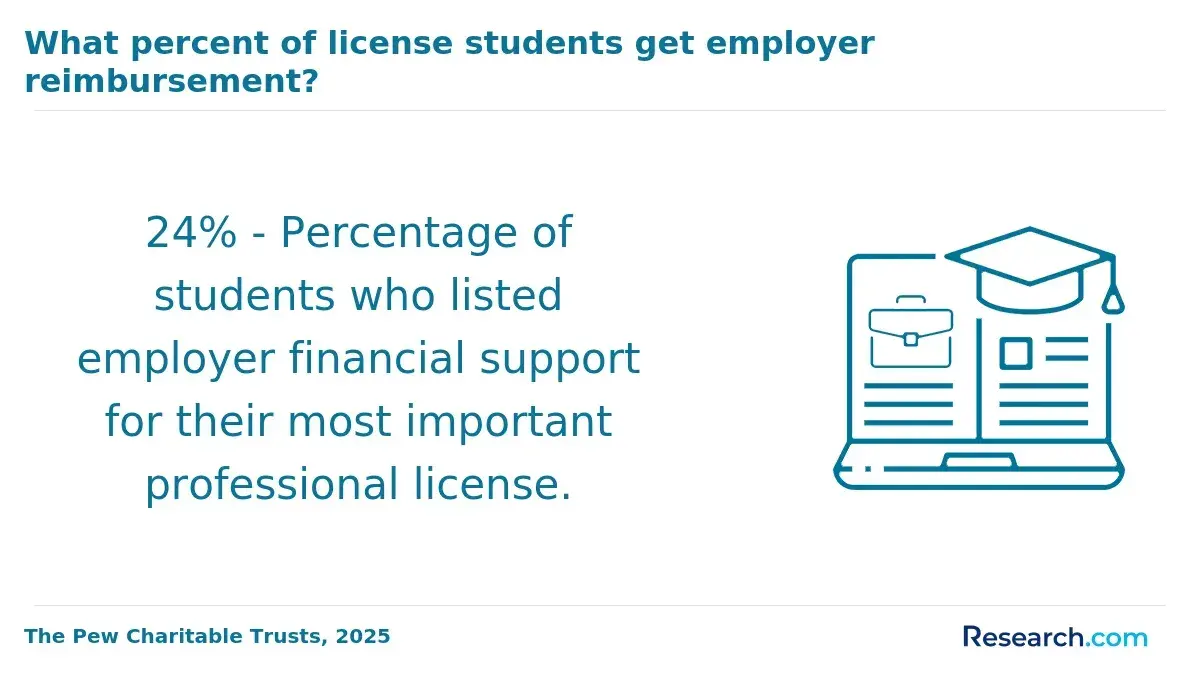
- Ask whether employer tuition assistance can be used for online courses and whether grades affect reimbursement.
- Check whether industry certifications, military training, or prior learning assessments can reduce required credits.
- Estimate lost income if you plan to reduce work hours, because opportunity cost can be larger than fees.
- Compare federal financial aid, scholarships, payment plans, and private loan terms before borrowing.
Do not choose a degree only because it is the cheapest. A low-cost program with weak supply chain coursework, limited career support, or poor transfer policies may not serve your goal. At the same time, a higher-priced program should be able to justify its cost through curriculum strength, employer relationships, completion support, internship access, or a clear specialization.
If you are comparing applied management programs in other sectors, looking at a construction management degree online can also show how online programs structure accelerated schedules, project-based coursework, and industry-focused outcomes.
What supply chain jobs can food industry management graduates pursue?
Food industry management graduates can pursue supply chain roles across food manufacturing, grocery, restaurant groups, third-party logistics, agriculture, wholesale distribution, convenience retail, meal kit companies, institutional food service, and cold chain operations. Entry-level titles often focus on coordination and analysis, while advancement usually requires experience leading people, improving systems, controlling costs, and managing vendor relationships.
The table below connects common roles to responsibilities and degree relevance. Use it to decide whether a program's coursework matches the jobs you want after graduation.
| Role | Typical responsibilities | Why food industry knowledge helps |
| Supply chain coordinator | Track shipments, update inventory records, communicate with vendors, resolve delivery issues | Food products may require temperature control, shelf-life awareness, and fast issue escalation |
| Logistics analyst | Analyze transportation costs, route performance, service levels, and carrier reliability | Perishable goods make delays more costly and require stronger planning |
| Procurement or purchasing specialist | Source ingredients, packaging, services, or equipment and support supplier negotiations | Food sourcing involves seasonality, quality specifications, food safety documentation, and price volatility |
| Inventory analyst | Monitor stock levels, forecast demand, reduce waste, and prevent shortages | Food inventory decisions must balance availability, spoilage, freshness, and promotions |
| Warehouse or distribution supervisor | Manage teams, receiving, picking, shipping, safety, and productivity | Cold storage, sanitation, allergen controls, and product rotation can be central to performance |
| Quality assurance or compliance coordinator | Support audits, documentation, corrective actions, and food safety procedures | Supply chain records are often tied to traceability, recalls, and regulatory expectations |
| Operations manager | Oversee production, labor planning, service levels, cost control, and continuous improvement | Food operations require coordination across safety, speed, quality, labor, and customer demand |
Career changers should not wait until graduation to build experience. The smartest path is usually to combine the degree with a job, internship, project, or certification that proves you can work with real supply chain problems.
A practical career-building sequence might include the following steps:
- Start with an entry-level role in purchasing, warehouse operations, food service management, quality assurance, inventory control, or logistics support.
- Use class projects to analyze real problems from your workplace, such as spoilage, late deliveries, order accuracy, or supplier performance.
- Build spreadsheet, dashboard, forecasting, and enterprise system skills that can be shown in interviews.
- Earn a food safety or supply chain certification that matches your target role.
- Apply for coordinator or analyst roles before graduation if your schedule and experience support it.
Some graduates later move into broader regulated supply chain leadership in healthcare, pharmaceuticals, or institutional services. If that direction interests you, an MBA in healthcare management may be a useful comparison point because healthcare supply chains also involve compliance, vendor risk, cold storage, and service continuity.
What salary can you expect in food supply chain careers?
Salary in food supply chain careers depends on the specific role, location, employer size, shift requirements, technical skills, and management responsibility. The most reliable way to use salary data is to treat it as a benchmark for comparison, not a guaranteed outcome.
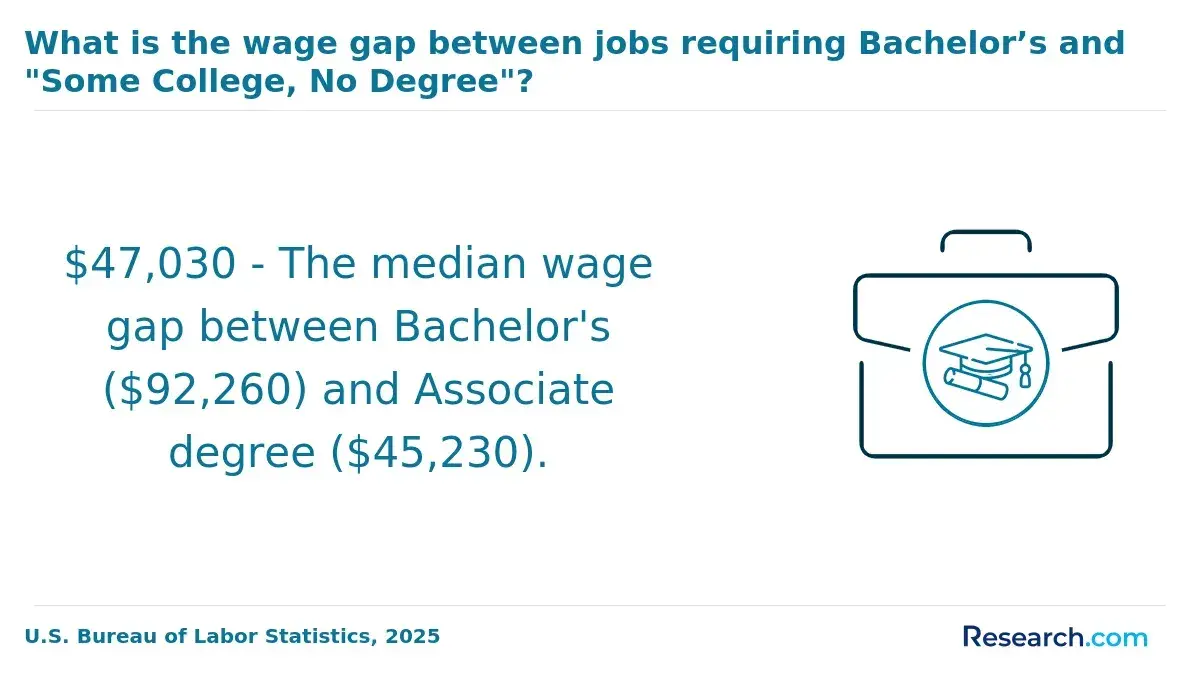
The U.S. Bureau of Labor Statistics reported a 2024 median annual wage of $80,880 for logisticians. That figure is useful because many food supply chain analyst, coordinator, planning, and logistics roles overlap with the logistician occupational category, but actual pay can be lower for entry-level roles and higher for experienced managers or specialized analysts.
The table below shows how related career paths commonly differ in responsibility and salary potential. It is designed to help you evaluate where a degree may fit into a longer career ladder.
| Career stage | Common job titles | Typical focus | Salary context |
| Entry level | Logistics assistant, inventory coordinator, procurement assistant, warehouse lead | Daily execution, documentation, order flow, and issue resolution | Often below median logistician pay until experience and systems skills develop |
| Early career professional | Supply chain coordinator, logistics analyst, buyer, inventory analyst | Planning, analysis, vendor communication, and process improvement | May align more closely with logistician benchmarks depending on duties |
| Mid-career specialist | Demand planner, sourcing specialist, distribution analyst, quality systems coordinator | Forecasting, supplier performance, analytics, compliance, and risk reduction | Pay often improves when the role requires data tools, category knowledge, or regulatory judgment |
| Manager | Distribution manager, procurement manager, operations manager, warehouse manager | People leadership, budgets, service levels, safety, and strategic planning | Management roles can exceed analyst benchmarks, but expectations and accountability also rise |
To evaluate return on investment, compare the program's total out-of-pocket cost with realistic job targets in your region. A degree is more likely to pay off when you choose a program with transferable credits, relevant coursework, employer-aligned skills, and opportunities to work in the field while studying.
Be cautious with schools that advertise salary outcomes without explaining the sample size, graduation year, job titles, region, or whether results include only employed respondents. Transparent career data should help you understand risk, not pressure you into enrolling.
Which certifications help food industry management graduates?
Certifications can strengthen a food industry management degree by proving specific skills employers recognize. They are especially useful when you are changing careers, trying to move from operations into management, or targeting roles that involve food safety, procurement, logistics, or process improvement.
The best certification depends on your target role. Choose credentials that match the work you want to do rather than collecting certificates with no clear purpose.
| Certification or credential area | Best for | How it supports supply chain careers |
| ServSafe Manager or equivalent food safety credential | Food service, retail food, and operations supervisors | Shows practical knowledge of safe handling, sanitation, and manager-level food safety responsibility |
| HACCP training | Food manufacturing, quality assurance, processing, and compliance roles | Supports hazard analysis, preventive controls, and documentation skills |
| APICS Certified in Planning and Inventory Management | Inventory, production planning, demand planning, and operations roles | Builds credibility in planning systems, materials management, and inventory control |
| APICS Certified Supply Chain Professional | Broader supply chain professionals and managers | Covers end-to-end supply chain strategy, supplier relationships, logistics, and operations |
| Lean Six Sigma | Operations, quality, warehouse, and process improvement roles | Helps document waste reduction, defect reduction, and measurable process improvements |
| Project Management Professional or CAPM | Coordinators and managers leading cross-functional initiatives | Useful for system rollouts, facility changes, supplier transitions, and continuous improvement projects |
A common mistake is earning a certification before confirming whether employers in your target job market value it. Review job postings, talk with hiring managers, and ask program faculty which credentials align with local food manufacturers, distributors, retailers, and logistics providers.
If you are still early in your education, start with accessible credentials such as food safety or spreadsheet/data courses. Add more advanced supply chain certifications after you have enough work context to apply the material and explain it in interviews.
Other Things You Should Know About Food Industry Management
It can be worth it if the program includes supply chain, operations, procurement, analytics, and food safety coursework. It is less useful if it focuses mainly on culinary arts or general hospitality without logistics or business depth.
Yes, it's possible to secure a supply chain job while studying online. Many online programs offer flexible schedules, allowing students to apply their learning directly in industry settings. This hands-on experience can enhance your education and improve career prospects upon graduation in 2027.
Ask about accreditation, total program cost, transfer credits, online student support, internship options, career outcomes, required software, course sequencing, and whether the curriculum includes food safety, logistics, procurement, and analytics.
References
- Food Business Management https://www.ciachef.edu/cia-new-york-food-business-management-bachelors-degree-program/
- Online Restaurant & Culinary Management | Institute of Culinary Education https://www.ice.edu/online-programs/restaurant-culinary-management
- Restaurant Supply Chain – Degrees for Jobs in Restaurant SCM https://supplychainmanagementedu.org/industry-specialties/restaurant/
- Important Questions to Ask Graduate Schools - Graduate Programs for Educators https://www.graduateprogram.org/blog/important-questions-to-ask-graduate-schools/
- Pardon Our Interruption https://www.coloradotech.edu/degrees/bachelors/management/food-service-management
- Study Food Industry Management in the USA https://www.studyusa.com/en/field-of-study/395/food-industry-management
- Answering 8 Common Questions About Grad School Requirements https://www.umassglobal.edu/blog-news/answering-8-common-questions-grad-school-requirements
- Why I chose to study Food Industry Management (FIM) instead of Food Science https://www.uoguelph.ca/oac/news/why-i-chose-study-food-industry-management-fim-instead-food-science
- Master in Food & Beverage Management Online | Rome Business School https://romebusinessschool.com/master-online-in-food-and-beverage-management/
- MSc in Food Industry Management - UNISG - University of Gastronomic Sciences https://www.unisg.it/en/course/msc-in-food-industry-management/