2027 Cheapest Accredited Online Pediatric Nurse Practitioner Degree Programs: Tuition, Fees, and Financial Aid

Co-Founder and Chief Data Scientist
Choosing an affordable online Pediatric Nurse Practitioner program is not just about finding the lowest per-credit tuition. Students also need to compare accreditation, mandatory fees, clinical costs, FAFSA eligibility, and net price after aid. The stakes are real: the BLS reported a May 2024 median wage of $129,210 for nurse practitioners, while graduate nursing tuition can vary widely by school and residency status.
This guide is for RN-to-MSN, BSN-to-DNP, and certificate-seeking nurses who want to identify genuinely affordable accredited options and avoid underestimating the final bill.
Key Things You Should Know
- The lowest advertised tuition among commonly available accredited online Pediatric Nurse Practitioner options often starts around $594 per credit, but total tuition can still exceed $26,000 before fees, books, travel, clinical compliance, and certification costs.
- University of South Alabama, UT Arlington, UAB, Wilkes University, University of Cincinnati, and Maryville are examples of online or hybrid PNP programs that are frequently more affordable than high-cost private alternatives, but each student's net price depends on residency, aid, transfer credits, and track length.
- FAFSA-eligible online PNP students may access federal graduate loans, school scholarships, employer tuition benefits, HRSA-style workforce programs, and payment plans, so the cheapest program by sticker price is not always the lowest-cost program after aid.
What Are the Cheapest Accredited Online Pediatric Nurse Practitioner Degree Programs?
The cheapest accredited online Pediatric Nurse Practitioner degree programs are usually public universities or private nonprofit schools with moderate per-credit graduate nursing tuition, transparent online pricing, and CCNE or ACEN programmatic accreditation. Most PNP pathways are Master of Science in Nursing programs, BSN-to-DNP programs, or post-master's certificates; for cost comparisons, MSN options are often the least expensive full degree route for BSN-prepared RNs.
The table below compares commonly available online or mostly online PNP programs using published tuition-style information and required credit estimates. Because schools change tuition and may charge different clinical, university, or distance-learning fees, use this as a shortlist and confirm the current cost of attendance directly with each school before applying.
| School | Online PNP option | Accreditation to verify | Typical credits | Published tuition basis | Estimated tuition before fees | Affordability note |
| University of South Alabama | MSN Pediatric Primary Care NP or Pediatric Acute Care NP | Institutional accreditation and CCNE nursing accreditation | About 45 credits | About $594 per credit for online graduate nursing coursework | About $26,730 | Often one of the lowest published tuition options for online PNP study; students should verify clinical, testing, and nursing fees. |
| The University of Texas at Arlington | Online MSN Pediatric Primary Care NP | Institutional accreditation and CCNE nursing accreditation | About 42 credits | Program-level online tuition estimate commonly listed near $30,000 | About $30,084 | Competitive total tuition estimate, especially for students who can complete the program on schedule without repeating courses. |
| University of Alabama at Birmingham | MSN Pediatric Primary Care NP or Pediatric Acute Care NP | Institutional accreditation and CCNE nursing accreditation | Often about 45 credits, depending on track | Graduate nursing tuition commonly published near the high-$600s per credit | Often near the low-$30,000 range before fees | Strong public-university option; final price depends on track, course sequencing, and university fee structure. |
| Wilkes University | Online MSN Pediatric Primary Care NP | Institutional accreditation and CCNE nursing accreditation | About 47 credits | Published graduate nursing tuition commonly near $729 per credit | About $34,263 | Moderate private nonprofit pricing; compare course fees and clinical-placement support before deciding. |
| University of Cincinnati | Online MSN Pediatric Primary Care NP | Institutional accreditation and CCNE nursing accreditation | Often about 44 credits | Published online graduate nursing tuition commonly in the mid-$800s per credit | About $36,000 to $38,000 before fees | Not always the lowest sticker price, but may be competitive if scholarships or employer benefits apply. |
| Maryville University | Online MSN Pediatric Primary Care NP | Institutional accreditation and CCNE nursing accreditation | About 47 credits | Published graduate nursing tuition commonly around $849 per credit | About $39,903 | Often more expensive than public options but still below many premium private graduate nursing programs. |
When comparing these programs, do not rank them by tuition alone. A program with a slightly higher per-credit rate can be cheaper overall if it requires fewer credits, offers renewable scholarships, accepts more transfer coursework, or includes student fees in a flat program price.
Students who are still exploring advanced healthcare pathways may also compare how doctoral clinical degrees are priced in other fields, such as PharmD online programs, because health-profession programs often share similar cost drivers: clinical requirements, accreditation rules, professional fees, and licensure-related expenses.
How Were the Cheapest Online Pediatric Nurse Practitioner Degree Programs Ranked?
The ranking logic prioritizes the student's likely out-of-pocket cost, not just the school's advertised tuition rate. A true affordability comparison should start with accredited programs only, then estimate the full program bill using credits, tuition structure, mandatory fees, clinical expenses, and financial aid availability.
For a practical comparison, use the following sequence when ranking programs for your own situation:
- Confirm that the university is institutionally accredited and that the nursing program has recognized programmatic accreditation, typically CCNE or ACEN.
- Identify the exact PNP track, such as Pediatric Primary Care NP, Pediatric Acute Care NP, dual-track PNP, MSN, BSN-to-DNP, or post-master's certificate.
- Multiply required credits by the current per-credit tuition rate, or use the school's published total program tuition if it provides one.
- Add mandatory university, online learning, nursing, clinical, technology, graduation, compliance, and testing fees.
- Subtract only aid that is confirmed, renewable, and applicable to online graduate nursing students.
- Compare net price against program quality indicators, including accreditation status, certification exam support, clinical-placement expectations, faculty access, and state authorization.
This method prevents a common mistake: assuming that the cheapest per-credit program is automatically the cheapest degree. For example, a $700-per-credit program requiring 42 credits can cost less in tuition than a $625-per-credit program requiring 52 credits.
Students considering leadership or nonclinical alternatives should also understand how nursing graduate costs compare with broader healthcare degrees, including a healthcare administration bachelor's degree, which may fit professionals who want administrative advancement rather than advanced practice licensure.
How Can You Verify the Accreditation of an Online Pediatric Nurse Practitioner Degree Program?
Accreditation is the first affordability filter because an inexpensive program can become a costly mistake if it does not meet certification, licensure, employer, or federal aid requirements. For Pediatric Nurse Practitioner programs, students should check both institutional accreditation and nursing programmatic accreditation.
Use this table to understand the main accreditation layers before enrolling. Each layer protects a different part of your investment.
| Accreditation or approval type | What it means | Why it affects cost and value |
| Institutional accreditation | The college or university is recognized by an accreditor accepted by the U.S. Department of Education. | It is typically required for federal financial aid eligibility and transfer-credit acceptance. |
| Programmatic nursing accreditation | The nursing program is accredited by an organization such as CCNE or ACEN. | It supports eligibility for certification exams, employer recognition, and state board review. |
| State authorization | The school is allowed to offer online education to students in your state. | Without authorization, you may be unable to enroll or complete required clinical placements where you live. |
| State board and certification alignment | The curriculum meets the educational expectations for NP certification and licensure in the student's intended state. | A low-cost program loses value if it does not support your planned certification or state practice requirements. |
Before applying, complete these checks directly with the school and the relevant public databases:
- Search the U.S. Department of Education's Database of Accredited Postsecondary Institutions and Programs for the institution.
- Confirm the nursing program's CCNE or ACEN status on the accreditor's official directory.
- Ask the program whether the specific PNP track, not just the school of nursing, is covered by accreditation.
- Verify that your state is approved for online enrollment and local clinical placement.
- Ask your state board of nursing whether the program meets educational requirements for NP licensure or recognition.
- Confirm that graduates are prepared for the intended Pediatric Nurse Practitioner certification exam.
A red flag is any school that advertises "accredited" without clearly naming the accreditor, the covered nursing degree, and the specific PNP track. Another red flag is a program that cannot explain whether its online students in your state are eligible for clinical placement and licensure review.
How Much Does an Accredited Online Pediatric Nurse Practitioner Degree Really Cost?
An accredited online Pediatric Nurse Practitioner degree typically costs more than the tuition line on a program page. Tuition is the charge for instruction, mandatory fees are required charges for enrollment or services, total program cost adds items such as books and clinical compliance, and net price is what remains after grants, scholarships, tuition benefits, and other aid are applied.
The cost structure below shows why two students in the same program can pay different amounts. It also shows why students should ask for a personalized cost estimate instead of relying on a tuition headline.
| Cost category | What it includes | How it changes affordability |
| Tuition | Per-credit or program-rate charge for graduate nursing courses | This is the biggest advertised cost, but not the full cost. |
| Mandatory university fees | Technology, online learning, student services, registration, graduation, or institutional fees | Fees can narrow the difference between a low-tuition and mid-tuition program. |
| Nursing and clinical fees | Simulation, clinical tracking, background checks, drug screening, immunization documentation, liability insurance, and skills requirements | These costs are especially important in NP programs because clinical readiness is required. |
| Learning materials | Books, digital access codes, exam-prep resources, software, and equipment | Some programs bundle materials; others bill them separately. |
| Travel and clinical placement | Campus intensives, local clinical travel, parking, lodging, and unpaid schedule adjustments | Online students may still face in-person expenses. |
| Certification and licensure | National certification exam, state APRN application, transcript fees, and credentialing documents | These costs arrive near graduation and should be included in the budget. |
A useful rule is to build a total-cost worksheet before applying. For each program, include tuition, required fees, estimated clinical costs, books, travel, certification expenses, and any income loss if clinical rotations require reduced work hours.
Students comparing health-related online degrees should also remember that clinical programs are usually costlier to deliver than nonclinical options. A nutritional science degree online, for example, may have different lab, internship, or practicum expenses, but it generally does not carry the same APRN clinical-placement and certification structure as a PNP program.
Which Tuition Models Make Online Pediatric Nurse Practitioner Degree Programs More Affordable?
The most affordable online PNP program for one student may not be the cheapest for another because tuition models behave differently. The key is to match the pricing model with your enrollment pace, residency status, transfer credits, and work schedule.
These are the tuition models most likely to affect the final bill:
- Per-credit tuition: You pay for each credit attempted, so programs with fewer required credits can be cheaper even if the per-credit rate is slightly higher.
- Flat program tuition: The school publishes a total program tuition amount, which can make budgeting easier if fees and course repeats are clearly explained.
- In-state and out-of-state pricing: Public universities may charge different rates, although many online graduate nursing programs use one online rate for all distance learners.
- Part-time pricing: Paying per term may feel manageable, but taking longer can increase fee exposure and delay earnings from advanced practice work.
- Full-time sequencing: A faster plan may reduce calendar time and fees, but it can increase work-schedule pressure during clinical rotations.
- Employer-paid or cohort pricing: Some health systems negotiate reduced tuition with partner universities, which can make a mid-priced school cheaper than a low-sticker-price competitor.
Subscription and competency-based tuition are common in some online programs, but they are less common in advanced practice nursing because PNP education must meet clinical-hour, preceptor, and certification-preparation requirements. If a school advertises unusually fast or unusually cheap NP completion, ask how it satisfies clinical and accreditation standards.
For students earlier in the nursing pathway, cost planning may start long before graduate school. Comparing entry-level options such as fast-track LPN programs online can help future nurses understand how each credential adds cost, time, and transfer considerations on the route toward advanced practice.
What Fees and Hidden Costs Should Online Pediatric Nurse Practitioner Degree Students Expect?
Hidden costs are not necessarily deceptive; many are legitimate expenses tied to clinical education, compliance, and professional preparation. The problem is that they are often listed outside the main tuition table, so students overlook them when comparing programs.
Ask each school whether the following expenses are required, optional, one-time, or recurring:
- Online learning or technology fees: These may be charged per credit, per course, or per term.
- Clinical compliance costs: Background checks, drug screens, health records, immunizations, CPR certification, and document-management platforms may be student-paid.
- Clinical placement expenses: Students may need to travel to approved sites, pay for parking, adjust work hours, or locate approved preceptors depending on school policy.
- Campus visit costs: Some online PNP programs require intensives, simulations, skills assessments, or orientation visits.
- Course materials: Digital resources, clinical guidelines, exam-prep platforms, and textbook bundles may not be included in tuition.
- Professional costs: Certification exam fees, state licensure fees, transcript requests, professional memberships, and credentialing paperwork may arrive near graduation.
- Repeat-course costs: A failed or withdrawn clinical course can add tuition, delay graduation, and affect aid eligibility.
A common mistake is comparing only tuition and then choosing a program that requires expensive travel or offers limited clinical support in the student's state. Ask admissions for a written fee schedule and ask current students or alumni whether the school's estimated cost of attendance reflects real clinical costs.
How Does FAFSA and Federal Financial Aid Work for Online Pediatric Nurse Practitioner Degree Programs?
Online PNP students may qualify for federal financial aid if the school participates in Title IV aid, the student meets eligibility requirements, and the program is an eligible degree or certificate program. Accreditation matters here because institutional accreditation is generally tied to federal aid participation.
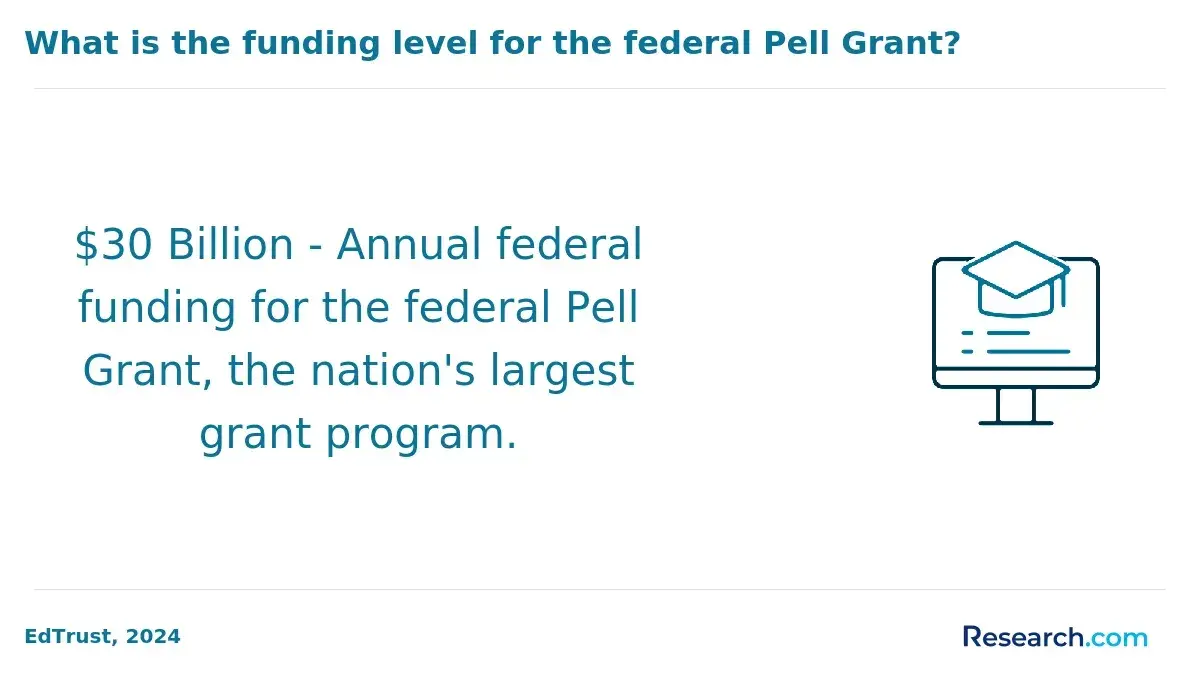
The FAFSA process also changed in the 2024-25 aid cycle, replacing the Expected Family Contribution with the Student Aid Index. For graduate nursing students, this matters because federal need analysis can affect some institutional aid decisions even when the main federal loan options are not Pell-style grants.
Graduate PNP students typically encounter these federal aid options:
- Direct Unsubsidized Loans: Eligible graduate students may borrow up to $20,500 per academic year, subject to aggregate limits and school-certified cost of attendance.
- Graduate PLUS Loans: These can help cover remaining school-certified costs after other aid, but they require a credit check and can carry higher borrowing costs.
- Federal Work-Study: Availability varies by school and may be limited for busy graduate nursing students with clinical schedules.
- School-certified cost of attendance: This figure can include tuition, fees, books, supplies, transportation, and living expenses, but it is not the same as the price you should automatically borrow.
To use FAFSA wisely, submit it early, compare aid letters by net price rather than loan amount, and avoid treating loan eligibility as affordability. A school that offers more loans is not necessarily cheaper; it may simply have a higher cost of attendance.
Which Scholarships, Grants, and Tuition Benefits Can Help Pay for an Online Pediatric Nurse Practitioner Degree?
Scholarships, grants, and tuition benefits lower costs differently. Scholarships are often merit-, need-, employer-, identity-, service-, or specialty-based awards; grants usually do not require repayment; employer benefits may reimburse tuition after successful course completion; and loan-forgiveness or service programs may require work commitments.
Online PNP students should search across several funding sources because graduate nursing aid is often fragmented:
- University nursing scholarships: Ask whether awards are available to online MSN, DNP, and certificate students, and whether they renew each term.
- Graduate assistantships: These are less common for part-time online nursing students but may exist for students near campus or in hybrid programs.
- Employer tuition reimbursement: Hospitals and pediatric health systems may reimburse tuition if the program is accredited and the student remains employed for a set period.
- Professional association awards: Pediatric, nursing, minority nurse, and advanced practice organizations may offer smaller awards that reduce borrowing.
- State workforce grants: Some states support nurses entering shortage areas, rural practice, primary care, or pediatric care.
- Federal and service-based programs: HRSA-style workforce programs, military benefits, and public service options may help eligible students but often include detailed service obligations.
Before counting any award in your budget, ask whether it is renewable, whether online students qualify, whether it applies to fees as well as tuition, and whether dropping below half-time enrollment changes eligibility. The safest comparison is confirmed aid divided across the actual number of credits or terms you expect to complete.
Can Transfer Credits, Prior Learning, and Competency-Based Study Lower the Cost of an Online Pediatric Nurse Practitioner Degree?
Transfer credit can reduce the cost of an online Pediatric Nurse Practitioner degree, but graduate nursing programs usually limit how much coursework can be transferred. Because PNP programs prepare students for advanced practice certification, schools are careful about accepting prior coursework in pharmacology, pathophysiology, assessment, diagnostics, pediatrics, and clinical practica.
Use the following questions before assuming prior credits will save money:
- How many graduate credits can be transferred into the PNP program?
- Do transferred courses need to be completed within a certain number of years?
- Will the school accept prior advanced pharmacology, advanced health assessment, or advanced pathophysiology courses?
- Can previous MSN or DNP coursework reduce the credit load for a post-master's PNP option?
- Are clinical hours transferable, or must they be completed under the new program's supervision?
- Does the school charge transcript evaluation, portfolio, or transfer-review fees?
- Will transfer credits affect financial aid enrollment status or scholarship eligibility?
Competency-based pricing can be useful in some online degrees, but it is not widely used for PNP clinical preparation because clinical hours, faculty evaluation, and preceptor documentation must meet professional standards. Prior learning may still help indirectly if it shortens prerequisite gaps or allows a student to enter a post-master's certificate instead of a second full graduate degree.
Students comparing body science, rehabilitation, or wellness pathways may see more flexible transfer-credit policies in programs such as an online kinesiology degree, but advanced practice nursing generally has stricter clinical and accreditation requirements.
How Should Students Compare the Net Price, Quality, and Return on Investment of Online Pediatric Nurse Practitioner Degree Programs?
The best-value online Pediatric Nurse Practitioner program is the accredited program that helps you reach certification and licensure goals at the lowest sustainable net cost. Net price matters more than sticker price because it reflects grants, scholarships, employer benefits, transfer credits, and unavoidable expenses.
The BLS projects much faster-than-average growth for nurse practitioners, nurse anesthetists, and nurse midwives from 2023 to 2033 in its current Occupational Outlook Handbook. That strong labor-market context can support the value of advanced practice education, but it does not erase the need to control borrowing and choose a program aligned with pediatric certification and state practice rules.
When comparing ROI, weigh the following factors together instead of choosing on price alone:
- Accreditation and certification alignment: The program should prepare students for the intended PNP certification and meet state requirements where the student plans to practice.
- Total cost after aid: Include tuition, mandatory fees, books, clinical costs, travel, certification, and licensure expenses.
- Borrowing level: Compare expected loan debt against realistic repayment plans, not just projected salary ranges.
- Clinical placement model: A cheaper program may be less valuable if students must find all preceptors with limited support.
- Completion timeline: A lower tuition program that takes longer may delay advancement and increase term-based fees.
- Student support: Advising, faculty access, board-preparation resources, and clinical coordination can affect completion and readiness.
- State fit: The right program must be authorized in your state and compatible with your board of nursing's requirements.
Before enrolling, ask each school for a written total-cost estimate, the current fee schedule, the expected clinical-placement policy in your state, certification exam preparation details, and scholarship renewal rules. The lowest-cost decision is the one that minimizes unnecessary debt without sacrificing accreditation, licensure eligibility, or the support needed to complete the program.
Other Things You Should Know About Pediatric Nurse Practitioner
Common prerequisites for enrolling in an online Pediatric Nurse Practitioner program in 2027 include holding a Bachelor of Science in Nursing (BSN), a valid RN license, and having clinical experience. Specific GPA requirements and completion of certain science courses are often needed.
Some fully online programs still require in-person intensives, simulations, skills assessments, or clinical orientations. These visits can add travel and lodging costs, so they should be included in your budget.
Institutions like Texas Tech University Health Sciences Center and University of Missouri are among those offering low tuition rates for online pediatric nurse practitioner programs in 2027. Comparisons should be made to ensure the program matches your career goals and financial needs.
References
- Online Pediatric Nurse Practitioner (PNP) Programs https://nursinglicensemap.com/nursing-degrees/online-nurse-practitioner-programs/pediatric-nurse-practioner-pnp-programs/
- Online Resources & Scholarships for Nurse Practitioner Students https://www.edumed.org/financial-aid/scholarships/nurse-practitioner-programs/
- Top Online Pediatric NP Programs (2026 PNP Rankings) https://www.npschools.com/rankings/all-online-pnp-programs
- Grants & Scholarships https://www.napnapfoundation.org/grantsscholarships/grantsscholarships
- Top Scholarships & Grants for NP and APRN Students https://www.preceptorlink.com/blog-posts/scholarships-and-grants-for-np-and-aprn-students
- How Long Does It Take to Become a Nurse Practitioner (NP)? - Nurse Practitioner Degrees https://npdegrees.org/resources/how-long-does-it-take-to-become-np/
- Most Affordable Online Pediatric NP Programs (2026) https://www.healthcaredegree.com/blog/most-affordable-pnp-programs
- Accreditation for Online NP Programs: What the Labels Mean and Why Some Matter More Than Others https://entokey.com/accreditation-for-online-np-programs-what-the-labels-mean-and-why-some-matter-more-than-others/
- Pediatric Nurse Practitioner - Primary Care (PNP-PC) Complete Guide on Vivian Health https://www.vivian.com/certifications/pnp-pc/
- Online Pediatric Nurse Practitioner (PNP) Programs | Maryville University https://nursing.maryville.edu/concentrations/pediatric-nurse-practitioner-online-program