2027 Cheapest Accredited Online Pediatric Nurse Practitioner Degree Programs That Accept FAFSA

Co-Founder and Chief Data Scientist
Choosing an online pediatric nurse practitioner program is really a cost, licensure, and career-value decision. The stakes are high: the BLS reported a May 2024 median annual wage of $129,210 for nurse practitioners and projects very strong demand for the occupation through 2033. This guide is for RNs comparing accredited online PNP degrees that participate in federal student aid. You will learn how to identify low-cost programs, estimate net price after FAFSA-based aid, verify accreditation, compare transfer policies, and decide whether the cheapest option is also the best investment.
Key Things You Should Know
- The cheapest FAFSA-eligible online pediatric nurse practitioner options are usually public university MSN or BSN-to-DNP programs with CCNE or ACEN accreditation, but the lowest advertised tuition is not always the lowest net cost.
- Graduate nursing students generally do not receive Pell Grants, but FAFSA can unlock Direct Unsubsidized Loans up to $20,500 per academic year, Grad PLUS Loans up to the school-certified cost of attendance, and school-based aid.
- Career ROI depends on total borrowing, state APRN licensure eligibility, clinical placement support, and whether the program prepares students for pediatric primary care or acute care certification.
Which Are the Cheapest Accredited Online Pediatric Nurse Practitioner Degree Programs That Accept FAFSA?
The cheapest accredited online pediatric nurse practitioner degree programs that accept FAFSA are typically online or hybrid MSN and DNP programs at public universities that participate in Title IV federal student aid. For most students, the best starting point is not a national "cheapest" label but a short list of programs that meet four tests: institutional accreditation, nursing program accreditation, federal aid participation, and eligibility for pediatric NP certification in the student's state.
The table below highlights affordable online or mostly online pediatric nurse practitioner programs commonly considered by cost-conscious RNs. Tuition changes frequently, and nursing fees, clinical placement fees, background checks, immunization tracking, and residency travel can materially affect total cost, so students should confirm current figures with each school before applying.
| School | Common online PNP pathway | Institution type | Accreditation to verify | FAFSA relevance | Why it may be affordable |
| University of South Alabama | MSN and DNP pediatric NP tracks, including primary care and acute care options | Public | Regional institutional accreditation and CCNE nursing accreditation | Federal school code participation should be verified for the intended degree level | Public university pricing and multiple graduate nursing pathways can reduce the need to transfer schools later |
| University of Texas at Arlington | Online MSN Pediatric Primary Care Nurse Practitioner | Public | Regional institutional accreditation and CCNE nursing accreditation | Degree-seeking students may use FAFSA if otherwise eligible | Accelerated online course structure may help working RNs finish sooner if they can handle the pace |
| University of Alabama at Birmingham | Online MSN pediatric primary care and pediatric acute care specialties | Public | Regional institutional accreditation and CCNE nursing accreditation | FAFSA can support eligible graduate degree enrollment | Large academic health system connections and multiple APRN specialties can support clinical fit |
| University of Missouri-Kansas City | Online MSN pediatric nurse practitioner options | Public | Regional institutional accreditation and CCNE nursing accreditation | Federal aid participation should be confirmed for the exact program | Public tuition structure and online delivery may help out-of-area students compare total cost |
| Old Dominion University | Online or distance-supported pediatric nurse practitioner graduate pathway | Public | Regional institutional accreditation and nursing accreditation | FAFSA availability depends on admission as an eligible degree-seeking student | Can be attractive for students who benefit from public university tuition and established distance education |
| University of Cincinnati | Online MSN pediatric primary care nurse practitioner pathway | Public | Regional institutional accreditation and CCNE nursing accreditation | Federal aid may apply to eligible graduate degree students | Structured online graduate nursing model may suit working nurses comparing predictable program plans |
A program belongs on a "cheapest" shortlist only if the total cost remains low after all required expenses are counted. A $30,000 tuition estimate can become much higher if the student must travel for intensives, pay repeated clinical onboarding fees, or extend enrollment because required pediatric clinical sites are difficult to secure.
Students comparing PNP programs sometimes also research adjacent health degrees to understand broader healthcare education costs. For example, those weighing advanced clinical practice against medication-focused careers may compare the investment with PharmD online programs, which involve a different licensure path, time commitment, and cost structure.
How Does FAFSA Eligibility Work for Online Pediatric Nurse Practitioner Degree Programs?
FAFSA eligibility means the student and the school can use the Free Application for Federal Student Aid to determine eligibility for federal aid. It does not mean the program is free, and it does not mean every student receives the same amount of aid. For an online pediatric nurse practitioner degree, FAFSA eligibility usually depends on the school's Title IV participation, the student's admission status, enrollment level, satisfactory academic progress, citizenship or eligible noncitizen status, and loan history.
The most important distinction is between a degree program and a non-degree or certificate pathway. MSN and DNP students are usually treated as graduate degree students for federal aid purposes when the program is approved by the institution. Post-graduate certificate students may or may not qualify, depending on how the school has classified the certificate for federal aid.
Before committing, students should verify these FAFSA-related points directly with the financial aid office and the graduate nursing department:
- Confirm that the institution participates in federal student aid and that the specific PNP pathway is aid-eligible.
- Ask whether the program is treated as graduate, doctoral, certificate, full-time, half-time, or less-than-half-time for aid purposes.
- Request a written cost of attendance that includes tuition, fees, books, technology, clinical onboarding, travel, and required residencies.
- Ask how online enrollment, part-time study, summer terms, and clinical semesters affect aid disbursement.
- Confirm whether maintaining aid requires a minimum GPA, pace of completion, and credit load each term.
A common mistake is assuming that "accepts FAFSA" means the entire degree will be covered by grants. For graduate nursing students, FAFSA often leads primarily to federal loans, although it can also be required for institutional scholarships, nurse faculty grants, state aid, or need-based awards controlled by the school.
How Much Does an Online Pediatric Nurse Practitioner Degree Cost After Financial Aid?
The cost after financial aid is the net amount the student must pay or borrow after grants, scholarships, employer tuition assistance, tuition discounts, and other non-loan aid are applied. For online PNP students, this number is more useful than published tuition because two students in the same program may have very different out-of-pocket costs.
The table below shows how to think about net cost. These are illustrative planning scenarios, not promises of what any school will award, but they show why students should compare total cost after non-loan aid instead of tuition alone.
| Planning scenario | Published program charges | Non-loan aid or assistance | Estimated amount left to pay or borrow | What it means for the student |
| Low tuition, no employer aid | $32,000 | $0 | $32,000 | The program may still be affordable, but the student should model federal loan repayment before enrolling |
| Moderate tuition with employer assistance | $42,000 | $10,000 | $32,000 | A higher-tuition school can match a cheaper option if employer benefits are usable there |
| Higher tuition with institutional scholarship | $50,000 | $18,000 | $32,000 | Scholarship renewal rules matter because losing the award can change the entire ROI calculation |
| Low tuition with added travel and fees | $32,000 | $0 | More than $32,000 | Residency travel, clinical fees, books, and supplies can erase part of the advertised savings |
Graduate students should also pay attention to borrowing limits. Direct Unsubsidized Loans for graduate and professional students are generally capped at $20,500 per academic year, while Grad PLUS Loans can cover remaining school-certified costs for eligible borrowers. That structure helps students finance a program, but it also makes it easy to overborrow if they do not separate essential costs from lifestyle expenses.
Cost comparisons should include these categories because they often determine the real net price:
- Tuition per credit and the total number of required credits.
- Program fees, distance learning fees, simulation fees, graduation fees, and clinical placement or tracking fees.
- Books, pediatric assessment tools, software, uniforms, background checks, drug screening, immunization documentation, and certification exam preparation.
- Travel, lodging, and time away from work for campus intensives or skills checkoffs.
- Lost income if clinical hours require reducing work shifts.
The lowest-cost program is usually the one with the lowest completed cost, not simply the lowest per-credit tuition. If a student needs an extra year because clinical sites are unavailable, the opportunity cost can outweigh a small tuition discount.
Which Affordable Online Pediatric Nurse Practitioner Degree Programs Offer the Best Value?
The best value is the program that combines affordable net price with accreditation, certification preparation, clinical feasibility, student support, and a realistic timeline. A cheap program that does not help a student secure appropriate pediatric clinical experiences can become expensive if it delays graduation or fails to meet state board expectations.
The table below compares value factors that matter more than sticker price alone. Use it to identify which affordable program is best aligned with your background, schedule, and career goal.
| Value factor | Why it matters | Best-fit student | Red flag |
| Clinical placement support | PNP students need pediatric clinical hours with approved preceptors | Students with limited pediatric professional networks | The school provides no guidance and places the full burden on the student |
| Certification alignment | Primary care and acute care pediatric NP roles have different preparation needs | Students with a clearly defined pediatric practice goal | The curriculum does not clearly state which certification exam it prepares students for |
| Part-time pacing | Working RNs often need flexible sequencing | Students maintaining income while enrolled | Courses are offered only once per year, making delays costly |
| State authorization | Online nursing programs must be authorized to enroll students in many states | Students living outside the university's home state | The school cannot confirm eligibility for the student's state |
| Total completed cost | Fees, travel, and extended enrollment can change affordability | Students comparing multiple acceptance offers | The school gives tuition only and will not provide a full cost estimate |
For many nurses, the best-value PNP program is not the shortest or cheapest one. It is the program that lets them keep working, complete required pediatric clinical hours, qualify for certification, and graduate with debt that is reasonable relative to expected advanced practice earnings.
Students who are still deciding whether they want direct patient care or a broader wellness, movement, and prevention path may also compare nursing graduate options with an online kinesiology degree. The career outcomes differ, but the comparison can clarify whether an APRN path is the right level of clinical responsibility and regulation.
Are the Cheapest Online Pediatric Nurse Practitioner Degree Programs Properly Accredited?
The cheapest online pediatric nurse practitioner degree is only worth considering if it is properly accredited and acceptable for certification and APRN licensure. Accreditation has two layers: institutional accreditation for the college or university and programmatic nursing accreditation, commonly through CCNE or ACEN. State board approval and state authorization also matter, especially for online students completing clinical hours outside the school's home state.
The table below summarizes what to verify before applying. This is a decision checklist, because missing one of these items can affect financial aid, certification eligibility, licensure, or employer acceptance.
| What to verify | Why it matters | Who to ask |
| Institutional accreditation | Supports federal aid eligibility and broad academic recognition | Admissions office or registrar |
| CCNE or ACEN nursing accreditation | Often required or strongly expected for certification, licensure, and employment | Graduate nursing program director |
| PNP population focus | Determines whether the program prepares students for pediatric primary care, acute care, or another role | Specialty track coordinator |
| State authorization | Online programs may not be able to enroll or place students in every state | State authorization office |
| State APRN licensure fit | Licensure requirements vary by state board of nursing | State board of nursing and program advisor |
Students should be cautious if a school uses vague language such as "accreditation pending" without explaining what that means for current students. They should also avoid assuming that approval in one state automatically satisfies another state's APRN rules.
Use this verification sequence before submitting a deposit:
- Confirm the school's institutional accreditation through an official accreditor or government-recognized database.
- Confirm the nursing program's CCNE or ACEN status and the exact degree level covered by accreditation.
- Ask the program to identify the pediatric NP certification exam its curriculum is designed to support.
- Contact the state board of nursing where you plan to practice and ask whether the program meets educational requirements for APRN licensure.
- Get written confirmation that your state is approved for online enrollment and clinical placement.
Accreditation is also important if a student later changes career direction. For instance, nurses who eventually move into operations, quality, or leadership may compare clinical graduate training with a healthcare administration bachelor's degree or graduate administration pathway, where institutional credibility also affects employer trust.
What FAFSA Grants and Federal Aid Can Pay for an Online Pediatric Nurse Practitioner Degree?
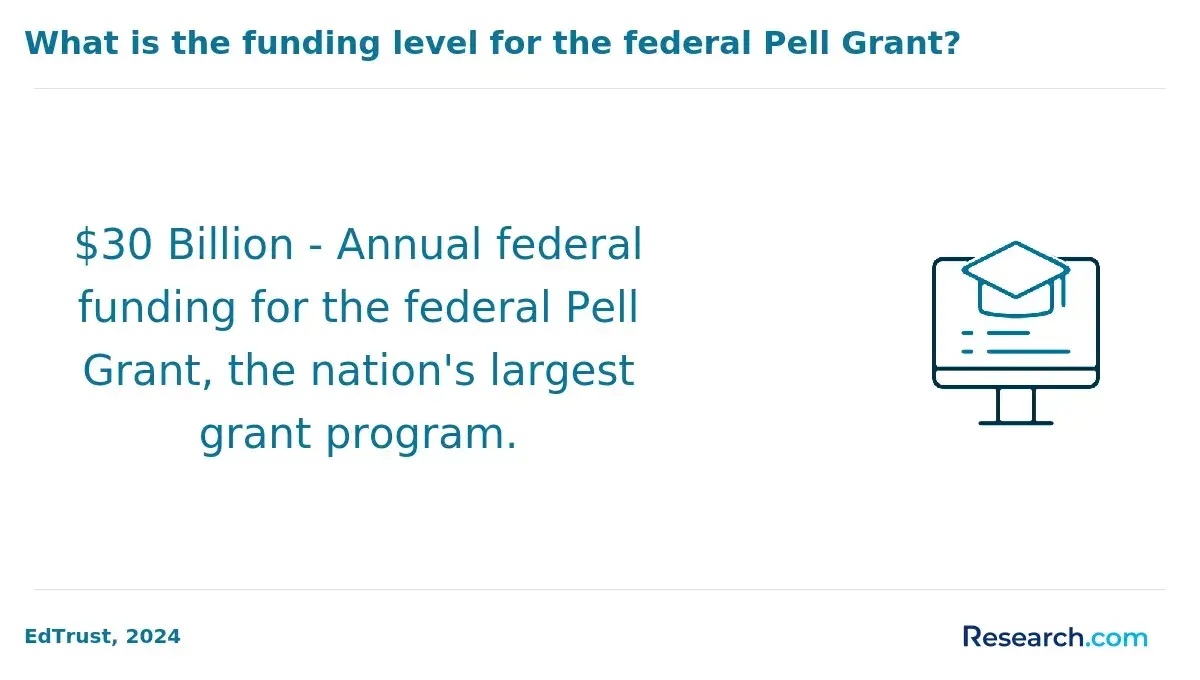
FAFSA can connect eligible students to several forms of aid, but graduate PNP students should understand that federal grants are limited compared with undergraduate aid. The Pell Grant maximum award was $7,395 in recent federal award years, but Pell Grants generally apply to eligible undergraduate students and usually do not fund graduate nursing degrees. For MSN and DNP students, the biggest federal tools are typically loans, work-study when available, and school-based aid that requires FAFSA data.
For online pediatric nurse practitioner students, the main FAFSA-linked aid categories are:
- Federal Direct Unsubsidized Loans, which are available to many eligible graduate students but begin accruing interest while the student is in school.
- Federal Grad PLUS Loans, which may cover remaining school-certified costs for eligible borrowers after other aid is applied.
- Federal Work-Study, if the school offers it to graduate students and the student can fit work around clinical requirements.
- Institutional grants or scholarships that use FAFSA results to determine financial need.
- State, workforce, or nursing-related aid programs that require FAFSA completion even when funds are not federal.
Students should also look beyond FAFSA. Employer tuition assistance, hospital system scholarships, nurse residency partnerships, rural or underserved-area incentives, military benefits, and professional association scholarships can reduce borrowing. These funds may have service commitments, minimum grade requirements, or repayment clauses if the student leaves the employer too soon.
A practical way to compare aid offers is to separate free money from borrowed money. Grants, scholarships, tuition reimbursement, and employer-paid benefits lower net cost. Loans improve access but do not lower cost; they shift payment into the future with interest.
How Do Transfer Credits Lower the Cost of an Online Pediatric Nurse Practitioner Degree?
Transfer credits can lower the cost of an online PNP degree when a school accepts prior graduate nursing coursework, advanced pathophysiology, advanced pharmacology, advanced health assessment, statistics, or evidence-based practice courses. The savings can be meaningful because graduate nursing tuition is usually charged per credit, but transfer rules are strict and vary by school.
Transfer credit is most helpful for students who started an MSN or DNP elsewhere, completed a related graduate nursing degree, or are moving from one APRN population focus to another. It is less useful when courses are too old, do not match the new program's outcomes, lack graduate-level rigor, or were completed at a non-accredited institution.
Before counting on transfer savings, students should follow this process:
- Request the PNP curriculum plan showing every required course and clinical hour.
- Send official transcripts and syllabi for prior graduate courses before enrollment, not after the first term begins.
- Ask which courses can be transferred, which can be waived, and which must be repeated for certification alignment.
- Confirm whether transferred credits reduce tuition, shorten time to graduation, or simply replace electives.
- Ask whether transfer credits affect full-time status, financial aid eligibility, or scholarship renewal.
The key trade-off is flexibility versus certainty. A higher-tuition school that accepts more valid graduate credits may cost less than a lower-tuition school that requires the student to repeat coursework. However, clinical specialty courses and pediatric population-focused hours are less likely to transfer because they must match certification and licensure expectations.
Students with prior undergraduate science coursework sometimes compare graduate nursing requirements with broader health science options such as a nutritional science degree online. That comparison can help clarify which credits are useful for nursing advancement and which are better suited to non-APRN health careers.
Which Students Benefit Most From a Low-Cost Online Pediatric Nurse Practitioner Degree With FAFSA?
A low-cost online pediatric nurse practitioner degree with FAFSA access is most useful for licensed RNs who are committed to pediatric advanced practice and need a financially manageable route to an MSN or DNP. It is especially valuable for nurses who can continue working while studying, have access to pediatric clinical networks, and are disciplined about limiting debt.
These students tend to benefit most from the low-cost FAFSA-eligible route:
- BSN-prepared RNs who already work in pediatrics, neonatal care, family practice, school health, emergency care, or community health.
- Working nurses whose employers provide tuition assistance or flexible scheduling during clinical semesters.
- Students who can complete clinical hours near home without paying for long-distance travel or relocation.
- RNs in states where the program has confirmed authorization and where the curriculum aligns with APRN licensure requirements.
- Students who compare aid offers carefully and borrow only what they need for tuition, fees, and essential education costs.
Students should be more cautious if they are unsure about working with children and families, dislike chronic disease management and developmental assessment, or cannot secure pediatric clinical placements in their region. Pediatric NP training is specialized, and switching to another population focus may require additional coursework and clinical hours.
Those earlier in the nursing pipeline may need a different starting point. For example, aspiring nurses who are not yet RNs may first compare practical nursing, ADN, or BSN routes, including fast-track LPN programs online, before planning for a future pediatric nurse practitioner degree.
How Does the Cost of an Online Pediatric Nurse Practitioner Degree Affect Career ROI?
Career ROI depends on the relationship between total education cost, debt, time to completion, certification success, licensure eligibility, and future earnings. The BLS reported a May 2024 median annual wage of $129,210 for nurse practitioners, but that figure includes nurse practitioners across specialties and settings; pediatric NP compensation can vary by region, employer type, experience, and whether the role is primary care, acute care, or subspecialty-based.
The table below shows how cost affects ROI. The goal is not to predict an individual salary, but to help students understand how borrowing decisions change financial flexibility after graduation.
| Total amount paid or borrowed | ROI pressure level | What the student should examine |
| Lower net cost with modest borrowing | Lower pressure | Whether the program still offers strong clinical placement, certification preparation, and state licensure fit |
| Moderate borrowing with strong employer support | Manageable if employment is stable | Whether tuition reimbursement has service commitments or repayment obligations |
| High borrowing for a prestigious or specialized program | Higher pressure | Whether the program provides advantages that justify the added debt, such as specialty access, clinical networks, or local employer recognition |
| Low tuition but delayed graduation | Potentially higher than expected | Whether course sequencing or clinical placement delays create extra terms and lost income |
A more expensive program may be worth considering if it reduces clinical placement risk, has strong pediatric acute care partnerships, offers a DNP pathway aligned with the student's leadership goals, or supports students in a state where cheaper programs cannot place them. Conversely, paying more for brand recognition alone is risky if the student's local employers mainly care about licensure, certification, and experience.
ROI should also be compared across healthcare credentials. Students who are interested in non-bedside leadership, operations, pharmacy, public health, or wellness careers should compare degree cost, licensure burden, and expected job duties before choosing the PNP route.
How Should Students Choose the Cheapest FAFSA-Eligible Online Pediatric Nurse Practitioner Degree?
Students should choose the cheapest FAFSA-eligible online pediatric nurse practitioner degree by comparing net cost, accreditation, licensure fit, clinical support, program length, and borrowing risk in the same worksheet. The right choice is the lowest-cost program that still protects the student's ability to graduate, become certified, and qualify for APRN licensure in the intended state.
Use this step-by-step process to compare programs before applying or accepting admission:
- Build a shortlist of accredited online or hybrid PNP programs that offer the correct population focus, such as pediatric primary care or pediatric acute care.
- Confirm that each school participates in federal student aid and that the exact degree pathway is FAFSA-eligible.
- Request a full cost of attendance from each school, not just tuition per credit.
- Ask for a sample course plan showing total credits, clinical hours, campus visits, and expected time to completion.
- Verify state authorization and APRN licensure alignment for the state where you live and the state where you plan to practice.
- Compare grants, scholarships, tuition reimbursement, and loans separately so you know what reduces cost and what creates debt.
- Ask how clinical placements work and what happens if a student cannot find a qualified pediatric preceptor.
- Calculate the amount you would need to borrow under each offer and compare it with realistic post-graduation repayment options.
Common red flags include unclear accreditation language, unwillingness to provide total cost estimates, no state-specific licensure guidance, excessive reliance on student-found clinical placements, and aid packages that appear affordable only because they include large loans. Students should also be wary of choosing an accelerated plan that leaves no room for work, family responsibilities, or clinical scheduling problems.
If your long-term goal is healthcare leadership rather than pediatric diagnosis and treatment, compare the PNP pathway with administrative or allied health options before borrowing for an APRN degree. A clinical degree can be powerful, but it is not the only route into healthcare advancement.
Other Things You Should Know About Pediatric Nurse Practitioner
Many programs deliver coursework online, but PNP degrees are rarely 100% online in practice because students must complete supervised clinical hours with pediatric patients. Some programs also require campus intensives, simulations, skills assessments, or orientation visits.
An MSN is often the shorter and less expensive route to initial NP preparation, while a DNP adds doctoral-level coursework in leadership, evidence-based practice, systems improvement, and advanced clinical practice. The better option depends on your state requirements, employer expectations, budget, and long-term goals.
Many online graduate nursing programs no longer require the GRE, but requirements vary. Schools commonly focus on RN licensure, BSN preparation, GPA, professional experience, references, a statement of purpose, and sometimes pediatric or acute care experience.
No. Online nursing programs must follow state authorization and clinical placement rules. Before applying, ask the school whether it can enroll students from your state and whether its curriculum meets APRN licensure requirements where you plan to practice.
References
- Most Affordable Online Pediatric NP Programs (2026) https://www.healthcaredegree.com/blog/most-affordable-pnp-programs
- How to Become a Pediatric Nurse Practitioner (PNP) https://nursinglicensemap.com/advanced-practice-nursing/nurse-practitioner/pediatric-nurse-practitioner-pnp/
- What Kinds of Financial Aid are Available to Nurse Practitioner Students? | ThriveAP https://provider.thriveap.com/blog/what-kinds-financial-aid-are-available-nurse-practitioner-students
- Online Resources & Scholarships for Nurse Practitioner Students https://www.edumed.org/financial-aid/scholarships/nurse-practitioner-programs/
- Most Affordable Online NP Programs (2026): Comprehensive https://www.npschools.com/rankings/all-affordable-online-np-programs
- All Pediatric Nurse Practitioner Programs in One Place - PNPprograms.com https://www.pnpprograms.com/
- NP Certification, Re-certification and Verification: Certify as an NP, renew, or verify your existing certification. https://www.aanp.org/student-resources-2/np-certification
- Primary Care Pediatric Nurse Practitioner DNP https://www.rushu.rush.edu/college-nursing/programs-admissions/pediatric-nurse-practitioner-pc-pnp-program
- Welcome to the American Academy of Nurse Practitioners Certification Board https://www.aanpcert.org/
- 2025 Most Affordable Online Nurse Practitioner Programs https://www.onlineu.com/most-affordable-colleges/nurse-practitioner-masters-degrees