2027 Best Accredited Online Pediatric Nurse Practitioner Degree Programs: Compare Tuition, Admissions, and Career Outcomes

Co-Founder and Chief Data Scientist
Choosing an online pediatric nurse practitioner program is a high-stakes decision because it affects licensure eligibility, clinical placement, tuition debt, and long-term career mobility. The U. S. Bureau of Labor Statistics reported a May 2024 median annual wage of $129,210 for nurse practitioners, making program quality and cost especially important. This guide is for registered nurses comparing accredited online PNP pathways. You will learn how to evaluate tuition, admissions, accreditation, flexibility, support services, and outcomes so you can choose a program that fits your goals.
Key Things You Should Know
- Accreditation is nonnegotiable: students should verify institutional accreditation, nursing program accreditation from CCNE, ACEN, or NLN CNEA, and state authorization before enrolling.
- Cost varies widely because online PNP programs may charge by credit, semester, or program; the best value usually combines reasonable tuition, strong clinical placement support, and certification preparation.
- Career demand is strong but not automatic: BLS data shows nurse practitioners had a May 2024 median wage of $129,210, but salary depends on certification, state practice authority, employer type, experience, and location.
Which Accredited Online Pediatric Nurse Practitioner Degree Programs Offer the Best Overall Value?
The best overall value in an accredited online pediatric nurse practitioner degree program is not always the cheapest option. For most students, value comes from the combination of accredited curriculum, manageable tuition, reliable clinical placement support, strong certification preparation, and a format that lets working nurses stay employed while studying.
Online PNP programs usually lead to an MSN, post-master's certificate, or DNP with a pediatric primary care or pediatric acute care focus. Pediatric Primary Care Nurse Practitioner programs typically prepare students for outpatient, preventive, and chronic-care roles, while Pediatric Acute Care Nurse Practitioner programs prepare students for higher-acuity environments such as hospitals, specialty units, and intensive care settings.
The table below compares common value profiles rather than ranking schools by a single metric. Use it to identify which type of accredited online PNP program best matches your budget, schedule, and career goal.
| Program value profile | Best fit | Typical strengths | Trade-offs to check |
| Public university online or hybrid MSN PNP | RNs seeking the lowest practical pathway to APRN eligibility | Often lower tuition, established nursing infrastructure, access to university clinical networks | May have state residency limits, fewer start dates, or competitive clinical site availability |
| Private nonprofit online MSN PNP | Working nurses who value structured advising and predictable scheduling | Often strong student services, cohort models, and national name recognition | Tuition can be substantially higher, so aid offers and total cost matter |
| Online DNP PNP track | Nurses seeking advanced clinical leadership, systems improvement, or doctoral-level practice preparation | Broader leadership, evidence-based practice, and quality improvement training | Longer time to completion and higher total cost than many MSN pathways |
| Post-master's PNP certificate | APRNs or MSN-prepared nurses adding pediatric specialization | Shorter than a full degree, focused specialty preparation, may reduce duplicate coursework | Eligibility depends on prior graduate coursework and state board requirements |
For many working RNs, the strongest value is a CCNE- or ACEN-accredited public online MSN PNP program with transparent per-credit tuition and documented help securing pediatric clinical placements. However, a higher-priced private or DNP program can be worth considering when it provides stronger placement support, better scheduling predictability, or a specialty focus that directly matches the student's intended practice setting.
A common mistake is choosing the lowest tuition program without checking whether the school helps arrange clinical experiences. Pediatric sites can be harder to secure than general adult primary care placements, so placement support can affect both completion time and stress level.
What Accreditation Should Students Look for in an Online Pediatric Nurse Practitioner Degree Program?
Accreditation determines whether a pediatric nurse practitioner program is recognized for federal financial aid, certification eligibility, employer acceptance, and state licensure review. Students should check accreditation before comparing tuition or admissions because an inexpensive program that does not meet the right standards can create serious barriers later.
There are three layers to verify. Institutional accreditation confirms that the college or university meets broad academic standards. Programmatic nursing accreditation confirms that the nursing program meets professional standards. State authorization confirms that the school is approved to deliver online education and clinical training to students in your state.
Use this accreditation checklist before applying, especially if you plan to move states, complete clinical hours across state lines, or pursue national certification after graduation.
- Confirm that the institution is accredited by a recognized institutional accreditor listed by the U.S. Department of Education or CHEA.
- Verify nursing program accreditation through CCNE, ACEN, or NLN CNEA; do not rely only on a school's marketing page.
- Ask whether the specific PNP track is Pediatric Primary Care, Pediatric Acute Care, or dual-focused, because certification eligibility depends on the population focus.
- Check whether the program meets APRN education requirements in your state of residence and any state where you may complete clinical hours.
- Ask admissions staff to confirm whether graduates are prepared for the appropriate national certification exam, such as pediatric primary care or pediatric acute care certification.
Programmatic accreditation also matters because APRN education includes advanced pathophysiology, advanced pharmacology, advanced health assessment, population-focused clinical courses, and supervised clinical practice. A strong online program should make those requirements visible and easy to verify.
If you are comparing healthcare graduate pathways beyond nursing, review accreditation just as carefully. For example, students exploring PharmD online programs should also confirm whether the credential meets professional licensing expectations before enrolling.
How Do Tuition Costs Compare Across Accredited Online Pediatric Nurse Practitioner Degree Programs?
Tuition for accredited online pediatric nurse practitioner programs varies because schools use different credit requirements, fee structures, residency policies, and clinical course pricing. The most useful comparison is not tuition per credit alone; it is the estimated total program cost after required credits, fees, travel, clinical compliance expenses, and expected financial aid.
The table below shows the major cost categories students should compare. It is designed to help you ask better questions when schools publish tuition in different formats.
| Cost item | Why it matters | How to compare programs |
| Tuition per credit | Most MSN and certificate programs charge by credit hour | Multiply by the exact number of required credits for your track |
| University and online fees | Technology, distance learning, simulation, and nursing fees can increase total cost | Ask for a full cost sheet, not just tuition |
| Clinical compliance costs | Background checks, immunization records, drug screening, liability insurance, and onboarding systems may be required | Ask whether these costs are included or billed separately |
| Campus intensives or simulations | Some online programs require short in-person visits | Estimate travel, lodging, meals, and time away from work |
| Certification and licensure expenses | Graduates typically pay for certification exams, state APRN licensure, and credentialing | Budget for post-graduation costs before comparing aid packages |
Public universities may offer the lowest posted tuition, especially for in-state students, but online nursing programs sometimes use a separate distance-learning rate. Private nonprofit programs may cost more but can offset some of the difference through scholarships, employer partnerships, or stronger support services. Private status alone does not mean poor value, and public status alone does not guarantee the best return.
A practical way to compare cost is to request a written "total program cost" estimate from each school for your exact degree plan. Then compare that estimate with your likely employment situation, expected time to completion, and whether the program helps prevent costly delays in clinical placement.
Students comparing healthcare education investments should also consider opportunity cost. A working RN who can remain employed during a flexible online PNP program may experience less income disruption than a student who must reduce hours for a rigid schedule.
How Competitive Is Admission to Accredited Online Pediatric Nurse Practitioner Degree Programs?
Admission to accredited online pediatric nurse practitioner programs is usually selective because schools must confirm that applicants are prepared for graduate-level science, advanced clinical reasoning, pediatric care, and state-regulated clinical practice. Flexibility in delivery does not mean open admission.
Most programs require an active RN license, a BSN or qualifying nursing degree, undergraduate statistics, transcripts, professional references, a resume, a personal statement, and sometimes pediatric or acute-care experience. Acute care PNP tracks often expect stronger relevant clinical experience than primary care tracks because the practice environment is more complex.
The following admissions factors are especially important because they affect both acceptance chances and readiness for the program.
- RN licensure: the license usually must be active and unencumbered in the state where the student will complete clinical training.
- Prior nursing degree: most MSN PNP programs require a BSN, while bridge or RN-to-MSN options may have additional prerequisite coursework.
- Clinical experience: pediatric, emergency, NICU, PICU, family practice, school health, or community health experience can strengthen an application.
- Academic record: programs often review nursing GPA, science performance, and graduate readiness rather than relying on one number alone.
- State eligibility: online programs may restrict applicants from states where they cannot place students or meet authorization rules.
One recent capacity signal matters for applicants: the American Association of Colleges of Nursing reported in 2024 that U.S. nursing schools turned away more than 65,000 qualified applications from baccalaureate and graduate programs, largely because of limits such as faculty, clinical sites, and preceptors. For PNP applicants, that means strong credentials help, but applying early and confirming clinical feasibility can matter just as much.
If you are not yet an RN, a PNP program is not the starting point. You may need a practical nursing, ADN, or BSN pathway first; students at the beginning of the nursing ladder may want to compare fast-track LPN programs online before planning a longer APRN route.
Which Learning Formats Offer the Greatest Flexibility in Online Pediatric Nurse Practitioner Degree Programs?
Online pediatric nurse practitioner programs are rarely "online only" in the same way as nonclinical degrees. Didactic courses may be online, but clinical hours must be completed in approved healthcare settings, and some programs require campus visits for assessment labs, simulations, intensives, or objective structured clinical examinations.
The best format depends on your work schedule, location, clinical site access, and learning style. A fully asynchronous program may offer maximum weekly flexibility, while a synchronous cohort model may offer more structure and instructor interaction.
This table explains the major online learning formats and the student situations they usually serve best.
| Format | How it works | Best fit | Potential drawback |
| Asynchronous online courses | Students complete lectures and assignments within weekly deadlines | Working nurses with variable shifts | Requires strong self-management |
| Synchronous online courses | Students attend live virtual classes at scheduled times | Learners who want discussion and structure | May conflict with night shifts or rotating schedules |
| Hybrid online program | Online coursework plus required campus visits or regional intensives | Students who value hands-on assessment practice | Travel and lodging can increase cost |
| Part-time progression | Students take fewer credits per term | RNs balancing work, family, and clinical hours | Longer time to graduation |
| Full-time progression | Students complete heavier course and clinical loads | Students who can reduce work hours | Higher short-term workload and income pressure |
Flexibility should not be judged only by whether courses are online. Ask how clinical placement deadlines work, whether the school allows evening or weekend clinicals, how far students may need to travel, and whether part-time students keep priority access to required courses.
A red flag is any program that says clinical placement is entirely the student's responsibility without explaining how the school approves preceptors, evaluates sites, and supports students who cannot secure a placement. Even when students help identify preceptors, the school should maintain academic oversight.
What Student Support Services Improve Success in Online Pediatric Nurse Practitioner Degree Programs?
Student support services can make the difference between finishing on schedule and delaying graduation. Pediatric nurse practitioner programs are demanding because students must manage graduate coursework, clinical hours, certification preparation, employment, and family responsibilities at the same time.
The most valuable support services are practical, not just promotional. They help students solve predictable problems before those problems become completion barriers.
- Clinical placement coordination or documented placement assistance, especially for pediatric primary care, pediatric acute care, and specialty settings.
- Dedicated graduate nursing advising that helps students plan course sequencing, practicum timing, and state authorization requirements.
- Certification exam preparation aligned with the student's pediatric population focus.
- Accessible faculty office hours and responsive preceptor communication during clinical courses.
- Technology support for online exams, telehealth simulations, learning platforms, and remote proctoring.
- Writing, research, and evidence-based practice support for graduate-level papers and DNP projects.
Ask each school how many staff members work directly with online graduate nursing students, how quickly advisors respond, and whether support continues during clinical semesters. A program may look affordable but become less valuable if students lose time because they cannot get placement guidance or course planning help.
Students who discover that they prefer leadership, operations, or policy rather than advanced clinical practice may want to compare a healthcare administration bachelor's degree or graduate healthcare management pathway instead of committing to PNP preparation.
Which Financial Aid Options Are Available for Accredited Online Pediatric Nurse Practitioner Degree Students?
Financial aid for accredited online pediatric nurse practitioner students can include federal loans, institutional scholarships, employer tuition benefits, state workforce grants, military benefits, and service-based repayment programs. The right mix depends on enrollment status, school eligibility, employer policies, and whether the student commits to working in an underserved area after graduation.
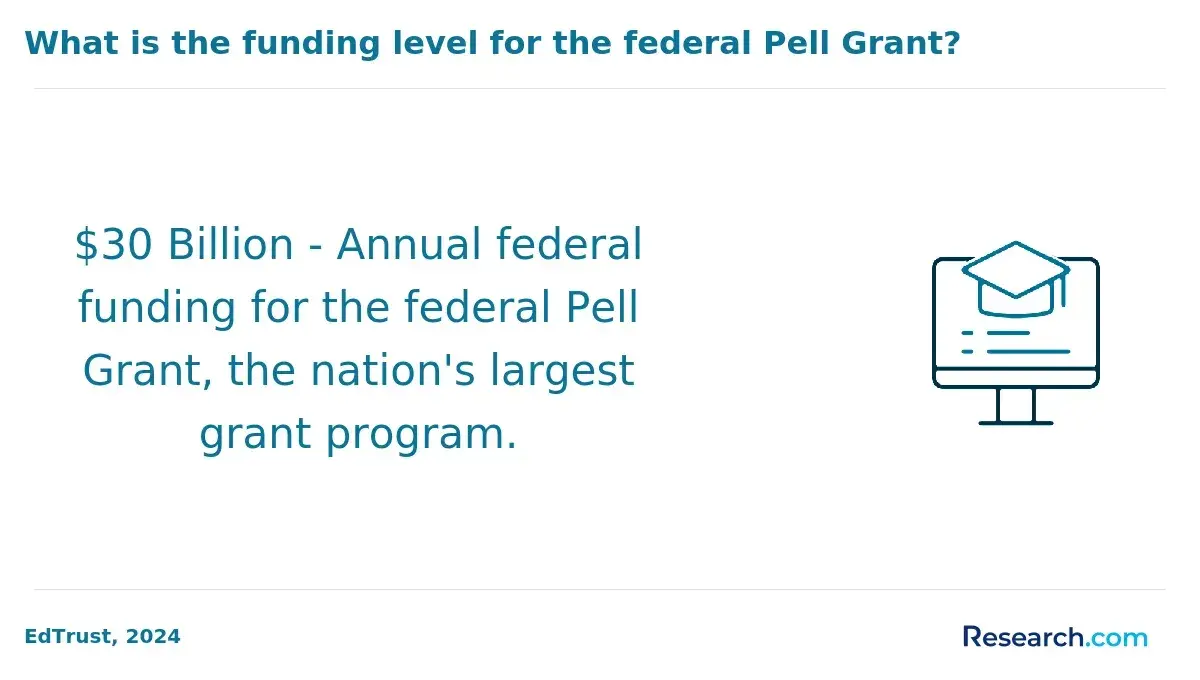
Graduate nursing students should pay close attention to borrowing costs. For the 2024-2025 award year, the federal Direct Unsubsidized Loan interest rate for graduate and professional students was 8.08%, which makes total repayment cost an important part of comparing programs.
Use the following steps to compare aid offers in a way that reflects real cost, not just the amount of aid listed on an award letter.
- Complete the FAFSA for every eligible school, even if you expect to use employer benefits or scholarships.
- Ask each program for a total cost of attendance estimate that includes tuition, fees, books, travel, clinical compliance, and certification-related expenses.
- Separate gift aid from loans, because scholarships reduce cost while loans defer cost.
- Check employer tuition reimbursement rules, including grade requirements, annual caps, repayment obligations, and whether part-time enrollment qualifies.
- Compare loan repayment options, including federal income-driven repayment and service-based programs for eligible clinicians.
- Recalculate affordability based on your expected work schedule during clinical semesters, since reducing hours can affect cash flow.
Common mistakes include borrowing up to the full cost of attendance without a repayment plan, ignoring fees because tuition looks manageable, and assuming every online program qualifies for the same aid. Accreditation and enrollment status can affect eligibility, so confirm aid details before paying a deposit.
Which Career Outcomes Are Associated With Accredited Online Pediatric Nurse Practitioner Degree Programs?
Accredited online pediatric nurse practitioner programs are associated with advanced practice roles focused on children, adolescents, and families. Graduates may pursue pediatric primary care, pediatric acute care, specialty clinic, hospital-based, school-based, community health, or telehealth roles depending on certification, clinical training, state scope-of-practice rules, and employer needs.
The BLS projected nurse practitioner employment to grow much faster than average from 2023 to 2033, reflecting demand for advanced clinicians in primary care, chronic disease management, and team-based healthcare. For readers, the key point is not that every PNP graduate will receive the same opportunities, but that APRN credentials are positioned in a strong labor market when paired with the right specialty and location.
The table below summarizes common PNP-related outcomes and the factors that influence them. Use it to connect program choice with the kind of work you actually want to do.
| Career path | Common settings | Program features to prioritize | Outcome considerations |
| Pediatric Primary Care Nurse Practitioner | Pediatric practices, community clinics, school-based health centers, outpatient systems | Primary care pediatrics, health promotion, developmental assessment, chronic condition management | Best for students who prefer continuity of care and prevention |
| Pediatric Acute Care Nurse Practitioner | Hospitals, specialty units, emergency departments, PICU-related settings | Acute care pediatrics, complex illness management, high-acuity clinical placements | Best for nurses with relevant inpatient pediatric experience |
| Pediatric specialty clinic provider | Cardiology, pulmonology, endocrinology, neurology, oncology, gastroenterology | Strong specialty preceptor access and advanced assessment training | May require experience or employer-specific onboarding |
| Clinical educator or quality improvement role | Health systems, academic-practice partnerships, pediatric service lines | DNP preparation, leadership, evidence-based practice, project work | Often combines clinical expertise with systems-level responsibilities |
Salary should be evaluated carefully. National NP wage data reflects all nurse practitioner specialties, not pediatric roles alone. Local market conditions, collective bargaining, certification type, experience, call requirements, and state practice authority can all affect compensation.
Students drawn to child health but not necessarily prescriptive advanced practice may also consider adjacent fields such as public health nutrition, child wellness, or exercise science; for example, a nutritional science degree online may fit students more interested in diet, prevention, and community health education than APRN practice.
How Do Online and Campus-Based Pediatric Nurse Practitioner Degree Programs Compare?
Online and campus-based pediatric nurse practitioner programs can lead to the same credential when they are properly accredited and state-authorized. The real differences involve scheduling, interaction style, clinical placement logistics, travel, and how much structure the student needs.
Online programs are often best for licensed RNs who need to keep working, live far from a university campus, or need part-time progression. Campus programs may be better for students who want frequent in-person faculty access, nearby university clinical affiliations, and a more traditional weekly schedule.
This comparison shows how format affects the student experience rather than assuming one delivery mode is always superior.
| Factor | Online PNP program | Campus-based PNP program |
| Course access | Remote lectures, online discussions, and digital assignments | In-person classes, labs, and campus-based meetings |
| Clinical training | Completed in approved local or regional sites when available | Often tied more closely to university-area clinical partners |
| Schedule flexibility | Usually stronger for working nurses, especially with asynchronous courses | More predictable but less flexible around shift work |
| Peer interaction | Virtual cohorts, discussion boards, and live sessions | Face-to-face collaboration and campus community |
| Travel costs | May require occasional intensives or clinical travel | Requires regular commuting or relocation |
| Best fit | Self-directed students who can manage online learning and clinical planning | Students who prefer in-person structure and local campus resources |
The main mistake is assuming "online" means easier. Graduate nursing coursework, clinical expectations, exams, and certification preparation should be comparable in rigor when the program is accredited. Online students need strong time management and must be proactive about clinical planning.
If you are comparing child and family health careers but prefer movement science, rehabilitation, or wellness programming over diagnosis and prescribing, an online kinesiology degree may be a better-aligned non-nursing option.
How Should Students Choose the Best Accredited Online Pediatric Nurse Practitioner Degree Program?
The best accredited online pediatric nurse practitioner degree program is the one that meets licensure and certification requirements, fits your schedule, supports your clinical placement needs, and produces a realistic return on investment for your career goal. A prestigious program is not automatically the best choice if it creates unnecessary debt or does not serve your state.
Use a structured decision process instead of relying on rankings, advertising, or tuition alone. This helps you compare programs on factors that directly affect completion and career readiness.
- Define your target role first: pediatric primary care, pediatric acute care, specialty practice, leadership, or doctoral-level clinical improvement.
- Verify institutional accreditation, nursing program accreditation, state authorization, and certification exam alignment.
- Request the full degree plan, including total credits, clinical hours, campus visits, course sequence, and part-time options.
- Ask how clinical placements work in your state and what happens if a preceptor cancels or a site becomes unavailable.
- Compare total cost after fees, travel, lost work time, scholarships, employer benefits, and projected borrowing.
- Review admissions fit, including pediatric experience expectations, GPA standards, prerequisite courses, and application deadlines.
- Evaluate support services, including advising, faculty access, certification preparation, technology help, and student success resources.
- Ask for outcome indicators such as certification exam preparation resources, graduation support, and employer partnerships, while remembering that schools may report outcomes differently.
Students should avoid programs that are vague about accreditation, clinical placement responsibility, state authorization, or total cost. They should also be cautious when a school promises fast completion without explaining clinical hour requirements, faculty supervision, and certification preparation.
For most working RNs, the strongest choice is a program that balances affordability, placement support, flexible pacing, and clear certification eligibility. If two programs are similar, prioritize the one that communicates clearly, provides written answers, and demonstrates experience supporting online PNP students in your state.
Other Things You Should Know About Pediatric Nurse Practitioner
Coursework may be online, but clinical hours must be completed in approved healthcare settings. Some programs also require campus visits for skills assessment, simulation, or intensives.
PNP-PC stands for Pediatric Primary Care Nurse Practitioner and focuses on outpatient, preventive, and chronic care. PNP-AC stands for Pediatric Acute Care Nurse Practitioner and focuses on high-acuity pediatric illness, often in hospital or specialty settings.
Some programs require it, especially acute care tracks, while others strongly prefer it. Pediatric experience can strengthen an application and help students succeed in advanced pediatric clinical courses.
Many students do work, especially in part-time programs. However, clinical semesters can be demanding, so students should ask about expected weekly hours and plan for possible schedule reductions.
References
- College Graduation Rates and How ACE Compares | ACE Blog https://ace.edu/blog/college-graduation-rates-and-how-ace-compares/
- Inside Pediatric Nurse Practitioner Online Programs https://www.edumed.org/online-schools/nurse-practitioner-programs/pediatric-nursing/
- The Labor Market for Recent College Graduates https://www.newyorkfed.org/research/college-labor-market
- All Online Nurse Practitioner Schools, Ranked - NPSchools https://www.npschools.com/
- Graduation Rates and Student Success https://aascu.org/resources/graduation-rates-and-student-success-squaring-means-and-ends/
- Online Pediatric Nurse Practitioner (PNP) Programs | Maryville University https://nursing.maryville.edu/concentrations/pediatric-nurse-practitioner-online-program
- Accrediting Organizations for Graduate Nursing Programs https://www.onlinefnpprograms.com/resources/nursing-program-accreditation/
- Most Affordable Online Pediatric NP Programs (2026) https://www.healthcaredegree.com/blog/most-affordable-pnp-programs
- Where the Class of 2025 landed after Penn, by the numbers https://www.thedp.com/article/2026/03/penn-career-services-class-2025-data-consulting-finance-decline
- The Real Cost of NP Programs: Tuition, Tradeoffs, and What To Compare - Nurse Practitioner Degrees https://npdegrees.org/resources/np-programs-true-cost/