
2027 How to Become a BCBA in Port St. Lucie, FL: Education Requirements & Certification

Co-Founder and Chief Data Scientist
Becoming a Board Certified Behavior Analyst (BCBA) in Port St. Lucie, FL, is not just a matter of finding a graduate program. You need to understand the national BACB certification process, line up supervised fieldwork early, budget for tuition and exam costs, and confirm how Florida and local employers treat the credential. That planning matters because demand for Board Certified Behavior Analysts in Port St. Lucie, FL, has increased by over 20% in recent years, while supervised placements and qualified mentors can still be competitive.
This guide is for students, behavior technicians, educators, psychology graduates, and career changers who want a practical path into applied behavior analysis in the Port St. Lucie area. You will learn what education is required, how fieldwork works, where to look for local and nearby training options, what costs to expect, how to prepare for the BCBA exam, and how to evaluate salary, job outlook, mentorship, and long-term career paths before committing.
Quick answer: How do you become a BCBA in Port St. Lucie?
To become a BCBA in Port St. Lucie, you must meet the national requirements set by the Behavior Analyst Certification Board: earn an eligible graduate degree, complete approved behavior-analytic coursework, finish supervised fieldwork, apply to the BACB, and pass the BCBA exam. Port St. Lucie does not create a separate city-level BCBA credential, so your main focus should be BACB eligibility, Florida practice expectations, employer requirements, and local supervision opportunities.
Key Things to Know About Becoming a BCBA in Port St. Lucie, FL
- Port St. Lucie, FL, shows a projected BCBA job growth rate of 15% over the next decade, which makes ABA a field worth evaluating for students interested in healthcare, education, developmental services, and autism support.
- The median annual salary for BCBAs in Port St. Lucie is approximately $70,000, though actual pay depends on employer type, caseload, experience, specialty area, and supervisory responsibility.
- Local BCBA preparation usually takes 1.5 to 2 years of post-bachelor’s coursework plus supervised fieldwork, so candidates should plan the academic and clinical pieces together rather than treating them as separate steps.
- What are the BCBA certification requirements in Port St. Lucie, FL?
- How do I meet supervised fieldwork requirements in Port St. Lucie, FL?
- What BCBA programs and universities are available in Port St. Lucie, FL?
- How much does it cost to become a BCBA in Port St. Lucie, FL?
- How do I apply for and pass the BCBA exam?
- Are there Port St. Lucie, FL-specific BCBA licensure or registration rules?
- How much do BCBAs make in Port St. Lucie, FL?
- Can BCBAs transition to licensed therapy roles in Port St. Lucie, FL?
- Can I expand my practice by integrating therapy credentials?
- Can special education expertise strengthen a BCBA career in Port St. Lucie?
- What is the job outlook for BCBAs in Port St. Lucie, FL?
- What are common career paths for BCBAs in Port St. Lucie, FL?
- How can I find BCBA mentorship or networking opportunities in Port St. Lucie, FL?
- What should I know about working with clients as a new BCBA in Port St. Lucie, FL?
What are the BCBA certification requirements in Port St. Lucie, FL?
The BCBA credential is a national certification, so Port St. Lucie candidates follow the same core BACB pathway as candidates in other parts of the country. The local challenge is not a different city rule; it is choosing the right graduate coursework, finding qualified supervision, documenting every requirement correctly, and staying aware of rule changes that may affect eligibility.
| Requirement | What it means | What to do in Port St. Lucie |
| Graduate education | You need a graduate degree in behavior analysis or an approved related field that supports BCBA eligibility. | Compare nearby, hybrid, and online programs carefully. Ask whether the degree and coursework align with BACB requirements before enrolling. |
| Behavior-analytic coursework | If the program is not ABAI- or APBA-accredited, coursework may need to come through a Verified Course Sequence or be reviewed course by course. | Confirm eligibility in writing with the school. The ABAI VCS system ends December 31, 2025, and documentation must be submitted by October 1, 2025, to remain eligible under current rules. |
| Supervised fieldwork | You must complete BACB-required supervised experience under a qualified supervisor. | Contact ABA clinics, school-based programs, and local providers early because supervision availability can affect your timeline. |
| BCBA exam | After education and fieldwork are complete, you apply to the BACB and sit for the national certification exam. | Prepare documentation before applying so your exam authorization is not delayed by missing transcripts, forms, or supervision records. |
| Certification maintenance | BCBAs must keep their certification active and meet ongoing maintenance rules. | Since January 1, 2024, the BACB allows only a 30-day grace period for recertification; missing it can lead to inactive status, reapplication, additional coursework, and an exam retake. |
Education and Coursework
Your first major decision is the graduate program. Look for a master’s or other eligible graduate-level pathway in behavior analysis, special education, psychology, or another approved area that includes the correct behavior-analytic coursework. Do not assume that a psychology or education degree automatically satisfies BCBA requirements. Ask the program to explain exactly how its courses map to BACB eligibility.
Supervised Practical Fieldwork
Fieldwork is where many candidates lose time. You need a qualified BCBA supervisor, a signed supervision agreement before hours begin, and consistent documentation. In Port St. Lucie, possible places to explore include local ABA providers, school settings such as St. Lucie Public Schools, and regional clinical organizations, including Treasure Coast ABA clinic, when appropriate placements are available.
Certification Exam and Recertification
Once the education and fieldwork requirements are finished, you apply for the BCBA exam. Passing the exam gives you the national certification, but the credential is not permanent unless you maintain it. Build continuing education and renewal dates into your professional calendar from the start, especially because the current 30-day recertification grace period leaves little room for missed deadlines.
Florida-Specific Licensing and Credentials
Florida does not require a separate state license beyond BCBA certification for the pathway described here. The Florida Certified Behavior Analyst credential still exists for some professionals, but it is valid only within Florida and remains tied to ethics and maintenance expectations. Employers in Port St. Lucie may still ask for proof of active BACB certification, background screening, insurance-related documentation, or experience with specific client populations.
Local Resources and Planning Tips
Start with a timeline that pairs coursework and supervision. If you wait until the end of your degree to search for a supervisor, you may delay exam eligibility. Also ask schools and employers about tuition support, practicum partnerships, Florida Autism License Plate Program opportunities, and continuing education options that can reduce cost or strengthen your preparation.
How do I meet supervised fieldwork requirements in Port St. Lucie, FL?
BCBA supervised fieldwork is not just a required hour count. It is the training period where you learn to assess behavior, design interventions, analyze data, supervise staff, communicate with families, and make ethical clinical decisions. In Port St. Lucie, the best approach is to secure supervision before logging hours and to choose a setting that lets you complete both direct and higher-level behavior-analytic activities.
| Fieldwork option | Total hours | Supervision requirement | Best fit |
| Supervised fieldwork | 2,000 hours | At least 5%, or 100 hours, must be supervised | Candidates who need a slower pace, are working full time, or have limited access to intensive supervision |
| Concentrated supervised fieldwork | 1,500 hours | At least 10%, or 150 hours, must be supervised | Candidates with strong supervisor access and a placement structured around BCBA-level skill development |
- Have a signed supervision contract in place before you count any fieldwork hours.
- Work with a qualified supervisor, usually a BCBA or a licensed psychologist who meets BACB supervision rules.
- Schedule supervision at least once every two weeks and make sure you complete at least half of your required monthly supervision hours during each month in which you log fieldwork.
- Protect your unrestricted hours. No more than 40% of your hours should be restricted direct client work, while at least 60% should involve activities such as assessment, intervention design, data review, caregiver training, and treatment evaluation.
- Ask whether supervision is included in your job or practicum. Some Port St. Lucie-area employers provide supervision through employment, while others charge separate supervision fees.
- Keep clean records from day one. BACB audits can require detailed proof of hours, activities, supervisor meetings, and monthly verification.
- Use local academic resources, including Indian River State College when relevant, to build foundational knowledge while you pursue graduate-level BCBA requirements.
If you are still comparing ABA roles, review how registered behavior technicians and board certified behavior analysts differ. Understanding that distinction can help you decide whether to start as an RBT, continue toward BCBA certification, or use technician experience to strengthen future fieldwork.
What BCBA programs and universities are available in Port St. Lucie, FL?
Port St. Lucie candidates usually combine local experience with nearby, hybrid, or online coursework. The right choice depends on whether you need a full graduate degree, only behavior-analytic coursework, an entry-level technician role, or structured post-certification mentorship.
| Option | Type of preparation | How it may help | Questions to ask before enrolling |
| Florida Atlantic University | Master’s program in special education with an ABA concentration | Offers a structured academic route for students seeking graduate-level ABA preparation near Port St. Lucie. | Is the coursework ABAI-verified or otherwise aligned with current BACB rules? Are hybrid or online formats available? How does the program support fieldwork? |
| Behavior Basics BCBA Residency Program | Residency and clinical mentorship | Can help newly credentialed BCBAs move from exam eligibility into supervised professional practice with support. | What caseloads, mentorship structure, specialties, and employment expectations are included? |
| University of South Florida and Florida Institute of Technology | Behavior technician training and related ABA preparation | May help entry-level candidates build practical ABA experience before or during graduate study. | Does the program meet your current goal: RBT preparation, graduate coursework, or BCBA eligibility? |
| Indian River State College | Foundational psychology and behavioral sciences coursework | Can support early academic preparation, especially for students exploring the field before committing to graduate study. | Will credits transfer? Does the coursework apply to your intended bachelor’s or graduate pathway? |
Florida Atlantic University (FAU)
FAU is one of the main nearby university options for Port St. Lucie students who want a formal graduate pathway connected to special education and ABA. Its value is strongest for candidates who want faculty guidance, a structured course sequence, and flexibility through hybrid or online formats where available. Before applying, confirm how the program currently satisfies BACB coursework rules, especially if you are planning around the VCS transition dates.
Behavior Basics BCBA Residency Program
The Behavior Basics residency model is most relevant after or near credential completion, when a new BCBA needs supported practice rather than just coursework. A residency can be helpful if you want mentorship with caseload management, parent communication, clinical decision-making, ethics, and specialty services in the Port St. Lucie, Palm City, or Fort Pierce area.
Additional Training Opportunities
Not every ABA career starts with a BCBA program. Some candidates begin with technician training, school support roles, or behavior therapy positions before entering graduate study. If you are comparing entry points, review the behavior therapist certification process so you understand how technician, therapist, and analyst roles differ in scope, education, and responsibility.
How much does it cost to become a BCBA in Port St. Lucie, FL?
The cost of becoming a BCBA depends on the graduate program, whether you pay separately for supervision, exam fees, study materials, and whether your employer or school offsets any expenses. Candidates in Port St. Lucie should compare total cost, not just advertised tuition.
| Cost category | Amount to plan for | How to control the cost |
| Graduate tuition | In-state graduate programs with a BACB-approved course sequence may cost between $12,000 and $27,000 for 30 to 45 credits at institutions like the University of South Florida. Private or out-of-state options can cost over $40,000. | Prioritize in-state tuition, transfer-friendly programs, employer partnerships, and schools that clearly document BCBA eligibility. |
| Supervised fieldwork | Fieldwork requires 1,500 to 2,000 hours. If supervision is billed separately, local candidates may pay $50 to $150 per hour, which can add several thousand dollars. | Ask employers whether supervision is included with employment or available through a practicum partnership. |
| Application and exam fees | Plan for the $245 BACB application fee and exam-related fees. Some budgets describe $245 each for the BCBA exam and application fees, while the exam application section below lists a $125 Pearson VUE exam fee. | Confirm current BACB and Pearson VUE charges before submitting payment. |
| Certification renewal | After certification, plan for a $225 annual renewal fee. | Track renewal deadlines and continuing education early to avoid inactive status. |
| Background checks | Common background screening costs may range from $50 to $100. | Ask whether the school, employer, practicum site, or agency pays for screening. |
| Study materials | Exam prep resources may cost $200 to $500. | Use official BACB materials first, then add practice exams or study groups if needed. |
| Professional liability insurance | Optional coverage may cost $100 to $200 yearly. | Check whether your employer already provides coverage before buying your own policy. |
To reduce out-of-pocket cost, apply for federal and state financial aid, including Florida’s grants such as the FSAG when eligible. Also ask universities, local ABA providers, Florida’s DCF, and St. Lucie Public Schools about scholarships, tuition reimbursement, internships, or paid supervision options. The lowest-cost path is usually a combination of in-state tuition, employer-supported supervision, careful transfer planning, and avoiding programs that do not clearly meet BACB requirements.
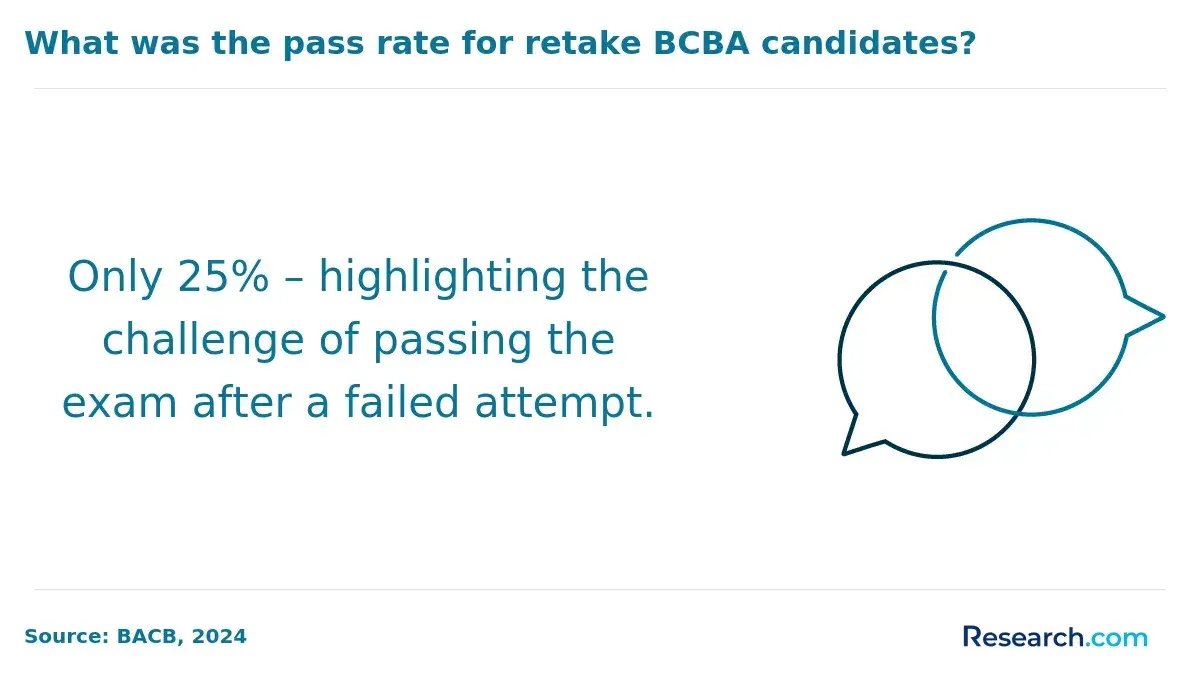
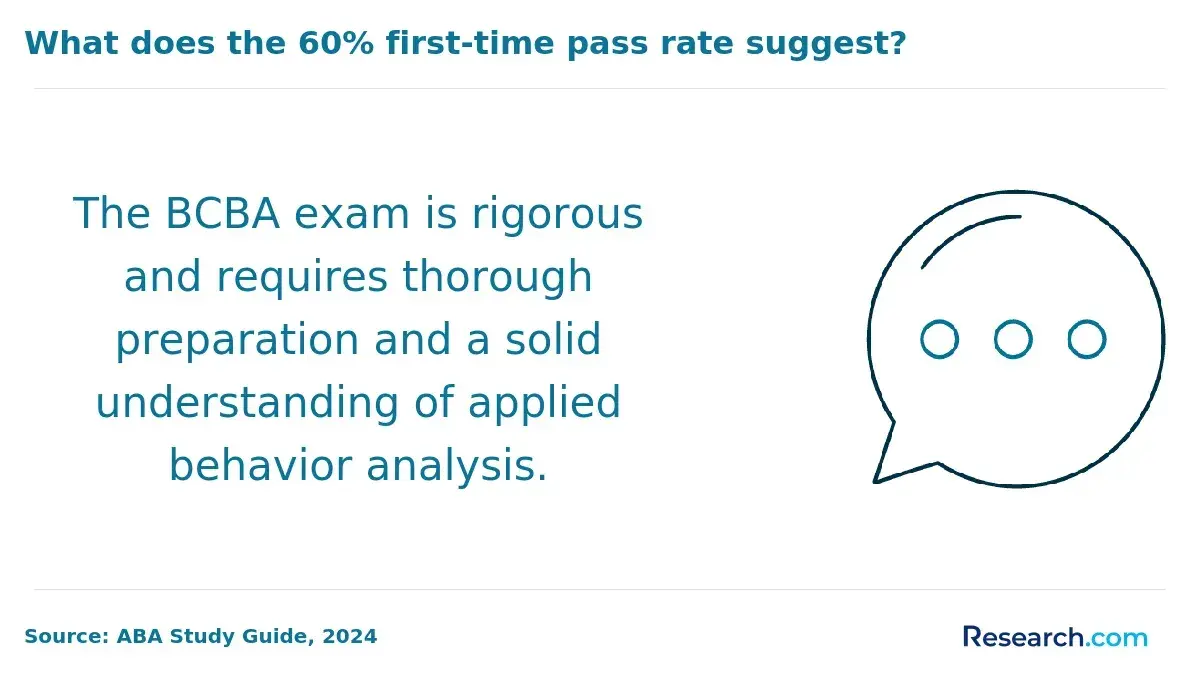
How do I apply for and pass the BCBA exam?
The BCBA exam process rewards organization. Many delays happen before the exam because transcripts, coursework documentation, supervision records, or names on identification documents do not match. Treat the application like a professional audit file, not a simple online form.
- Confirm eligibility first. Make sure you have the required graduate degree, qualifying behavior-analytic coursework, and completed supervised fieldwork before applying.
- Gather documentation before opening the application. You should have official transcripts, fieldwork verification forms, and any required coursework documentation ready for review.
- Submit the BACB application through the BACB portal and pay the $245 application fee. Review names, dates, addresses, and documentation carefully before submission.
- After approval, create or use your Pearson VUE account and schedule the exam. The exam fee listed for this step is $125. Book early if you want a Port St. Lucie testing location or a nearby testing center.
- Study from the BACB task list and official materials first. Add timed practice exams, fluency drills, ethics review, and local or online study groups once you know your weak areas.
- Simulate test conditions. Practice answering questions under timed conditions so the exam format does not become a separate source of stress.
- Arrive 30 minutes early on exam day with two valid IDs that match your BACB records. Follow testing center rules closely, because administrative issues can interfere with testing.
- Remember that results are reported as pass/fail only, and passing scores vary by exam form. Focus on full-content mastery rather than guessing a specific raw score target.
If you need a flexible academic pathway before applying, compare online and in-person BCBA degree program options. A strong program should help you align coursework, fieldwork, and exam timing rather than leaving you to coordinate each requirement alone.
Are there Port St. Lucie, FL-specific BCBA licensure or registration rules?
Port St. Lucie does not have its own separate BCBA license or city registration pathway. Candidates should focus on BACB certification, Florida-wide practice expectations, employer requirements, payer requirements, background checks, and the ethical standards that govern behavior analysis.
Before accepting a role or opening a practice, verify these items:
- Whether the employer requires active BACB certification before hire or allows candidates to work in a trainee or technician role first.
- Whether your position requires additional background checks, school district clearance, Medicaid-related documentation, or private insurance credentialing.
- Whether your scope of practice is limited to behavior analysis or overlaps with another licensed profession such as counseling, psychology, speech-language pathology, or special education.
- Whether you are maintaining certification requirements on time, including renewal obligations and ethics compliance.
The safest approach is to avoid assuming that BCBA certification authorizes every type of therapy service. If your work begins to involve mental health counseling, psychotherapy, diagnosis, or educational licensure duties, confirm whether an additional credential is required.
How much do BCBAs make in Port St. Lucie, FL?
The average annual salary for a BCBA in Port St. Lucie, FL, is about $73,530, or roughly $35.35 per hour. That is higher than the statewide Florida average of $66,565, or $32.00 per hour. Local salaries commonly range from $65,000 at the 25th percentile to $79,500 at the 75th percentile, while top earners make close to $92,000 annually.
| Salary factor | How it affects pay in Port St. Lucie |
| Employer type | Clinics, schools, home-based providers, and specialized agencies may pay differently. Organizations such as Path 2 Potential offer salaries up to $94,869. |
| Experience | New BCBAs may start closer to the lower end, while experienced clinicians who supervise teams or manage programs can command higher compensation. |
| Credentials and responsibilities | Advanced training, supervision duties, leadership roles, and specialized clinical skills can improve earning potential. |
| Specialization | Experience in areas such as early intervention or feeding disorders may support stronger compensation when employers need those services. |
| Local demand | Population growth and continuing need for ABA services can improve job availability and salary competitiveness. |
Salary should not be evaluated in isolation. Compare caseload size, billable hour expectations, supervision responsibilities, travel requirements, benefits, paid CEUs, liability coverage, and opportunities for advancement. A slightly lower salary may be better if the employer provides strong mentorship and manageable caseloads; a higher salary may not be worth it if it comes with unsustainable productivity expectations.
The chart below shows the annual wage of BCBA per percentile.
Can BCBAs Transition to Licensed Therapy Roles in Port St. Lucie, FL?
BCBAs can pursue additional licensed therapy credentials, but they should treat that move as a separate professional pathway, not an automatic extension of BCBA certification. Behavior analysis and licensed therapy can complement each other, yet they are governed by different training, ethics, scope-of-practice, supervision, and licensure expectations.
This path may make sense if you want to work with broader mental health concerns, provide counseling services, or integrate behavioral services with therapeutic models in a legally appropriate way. To understand one possible route, review Research.com’s guide on how to become a therapist in Port St. Lucie.
Can I expand my practice by integrating therapy credentials?
Adding a therapy credential can broaden the types of clients you serve, but only if you complete the required education, supervised clinical experience, and licensure steps for that profession. BCBAs should be especially careful not to market counseling, psychotherapy, marriage and family therapy, or diagnosis-related services unless they hold the proper credential.
If your long-term goal includes family systems work, couples-related services, or relational therapy, compare the Port St. Lucie MFT license requirements with your BCBA pathway. That comparison can help you decide whether dual credentialing is worth the extra time, cost, and supervision.
Can integrating special education expertise enhance my BCBA career in Port St. Lucie, FL?
Special education knowledge can make a BCBA more effective in school-based consultation, IEP-related collaboration, classroom behavior planning, parent communication, and staff training. This is especially useful for analysts who want to work with students with disabilities, support teachers, or move between clinical and educational settings.
However, special education expertise and special education teacher certification are not the same thing. If you want to teach in a public school role or hold an educator credential, review how to become a special education teacher in Port St. Lucie before assuming your BCBA credential will qualify you for school employment beyond behavior analysis duties.
What is the job outlook for BCBAs in Port St. Lucie, FL?
The Port St. Lucie BCBA job market is supported by local demand for autism services, school-based behavioral support, home-based ABA, early intervention, and clinical supervision. The area shows a projected BCBA job growth rate of 15% over the next decade, and demand for BCBAs has increased by over 20% in recent years.
To position yourself well, do more than finish the minimum credential. Employers often value candidates who can communicate with families, supervise RBTs, interpret data, write clear treatment plans, collaborate with schools, and adapt services across clinic, home, school, and telehealth settings.
Indian River State College can be useful for students beginning with psychology or behavioral science foundations, while graduate-level candidates may need a dedicated ABA program that aligns with BCBA requirements. If flexibility is important, compare the best applied behavior analysis online degree program options with local supervision availability so your education and fieldwork can progress together.
The chart below shows the projected employment growth rate of BCBA-related jobs from 2023 to 2033.
What are common career paths for BCBAs in Port St. Lucie, FL?
BCBAs in Port St. Lucie can work in clinics, schools, homes, early intervention programs, nonprofit settings, telehealth-supported roles, supervisory positions, and private practice. The best path depends on your preferred client population, tolerance for travel, interest in leadership, and comfort with billing and compliance responsibilities.
| Career path | Typical work | Best for | Trade-offs to consider |
| Clinical BCBA | Conducts assessments, writes behavior plans, supervises RBTs, reviews data, and coordinates care. | Candidates who want structured ABA service delivery and clinical growth. | Caseloads, billable targets, and documentation demands can be high. |
| School-based consultant | Supports behavior intervention plans, trains staff, consults with educators, and helps teams address student behavior needs. | BCBAs interested in special education, classroom systems, and interdisciplinary work. | School calendars, district procedures, and role boundaries can affect autonomy. |
| Early intervention or home-based provider | Works with young children and families, often through caregiver coaching and natural-environment interventions. | Professionals who value family-centered work and flexible service settings. | Travel, scheduling, and family availability can shape workload. |
| Clinical supervisor or program manager | Oversees other clinicians, trains staff, manages quality assurance, and supports program operations. | Experienced BCBAs who want leadership and systems-level impact. | Less direct client time and more administrative responsibility. |
| ABA clinic owner | Builds a practice, hires staff, manages compliance, handles billing, and develops service lines. | BCBAs with business skills, leadership experience, and strong local market understanding. | Requires knowledge of insurance, HIPAA, employment law, marketing, and financial management. |
Clinical and Supervisory Roles
Many BCBAs begin in clinics or pediatric ABA centers. This route develops core skills in functional behavior assessment, treatment planning, data analysis, RBT supervision, parent training, and interdisciplinary collaboration. It can also lead to senior BCBA, clinical director, or quality assurance roles.
School-Based and Educational Consulting
School-based work suits BCBAs who want to support students, teachers, paraprofessionals, and families. Strong communication is essential because you may need to translate behavior-analytic concepts into practical classroom strategies and collaborate with IEP teams.
Early Intervention and Home-Based Services
Home-based and early intervention work can be deeply rewarding for BCBAs who enjoy coaching caregivers and helping young children build communication, adaptive, and social skills. It also requires flexibility, careful boundaries, and strong documentation practices.
Opening Your Own ABA Clinic
Private practice is possible, but it should come after strong clinical and operational experience. Before opening a clinic, evaluate demand, payer contracts, billing systems, supervision structure, hiring needs, HIPAA compliance, liability coverage, and local competition.
Advancing Your Career and Training
Continuing education in supervision, ethics, trauma-informed care, insurance documentation, and specialty assessment can improve career mobility. If cost is a barrier to entering the field, compare a cheap BCBA online program with accreditation, BACB alignment, completion support, and supervision access before choosing only by tuition.
How can I find BCBA mentorship or networking opportunities in Port St. Lucie, FL?
Mentorship is especially important for new BCBAs because certification proves eligibility, not mastery. A strong mentor can help you handle difficult cases, set ethical boundaries, supervise RBTs, communicate with families, and avoid common clinical and documentation mistakes.
- Explore the Behavior Basics Residency Program if you want structured mentorship, specialized training, smaller caseload support, and a guided transition into clinical practice.
- Attend local CEU events, workshops, open houses, and ABA meet-ups. These events can satisfy continuing education needs while helping you meet supervisors, employers, and peers.
- Look for employers that advertise mentorship, case consultation, leadership development, and supervision quality rather than only salary or caseload volume.
- Connect with agencies such as the Collaborative Behavior Group when local events, open houses, or training opportunities are available.
- Use online ABA communities and Florida-focused professional forums to find advice, job leads, CEU recommendations, and supervisor referrals.
- Volunteer, intern, or work in clinics, schools, nonprofits, or advocacy organizations to build a local reputation before applying for BCBA-level roles.
- Keep LinkedIn and other professional profiles current so local providers can see your fieldwork experience, specialties, and certification progress.
A practical networking strategy is to contact a small number of providers each month, attend at least one CEU or professional event when available, and follow up with specific questions rather than general requests for “mentorship.” Busy clinicians are more likely to respond when you ask about supervision structure, early-career mistakes, or recommended training resources.
What should I know about working with clients as a new BCBA in Port St. Lucie, FL?
New BCBAs in Port St. Lucie need clinical skill, cultural awareness, documentation discipline, and realistic expectations about service delivery. You may work across clinics, homes, schools, and telehealth-supported models, and each setting brings different communication, scheduling, and compliance challenges.
- Build cultural competence for English- and Spanish-speaking families and avoid one-size-fits-all treatment planning.
- Learn how services differ across private clinics, school settings, home-based therapy, and telehealth-supported care.
- Collaborate with speech therapists, teachers, occupational therapists, social workers, physicians, and caregivers when a client’s plan requires coordinated support.
- Understand Florida Medicaid and private insurance expectations for autism and ABA services, especially documentation and authorization rules.
- Prepare for waitlists by improving intake workflows, prioritization criteria, caregiver communication, and referral coordination.
- Participate in community events so you understand local family needs rather than relying only on clinic-based data.
- Stay current on BACB ethics, certification maintenance, Florida practice expectations, and employer compliance policies.
- Seek supervision or peer consultation when you encounter cases outside your training, such as complex mental health concerns, feeding issues, severe aggression, or legal disputes.
Common mistakes to avoid when becoming a BCBA in Port St. Lucie
| Mistake | Why it causes problems | Better approach |
| Choosing a program only because it is convenient | A nearby or online program may not automatically meet BACB coursework requirements. | Ask for written confirmation of how the program supports BCBA eligibility. |
| Waiting too long to secure supervision | Fieldwork availability can delay certification even after coursework is complete. | Contact potential supervisors before or early in your graduate program. |
| Counting hours before signing a supervision agreement | Hours may not count if the proper contract and documentation are missing. | Finalize the supervision contract before logging any fieldwork. |
| Focusing only on tuition | Supervision, fees, books, exam prep, renewal, insurance, and background checks can change the true cost. | Create a full budget before enrolling. |
| Assuming BCBA certification allows therapy services | Behavior analysis and licensed therapy have different scopes of practice. | Pursue additional licensure if your career goals include counseling, psychotherapy, or family therapy. |
| Ignoring renewal deadlines | Missing recertification can lead to inactive status and additional requirements. | Track CEUs and renewal dates from your first day as a BCBA. |
Questions to ask before choosing a BCBA program or employer
- Does the program meet current BACB education and coursework requirements?
- How will the VCS system ending December 31, 2025, affect my eligibility timeline?
- Is supervised fieldwork included, arranged separately, or left entirely to the student?
- Who provides supervision, and do they meet BACB supervisor requirements?
- What percentage of fieldwork will be unrestricted activities?
- What is the total cost, including tuition, supervision, application fees, exam fees, materials, renewal, and background checks?
- Does the employer provide mentorship for new BCBAs or mainly expect independent caseload management?
- What are the caseload size, billable expectations, travel requirements, and documentation standards?
- Does the role involve any services that may require a separate Florida license or credential?
What do BCBAs say about their careers in Port St. Lucie, FL?
The most useful part of my Port St. Lucie training was learning how classroom theory becomes a real behavior plan. Working with children on the autism spectrum helped me understand assessment, data collection, and family communication in a way coursework alone could not. – Jasmine
The combination of coursework and clinical hours gave me a clearer path from student to practitioner. The biggest lesson was that ethical, data-based decision-making has to guide every treatment choice, especially when families are counting on you. – Marcus
Working through a local nonprofit initiative showed me how much families need consistent, compassionate ABA services. It also helped me see that evidence-based practice is not just technical; it has to be delivered with trust and respect. – Elena
Related Articles for Nearby Cities
- 2027 How to Become a BCBA in Miami, FL: Education Requirements & Certification
- 2027 How to Become a BCBA in Orlando, FL: Education Requirements & Certification
- 2027 How to Become a BCBA in Tampa, FL: Education Requirements & Certification
- 2027 How to Become a BCBA in St. Petersburg, FL: Education Requirements & Certification
- 2027 How to Become a BCBA in Jacksonville, FL: Education Requirements & Certification
- 2027 How to Become a BCBA in Atlanta, GA: Education Requirements & Certification
- 2027 How to Become a BCBA in Charlotte, NC: Education Requirements & Certification
- 2027 How to Become a BCBA in Raleigh, NC: Education Requirements & Certification
- 2027 How to Become a BCBA in Durham, NC: Education Requirements & Certification
- 2027 How to Become a BCBA in Greensboro, NC: Education Requirements & Certification
References:
- Behavior Basics, Inc. (n.d.). BCBA Residency Program - Port Saint Lucie, Palm City, Fort Pierce. Retrieved from Behavior Basics BCBA Residency Program
- Behavior Analyst Certification Board. (n.d.). Board Certified Behavior Analyst. Retrieved from BACB BCBA certification information
- City of Port St. Lucie, FL. (n.d.). Home. Retrieved from City of Port St. Lucie official website
- Florida Tech. (n.d.). Behavior Technician Training. Retrieved from Florida Tech behavior technician training
- Port St. Lucie Police Department. (n.d.). Get Service. Retrieved from Port St. Lucie Police Department services
- Saint Lucie County Property Appraiser. (n.d.). Our Promise to You… Superior Service, Trusted Results. Retrieved from Saint Lucie County Property Appraiser
- St. Lucie Clerk. (n.d.). Public Search. Retrieved from St. Lucie Clerk public search
- St. Lucie Co Sheriff's Office, FL. (n.d.). Inmate Lookup. Retrieved from St. Lucie County Sheriff inmate lookup
- St. Lucie County, FL. (n.d.). Contact Us. Retrieved from St. Lucie County contact information
- St Lucie Public Schools. (n.d.). Behavior. Retrieved from St. Lucie Public Schools behavior services
Key Insights
- The BCBA pathway in Port St. Lucie is driven by BACB national certification, not a separate city credential.
- Plan coursework and fieldwork together. Supervision access is often the factor that determines how quickly you can become exam eligible.
- Port St. Lucie candidates should compare total program cost, including tuition, supervision, exam fees, background checks, study materials, renewal, and optional insurance.
- The local average BCBA salary is about $73,530, but job quality also depends on caseload, mentorship, benefits, travel, and billable expectations.
- Demand is strong, with BCBA job growth projected at 15% over the next decade and demand increasing by over 20% in recent years, but candidates still need strong clinical, communication, and documentation skills to stand out.
- Additional therapy or special education credentials can expand career options, but they require separate training and should not be assumed to fall under BCBA scope of practice.
- The best next step is to verify BACB-aligned coursework, contact potential supervisors, build a full cost estimate, and choose a pathway that fits both your timeline and the type of clients you want to serve.
Other Things You Should Know About Being a BCBA in Port St. Lucie, FL
To become a BCBA in Port St. Lucie, FL, in 2027, you must complete a minimum of 1,500 hours of supervised experience. This supervision must be overseen by a qualified BCBA supervisor and adhere to the guidelines set by the Behavior Analyst Certification Board.
The Behavior Analyst Certification Board (BACB) sets the BCBA certification standards in 2027. It controls eligibility rules, approved coursework, supervised experience, the BCBA exam, ethics requirements, and recertification conditions for candidates in Port St. Lucie, FL.
To become a BCBA in Port St. Lucie, FL, in 2027, you must complete a master's degree in behavior analysis, education, or psychology. Additionally, you must complete a verified course sequence and a supervised experience that meets BCBA eligibility standards before applying for the certification exam.


