2027 LPN-to-BSN Costs Beyond Tuition: Technology, Travel, Testing, and Required Materials
Audited and Verified:
Our Editorial and Data Verification Process
Research.com uses government datasets, official education statistics and primary institutional information to support its career and degree guides. Our review process checks factual accuracy, occupational definitions, source dates and the requirements associated with the credentials discussed.
How This Article Was Fact-Checked
Our editorial team verifies salary estimates, employment projections, education requirements and program information against original data providers and official organizations. Salary figures are checked against the relevant occupational definitions and reporting periods. Information about licensure, accreditation and required in-person training is reviewed separately.
Fact-checked and verified on:

Co-Founder and Chief Data Scientist
An LPN-to-BSN program's tuition quote rarely captures what it will cost to finish. Clinical travel, required technology, supplies, screening, and RN licensing expenses can arrive at different points in the program—and some must be paid before financial aid or employer reimbursement arrives.
This guide is for licensed practical or vocational nurses comparing prelicensure BSN bridge programs. It shows which expenses to request in writing, how delivery format changes the budget, and how to compare schools without mistaking a low tuition rate for a low total cost.
Key Things You Should Know
- Budget separately for program charges, required purchases, clinical transportation, screening, and RN examination and licensure; a tuition quote does not cover them all.
- The U.S. NCLEX registration fee is $200; state application, fingerprinting, and any retesting costs are separate and must be checked for the intended licensing state.
- Compare costs through graduation and initial RN licensure, including accepted credits, required on-site days, likely travel, and income lost if clinical schedules reduce paid LPN shifts.
What costs should LPN-to-BSN students budget beyond tuition?
An LPN-to-BSN bridge is generally a prelicensure RN pathway: it builds on prior practical-nursing education but still requires completion of the school's BSN curriculum and applicable RN clinical preparation. It is not the same as an RN-to-BSN program, which assumes the student already holds an RN license.
Build a budget from the school's charges and the expenses you must pay elsewhere. This table separates them so a bundled "program fee" does not obscure a second bill for the same item:
| Cost category | What may be included | What to verify |
| School charges beyond tuition | Course, lab, simulation, technology, graduation, and clinical-placement fees | Whether fees recur each term or increase with additional courses |
| Required purchases | Books, access codes, uniforms, equipment, and computer hardware | Which items are bundled, reusable, or restricted to approved vendors |
| Clinical and compliance costs | Travel, parking, screening, immunization documentation, and site-specific requirements | When requirements expire and who pays for repeat clearance |
| Completion and licensing costs | Exit testing, graduation paperwork, NCLEX registration, and state RN application | Which payments occur after the final tuition bill |
| Indirect costs | Reduced LPN work hours, childcare, meals away from home, and possible lodging | Whether the published cost of attendance reflects your actual schedule |
Ask for a term-by-term estimate based on your transcript evaluation. A bridge label does not guarantee that every prior LPN course will replace a BSN requirement. An associate-degree RN to MSN option is a different, postlicensure route—not a shortcut that lets an LPN omit initial RN preparation.
How much do books, uniforms, equipment, and clinical supplies cost?
There is no dependable national price for an LPN-to-BSN supply kit. Costs depend on whether the school bundles digital textbooks and testing access into course fees, requires new editions or single-use access codes, and specifies uniform colors or equipment models. Request the required-item list for every term, not just the first semester.
Books and access codes can be especially difficult to price from a bookstore listing: a used text may be acceptable while its companion online assignment code must be bought new. For scrubs, shoes, a watch, stethoscope, and protective items, ask what existing LPN gear meets the BSN program's and clinical site's rules before replacing it. Check whether laundry, replacement uniforms, or lab supplies will be recurring expenses.
Keep this budget specific to initial RN education. Materials advertised for postgraduate FNP certificate schedules serve a different clinical role and should not be used to estimate an LPN-to-BSN supply bill.
What technology expenses do online and hybrid nursing programs require?
Online coursework can shift costs from campus commuting to the student's home setup. A school may require a supported laptop, webcam, microphone, dependable broadband, and software that runs only on certain operating systems. Remote-proctored tests may require a private room and equipment that meets the testing provider's specifications. Confirm whether the learning platform, digital texts, simulation tools, and exam-preparation products are included in mandatory fees.
Ask for the published device specifications before buying a computer, and confirm whether in-person testing or simulation is required despite the online label. If household members share a device or connection, account for how scheduled exams and live sessions will work. The same checks matter when considering online BSN-to-MSN programs organized by tuition: a low tuition figure does not establish that technology is free.
Clinical travel is often the largest expense a tuition comparison misses, but its amount depends on placement location and schedule. Request the expected number of clinical, lab, simulation, and campus attendance days; the possible placement radius; and whether assignments can start early, end late, or fall on weekends. The school may arrange placements without guaranteeing one near your home or LPN job.
Estimate each required trip using round-trip distance × expected trips, then add parking, tolls, transit fares, and any overnight stay. Calculate the effect of shifts you cannot work and caregiving you must cover separately: those are real household costs even when they are not billed by the school. Recheck the estimate if the placement site changes. Similarly, a later shorter family NP training pathway should not be assumed to have a small travel bill merely because its advertised duration is short; it is not a substitute for RN licensure.
Ask the program which entrance or progression exams, commercial assessment packages, skills checks, and exit tests carry separate charges. An exam may be included in a course fee while a repeat attempt is not. Entrance test rules also vary: nursing program options without HESI scores can help frame questions about admissions testing but confirm the exact LPN-to-BSN track's policy.
Clinical sites may require background checks, fingerprinting, drug screening, CPR certification, health documentation, or renewed clearances. Find out who orders them, when they expire, and whether a change of site triggers another charge. Existing LPN employment clearance may not satisfy a school or new clinical site.
For initial RN licensure, the U.S. NCLEX registration fee is $200 under the examination administrator's published fee schedule. The state board's application and fingerprinting charges are additional and vary. Confirm current fees and eligibility instructions with the board where you intend to apply; graduation and NCLEX registration do not themselves grant an RN license.
Check three different questions before paying a deposit: whether the institution holds recognized institutional accreditation, whether the specific nursing program has applicable programmatic accreditation, and whether its prelicensure RN pathway has the approval or recognition required by the relevant state board. Also ask whether the school may enroll you and arrange clinical education in your state. These are distinct determinations, not interchangeable seals of quality.
A mismatch can have financial consequences: a student may need a different program, additional travel, or more time before qualifying to apply for RN licensure. Obtain the exact program name and approval status in writing, then verify it with the appropriate accreditor and state board. This check applies to other degrees too; a listing of accelerated DNP programs cannot establish approval or licensure eligibility for a prelicensure LPN-to-BSN track.
Delivery format changes where costs arise, not whether supervised RN preparation is required. Compare programs using the actual attendance calendar and placement rules rather than their online labels.
| Format | Potential cost advantage | Cost exposure to check |
| Mostly online coursework | Fewer routine classroom commutes | Computer and internet requirements, proctored exams, travel for labs and clinicals |
| Hybrid | Some remote study with scheduled on-site learning | Repeated trips, parking, and childcare tied to fixed lab or simulation days |
| Campus-based | On-site equipment and services may be easier to access | Frequent commuting and time away from paid LPN shifts |
Ask whether online courses are asynchronous, which activities have fixed times, and where clinical placements may occur. For context, RN-to-BSN pathways without standard hospital rotations are designed for nurses who already hold an RN license; their attendance pattern should not be used to budget a prelicensure LPN-to-BSN program.
Start with the school's financial aid office and its published cost of attendance, which may include allowances for books, supplies, transportation, and living expenses as well as tuition and fees. Eligibility for federal student aid depends on the student and program meeting applicable requirements; filing the FAFSA does not guarantee that every actual expense will be covered. Ask whether your expected enrollment intensity, prior coursework, and program length affect aid.
Employer tuition assistance may help an employed LPN, but request the policy before relying on it. Check reimbursement timing, grade requirements, annual limits, eligible non-tuition expenses, and any commitment to remain employed. Scholarships and state workforce programs may have separate eligibility rules. Compare net out-of-pocket cost and payment timing, not just a stated award amount. The same discipline matters with lower-cost mental health advanced practice study, which requires a different educational and licensing starting point.
Request comparable, written estimates from each school for the same entry term and your expected course load. The following sequence turns advertised prices into a decision you can audit:
- Get a written credit evaluation showing which LPN and general-education credits apply to the nursing major and how many terms remain.
- Request tuition by credit or term, every mandatory fee, the required-materials list, and an explanation of charges for repeated or delayed courses.
- Obtain the on-site calendar and placement policy; estimate travel, parking, childcare, and LPN shifts you may lose.
- Add screening, testing, graduation, NCLEX, and state RN application costs, noting when each payment is due.
- Subtract only aid or employer assistance you are eligible to receive, accounting for reimbursement delays and conditions.
Then compare the totals alongside approval status, clinical-site access, and the time needed to finish. A cheaper credit hour can cost more if fewer credits apply or clinical scheduling extends enrollment. Lists of lower-cost online NP degree options address a later, graduate-level decision; they do not replace this school-specific prelicensure cost comparison.
What career benefits and salary potential can a BSN provide after graduation?
For an LPN, the principal potential benefit is access to the RN licensure pathway and, once licensed, jobs with RN responsibilities rather than LPN scope. A BSN may also meet educational preferences for some RN positions or support later graduate study. Completion of the degree alone does not authorize RN practice: the graduate must meet state eligibility requirements, pass the NCLEX-RN, and receive a license.
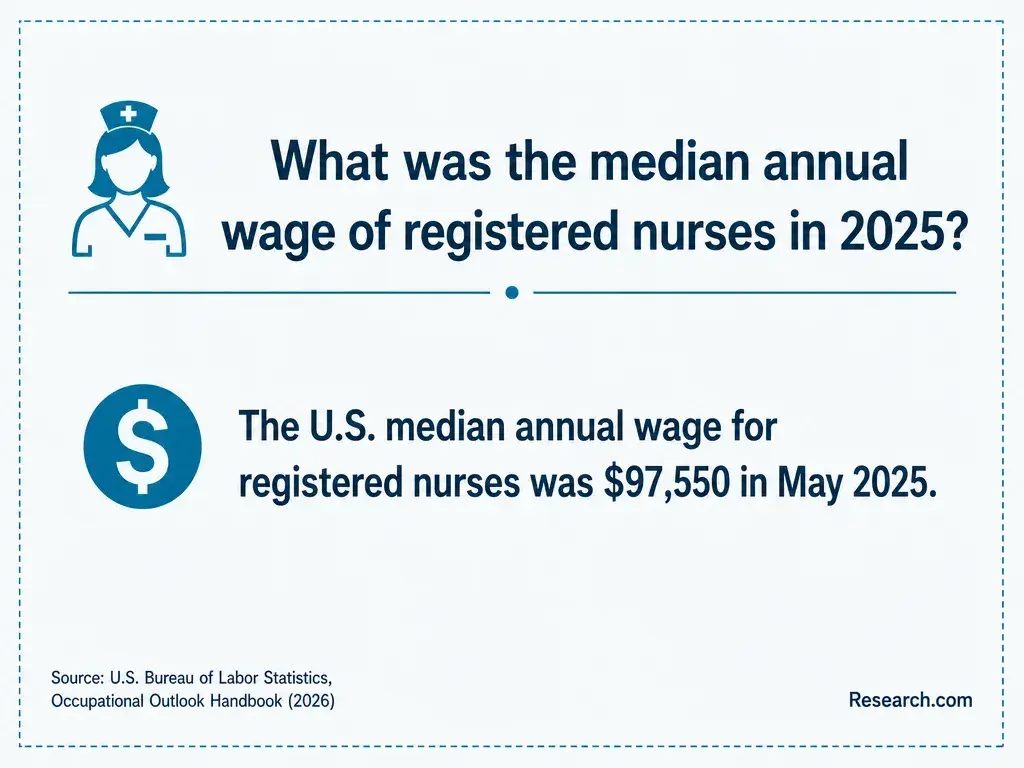
The U.S. Bureau of Labor Statistics reports separate occupational wage data for registered nurses and licensed practical and vocational nurses. Those occupation-wide figures can show a broad earnings difference, but they are not a promised raise for an individual BSN graduate. Local offers depend on employer, setting, shifts, experience, and available RN openings. Compare realistic local RN offers with your present LPN earnings and the full cost of attendance, including forgone shifts.
Graduate specialties require additional preparation; accelerated MSN preparation in psychiatric nursing, for example, is not an outcome of the BSN alone. If your immediate goal is a particular RN position, confirm that employer's degree and experience requirements before treating future graduate school costs as part of this decision.
Other Things You Should Know About Nursing
Do not assume so. The nursing program must determine whether an experience meets its supervised clinical objectives and documentation rules; ordinary employment hours are not automatically accepted.
Often, if your license remains active and your employer's schedule accommodates classes and clinicals. Ask for the on-site calendar before committing to a fixed work schedule.
Some programs or sites require proof of coverage or other health documentation. Request the applicable policy early, including any waiver process and deadlines.
Ask whether the delay would extend enrollment, create another term of fees, or require renewed screening. Get the school's progression and refund policies in writing before paying nonrefundable expenses.
- Background Screening FAQs | FL HealthSource https://flhealthsource.gov/background-screening/bgs-faqs/
- What Financial Aid Offers Don't Tell You About the Cost of College | U.S. GAO https://www.gao.gov/blog/what-financial-aid-offers-dont-tell-you-about-cost-college
- Health Profession Student Clinical Training Standards | oregon.gov https://www.oregon.gov/oha/hpa/hp/pages/sct.aspx
- Cost of Attendance (Budget) | 2025-2026 Federal Student Aid Handbook https://fsapartners.ed.gov/knowledge-center/fsa-handbook/2025-2026/vol3/ch2-cost-attendance-budget
- Licensure by Examination | la.gov https://www.lsbpne.la.gov/licensure/licensure-by-examination/
- Clinical Clearance Requirements | Rutgers Nursing https://nursing.rutgers.edu/students/clinical/clinical-clearance-requirements/
- PA Clearance for Clinical Year | School of Medicine Catalog https://med.catalog.cuny.edu/pahandbook/clinicalyr/clearance
- How Do Transfer Credits Work When You Go Back to School? | Whitworth Online https://online.whitworth.edu/news-articles/how-do-transfer-credits-work-when-you-go-back-to-school/
- Policy 1.6: Course Repeat Policy - Current Students https://students.nursing.uw.edu/policies/policy-1-6-course-repeat-policy/
- Sumner CollegeNursing Student Must Haves and Essentials for Nursing School https://sumnercollege.edu/blog/nursing-student-must-haves-and-essentials-for-nursing-school/