2027 Food Industry Management Roles at the Center of AI-Enabled Supply and Demand Planning

Co-Founder and Chief Data Scientist
Food companies need managers who can use AI to forecast demand, reduce waste, manage suppliers, and keep shelves stocked when costs and consumer behavior shift quickly. The U. S. food system remains massive: USDA Economic Research Service data published in 2024 shows U. S. food spending reached more than $2.5 trillion. This guide is for students, career changers, and working professionals comparing food industry management degrees, certificates, and career paths. You will learn which roles use AI, what skills employers value, what programs typically cost, and how to choose a credible education path.
Key Things You Should Know
- AI-enabled food planning roles sit at the intersection of operations, analytics, food safety, procurement, logistics, and merchandising; BLS May 2024 data shows logisticians had a median annual wage of $82,060, while operations research analysts had a median annual wage of $91,290.
- A bachelor's degree can support entry-level supply chain, food operations, procurement, or production planning roles, while an MBA, master's in supply chain, analytics certificate, or specialized food industry management graduate program is often more useful for advancement into planning leadership.
- Before enrolling, students should compare accreditation, experiential learning, AI and analytics coursework, employer connections, transfer-credit policies, and total cost; College Board's 2024 data lists average published tuition and fees at $11,610 for in-state public four-year colleges and $43,350 for private nonprofit four-year colleges.
What are AI-enabled food industry management roles in modern supply and demand planning?
AI-enabled food industry management roles are business and operations jobs that use data, predictive models, automation tools, and domain knowledge to coordinate supply with consumer demand. In practical terms, these professionals help food manufacturers, distributors, grocery chains, restaurants, and agricultural suppliers decide what to buy, make, store, ship, and sell.
The "AI-enabled" part does not mean every manager builds machine learning models from scratch. More often, it means managers know how to interpret AI-generated forecasts, question model outputs, identify operational constraints, and translate recommendations into decisions that protect margins, freshness, service levels, and food safety.
The table below summarizes where these roles usually sit in the food supply chain and what decisions they influence. This matters because students should choose coursework and internships that match the part of the chain they want to manage.
| Planning area | Typical business question | How AI supports the decision | Common employer settings |
| Demand planning | How much product will customers buy? | Uses sales history, seasonality, promotions, weather, and market signals to improve forecasts | Grocery, foodservice, consumer packaged goods, meal kits |
| Supply planning | Can suppliers, plants, and warehouses meet expected demand? | Flags capacity gaps, supplier risks, ingredient constraints, and replenishment needs | Food manufacturing, distribution, agribusiness |
| Inventory planning | How much stock is enough without creating waste? | Optimizes reorder points, shelf-life windows, safety stock, and spoilage risk | Retail, cold chain logistics, restaurants |
| Production planning | What should be produced, when, and on which line? | Balances forecast demand, labor, equipment, allergens, sanitation schedules, and throughput | Food plants, bakeries, beverage producers |
| Category and merchandising planning | Which products, prices, and promotions should be prioritized? | Analyzes buying patterns, substitutions, promotion lift, and local demand differences | Grocery, wholesale clubs, specialty food retail |
These roles are attractive for people who like applied problem-solving more than pure coding. The strongest candidates can explain business trade-offs: a forecast may be statistically accurate, for example, but still impractical if it ignores supplier lead times, refrigerated storage limits, or expiration dates.
How is AI transforming supply and demand planning across the food supply chain?
AI is changing food planning by moving companies from reactive spreadsheets toward faster, more connected decisions. The biggest value is not simply "automation"; it is better coordination across demand signals, supplier capacity, inventory risk, transportation, labor, and product freshness.
In food, planning is harder than in many industries because products expire, demand changes with weather and holidays, and quality problems can create urgent recalls. AI tools help managers detect patterns and exceptions earlier, but human judgment still matters because models can misread one-time events or incomplete data.
Several AI use cases are especially relevant for students preparing for food industry management careers. Understanding these applications helps you decide whether to emphasize analytics, operations, procurement, retail management, or food safety in your education plan.
- Demand sensing: AI tools combine point-of-sale data, promotions, local events, weather, and seasonality to adjust short-term forecasts more quickly than traditional monthly planning cycles.
- Fresh inventory optimization: Planning systems can recommend order quantities that balance customer availability with spoilage risk, which is critical for produce, dairy, meat, bakery, and prepared foods.
- Supplier risk monitoring: AI can flag unusual delays, quality issues, commodity-price changes, or geographic disruptions that may affect ingredients and packaging.
- Production scheduling: Optimization tools help planners sequence production runs around equipment availability, allergens, sanitation windows, labor, and batch sizes.
- Traceability and compliance support: Data systems can make it easier to track product movement, lot codes, and supplier records, especially as food traceability expectations rise.
One current trend affecting planning roles is the growing expectation that managers can work with enterprise resource planning systems, demand planning platforms, business intelligence dashboards, and AI-assisted forecasting tools. Employers increasingly value people who can ask whether the model is using the right data, not just people who can accept a recommendation.
Students should also understand the limits of AI. Forecasts are probabilities, not guarantees. A tool can help predict demand for frozen meals, but it cannot fully account for a sudden food safety issue, a port disruption, a viral social media trend, or a major retailer changing shelf space with little notice.
What degree pathways prepare students for AI-focused food industry management careers?
There is no single required major for AI-enabled food supply and demand planning. The best degree depends on whether you want to work closer to food operations, retail management, analytics, logistics, procurement, or executive leadership.
The table below compares common education pathways and the career fit of each option. Use it to narrow your search before comparing individual schools.
| Pathway | Best fit | Strengths | Limitations to consider |
| Bachelor's in food industry management, food business, agribusiness, or hospitality management | Students who want applied food-sector knowledge and management fundamentals | Covers food operations, purchasing, safety, service, marketing, and business basics | May need added analytics, supply chain, or data courses for AI-heavy planning roles |
| Bachelor's in supply chain management, operations management, or logistics | Students targeting planner, buyer, inventory analyst, or logistics coordinator roles | Strong alignment with forecasting, procurement, transportation, and inventory | May require food-specific electives or internships to understand perishability and compliance |
| Bachelor's in business analytics, statistics, information systems, or data science | Students who want to work with forecasting tools and planning data | Builds quantitative and technical strength for AI-supported decision-making | May lack food industry context unless paired with relevant projects or work experience |
| MBA or master's in supply chain, analytics, or food business | Working professionals seeking management advancement | Can support leadership roles in planning, operations, procurement, or strategy | More expensive and usually most valuable when paired with relevant experience |
| Graduate certificate or professional certificate | Career changers or professionals who already hold a degree | Shorter, targeted way to add analytics, supply chain, or food safety knowledge | May not substitute for a degree when employers require one for management roles |
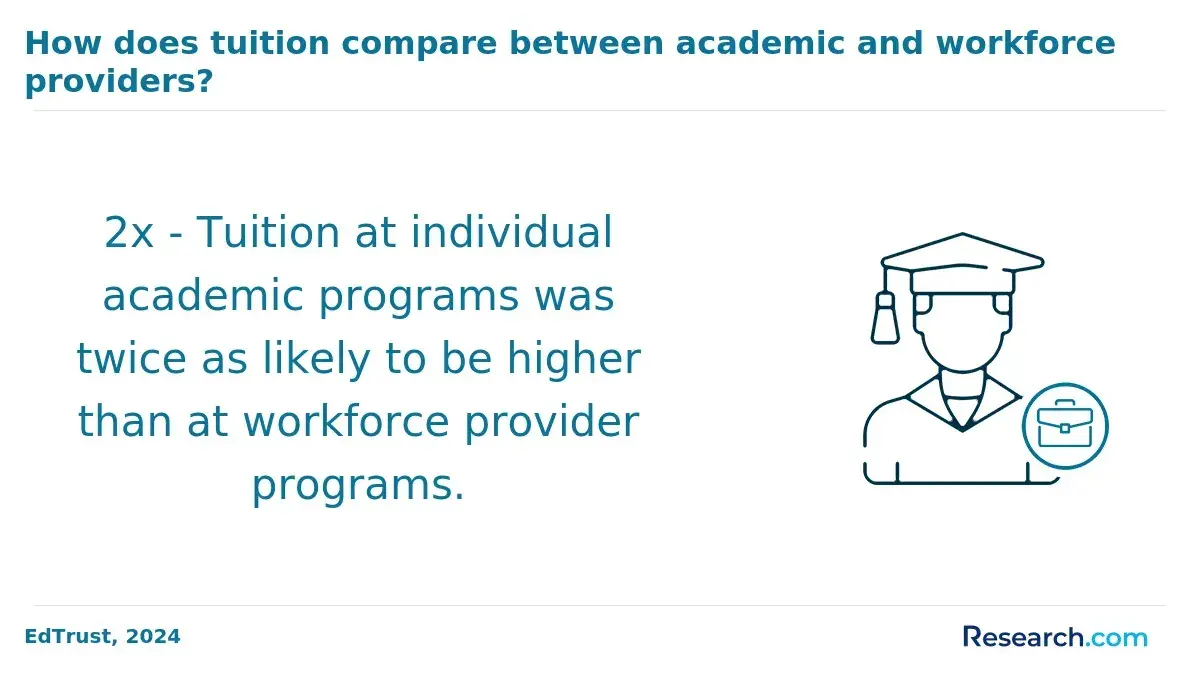
A food-specific program can be useful if you want to work in grocery, foodservice, restaurants, or consumer packaged goods. Students interested in hospitality operations can also compare a hotel and restaurant management degree online, especially if their goal is restaurant supply planning, foodservice purchasing, menu profitability, or multi-unit operations.
A pure data science degree can also work, but it may be less direct for students who do not want a technical analytics career. If your goal is to become a planning manager rather than a data scientist, prioritize programs that combine business decisions, supply chain systems, statistics, and food-sector applications.
What courses and technical skills are taught in food industry management programs?
Strong food industry management programs combine business, operations, food systems, and analytics. The exact curriculum varies by school, but students preparing for AI-enabled planning should look beyond general management courses and check whether the program develops practical forecasting and systems skills.
The most relevant courses usually fall into several categories. These subjects help students connect data-driven recommendations with real-world constraints such as shelf life, production capacity, suppliers, and customer service.
- Food industry foundations: food systems, food safety, quality assurance, food law, food marketing, category management, restaurant or retail operations, and consumer behavior.
- Supply chain and operations: procurement, logistics, inventory management, production planning, transportation, warehousing, lean operations, and cold chain management.
- Analytics and AI readiness: business statistics, forecasting, data visualization, spreadsheet modeling, database basics, predictive analytics, optimization, and responsible AI use.
- Business leadership: accounting, finance, managerial economics, project management, negotiation, team leadership, strategy, and communication.
- Applied learning: internships, capstone projects, case competitions, simulation labs, employer-sponsored projects, or cooperative education placements.
Students should also build software fluency. Employers may use tools such as ERP platforms, supply chain planning suites, business intelligence dashboards, warehouse management systems, statistical software, and advanced spreadsheets. You do not need to master every platform before graduating, but you should be comfortable learning new systems and validating data quality.
Project execution is another underrated skill. AI planning recommendations often fail when teams cannot manage process changes, timelines, stakeholders, or implementation risks. If you want a broader operations credential, comparing an online project management degree can make sense for roles that involve system rollouts, continuous improvement, or cross-functional planning projects.
Common mistake: choosing a program because it mentions "AI" in a course title without checking what students actually do. Better evidence includes projects using real or realistic datasets, forecasting assignments, dashboards, internship requirements, and faculty with operations or analytics experience.
How do online food industry management programs compare with campus-based options?
Online and campus-based programs can both prepare students for food industry management roles, but they serve different needs. The better choice depends on your work schedule, need for hands-on facilities, internship access, networking preferences, and learning style.
The table below compares the decision factors that matter most. It can help you avoid choosing a format based only on convenience or reputation.
| Factor | Online program | Campus-based program | Best choice when |
| Flexibility | Usually stronger for working adults, parents, and military students | Often follows fixed class schedules | Choose online if you need to keep working while studying |
| Hands-on learning | May rely on virtual labs, local internships, simulations, or employer projects | May offer food labs, retail labs, test kitchens, or in-person supply chain simulations | Choose campus if the program's facilities directly support your target role |
| Networking | Can be strong when programs include live sessions, cohort projects, and employer events | Often easier for informal networking, clubs, and local recruiting | Choose the format with stronger employer access in your preferred region |
| Cost control | May reduce relocation and commuting costs | May offer more campus-based scholarships or assistantships | Compare total cost, not only tuition |
| Career services | Quality varies; strong programs support online students equally | May have more in-person fairs and employer visits | Ask how many food, logistics, grocery, or CPG employers recruit from the program |
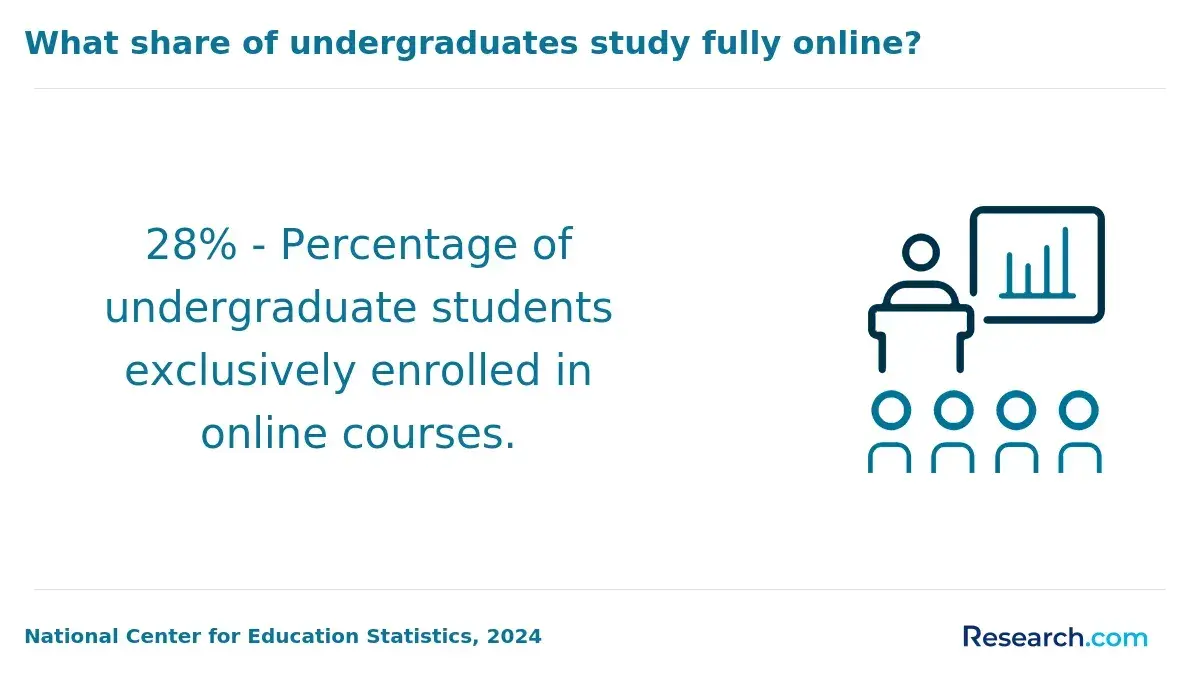
Online study is often a good fit for professionals already working in foodservice, retail, logistics, manufacturing, or purchasing who want to move into planning or management. Campus study may be stronger for younger students who want residential internships, faculty access, student clubs, and in-person recruiting.
Students comparing management degrees across industries may also look at adjacent online business pathways, such as an affordable online MBA healthcare management, to understand how online graduate programs structure leadership, analytics, and operations coursework. The key is to choose the sector focus that matches your intended employers.
Before enrolling online, confirm whether the program helps students secure internships or applied projects near where they live. A flexible format is valuable only if it still gives you evidence of experience to show employers.
What admission requirements do U.S. food industry management programs typically have?
Admission requirements vary by school, degree level, and selectivity. Food industry management programs are usually not licensed pathways in the way nursing or teaching programs can be, but reputable schools still use admissions criteria to determine whether applicants are prepared for business, quantitative, and applied coursework.
For undergraduate programs, applicants usually need a high school diploma or equivalent, transcripts, an application form, and sometimes standardized test scores if the institution is not test-optional. Some programs may recommend high school courses in algebra, statistics, biology, business, or economics.
Graduate programs commonly review academic background, professional experience, quantitative readiness, and career goals. MBA and master's programs may waive GMAT or GRE scores, but students should not assume a waiver is automatic.
Use the following checklist before applying so you can identify missing requirements early and avoid last-minute surprises.
- Confirm the exact major name, degree level, modality, and campus or online availability.
- Check minimum GPA rules, prerequisite courses, and whether business or statistics coursework is required.
- Ask whether test scores are required, optional, waived by experience, or waived by prior GPA.
- Review whether transfer credits, military credits, prior learning, or industry certifications can reduce time to completion.
- Ask whether international transcripts, English proficiency scores, or credential evaluations are needed if applicable.
- Confirm application deadlines for scholarships, internships, graduate assistantships, or cohort starts.
Common mistake: applying only to the broad university without confirming admission into the specific business school, agriculture college, hospitality school, or supply chain major. Some institutions require a second internal application after students complete prerequisite courses.
How long do food industry management degrees take, and what do they cost?
Program length and cost depend on degree level, transfer credits, enrollment intensity, residency status, and whether the school is public, private nonprofit, or for-profit. Students should compare total program cost, not only tuition per credit, because fees, books, technology charges, travel, internships, and lost work hours can change the real price.
College Board's 2024 Trends in College Pricing data lists average published tuition and fees for the 2024-25 academic year at $11,610 for in-state students at public four-year institutions and $43,350 at private nonprofit four-year institutions. These are sticker prices, not net prices, so grants, scholarships, employer tuition assistance, and transfer credits can substantially change what a student actually pays.
The table below gives a practical planning view of typical timelines and cost drivers. It is not a quote from any one school, but it shows where students should expect variation.
| Credential | Typical completion time | Main cost drivers | Best fit |
| Undergraduate certificate | Several months to 1 year | Credit load, public vs. private pricing, whether credits apply to a later degree | Students testing interest in food business or adding a targeted skill |
| Associate degree | About 2 years full time | Community college tuition, transfer agreements, books, commuting | Students seeking lower-cost entry or transfer into a bachelor's program |
| Bachelor's degree | About 4 years full time; shorter with transfer credits | Residency status, institutional aid, living costs, internship requirements | Entry-level management, analyst, procurement, or planning-track roles |
| Graduate certificate | Several months to 1 year | Graduate tuition per credit, employer reimbursement, stackability into a master's | Professionals adding analytics, supply chain, or food safety specialization |
| Master's or MBA | About 1 to 3 years depending on format | Graduate tuition, fees, residency, course load, opportunity cost | Professionals seeking leadership, strategy, planning manager, or director-track roles |
Accelerated programs can reduce calendar time, but they are not automatically cheaper. A compressed schedule may limit work hours, internship flexibility, or time for technical skill-building. Students comparing accelerated graduate options in related management fields can review how programs such as the fastest online MHA balance pace, workload, and professional outcomes, then apply the same questions to food management programs.
To evaluate affordability, calculate a simple break-even picture: total expected cost, expected time out of the workforce, likely starting role, employer tuition support, and whether the credential helps you qualify for roles you could not reasonably access otherwise. Do not assume a degree will pay off just because the industry is large.
What are the main AI-centric job titles and career paths in food supply planning?
AI-centric food planning careers usually begin in analyst, coordinator, buyer, or operations roles and move toward planning management, supply chain leadership, category strategy, or analytics leadership. Job titles vary by employer, so students should read responsibilities carefully instead of relying on titles alone.
The table below maps common titles to responsibilities and education signals. It can help you search job postings more effectively and choose internships that match your preferred path.
| Job title | Typical responsibilities | Common preparation | AI or analytics connection |
| Demand planning analyst | Builds and monitors forecasts, tracks forecast error, supports sales and operations planning | Bachelor's in supply chain, business analytics, food business, or operations | Uses forecasting tools, dashboards, promotion data, and exception reporting |
| Supply planning analyst | Coordinates production, suppliers, inventory, and capacity against expected demand | Supply chain, operations, agribusiness, or food manufacturing background | Uses planning systems to identify shortages, constraints, and replenishment needs |
| Procurement or sourcing analyst | Evaluates suppliers, costs, contracts, risk, quality, and lead times | Business, supply chain, economics, or food industry management | Uses spend analytics, supplier performance data, and risk-monitoring tools |
| Inventory optimization specialist | Balances service levels, stockouts, waste, and holding costs | Operations, logistics, retail, or food distribution experience | Applies reorder models, shelf-life data, and automated replenishment recommendations |
| Sales and operations planning manager | Aligns demand, supply, finance, sales, and operations in recurring planning cycles | Bachelor's plus experience; graduate degree can help for advancement | Translates AI forecasts into cross-functional business decisions |
| Food supply chain analytics manager | Leads dashboards, forecasting projects, planning metrics, and analytics adoption | Analytics, supply chain, information systems, or graduate-level business training | Works closely with data teams and operational leaders to improve planning decisions |
A practical early-career path might start with a warehouse, retail, restaurant purchasing, production, or inventory role, then move into analyst work after building spreadsheet, forecasting, ERP, and communication skills. For many students, an internship with a grocery chain, food distributor, manufacturer, or foodservice operator is more valuable than a generic business internship.
Common mistake: aiming directly for an "AI manager" title without operational grounding. Food planning managers need to understand why a mathematically optimal recommendation may fail because of shelf life, truck availability, supplier minimums, sanitation schedules, or retailer service-level rules.
What salary ranges and advancement opportunities exist in AI-enabled food management roles?
Salary outcomes vary by role, employer size, region, degree level, technical skill, and experience. Food-specific planning roles do not always map perfectly to one federal occupation category, so the best way to use wage data is to compare related occupations rather than treat one number as a guaranteed salary.
BLS May 2024 wage data provides useful benchmarks. Logisticians had a median annual wage of $82,060, operations research analysts had a median annual wage of $91,290, and food service managers had a median annual wage of $65,310. For readers, this means AI-enabled planning roles tied to analytics and logistics may have stronger salary alignment with supply chain and operations research categories than with traditional foodservice management alone.
The table below shows how advancement often works. It is a career-planning framework, not a promise of promotion timing.
| Career stage | Common titles | What employers usually look for | Advancement signal |
| Entry level | Inventory coordinator, purchasing assistant, supply chain analyst, demand planning analyst | Excel or spreadsheet skills, attention to detail, basic forecasting, operations knowledge | Can explain data issues and operational constraints clearly |
| Early management | Demand planner, supply planner, category analyst, procurement specialist | ERP experience, forecasting metrics, supplier coordination, cross-functional communication | Can improve service levels, reduce waste, or support planning cycles |
| Mid-level leadership | Planning manager, procurement manager, S&OP manager, inventory optimization manager | Team leadership, scenario planning, financial awareness, change management | Can translate AI outputs into practical business decisions |
| Senior leadership | Director of supply chain, director of planning, VP operations, category strategy leader | Strategic planning, budget ownership, vendor networks, enterprise systems knowledge | Can align planning, finance, operations, sales, and executive priorities |
BLS projections released in 2024 for 2023-33 also show strong growth expectations for analytics-heavy roles such as operations research analysts and logisticians. Students should interpret this as a sign that quantitative planning skills are valuable across industries, not as a guarantee that every food-sector role will grow equally in every region.
To improve advancement potential, build a portfolio of measurable work: forecast accuracy improvements, waste reduction projects, dashboard examples, purchasing analysis, inventory simulations, or internship projects. Employers often respond well when candidates can show how they used data to make a specific operational decision.
How can students evaluate accredited, reputable food industry management programs in the U.S.?
Program quality depends on more than the school's name. A reputable food industry management program should have recognized institutional accreditation, relevant coursework, transparent costs, strong student support, and evidence that students can gain applied experience.
In the U.S., start by confirming institutional accreditation through an accreditor recognized by the U.S. Department of Education or the Council for Higher Education Accreditation. Depending on the program, additional signals may include business accreditation, agriculture or hospitality school reputation, employer partnerships, internship placement support, and faculty experience in food systems, supply chain, analytics, or operations.
Before you choose a program, use these practical steps to compare options consistently.
- Verify institutional accreditation through an official accreditation database rather than relying only on marketing pages.
- Match the curriculum to your target role by checking for forecasting, supply chain, analytics, food safety, procurement, and applied projects.
- Ask whether online and campus students receive the same career services, advising, tutoring, and employer access.
- Request total cost estimates, including tuition, fees, books, software, travel, residency requirements, and internship expenses.
- Review transfer-credit policies before enrolling, especially if you have community college credits, military training, or prior college coursework.
- Ask for examples of recent internships, capstone projects, employer partners, and job titles pursued by graduates.
- Compare faculty expertise and look for instructors with current experience in food operations, retail, logistics, analytics, or supply chain systems.
Red flags include vague accreditation language, unclear tuition and fee pages, no applied learning options, weak career support for online students, and programs that promise specific salaries or job placements. A good program should help you build credible skills, not sell certainty.
The smartest choice is usually the program that aligns with your target employers and gives you evidence of competence: projects, internships, software experience, references, and a clear story about how you solve food planning problems.
Other Things You Should Know About Food Industry Management
Not necessarily. Many planning roles require strong spreadsheet, dashboard, ERP, forecasting, and data-interpretation skills rather than advanced programming. Coding in Python, SQL, or R can help for analytics-heavy roles, but business judgment and food operations knowledge remain important.
It depends on your target role. A food industry management degree is useful for foodservice, grocery, retail, and food business roles. A supply chain degree may be stronger for logistics, planning, procurement, and operations roles across multiple industries. The best option combines food-sector exposure with analytics and supply chain coursework.
Some entry-level operations, inventory, purchasing, or supervisor roles may be accessible through experience. However, analyst and management-track planning roles often prefer a bachelor's degree or equivalent technical training. A certificate can be a practical bridge if you already have food industry experience.
The biggest career mistake is neglecting to stay updated with emerging AI technologies and data analytics trends. Continuous learning and adaptation are crucial to effectively navigating the rapidly evolving landscape of AI-enabled supply and demand planning in the food industry.
References
- AI in Food Industry: Top Use Cases You Need To Know https://smartdev.com/ai-use-cases-in-food-industry/
- Why I chose to study Food Industry Management (FIM) instead of Food Science https://www.uoguelph.ca/oac/news/why-i-chose-study-food-industry-management-fim-instead-food-science
- World Food and Agribusiness Schools & Programs https://www.ifama.org/schools-and-programs
- How AI Enables Resilience in Agri-Food Supply Chains https://www.cutter.com/article/how-ai-enables-resilience-agri-food-supply-chains
- Food industry revolution: how AI and demand forecasting dictate new game rules - Occubee https://occubee.com/en/food-industry-revolution-how-ai-and-demand-forecasting-dictate-new-game-rules/
- Food Industry Management https://www.niagara.edu/programs/food-industry-management/
- Market Insights | Tenth Revolution Group https://www.tenthrevolution.com/insights/
- How to choose a culinary and restaurant management course? https://insights.ehl.edu/choosing-culinary-and-restaurant-management-course
- 16 Artificial Intelligence Career Paths https://www.calmu.edu/news/artificial-intelligence-career-paths
- AI in Food Supply Chain Optimization Market Size Forecast 2025 to 2034 https://www.towardsfnb.com/insights/ai-in-food-supply-chain-optimization-market