2027 Online Food Industry Management Degrees for Students Who Want Food Quality Leadership Careers

Co-Founder and Chief Data Scientist
Choosing an online food industry management degree is really a career-fit decision. Do you want to lead quality, safety, production, and compliance work in a food business? The stakes are rising as food companies invest in traceability, automation, and stronger safety systems.
The U.S. Bureau of Labor Statistics reports a May 2024 median wage of $121,440 for industrial production managers, a role some experienced food operations professionals pursue. This guide explains degree types, costs, admissions, online formats, skills, careers, and how to choose a reputable program.
Key Things You Should Know
- Online food industry management programs are best for students who want applied leadership roles in food quality, safety, production, supply chain, compliance, or plant operations rather than purely laboratory-based food science careers.
- Cost varies widely, but College Board's 2024 pricing data shows why school type matters. Average published tuition and fees were $11,610 for in-state public four-year students and $43,350 at private nonprofit four-year institutions for 2024-25.
- Career outcomes depend on experience and role level. BLS May 2024 data places quality control inspectors at a median annual wage of about $47,950, while industrial production managers had a median wage of $121,440.
What is an online food industry management degree and who is it designed for?
An online food industry management degree is a business- and operations-focused program that applies management principles to food manufacturing, processing, distribution, retail food operations, safety systems, and quality assurance. Unlike a traditional food science degree, which often emphasizes chemistry, microbiology, product development, and lab work, food industry management usually focuses on how food organizations operate safely, efficiently, and profitably.
These programs are designed for students who want to move toward supervisory or leadership responsibilities in food-related settings. Typical learners include current quality technicians, production employees, food service managers, military logistics personnel, community college transfer students, and working adults who need an online schedule.
The degree can be a good fit if your target role involves coordinating people, processes, audits, suppliers, safety procedures, and performance metrics. It may be a weaker fit if you want a research scientist role that requires advanced laboratory training, a registered dietitian pathway, or a highly specialized regulatory law career.
Students comparing this field with broader business programs should look closely at curriculum fit. A general business degree may offer more flexibility across industries, while a food industry management program gives you more direct preparation for food quality systems, sanitation, traceability, and production environments. If speed is your main concern and you are open to a broader business path, an accelerated business degree may be worth comparing before you commit to a food-specific program.
How do online food industry management programs prepare graduates for food quality leadership roles?
Food quality leadership is not only about spotting defects. It involves building systems that prevent problems, documenting compliance, training teams, communicating with regulators and customers, and using data to improve processes. Online programs prepare students for this by combining management coursework with food safety, quality assurance, supply chain, and operations content.
The best programs help students connect classroom concepts to workplace decisions. For example, a course on quality management should not only define Hazard Analysis and Critical Control Points, or HACCP; it should teach students how a corrective action plan, supplier approval process, or audit finding affects daily production.
For students aiming at leadership, the most useful programs tend to build competence in several connected areas:
- Food safety systems: HACCP, preventive controls, sanitation standard operating procedures, allergen control, recall planning, and documentation.
- Quality assurance: inspection methods, root-cause analysis, specification management, continuous improvement, and statistical thinking.
- Operations leadership: scheduling, labor planning, productivity, waste reduction, equipment constraints, and cross-functional communication.
- Regulatory awareness: FDA and USDA oversight basics, Food Safety Modernization Act concepts, labeling issues, and audit readiness.
- Digital traceability: enterprise systems, batch records, supplier data, barcode or RFID workflows, and food safety data reporting.
A current trend affecting food quality leadership is the move toward faster digital traceability and more automated production monitoring. Students should therefore prioritize programs that teach data literacy, documentation systems, and process improvement rather than programs that treat food safety as a checklist-only topic.
What types of online food industry management degrees and certificates are available?
Online options range from short certificates to graduate degrees. The right choice depends on your current education, work experience, desired role, and whether you need a credential for promotion or a broader career change.
The table below compares common credential levels so you can match the program type to your career stage rather than choosing based only on the fastest or cheapest option.
| Credential type | Best for | Typical focus | Decision point |
| Undergraduate certificate | Entry-level workers or students testing the field | Food safety basics, sanitation, quality systems, production fundamentals | Useful for skill-building, but may not be enough for management roles by itself |
| Associate degree | Students seeking technician, supervisor-track, or transfer options | General education, food operations, quality control, introductory management | Works well if the credits transfer cleanly into a bachelor's program |
| Bachelor's degree | Students aiming for quality assurance, operations, supply chain, or management-track roles | Food industry systems, business, safety, logistics, leadership, analytics | Often the strongest entry point for long-term management mobility |
| Graduate certificate | Professionals who already have a degree and need targeted food safety or quality expertise | Advanced food safety, regulatory compliance, quality systems, risk management | Efficient if you do not need a full master's degree |
| Master's degree or MBA concentration | Experienced professionals seeking senior operations, compliance, or business leadership roles | Strategy, finance, leadership, supply chain, quality systems, analytics | Best when paired with relevant industry experience |
Students sometimes compare food industry management with adjacent management fields because many regulated industries share similar themes: compliance, documentation, safety, quality improvement, and risk control. For example, someone interested in regulated operations outside food may also compare an affordable online MBA healthcare management with a food-focused graduate program.
How do online food industry management programs compare with campus-based options?
Online programs can be a strong match for working adults because food manufacturing, distribution, and service operations often run on shifts that make campus attendance difficult. However, the online format should not mean a weaker applied experience. Students should look for projects, simulations, case studies, internship options, or assignments that use real workplace data when possible.
The table below summarizes the practical trade-offs between online and campus-based study for this particular field.
| Factor | Online program | Campus-based program | What to consider |
| Schedule flexibility | Usually stronger for working adults and shift workers | May require fixed class times and commuting | Online is often better if you cannot leave your job |
| Hands-on learning | May use workplace projects, simulations, virtual labs, or local internships | May offer campus labs, pilot plants, or food science facilities | Campus may be better for lab-heavy goals |
| Networking | Often depends on discussion boards, group projects, and employer connections | Can provide easier in-person access to faculty and peers | Ask how online students connect with employers |
| Cost control | May reduce commuting, relocation, and schedule disruption costs | May provide stronger access to campus resources | Compare total cost, not tuition alone |
| Career fit | Strong for operations, quality, compliance, and management roles | Strong for students needing labs, research, or campus internships | Choose based on the role you want after graduation |
Online learning works best for students who are organized, comfortable with digital communication, and able to connect assignments to real workplace problems. Campus learning may be the better choice for students who need extensive lab access, prefer face-to-face mentoring, or are entering college directly from high school and want a structured campus environment.
Students should also compare how different applied management fields deliver online coursework. For example, online construction management courses often use project-based assignments and safety-focused case studies, which is similar to how strong food industry programs should teach operations and risk management.
What courses and skills are typically included in food industry management curricula?
Curricula vary by school, but strong programs usually combine food-specific technical knowledge with business, analytics, communication, and leadership. That combination matters because food quality leaders must translate technical requirements into procedures that employees can follow during real production pressures.
Most programs include a mix of courses like these, although exact titles differ by institution:
- Food safety management and HACCP principles.
- Quality assurance and quality control systems.
- Food laws, regulations, labeling, and compliance.
- Sanitation, allergen management, and environmental monitoring concepts.
- Operations management and process improvement.
- Supply chain management, procurement, and distribution.
- Business finance, accounting, marketing, or strategic management.
- Data analysis, statistics, or decision-support tools.
- Leadership, team supervision, training, and organizational communication.
- Capstone, internship, practicum, or applied industry project.
The most valuable skills are practical and cross-functional. A graduate may need to investigate a customer complaint in the morning, review production records after lunch, help prepare for a third-party audit, and explain a corrective action plan to employees before the end of a shift.
Data governance is becoming more important as food companies digitize records, trace ingredients, and monitor production data. Students who like the compliance and information-management side of quality may find it useful to compare food programs with other accredited data-heavy fields, such as a CAHIIM accredited health information management degree online, to understand how different industries train professionals to manage regulated information.
What are the typical admission requirements for online food industry management programs?
Admission requirements depend on credential level. Certificate and associate programs are usually more accessible, while bachelor's completion and graduate programs often require prior college credit, a minimum GPA, or professional experience.
Before applying, students should prepare the materials schools most commonly request and confirm whether any food science, math, statistics, or business prerequisites are required.
- Undergraduate certificate or associate program: high school diploma or GED, application form, transcripts, and sometimes placement testing or advising.
- Bachelor's program: high school transcript or transfer credits, minimum GPA requirement, general education readiness, and possibly prior coursework in science, business, or math.
- Bachelor's completion program: completed associate degree or a set number of transferable credits, official college transcripts, and sometimes relevant work experience.
- Graduate certificate or master's program: accredited bachelor's degree, minimum GPA, resume, statement of purpose, letters of recommendation, and sometimes professional experience in food, agriculture, manufacturing, supply chain, or a related field.
A common mistake is assuming that "online" means open admission. Some programs are selective, and others admit students broadly but require prerequisite courses before upper-level food management classes. Transfer students should ask for a written transfer credit evaluation before enrolling because accepted credits can significantly change both cost and time to completion.
How long do online food industry management degrees take, and what do they cost?
Time to completion depends on the credential, course load, transfer credits, and whether the program uses traditional semesters or accelerated terms. Working adults often choose part-time study to avoid leaving the labor market, but part-time enrollment can delay promotion opportunities if the degree is needed for advancement.
The table below gives realistic planning ranges. Individual schools may be shorter or longer, especially for students who bring transfer credits or enroll year-round.
| Program type | Common time range | Main cost drivers | Best-fit student |
| Certificate | Several months to 1 year | Number of credits, professional fees, course materials | Workers needing targeted skills quickly |
| Associate degree | 2 years full time | Tuition rate, transfer pathway, online fees | Students seeking entry-level roles or bachelor's transfer |
| Bachelor's degree | 4 years full time, or shorter with transfer credits | Residency status, public or private tuition, credits required, fees | Students seeking long-term management mobility |
| Graduate certificate | 6 months to 18 months | Graduate tuition, credit count, employer reimbursement | Degree holders needing specialized food quality or safety training |
| Master's degree | 1 to 3 years | Graduate tuition, program length, residency rules, technology fees | Experienced professionals seeking senior roles |
For cost planning, use published tuition as only the starting point. College Board's 2024 Trends in College Pricing reported average published tuition and fees of $11,610 for in-state students at public four-year institutions and $43,350 at private nonprofit four-year institutions for 2024-25. Online students should treat those figures as broad benchmarks, not program-specific prices, because online tuition policies vary widely.
When comparing costs, request a full program estimate that includes:
- Tuition per credit and total credits required.
- Mandatory online, technology, student service, or graduation fees.
- Books, software, lab kits, exam proctoring, or certification-related costs.
- Transfer credit limits and residency credit requirements.
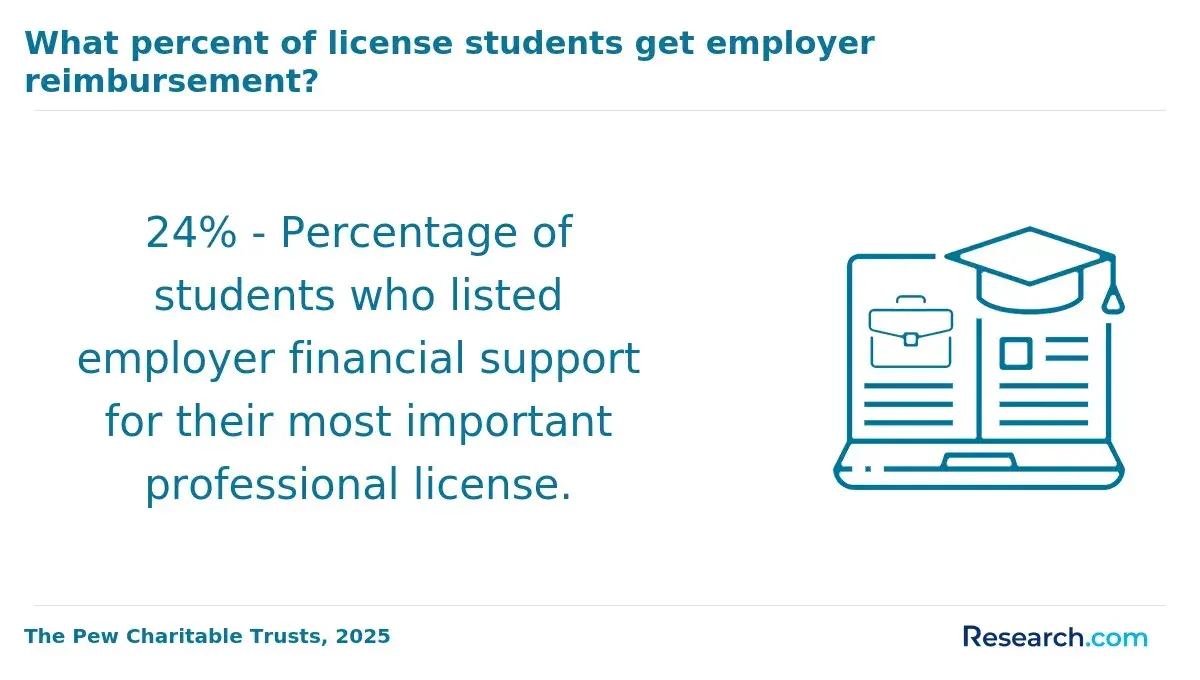
- Employer tuition assistance, military benefits, scholarships, and federal aid eligibility.
- Internship, travel, or campus residency requirements, if any.
The lowest tuition is not always the best value. A slightly higher-cost program may be more worthwhile if it accepts more transfer credits, has stronger employer connections, includes applied projects, or aligns better with food quality leadership roles.
What careers can graduates pursue in food quality and food industry management?
Graduates can pursue roles across food manufacturing, processing, distribution, grocery, ingredient supply, agricultural businesses, food service companies, and regulatory-adjacent organizations. Entry level is often technical or coordinator-based; leadership roles usually require experience, strong communication, and proof that you can manage quality systems under production constraints.
The table below shows common career directions and how they connect to food quality leadership.
| Career path | Typical responsibilities | Common entry point | Advancement direction |
| Quality control technician or inspector | Inspect products, collect samples, check specifications, document results | Certificate, associate degree, or relevant experience | Quality assurance specialist or supervisor |
| Quality assurance specialist | Maintain quality systems, investigate deviations, support audits, manage documentation | Bachelor's degree or experience in quality control | QA manager or food safety manager |
| Food safety coordinator | Support HACCP plans, training, sanitation records, allergen controls, and preventive controls | Food safety coursework plus industry experience | Food safety manager or compliance manager |
| Production supervisor | Manage shift teams, production targets, safety practices, waste, and quality communication | Associate or bachelor's degree plus operations experience | Plant manager or operations manager |
| Supply chain or procurement coordinator | Coordinate suppliers, inventory, specifications, logistics, and traceability records | Business or food industry management coursework | Supply chain manager or supplier quality manager |
| Regulatory affairs or compliance associate | Support labeling, documentation, audits, regulatory submissions, and customer requirements | Bachelor's degree with regulatory coursework | Compliance manager or regulatory affairs manager |
Students who want food quality leadership should not rely on the degree alone. A strong career plan usually includes relevant work experience, familiarity with audits, exposure to sanitation or production environments, and credentials such as HACCP training, Preventive Controls Qualified Individual training, ServSafe, SQF-related training, or other employer-recognized certificates.
What salary ranges and job outlook can food industry management graduates expect?
Salary depends heavily on role, region, employer size, shift requirements, and experience. A new graduate entering a quality technician role will usually be in a different labor market than a professional moving into plant management after several years of operations experience.
The table below uses U.S. Bureau of Labor Statistics May 2024 wage data and 2024-2034 outlook categories where available. These figures describe occupations, not guaranteed outcomes for a specific degree program.
| Occupation related to food industry management | May 2024 median annual wage | 2024-2034 outlook context | How to interpret it |
| Quality control inspectors | About $47,950 | Employment is projected to decline in many inspection roles as automation expands | Good entry point, but advancement may require quality systems, data, and leadership skills |
| Food scientists and technologists | About $85,000 | Demand is supported by product development, safety, and process improvement needs | Some roles may require stronger science preparation than a management-focused degree provides |
| Industrial production managers | $121,440 | BLS projects 4% growth from 2024 to 2034 | Often requires significant operations experience in addition to education |
| Occupational health and safety specialists and technicians | About $81,000 | Safety and compliance roles remain relevant across manufacturing settings | Useful comparison for students interested in plant safety and risk reduction |
The main takeaway is that food industry management can support upward mobility, but the highest-paying roles are usually not entry-level. Students should evaluate programs based on whether they help build the experience, applied projects, internships, and employer-recognized skills needed to move from inspection or coordination work into supervisory and management positions.
How can students evaluate accreditation and choose a reputable food industry management program?
Accreditation is one of the most important checks before enrolling. At minimum, students should choose a school that holds institutional accreditation from an agency recognized by the U.S. Department of Education or the Council for Higher Education Accreditation. This affects federal financial aid eligibility, credit transfer, graduate school options, and employer confidence.
Programmatic accreditation is less standardized in food industry management than in fields such as nursing, dietetics, engineering, or health information management. That means students should look beyond a single label and evaluate whether the program's curriculum, faculty, outcomes, and industry connections match the career goal.
Use these steps before committing to a program:
- Verify institutional accreditation through official accreditation databases, not only the school's marketing pages.
- Ask whether the curriculum includes food safety, quality assurance, regulatory compliance, operations management, and data analysis.
- Request information about internship options, applied projects, employer partnerships, and career services for online students.
- Confirm whether credits will transfer in and whether credits will transfer out if you later change schools.
- Ask whether the program prepares students for relevant industry training, such as HACCP or preventive controls, without assuming certification is automatically included.
- Review total program cost, graduation requirements, online fees, and course availability before enrolling.
- Look for transparent outcomes data, but avoid schools that imply a degree guarantees a specific job title or salary.
Red flags include unclear accreditation status, vague curriculum descriptions, aggressive enrollment pressure, limited faculty information, no transfer credit transparency, and career claims that sound guaranteed. A reputable program should be willing to explain exactly how online students learn applied quality and management skills.
Other Things You Should Know About Food Industry Management
It can be worth it if your goal is to move into quality assurance, food safety, operations supervision, supply chain, or compliance leadership. It is less likely to be worth it if the program lacks accreditation, applied coursework, transfer flexibility, or a clear connection to your target role.
Yes, many online programs are designed for working adults. Before enrolling, check whether courses are asynchronous, whether any live sessions are required, and whether internships or campus visits could conflict with your work schedule.
Useful options may include HACCP training, Preventive Controls Qualified Individual training, ServSafe, internal auditor training, and SQF or other food safety scheme-related training. Requirements vary by employer, so students should compare certifications against job postings in their target region.
References
- Master in Food & Beverage Management Online | Rome Business School https://romebusinessschool.com/master-online-in-food-and-beverage-management/
- What Does A Food Processing Course Include | CTA Training https://clubtraining.com.au/blog/what-does-a-food-processing-course-include/
- Online Restaurant & Culinary Management | Institute of Culinary Education https://www.ice.edu/online-programs/restaurant-culinary-management
- Hospitality and Tourism Management | CIA Culinary School https://www.ciachef.edu/blog/12-careers-in-hospitality-and-tourism-management/
- Top 5 Online Food Service Management Degree Programs https://bestaccreditedcolleges.org/articles/online-food-service-management-degree-program-overviews.html
- What salary can I expect from a graduate hospitality job? https://gradireland.com/careers-advice/hospitality-and-event-management/what-salary-can-i-expect-graduate-hospitality-job
- Food-Related Jobs and Careers in the Food Industry https://www.ficsi.in/food-industry-job-portal
- The Inside Scoop on Quality Assurance Manager: A Career Guide | Innopharma Education https://www.innopharmaeducation.com/blog/the-inside-scoop-on-quality-assurance-manager-a-career-guide
- Study Food Industry Management in the USA https://www.studyusa.com/en/field-of-study/395/food-industry-management
- SQF Certification: Safe Quality Food Certification for GFSI Compliance | Kiwa https://www.kiwa.com/en/ec/tipo-de-servicio/certificacion/spp/sqf-safe-quality-food-certification/