2027 Online Food Industry Management Degrees for Students Who Want Multi-Site Food Operations Careers

Co-Founder and Chief Data Scientist
Managing one food operation is demanding; managing several locations requires stronger systems, staffing, purchasing, safety, and financial skills. The U.S. restaurant industry was projected by the National Restaurant Association to reach $1.1 trillion in sales in 2024, which shows why employers need managers who can scale operations consistently.
This guide is for students, shift leaders, food service workers, and career changers comparing online food industry management degrees. You will learn how programs work, what they cost, which credentials matter, and how to choose a path that supports multi-site operations careers.
Key Things You Should Know
- Online food industry management degrees are best for students targeting restaurant groups, hospitality companies, contract food service, grocery food operations, campus dining, healthcare food service, or franchise management rather than single-location kitchen roles only.
- College Board's 2024 data lists average published tuition and fees at $11,610 for in-state public four-year institutions and $43,350 for private nonprofit four-year institutions, so transfer credit and employer tuition benefits can materially change ROI.
- The U.S. Bureau of Labor Statistics reported a $65,310 median annual wage for food service managers in May 2024, but multi-unit roles often depend on experience, geography, company size, profit responsibility, and proven performance metrics.
What is an online food industry management degree?
An online food industry management degree is a business-focused program that prepares students to supervise food service operations, control costs, manage staff, comply with food safety rules, and improve customer experience. Unlike culinary arts programs, which usually emphasize cooking technique and kitchen production, food industry management programs focus on how food businesses run at scale.
For students who want multi-site food operations careers, the most relevant programs usually sit at the intersection of hospitality management, restaurant management, food service administration, supply chain, and operations leadership. Some students may also compare an online hospitality management program if they want broader career options in hotels, resorts, event operations, or food and beverage divisions.
The degree can make sense if you want to move from hourly or assistant manager work into district management, franchise operations, food service director roles, or corporate operations support. It may be less useful if your goal is strictly to become a chef, registered dietitian, food scientist, or restaurant owner who already has strong business experience and needs only a short certificate in accounting, sanitation, or entrepreneurship.
The table below compares common education options so you can match the credential to your career target rather than choosing a program based only on convenience or name recognition.
| Credential | Best fit | Typical focus | Main trade-off |
| Certificate | Working food service employees who need a fast skills upgrade | Food safety, supervision, cost control, customer service | Usually not enough for corporate or multi-unit leadership by itself |
| Associate degree | Students seeking entry-level management or transfer credit | Restaurant operations, basic accounting, menu planning, sanitation | May limit advancement if employers prefer bachelor's degrees |
| Bachelor's degree | Students aiming for district, regional, or corporate operations roles | Leadership, finance, marketing, HR, procurement, analytics, food systems | Higher time and cost commitment than shorter credentials |
| Master's degree or MBA concentration | Experienced managers seeking senior operations leadership | Strategy, organizational leadership, analytics, supply chain, multi-unit growth | Usually best after gaining management experience |
Which online food industry management programs are accredited?
Accreditation is one of the first things to check because it affects credit transfer, federal financial aid eligibility, graduate school options, and employer confidence. For U.S. students, the baseline standard is institutional accreditation from an accreditor recognized by the U.S. Department of Education or the Council for Higher Education Accreditation.
Programmatic accreditation is less universal in food industry management than it is in fields such as nursing or accounting, but it can still add value. Hospitality, culinary, dietetics, business, or nutrition-related accreditation may apply depending on the program's academic home. The key is to confirm what the accreditation actually covers: the institution, the business school, the hospitality program, the dietetics pathway, or only a separate culinary program.
Use this checklist before applying, especially if you plan to transfer credits or use federal aid.
- Confirm the school's institutional accreditation through official accreditation databases, not only through marketing pages.
- Ask whether the online version of the program is covered under the same accreditation status as the campus version.
- Check whether credits transfer into bachelor's or graduate programs if you are starting with a certificate or associate degree.
- Ask whether the curriculum prepares students for industry certifications such as ServSafe Manager or food protection credentials required by local health departments.
- Review employer partnerships, internship rules, and field experience expectations for online students in your state.
A common mistake is assuming that "accredited" means the program meets every professional requirement in every state or municipality. Food safety credentials, alcohol service training, and manager certification rules can be local, so students should check the requirements where they plan to work.
How do online and campus food management degrees compare?
Online and campus food management degrees can lead to similar credentials, but they fit different students. The better choice depends on your work schedule, need for hands-on facilities, learning style, internship access, and whether you are already employed in food service.
The table below summarizes the main differences that matter for students planning multi-site food operations careers.
| Factor | Online degree | Campus degree | Decision point |
| Schedule | Often more flexible for working adults and shift workers | More fixed class times and campus attendance | Online is usually better if you cannot pause employment |
| Hands-on learning | May use local practicums, employer-based projects, simulations, or case studies | May offer teaching kitchens, dining labs, and on-campus hospitality facilities | Campus may be stronger if you need structured lab experience |
| Networking | Often built through virtual teams, employer projects, and local internships | Often built through campus events, faculty access, and local industry recruiters | Ask how the program connects online students to employers |
| Cost control | Can reduce commuting and relocation costs | May include added housing, transportation, and campus fees | Total cost matters more than tuition alone |
| Career fit | Strong for current food service employees seeking advancement | Strong for students who want a traditional college experience | Choose the format that helps you complete the degree, not just start it |
Online study is often a practical option for assistant managers, supervisors, catering coordinators, and food service workers who already have workplace exposure. Campus study may be better for students who need direct access to faculty, structured labs, local internships, or the accountability of in-person classes.
The biggest red flag is enrolling in an online program that has no plan for applied learning. Multi-site operations employers care about execution, not just theory, so look for courses that require budgeting projects, scheduling analysis, service quality audits, vendor comparison, or operations improvement plans.
What courses are included in food industry management degrees?
Food industry management degrees usually combine business courses with food service operations courses. The goal is to help students understand both the customer-facing side of food service and the back-end systems that keep multiple locations profitable, safe, and consistent.
Students interested in nutrition-heavy roles should compare the curriculum carefully because a food industry management degree is not the same as an online dietician program. Dietetics pathways have specific accreditation, supervised practice, and exam requirements that food management programs generally do not meet.
Common course areas include the following, and each should connect to real operational decisions rather than isolated textbook concepts.
- Food service operations management, including workflow, service design, production planning, and quality control across locations.
- Food safety and sanitation, including hazard prevention, inspection readiness, allergen control, and regulatory compliance.
- Accounting and cost control, including food cost, labor cost, waste reduction, inventory valuation, and profit analysis.
- Human resource management, including hiring, training, scheduling, performance coaching, retention, and conflict resolution.
- Purchasing and supply chain management, including vendor selection, contract basics, storage, distribution, and contingency planning.
- Marketing and customer experience, including menu positioning, loyalty programs, guest feedback, digital ordering, and brand consistency.
- Business analytics, including point-of-sale data, labor forecasting, sales trends, dashboard reporting, and operational KPIs.
- Leadership and ethics, including workplace culture, compliance, inclusive supervision, and decision-making under pressure.
Technology is becoming more important in these programs. Multi-site operators increasingly use inventory platforms, scheduling systems, delivery integrations, customer feedback tools, and AI-assisted forecasting. A strong program should help students interpret data and manage systems, not simply memorize hospitality terminology.
What admission requirements do these programs usually require?
Admission requirements depend on the credential level and the school. Certificate and associate programs usually have simpler requirements, while bachelor's and graduate programs may require transcripts, minimum GPA standards, essays, and professional experience.
The table below shows typical requirements so you can estimate your readiness before contacting admissions offices.
| Program level | Common admission requirements | What applicants should prepare |
| Certificate | High school diploma or equivalent; sometimes open enrollment | Proof of education, basic computer access, work schedule plan |
| Associate degree | High school diploma or equivalent; placement requirements may apply | Transcripts, transfer credit records, financial aid documents |
| Bachelor's degree | High school diploma or transfer credits; minimum GPA may apply | Official transcripts, prior college records, resume if work experience is considered |
| Degree completion program | Prior college credits or associate degree | Transfer evaluation, syllabi for older credits, employer training documentation |
| Master's degree | Bachelor's degree; some programs prefer management experience | Resume, statement of purpose, recommendations, transcripts |
Students with restaurant, grocery, catering, military food service, school nutrition, or healthcare dining experience should ask whether the program awards credit for prior learning. This can shorten the timeline and reduce cost, but policies vary widely.
Before applying, take these practical steps to avoid delays and unnecessary expense.
- Request an unofficial transfer review before committing to a program.
- Ask whether industry credentials, military training, or employer management programs can count for credit.
- Confirm whether online students pay separate technology, distance learning, proctoring, or course material fees.
- Check whether internships or practicums can be completed at your current workplace.
- Ask how often required courses are offered, because limited course rotation can delay graduation.
How long does an online food industry management degree take?
The time required depends on the credential, transfer credits, course load, and whether the program is accelerated. Many working adults choose part-time enrollment because food service schedules can include nights, weekends, holidays, and unpredictable staffing demands.
The table below gives a practical timeline comparison. Exact completion time depends on the school's calendar and your ability to maintain steady enrollment.
| Program type | Typical full-time timeline | Typical part-time timeline | Best for |
| Certificate | Several months to 1 year | 1 year or more | Fast upskilling or promotion preparation |
| Associate degree | About 2 years | 3 years or more | Entry-level management or transfer pathway |
| Bachelor's degree | About 4 years | 5 to 6 years or more | District, corporate, or multi-unit operations goals |
| Bachelor's completion program | 1 to 2 years after transfer credit | 2 to 4 years | Adults with prior college credits |
| Master's degree | 1 to 2 years | 2 to 3 years | Experienced managers seeking senior leadership |
Accelerated programs can be useful if you have strong time management skills and stable work hours. They can be risky if you are already managing heavy operational responsibilities, because compressed courses leave less room for emergencies, travel, or peak business seasons.
A good timeline strategy is to map the degree against your career ladder. If you are an entry-level employee, an associate degree or certificate may help you move into supervisor work sooner. If you are already an assistant or general manager, a bachelor's completion program may be the better route to district or corporate roles.
How much do online food industry management degrees cost?
Online food industry management degree costs vary by institution type, residency status, transfer credit, fees, books, software, and time to completion. Published tuition can be misleading because the lowest per-credit price is not always the lowest total cost.
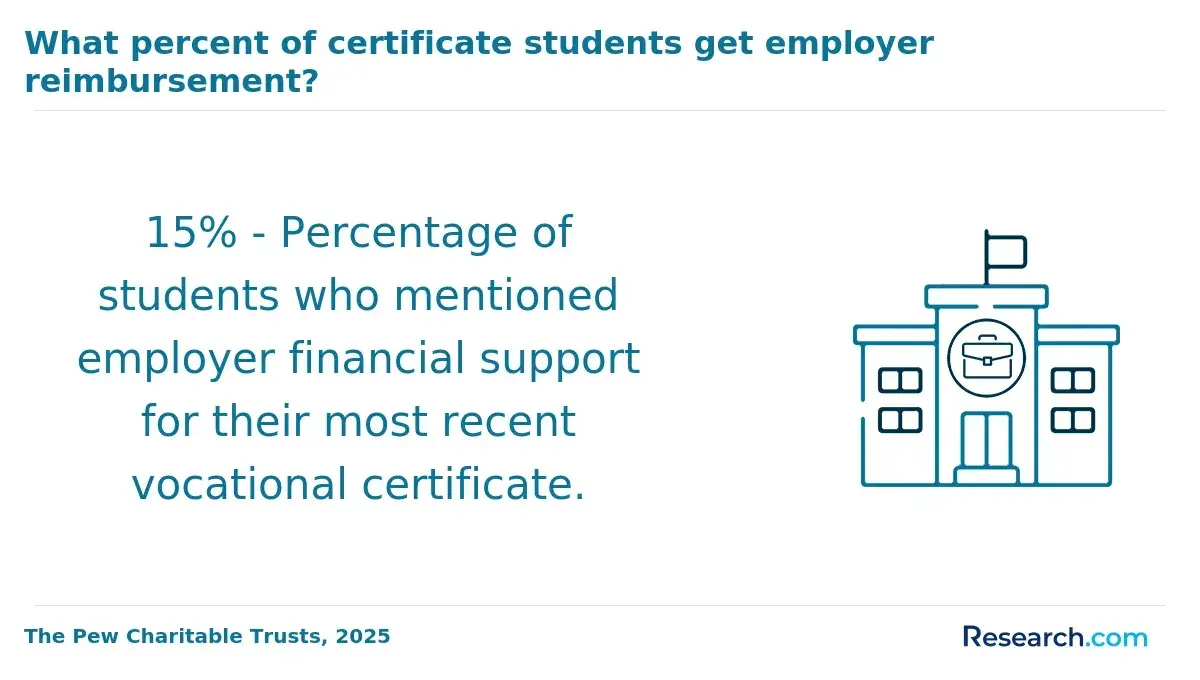
College Board's 2024 Trends in College Pricing data lists average published tuition and fees of $11,610 for in-state students at public four-year institutions and $43,350 at private nonprofit four-year institutions for the 2024-2025 academic year. For online students, this means the biggest savings often come from transfer credits, in-state tuition eligibility, employer reimbursement, and finishing without repeating courses.
Because many food operations careers overlap with scheduling, budgeting, vendor coordination, and implementation work, some students also compare a cheap project management degree online if they want broader operations roles outside food service. That alternative can make sense for students who are less committed to restaurants or hospitality and more interested in logistics, implementation, or cross-industry management.
Typical cost categories include the following. Review all of them before deciding whether a program is affordable.
- Tuition, usually charged per credit or per term.
- Mandatory fees, such as technology, online learning, graduation, proctoring, or student service fees.
- Books, digital platforms, simulations, uniforms, knives, or lab kits if required.
- Travel costs for any campus residencies, internships, conferences, or required in-person assessments.
- Lost income if the course load forces you to reduce work hours.
- Certification exam fees for food safety, alcohol service, or manager credentials.
To evaluate ROI, compare total program cost against the roles you realistically qualify for next, not only the highest job title listed on a school's marketing page. A current general manager may see faster advancement from a bachelor's completion program than a student with no food service experience because employers often weigh experience heavily in operations roles.
What jobs can you get with a food industry management degree?
A food industry management degree can support careers in restaurants, contract dining, hospitality groups, school food service, healthcare food service, grocery prepared foods, convenience food retail, catering, franchise operations, and corporate food service support. For multi-site careers, employers usually look for a mix of education, hands-on operations experience, leadership ability, and measurable results.
Students who already have a bachelor's degree and want senior operations strategy roles may eventually compare an operations management MBA online. That path is usually more appropriate after gaining management experience, especially if the goal is regional leadership, corporate operations, supply chain strategy, or executive roles.
The table below outlines common roles and what they usually involve. Job titles vary by employer, so focus on responsibilities and scope rather than title alone.
| Role | Typical responsibilities | Degree relevance |
| Assistant food service manager | Supervises shifts, supports scheduling, trains staff, tracks service standards | Entry point for associate or bachelor's students |
| Restaurant general manager | Owns store-level profit, labor, guest experience, hiring, and compliance | Degree strengthens business and leadership skills |
| Food service director | Manages dining operations in schools, healthcare, corporate, or institutional settings | Often benefits from management, compliance, and budgeting coursework |
| District or area manager | Oversees multiple locations, coaches managers, audits performance, implements standards | Bachelor's degree plus strong experience is often useful |
| Franchise operations consultant | Supports franchisees, reviews brand standards, analyzes performance, recommends improvements | Requires strong operations knowledge and communication skills |
| Purchasing or inventory manager | Manages vendors, product availability, waste, cost controls, and supply chain coordination | Relevant if the program includes procurement and analytics |
| Corporate operations analyst | Reviews sales, labor, guest feedback, and operational data across locations | Best fit for programs with analytics and business systems coursework |
To prepare for multi-site roles, students should build evidence that they can improve operations, not just complete coursework. Useful experience includes leading training, reducing waste, improving inspection results, managing labor targets, opening new locations, or standardizing procedures across teams.
A common mistake is waiting until graduation to get food service experience. For operations careers, part-time supervisory work, internships, employer-sponsored leadership programs, and applied class projects can be just as important as the diploma.
What is the salary outlook for food service managers?
The salary outlook for food service managers is solid but highly variable. The U.S. Bureau of Labor Statistics reported a median annual wage of $65,310 for food service managers in May 2024. This figure is a national midpoint, not a promise; actual pay depends on location, employer type, revenue responsibility, bonuses, benefits, schedule demands, and whether the role covers one site or multiple locations.
BLS also projects employment for food service managers to grow by 5% from 2023 to 2033, which is about as fast as the average for all occupations. For students, the important takeaway is that management opportunities exist, but stronger roles often require a track record in staffing, cost control, compliance, and customer experience.
The table below shows how scope can influence career positioning. It is not a salary guarantee, but it helps explain why multi-site experience can change the value of a degree.
| Career stage | Typical scope | What employers usually evaluate |
| Shift lead or supervisor | One shift or department | Reliability, service standards, team communication |
| Assistant manager | Store-level support | Scheduling, training, opening and closing procedures, problem solving |
| General manager | One location | Profit and loss, hiring, food safety, guest satisfaction, labor control |
| District or area manager | Multiple locations | Manager coaching, standardization, audits, sales trends, operational consistency |
| Regional or corporate operations leader | Large market or system-wide functions | Strategy, analytics, implementation, vendor coordination, executive communication |
AI and automation are changing the work, but they are not eliminating the need for managers who can lead people and make operational judgments. Scheduling tools, inventory systems, ordering kiosks, and forecasting software can improve efficiency, yet managers still need to interpret data, handle exceptions, coach teams, and maintain service quality across locations.
Do food industry management careers require licenses or certifications?
Most food industry management careers do not require a state professional license in the same way nursing, teaching, or dietetics may. However, many roles require or strongly prefer food safety credentials, alcohol service training, allergen training, or local food protection certificates. Requirements vary by state, county, city, and employer.
The table below summarizes credentials that commonly matter in food operations. Always verify requirements with your local health department and target employers.
| Credential or training | Why it matters | Who may need it |
| Food protection manager certification | Shows knowledge of sanitation, contamination prevention, temperature control, and inspection readiness | Restaurant managers, food service directors, kitchen managers |
| ServSafe Manager or similar food safety credential | Commonly recognized by employers and health departments | Managers responsible for safe food handling and compliance |
| Alcohol service training | Supports responsible alcohol sales and may be required by state or employer policy | Managers in restaurants, hotels, events, and bars |
| Allergen awareness training | Helps reduce risk and improve guest safety | Managers, trainers, front-of-house leaders, kitchen supervisors |
| Registered dietitian credential | Required for many clinical nutrition and dietetics roles | Students pursuing dietetics, not general food operations management |
Students should not assume that a degree automatically includes every certification exam. Ask whether certification preparation is embedded in the curriculum, whether exam fees are included, and whether the credential is accepted where you plan to work.
For multi-site careers, certifications can help, but they rarely replace experience. The strongest profile usually combines a relevant degree, recognized safety credentials, measurable management achievements, and comfort using operational technology.
Other Things You Should Know About Food Industry Management
It can be worth it if you want management or multi-site operations roles and need stronger business, leadership, cost control, and compliance skills. It is less likely to pay off if you only want back-of-house culinary work or if a shorter certificate would meet your immediate goal.
A degree can support that path, but district manager roles usually require significant store-level leadership experience. Employers often look for proven results in labor control, sales performance, safety compliance, manager development, and customer experience.
Some do, but policies vary. Online programs may allow students to complete fieldwork at a current workplace or approved local employer, so ask about placement rules before enrolling.
In 2027, these degrees offer coursework in supply chain management, digital operations, and food safety compliance, tailored for multi-site operations. Graduates gain skills to oversee diverse locations, employ data-driven decision-making, and effectively manage remote teams.
References
- Pardon Our Interruption https://www.coloradotech.edu/degrees/bachelors/management/food-service-management
- ACT Changes: Shorter Test, Fewer Questions, and Optional Science Section https://todayscollegesolutions.com/2025/04/college-admission-requirements-explained/
- Admissions Criteria https://ed.wum.edu.pl/pl/admissions-criteria
- Admission Requirements | Undergraduate Admissions + Programs https://www.ualberta.ca/en/admissions/how-to-apply/admission-requirements/index.html
- Online BBA vs. On-Campus BBA: What You Should Know Before You Choose | CourseCompare.ca https://www.coursecompare.ca/online-bba-vs-on-campus-bba/
- Restaurant and food service managers | WorkBC https://www.workbc.ca/career-profiles/restaurant-and-food-service-managers
- How Long Does It Take to Get a Business Management Degree? | University of Phoenix https://www.phoenix.edu/blog/how-long-does-it-take-to-get-a-business-management-degree.html
- Food Service Manager https://www.truity.com/career-profile/food-service-manager
- Food Industry Management https://www.niagara.edu/programs/food-industry-management/
- Foodcareers professional certifications https://www.foodcareers.eu/professional-certifications