2027 Best Online Food Industry Management Degrees for Students With Hospitality Backgrounds

Co-Founder and Chief Data Scientist
Hospitality workers often reach a point where restaurant, hotel, or catering experience is no longer enough for corporate food roles. The National Restaurant Association projected U. S. restaurant sales to reach $1.1 trillion in 2024, with the industry employing 15.7 million people, making stronger management, operations, and food-systems skills increasingly valuable. This guide is for hospitality professionals comparing online food industry management degrees. You will learn how programs differ, what they cost, which schools to consider, and how to connect your current experience to better career options.
Key Things You Should Know
- Online food industry management degrees are best for hospitality professionals moving from frontline service or property operations into foodservice leadership, food entrepreneurship, supply chain, compliance, purchasing, or multi-unit operations.
- The BLS reported a May 2024 median annual wage of $65,310 for food service managers, but higher-level corporate, operations, and production-management roles often require broader business, analytics, finance, and food-systems knowledge.
- Cost varies widely: College Board data for 2024-25 showed average published tuition and fees of $11,610 for in-state public four-year institutions and $43,350 for private nonprofit four-year institutions, so transfer credits and employer tuition benefits can strongly affect ROI.
What is an online food industry management degree and how does it build on hospitality experience?
An online food industry management degree is a business-focused or applied-science program that prepares students to manage food operations, foodservice teams, purchasing, safety systems, menus, supply chains, product development, or food-related enterprises. For someone with a hospitality background, it converts practical experience in guest service, catering, restaurants, hotels, or events into broader management capability.
These programs are not all identical. Some are housed in business schools and emphasize operations, accounting, marketing, and entrepreneurship. Others sit in hospitality, agriculture, food science, or nutrition departments and focus more on food systems, product quality, regulations, sensory evaluation, and food safety. A student who wants to supervise restaurant locations may need a different curriculum than someone who wants to work in food manufacturing, menu innovation, or supply chain procurement.
A hospitality degree online can be a strong alternative when your goal is hotel, restaurant, event, or tourism leadership rather than food manufacturing or food-product operations. The best choice depends on whether you want to stay close to guest-facing service or move toward the business, science, and logistics of food.
The table below shows how common online degree types differ. Use it to match your hospitality background with the kind of food industry role you actually want.
| Degree type | Best fit for hospitality professionals who want | Typical focus | Possible limitation |
| BS or BA in Food Industry Management | Corporate foodservice, retail food, food distribution, category management, or food entrepreneurship | Food business, operations, marketing, supply chain, finance, and consumer behavior | May be less science-heavy than food science degrees |
| BS in Hospitality Management with food and beverage coursework | Restaurant, hotel food and beverage, catering, resort dining, or event operations leadership | Service operations, revenue management, guest experience, leadership, and foodservice management | May not go deeply into food manufacturing, food quality systems, or product development |
| BS in Food Science, Food Systems, or Food Technology | Food safety, quality assurance, product development, technical sales, or production support | Food chemistry, microbiology, processing, quality, regulations, and lab-based skills | May require science prerequisites or limited in-person lab experiences |
| Business degree with food, retail, or operations electives | Management, purchasing, franchising, multi-unit leadership, or entrepreneurship | Accounting, analytics, project management, marketing, strategy, and operations | Food-specific coursework may be limited unless electives are chosen carefully |
For hospitality professionals, the main advantage is relevance. Prior work in kitchens, banquets, hotels, restaurants, or catering can help you understand labor scheduling, customer expectations, cost control, waste, sanitation, and service recovery. The degree adds the formal language employers often expect in management roles: profit-and-loss analysis, procurement, compliance, data reporting, leadership, and strategic planning.
Which accredited U.S. schools offer reputable online food industry management programs?
Reputable online options usually come from institutionally accredited U.S. universities with food industry, hospitality, food science, or business programs that can be completed fully online or mostly online. Because food-focused online degrees change frequently, students should verify current modality, lab requirements, tuition, transfer policies, and accreditation status before applying.
The schools below are examples of accredited U.S. institutions with online or online-friendly programs relevant to food industry management. This is not a universal ranking; it is a decision-support shortlist for hospitality professionals comparing practical pathways.
| School | Relevant online program area | Why it may fit hospitality professionals | What to verify before applying |
| Arizona State University Online | Business with food industry management emphasis or related food business pathways | Strong fit for students who want food retail, corporate food, consumer products, or food entrepreneurship rather than hotel-only leadership | Exact degree name, online availability, business prerequisites, and food-focused course sequence |
| Florida International University Online | Hospitality management with food and beverage relevance | Good fit for hotel, restaurant, resort, cruise, and event professionals who want broader hospitality leadership with foodservice coursework | Food and beverage electives, internship expectations, and whether the program aligns with your target role |
| Johnson & Wales University Online | Food and beverage entrepreneurship, hospitality management, or related online professional studies programs | Useful for culinary, restaurant, catering, and foodservice professionals who want business ownership or management skills | Program availability, transfer-credit treatment for culinary or associate coursework, and total program cost |
| Kansas State University Online | Food science and industry or related food systems programs | Stronger fit for students interested in technical food industry roles, quality assurance, food safety, production, or product-focused operations | Science prerequisites, lab expectations, and whether the program is suitable for non-science hospitality backgrounds |
| Oregon State University Ecampus | Food science, sustainable food systems, or food-related applied science pathways | Relevant for students who want to understand the production, quality, sustainability, and systems side of the food industry | Any required in-person labs, chemistry prerequisites, and whether the curriculum supports management roles directly |
| University of Massachusetts Amherst Online | Hospitality and tourism management or related completion pathways | Practical for working hospitality professionals moving toward restaurant, lodging, event, or service operations leadership | Degree-completion structure, transfer-credit requirements, and foodservice course availability |
When comparing schools, prioritize institutional accreditation first. Then look for the program features that matter for your goal: foodservice operations courses for restaurant leadership, food safety and quality courses for compliance roles, finance and analytics for corporate operations, and entrepreneurship coursework for ownership or consulting.
Before you request information from a school, ask these questions so you do not confuse a general hospitality program with a food industry management pathway:
- Is the program fully online, mostly online, or online with required campus labs or residencies?
- Does the curriculum include food safety, purchasing, cost control, supply chain, menu management, and regulatory topics?
- Can previous hospitality, culinary, business, or associate-degree credits transfer into the major?
- Are internships required, and can current hospitality employment satisfy experiential requirements?
- What roles do recent graduates pursue, and does the school publish career-support information specific to food or hospitality management?
How do online food industry management degrees compare to campus programs for hospitality professionals?
Online programs usually make more sense for hospitality professionals who need to keep working, while campus programs may be better for students who need lab access, intensive networking, culinary production facilities, or structured internships. The best format depends on your schedule, target role, and learning style rather than on prestige alone.
Online education is particularly practical in hospitality because many students work nights, weekends, rotating shifts, or peak-season schedules. Asynchronous courses can let students complete lectures, discussions, and assignments outside standard class hours. However, food science and culinary-adjacent programs may still require hands-on labs, sensory evaluation, production work, or supervised experiences that are harder to replicate online.
The comparison below highlights the trade-offs hospitality professionals should weigh before choosing a format.
| Factor | Online program | Campus program | Best choice when |
| Work schedule | More flexible for full-time hospitality employees | More structured, with set class and lab times | Choose online if you need to keep earning while studying |
| Hands-on learning | May use simulations, local projects, employer-based assignments, or limited residencies | Often offers food labs, test kitchens, production spaces, and in-person demonstrations | Choose campus if your goal requires intensive culinary, lab, or product-development practice |
| Networking | Can connect working adults across regions, but requires intentional participation | More spontaneous networking through events, faculty access, and local employer visits | Choose campus if you want a local employer network and can attend regularly |
| Cost control | May reduce commuting, housing, and schedule-disruption costs | May offer campus resources but can involve relocation or transportation expenses | Choose online if indirect costs would make campus attendance unrealistic |
| Career transition | Works well when you can apply coursework to your current job | Works well when you need a new internship, career center access, or campus recruiting | Choose based on whether your current employer can support your career pivot |
Online is not automatically easier. A working restaurant manager may need to plan carefully around inventory days, holiday surges, and late-night shifts. The strongest online students usually treat coursework like a scheduled management responsibility, not an optional task to complete after every other demand.
Common mistakes include choosing the cheapest program without checking required in-person components, assuming all online courses are asynchronous, or enrolling in a hospitality program that does not include enough food operations coursework. A better approach is to map your target job first, then select the format that gives you the right combination of flexibility, credibility, and hands-on preparation.
What admission requirements apply to online food industry management degrees for experienced hospitality workers?
Admission requirements typically depend on whether the program is a bachelor's completion degree, a full four-year online bachelor's, a master's program, or a certificate-to-degree pathway. Experienced hospitality workers may benefit from transfer credits, prior college coursework, military credit, employer training, or documented industry experience, but each school sets its own rules.
For bachelor's programs, applicants commonly need a high school diploma or equivalent, transcripts from all prior colleges, and sometimes a minimum GPA. Degree-completion programs may require a certain number of transferable credits before admission. Food science-oriented programs may also expect college algebra, chemistry, biology, or statistics, which can surprise students coming from culinary or hospitality associate programs.
Master's programs are more likely to require a bachelor's degree, resume, statement of purpose, letters of recommendation, and evidence of professional experience. Some business-oriented programs may ask for quantitative readiness, while hospitality graduate programs may weigh industry experience heavily. Standardized tests are less common than they once were, but policies vary.
Hospitality professionals should prepare the following materials early because they can affect both admission and time to completion:
- Official transcripts from community colleges, culinary schools, prior universities, or military education programs
- A current resume showing supervisory duties, food safety responsibilities, purchasing, scheduling, training, catering, event operations, or profit-and-loss exposure
- Copies of industry credentials such as ServSafe, food handler cards, alcohol service training, or allergen-awareness certificates
- Descriptions or syllabi for older culinary, hospitality, business, or nutrition courses that may need transfer-credit review
- A short career statement explaining whether you are targeting restaurant leadership, corporate foodservice, food safety, procurement, entrepreneurship, or food manufacturing
The most important admission strategy is to request a preliminary transfer evaluation before you commit. A school with a lower tuition rate may cost more if it accepts fewer credits, while a more expensive school may be a better value if it shortens your path to graduation.
Red flags include vague answers about transfer credits, unclear internship rules, unclear institutional accreditation, and programs that advertise food industry careers but list few food-specific courses. If admissions staff cannot explain how your hospitality background fits the curriculum, keep comparing.
What courses and specializations are typically included in online food industry management curricula?
Online food industry management curricula usually combine business management, foodservice operations, food safety, consumer behavior, purchasing, finance, and leadership. More technical programs add food chemistry, microbiology, quality systems, processing, packaging, and regulatory compliance.
Hospitality professionals should look beyond course titles and ask what skills each course builds. For example, "food and beverage management" may focus on menu pricing and service operations, while "food systems management" may focus on procurement, distribution, sustainability, and institutional foodservice.
The table below summarizes common curriculum areas and why they matter for career mobility.
| Curriculum area | What students learn | Why it matters for hospitality professionals |
| Foodservice operations | Menu planning, labor scheduling, service systems, inventory, purchasing, and cost control | Builds on restaurant, catering, hotel, and banquet experience |
| Accounting and finance | Budgeting, profit-and-loss statements, food cost, pricing, and forecasting | Helps workers move from shift execution into management decisions |
| Food safety and sanitation | Hazard controls, sanitation systems, allergen practices, inspections, and compliance documentation | Important for restaurants, institutional dining, production, and quality roles |
| Supply chain and procurement | Vendor management, purchasing strategy, logistics, inventory systems, and risk management | Useful for corporate foodservice, multi-unit operations, and distribution roles |
| Marketing and consumer behavior | Brand positioning, menu strategy, customer research, digital engagement, and food trends | Relevant for food entrepreneurship, retail food, and restaurant growth roles |
| Leadership and human resources | Training, conflict management, labor planning, team culture, and compliance | Directly supports advancement from line-level or shift roles into supervisory positions |
| Food science or product quality | Food composition, processing, sensory evaluation, shelf life, and quality assurance | Best for students moving beyond hospitality into manufacturing, quality, or product roles |
Specializations vary by school. Common options include food and beverage management, restaurant management, food entrepreneurship, food safety, food systems, sustainable food operations, hospitality analytics, supply chain, nutrition and wellness, or event and catering management. If you want to manage launches, renovations, supply-chain rollouts, or cross-functional foodservice projects, a bachelor degree in project management may also be worth comparing with food-focused degrees.
Technology is becoming more important across these curricula. Students increasingly encounter point-of-sale analytics, inventory software, scheduling platforms, delivery data, kitchen display systems, AI-assisted forecasting, and digital ordering workflows. The goal is not to replace hospitality judgment; it is to use data to reduce waste, improve labor planning, and make better menu and purchasing decisions.
Before choosing electives, connect them to a target outcome. Restaurant leadership usually benefits from finance, labor, revenue, and foodservice operations. Food manufacturing or quality roles need science and compliance. Entrepreneurship requires accounting, marketing, legal awareness, and business planning. Corporate food roles often reward analytics, procurement, category management, and project execution.
How long do online food industry management programs take and what do they cost to complete?
Most online bachelor's degrees take about four years for first-time students, two to three years for transfer students, and one to two years for students who already have substantial credits. Online master's programs often take one to three years depending on course load. Total cost depends on tuition, accepted transfer credits, fees, textbooks, residency or lab requirements, and lost work hours.
College Board's 2024-25 pricing data reported average published tuition and fees of $11,610 for in-state public four-year institutions, $30,780 for out-of-state public four-year institutions, and $43,350 for private nonprofit four-year institutions. Those figures are not online-program prices, but they provide a useful benchmark: institution type, residency rules, and transfer credits can change the total bill substantially.
The table below helps estimate time and cost pressure by student profile. It is more useful than comparing sticker prices alone because hospitality workers often bring prior credits or need part-time schedules.
| Student profile | Likely program path | Typical time consideration | Cost factor to watch |
| First-time bachelor's student | Full online bachelor's degree | Longest timeline because general education and major courses are both required | Total tuition over four academic years plus fees and materials |
| Hospitality associate-degree holder | Bachelor's completion program | Often faster if technical, culinary, or hospitality credits transfer well | How many credits apply to the major rather than only electives |
| Working manager with some college | Part-time online bachelor's | Flexible but may extend completion if taking one or two courses at a time | Per-credit tuition, term fees, and employer tuition reimbursement limits |
| Bachelor's degree holder | Online master's, graduate certificate, or MBA-style pathway | May be shorter than a second bachelor's | Graduate tuition rates and whether a full degree is needed for the target role |
| Culinary graduate seeking business mobility | Business, hospitality, or food entrepreneurship degree completion | Depends on whether culinary credits transfer into academic requirements | Credit loss from nontraditional or nationally accredited prior coursework |
To reduce cost without weakening career value, take these steps before enrolling:
- Request a written transfer-credit estimate from each school you are seriously considering.
- Ask whether current hospitality employment can satisfy internship, practicum, or field-experience requirements.
- Compare total program cost, not only tuition per credit, including technology fees, lab fees, proctoring, books, travel, and graduation fees.
- Check whether your employer offers tuition reimbursement, scheduling flexibility, internal promotion pathways, or management-training credit.
- Use federal financial aid tools carefully and avoid borrowing based on optimistic salary assumptions.
The cheapest program is not always the best value, and the fastest program is not always the strongest fit. A food science program with labs may cost more or take longer but can support technical roles that a general hospitality degree may not. Conversely, a hospitality or food business program may be the better ROI if your goal is restaurant, resort, catering, or multi-unit leadership.
Employer Confidence Share in Online vs. In-Person Degree Skills, Global 2024

What food industry management careers can hospitality graduates pursue after these online degrees?
Hospitality graduates with online food industry management degrees can pursue roles in restaurant management, food and beverage operations, catering, institutional dining, corporate foodservice, purchasing, food sales, food safety coordination, quality support, franchise operations, and food entrepreneurship. The right role depends on whether the degree emphasizes hospitality operations, business management, or food science.
Hospitality experience is valuable because many food industry roles require judgment under pressure. Employers often value people who understand service timing, labor shortages, guest recovery, sanitation routines, supplier issues, and margin pressure. The degree helps translate that experience into management language used in corporate and multi-site environments.
The table below connects common career directions with the preparation that usually matters most.
| Career path | Typical responsibilities | Best academic preparation | Hospitality background advantage |
| Food service manager | Supervise staff, control costs, manage service quality, handle vendors, and maintain compliance | Foodservice management, accounting, HR, sanitation, and operations | Direct experience with guest service, labor scheduling, and daily operations |
| Food and beverage director | Oversee dining outlets, banquet operations, beverage programs, budgets, and service standards | Hospitality management, beverage management, finance, revenue strategy, and leadership | Understanding of hotels, resorts, events, and high-volume service |
| Purchasing or procurement coordinator | Source products, negotiate with vendors, monitor inventory, and manage cost and availability | Supply chain, purchasing, analytics, food systems, and finance | Practical knowledge of ingredient use, waste, substitutions, and service impact |
| Food safety or quality coordinator | Support inspections, documentation, sanitation programs, training, and compliance checks | Food safety, microbiology, quality systems, and regulatory coursework | Familiarity with real-world sanitation and operational discipline |
| Multi-unit restaurant or franchise operations manager | Monitor store performance, train managers, enforce standards, and improve profitability | Operations, analytics, leadership, finance, and marketing | Experience handling frontline performance and service consistency |
| Food entrepreneur or catering owner | Develop concepts, manage pricing, comply with regulations, market services, and lead staff | Entrepreneurship, accounting, marketing, food law, and operations | Knowledge of customers, menus, service logistics, and local market expectations |
Some hospitality professionals also move into specialized settings such as hospitals, senior living, schools, correctional facilities, corporate campuses, or airport concessions. If your long-term goal is executive leadership in healthcare foodservice or nutrition-related operations, comparing a healthcare MBA may make sense, especially if you want broader administrative roles beyond food operations.
A smart career plan usually starts with your current role. A banquet captain may move into catering sales or food and beverage management. A sous chef may target purchasing, production management, or culinary operations. A hotel restaurant supervisor may move into multi-unit foodservice or resort dining leadership. A catering coordinator may build toward entrepreneurship, event food logistics, or institutional dining.
Common mistakes include choosing a technical food science degree when the real goal is restaurant leadership, or choosing a general hospitality degree when the real goal is quality assurance or food manufacturing. Match the curriculum to the job description, not just to the program name.
What salary ranges and earning potential are common in food industry management roles?
Salary potential varies by role, location, employer size, and whether the job is guest-facing, corporate, technical, or multi-unit. A degree can support advancement, but it does not guarantee a specific salary. Readers should compare wage data for the job title they want, not only the broad industry.
The BLS reported a May 2024 median annual wage of $65,310 for food service managers. For hospitality professionals, that figure is a useful midpoint: entry-level assistant manager roles may pay less, while corporate foodservice, multi-unit operations, food production management, procurement, or director-level positions may require more experience and carry different pay structures.
The table below provides salary context by role category. Use it to identify which positions may justify a full degree versus a certificate, employer training program, or shorter management credential.
| Role category | Typical earning context | What can improve earning potential | Important limitation |
| Restaurant or food service manager | BLS May 2024 median annual wage: $65,310 | Multi-unit experience, strong cost-control results, scheduling discipline, and leadership record | Pay can vary sharply between independent restaurants, chains, hotels, and institutional employers |
| Food and beverage director | Often tied to employer size, outlet complexity, banquet volume, and revenue responsibility | Budget ownership, beverage knowledge, event operations, and hotel or resort experience | Titles are not standardized across employers |
| Procurement or purchasing specialist | Often linked to supply chain scope, contract responsibility, and vendor management complexity | Analytics, negotiation, inventory systems, and product-category knowledge | Some employers prefer broader supply-chain or business degrees |
| Food safety or quality coordinator | Often influenced by technical requirements, manufacturing environment, and compliance responsibility | Food safety credentials, science coursework, audit experience, and documentation skills | Technical roles may require science prerequisites beyond hospitality coursework |
| Operations or general manager in food-related businesses | Compensation may include salary, bonus, performance incentives, or profit-linked pay | Profit-and-loss ownership, multi-site management, analytics, and leadership depth | Higher pay usually comes with higher accountability and irregular hours |
To evaluate salary realistically, compare job postings in your target region and note the required degree, years of experience, certifications, software skills, and travel expectations. Also look at benefits, bonus structure, schedule stability, and promotion pathway. A lower base salary with strong advancement and tuition support may be more valuable than a slightly higher salary with no growth path.
Hospitality professionals should be careful with salary averages posted by schools or job boards. Ask whether figures are national or regional, whether they represent graduates or all workers, and whether they include bonuses. Use BLS data as a baseline and employer-specific job postings as the reality check.
What is the job outlook and industry demand for food industry management professionals in the U.S.?
Demand for food industry management professionals is supported by the size of the U.S. foodservice economy, ongoing turnover in hospitality, more complex delivery and technology systems, and employer need for managers who can control labor, food cost, safety, and guest experience. The strongest opportunities tend to go to candidates who combine operations experience with data, finance, compliance, and leadership skills.
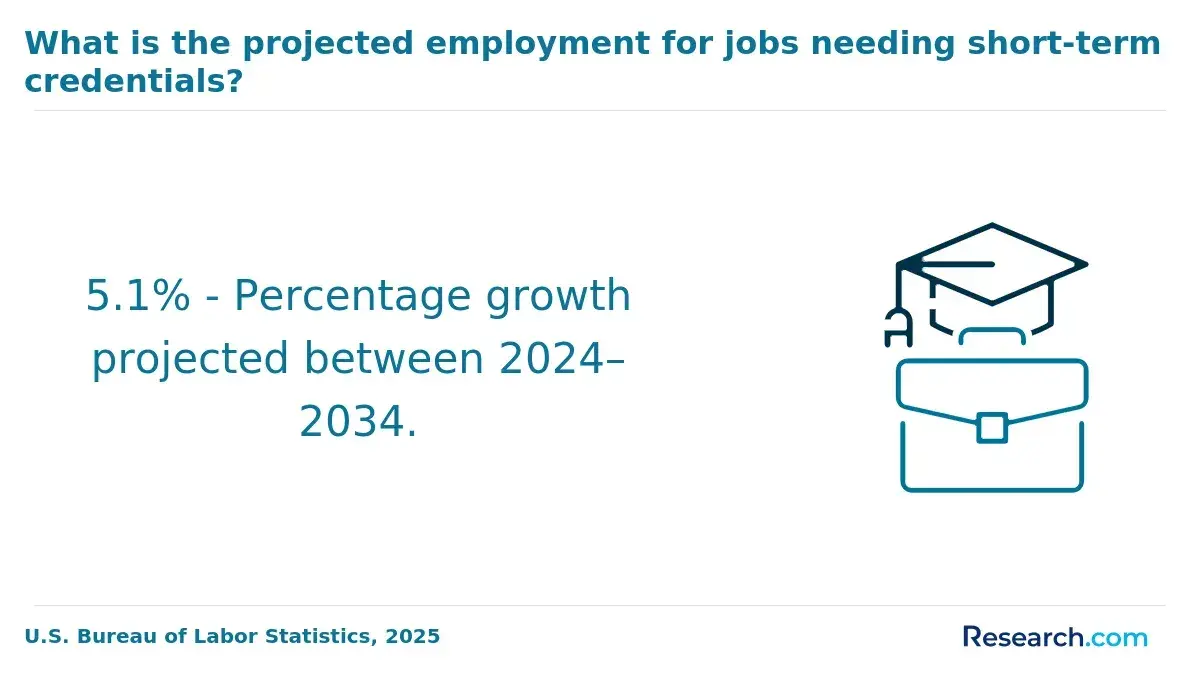
BLS employment projections for food service managers show growth of 5% from 2024 to 2034, which indicates steady demand rather than explosive expansion. For readers, the practical takeaway is that competition may favor candidates who can show measurable performance: lower waste, improved service scores, stronger retention, better inspection results, or successful rollout of new systems.
Several current trends affect whether an online food industry management degree is worth pursuing:
- Technology-enabled operations: restaurants and foodservice employers increasingly use digital ordering, inventory systems, labor forecasting, kitchen display systems, and performance dashboards, so managers need comfort with data-driven decisions.
- Cost and margin pressure: food, labor, rent, and delivery costs make cost-control skills more important than basic supervisory experience alone.
- Food safety and allergen expectations: employers need managers who can train teams, document controls, and reduce compliance risk in high-volume environments.
- Supply chain disruption planning: procurement and menu flexibility have become more strategic as operators manage product availability, substitutions, and vendor reliability.
- Credential-based advancement: experience still matters, but larger employers often prefer or require degrees for corporate, director, training, procurement, and multi-unit roles.
AI and automation are unlikely to remove the need for food industry managers, but they are changing the work. Forecasting tools may help predict demand, but managers still decide how to staff, train, substitute products, handle guests, and protect margins. The best online programs teach students to interpret technology outputs rather than blindly follow them.
Students should also understand that geography matters. Large metro areas, resort markets, healthcare systems, universities, corporate dining providers, distribution hubs, and food manufacturing regions may offer different opportunities. Before enrolling, search job postings within commuting range or remote-friendly corporate roles and identify the degrees and skills employers repeatedly request.
Are there licenses, certifications, or professional credentials that enhance food industry management careers?
Most food industry management roles do not require a state license, but certifications can improve credibility in food safety, sanitation, alcohol service, allergen management, project coordination, supply chain, or specialized institutional dining. Requirements vary by state, county, employer, and role, especially for food handling and alcohol service.
Hospitality professionals should treat certifications as targeted add-ons, not substitutes for every degree. A certificate can help you qualify for a specific responsibility, while a degree usually supports broader advancement into management, corporate, or technical roles.
The table below summarizes credentials that may be relevant depending on your target job.
| Credential or training area | Most relevant for | Why it matters | What to verify |
| ServSafe Manager or equivalent food protection manager certification | Restaurant managers, kitchen supervisors, catering managers, and institutional dining staff | Demonstrates knowledge of foodborne illness prevention, sanitation, and safe operations | State or county acceptance rules and renewal cycle |
| Food handler card | Entry-level and supervisory foodservice roles in many jurisdictions | May be required for workers who prepare, store, or serve food | Local health department requirements |
| Alcohol service certification | Restaurant, hotel, catering, event, and beverage operations roles | Supports responsible service and may be required by employer or state rules | Approved provider and state-specific requirements |
| Allergen-awareness training | Restaurants, schools, healthcare foodservice, catering, and senior living facilities | Helps reduce risk for guests and patients with food allergies | Whether the credential meets local or employer policy |
| HACCP training | Food manufacturing, quality assurance, commissary kitchens, and high-volume production | Supports hazard analysis and preventive control systems | Whether the role requires introductory training or advanced certification |
| Certified Dietary Manager or related dietary credential | Healthcare, long-term care, and senior living foodservice | Can support roles where nutrition, patient needs, and regulatory compliance intersect | Employer requirements and state-specific expectations |
If your interest shifts from food operations into health information, compliance data, or healthcare administration records, the best online CAHIIM accredited health information management degree programs are a separate pathway to compare. They are not food industry management degrees, but they may fit students drawn to healthcare systems, data integrity, and regulated operations.
To avoid credential mistakes, do not assume a national certificate automatically satisfies local rules. Check your state food code, county health department guidance, employer policy, and renewal requirements. Also avoid collecting certificates without a plan; the best credential is the one that supports a job responsibility you can document on a resume.
Other Things You Should Know About Food Industry Management
It can be worth it if you want to move into management, corporate foodservice, procurement, food safety, multi-unit operations, or entrepreneurship. It may be less necessary if your employer promotes based mainly on experience and offers strong internal training.
In 2027, the top online food industry management degrees for students with a hospitality background offer specialized courses in supply chain management, food safety, and business operations. Schools such as Purdue University Global and Colorado State University frequently top the list, providing comprehensive curriculums tailored to industry trends.
Often, but not always. Regionally accredited college credits usually transfer more easily than noncredit training. Ask each school for a written transfer evaluation before enrolling.
Some do. Hospitality and business programs may allow employer-based projects or internships near your location, while food science programs may require labs or short campus sessions. Always verify format requirements before applying.
References
- How to choose a culinary and restaurant management course? https://insights.ehl.edu/choosing-culinary-and-restaurant-management-course
- Online Bachelor′s in Hospitality Management (BBA) https://www.monroeu.edu/student-life/online-experience/online-bachelors-hospitality-management-bba
- What can you do with a hospitality management degree? https://lesroches.edu/blog/what-can-i-do-with-a-hospitality-management-degree/
- Hospitality management careers: where can your degree take you? https://www.glion.edu/magazine/hospitality-management-careers/
- What Can You Do With a Hospitality Degree? Career Options https://www.shms.com/en/news/hospitality-degree/
- 20 High-Paying Careers in the Food Industry | CIA https://www.ciachef.edu/blog/top-careers-in-food/
- Online Master’s in Food Business - CIA School of Graduate and Professional Studies https://masters.culinary.edu/food-business-masters-degree/
- Which Jobs Can I Do with a Hospitality Management Degree? | OEd https://oed.com.ph/careers-in-hospitality-management/
- Study Food Industry Management in the USA https://www.studyusa.com/en/field-of-study/395/food-industry-management
- Master in Food & Beverage Management Online | Rome Business School https://romebusinessschool.com/master-online-in-food-and-beverage-management/