2027 Best Online Food Industry Management Degrees for Food Manufacturing Careers

Co-Founder and Chief Data Scientist
Choosing an online food industry management degree is really a career strategy decision: you need a program that connects food science, safety, operations, and business. The stakes are significant because U.S. food manufacturing employed about 1.7 million workers in 2024, according to federal labor data, and employers increasingly need managers who understand automation, regulation, and supply chain risk.
This guide is for prospective students, plant employees, veterans, and career changers who want to compare programs, costs, credentials, and career outcomes before enrolling.
Key Things You Should Know
- The strongest online options are regionally accredited programs that combine food science, manufacturing operations, food safety, supply chain, and management-not general business degrees with no food-sector coursework.
- For salary context, the BLS reported a May 2024 median annual wage of $121,440 for industrial production managers, a key management category that includes many manufacturing leadership roles.
- Typical completion time ranges from 2 to 4 years for a bachelor's degree and 1 to 3 years for a master's degree. College Board 2024-25 data shows average published tuition and fees of $11,610 at in-state public four-year colleges and $43,350 at private nonprofit four-year colleges.
What is an online food industry management degree and how does it prepare you for food manufacturing careers?
An online food industry management degree is an interdisciplinary program that prepares students to manage people, processes, safety systems, quality controls, and business decisions in food production environments. Depending on the school, the degree may be titled food science and industry, food technology, food safety, agribusiness management, operations management, or food systems management.
For food manufacturing careers, the best programs do more than teach general management. They help students understand how raw ingredients become consistent, safe, packaged products at commercial scale. That means learning the language of processing equipment, sanitation, hazard prevention, product specifications, regulatory audits, production scheduling, procurement, and continuous improvement.
This degree is usually a good fit if you want to move into plant supervision, quality assurance, food safety coordination, production planning, supply chain management, regulatory compliance, or operations leadership. It may be less useful if your goal is purely culinary entrepreneurship, clinical nutrition, restaurant management, or laboratory research unless the program includes the right technical coursework.
The degree can also serve different career stages. Entry-level students may use it to qualify for coordinator or supervisor-track roles, while experienced production employees may use it to move from shift lead to operations manager, quality manager, or plant leadership. The return on investment depends heavily on prior experience, tuition, employer tuition assistance, internship access, and whether the curriculum matches food manufacturing rather than general food service.
Which accredited schools offer the best online food industry management programs in the United States?
The best accredited online food industry management programs in the United States are usually housed in land-grant universities, agricultural colleges, food science departments, or professional studies divisions with strong industry connections. Because program names vary, students should compare curriculum fit rather than searching only for the exact phrase "food industry management."
The table below highlights accredited U.S. schools with online or mostly online programs that can support food manufacturing careers. Availability, modality, tuition, and admission requirements can change, so applicants should verify current details directly with each university before applying.
| School | Online program example | Best fit for | Manufacturing relevance |
| Kansas State University Global Campus | Bachelor's in Food Science and Industry | Students seeking a food-focused undergraduate path | Strong fit for processing, quality, food safety, and plant operations roles |
| University of Georgia Online | Master of Food Technology | Working professionals who want graduate-level technical and management preparation | Useful for food safety, product quality, processing, and technical leadership |
| University of Nebraska-Lincoln Online | Master's in Food Science and Technology | Professionals seeking deeper food science and technology expertise | Relevant for quality assurance, process improvement, product development, and regulatory work |
| University of Arkansas Online | Graduate food safety or food law-related study options | Professionals focused on compliance, food safety systems, and regulatory risk | Useful for HACCP, FSMA, audit readiness, sanitation, and supplier controls |
| Penn State World Campus | Bachelor's in Agribusiness Management | Students interested in food supply chains, procurement, commodities, and business operations | Best for food system business roles rather than plant-floor technical management |
A practical way to interpret this list is to match the program type to your target job. If you want to manage production lines or quality systems, prioritize food science, food technology, or food safety. If you want procurement, distribution, or category management, agribusiness or supply chain coursework may be more valuable.
Before applying, confirm that the institution is regionally accredited and that the department has food-sector faculty, industry projects, or employer partnerships. A program does not need a special "food industry management" accreditation to be legitimate, but it should clearly show how its courses connect to food manufacturing careers.
How do online food industry management degrees compare to campus programs for food manufacturing roles?
Online and campus programs can both prepare students for food manufacturing roles, but they differ in scheduling, lab access, networking, and hands-on experiences. The right choice depends on whether you need flexibility, technical lab exposure, local employer access, or a faster route using transfer credits.
The comparison below summarizes the most important trade-offs for students aiming at plant operations, quality assurance, food safety, and production management roles.
| Factor | Online food industry management degree | Campus food industry management degree |
| Flexibility | Best for working adults, military students, parents, and shift workers | Best for students who can attend scheduled labs and daytime classes |
| Hands-on learning | May use virtual labs, local internships, employer-based projects, or short residencies | Often provides easier access to pilot plants, sensory labs, and faculty-led research |
| Networking | Strong when programs include industry projects, cohort discussions, and career services | Often stronger for local employer recruiting and in-person faculty relationships |
| Cost control | Can reduce relocation and commuting costs, especially for out-of-area students | May be cost-effective for in-state students living near campus |
| Career fit | Works well for students already employed in manufacturing who can apply coursework at work | Works well for first-time students who need internships, labs, and campus recruiting |
Online study is often the smarter option if you already work in a food plant, warehouse, quality lab, or supply chain role because your workplace can become your applied learning environment. Campus study may be better if you need laboratory-heavy preparation, faculty research access, or a traditional internship pipeline.
Students comparing food-specific degrees with broader business programs should be careful. A cheapest business administration degree online may offer a lower-cost management foundation, but it may not cover food safety, processing, sanitation, or regulatory topics unless you add food-sector electives or relevant work experience.
What courses and specializations are typically included in food industry management programs focused on manufacturing?
Food industry management programs focused on manufacturing usually combine science, operations, and business. The exact course mix depends on whether the degree is housed in a food science department, business school, agriculture college, or professional studies unit.
Common course areas include the following, and each one matters because food manufacturing managers must make decisions that affect both productivity and public safety.
- Food science foundations, including food chemistry, microbiology, ingredients, preservation, and product stability.
- Food processing and engineering concepts, including thermal processing, packaging, equipment flow, scale-up, and process controls.
- Food safety systems, including HACCP, preventive controls, sanitation, allergen management, traceability, and recall procedures.
- Quality assurance and quality control, including specifications, sampling, audits, statistical process control, and corrective actions.
- Operations management, including production scheduling, capacity planning, lean manufacturing, inventory control, and labor management.
- Supply chain and procurement, including supplier approval, cold chain logistics, commodities, packaging materials, and distribution risk.
- Regulatory and compliance topics, including FDA rules, USDA inspection concepts, labeling basics, documentation, and audit readiness.
- Business and leadership courses, including accounting, finance, project management, organizational behavior, and strategic decision-making.
Specializations can make a major difference. A student aiming for quality manager roles should prioritize food microbiology, HACCP, preventive controls, sanitation, and audit coursework. A student aiming for plant management should prioritize operations, labor planning, supply chain, finance, and continuous improvement.
Students who are more interested in dietetics, wellness, or consumer nutrition should compare this path with an online nutrition degree. Nutrition programs can be valuable, but they are usually designed around human health, counseling, food behavior, or dietetics rather than manufacturing operations.
What admission requirements and prior experience do online food industry management programs usually expect?
Admission requirements vary by school and degree level, but most online food industry management programs look for academic readiness, professional motivation, and evidence that the student understands the technical nature of food manufacturing. Graduate programs are more likely to expect prior coursework in science or professional experience in food, agriculture, quality, engineering, or operations.
Applicants should expect some combination of the following requirements, especially for bachelor's completion and master's programs.
- Completed application and official transcripts from high school or prior colleges.
- Minimum GPA requirement, often higher for graduate programs than undergraduate programs.
- Prerequisite courses in biology, chemistry, microbiology, statistics, business, or food science, depending on the program.
- Resume showing manufacturing, food service, agriculture, quality assurance, laboratory, military logistics, or supervisory experience when applicable.
- Statement of purpose explaining career goals and why the program fits food industry plans.
- Letters of recommendation for many graduate programs.
- English proficiency documentation for applicants whose prior education was not in English.
Prior experience is not always required, but it can change the value of the degree. A student with several years as a production lead, QA technician, sanitation supervisor, or warehouse coordinator may be able to connect coursework directly to promotion opportunities. A student with no food-sector background should look for programs with internships, capstones, employer projects, or career placement support.
Before applying, take these steps to avoid admission and transfer-credit surprises.
- Ask whether transfer credits, military credits, associate degree credits, or prior learning assessments can reduce total time and cost.
- Confirm whether science prerequisites must be completed before admission or can be taken during the program.
- Ask whether any labs, proctored exams, campus visits, internships, or field experiences are required.
- Review the program's career outcomes and ask which employers have hired recent students or graduates.
- Check whether the program is designed for first-time students, working adults, or experienced food professionals.
How long do online food industry management degrees take, and what do they cost?
Online food industry management degrees usually take 2 to 4 years at the bachelor's level, depending on transfer credits and course load. Master's programs commonly take 1 to 3 years, with shorter timelines for full-time students and longer timelines for working professionals taking one course at a time.
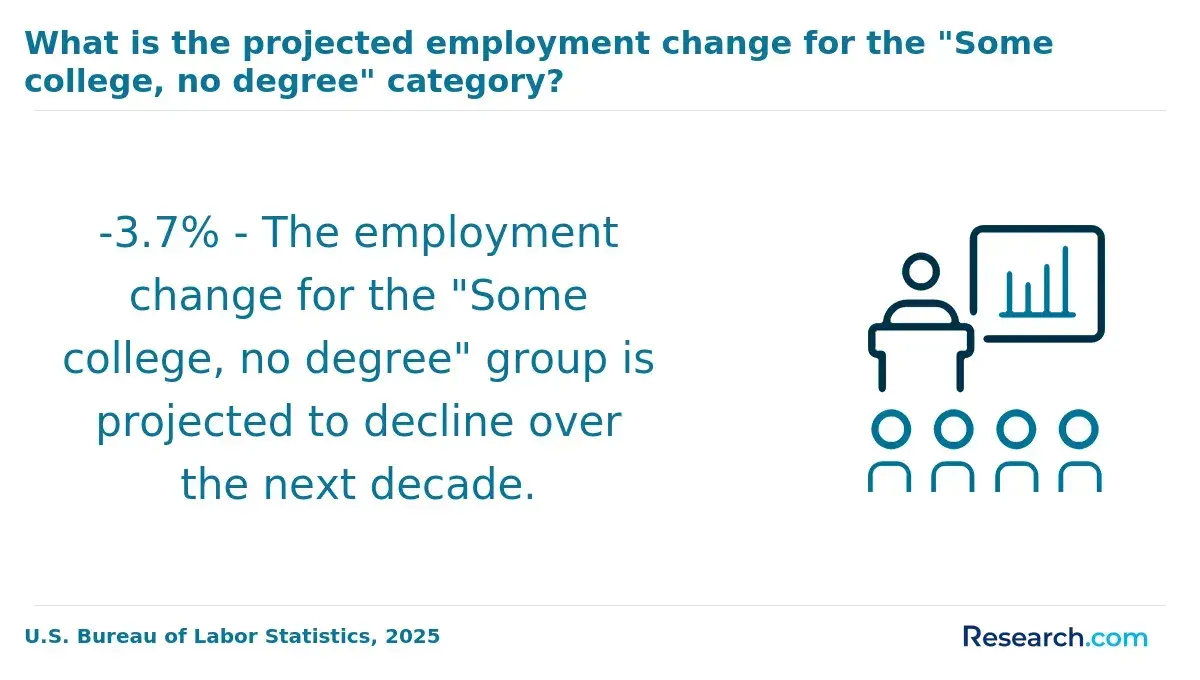
Cost depends on residency status, public versus private tuition, transfer credit, program level, fees, books, lab kits, travel requirements, and whether the employer helps pay. College Board's 2024-25 national averages show published tuition and fees of $11,610 for in-state students at public four-year institutions and $43,350 at private nonprofit four-year institutions. Those figures are not specific to food industry programs, but they provide a useful benchmark for evaluating whether an online program is priced competitively.
- Public in-state online bachelor's programs often provide the strongest tuition value when the school extends in-state or flat online rates.
- Public out-of-state programs can become expensive unless the university offers a reduced online rate or tuition reciprocity.
- Private nonprofit programs may cost more, but some offer strong advising, cohort models, employer partnerships, or generous institutional aid.
- Graduate food technology or food safety programs may have higher per-credit tuition but fewer total credits than a second bachelor's degree.
- Employer tuition assistance can significantly improve ROI for students already working in manufacturing, logistics, quality, or operations.
Students should compare total cost of attendance, not just tuition per credit. Fees, textbooks, lab supplies, exam proctoring, short residencies, travel, and lost work hours can change the real price. Ask the school for a written cost estimate based on your transfer credits and intended pace.
The most cost-effective path is often not the cheapest program on paper. A slightly more expensive program may be a better investment if it accepts more transfer credits, includes manufacturing-relevant courses, provides employer connections, or can be completed faster without leaving the workforce.
What careers in food manufacturing and operations can you pursue with a food industry management degree?
A food industry management degree can lead to several career paths in manufacturing, especially when paired with plant experience, quality training, or technical food safety knowledge. Employers may include food processors, beverage companies, ingredient suppliers, meat and poultry operations, dairy plants, bakeries, frozen food manufacturers, packaging companies, cold storage providers, and private-label manufacturers.
The table below summarizes common roles and how the degree typically supports each path.
| Career path | Typical responsibilities | How the degree helps |
| Production supervisor | Oversees line employees, schedules production, monitors output, resolves shift issues, and supports safety goals | Builds knowledge of operations, leadership, food safety, and process flow |
| Quality assurance supervisor | Manages inspections, documentation, specifications, corrective actions, and audit preparation | Connects food microbiology, HACCP, sanitation, and quality systems |
| Food safety coordinator | Maintains preventive controls, training records, hazard analyses, supplier documentation, and recall readiness | Strengthens regulatory, documentation, and risk-management skills |
| Operations manager | Coordinates production, labor, inventory, equipment utilization, budgets, and continuous improvement | Combines management, finance, supply chain, and manufacturing decision-making |
| Supply chain or procurement analyst | Works with suppliers, ingredients, packaging, inventory, logistics, and cost controls | Supports sourcing decisions and food system risk analysis |
| Plant manager | Leads facility performance, safety, quality, compliance, staffing, budgets, and strategic improvement | Requires broad command of operations, people leadership, compliance, and business performance |
Entry-level graduates without plant experience may start as QA technicians, production coordinators, management trainees, sanitation leads, inventory analysts, or regulatory assistants. Experienced workers may use the degree to compete for supervisor, manager, or specialist roles.
AI, robotics, sensors, and predictive analytics are changing food manufacturing, but they are not eliminating the need for human managers. Instead, employers increasingly need leaders who can interpret production data, train teams, manage automated systems, and respond when quality or safety indicators move outside acceptable limits.
What salary ranges and advancement opportunities exist for food manufacturing managers and executives?
Salary potential in food manufacturing management depends on role, plant size, region, product category, union environment, shift responsibility, regulatory complexity, and years of experience. A degree can help applicants qualify for management-track roles, but compensation is never guaranteed and usually depends on performance and employer needs.
For a national benchmark, the BLS reported a May 2024 median annual wage of $121,440 for industrial production managers. This occupational category is broader than food manufacturing, but it is one of the most relevant federal salary measures for plant leadership roles.
The table below explains how advancement often works in food manufacturing and where education tends to matter most.
| Career stage | Common titles | Advancement signal employers look for | Education value |
| Entry level | QA technician, production coordinator, sanitation lead, inventory assistant | Reliability, food safety awareness, documentation accuracy, shift experience | Helps build technical vocabulary and qualify for trainee programs |
| Supervisor level | Production supervisor, QA supervisor, warehouse supervisor | Ability to lead teams, solve line problems, enforce safety standards, communicate across shifts | Supports promotion by adding operations, compliance, and leadership training |
| Manager level | Operations manager, quality manager, food safety manager, supply chain manager | Budget ownership, audit success, KPI improvement, labor planning, cross-functional leadership | Often useful for competing with candidates who have both experience and credentials |
| Executive or plant leadership | Plant manager, director of operations, director of quality, vice president of manufacturing | Facility performance, strategic planning, regulatory risk control, capital projects, people leadership | Graduate education or business training may strengthen candidacy, especially for multi-site roles |
Advancement usually comes from combining education with measurable results. Examples include reducing waste, improving first-pass quality, strengthening audit performance, lowering downtime, improving employee retention, or leading successful product launches. Students should document these achievements during the degree so they can show employers more than a transcript.
For ROI, the most important question is not "What is the average salary after graduation?" It is "Will this program help me move into a higher-responsibility role that I can realistically obtain based on my location, experience, and employer market?"
What industry certifications, food safety standards, or regulatory knowledge are important for food manufacturing managers?
Food manufacturing managers do not usually need a state license, but they do need strong command of food safety standards, documentation practices, and regulatory expectations. Requirements vary by employer, product category, and whether the facility is regulated primarily by FDA, USDA, or another authority.
The most useful credentials and knowledge areas are listed below because they frequently appear in job descriptions for food safety, quality, production, and operations leadership roles.
- HACCP training for identifying, evaluating, and controlling food safety hazards in manufacturing processes..
- Preventive Controls Qualified Individual training for facilities covered by FDA preventive controls requirements.
- Good Manufacturing Practices knowledge for sanitation, employee hygiene, contamination prevention, and facility controls.
- GFSI-benchmarked scheme familiarity, such as SQF or BRCGS, for companies that sell to major retailers or foodservice customers.
- Allergen control training for ingredient segregation, labeling controls, sanitation validation, and cross-contact prevention.
- Recall and traceability knowledge for lot coding, supplier records, mock recalls, and crisis response.
- OSHA and workplace safety awareness for equipment safety, lockout/tagout, ergonomics, and incident prevention.
- Lean Six Sigma or continuous improvement training for waste reduction, process stability, and performance improvement.
Documentation is one of the biggest differences between food manufacturing and many other management fields. A strong manager must know how to maintain records that prove the facility followed its procedures, not just how to keep production moving.
Students interested in regulated data, compliance documentation, and information governance outside manufacturing may also compare related healthcare-oriented paths such as a CAHIIM accredited health information management degree online. That is a different career direction, but it illustrates how accreditation and regulatory records can shape professional roles.
How can you evaluate and choose a reputable online food industry management program for manufacturing-focused careers?
Choosing a reputable online food industry management program requires more than reading rankings. The best program is the one that matches your target role, accepts your prior credits, fits your budget, and gives you credible preparation for food manufacturing-not just a flexible schedule.
Use the following steps to evaluate programs before you commit.
- Verify institutional accreditation through recognized accreditation databases and confirm the school is eligible for federal financial aid if you plan to use aid.
- Read the full curriculum and highlight courses related to food safety, processing, quality systems, operations, supply chain, finance, and leadership.
- Ask whether the program includes applied projects, internships, employer-based capstones, or case studies from real food manufacturing environments.
- Request a transfer-credit evaluation before enrollment so you can estimate the real completion time and total cost.
- Ask admissions or program faculty which roles recent students pursued and whether the program supports working adults in manufacturing shifts.
- Compare faculty backgrounds and look for experience in food science, quality assurance, operations, agribusiness, regulatory affairs, or manufacturing leadership.
- Check whether any required labs, residencies, proctored exams, or internship hours could interfere with work or family obligations.
- Review financial aid, employer tuition reimbursement, military benefits, payment plans, and scholarship options before choosing a start date.
Common red flags include vague curriculum descriptions, no clear accreditation information, aggressive enrollment pressure, unclear tuition and fee disclosures, limited faculty information, and promises of specific salaries or promotions. A reputable program should be transparent about requirements, costs, outcomes, and limitations.
If your main goal is plant leadership, process improvement, or cross-functional operations work, you may also compare food-focused programs with a bachelor's in project management. Project management can be valuable for capital projects and continuous improvement, but it should be paired with food safety and manufacturing knowledge if you want to lead in food production.
The smartest choice is usually a program that lets you build a portfolio while you study. Capstones on downtime reduction, sanitation improvement, supplier approval, allergen control, packaging waste, or scheduling efficiency can become strong interview evidence for manufacturing employers.
Other Things You Should Know About Food Industry Management
It can be worth it if you want manufacturing, quality, food safety, supply chain, or operations leadership roles and the program is accredited, affordable, and aligned with food-sector work. It is less compelling if the curriculum is mostly general business and you already have strong management credentials.
The most effective online education program for advancing in a food manufacturing career in 2027 typically balances comprehensive coursework in business management with specialized food industry insights. Programs that are accredited and offer flexible schedules, such as a Master's in Food Industry Management, can be particularly advantageous.
Some programs use virtual labs, local field experiences, employer-based projects, mailed lab kits, or short campus residencies. If hands-on lab work is important for your target role, ask exactly how the online program delivers those requirements before enrolling.
A bachelor's degree is usually best for building broad career mobility. A master's degree can help experienced professionals move into technical leadership. A certificate may be enough if you already have a degree and only need focused training in HACCP, preventive controls, quality systems, or operations improvement.
References
- How to choose training software for food manufacturing https://www.alchemysystems.com/blog/how-to-choose-training-software-for-food-manufacturing/
- Online Master’s in Food Business - CIA School of Graduate and Professional Studies https://masters.culinary.edu/food-business-masters-degree/
- Food Industry Careers & Jobs | General Mills Careers https://careers.generalmills.com/career-areas
- Exploring Options - Different Types of Opportunities in The Food Industry https://foodindustryhub.com/opportunities-in-the-food-industry/
- Become an Food Production Manager: Career Path Guide | Skills U https://skillsu.com/role/food-production-manager
- Food Manager Certificate: Who, What, When, Where, Why, and How Much https://servingalcohol.com/food-manager-certificate-who-what-when-where-why-and-how-much/
- Have You Ever Considered a Career in Food Manufacturing? - Goodwin Recruiting https://www.goodwinrecruiting.com/have-you-ever-considered-a-career-in-food-manufacturing
- Master in Food & Beverage Management Online | Rome Business School https://romebusinessschool.com/master-online-in-food-and-beverage-management/
- Food Industry Certifications 101 and the Top Training Courses https://blog.foodsafedrains.com/food-industry-certifications-101-and-the-top-training-courses
- Food Production Manager Jobs (with Salaries) - SEEK https://au.seek.com/food-production-manager-jobs