2027 Food Industry Management Career Paths With the Strongest Salary Growth

Co-Founder and Chief Data Scientist
Food industry management can lead to careers in restaurants, manufacturing, supply chains, nutrition services, and food safety, but the best path depends on salary upside and required education. The National Restaurant Association projected U.S. foodservice sales above $1.1 trillion in 2024, showing why skilled managers remain important across the sector.
This guide is for students, career changers, and food workers considering advancement. You will learn which roles pay more, what degrees help, what skills raise earning potential, and how to choose a program wisely.
Key Things You Should Know
- Highest salary upside is usually outside entry-level restaurant supervision: food manufacturing operations, supply chain/logistics, sales, marketing, and multi-unit leadership generally offer stronger advancement than single-site foodservice management.
- BLS data published in 2024 reported median pay of $63,060 for food service managers, $79,400 for logisticians, $116,970 for industrial production managers, and $157,620 for marketing managers, showing how career track matters.
- Education ROI improves when the program matches the target role: hospitality or foodservice management for restaurants, food science or operations for manufacturing, nutrition/dietetics for clinical or wellness settings, and business analytics or supply chain for corporate roles.
Which food industry management careers show the strongest salary growth and earning potential?
The strongest salary growth in food industry management usually comes from roles that control revenue, production efficiency, compliance risk, or multi-location operations. A restaurant assistant manager can build valuable experience, but larger salary jumps often happen when professionals move into plant management, supply chain leadership, category management, corporate foodservice, or regional operations.
It helps to think of "salary growth" in two ways: annual wage growth within a job and upward mobility into higher-paying roles. The second factor is often more important because food industry management includes many career ladders where responsibilities expand from supervising a shift to managing budgets, vendors, people, safety systems, and profit-and-loss performance.
The table below compares common food industry management paths using recent BLS wage data published in 2024 where a close occupational category is available. Exact pay varies by employer, region, company size, bonus structure, and whether the role is hourly, salaried, or incentive-based.
| Career path | Closest BLS role or labor category | Median pay reported in 2024 BLS data | Why salary growth can be strong | Best fit |
| Food manufacturing operations manager | Industrial production manager | $116,970 | Managers who improve throughput, labor efficiency, food safety, and waste reduction can move into plant, regional, or director roles. | People who like process improvement, production data, and leading large teams. |
| Food supply chain or logistics manager | Logistician | $79,400 | BLS projected 18% employment growth for logisticians in its 2024 Occupational Outlook updates, reflecting demand for resilient supply chains. | People interested in forecasting, transportation, procurement, cold chain, and vendor coordination. |
| Food sales, category, or account manager | Sales manager | $135,160 | Pay may include commissions or bonuses tied to revenue, national accounts, retail partnerships, or foodservice contracts. | People who combine food knowledge with negotiation and client management. |
| Food brand, product, or marketing manager | Marketing manager | $157,620 | Managers who guide pricing, product launches, consumer insights, and brand growth can access high corporate salaries. | People interested in consumer behavior, analytics, retail trends, and product strategy. |
| Restaurant or foodservice general manager | Food service manager | $63,060 | Single-unit pay can be moderate, but multi-unit, district, and regional roles can create larger compensation jumps. | People who enjoy fast-paced operations, guest service, staffing, and daily problem solving. |
| Nutrition services or healthcare foodservice manager | Dietitian or nutritionist; food service manager | $69,680 for dietitians and nutritionists | Healthcare, senior living, schools, and wellness organizations may value both nutrition expertise and operations management. | People interested in patient care, menu planning, compliance, and institutional foodservice. |
The most important takeaway is that the "food industry" is not one salary market. A kitchen manager, plant supervisor, procurement analyst, and food brand manager may all work around food, but they are paid according to different business functions. Students who want the strongest salary growth should choose a degree and early work experience that point toward the function they want to manage.
Several trends are pushing employers to pay more for specialized management skills. AI-assisted demand forecasting, automated production lines, digital inventory systems, food traceability requirements, and tighter labor budgets all reward managers who can use data rather than rely only on experience. This does not mean every job requires coding, but it does mean spreadsheet fluency, dashboard interpretation, and comfort with technology can separate high-growth candidates from purely operational applicants.
What degree options in food industry management lead to the best-paying roles?
The best degree depends on the part of the food industry you want to manage. A hospitality management degree can be excellent for restaurant, hotel, and event foodservice careers, but it may not be the strongest option for someone aiming at food manufacturing, product development, supply chain, or nutrition services leadership.
The table below summarizes common degree routes and the career outcomes they tend to support. Use it as a fit guide, not a ranking, because employer requirements vary widely by role and industry segment.
| Degree option | Best-paying career targets | Typical strengths | Limitations to consider |
| Hospitality or foodservice management | Restaurant general manager, catering director, hotel food and beverage manager, district manager | Operations, guest experience, cost control, staffing, service systems | May need additional finance, analytics, or supply chain coursework for corporate roles. |
| Food science | Quality assurance manager, production supervisor, regulatory affairs specialist, product development manager | Food safety, chemistry, processing, sensory evaluation, product quality | More technical; may require lab work and science prerequisites. |
| Business administration with operations or supply chain concentration | Supply chain manager, procurement manager, operations analyst, category manager | Finance, logistics, analytics, vendor management, strategy | Students may need internships or food-sector electives to show industry fit. |
| Nutrition or dietetics | Nutrition services manager, school foodservice director, clinical foodservice leader, wellness program manager | Menu planning, health outcomes, dietary guidelines, institutional compliance | Registered dietitian roles require specific accredited coursework and supervised practice. |
| Project management or technology-focused business degree | Food systems project manager, facilities rollout manager, ERP implementation coordinator, process improvement lead | Scheduling, risk management, budgets, cross-functional leadership | Works best when paired with food operations experience. |
Students pursuing nutrition-focused management should be especially careful about credential rules. If the goal is to become a registered dietitian, compare programs that meet dietetics education requirements and supervised practice expectations; a useful starting point is this guide to the best online registered dietitian programs.
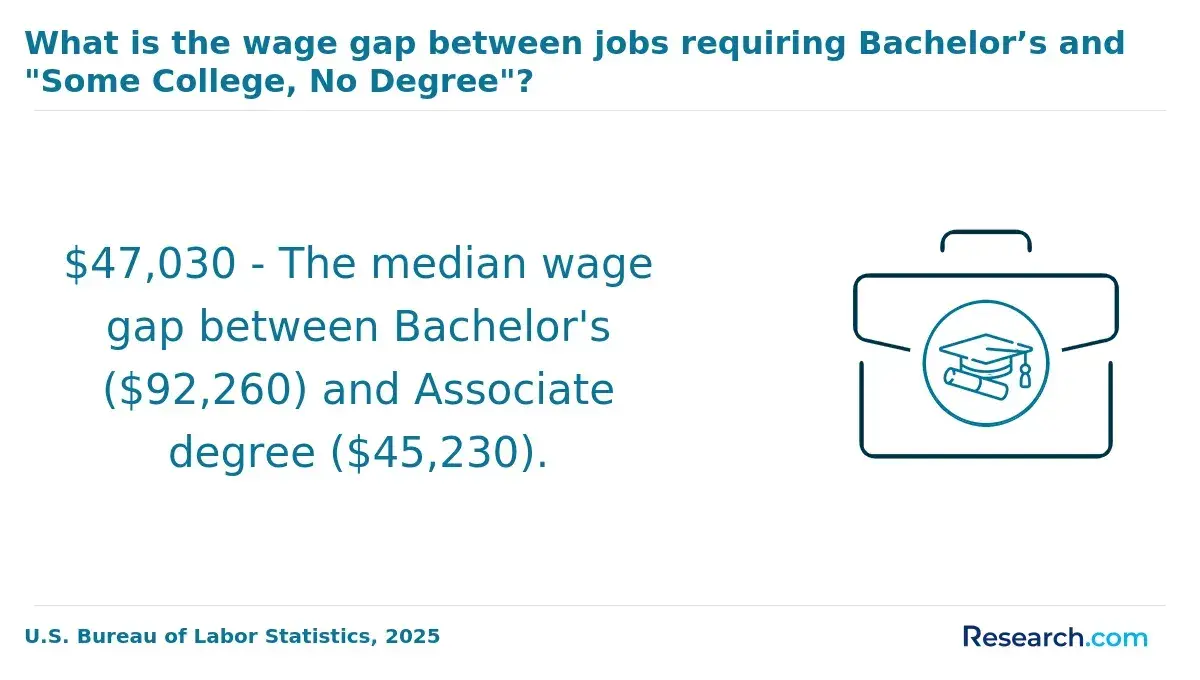
A bachelor's degree is the most flexible credential for long-term advancement, especially for corporate roles. However, an associate degree or certificate can make sense for students who already work in restaurants, retail food, warehouses, or production facilities and need a faster credential to qualify for supervisor roles. A master's degree usually makes the most sense later, when a professional is targeting executive leadership, analytics-heavy roles, research and development management, or healthcare foodservice administration.
Common mistakes include choosing a broad culinary program when the target job is corporate operations, choosing a nutrition program that does not meet dietetics requirements, or assuming a business degree alone will prove food industry readiness. The safer approach is to match the degree to the job family, then add internships, certifications, or work experience that make the career connection obvious.
How much do food industry managers earn, and how fast are salaries rising?
Food industry management salaries vary because the field crosses several labor markets. Restaurant management is often more operations-heavy and location-dependent, while food manufacturing, logistics, sales, and marketing roles may pay more because they directly affect production capacity, revenue growth, or national distribution.
Recent BLS releases show that wages are still rising, but not evenly across every role. The BLS Employment Cost Index release for March 2024 reported that private-industry wages and salaries rose 4.1% over the previous 12 months, which means workers were still seeing wage growth, though individual raises depend heavily on promotions, employer profitability, and local labor competition.
The table below gives a salary context for food-related management paths. These are national medians for broader occupations, so they should be used as benchmarks rather than predictions for a specific graduate.
| Role category | Recent national median pay | Salary-growth interpretation | What can raise pay |
| Food service managers | $63,060 | Good entry into management, but large salary growth often requires moving to high-volume, multi-unit, corporate, or hotel food and beverage roles. | Profit-and-loss ownership, scheduling efficiency, beverage revenue, guest satisfaction, low turnover. |
| Industrial production managers | $116,970 | Strong earning potential in food manufacturing because managers oversee labor, equipment, quality, and production targets. | Lean manufacturing, safety record, automation knowledge, throughput improvement. |
| Logisticians | $79,400 | Strong outlook due to supply chain complexity, especially in perishable goods, cold chain, and inventory planning. | ERP systems, forecasting, vendor negotiation, transportation analytics. |
| Sales managers | $135,160 | High upside when compensation includes performance incentives or responsibility for major foodservice or retail accounts. | Account growth, pricing strategy, contract negotiation, category knowledge. |
| Marketing managers | $157,620 | Among the highest-paying adjacent paths for food industry professionals moving into brand, product, or consumer strategy. | Data analytics, product launches, consumer insights, digital marketing, margin strategy. |
To evaluate salary growth realistically, look beyond the starting title. Ask whether the role controls a budget, whether bonuses are available, how many employees or locations the manager oversees, and whether the company has a clear promotion ladder. A lower starting salary at a large food manufacturer with supervisor-to-plant-manager mobility may be a better long-term move than a slightly higher starting salary in a flat organization.
Regional differences also matter. Food manufacturing pay may be stronger in regions with major processing plants, logistics hubs, and agribusiness operations, while restaurant management pay can be higher in large metro areas but offset by cost of living. Students should compare local job postings with national medians before deciding whether a degree investment is likely to pay off.
What does a food industry management program teach, and which skills boost income?
A strong food industry management program teaches students how food businesses make money, control risk, manage people, and deliver consistent products or service. The curriculum may look different depending on whether the program is housed in hospitality, business, food science, nutrition, or agriculture, but the most valuable programs connect operations knowledge with financial and analytical decision-making.
Most programs include a mix of business, food systems, and applied management coursework. The courses below are especially relevant because they connect directly to promotion potential and employer expectations.
- Foodservice or production operations: Teaches workflow, labor planning, purchasing, inventory, and service or production standards.
- Food safety and sanitation: Covers hazard prevention, regulatory compliance, allergen control, and documentation systems.
- Managerial accounting and cost control: Helps students understand food cost, labor cost, margin, waste, pricing, and profitability.
- Supply chain and procurement: Builds skills in vendor selection, forecasting, cold chain, contracts, and distribution.
- Human resources and leadership: Prepares students for hiring, training, conflict resolution, retention, and labor law basics.
- Data analytics and information systems: Supports decisions using POS reports, ERP systems, inventory dashboards, production data, and forecasting tools.
- Marketing and consumer behavior: Useful for menu development, product launches, brand management, and retail food strategy.
Income often rises fastest when a manager can solve expensive problems. For example, reducing turnover, improving forecast accuracy, preventing food safety failures, lowering waste, or increasing sales per labor hour can make a manager more promotable than someone who only supervises daily tasks.
Students who want project-heavy roles in food operations, facilities, technology rollouts, or product launches may benefit from structured project management training. If that path is appealing, compare options such as an accelerated online project management degree, especially if you already have food industry experience and want to move into implementation leadership.
Technology is changing the skill mix. AI forecasting tools, automated ordering, robotics in production, digital traceability, and sensor-based quality monitoring are not replacing all managers, but they are changing what managers need to understand. The best candidates can explain what the data means, spot operational risks, and translate technical findings into decisions employees can follow.
Certifications can also strengthen income potential, although they rarely replace a degree for corporate advancement. Depending on the target role, useful credentials may include ServSafe Manager, HACCP training, Certified Food Protection Manager credentials, Project Management Professional training, Six Sigma or Lean credentials, and supply chain certifications. Requirements vary by employer and state, so students should verify which credentials are actually requested in job postings before paying for them.
Which types of food industry management jobs offer the fastest promotion and pay raises?
The fastest promotion paths tend to be in organizations with multiple layers of management, measurable performance targets, and frequent openings. A single independent restaurant may offer rich hands-on learning, but a regional chain, manufacturing company, distributor, hospital system, university dining operation, or national food brand may offer clearer advancement steps.
The career ladders below show where pay raises often happen. They are not guaranteed timelines, but they help students understand how entry-level work can become a higher-paying management path.
| Entry point | Next step | Higher-growth management target | Why advancement can be faster |
| Shift lead or assistant restaurant manager | General manager | Multi-unit manager or district manager | Chains need leaders who can standardize performance across locations. |
| Production associate or line supervisor | Production supervisor | Plant manager or operations director | Manufacturing has measurable productivity, safety, and quality targets. |
| Inventory coordinator or buyer assistant | Procurement analyst or purchasing manager | Supply chain manager or category manager | Strong savings, vendor performance, and forecasting results are visible to leadership. |
| Quality technician | Quality assurance supervisor | Food safety or regulatory affairs manager | Compliance failures are costly, so experienced quality leaders are valuable. |
| Foodservice supervisor in healthcare or education | Department manager | Director of nutrition services or dining services | Large institutions need managers who balance budgets, nutrition standards, and compliance. |
Students can speed up advancement by being intentional from the first role. The following steps are practical because they create evidence of management readiness rather than simply adding years of experience.
- Choose entry-level employers with multiple locations, training programs, or internal promotion tracks.
- Track measurable wins, such as lower waste, improved inspection scores, better labor scheduling, faster service times, or fewer stockouts.
- Volunteer for cross-functional projects involving purchasing, safety audits, new product launches, inventory systems, or staff training.
- Learn the software used in the target path, such as POS analytics, ERP platforms, scheduling tools, procurement systems, or quality documentation software.
- Ask managers what qualifications are required for the next promotion before enrolling in a degree or certificate.
One common mistake is staying too long in a role with no promotion ladder because the workplace feels familiar. Experience matters, but employers hiring for higher-level management usually want evidence of broader responsibility. If a job cannot offer budget ownership, team leadership, compliance exposure, or measurable operational projects, it may be a stepping stone rather than a long-term growth environment.
How do online food industry management degrees compare to campus programs for career outcomes?
Online and campus food industry management degrees can both lead to strong outcomes when they are accredited, career-aligned, and connected to practical experience. The right format depends less on prestige alone and more on whether the program supports internships, labs, employer networking, transfer credits, and the kind of management path the student wants.
The comparison below highlights where each format tends to work best. It can help students avoid choosing a program format that fits their schedule but not their career goal.
| Factor | Online program | Campus program | Best decision rule |
| Flexibility | Strong for working adults, parents, military students, and current food workers. | Better for students who want a structured weekly schedule. | Choose online if you need to keep working; choose campus if you need daily structure. |
| Hands-on learning | May require local internships, workplace projects, or short residencies. | Often easier for labs, culinary facilities, sensory labs, and campus dining experience. | Choose campus for lab-heavy food science unless the online program clearly explains local lab options. |
| Networking | Depends on virtual career services, employer partnerships, and student engagement. | Often stronger for local internships and faculty relationships. | Ask for employer placement examples in your target region. |
| Cost control | Can reduce commuting and housing costs, but tuition varies widely. | May offer campus jobs, labs, and in-person resources, but housing can raise total cost. | Compare total cost, not just tuition per credit. |
| Career fit | Strong for business, hospitality management, supply chain, and completion degrees. | Strong for food science, culinary management, and programs requiring facilities. | Match format to required hands-on competencies. |
Online study can be especially valuable for people already working in the food industry because assignments can often be connected to real workplace problems. For example, a student might analyze inventory waste at a current employer, build a labor schedule model, or evaluate a supplier issue. That kind of applied work can support promotion discussions.
Students who want a faster nutrition-related credential may compare options such as a 2 year nutrition degree online, but they should verify whether the program is designed for transfer, workforce entry, or preparation for a longer dietetics pathway. A short program can be useful, but it may not meet requirements for advanced nutrition credentials by itself.
The biggest red flag is an online program that sounds convenient but cannot explain how students complete internships, food safety training, labs, or employer-facing projects. Before enrolling, ask the school how online students build practical experience and whether graduates have entered the specific career path you want.
What admissions requirements and prerequisites do food industry management programs typically have?
Admissions requirements depend on degree level and academic focus. Hospitality and business-based food management programs are often accessible to students with a standard high school curriculum, while food science, dietetics, and nutrition programs may require stronger preparation in biology, chemistry, math, or statistics.
The table below summarizes typical requirements. Individual schools set their own standards, so students should always verify admissions details directly with the program.
| Program level | Common admissions requirements | Possible prerequisites | Best applicant profile |
| Certificate | High school diploma or equivalent; sometimes work experience. | May require food safety basics for advanced certificates. | Current food workers seeking supervisor skills or a targeted credential. |
| Associate degree | High school diploma or equivalent; placement testing may be used. | Introductory math, writing, and sometimes biology or nutrition. | Students seeking affordable entry or transfer to a bachelor's program. |
| Bachelor's degree | High school transcript, application, possible essay, and transfer records if applicable. | Business math, statistics, biology, chemistry, or accounting depending on major. | Students targeting long-term management, corporate roles, or technical food careers. |
| Master's degree | Bachelor's degree, resume, statement of purpose, recommendations, and sometimes professional experience. | Foundational business, statistics, nutrition, or science coursework may be required. | Working professionals aiming for senior leadership, analytics, or specialized administration. |
Applicants can strengthen their profile by showing that they understand the industry. Admissions teams and scholarship committees may value restaurant work, retail food experience, agriculture involvement, food pantry volunteering, culinary competition, quality assurance exposure, or leadership in school organizations.
Before applying, students should complete a short readiness check. These steps can reduce wasted applications and prevent enrollment in a program that does not match the target career.
- Identify the exact job family you want, such as restaurant operations, food manufacturing, dietetics, supply chain, or brand management.
- Review job postings for that role and note repeated degree, certification, software, and experience requirements.
- Ask the program whether transfer credits, prior learning, military training, or industry certifications can reduce time to completion.
- Confirm whether internships, labs, or supervised practice are required and whether they can be completed near you.
- Check whether the curriculum includes finance, analytics, leadership, and food safety, not just general food topics.
A common mistake is applying based only on the program name. "Food management," "hospitality," "nutrition," and "food science" can lead to very different outcomes. Read the course list carefully and compare it with actual job postings before committing.
How long do food industry management degrees take, and what do they cost?
Program length ranges from a few months for certificates to four years for a bachelor's degree, with many adult learners taking longer because they study part time. The best value is not always the cheapest program; it is the program that helps you reach the target role at a manageable total cost.
Recent College Board pricing data for the 2024-25 academic year reported average published tuition and fees of $4,050 at public two-year colleges, $11,610 for in-state students at public four-year colleges, and $43,350 at private nonprofit four-year colleges. These figures are useful for context, but your actual net price may be lower after grants, scholarships, employer tuition support, or transfer credits.
The table below compares common timelines and cost considerations. It focuses on U.S. degree pathways and does not include every possible housing, transportation, lab, or technology fee.
| Credential | Typical full-time length | Cost considerations | Best use case |
| Certificate | Several months to one year | Usually lower total cost; may not qualify for all financial aid if noncredit. | Current workers needing supervisory, food safety, HACCP, or operations credentials. |
| Associate degree | About two years | Often lower tuition, especially at community colleges; transfer planning is important. | Students seeking affordable entry into foodservice, nutrition support, or operations roles. |
| Bachelor's degree | About four years | Higher total cost but broader access to corporate, technical, and long-term management roles. | Students targeting advancement into multi-unit, plant, supply chain, brand, or institutional leadership. |
| Master's degree | One to three years | Higher per-credit cost; ROI depends on employer support and leadership goals. | Professionals seeking executive, analytics, healthcare, food science, or specialized management roles. |
Students should compare total cost using more than tuition. A realistic budget should include the following items because they can change the return on investment significantly.
- Tuition and mandatory fees.
- Books, digital platforms, uniforms, lab kits, knives, or food production supplies when required.
- Internship travel, transportation, parking, or housing costs.
- Certification exams such as food protection, HACCP, or project management credentials.
- Lost income if the program requires full-time study or daytime internships
- Interest costs if loans are needed.
To reduce cost, start with transfer-friendly community college coursework when appropriate, use employer tuition assistance if available, ask about credit for prior learning, and compare net price rather than advertised tuition. Students who already work in foodservice or manufacturing should also ask whether workplace projects can satisfy internship or capstone requirements.
Costly mistakes include borrowing for a degree without checking local salaries, choosing a private program before comparing public options, ignoring transfer policies, or assuming an accelerated program is cheaper. Accelerated study can reduce time, but it may be more intense and may limit the hours a student can work.
Are food industry management careers stable, and what is the long-term job outlook?
Food industry management is generally stable because food is essential, but stability varies by segment. Grocery distribution, institutional foodservice, food manufacturing, and healthcare dining can be more resilient than luxury dining or discretionary hospitality during economic slowdowns. However, even stable sectors can face margin pressure, automation, labor shortages, and changing consumer behavior.
BLS employment projections published in 2024 showed 5% projected growth for food service managers and 18% growth for logisticians in the 2022-2032 outlook period. For students, this suggests that traditional foodservice management remains a viable path, while supply chain-related roles may offer stronger demand signals.
Long-term stability is influenced by several trends. Food companies are investing in automation to address labor shortages and improve consistency. Traceability and food safety documentation are becoming more data-driven. Consumers are also pushing demand for convenience, health-conscious options, value pricing, and transparent sourcing. Managers who can adapt operations to these trends may be better positioned than those who rely only on traditional supervisory experience.
Stable food industry management paths often share a few characteristics. These features matter because they protect employability even when one segment of the industry slows.
- Transferable management skills: Budgeting, scheduling, team leadership, procurement, and safety compliance can transfer across restaurants, institutions, manufacturing, and retail food.
- Technical or regulatory knowledge: Food safety, HACCP, allergen control, quality assurance, and traceability skills are valuable because mistakes can be costly.
- Data and systems fluency: Managers who understand POS data, ERP systems, inventory dashboards, and forecasting tools can support higher-level decisions.
- Multi-site or high-volume experience: Employers often value candidates who can maintain consistency across locations, shifts, teams, or production lines.
Food industry management may not be the right fit for everyone. People who need a predictable nine-to-five schedule may find restaurant and production operations demanding, especially early in their careers. Students who dislike conflict management, fast decision-making, or performance metrics may prefer adjacent paths such as food policy, research, nutrition counseling, product development support, or education.
The safest long-term strategy is to build a portable skill set. A degree can open doors, but salary growth is more likely when students combine education with measurable operational achievements, strong references, and credentials that employers recognize.
How can students choose an accredited, reputable food industry management program in the U.S.?
Accreditation is one of the most important checks before enrolling. At minimum, students should choose a school with recognized institutional accreditation, because it can affect federal financial aid, credit transfer, graduate school eligibility, and employer trust. Programmatic accreditation may also matter for specific fields such as dietetics, nutrition, culinary education, business, or hospitality.
Students should evaluate programs using evidence, not marketing language. The checklist below can help identify programs that are more likely to support career progress and avoid costly surprises.
- Confirm institutional accreditation through the school and the U.S. Department of Education-recognized accreditor listed for the institution.
- Check whether programmatic accreditation matters for the target path, such as ACEND for dietetics-related pathways or recognized business accreditation for management programs.
- Ask for recent career outcomes by program, not just university-wide employment claims.
- Review internship, practicum, lab, or capstone requirements and confirm they are available to online and transfer students.
- Compare course requirements with job postings for the roles you want.
- Ask how many credits transfer in and how many must be completed at the institution.
- Calculate net price after grants, scholarships, employer support, and transfer credits.
- Look for employer partnerships with restaurants, food manufacturers, hospitals, schools, distributors, hotels, or consumer packaged goods companies.
Students interested in healthcare foodservice, patient nutrition operations, or administrative work in healthcare settings may also compare adjacent programs such as an HIM degree. Health information management is not the same as food industry management, but it can be relevant for students drawn to healthcare operations, compliance, data, and administrative leadership.
The best program is the one that aligns curriculum, experience, cost, and career outcomes. A reputable school should be able to explain exactly how students gain practical experience, what roles graduates pursue, and how the program supports working adults, online learners, transfer students, or students changing careers.
Red flags include unclear accreditation, vague job placement claims, pressure to enroll quickly, limited transfer transparency, no internship support, and course lists that do not match the advertised career outcomes. If a school cannot answer basic questions about costs, credits, practical training, or graduate outcomes, keep comparing options.
Other Things You Should Know About Food Industry Management
It can be a good career for people who enjoy operations, leadership, problem solving, and measurable results. The strongest opportunities often go to managers who combine food knowledge with finance, analytics, safety, supply chain, or multi-unit leadership skills.
In 2027, roles such as supply chain managers, food safety directors, and sustainability coordinators in the food industry are seeing the strongest salary growth. These positions command high salaries due to increasing consumer demand for transparency and sustainability in food production and distribution.
Corporate roles such as food marketing manager, sales manager, plant operations manager, and supply chain leader often have higher earning potential than entry-level foodservice management. Actual pay depends on location, employer size, bonuses, and level of responsibility.
Choose hospitality or foodservice management for restaurants and service operations, food science for manufacturing or quality, business or supply chain for corporate roles, and nutrition or dietetics for health-focused foodservice. The best choice is the one that matches your target job postings.
References
- Which jobs offer the best chance of promotion? | Canadian HR Reporter https://www.hrreporter.com/focus-areas/leadership-succession-planning/which-jobs-offer-the-best-chance-of-promotion/362227
- Have You Ever Considered a Career in Food Manufacturing? - Goodwin Recruiting https://www.goodwinrecruiting.com/have-you-ever-considered-a-career-in-food-manufacturing
- Top 15 Highest Paying Business Degree Jobs in 2025 UK & Global Guide https://apexlearning.org.uk/highest-paying-business-degree-jobs-2025-2026/
- Food Industry Management https://www.niagara.edu/programs/food-industry-management/
- Online Degree vs. Traditional: Choosing the Right Path https://beal.edu/online-degree-vs-traditional/
- Beyond the Restaurant: Career Opportunities for Restaurant Managers - International Culinary Studio https://www.internationalculinarystudio.com/beyond-the-restaurant-career-opportunities-for-restaurant-managers/
- Food Industry Jobs in Ireland: Your Ultimate Guide to Careers and Salaries https://qsp.ie/page/news/82/Food-Industry-Jobs-in-Ireland-Your-Ultimate-Guide-to-Careers-and-Salaries-
- How to Handle Pay Rise Requests as a Manager - Macdonald & Company https://www.macdonaldandcompany.com/blog/handle-pay-rise-requests-as-manager-employers/
- 20 High-Paying Careers in the Food Industry | CIA https://www.ciachef.edu/blog/top-careers-in-food/
- Study Food Industry Management in the USA https://www.studyusa.com/en/field-of-study/395/food-industry-management