2027 Online Food Industry Management Degrees With Food Business Finance Coursework

Co-Founder and Chief Data Scientist
Choosing an online food industry management degree is really a business decision: you are weighing tuition, time, career mobility, and whether the curriculum teaches the financial side of food operations. The U. S. Bureau of Labor Statistics reported median annual pay of $63,060 for food service managers in May 2023, showing why management roles can be attractive but not automatic. This guide is for students, career changers, and food professionals comparing online programs. You will learn what to study, what to verify, what careers fit, and how to judge value before enrolling.
Key Things You Should Know
- Online food industry management programs with finance coursework usually combine food systems, hospitality or foodservice operations, accounting, managerial finance, cost control, supply chain, marketing, and business analytics rather than culinary training alone.
- The clearest labor-market benchmark is food service management. The BLS reported median annual pay of $63,060 in May 2023, but salaries vary widely by employer, region, experience, and whether the role includes multi-unit, purchasing, or profit-and-loss responsibility.
- Before choosing a program, verify institutional accreditation, total cost, transfer-credit rules, internship or capstone options, and whether the degree includes practical finance work such as menu costing, budgeting, revenue management, procurement, and financial statement analysis.
What is an online food industry management degree with a food business finance focus?
An online food industry management degree with a food business finance focus is a business-oriented program that prepares students to manage food-related organizations, control costs, analyze revenue, and make operational decisions in restaurants, foodservice companies, food manufacturing, retail grocery, catering, distribution, or food entrepreneurship.
Depending on the school, the degree may be titled food industry management, food and beverage entrepreneurship, hospitality management, food business, agribusiness, food systems management, or foodservice management.
The finance focus matters because many food businesses operate on tight margins. Students are not just learning how food is produced or served; they are learning how purchasing, labor scheduling, inventory, pricing, waste, vendor contracts, and demand forecasting affect profitability. A strong program should help students understand both customer-facing operations and back-office financial decisions.
This degree is usually a better fit for people who want to supervise teams, manage budgets, run food operations, coordinate supply chains, or launch a food-related venture. It may not be the best fit for someone whose primary goal is clinical nutrition, dietetics, or nutrition counseling; those students should compare a nutrition degree online instead.
Common degree levels differ in purpose. The table below summarizes how each option typically fits different students and career goals.
| Program type | Typical length | Best fit | Finance emphasis to look for |
| Certificate or undergraduate certificate | Several months to 1 year | Working foodservice employees who need targeted business skills | Cost control, purchasing, menu pricing, basic accounting |
| Associate degree | About 2 years full time | Students seeking entry-level supervisory roles or transfer credit toward a bachelor's degree | Introductory accounting, foodservice operations, inventory management |
| Bachelor's degree | About 4 years full time, often less with transfer credit | Students seeking management, buyer, operations, sales, or entrepreneurship roles | Managerial finance, budgeting, revenue management, analytics, strategic management |
| Master's degree or MBA concentration | About 1 to 3 years | Experienced professionals aiming for senior operations, corporate, consulting, or ownership roles | Financial strategy, operations analytics, supply chain finance, leadership, investment decisions |
How do online food industry management programs compare with on-campus options for flexibility and outcomes?
Online and on-campus food industry management programs can lead to similar academic outcomes when they are accredited, use the same faculty standards, and include career-relevant projects. The main difference is how students access learning, build professional networks, complete hands-on requirements, and manage time. Online programs are especially useful for people already working in restaurants, grocery, distribution, food manufacturing, or hospitality because they can connect coursework directly to workplace problems.
According to NCES distance education data released in 2024, more than half of U.S. postsecondary students took at least one distance education course in fall 2022. For prospective students, that means online learning is no longer a niche option, but quality still varies by school, advising, technology, and employer recognition.
The table below compares the major trade-offs that usually affect student experience and return on investment.
| Factor | Online program | On-campus program | Decision takeaway |
| Schedule flexibility | Often asynchronous or hybrid, allowing students to work while enrolled | Requires fixed class times and commuting or relocation | Online is usually stronger for working adults and career changers |
| Hands-on learning | May use local internships, employer-based projects, simulations, or case studies | May provide campus labs, demonstration kitchens, foodservice facilities, or in-person events | Ask how online students complete experiential requirements |
| Networking | Depends on virtual events, alumni access, group projects, and employer partnerships | Often easier to build informal relationships through campus events | Online students should look for active career services and industry connections |
| Cost structure | May reduce relocation and commuting costs, but tuition varies widely | May add housing, transportation, and campus fees | Compare total cost, not tuition alone |
| Career outcomes | Can be strong when the degree is accredited and career-aligned | Can be strong when campus recruiting and internships match student goals | Format matters less than curriculum, experience, and employer fit |
Students who already have management experience and want broader operations leadership may also compare an operations management MBA, especially if their long-term goal is regional management, supply chain leadership, or corporate operations rather than foodservice-specific roles.
Which accredited schools offer online food industry management degrees that include finance coursework?
There is no single national list of "food business finance" degrees, so students should search broadly across related program names: food industry management, food and beverage entrepreneurship, hospitality management, foodservice management, food systems, food science and industry, and agribusiness. The most important filter is accreditation first, then the match between the curriculum and the financial work you want to do.
The examples below show the types of accredited U.S. institutions that commonly offer online or largely online pathways related to food industry management, hospitality, food systems, or food business. Program names and delivery formats can change, so always verify the current catalog before applying.
| School | Relevant online pathway | Accreditation to verify | Finance-related fit |
| Johnson & Wales University | Online food and beverage entrepreneurship or hospitality-related business pathways | Institutional accreditation through a recognized regional accreditor | Useful for students interested in food ventures, restaurant operations, beverage businesses, and applied business planning |
| Florida International University | Online hospitality management pathways with foodservice and hospitality business content | SACSCOC institutional accreditation | Strong fit for students seeking hospitality finance, revenue management, operations, and foodservice management exposure |
| University of Massachusetts Amherst | Online hospitality and tourism management options through adult or professional education pathways | NECHE institutional accreditation | Relevant for students who want hospitality accounting, service operations, and management coursework |
| Kansas State University | Online food science and industry or related food systems pathways | HLC institutional accreditation | Better for food manufacturing, product, quality, or technical food business roles; finance may require electives or a business minor |
| Arizona State University Online | Food, nutrition, entrepreneurship, sustainability, or business-adjacent food pathways | HLC institutional accreditation | Useful for students interested in food innovation, product development, and venture-oriented coursework, depending on selected electives |
When reviewing a school, do not stop at the title. A program can sound food-focused but contain little financial analysis, or it can be labeled hospitality management and still offer strong coursework in accounting, revenue management, purchasing, and cost control. Request the full degree plan and read individual course descriptions before deciding.
What core curriculum and finance-related courses are included in food industry management programs?
A strong online food industry management curriculum should connect food operations to business performance. Students should learn how food moves from suppliers to customers, how safety and quality systems work, how labor and inventory affect margins, and how managers use financial data to make decisions.
The table below groups common courses by the business problem they help students solve.
| Curriculum area | Common courses | Why it matters for food business finance |
| Food industry foundations | Food systems, foodservice operations, food production, food safety, hospitality management | Helps students understand the operational realities behind revenue, labor, purchasing, and compliance costs |
| Accounting and finance | Financial accounting, managerial accounting, hospitality finance, foodservice cost control, budgeting | Builds the ability to read statements, manage budgets, track margins, and defend business decisions with numbers |
| Operations and supply chain | Procurement, inventory management, logistics, quality control, operations management | Shows how vendor selection, waste, stockouts, and production planning affect profitability |
| Marketing and consumer behavior | Food marketing, menu strategy, consumer trends, retailing, brand management | Connects pricing, promotion, customer demand, and product positioning to revenue |
| Analytics and technology | Business analytics, spreadsheet modeling, point-of-sale analysis, forecasting, information systems | Prepares students to use data from sales, labor, inventory, and purchasing systems |
| Capstone or internship | Business plan, consulting project, internship, applied research project | Lets students demonstrate practical financial and operational judgment to employers |
Students interested in the health, wellness, and nutrition side of food organizations may want to compare business-focused food programs with an online nutrition masters, especially if they want to work in nutrition program leadership, community health, or wellness strategy rather than restaurant or foodservice finance.
Finance-related coursework should be applied, not abstract. Before enrolling, look for assignments that require students to calculate food cost percentage, analyze labor productivity, build an operating budget, model menu profitability, evaluate supplier bids, or interpret a profit-and-loss statement. These tasks are closer to what managers do than a general lecture on business theory.
What are the typical admission requirements for online food industry management degrees?
Admission requirements depend on degree level and institution type, but online food industry management programs usually evaluate academic readiness, transfer history, and sometimes work experience. Selective programs may also consider professional goals because many students are already working in foodservice, hospitality, retail, agriculture, or food production.
Prospective students should prepare the following materials before applying because missing documents can delay admission or transfer-credit review.
- High school transcript or GED documentation for first-time undergraduate applicants.
- College transcripts for transfer, degree-completion, or graduate applicants.
- Minimum GPA evidence, commonly higher for graduate programs than undergraduate programs.
- Application form and fee, unless the school offers a fee waiver.
- Resume or work history, especially for adult, professional, or graduate programs.
- Statement of purpose describing food industry, hospitality, entrepreneurship, or management goals.
- English proficiency documentation for applicants whose prior education requires it under school policy.
- Prerequisite coursework, which may include introductory business, math, accounting, food safety, or science courses depending on the program.
Transfer credit is one of the biggest admissions-related ROI factors. A student who brings in community college, military, culinary school, or prior university credits may shorten the degree and reduce cost, but schools differ in how they apply credits to major requirements. Ask for an official or preliminary transfer evaluation before committing.
Graduate programs may require a bachelor's degree, professional references, a resume, and sometimes quantitative preparation. Many online business and hospitality programs no longer require standardized tests for all applicants, but policies vary, so students should confirm current requirements directly with admissions.
How long do online food industry management degrees take and what do they cost?
Most bachelor's programs require about 120 credits, while master's programs often require about 30 to 36 credits. Full-time bachelor's students typically need about four years, but online degree-completion students with transfer credit may finish faster. Part-time students often take longer, which can be worthwhile if it lets them keep earning income while studying.
Cost should be evaluated as total cost of attendance, not just per-credit tuition. The College Board's 2024 pricing data reported average published tuition and fees of $11,610 for in-state students at public four-year institutions and $43,350 at private nonprofit four-year institutions for the 2024-25 academic year.
Online students may pay different rates, but those figures provide a useful benchmark for judging whether a program's price is unusually low, moderate, or high. When comparing programs, separate direct tuition from the extra costs that affect your actual budget.
- Per-credit tuition multiplied by the number of credits you still need to complete.
- Online learning fees, technology fees, graduation fees, and course materials.
- Books, software, spreadsheet tools, food safety materials, or required industry certifications.
- Internship, practicum, travel, or residency costs if the program is not fully online.
- Lost income if you reduce work hours to study full time.
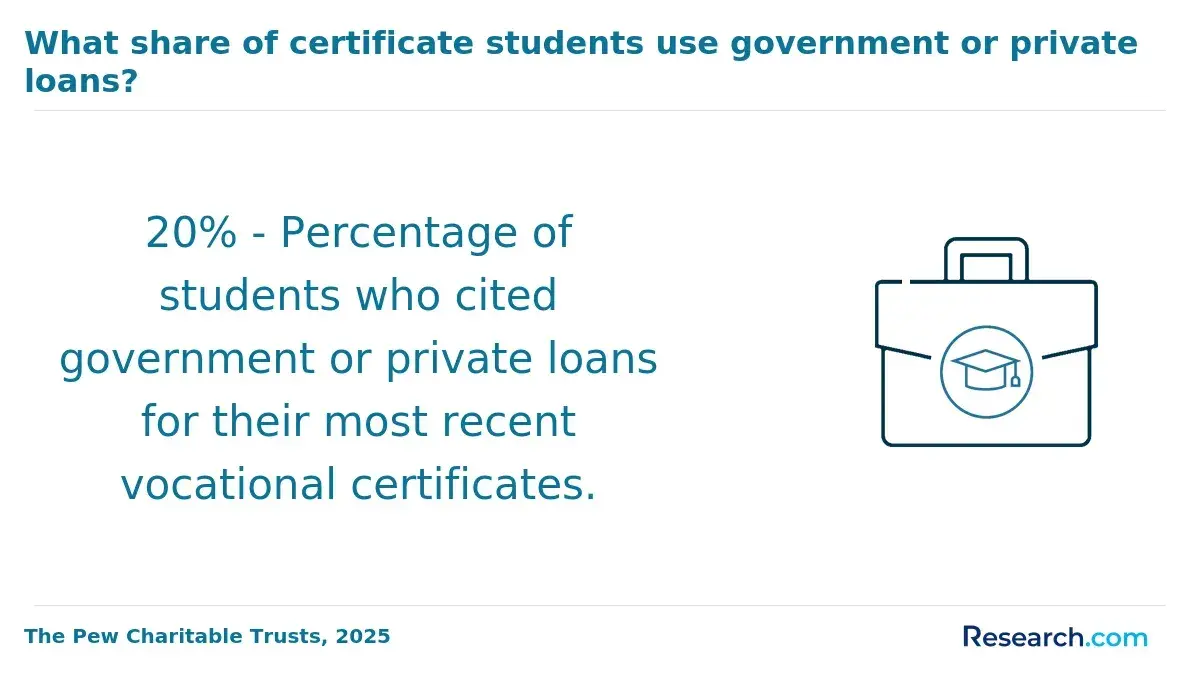
- Interest costs if you borrow federal or private student loans.
The table below shows common timeline and cost trade-offs for online students.
| Enrollment choice | Typical advantage | Typical trade-off | Best for |
| Full-time study | Faster completion and earlier access to degree-required roles | Harder to balance with work and family responsibilities | Students with financial support, strong transfer credit, or urgent career goals |
| Part-time study | More manageable schedule and continued income | Longer time to completion and possible extended fee exposure | Working adults and students seeking employer tuition assistance |
| Accelerated terms | Can shorten calendar time | Heavier workload in shorter sessions | Organized students with predictable schedules |
| Transfer-heavy degree completion | Can reduce credits, tuition, and time | Requires careful transcript evaluation | Community college graduates, career changers, military students, and former college students |
To reduce cost, start by completing the FAFSA, asking about transfer credit, checking employer tuition benefits, comparing public online options, and looking for scholarships tied to hospitality, agriculture, food science, or restaurant associations. Avoid choosing the cheapest program automatically if it lacks accreditation, career support, or the finance coursework needed for your target role.
What careers can graduates pursue with an online food industry management degree focused on finance?
Graduates can pursue roles across restaurants, contract foodservice, hotels, grocery retail, food manufacturing, distribution, catering, schools, healthcare foodservice, universities, and food startups. The finance focus is most valuable in roles where managers influence profit-and-loss performance, purchasing, labor budgets, inventory, pricing, forecasting, or vendor relationships.
The table below connects common career paths with the financial responsibilities employers may expect.
| Career path | Typical responsibilities | Finance connection | Common next step |
| Food service manager | Supervise staff, manage daily operations, ensure service quality, oversee safety procedures | Labor budgets, sales tracking, cost control, inventory, profit-and-loss accountability | General manager, district manager, director of foodservice |
| Restaurant or hospitality operations manager | Coordinate multiple departments, improve service systems, manage vendor and staffing issues | Revenue management, expense control, productivity analysis, margin improvement | Multi-unit manager or regional operations leader |
| Food buyer or procurement coordinator | Select suppliers, negotiate terms, monitor quality and availability | Vendor pricing, contract value, cost variance, supply risk | Category manager or supply chain manager |
| Food product or brand coordinator | Support product launches, pricing research, promotions, and sales analysis | Pricing strategy, sales forecasting, promotional ROI, product margin | Brand manager or product manager |
| Food entrepreneur or small business owner | Develop a concept, manage operations, hire staff, build supplier relationships | Startup budgeting, cash flow, unit economics, break-even analysis | Expansion, franchising, consulting, or investor-backed growth |
| Quality or production supervisor | Monitor production teams, safety practices, throughput, and process performance | Waste reduction, yield analysis, labor efficiency, production cost control | Plant operations manager or continuous improvement leader |
Technology is changing these roles. Employers increasingly use point-of-sale analytics, inventory platforms, scheduling software, demand forecasting tools, and AI-assisted reporting. A finance-focused food management graduate does not need to be a software engineer, but they should be comfortable interpreting dashboards, questioning data quality, and turning operating data into decisions.
Students who enjoy cross-functional planning, vendor coordination, budgets, and timelines may also want to explore what jobs can you get with a project management degree, because food companies often need project managers for store openings, product launches, systems implementation, and supply chain improvements.
What are the salary expectations and job outlook in food industry and food service management?
Salary expectations should be treated as benchmarks, not promises. Pay depends on location, company size, hours, bonuses, union or nonunion environments, and whether the role manages one site, multiple units, or corporate financial responsibility. Food business finance coursework can improve preparedness for higher-responsibility roles, but experience and performance still matter.
The BLS wage data below provides a practical comparison of occupations that may overlap with food industry management or food business finance careers. These figures were reported for May 2023 and published through BLS occupational resources available in 2024.
| Occupation | Median annual wage | How it relates to food industry management |
| Food service managers | $63,060 | Direct benchmark for restaurant, institutional foodservice, catering, and hospitality food operations roles |
| General and operations managers | $101,280 | Relevant to experienced managers overseeing broader business units, multi-site operations, or corporate functions |
| Market research analysts | $74,680 | Relevant to food branding, consumer insights, menu analysis, and product demand research |
| Accountants and auditors | $79,880 | Relevant for students who combine food industry knowledge with accounting-heavy roles, though accounting jobs may require additional preparation |
| Industrial production managers | $116,970 | Relevant to food manufacturing and processing leadership roles with production, cost, quality, and staffing responsibilities |
The job outlook is mixed by role. BLS projections published in 2024 showed continuing openings for food service managers largely because of replacement needs and ongoing demand for food services, but growth may be slower than faster-growing business analytics or logistics occupations.
For students, the practical lesson is to build transferable skills: accounting literacy, spreadsheet modeling, purchasing, scheduling, data interpretation, people management, and communication with nonfinancial teams.
Location also matters. Large metro areas, corporate headquarters, resorts, universities, healthcare systems, and large food manufacturers may offer more structured management tracks, while smaller employers may provide broader responsibility earlier but less formal training. Students should compare job postings in their target region before choosing electives.
Are there licenses, certifications, or professional designations relevant to food industry management careers?
Most food industry management roles do not require a state license in the way nursing, teaching, or public accounting often do. However, certifications can matter for food safety, operational credibility, advancement, and employer screening. Requirements vary by state, county, city, employer, and facility type, especially for food safety manager rules.
The certifications below are commonly relevant to food industry management students and professionals. They are not all required for every job, but they can strengthen a resume when aligned with a target role.
| Credential | Relevant for | Why it may help |
| ServSafe Food Protection Manager or similar approved food safety manager certification | Restaurants, catering, institutional foodservice, hospitality, retail food | Shows knowledge of foodborne illness prevention, sanitation, temperature control, and safe operations |
| Certified Professional Food Manager | Foodservice managers in jurisdictions or employers that accept the credential | May satisfy employer or local food safety manager expectations, depending on local rules |
| HACCP training or certification | Food manufacturing, processing, quality assurance, supply chain, institutional food operations | Supports hazard analysis, preventive controls, and process-based safety management |
| Certified Dietary Manager, Certified Food Protection Professional | Healthcare, long-term care, schools, and institutional dining | Can be valuable for foodservice leadership in regulated care or institutional settings |
| Project Management Professional or similar project credential | Corporate food operations, openings, systems rollouts, supply chain initiatives | Useful for experienced professionals managing complex budgets, timelines, and teams |
| Certified Management Accountant or accounting coursework | Corporate finance, cost control, accounting-adjacent food business roles | Helpful when a role emphasizes budgeting, cost analysis, forecasting, and internal reporting |
Students should ask schools whether certification preparation is embedded in coursework or must be completed separately. If a job posting says a food safety credential is required, confirm which certifying bodies are accepted in that state or locality before paying for an exam.
How can prospective students choose a reputable online food industry management program with strong ROI?
A reputable online food industry management program should be accredited, financially transparent, career-aligned, and specific about how online students gain applied experience. Strong ROI comes from the relationship between cost, completion time, transferable credits, employer recognition, and career relevance; it does not come from institution type alone.
Use the following steps to compare programs before you apply or deposit. This process helps you avoid paying for a degree that sounds relevant but does not support your target role.
- Verify institutional accreditation through the school's accreditor and the U.S. Department of Education-recognized accreditation system.
- Request the full degree plan and identify at least three finance-related courses such as accounting, cost control, budgeting, revenue management, analytics, or procurement.
- Ask whether online students complete internships, employer-based projects, simulations, capstones, or portfolio work.
- Compare total remaining cost after transfer credit, scholarships, employer aid, and fees rather than comparing tuition headlines.
- Review faculty experience, advisory boards, alumni outcomes, and employer partnerships in foodservice, hospitality, retail, manufacturing, or supply chain.
- Search job postings in your target market and match required skills to the curriculum.
- Ask admissions how often courses are offered, because limited course rotations can delay graduation.
- Confirm whether credits can apply to graduate study if you may pursue an MBA, master's degree, or specialized certificate later.
Watch for red flags. A program deserves extra scrutiny if it lacks recognized accreditation, will not provide a clear cost estimate, uses vague course titles without descriptions, promises specific salaries, provides little support for online students, or has no applied business coursework. Another common mistake is choosing a culinary-heavy program when the career goal is finance, procurement, operations, or corporate management.
The best program for one student may not be the best program for another. A working restaurant supervisor may benefit most from an affordable online bachelor's completion program with strong transfer credit. A food science professional may need business electives or an MBA later.
A future entrepreneur may prioritize capstone projects, accounting, marketing, and mentorship. The right choice is the one that closes the gap between your current experience and the financial decisions you want to be trusted to make.
Other Things You Should Know About Food Industry Management
It can be worth it if the program is accredited, affordable for your situation, and includes practical finance, operations, and management coursework tied to your target role. It may not be worth it if you already have strong management experience and only need a short certificate or if the curriculum does not match your career goal.
Many programs can be completed online, but some require internships, practicums, local fieldwork, or short residencies. Always ask how online students complete hands-on requirements and whether you can use your current workplace for applied projects.
Prioritize food cost analysis, labor budgeting, purchasing, inventory valuation, menu pricing, cash flow, forecasting, spreadsheet modeling, and profit-and-loss statement interpretation. These skills are useful across restaurants, hospitality, grocery, manufacturing, and food entrepreneurship.
References
- 7 Finance Degree Jobs to Pursue | DeVry University https://www.devry.edu/blog/finance-degree-jobs.html
- Food Business Management https://www.ciachef.edu/cia-new-york-food-business-management-bachelors-degree-program/
- Why I chose to study Food Industry Management (FIM) instead of Food Science https://www.uoguelph.ca/oac/news/why-i-chose-study-food-industry-management-fim-instead-food-science
- Most Important Food Safety Certifications & Qualifications - FSNS https://fsns.com/food-qualifications-and-certifications/
- Study Food Industry Management in the USA https://www.studyusa.com/en/field-of-study/395/food-industry-management
- Best Finance Degrees Online | Accounting.com https://www.accounting.com/degrees/finance/bachelors/best-online-programs/
- Online Master’s in Food Business - CIA School of Graduate and Professional Studies https://masters.culinary.edu/food-business-masters-degree/
- How to choose a culinary and restaurant management course? https://insights.ehl.edu/choosing-culinary-and-restaurant-management-course
- How Online Degrees Are Reshaping Competition in Higher Education - ProMarket https://www.promarket.org/2026/02/09/how-online-degrees-are-reshaping-competition-in-higher-education/
- Restaurant and food service managers | WorkBC https://www.workbc.ca/career-profiles/restaurant-and-food-service-managers