2027 Best Online Bachelor's in Food Industry Management With Strong Student Support

Co-Founder and Chief Data Scientist
Choosing an online food industry management bachelor's degree is a practical career decision, not just an academic one. Food operations, supply chains, safety systems, and customer expectations are changing quickly, and employers need managers who understand both food and business. The U.S. Bureau of Labor Statistics reported a May 2024 median annual wage of $65,310 for food service managers, showing that leadership roles can offer solid earning potential. This guide helps working adults, transfer students, and career changers compare programs, costs, support services, coursework, and outcomes before enrolling.
Key Things You Should Know
- The best online bachelor's options for food industry management are usually accredited programs in food science and industry, food and beverage entrepreneurship, nutrition and food systems, hospitality management, or agribusiness with strong advising, tutoring, career support, and internship coordination.
- Costs vary widely: College Board's 2024 data lists average published undergraduate tuition and fees at $11,610 for in-state public colleges and $43,350 for private nonprofit colleges, so transfer credits and employer tuition benefits can materially change ROI.
- Career outcomes depend on the role: BLS May 2024 data reports median pay of $65,310 for food service managers, $80,880 for logisticians, and $78,770 for agricultural and food scientists, making course selection important if you want operations, supply chain, quality, or product-development work.
What is an online bachelor's in food industry management and who is it right for?
An online bachelor's in food industry management is an undergraduate degree that prepares students to manage food-related operations, products, people, safety systems, and business decisions. Because "food industry management" is not always the exact program title, strong options may appear under related names such as food science and industry, food and beverage entrepreneurship, hospitality management, nutrition and food systems, agribusiness, or food business management.
This degree is usually right for students who want leadership roles in restaurants, food manufacturing, grocery and retail food operations, institutional dining, food distribution, quality assurance, or food product development. It can also fit people already working in kitchens, production facilities, catering, procurement, or customer-facing food businesses who need a bachelor's credential to move into supervision or management.
The degree may not be the best fit if your primary goal is to become a registered dietitian, a licensed food scientist in a specialized research setting, or a chef focused mainly on culinary technique. Those paths may require different prerequisites, supervised practice, graduate education, laboratory-intensive coursework, or culinary training. If your interest leans toward hotel, restaurant, or event operations more broadly, comparing hospitality management courses online can help you decide whether a hospitality-focused curriculum fits better than a food science or food systems degree.
The key is to match the program title to the job you want. A food science curriculum is stronger for quality assurance, processing, and product development; a hospitality or food and beverage program is stronger for restaurants, catering, lodging food operations, and guest experience; and an agribusiness program is stronger for supply chains, commodity markets, and food distribution.
How do online food industry management degrees compare to on-campus programs?
Online and on-campus food industry management programs can lead to similar bachelor's credentials when they are offered by accredited institutions, but the learning experience is different. Online programs are often better for working adults because they reduce commuting and scheduling barriers, while on-campus programs may offer more immediate access to labs, test kitchens, campus dining facilities, and in-person networking.
The table below summarizes the most important trade-offs. Use it to decide whether convenience, hands-on access, pace, or networking should carry the most weight in your school search.
| Factor | Online bachelor's program | On-campus bachelor's program | Best fit |
| Schedule | Often asynchronous or hybrid, with weekly deadlines | Fixed class times and campus attendance | Online fits working adults and caregivers; campus fits students who prefer daily structure |
| Hands-on learning | May use local internships, virtual simulations, mailed lab kits, or short residencies | May include campus labs, kitchens, sensory labs, or production facilities | Campus can be stronger for lab-heavy food science; online can work well for management-focused programs |
| Networking | Virtual advising, online career events, employer projects, discussion boards | Campus clubs, faculty labs, local employer visits, in-person events | Online students should ask how the school connects distance learners with employers |
| Cost structure | May reduce transportation and housing costs, but technology and online fees can apply | May require relocation, parking, housing, and meal-plan costs | Online often helps cost-conscious adults, but total cost must be verified |
| Student support | Remote tutoring, advising, library access, career coaching, mental health resources | In-person offices plus digital services | Strong online programs make support available outside standard business hours |
Online study makes the most sense when the program has a clear plan for experiential learning. Before enrolling, ask whether internships can be completed near your home, whether lab courses are fully online or require campus visits, and whether career services actively support online students rather than only campus students.
On-campus study may be worth the added time and cost if you want intensive lab work, culinary production experience, food product testing, or regular face-to-face mentoring. The better choice is not simply "online" or "campus"; it is the format that gives you the skills, access, and support needed for your target role.
Which accredited schools offer strong online bachelor's programs in food industry management?
Accreditation should be the first filter when comparing online food industry management programs. Look for institutional accreditation from a U.S. Department of Education-recognized accreditor, and then evaluate whether the curriculum has the right balance of food systems, management, safety, finance, analytics, and experiential learning for your goals.
The following accredited schools offer online or largely online bachelor's programs that can support food industry management career paths. Program names and delivery formats can change, so confirm current requirements, campus visit expectations, transfer policies, and state authorization before applying.
| School | Relevant online bachelor's option | Why it may fit food industry management goals | Support features to verify |
| Kansas State University | Food Science and Industry-related online study options | Strong fit for students interested in food processing, safety, quality assurance, and technical food industry roles | Online advising, lab completion requirements, internship support, faculty access |
| Oregon State University Ecampus | Food science and sustainable food systems-related online pathways | Useful for students interested in food technology, sustainability, production systems, and science-informed management | Science tutoring, chemistry prerequisites, online lab design, career coaching |
| Arizona State University Online | Food and nutrition entrepreneurship-related bachelor's pathway | Good fit for students interested in food business, nutrition-informed products, wellness ventures, and entrepreneurial management | Success coaching, transfer evaluation, business course sequencing, internship options |
| Johnson & Wales University Online | Food and beverage entrepreneurship or hospitality-related bachelor's pathway | Practical fit for restaurant, catering, beverage, culinary business, and food-service operations leadership | Career services for online learners, prior learning credit, industry project opportunities |
| University of Arizona Online | Nutrition, food systems, or related online bachelor's options | May fit students interested in food systems, wellness, public-facing food programs, or nutrition-adjacent management | Advising on dietetics limitations, science prerequisites, graduate pathway planning |
To choose among these programs, compare them in a structured way instead of relying only on rankings. A useful evaluation process should include the following steps because each one affects cost, completion time, or career fit.
- Confirm institutional accreditation and whether the school is authorized to enroll online students in your state.
- Match the curriculum to your target job: operations, quality assurance, supply chain, nutrition entrepreneurship, hospitality food service, or food production management.
- Ask whether online students receive the same academic advising, tutoring, library access, disability services, and career coaching as campus students.
- Request a transfer-credit evaluation before committing, especially if you have community college, culinary school, military, or prior university credits.
- Verify internship, lab, practicum, or residency requirements so you do not discover late that travel or daytime availability is required.
A common mistake is choosing the program with the most appealing title without checking course depth. For example, a restaurant operations program may not prepare you for food manufacturing quality roles, while a food science program may include more chemistry and microbiology than a future restaurant manager needs.
What admission requirements and prior experience do online food industry management programs expect?
Admissions requirements vary by school, but online bachelor's programs usually expect a high school diploma or equivalent for first-year applicants and official transcripts from every college attended for transfer applicants. Some programs admit students directly into the major, while others require prerequisite courses before upper-division food science, nutrition, business, or management courses.
Applicants should pay close attention to prerequisites because food-related programs can differ significantly. A food science track may require college algebra, biology, chemistry, and microbiology. A food and beverage entrepreneurship program may emphasize writing, accounting, marketing, and hospitality operations. A nutrition-related program may require anatomy, physiology, chemistry, and statistics.
Prior food industry experience is usually helpful but not always required. Experience as a line cook, shift supervisor, grocery associate, production worker, server, catering assistant, quality technician, or warehouse worker can make coursework more meaningful and may strengthen internship or job applications. However, students without industry experience can still prepare by seeking part-time work, volunteer food-service roles, or internships early in the program.
Before applying, collect the documents and information that admissions and advising teams commonly need. Doing this early reduces delays in transfer evaluation and financial aid processing.
- Official high school and college transcripts, including dual-enrollment, military, culinary, or community college coursework
- Course descriptions or syllabi for older food, hospitality, science, or business courses that may qualify for transfer credit
- Resume showing food-service, retail, manufacturing, logistics, safety, leadership, or customer-service experience
- Documentation for prior learning assessment, industry certifications, military training, or employer-based training if the school accepts them
- Questions for the advisor about math, science, lab, internship, and residency requirements
One red flag is a school that cannot explain how your prior credits apply before you enroll. Another is a program that advertises a short completion timeline but does not clarify whether that timeline assumes a large number of transfer credits, full-time enrollment, summer terms, or unusually heavy course loads.
How long does it take to earn an online food industry management bachelor's and what does it cost?
A bachelor's degree typically requires about 120 credits. First-time students commonly need four years of full-time study, while transfer students with an associate degree or substantial credits may finish in two years or less, depending on course sequencing and how many credits apply to the major. Part-time students often take longer, but the format can be more realistic for adults working in food service, manufacturing, retail, or logistics.
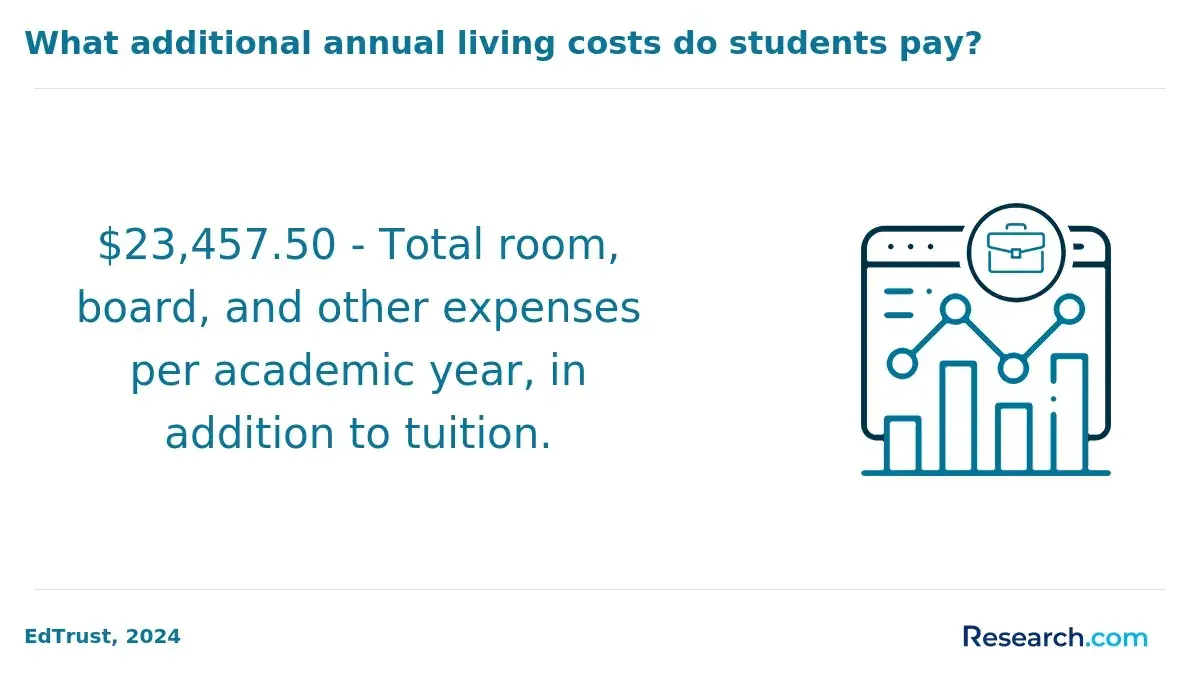
Cost depends on tuition, fees, transfer credits, books, supplies, lab materials, internships, travel, and lost work hours. College Board's 2024 Trends in College Pricing and Student Aid reported average published tuition and fees of $11,610 for in-state students at public four-year institutions, which gives readers a useful benchmark for comparing public online programs before scholarships or grants are applied.
The table below shows common cost drivers and why they matter. It is especially useful when comparing programs that appear similar but use different tuition models or require different amounts of hands-on work.
| Cost factor | What to check | Why it affects the decision |
| Tuition model | Per-credit rate, flat-rate tuition, in-state pricing, or online-only rate | A lower advertised rate may not be cheaper if many major credits do not transfer |
| Transfer credits | Maximum accepted credits and how they apply to major requirements | Accepted credits can shorten time to completion and reduce total tuition |
| Online fees | Technology, distance education, proctoring, and course material fees | Fees can change the real price beyond tuition |
| Lab or practicum requirements | Campus visits, local site placement, equipment, or lab kits | Hands-on requirements may add travel or scheduling costs |
| Financial aid | Federal aid eligibility, scholarships, employer reimbursement, and payment plans | A program's net price is more important than its sticker price |
Students comparing education costs across applied management fields may find it helpful to review how other programs break down tuition and fees; for example, this guide to online construction management degree cost shows why total program cost matters more than per-credit tuition alone.
To control costs, take a practical approach before enrollment rather than trying to fix the budget later. The following steps are especially important for working adults and transfer students.
- Request a written degree plan showing remaining credits, estimated time to completion, and term-by-term course availability.
- Use the school's net price calculator and compare the result with your expected grants, loans, employer benefits, and out-of-pocket budget.
- Ask whether food safety, ServSafe, culinary, military, or employer training can count through prior learning assessment.
- Compare full-time and part-time schedules based on your work hours, not just the fastest advertised timeline.
- Avoid borrowing based on best-case salary assumptions; use conservative income estimates and consider your current living costs.
What core courses and specializations are included in a food industry management curriculum?
A strong food industry management curriculum blends business decision-making with food-specific knowledge. The exact course mix depends on whether the program is housed in food science, hospitality, nutrition, agriculture, or business, but the best programs make clear how each course supports real food industry work.
Core courses often cover food safety, sanitation, operations, accounting, marketing, supply chain, human resources, leadership, and regulatory issues. More science-oriented programs may add food chemistry, microbiology, sensory evaluation, product development, and processing. More hospitality-oriented programs may add menu management, beverage operations, service systems, revenue management, and customer experience.
The table below shows how common curriculum tracks connect to career goals. This can help you avoid choosing a specialization that sounds interesting but does not support your intended role.
| Curriculum focus | Common courses | Best aligned roles |
| Food operations management | Food-service operations, purchasing, cost control, staffing, service quality | Restaurant manager, food-service director, catering manager, dining operations supervisor |
| Food science and quality | Food microbiology, food chemistry, processing, quality assurance, regulatory compliance | Quality assurance technician, food safety coordinator, production supervisor, product development assistant |
| Food business and entrepreneurship | Entrepreneurship, marketing, finance, product strategy, consumer behavior | Food startup founder, brand coordinator, retail food manager, product commercialization assistant |
| Supply chain and agribusiness | Logistics, procurement, agricultural markets, inventory management, distribution | Procurement analyst, distribution coordinator, inventory supervisor, supply chain associate |
| Nutrition and food systems | Nutrition science, community food systems, wellness communication, program planning | Wellness program coordinator, food systems assistant, nutrition program support role |
If your long-term goal is nutrition-focused work, verify whether the degree leads to the credential you need. A general food industry management degree is not the same as a dietetics pathway, so students considering nutrition careers should compare a nutritionist bachelor degree online before choosing a management-centered program.
Valuable electives include data analytics, food law, sustainability, project management, e-commerce, consumer insights, leadership communication, and lean operations. Employers increasingly expect managers to use inventory systems, scheduling software, food safety platforms, customer data, and supply chain tools, so technology-friendly coursework can improve career readiness.
How do online food industry management programs support students academically and personally?
Strong student support is one of the biggest differences between a good online program and a frustrating one. Online students often balance coursework with shifts, family obligations, and unpredictable schedules, so support must be accessible, proactive, and designed for distance learners.
The best online food industry management programs do more than provide a login and recorded lectures. They build a support system around advising, academic help, career planning, technology, and personal well-being. Look for these services and ask how often online students actually use them.
- Dedicated academic advisors who understand the food industry major, prerequisite sequencing, transfer credits, and graduation requirements
- Online tutoring for writing, math, accounting, chemistry, biology, statistics, and business courses
- Career coaching that helps online students find internships, update resumes, prepare for interviews, and connect with food industry employers
- Library and research support for students completing food safety, market analysis, product development, or operations projects
- Technology support available during evenings or weekends, especially for students taking asynchronous courses after work
- Disability services, mental health resources, emergency aid, and faculty office hours that are available remotely
Support quality is difficult to judge from marketing pages alone. During admissions conversations, ask direct questions: How quickly do advisors respond? Are tutoring appointments available outside standard business hours? Do online students have access to the same job fairs or employer networks as campus students? Who helps if an internship site falls through?
Common red flags include unclear advisor assignments, limited tutoring in science or quantitative courses, career services that focus mostly on campus students, and no transparent process for resolving online course problems. A program with strong support should be able to explain exactly who helps you, when they are available, and what happens if you get off track.
What careers can you pursue with a bachelor's in food industry management?
A bachelor's in food industry management can lead to roles across food service, manufacturing, retail, logistics, institutional dining, food safety, and product-related business functions. The best career path depends on your coursework, prior experience, internships, and willingness to start in supervisory or coordinator roles before moving into higher management.
The table below outlines common roles and the type of preparation each one usually requires. Use it to identify whether you need more business coursework, more science coursework, or more operations experience.
| Career path | Typical responsibilities | Helpful preparation |
| Food service manager | Oversee staff, budgets, customer service, purchasing, safety, and daily operations | Operations management, accounting, sanitation, leadership, scheduling systems |
| Food production supervisor | Coordinate production teams, workflow, quality checks, safety procedures, and output targets | Food processing, quality assurance, safety, lean operations, people management |
| Quality assurance coordinator | Monitor safety standards, documentation, audits, product consistency, and regulatory compliance | Food microbiology, HACCP concepts, sanitation, statistics, regulatory coursework |
| Supply chain or procurement associate | Support purchasing, vendor relationships, inventory, distribution, and cost control | Logistics, agribusiness, analytics, negotiation, inventory management |
| Food product or brand coordinator | Support product launches, consumer research, packaging, pricing, and market positioning | Marketing, product development, entrepreneurship, consumer behavior, data analysis |
| Institutional food operations supervisor | Manage dining services in schools, healthcare, senior living, correctional, or corporate settings | Food safety, nutrition basics, procurement, budgeting, regulatory awareness |
Some graduates later move into healthcare dining administration, senior living operations, or hospital food-service leadership. If that direction interests you, comparing a fastest online master's in healthcare administration can help you understand when a graduate credential may be useful for broader healthcare management roles.
To improve career readiness while enrolled, combine coursework with practical evidence of skill. Employers often value internships, supervisory experience, food safety credentials, portfolio projects, and measurable work achievements because they show you can apply classroom concepts in real operations.
- Pursue food safety training or certifications that are relevant to your state, employer, or target industry.
- Choose class projects that analyze real food businesses, production workflows, menus, supply chains, or product ideas.
- Use internships or current employment to document achievements such as reduced waste, improved scheduling, stronger inventory control, or better audit readiness.
- Build software familiarity with spreadsheets, point-of-sale systems, inventory platforms, scheduling tools, and basic data dashboards.
- Ask faculty and career services which employers recruit from the program and what entry-level titles graduates commonly pursue.
What salary ranges and advancement opportunities exist in food industry management roles?
Salary potential in food industry management varies by role, region, employer size, work schedule, and level of responsibility. A bachelor's degree can help applicants compete for supervisory and management roles, but pay is not guaranteed and often depends on experience, performance, and the complexity of the operation.
BLS May 2024 data places the median annual wage for food service managers at $65,310. That figure is a useful baseline for restaurant, dining, and food-service operations roles, but it does not capture every food industry career, especially technical food science, supply chain, or manufacturing management roles.
The table below gives a practical view of salary context across related roles. These are occupational medians, not promises for graduates, and individual outcomes can differ significantly.
| Role category | BLS May 2024 median annual wage | What can support advancement |
| Food service managers | $65,310 | Multi-unit experience, cost control, team leadership, safety performance, revenue growth |
| Logisticians | $80,880 | Supply chain analytics, procurement experience, inventory systems, vendor management |
| Agricultural and food scientists | $78,770 | Food science depth, lab skills, regulatory knowledge, graduate study for research-heavy roles |
| Industrial production managers | $122,090 | Manufacturing leadership, process improvement, safety systems, production planning |
Advancement often happens in stages. A student may begin as a shift lead, assistant manager, quality technician, production coordinator, or procurement assistant, then move into department management, plant supervision, district operations, category management, or director-level roles. The timeline depends heavily on work history and whether the student builds technical or managerial depth during the degree.
To evaluate ROI, compare the program's total net cost with your likely career path, not just the highest-paying occupation in the field. A low-cost accredited program with strong transfer credit may be a better investment than a more expensive program if both lead to the same target role and provide similar support.
How is the job outlook for food industry management professionals and related fields?
The job outlook for food industry management professionals is mixed by occupation, which is why specialization matters. Food service management is a large field with ongoing replacement needs, while logistics, food safety, product development, and production management may offer different growth patterns depending on the employer and region.
The BLS Occupational Outlook Handbook projects employment for logisticians to grow 19% from 2023 to 2033, much faster than the average for all occupations. For students interested in the food industry, that trend suggests supply chain, procurement, inventory, and distribution coursework can be valuable because food companies rely on reliable movement of perishable goods, ingredients, packaging, and finished products.
Several current trends are influencing hiring and program choice. Food companies are using more inventory analytics, automation, digital ordering, traceability systems, and food safety documentation tools.
At the same time, restaurants and food-service operators continue to focus on labor scheduling, cost control, customer experience, and waste reduction. Students who combine food knowledge with analytics, communication, and technology skills may be better positioned than those who study management theory alone.
Before enrolling, use the local labor market as a reality check. Search job postings in your region for titles you want, note whether they ask for a bachelor's degree, identify preferred majors, and track common software or certification requirements. If most postings require hands-on production, kitchen, or supervisory experience, plan to build that experience while completing the degree.
A smart program choice should answer three questions: Does the curriculum match the roles available in your target region? Does the school help online students find internships or employer contacts? Does the total cost make sense for the wage range of the jobs you are likely to pursue first?
Other Things You Should Know About Food Industry Management
It can be worth it if you want supervisory, operations, quality, supply chain, or food business roles and choose an accredited program that matches your career goal. The degree is less likely to pay off if the program is too expensive, lacks student support, or does not align with the jobs you plan to pursue.
Some programs are fully online, while others require labs, internships, practicums, or short campus visits. Always ask how science labs, food production work, or internship requirements are handled before enrolling.
Not always. Many programs accept students without food industry experience, but prior work in restaurants, grocery, manufacturing, catering, logistics, or customer service can help you understand coursework and compete for internships or promotions.
In 2027, several online programs offer strong student support in food industry management. The best programs typically provide flexible learning schedules, access to academic advisors, career counseling, and technological support to ensure a seamless online learning experience.
References
- Exploring Options - Different Types of Opportunities in The Food Industry https://foodindustryhub.com/opportunities-in-the-food-industry/
- World Food and Agribusiness Schools & Programs https://www.ifama.org/schools-and-programs
- Study Food Industry Management in the USA https://www.studyusa.com/en/field-of-study/395/food-industry-management
- How Long Does It Take to Get a Business Management Degree? | University of Phoenix https://www.phoenix.edu/blog/how-long-does-it-take-to-get-a-business-management-degree.html
- Explore Careers - Nutrients for Life https://nutrientsforlife.org/for-students/career-exploration/explore-careers/
- How to choose a culinary and restaurant management course? https://insights.ehl.edu/choosing-culinary-and-restaurant-management-course
- IIHSR University https://iihsruniversity.edu.pl/bachelor-of-b-management
- Got the Appetite for Success? Use Your Business Degree in the Food Science Industry | Innopharma Education https://www.innopharmaeducation.com/blog/got-the-appetite-for-success-use-your-business-degree-in-the-food-science-industry
- Beyond the Restaurant: Career Opportunities for Restaurant Managers - International Culinary Studio https://www.internationalculinarystudio.com/beyond-the-restaurant-career-opportunities-for-restaurant-managers/
- Why I chose to study Food Industry Management (FIM) instead of Food Science https://www.uoguelph.ca/oac/news/why-i-chose-study-food-industry-management-fim-instead-food-science