
2027 Which Industries Offer the Best Career Paths for Communication Disorders Degree Graduates?

Co-Founder and Chief Data Scientist

Reviewed by Rhea Paul, PhD
SLP Education & Research Expert
A communication disorders degree can lead to several career directions, but the best path depends on more than where you can get hired first. Graduates often compare healthcare, schools, government agencies, nonprofits, private practice, and technology employers while weighing salary, licensure, flexibility, job security, and the kind of clients or communities they want to serve.
The stakes are practical. Some roles require graduate education, supervised clinical experience, state licensure, or specialized certification before independent practice is possible. Other roles use communication disorders training in adjacent areas such as assistive technology, research, education services, telehealth operations, or program coordination. Pay also varies by setting; for example, jobs in healthcare settings show a median annual wage of $79,000, which can make medical and rehabilitation environments especially attractive for graduates focused on earnings.
This guide compares the industries that offer strong career paths for communication disorders graduates. It explains where starting salaries tend to be strongest, which sectors are hiring, how industry choice affects long-term earnings, where recession-resistant roles are more common, and how licensing, remote work, leadership pathways, and mission-driven work should shape your decision.
Key Things to Know About the Industries That Offer the Best Career Paths for Communication Disorders Degree Graduates
- Healthcare settings offer strong compensation and job stability-with median salaries around $80,000-and clear licensure pathways supporting long-term career growth and advancement.
- Educational institutions provide meaningful mission alignment and professional development but often feature lower starting salaries compared to clinical roles.
- Corporate and telepractice environments deliver flexible remote work options-enhancing work-life balance-and growing advancement opportunities fueled by digital health trends.
Which Industries Offer the Highest Starting Salaries for Communication Disorders Degree Graduates?
The highest starting salaries for communication disorders graduates are usually found in settings where services are medically necessary, staffing is difficult, caseloads are complex, or employers compete for licensed clinicians. Healthcare settings often lead because they require professionals who can work with patients recovering from stroke, traumatic brain injury, surgery, neurological disease, swallowing disorders, or developmental conditions.
Starting pay should not be judged in isolation, however. A higher offer may come with weekend schedules, productivity targets, emotionally demanding cases, or strict credentialing requirements. A lower initial salary may come with better benefits, predictable hours, strong supervision, or eligibility for loan forgiveness.
- Hospitals: Hospitals are often among the strongest-paying entry points because clinicians may work with acute, medically complex cases. These environments can be excellent for skill development, but they may require comfort with fast-paced care teams, documentation standards, and high-stakes patient needs.
- Government and public sector agencies: Federal, state, and local agencies can offer competitive salaries, particularly in veterans' health, public health, and specialized service programs. The appeal is often a mix of pay, benefits, job security, and mission-driven work.
- Educational services: Public school districts, private schools, and specialized education providers hire professionals to support children with speech, language, literacy, and communication needs. Starting pay may be shaped by state funding, collective bargaining agreements, contract length, and local shortages.
- Rehabilitation centers: Inpatient and outpatient rehabilitation facilities may pay above average for clinicians who can support recovery after injury, illness, or developmental disability. These roles can offer concentrated clinical experience but may involve demanding caseloads.
- Home healthcare services: Home-based care agencies may offer elevated starting salaries because clinicians travel, manage independence in the field, and treat patients in less controlled environments. Graduates should compare mileage reimbursement, scheduling expectations, and documentation time before accepting an offer.
- Outpatient care centers: Outpatient clinics can provide competitive compensation when patient volume is high and services are in demand. These settings may also offer opportunities to specialize in pediatric, adult neurological, fluency, voice, or feeding-related care.
- Research and development organizations: Entry-level roles are less common, but communication disorders graduates may find well-paid opportunities in clinical trials, speech technology, accessibility tools, or communication-related product development when they bring research, data, or technical skills.
When comparing offers, look beyond the base salary. Ask about supervision, productivity requirements, continuing education support, health benefits, retirement contributions, licensure reimbursement, clinical fellowship support if applicable, and whether the role builds experience that supports your next credential or promotion.
Graduates considering broader health-related education pathways may also compare how advanced clinical programs affect earnings and mobility; for example, some readers researching healthcare advancement also review online doctoral nursing options, though communication disorders licensure has its own distinct requirements.
What Are the Fastest-Growing Industries Actively Hiring Communication Disorders Graduates Today?
The fastest-growing hiring areas for communication disorders graduates are tied to long-term needs rather than short-term trends: an aging population, earlier identification of childhood communication needs, expanded telepractice, and broader use of speech and language expertise in technology. Healthcare and education remain the most reliable demand centers, while telehealth and assistive technology are creating newer career options.
- Healthcare services: Hospitals, outpatient clinics, long-term care facilities, and home healthcare providers continue to need professionals who understand communication, cognition, swallowing, and rehabilitation.
- Age-related conditions, including stroke and dementia, increase demand across acute care, post-acute care, and community-based treatment settings.
- Pediatric healthcare and early intervention services also create entry points for graduates interested in children and family-centered care.
- Educational institutions: K-12 schools, early childhood programs, and specialized education providers hire communication disorders professionals to support students with speech and language challenges.
- Inclusive education requirements and greater awareness of developmental needs support steady demand.
- Schools can provide stable schedules and clear service populations, though caseload size and paperwork should be carefully evaluated.
- Technology and telehealth: Telepractice platforms, digital therapy companies, and assistive communication firms increasingly need professionals who can connect clinical knowledge with virtual care, product design, or user support.
- Remote assessment and therapy expand access for clients who cannot easily reach in-person services.
- Companies developing augmentative and alternative communication tools, AI speech recognition, or therapy software may value graduates who understand both clinical use cases and user experience.
- Insurance and rehabilitation: Rehabilitation-focused organizations and payers need professionals who can document outcomes, support care plans, and understand functional improvement.
- Graduates with strengths in documentation, outcomes measurement, and interdisciplinary collaboration may find strong opportunities in this area.
- Government and public health: Public agencies hire for early childhood programs, veterans' services, disability support, public schools, and community health initiatives.
- These roles can be stable and meaningful, though funding cycles and hiring timelines may vary by agency.
Healthcare and education usually offer the clearest volume of openings. Technology and telehealth may offer faster-changing roles, greater flexibility, and more innovation, but they often require additional skills in digital tools, remote care standards, data, or product collaboration. Government and public health roles can be excellent for graduates who value service, stability, and population-level impact.
Graduates exploring adjacent healthcare training sometimes review programs such as online nurse practitioner programs, but communication disorders professionals should first verify the credentials required for their intended role and state.
How Does Industry Choice Affect Long-Term Earning Potential for Communication Disorders Professionals?
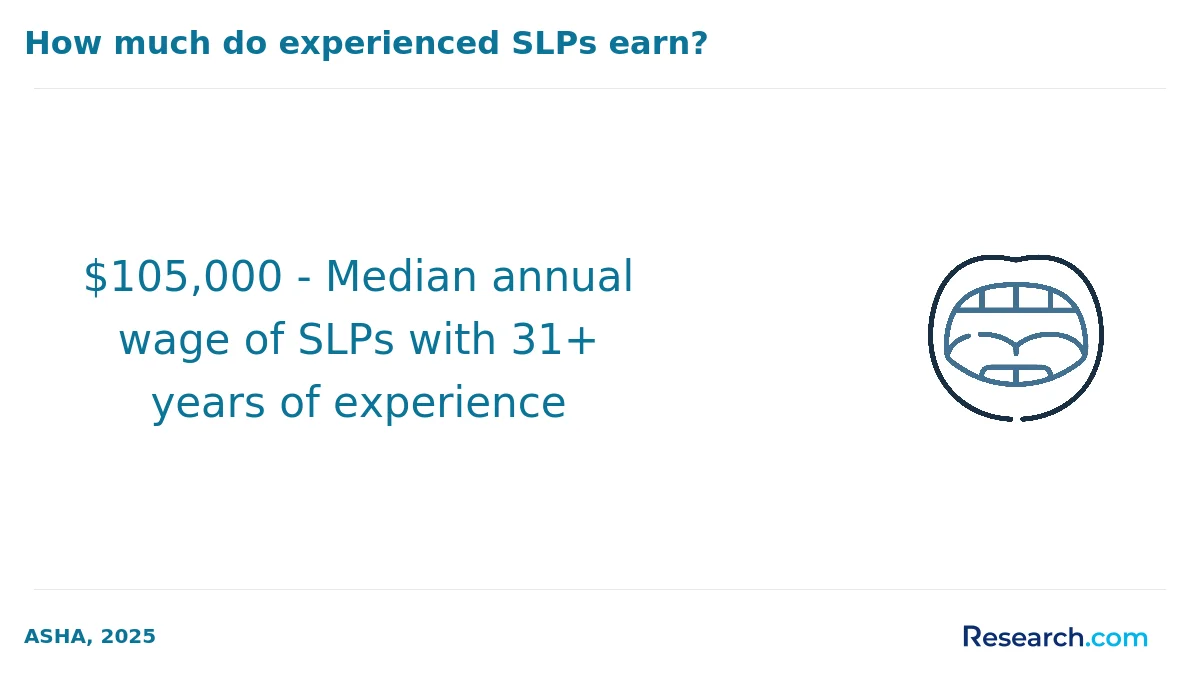
Industry choice can shape long-term earnings as much as the first job offer. Some sectors provide predictable raises but limited salary ceilings. Others offer faster advancement, bonuses, ownership potential, or leadership pathways that can substantially increase income over time. The right choice depends on your risk tolerance, credential plan, preferred work setting, and willingness to pursue specialization or management.
| Industry | Typical long-term earning pattern | Main trade-off |
| Healthcare settings | Steady increases tied to experience, specialization, and clinical responsibility | Higher complexity and productivity expectations may accompany stronger pay |
| Education sector | Predictable salary schedules based on tenure, credentials, and district policy | Stability and benefits may come with lower salary ceilings |
| Corporate and technology employers | Potential for faster growth through project leadership, bonuses, equity, or product roles | Roles may be less standardized and more sensitive to market shifts |
| Government and nonprofits | Reliable benefits and structured advancement, but often compressed pay ranges | Security and mission alignment may outweigh maximum earnings |
| Private practice and consulting | Higher upside if the practice scales, develops a niche, or adds multiple revenue streams | Business risk, marketing, billing, and operations become part of the job |
Career trajectories for communication disorders professionals can diverge significantly across industries. Some roles may offer rapid salary growth, potentially doubling or tripling pay within 10 to 15 years, while others maintain narrower wage ranges even for experienced professionals. Graduates should therefore evaluate the ten-year path, not only the first-year paycheck.
A practical way to compare industries is to ask: Does this setting reward specialization? Are leadership roles available? Can I supervise others? Is there a path into administration, product development, private practice, research, or consulting? Will additional credentials increase pay, or only maintain eligibility?
One communication disorders professional described the decision clearly: the choice was not simply between a school role and a clinic role, but between predictable income and the possibility of building an independent practice. Leaving a stable paycheck was difficult, but over time the combination of autonomy, niche services, and business ownership created stronger financial growth. The lesson for new graduates is straightforward: starting salary matters, but the earning ceiling matters more if you are planning a long career.
Which Industries Provide the Most Stable and Recession-Proof Careers for Communication Disorders Graduates?
The most stable career paths for communication disorders graduates are usually found in healthcare, public education, government agencies, rehabilitation services, and essential community programs. These settings are less dependent on consumer spending because they address medical, developmental, educational, or public service needs.
During economic downturns such as the 2008 financial crisis and the 2020 COVID-19 disruption, healthcare settings, including hospitals, outpatient services, and rehabilitation centers, showed resilience because patients continued to need speech, language, cognitive, and swallowing-related services. Government roles, including veterans' hospitals and public health agencies, also tend to offer relative protection because many positions are tied to essential services and stable funding streams.
Private-sector roles can still be strong, especially in high-demand clinical areas, but they may be more vulnerable to hiring freezes, reduced benefits, productivity pressure, or organizational restructuring. Graduates with major financial obligations may prefer a stable employer first and pursue higher-risk opportunities later.
Key factors that can make a communication disorders career more recession resistant include:
- Licensure requirements: Roles that require formal credentials are harder to replace with unlicensed labor, which can protect demand.
- Medical necessity: Services connected to rehabilitation, swallowing safety, neurological recovery, or developmental intervention are less discretionary.
- Public service funding: Schools, government agencies, and public health programs may offer more predictable employment than consumer-driven businesses.
- Telepractice expansion: Remote service delivery can preserve access when travel, geography, or public health disruptions limit in-person care.
- Continuing education: Professionals who maintain current skills and credentials can move more easily between settings if one sector slows.
Recent data highlight that employment in healthcare occupations related to communication disorders grew by over 17% from 2025 to 2035, underscoring the durability of this career area. Graduates who value security should prioritize employers with stable funding, strong supervision, clear credential support, and services that remain necessary in both strong and weak economies.
Some readers also explore administrative healthcare credentials, including online medical billing and coding programs, as a way to understand reimbursement, documentation, and healthcare operations that can complement clinical career planning.
What Role Does the Private Sector Play in Shaping Career Paths for Communication Disorders Degree Holders?
The private sector gives communication disorders graduates access to career paths that may be faster-moving, more specialized, and more performance-driven than traditional public roles. Opportunities can appear in private clinics, hospitals, teletherapy companies, healthcare technology firms, education services companies, media production, corporate wellness, and assistive communication products.
The main advantage is flexibility. Private employers can create new roles quickly, reward specialized skills, and promote employees based on business need or performance rather than a fixed public pay scale. The main drawback is variability. Benefits, supervision quality, caseload expectations, job security, and promotion criteria can differ sharply from one company to another.
- Healthcare technology: Companies such as Philips and Nuance Communications may hire communication disorders specialists to support therapeutic devices, speech recognition tools, documentation technology, or virtual treatment platforms.
- Corporate wellness and teletherapy: Employers may use communication, cognitive, or speech-related expertise in employee support programs, remote therapy delivery, coaching, or platform operations.
- Education services: Private schools and edtech firms such as Pearson and K12 Inc. may employ specialists to improve language curricula, adaptive learning tools, accessibility services, or intervention products.
- Media production: Organizations creating speech-related educational content, podcasts, apps, or training materials may need professionals who can combine accuracy, accessibility, and audience-friendly communication.
Before accepting a private-sector role, graduates should ask direct questions: How are raises determined? What productivity metrics apply? Who provides clinical supervision? Is licensure supported? Are caseloads sustainable? What happens if funding, contracts, or client volume changes?
One professional described the private sector as rewarding but demanding. She had to learn quickly how to advocate for professional development, adapt to different company cultures, and identify which employers respected both clinical standards and business goals. Her experience shows why fit matters: a startup may offer autonomy and rapid growth, while a large company may offer stronger infrastructure and clearer benefits.
How Do Public Sector and Government Agencies Compare to Private Employers for Communication Disorders Graduates?
Public sector and government roles usually offer structure, stability, and benefits. Private employers often offer more flexible career movement and, in some cases, higher earning potential. The better option depends on whether you value predictability, mission, benefits, speed of advancement, or income growth most.
| Factor | Public sector and government agencies | Private employers |
| Career structure | Defined grades, job classifications, eligibility rules, and formal promotion processes | More flexible titles, faster role changes, and less standardized advancement |
| Compensation | Competitive salaries that may plateau, often paired with strong benefits | Potentially higher starting wages, bonuses, raises, or productivity-based incentives |
| Benefits | Often strong health coverage, retirement plans, paid leave, and public service advantages | Varies widely by employer size, profitability, and employment model |
| Job security | Generally stronger because many roles support essential services | Can be strong in high-demand clinical settings but more exposed to market changes |
| Advancement | Often slower, with promotion tied to grade levels, tenure, credentials, and openings | May be faster for employees who specialize, lead teams, or support revenue growth |
Federal, state, and local agencies, including the Department of Veterans Affairs, public schools, and state health departments, typically offer civil service structures. New graduates may enter at defined levels and advance through documented experience, credentials, and performance reviews. This structure can be reassuring for professionals who want transparency and long-term stability.
Private employers such as hospitals, clinics, telehealth companies, and education organizations may move faster. They can create lead roles, specialist positions, or management tracks when demand grows. However, graduates should examine whether the role includes adequate supervision, sustainable caseloads, and benefits that offset any salary advantage.
Public sector roles may also support financial planning through benefits and, in many cases, eligibility for Public Service Loan Forgiveness. For graduates with significant federal student loans, that benefit can meaningfully affect the total value of a job offer.
Employment for speech-language pathologists and audiologists in government roles is projected to grow approximately 12% over the next decade, reflecting sustained demand in public education and healthcare services according to the U.S. Bureau of Labor Statistics.
Which Industries Offer the Clearest Leadership and Advancement Pathways for Communication Disorders Professionals?
The clearest leadership pathways for communication disorders professionals are usually found in healthcare systems, education, academia, corporate technology, and larger service organizations. These settings have enough organizational layers to support movement from clinician or specialist roles into supervision, program management, administration, research leadership, product leadership, or executive roles.
Healthcare
Healthcare offers one of the most structured advancement paths. A professional may begin in direct care, move into senior clinician or lead therapist roles, then advance to clinical supervisor, department director, program manager, or executive-level clinical leadership.
- Defined hierarchy: Hospitals and rehabilitation centers often have clear reporting lines and leadership titles.
- Specialization value: Expertise in areas such as swallowing, neurological rehabilitation, pediatrics, or voice may support advancement.
- Graduate education impact: An MBA focused on healthcare administration or another leadership-oriented graduate credential can strengthen candidacy for executive roles.
- Trend: Approximately 35% of communication disorders professionals in healthcare transition to leadership within ten years.
Education and academia
Schools, districts, universities, and research institutions offer advancement through coordinator, lead specialist, department chair, director, faculty, or administrative roles. The path is often transparent but may require specific credentials, years of service, research productivity, or administrative training.
- Leadership roles: Common targets include program coordinator, director of speech-language pathology services, department chair, or special education leadership positions.
- Professional growth: A master's in educational leadership or administration combined with clinical credentials may support movement into senior roles.
- Mobility considerations: Tenure-track and academic leadership roles require sustained scholarly activity, service, and certification maintenance.
Corporate and technology
Corporate and technology employers can provide rapid advancement for professionals who combine communication disorders expertise with product, operations, research, data, or customer success skills. A graduate may move from clinical specialist to project manager, product manager, director, or executive role.
- Merit-based progression: Promotions may be tied to measurable outcomes, product launches, client growth, or team leadership.
- Advanced degrees: MBAs or master's degrees in technology management can help professionals move beyond specialist roles.
- Work environment: Remote and hybrid options may support leadership growth across geographically distributed teams.
Graduates who want leadership should choose early roles that build more than clinical hours. Look for opportunities to supervise, train staff, manage projects, analyze outcomes, improve workflows, contribute to budgets, or present results to decision-makers.
What Emerging and Technology-Driven Industries Are Creating New Demand for Communication Disorders Skills?
Technology-driven industries are creating new demand for communication disorders skills because speech, language, cognition, accessibility, and human interaction are central to digital products. These roles may not always carry traditional clinical titles, but they can use the same foundation: understanding how people communicate, where communication breaks down, and how tools can improve access.
- Artificial intelligence: AI tools for speech recognition, language processing, transcription, virtual assistants, and therapy support need input from professionals who understand real-world speech and language variation. Useful skills include phonetics, linguistics, clinical assessment, data literacy, and the ability to evaluate whether technology works for diverse users.
- Digital health: Telepractice platforms, mobile health apps, and remote monitoring tools need professionals who understand therapy delivery, patient engagement, privacy expectations, and remote assessment. Graduates who can translate clinical workflows into digital experiences may find strong opportunities.
- Biotechnology: Genetic research, neurotechnology, and brain-computer interface development can involve communication-related outcomes. These roles may require collaboration with scientists, engineers, clinicians, and regulatory teams.
- Advanced manufacturing: Communication disorders expertise can support workplace accessibility, assistive technology design, training systems, and human factors work for employees with communication challenges.
- Clean energy: As clean energy organizations grow, they may need specialists who can improve technical communication, workforce training, accessibility, and safety-related information across diverse teams.
These emerging sectors can be rewarding, but they require deliberate upskilling. Graduates may benefit from coursework or certificates in data analysis, user experience, product management, programming languages such as Python, telehealth methods, accessibility standards, or research design. The goal is not to abandon communication disorders expertise; it is to pair it with a technical skill that employers can clearly use.
Technology careers may also carry more uncertainty than school, hospital, or government roles. Before moving into a startup or product company, review the employer's funding, customer base, regulatory exposure, clinical supervision model, and expectations for nonclinical work. Readers considering interdisciplinary health and performance fields may also explore online exercise science degree programs to understand how adjacent disciplines connect with rehabilitation, accessibility, and human performance.
How Do Nonprofit and Mission-Driven Organizations Compare as Career Options for Communication Disorders Graduates?
Nonprofit, social enterprise, and mission-driven organizations can be strong career options for communication disorders graduates who want their work to focus on access, equity, disability services, community health, education, or underserved populations. These roles may not always offer the highest compensation, but they can provide meaningful work, broad responsibility, and leadership opportunities earlier than some larger organizations.
- Compensation: Entry-level salaries may be lower than those in some clinics or for-profit healthcare organizations, although larger nonprofits can offer competitive packages depending on funding, location, and role scope.
- Benefits and financial incentives: Many nonprofits offer health insurance, retirement plans, paid leave, and professional development support. Some roles may qualify for Public Service Loan Forgiveness, which cancels federal student loan debt after ten years of qualifying payments.
- Advancement opportunities: Smaller organizations may not have many formal titles, but employees often take on program development, outreach, supervision, grant reporting, training, and operations responsibilities that build leadership skills.
- Mission alignment: Graduates who want to work with underserved communities may find nonprofit roles especially satisfying because the work is closely connected to service access and community impact.
- Professional development and licensing: Support varies by organization. Candidates should ask whether the employer pays for continuing education, licensure renewal, supervision, association dues, and specialty training.
The main trade-off is resources. A nonprofit may offer deep purpose but limited staffing, lower administrative support, or funding uncertainty. Graduates should evaluate whether the mission is matched by sustainable workloads, ethical service delivery, and a realistic path for growth.
Nonprofit careers can also move beyond direct service. Communication disorders graduates may work in program leadership, family advocacy, policy implementation, disability access, community outreach, training, grant-funded initiatives, or clinical operations. Those interested in broader healthcare leadership pathways sometimes review bridge options such as ADN to MSN programs to understand how clinical training can connect with advanced practice and administration.
Which Industries Support the Most Remote and Flexible Work Arrangements for Communication Disorders Degree Holders?
The industries most likely to support remote and flexible work for communication disorders degree holders are telehealth, educational technology, digital health, assistive technology, online education services, and some corporate or research roles. Recent data indicates that approximately 58% of roles for communication disorders professionals within educational technology and telehealth industries feature remote or hybrid options, highlighting a major shift in how some services are delivered.
Telehealth aligns naturally with remote work because assessment, coaching, therapy, documentation, and consultation can often occur through secure online platforms when regulations, payer rules, and client needs allow. Educational technology firms may also offer remote roles in curriculum design, accessibility review, product support, training, or customer success.
Traditional healthcare settings, including hospitals and many clinics, usually require more onsite work because services may involve swallowing assessment, acute care collaboration, medical equipment, or direct patient handling. Public school roles also often require physical presence because of student service requirements, district policy, and regulatory expectations.
| Industry | Remote flexibility | What to verify before accepting |
| Telehealth | High | State licensure rules, supervision, platform quality, caseload expectations, payer requirements |
| Educational technology | High to moderate | Role type, product responsibilities, travel expectations, performance metrics |
| Digital health and assistive technology | Moderate to high | Clinical versus product duties, regulatory requirements, team structure |
| Hospitals and clinics | Low to moderate | Whether documentation, follow-ups, or consultations can be hybrid |
| Public schools | Low to moderate | District policy, student service model, telepractice permissions |
Remote work can expand job options beyond a graduate's local area and may allow someone to work for an employer in a higher-paying market while living elsewhere. It can also reduce commuting time and improve schedule control. The risks include isolation, variable platform quality, multistate licensure complexity, and blurred work-life boundaries.
During interviews, ask whether the role is fully remote, hybrid, or temporarily remote. Confirm how supervision, documentation, technology support, client privacy, scheduling, and licensure compliance are handled. Flexibility is valuable only if the employer has a sustainable system for delivering services well.
How Do Industry-Specific Licensing and Certification Requirements Affect Communication Disorders Career Entry?
Licensing and certification requirements can determine which communication disorders jobs a graduate can enter immediately and which require additional education or supervised experience. The most important rule is to verify requirements by state, employer, and role title before assuming a degree alone is enough.
Healthcare industry: Clinical roles in healthcare often require state licensure and may require graduate education, supervised clinical experience, a clinical fellowship, and passing examinations such as the Praxis. Independent practice in speech-language pathology is typically more regulated than many adjacent support or administrative roles.
Education sector: Public school positions usually require state certification or licensure related to speech-language pathology or school-based services. Requirements vary by state and may include clinical experience, exams, or additional education-related endorsements.
Private and corporate settings: Some private clinics require the same clinical licensure as healthcare roles. Corporate, technology, and education services roles may not always require licensure if the job is not providing clinical services, but credentials such as the Certificate of Clinical Competence from the American Speech-Language-Hearing Association can strengthen credibility and mobility.
Government and research roles: Requirements vary widely. A federal clinical job may require licensure, while a research, policy, or program role may place more emphasis on graduate training, research experience, data skills, or subject-matter expertise.
Continuing education and specialty credentials: Specialty training in areas such as swallowing disorders, pediatric communication, autism services, fluency, voice, augmentative and alternative communication, or telepractice can improve competitiveness and support advancement. Graduates comparing pathways to advanced clinical preparation may find it useful to review online speech pathology masters options while checking state licensure rules for their intended location.
Verification: Regulations change, and job titles can be misleading. Check state licensing boards, employer requirements, professional associations, and program accreditation details before enrolling in a program or accepting a role.
Job growth trend: Employment for speech-language pathologists is projected to grow 17% from 2025 to 2035, highlighting the importance of meeting credential requirements for competitive opportunities.
What Graduates Say About the Industries That Offer the Best Career Paths for Communication Disorders Degree Graduates
- Mordechai: "One thing I found truly rewarding after graduating with a communication disorders degree is the remarkable stability the healthcare industry offers. Hospitals and rehabilitation centers consistently need skilled professionals, ensuring job security even in uncertain times. Plus, the workplace culture often fosters compassion and teamwork-values that really resonate with me."
- Casen: "From my experience exploring career paths in communication disorders, the compensation in private practice and education sectors varies but can be quite fulfilling once you climb the ladder. Advancement opportunities are plentiful if you're proactive in gaining certifications and specializations. Seeing tangible professional growth has kept me motivated and optimistic about the future."
- Walker: "Entering the workforce with a degree in communication disorders revealed to me how critical advancement opportunities are within governmental agencies and nonprofit organizations. These sectors may not offer the highest starting salary, but strong promotion prospects can lead to leadership roles. I appreciate the professional environment-structured yet supportive-which helps maintain a clear career trajectory."
Other Things You Should Know About Communication Disorders Degrees
Education and healthcare industries typically provide the best work-life balance and job satisfaction for communication disorders graduates. Many positions in schools and outpatient clinics follow regular daytime hours and have predictable schedules. Additionally, these sectors often emphasize meaningful patient or student interactions, which enhances overall job satisfaction.
The healthcare and research sectors typically invest the most in professional development for communication disorders professionals. Hospitals and research centers allocate resources for ongoing training, certifications, and advanced degrees to maintain high standards of practice. This investment supports career advancement and helps employees keep pace with evolving treatment methods and technologies.
Graduates should assess industry fit by considering their priorities such as work environment, mission alignment, and advancement potential. If a graduate values patient-centered care and long-term relationships, healthcare or educational settings may be ideal. Conversely, those seeking innovation or research opportunities might prefer academic or private-sector roles that emphasize cutting-edge developments in communication disorders.
References
- U.S. Bureau of Labor Statistics - Speech-Language Pathologists https://www.bls.gov/ooh/healthcare/speech-language-pathologists.htm
- ASHA EdFind - Accredited Speech-Language Pathology Programs https://find.asha.org/ed/
- Audiology and Speech-Language Pathology Interstate Compact https://aslpcompact.com/compact-map/
- Idaho State University - Master of Science in Speech-Language Pathology (Online/Distance Education) https://www.isu.edu/slp/programs-offered/slp-graduate-program/
- James Madison University - Master of Science (M.S.) in Speech-Language Pathology (Distance Education / Online) https://www.jmu.edu/chbs/csd/online_ms/index.shtml
- Ithaca College - Online Master of Science in Speech-Language Pathology https://slponline.ithaca.edu/programs/masters-speech-language-pathology-online
- Abilene Christian University - Master of Science in Speech-Language Pathology (Online) https://acu.edu/academics/graduate/master-of-science-in-speech-language-pathology/
- Auburn University, Montgomery - Master of Science in Speech-Language Pathology https://www.aum.edu/degree/ms-speech-language-pathology/


