2027 How to Compare Online Legal Studies Degrees Beyond Tuition

Co-Founder and Chief Data Scientist
Professionals seeking to pivot into legal studies often confront a maze of online degree options where tuition cost alone fails to capture critical factors like program flexibility, institutional accreditation, and employer recognition. The National Center for Education Statistics reports a 45% surge in adult online enrollments since 2020, signaling a shift toward education models that must align with work schedules and career trajectories.
This trend intensifies the challenge of identifying programs that offer real-world applicability, schedule adaptability, and relevant skill credentialing beyond sticker price. This article evaluates how to compare online legal studies degrees on dimensions that meaningfully impact career outcomes and student experience.
Key Things You Should Know
- Legal studies programs with specialized concentrations reduce job placement time by 22%, per 2024 NACE data, but may narrow future career flexibility, forcing candidates to weigh immediate advantage against long-term adaptability.
- Employers increasingly prioritize practical legal tech skills; 48% of legal services firms report candidates' certification in e-discovery or compliance software over traditional theory as decisive in 2024 recruitment surveys.
- Programs averaging 18 months of full-time study outperform accelerated one-year tracks in graduate earnings by 15% after two years, reflecting workforce premium on comprehensive applied coursework despite higher upfront opportunity costs.
What is an online legal studies degree and how does it differ from on-campus programs?
An online legal studies degree offers flexibility that suits employed professionals balancing work and education but typically limits access to mentorship and hands-on experiences like internships or moot court. This tradeoff can affect readiness for roles that demand practical legal skills early on, such as legal assistants in regional firms who may require supplementary onboarding to fill gaps left by reduced experiential learning. The decision between online and on-campus programs should consider these operational realities alongside immediate career objectives.
Employers increasingly recognize online legal studies degrees, yet they scrutinize accreditation and rigor to ensure graduates meet critical thinking and applied skills standards despite fewer direct faculty interactions. Candidates must navigate employer expectations in legal and compliance sectors with demonstrable skills that match traditional campus counterparts.
The financial implications of these pathways extend beyond tuition to include technology fees, travel for hybrid components, textbooks, and state authorization charges. For instance, the average annual tuition and fees for U.S. graduate programs reached $23,654 recently, but total costs often rise due to hidden expenses, especially when specialized legal software or resources are required.
Choosing the right format hinges on the candidate's learning style and career targets; self-directed students managing employment may prefer online legal studies degree benefits, while immersive campus environments better support roles needing direct professional interaction. Those exploring legal support roles and compliance should also review types of paralegals and salaries to align educational choices with workforce demands.
How can you compare online legal studies program quality and accreditation across schools?
Institutional and specialized accreditation directly dictate the practical value of online legal studies programs. Regional accreditation from bodies like the Higher Learning Commission ensures basic academic standards and federal aid eligibility. However, for those targeting paralegal or pre-law roles, ABA or state Bar approval is the decisive factor; without it, credit transfer options for advanced law degrees can be severely limited. In workforce terms, lacking proper accreditation often translates to narrower job opportunities and skepticism from employers.
Cost differences between program types reflect more than just price tags. Public institutions average about $9,500 yearly tuition, contrasting with for-profit privates around $18,000 and private nonprofits near $37,000. Yet higher tuition does not reliably predict better employment outcomes. Job placement in legal assistant positions needs to be weighed alongside price to validate the investment. As a comparison, criminal justice associate programs online reveal similar dynamics in balancing cost and labor market returns.
Curriculum should integrate current legal technologies and writing-intensive courses to meet employer expectations in areas such as corporate compliance and litigation. Delivery flexibility and robust internship connections also influence real-world readiness, especially for working professionals managing schedules.
Prospective students evaluating online legal studies program accreditation must probe these dimensions deeply, graduation rates, accreditation type, curriculum depth, and post-graduation placement, to navigate the tradeoffs that shape both career trajectory and educational ROI.
What total costs should you evaluate for online legal studies beyond published tuition?
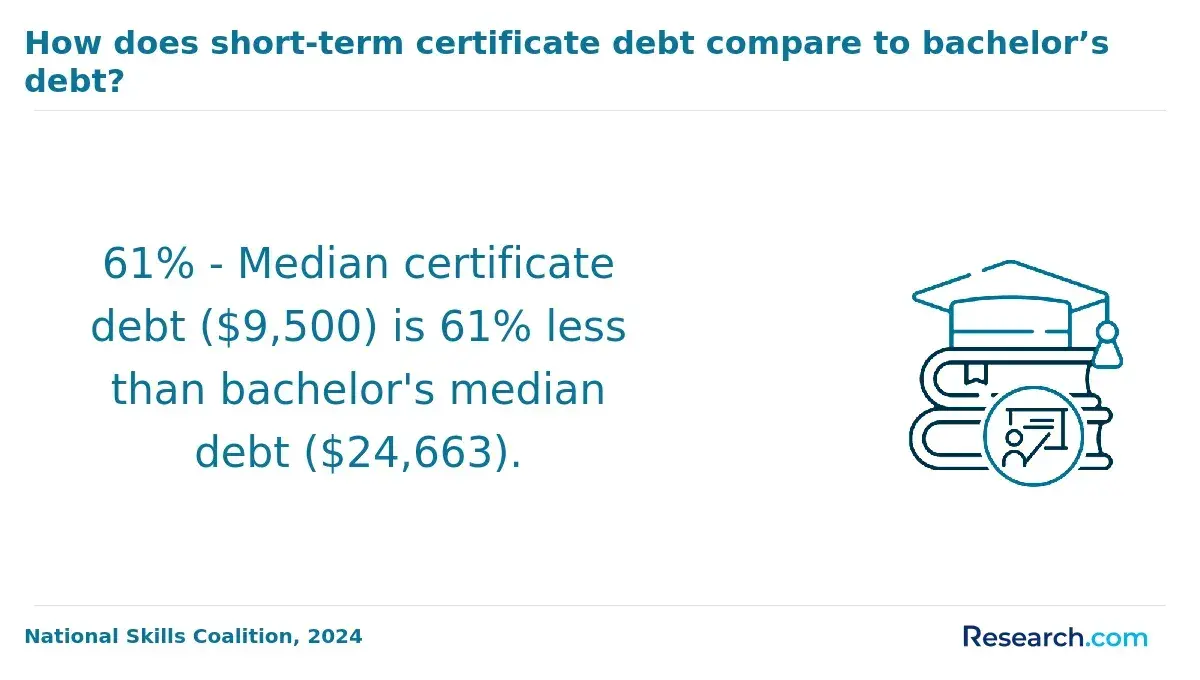
Assessing the total financial burden of an online legal studies degree requires attention to more than just tuition. Beyond sticker costs, additional expenses such as technology fees, course materials, exam fees, and reliable internet access typically add around $1,200 annually. These hidden expenses in online legal studies programs can erode affordability and extend return on investment timelines.
Consider a working professional shifting to an online bachelor's program who might face a $20,000 loss in wages over two years on top of $15,000 in direct educational costs. Such opportunity costs highlight the real financial tradeoffs and explain why employability outcomes depend heavily on career timelines and program-specific factors like attrition rates and credit transfer policies.
Additional financial variables include mandatory travel for residencies or internships, potentially costing between $500 and $3,000, and licensing exam preparedness expenses from $500 to $2,000. Moreover, scholarships or employer tuition reimbursement often exclude these ancillary expenses, leaving students responsible for significant out-of-pocket fees.
For those comparing pathways, exploring the cheapest online forensic science degree options illustrates how subtle cost differences and program structures influence net price and eventual career returns. A realistic cost breakdown that accounts for these factors provides a clearer perspective on the true investment required by prospective students considering an online legal studies degree total cost breakdown.
What admission requirements and prerequisites do online legal studies programs typically expect?
Admission requirements for online legal studies programs often extend beyond basic academic credentials, reflecting the profession's demands for demonstrated practical skills and relevant experience. Undergraduate entry typically asks for a high school diploma or GED, but some accelerated certificates require prior postsecondary credits. Graduate programs mandate a bachelor's degree without restricting undergraduate majors, allowing career changers flexibility.
However, prerequisite courses in legal terminology or foundational law may be necessary for applicants lacking work experience in related fields. Part-time or executive online formats prioritize professional experience, aligning with employer expectations that graduates quickly add value in roles such as legal assistants and paralegals, who earned a median wage of $62,890 in 2023.
Technical prerequisites, including reliable internet access and software proficiency, also frame enrollment readiness due to the digitization of legal work and learning management systems. For example, a full-time paralegal upgrading to a legal studies bachelor's degree online must verify prior credits meet articulation agreements; failure to do so can prolong time-to-degree and increase costs, undermining salary advancement benefits.
When evaluating prerequisites for enrolling in online legal studies degrees, applicants must weigh experience requirements, technical readiness, and credit transferability to avoid costly delays and better position themselves in a competitive legal support labor market. Additionally, students interested in related fields may consider parallel educational investments, such as a masters in digital marketing, which offers a contrasting example of interdisciplinarity and earning potential.
How do curriculum, course formats, and faculty credentials vary between online legal studies programs?
Choosing an online legal studies program requires scrutiny beyond curriculum titles; the real-world applicability of coursework and faculty expertise shapes employability and career pivot success. Programs that lean heavily on broad legal theory without sufficient practical skill development risk leaving graduates underprepared for corporate or compliance roles that demand proficiency in current case law, regulatory environments, and relevant technologies.
For working professionals, asynchronous course formats ease scheduling conflicts but may reduce opportunities for employer-valued networking and real-time feedback found in hybrid models. Faculty composition significantly affects curriculum rigor and relevance. Adjunct instructors disconnected from active practice often lack insights into evolving legal landscapes, whereas faculty engaged in current legal work or leadership roles can integrate contemporary practices and technologies, giving students a tactical advantage.
Prospective students should ask for detailed faculty bios, including recent legal practice areas and contributions to the field. Financial planning is critical and often underestimated. Data from the National Center for Education Statistics reveal that 87% of full-time, first-time undergraduates receive financial aid, suggesting base tuition rates can misrepresent actual costs. Evaluating scholarship options and employer tuition assistance alongside program content is essential to balance investment against realistic career outcomes.
How long do online legal studies degrees take, and what scheduling options are available?
Completing an online legal studies degree often requires balancing time, cost, and workforce impact, with program length ranging from three to six years depending on enrollment status and course structure. Full-time bachelor's students at four-year institutions typically finish in about four years, aligning with employer expectations that favor timely graduation as a marker of focus and reliability.
Part-time options extend to five or six years, often necessary for working adults managing professional and personal responsibilities, though this longer path can delay employment opportunities in legal fields. Accelerated programs can truncate degree completion to under three years through heavier course loads and continuous enrollment, but these intensify burnout risk and limit part-time work possibilities.
Meanwhile, asynchronous scheduling offers flexibility for those with variable schedules, whereas synchronous classes demand fixed availability, restricting options for employees with rigid hours. Graduation data from IPEDS reveals a 64% six-year completion rate for full-time legal studies students, emphasizing the challenge of maintaining consistent progress in online formats. Employers often interpret extended enrollments as potential distractions or wavering commitment, influencing hiring decisions in legal and related sectors.
What legal and non-legal career pathways are available with an online legal studies degree?
Graduates of online legal studies programs often navigate roles that cross traditional legal boundaries into sectors such as compliance, human resources, and cybersecurity. For instance, employers increasingly value candidates who can interpret regulations within complex organizational frameworks, making legal acumen essential beyond law firms.
Projected employment growth in dispute resolution fields like arbitrators and mediators (5% from 2022 to 2032) aligns with median wages around $75,530. This niche demands specialized negotiation skills and conflict management, areas emphasized in many legal studies tracks.
Important tradeoffs arise, as these degrees generally do not qualify graduates to practice law or engage in lobbying without further credentialing. Instead, their value lies in versatility and adaptability across industries facing regulatory scrutiny. Students should prioritize programs incorporating applied internships, certification opportunities in compliance or mediation, and updated curriculum reflecting shifting regulatory landscapes.
Roles in cybersecurity and HR notably benefit from legal studies graduates who understand data privacy and labor laws, improving organizational adherence to mandates and helping manage workplace disputes effectively. This interdisciplinary edge widens employment possibilities beyond jurisdictions requiring juris doctor degrees. Evaluators must weigh program depth in practical skills against limitations on legal practice eligibility to align education choices with targeted career outcomes.
What salary ranges and earning potential can graduates with legal studies degrees expect?
Graduates holding legal studies degrees face distinct earning ceilings compared to juris doctor (JD) holders due to licensing restrictions. Typical salaries range from $45,000 to $75,000 annually, with entry-level positions in compliance and paralegal roles starting near $45,000 and progressing to $60,000 within a few years. Specialized roles in corporate or government legal departments may approach $70,000, especially when combined with certifications in risk management, e-discovery, or legal technology.
The key tradeoff is that legal studies graduates cannot sit for the bar exam, which limits access to attorney roles that often exceed six figures. For example, a contract specialist in New York City with a legal studies degree might earn around $72,000, whereas a JD legal counsel in the same market typically earns above $120,000. This wage gap highlights the importance of pursuing targeted credentials or niche roles requiring legal expertise without law licenses.
Practical career development hinges on supplementing a legal studies degree with credentials from organizations like the National Association of Legal Assistants, which can boost compensation by 10% to 20%. Without these, earnings can stagnate near entry-level figures. Program selection should prioritize strong employer connections and internship opportunities to enhance real-world experience and salary trajectories.
How do licensing, certifications, and professional standards affect legal studies career options?
Licensing and certification requirements decisively shape career opportunities in legal studies, often more than program cost or duration. Without specific credentials-such as a paralegal certificate recognized by the National Association of Legal Assistants-graduates face restricted roles limited to administrative support without true legal authority. For instance, this certificate is mandatory in over 35 states for paralegal employment, highlighting how credential gaps narrow eligibility.
Employers increasingly expect formal certifications for mid- and upper-level positions within corporate legal teams and government agencies. These certifications confirm practical skills beyond academic credentials and ensure alignment with regulatory standards-especially critical when assessing distance education candidates in a market where nearly 60% of postsecondary students take at least one online course, according to NCES statistics.
Jurisdictional differences add complexity; compliance officers in healthcare or finance require certifications like the Certified Compliance & Ethics Professional (CCEP) that align with federal and state rules. Programs lacking direct pathways to such credentials compromise graduate employability in specialized legal roles.
Practical considerations include:
- Identifying if programs enable or support eligibility for key certifications in your target field and jurisdiction.
- Recognizing that licensing often requires supervised internships, which may conflict with fully online formats.
- Confirming your credentials remain relevant amid shifting regulatory and remote work standards.
Choosing a program without integrating these professional requirements risks limiting the scope of your career mobility within the legal workforce.
What criteria should you use to choose a reputable, student-supportive online legal studies program?
Choosing an online legal studies program requires assessing measurable outcomes rather than relying on institutional reputation alone. For example, median earnings six years after graduation, such as $39,900 compared to an average $18,264 annual tuition after financial aid, illustrate a tangible return on investment. Candidates must weigh such financial benchmarks against program costs to avoid excessive debt with little income gain.
Student support impacts success and employability, especially for working professionals. Reliable advising, career counseling, and faculty access shape a student's ability to intersect coursework with real-world application. Programs offering legal career placement boost chances in competitive sectors like compliance or paralegal roles. Inadequate technical support or unreliable platforms cause disruptions that diminish learning continuity and retention.
Curricular alignment with career goals is essential. Those targeting corporate legal roles should ensure courses cover contract law and regulatory frameworks, while others may prioritize case management software skills or legal research. Flexibility through asynchronous classes or part-time options often balances rigorous study with work commitments but may limit networking opportunities.
Employer recognition correlates strongly with alumni network strength and graduates' career paths within targeted geographies or sectors. Labor market trends and entry barriers vary; aligning program choice with specific job market demands prevents misaligned investments in generic credentials. Prioritizing concrete career outcomes over brand prestige avoids common pitfalls in legal studies education.
Other Things You Should Know About Legal Studies
The online structure of legal studies programs often limits direct interaction, which can reduce opportunities for hands-on skill development like moot courts or in-person internships. Programs that incorporate interactive simulations, live discussions, and strong mentorships tend to better prepare students for workplace demands. When choosing a program, prioritize those with robust experiential learning components because employers expect graduates to demonstrate practical legal reasoning and applied research skills, not just theoretical knowledge.
Online legal studies programs vary in intensity, with some designed for part-time learners and others requiring a full-time commitment. Working professionals must evaluate how course schedules, assignment frequency, and exam formats align with their current job demands. Selecting a program with asynchronous options and longer terms can reduce conflict but may prolong degree completion, potentially delaying career benefits. Balancing workload against career timeline priorities is essential for effective decision-making.
Specializations such as paralegal studies, compliance, or dispute resolution lead to distinct job roles with varying stability and growth potential. Some track choices align better with in-demand legal support roles, while others serve niche areas with limited openings. Selecting a specialization requires analyzing local job market trends and long-term outlooks rather than personal preference alone, as this directly affects return on educational investment and career trajectory.
References
- What Can You Do With a Master of Legal Studies (MLS)? https://mls.uclawsf.edu/articles/what-can-you-do-with-master-of-legal-studies/
- Top Online Pre-Law and Legal Studies Degrees and Certificates https://www.lawyeredu.org/online-degrees/
- How Long Does It Take to Get a Law Degree Online? - St Francis School of Law https://stfrancislaw.com/blog/how-long-does-it-take-to-get-a-law-degree-online/
- How Much Does Law School Cost | Brazos Higher Education https://studentloans.com/how-much-does-law-school-really-cost/
- Accredited Programs https://onlinemasteroflegalstudies.com/mls-degrees/accredited/
- Is Online Law School Worth It for Your Career Goals? https://online.law.tulane.edu/blog/why-online-law-school
- Online Legal Studies Degrees https://www.affordablecollegesonline.org/degrees/best-online-bachelors-in-legal-studies-programs/
- Navigating the Legal Landscape: Online Legal Studies Programs for Every Ambition https://www.paralegalinst.com/online-legal-studies-program-complete-guide
- [PDF] Law-School Accreditation from the Perspective of Higher Education https://jle.aals.org/cgi/viewcontent.cgi
- What Can You Do With a Legal Studies Degree? - Trinity Law School https://www.tiu.edu/law/questions/what-can-you-do-with-a-legal-studies-degree/