2027 How to Compare Online Legal Studies Degrees by Return Potential

Co-Founder and Chief Data Scientist
Facing a packed schedule, prospective legal studies students grapple with choosing an online degree that actually leads to meaningful income growth, not just a credential. With the U.S. Department of Education reporting a 12% increase in adult enrollment in online programs since 2023, flexibility alone no longer guarantees career payoff. Many programs promise access but lack clarity on outcomes in an increasingly competitive job market where employers scrutinize practical skills and ROI.
Deciding which program balances cost, curriculum rigor, and employer reputation can determine long-term career mobility rather than short-term convenience. This article guides readers through comparing online legal studies degrees by return potential to inform smarter educational investments.
Key Things You Should Know
- Programs with integrated paralegal certification yield a 15% higher median starting salary but extend time-to-completion by 6-12 months, necessitating a tradeoff between faster entry and enhanced early earning.
- Employers in midsize firms prioritize candidates from regionally accredited institutions with practicum experience, valuing 2024 labor market data showing 42% quicker job placement over purely online certificates.
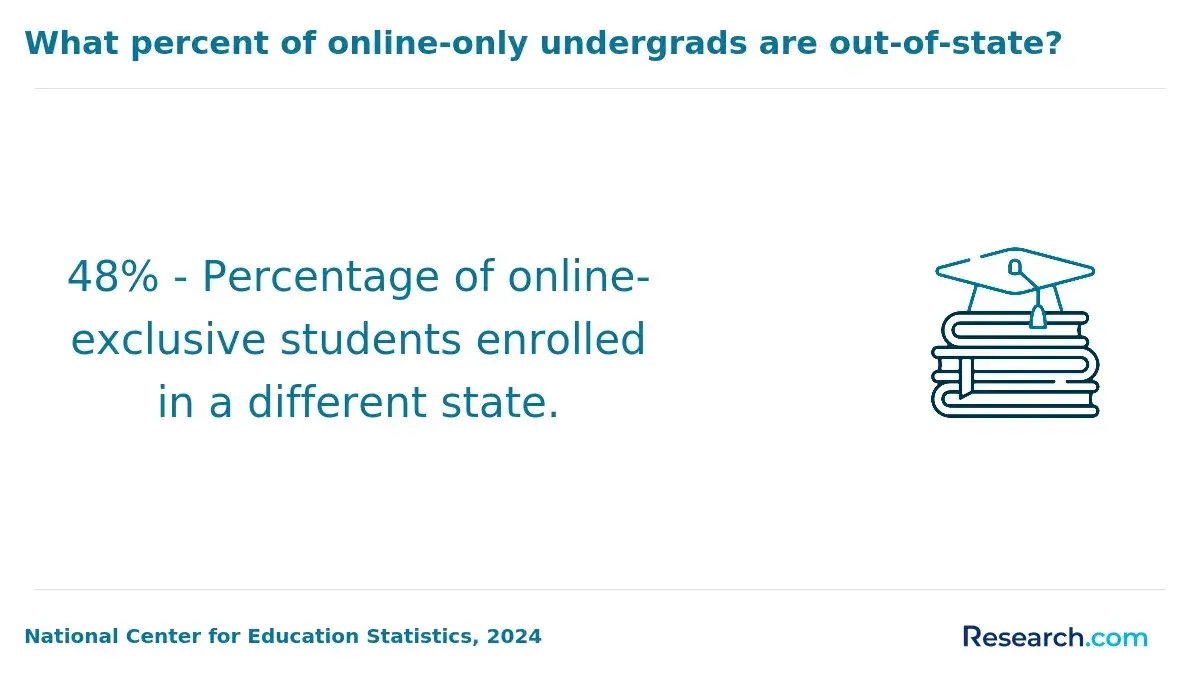
- State-specific licensing and transfer policies lengthen degree timelines by up to 25% in multistate applicants, impacting total cost and career pivot timing amid fluctuating in-state vs. out-of-state tuition differentials.
How do online legal studies degrees compare to on-campus programs in quality and credibility?
Online legal studies degrees from regionally accredited institutions with rigorous curricula can provide academic quality and credibility on par with traditional on-campus programs. Employers increasingly focus on competencies and applied skills rather than mode of attendance, making institutional reputation and curriculum rigor key factors. For example, graduates with a master's in legal studies earned an average starting salary of $81,378 in 2023, revealing that well-structured online programs can deliver competitive financial outcomes similar to their on-campus counterparts. This performance particularly reflects in fields where practical skills and knowledge outweigh physical presence, a crucial distinction when comparing how online legal studies degrees compare to traditional on-campus programs.
Nonetheless, certain legal roles and sectors still emphasize on-campus experience for networking access and hands-on learning opportunities, such as positions involving court appearances or requiring local legal insight. In these cases, in-person training may confer advantages some employers prioritize. Meanwhile, online programs offer flexibility that suits working professionals and those with personal commitments without significantly compromising foundational legal knowledge and quality. Prospective students should also carefully examine program structures integrating experiential elements like internships-often more limited in fully online formats-and assess regional employer preferences, especially in conservative legal markets.
Key considerations when choosing between online and on-campus options include:
- Verifying regional accreditation and evaluating curriculum rigor and faculty qualifications.
- Reviewing alumni employment rates and salary levels within the intended legal specialization.
- Determining the extent of experiential learning opportunities such as internships or clerkships.
- Understanding employer biases or preferences in your targeted geographic or professional sector.
In practice, online legal studies degrees provide parity with traditional programs in high-demand niches like compliance or legal consulting. However, diminished in-person interaction may restrict development of locally rooted professional networks and real-time collaborative skills, potentially limiting long-term return on investment despite equivalent academic preparation.
For those exploring funding options and program affordability, resources related to online interdisciplinary studies degree financial aid may offer additional guidance tailored for interdisciplinary pathways linked to legal studies.
What accreditation should an online legal studies program have for strong career and transfer value?
Regional accreditation from an agency recognized by the U.S. Department of Education or the Council for Higher Education Accreditation (CHEA) remains the most reliable indicator of quality and practical value in online legal studies programs. Unlike national or programmatic accreditations, these regional credentials assure transferability and employer recognition across diverse sectors. For example, a candidate pursuing paralegal positions within federal agencies will find regional accreditation indispensable due to strict credential verification standards.
Employers in legal services, compliance, and government consistently prioritize graduates from accredited institutions, valuing verified academic rigor and standardized curriculum. Omission of such accreditation often results in limited employability and non-transferable credits, imposing unexpected costs on students.
Deciding which program to enroll in demands close attention to accreditation status, especially for students seeking career pivots or advancement. Those interested in certification or licensing roles must cross-reference state requirements, as unaccredited programs may nullify eligibility.
Financially, accredited programs typically offer better return on investment. According to the National Center for Education Statistics data reviewed by BestColleges in 2025, the average total cost of an online master's in legal studies was $19,127, with a net price of $17,478 after aid. Hidden expenses in unaccredited paths can be substantial due to lost credit transfers and disqualified employer tuition benefits.
Students comparing options should consider factors beyond cost alone. Practical outcomes hinge on enrollment in accredited online legal studies programs for career advancement and securing transferable accreditation for online legal studies degrees. For context on broader expense considerations, see criminal justice degree online cost.
How can students evaluate the return on investment of an online legal studies degree?
The return on investment (ROI) for an online legal studies degree hinges on a detailed weighing of costs against achievable salary gains within specific job markets. Tuition disparities-for example, those noted by OnlineU's 2026 ranking where in-state online tuition can be as low as $4,243 annually compared to $22,380 for out-of-state-result in significant financial considerations, making residency status a critical factor before enrollment. Assessing career outcomes and salary potential of online legal studies programs requires scrutinizing employment data for roles like paralegals or compliance analysts in the student's geographic area.
Consider a graduate aiming for a compliance analyst position in a major metropolitan center with an entry salary around $50,000: the educational investment including tuition, fees, and lost wages from reduced working hours should ideally be recoverable within 3 to 5 years, based on government labor statistics and wage growth patterns. For working professionals evaluating how to evaluate the return on investment for online legal studies degrees in the United States, practical skill offerings such as proficiency with e-discovery tools or regulatory frameworks can influence earnings trajectory and employer fit.
Students must also juxtapose legal studies degrees against alternative credentials like paralegal certificates or compliance certifications. This requires analyzing local hiring practices and promotion pathways to determine credential value. Flexibility in program schedules is paramount for those balancing work, as extended lost income may negate degree benefits. Reliable, updated data from government sources and organizations like forensic psychology graduate programs online provide useful comparative frameworks, ensuring ROI calculations reflect genuine market realities without inflated assumptions.
What types of online legal studies degrees exist, and which align with different legal careers?
Choosing an online legal studies degree program hinges on realistic workforce expectations and career-specific skill sets. Entry-level roles like legal assistants or clerks typically require associate degrees, which emphasize foundational competencies such as legal research and document preparation. However, those targeting paralegal or judicial assistant positions must consider bachelor's degrees, as employers consistently prefer this level for responsibilities involving litigation support, compliance, and independent client interaction. This practical career distinction is evident in earning potential: a bachelor's degree in legal studies aligns with a reported 20-year net ROI of $208,000, despite an average annual tuition cost of $6,118.
For professionals balancing work and education, certificate programs offer expedited specialization in fields like intellectual property or immigration law, but these generally result in limited salary growth without further degrees. Hiring managers prioritize bachelor's degrees for advancing within mid-sized corporate legal departments or government roles, which underscores the importance of degree-level alignment with career goals. When weighing costs and duration, it is essential for students to match their program choice to intended job roles, as certificates accelerate entry but present fewer advancement opportunities.
Prospective students evaluating the best online legal studies degree programs for career paths should also consider broader educational investment trends. For example, comparable fields reveal how tuition and length impact net returns; see insights on the online marketing degree as a reference for strategic planning in higher education.
How do curriculum, coursework, and specializations differ across online legal studies programs?
An online legal studies program's value hinges on the alignment between its curriculum and targeted workforce demands, affecting both employability and salary prospects. Core subjects-such as criminal law, civil procedure, and legal research-form the foundation, yet programs diverge sharply in balancing theoretical frameworks against applied skills. For instance, paralegal-focused curricula often embed detailed case simulations and litigation support exercises, enhancing immediate job readiness in regulatory or compliance roles.
Course offerings vary by intended career path: corporate legal tracks emphasize contract law, intellectual property, and compliance, while public sector-oriented tracks focus on criminal justice procedures or family law. Specializations in niche areas like cybersecurity or environmental law increase market value in tightly defined sectors but restrict broader career flexibility.
Deciding on a specialization requires evaluating industry demand nuances. Entering corporate legal teams demands mastery of business law and data privacy; government roles prioritize administrative law and constitutional issues. This tradeoff affects career adaptability and earning potential, with broader programs offering versatility but often lower starting salaries.
Cost-efficiency and graduation timelines reflect specialization intensity and curriculum design. According to OnlineCollege.org's 2024 report, Penn State World Campus's online legal studies bachelor's degree achieves an annual return on investment of 8.8%, increasing to 10% when factoring financial aid. This distinction highlights how tightly aligned coursework and specialization pathways can deliver measurable career and economic outcomes.
What admission requirements and prior education are needed for online legal studies degrees?
Admission into online legal studies programs often reflects a strategic balancing act between prior academic achievement and workforce experience. For many applicants, a high school diploma or equivalent is the baseline, but this alone rarely ensures competitive admission. Programs frequently require standardized test scores, though many waive these for adult learners or those with relevant professional backgrounds. Applicants holding associate degrees or prior credits typically benefit from accelerated tracks, reducing time and costs-critical considerations given that tuition can approach $750 per credit, totaling around $90,000 for a 120-credit bachelor's before aid.
This substantial investment makes it imperative to consider transfer credits carefully; repeating general education courses can erode the return on investment. Programs also demand evidence of critical thinking and communication skills through transcripts, personal statements, and letters of recommendation. Some institutions expect prior legal or administrative experience, especially those designed for working professionals.
Financial aid and employer tuition reimbursement often hinge on these admission criteria and accreditation status. Students who meet benchmarks and enter degree-completion pathways can minimize delays and additional expenses. Thus, admission requirements are not just formalities but integral to managing educational costs, completion timelines, and labor market readiness.
How long do online legal studies programs take, and what total costs should you expect?
Accelerated online legal studies programs offer valuable time savings but require balancing an intense course load with professional responsibilities. For instance, a compliance officer in finance might sustain a three-year part-time schedule, while a paralegal aiming to shift careers could accept a compressed two-year program to minimize lost income. These scheduling decisions affect not only completion but also how students manage their current work-life demands.
Tuition varies considerably, from around $19,170 at the University of Tennessee to nearly $72,792 at Washington University in St. Louis, illustrating a nearly fourfold disparity tied closely to institutional prestige and its impact on employer perception. This cost difference correlates with variations in program rigor, alumni networks, and ultimately, career leverage within legal, governmental, and corporate sectors.
Additional expenses-such as fees, materials, and technology-also contribute to total investment. Financial aid and employer tuition reimbursement can offset these costs but often come with restrictions that need early verification.
Choosing programs based solely on price risks delaying career progression or salary growth. In evaluating options, prospective students should consider:
- Program length versus the opportunity cost of extended study
- Employer expectations for brand recognition and alumni prestige
- Balance between tuition cost and available learning resources
These trade-offs are crucial for those with explicit target roles, ensuring educational choices align with pragmatic workforce demands rather than just affordability.
What legal and related career paths can you pursue with an online legal studies degree?
Online legal studies degrees often lead to roles beyond traditional paralegal work, such as compliance and human resources, where salaries typically exceed those in conventional legal support positions. For example, compliance officers in regulated sectors like healthcare or finance combine legal expertise with specialized industry knowledge to ensure organizations meet evolving legal standards. This specialization generally results in stronger earning potential and job stability compared to generalist legal assistant positions.
Other career options include contract administration, focusing on drafting and reviewing agreements to mitigate business risk, and court administration, which requires procedural knowledge without necessarily needing formal legal licensing. These roles emphasize practical application of legal principles rather than advocacy, enabling faster workforce entry but also imposing limits on long-term salary growth.
Employers increasingly expect certifications or additional training, especially in HR where credentials like SHRM influence hiring. Compliance positions often require targeted certifications, reflecting a tradeoff: accepting longer paths to employment in exchange for higher salaries versus quicker access to legal roles with lower pay ceilings. The U.S. Bureau of Labor Statistics reports median paralegal salaries around $52,920, underscoring this gap.
Students should carefully weigh these factors, aligning their educational choices with realistic career progressions. Specialized legal studies tracks offer differentiated growth opportunities, while broader programs prioritize easier entry but risk earlier earning plateaus in today's complex legal job market.
What salary ranges and advancement potential are typical for legal studies graduates?
A typical salary range for graduates with online legal studies degrees is between $40,000 and $60,000, heavily influenced by location, prior experience, and employer type. Employers in corporate legal departments or government agencies generally provide more defined career progression opportunities, whereas smaller firms or nonprofits often have less structured roles. Advancement beyond entry-level often depends on additional credentials or years of experience; paralegals with bachelor's degrees may progress to supervisory roles earning $75,000 to $85,000 after gaining expertise.
Tuition cost disparities create significant financial tradeoffs. For example, the University of Central Florida's online legal studies program charges approximately $4,478 annually for in-state students but up to $19,810 for out-of-state students. Those paying higher tuition face extended timelines to recoup their investment, limiting salary growth impact in the early career phase.
When evaluating programs, it is essential to consider how tuition costs affect long-term earning potential and break-even points. Legal studies credentials paired with certifications or internships can open clearer advancement pathways and higher income ceilings. Without these, graduates frequently encounter salary limits near $60,000, restricting the financial return of the degree itself.
- Bachelor's legal studies graduates typically start between $40K-$60K, with advancement dependent on additional credentials or experience.
- Corporate and government roles often offer more predictable progression than smaller legal employers.
- Tuition differences dramatically influence cost-to-return ratios, affecting financial flexibility after graduation.
- Programs supplemented by certifications or legal internships tend to deliver better long-term salary outcomes.
How can you avoid predatory or low-quality online legal studies programs when choosing a school?
Accreditation validation from authoritative bodies like the U.S. Department of Education or the Council for Higher Education Accreditation is essential to avoid degrees that employers disregard. Investing in a legal studies program demands scrutiny beyond sticker price-benchmark programs offering under $25,000 total tuition, such as those charging approximately $750 per credit for a 30-credit degree, exemplify prudent financial commitments. Pay particular attention to graduate employment data; programs failing to demonstrate substantial workforce integration often signal limited value.
Faculty expertise and curriculum focus critically shape employability. A professional shifting from paralegal work to legal compliance, for instance, needs targeted regulatory law training rather than abstract theory, ensuring direct applicability. Delivery models must align with personal schedules and learning preferences to prevent wasted time and resources.
Credit transfer transparency, pathways to licensure, and career support services are practical filters distinguishing viable programs. Without these, alumni regularly encounter barriers translating education into credentialed roles or wage growth. Independent rankings and government-sourced evaluations published since 2024 can provide unbiased quality validation, steering decisions away from marketing-driven or unsubstantiated program claims.
- Confirm program accreditation status before application.
- Compare tuition costs relative to program outcomes and credit requirements.
- Evaluate employment rate statistics and alumni career progression rigorously.
- Match curriculum focus to your specific career trajectory and workforce demands.
- Verify credit transfer policies and availability of career services critical for post-graduation success.
Other Things You Should Know About Legal Studies
No. ABA accreditation is required for law schools, not for most undergraduate legal studies degrees. For paralegal roles, employers usually look for regional accreditation and, in some states, approved paralegal coursework or a certificate from a recognized body. Check state-specific rules before enrolling.
Online legal studies programs vary significantly in workload and pacing, with some offering self-paced formats and others requiring strict weekly deadlines. Working professionals should prioritize programs that provide flexible pacing and manageable credit loads per term to avoid burnout. Programs with rigid schedules may conflict with job demands and reduce learning effectiveness, while highly flexible programs risk prolonging completion times if self-discipline is insufficient.
Internships or practicum components in legal studies provide critical hands-on experience and networking opportunities that significantly improve job prospects. Students focused on rapid skill acquisition and job placement should prioritize programs offering direct access to legal work environments. Programs without these components often rely on theoretical knowledge alone, which limits real-world readiness and can reduce the degree's immediate market value.
In 2027, employers may favor certificate programs for specialized qualifications and quick workforce entry, while undergraduate degrees provide a broader legal foundation. Students should assess career goals and industry demands, considering how each option aligns with employer expectations and personal aspirations.
References
- Selecting the Perfect Law School | LLM GUIDE https://llm-guide.com/blog/1189/1154/selecting-the-perfect-law-school
- Complete Guide to Types of Law Degrees and Legal Career Paths https://presidencyuniversity.in/blog-details/complete-guide-to-types-of-law-degrees-and-legal-career-paths
- Paralegal vs. Lawyer: Legal Studies & Programs Explained https://www.allcriminaljusticeschools.com/blog/paralegal-vs-legal-studies/
- Online Legal Studies Degrees https://www.affordablecollegesonline.org/degrees/best-online-bachelors-in-legal-studies-programs/
- Paralegal Program Comparison https://paralegal.edu/compare/
- Homepage https://onlinemasteroflegalstudies.com/
- School of Legal Studies | ALU | Earn Your Degree Online https://alu.edu/academics/school-of-legal-studies/
- Best Online Master of Studies in Law Programs for 2025 https://www.princetonreview.com/law-school-rankings/best-online-master-studies-in-law-programs
- Online Bachelor's Degree: Legal Studies https://www.umgc.edu/online-degrees/bachelors/legal-studies
- 5 Highest Paid Types of Lawyers | What Lawyers Make the Most Money? https://www.collegesoflaw.edu/blog/2024/02/19/lawyer-types-highest-paid-career-paths/