2027 Online Legal Studies Degrees With the Best Support for Returning Adults

Co-Founder and Chief Data Scientist
Balancing a full-time job, family commitments, and the desire to enter or advance in the legal field puts many returning adults at a significant crossroads. Conventional campus-based legal studies programs rarely offer the scheduling flexibility or tailored support needed to navigate these pressures effectively. Recent data from the National Center for Education Statistics signals a 25% increase in adult enrollment in online undergraduate programs since 2022, illustrating a growing shift toward accessible, adaptable learning models for career-minded individuals.
This article evaluates online legal studies degrees that combine rigorous academics with robust support structures, specifically designed to help adult learners overcome barriers and make informed educational choices.
Key Things You Should Know
- Adult learners face a 25% higher time-to-completion in online legal studies degrees than traditional students, per 2024 NCES data, demanding programs balance pacing with career continuity to prevent dropout risk.
- Employers increasingly prioritize demonstrated case-management skills over degrees alone: 58% of legal firms reported preference for candidates with practical internships embedded in curricula, emphasizing applied learning over theory.
- The median total cost for online legal studies degrees rose 12% since 2022, adjusting budgets for returning adults who must weigh debt load against career pivot timing amid a softening paralegal job market.
What is an online legal studies degree and how does it differ from a law degree?
Choosing between an online legal studies degree and a law degree entails a precise understanding of career objectives and time commitment. Legal studies degrees provide targeted skills for support roles such as paralegals, compliance officers, and court clerks without preparing students for bar licensure. These programs prioritize practical knowledge in contract law, criminal justice, and legal technology, making them especially suitable for adult learners balancing work and study. Compared to the multi-year, resource-intensive path of a Juris Doctor, legal studies degrees typically require less financial and time investment.
Employer preferences often reflect this distinction. Many organizations hiring for paralegal or legal assistant roles prioritize candidates with a bachelor's or associate degree in legal studies plus relevant certifications over those holding a JD. For instance, an adult seeking a shift into corporate compliance can leverage an online legal studies degree program to quickly gain expertise in regulatory frameworks without the prolonged commitment law school demands.
The median annual wage for legal occupations stood at $82,430, significantly exceeding the overall U.S. median. This gap illustrates the competitive earning potential achievable through legal support positions. For those evaluating educational options, programs like the accelerated paralegal program offer streamlined routes focused on employability and skill application.
Key considerations include:
- Tradeoffs between duration, cost, and professional scope
- Alignment of curriculum with targeted roles in the legal workforce
- Certification and credentialing's role alongside degrees
These factors strongly influence how well a program serves returning adults pursuing online legal studies degree programs for adult learners and those weighing the difference between online legal studies and law degrees.
Which accredited online legal studies programs offer the strongest support for returning adult students?
Adult learners seeking the best online legal studies programs for adult learners must consider beyond accreditation and curriculum. Programs that effectively accommodate working professionals integrate flexible scheduling, tailored academic advising, and career services targeted at returners. These elements mitigate common obstacles such as balancing employment with study and skill gaps, offering asynchronous coursework and virtual office hours for accessibility.
Top accredited legal studies degrees with support for returning students often embed internship placements and foster employer partnerships that link academic learning to practical roles like corporate compliance or paralegal work. Such experiential learning aligns closely with employer demands for candidates who combine legal understanding with applicable experience, directly impacting employability.
Logistical considerations remain pivotal: tuition payment options, credit transfer policies, and military or veteran support vary significantly across programs, with many robust options found at regionally accredited private schools and ABA-approved public universities. Choosing a program that clearly documents career placement rates for adult learners and provides pathways for credential stacking or progression enhances both immediate job prospects and long-term advancement.
Returning professionals should also analyze the cost-benefit tradeoffs of program features versus outcomes, considering that the landscape includes 174 distance-learning legal studies degrees globally. For those exploring related opportunities, reviewing forensic science degree salary data can provide comparative workforce insights relevant to regulatory and investigative legal fields.
How do online legal studies degrees compare with on-campus options for flexibility and student support?
Choosing an online legal studies degree hinges on balancing flexibility with the need for effective student support services for online legal studies. Unlike campus programs that offer direct faculty access and peer interaction, online options demand strong time management and self-discipline. For example, a paralegal managing a full caseload can leverage asynchronous coursework to study after hours, but the lack of immediate feedback risks engagement and persistence.
Online programs attempt to offset these challenges with virtual tutoring, digital advising, and online communities, yet the variability in these resources' quality can critically affect retention, especially for returning adults facing outdated study habits or unfamiliar learning platforms. Such dynamics underline the importance of proactive support aligned with real-world applications.
Employment outcomes also shape decision-making: the Bureau of Labor Statistics forecasts a 4% job growth in paralegal roles through 2032, with median earnings near $60,260. Employers prioritize graduates who demonstrate practical expertise and reliability-attributes fostered by completing programs that integrate continuous assistance.
Hybrid models that combine online flexibility with on-campus mentorship may better suit students needing structured interaction without sacrificing accessibility. For those exploring alternatives, comparing pathways reveals different tradeoffs in pedagogy and support.
Those interested in related fields might explore a criminal justice major for other affordable online degree options.
What types of legal studies degrees can adults earn online and which level fits their goals?
Adult learners pursuing online legal studies degree programs for adults must weigh education levels against realistic career trajectories and commitments. Certificate programs offer fast entry to roles like paralegal or compliance support without the extended investment of a full degree. Associate degrees provide more solid legal foundations suited for legal assistant positions but often limit advancement compared to bachelor's or graduate options.
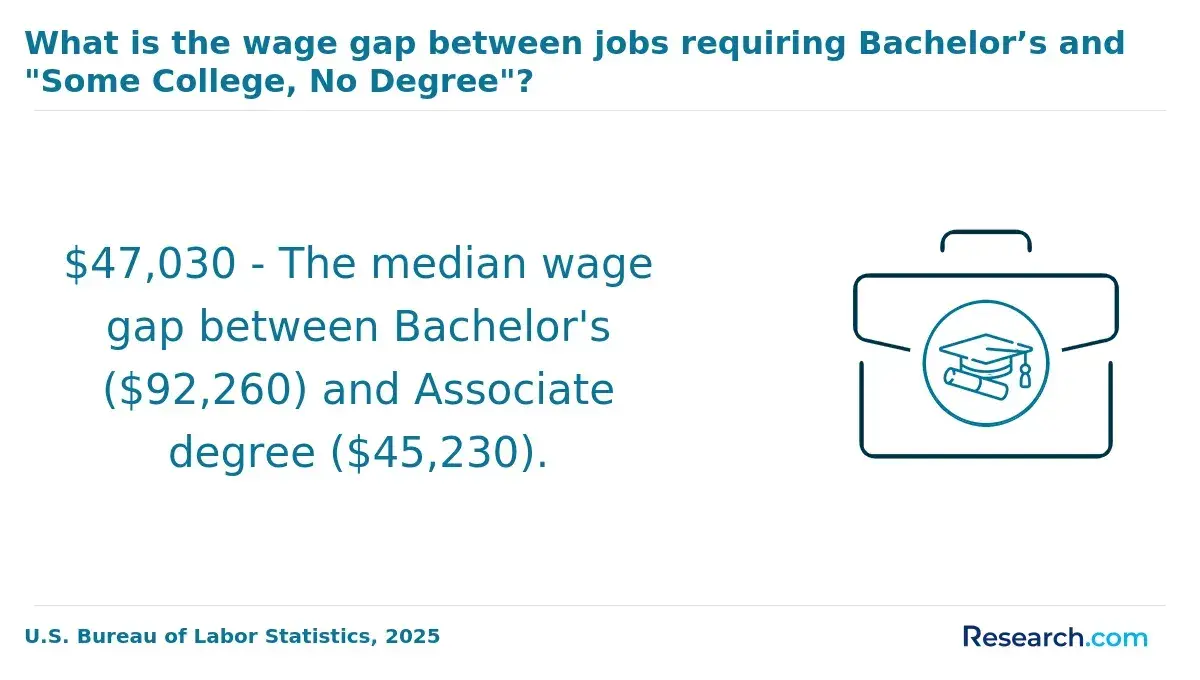
Bachelor's degrees, usually four years, remain the benchmark for management roles in legal services or preparation for law school. Their typical tuition ranges from about $9,000 to $23,000 annually, with many public programs falling below $10,000 per year, per BestColleges' 2024 rankings. Graduate degrees demand prior undergraduate completion and focus on specialized legal concepts, aligning with roles in policy analysis, corporate governance, or government compliance.
Consider this real-world scenario: a mid-career human resources professional seeking a labor law specialty may find a master's degree essential to access new fields, while a returning student targeting paralegal work could fulfill goals faster through associate or certificate pathways. Employers typically prefer bachelor's or graduate credentials for higher-responsibility roles; those with certificates or associate degrees usually qualify for support positions.
Decisions should factor in accreditation, state licensing requirements, and program flexibility to maintain employment during studies. For comparative insights on cost-effective and time-efficient online programs, exploring a Spanish online degree might provide useful perspective on balancing affordability and credential value within a practical timeframe.
How can returning adults evaluate accreditation and program quality in online legal studies?
Choosing an online legal studies program without prioritizing regional or national accreditation recognized by the U.S. Department of Education risks investing in credentials that employers and certifications may not honor. Accreditation serves as a baseline filter for academic rigor and industry acceptance, but students must also confirm alignment with relevant legal professional associations to ensure coursework is applicable for specialized roles.
Outcomes data is more telling than marketing claims. For instance, in a 2024 report from Wiley University Services, 70% of online learners worked full-time during their studies, emphasizing the necessity for programs designed with flexible pacing and employer-relevant content. Without this focus, students may struggle to balance commitments or acquire practical skills.
Delivery method significantly impacts preparedness. Programs featuring asynchronous classes coupled with active faculty engagement, simulations, and case studies improve skill acquisition and workplace readiness better than those relying mainly on passive lectures-particularly important given employer expectations for paralegal and compliance functions.
Returning adults should weigh institutional support services carefully. Access to career advising, internship placement, and technical assistance can create tangible pathways to employment, differentiating programs that merely grant degrees from those that foster career mobility within legal fields.
What coursework and specializations are typical in online legal studies programs for nontraditional students?
Online legal studies programs targeting nontraditional students must prioritize skill application and flexible delivery to address adult learners' competing responsibilities. Coursework typically blends foundational subjects-legal research, contract law, criminal justice, constitutional law-with specializations that mirror labor market demand, such as cybersecurity law, health law, or real estate law. These focus areas correspond to sectors actively seeking candidates with both legal literacy and workplace-relevant soft skills.
Practical exposure to legal technology systems and case management platforms is essential for employability, especially in corporate legal departments and law firms where proficiency reduces onboarding time. Programs that incorporate simulated client interactions and real-world document drafting help bridge the gap between theory and daily legal work.
Adult students' persistence is closely tied to robust academic support; 68% of online learners cited proactive advising and coaching as critical to completion, according to the 2024 Wiley University Services' Online College Students report. For instance, a working parent benefits significantly from asynchronous course formats combined with accessible coaching to manage deadlines alongside family obligations.
Employers prioritize candidates demonstrating applied legal competence with strong communication and critical thinking. Strategic specialization choice based on regional employment trends-such as cybersecurity in tech hubs or health law near medical centers-can materially affect career trajectory, more so than generic legal studies paths.
What are the admission requirements for online legal studies programs geared toward working adults?
Admission into online legal studies programs for working adults hinges on flexibility and acknowledgment of professional experience over strict academic prerequisites. While a high school diploma or equivalent remains a baseline, many programs accept partial college credits or relevant work history instead of a completed degree. Applicants typically need to provide transcripts that verify proficiency in essential skills like reading comprehension and writing, which are critical for navigating the specialized legal terminology and documentation.
Candidates in full-time employment must demonstrate strong time management-often through professional references or a detailed statement of purpose. Background checks are common due to the sensitive nature of legal compliance fields. Some programs require preliminary courses in areas such as basic law, criminal justice, or business to build necessary foundational knowledge before advancing.
Scheduling logistics are a decisive factor; evening or asynchronous classes and flexible deadlines vary widely across institutions, determining realistic feasibility for working professionals. Technical requirements include reliable internet and familiarity with learning management systems to avoid interruptions during the study.
Understanding market demand is key-compliance officer roles, a common legal studies outcome, are projected to grow 3% from 2022-2032 with a median wage of $79,450 in 2024, reflecting steady corporate and regulatory demand. Credit transfer negotiations can reduce program length and cost, a vital consideration given the opportunity cost of time away from work.
How long do online legal studies degrees take, and what do they cost for adult learners?
Adult learners pursuing an online legal studies degree face a critical balance between time investment and career impact. Programs typically require 18 to 36 months, with part-time options extending close to three years and accelerated tracks completing in 12 to 18 months. These options respond to the fact that over half of online undergraduates are 25 or older, necessitating flexible pacing to fit complex personal and professional schedules.
Cost can range substantially-from about $8,000 at community colleges and state universities to $25,000 or more at private institutions-reflecting differences in program length, credit demands, and fees. For working professionals, the choice between a longer, less expensive program and a shorter, more costly one involves a nuanced tradeoff: delaying degree completion reduces immediate expenses but postpones the employment benefits tied to credential attainment.
Employers prioritize practical legal knowledge and accredited credentials over institutional prestige, so transferability of credits and regional accreditation are key affordability and credibility considerations. For example, a paralegal aiming for promotion might select a 24-month schedule with weekend classes to maintain income continuity, while a career changer able to pause work may opt for an accelerated plan despite higher upfront costs.
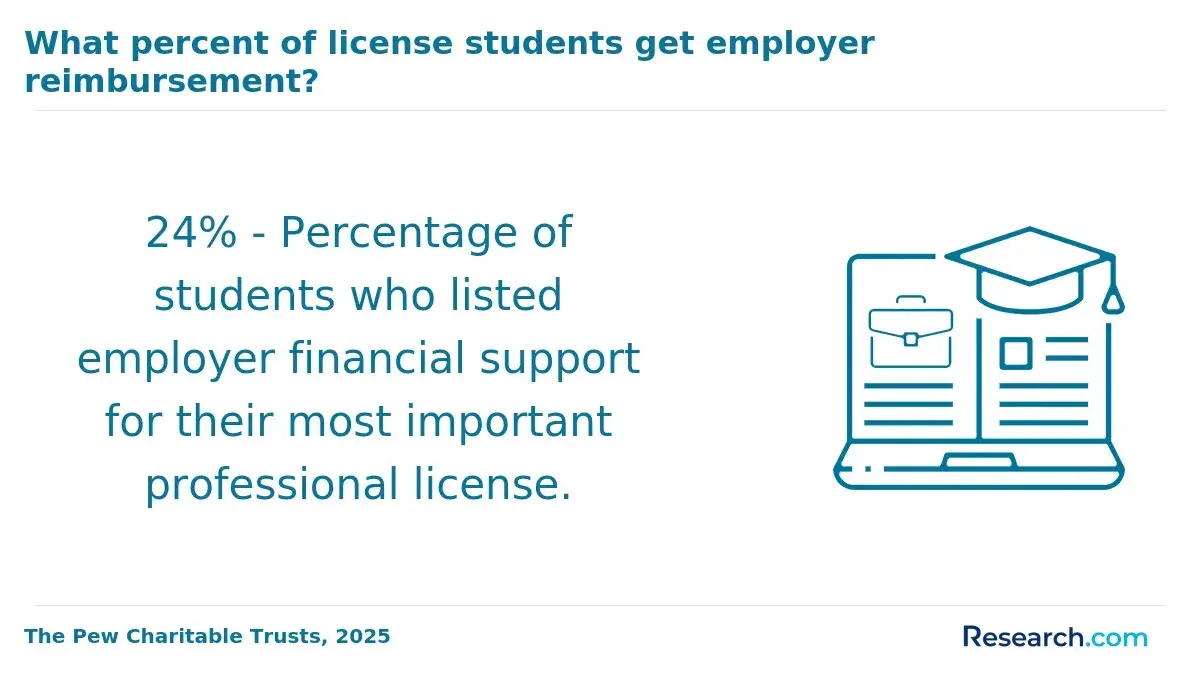
Without deliberate planning to manage workload alongside job and family responsibilities, students risk higher dropout rates. Tools such as clear goal articulation and employer-supported education improve completion odds and better align study timelines with real-world demands.
What careers can an online legal studies degree support, and what are the salary expectations?
An online legal studies degree typically positions graduates for entry-level roles like paralegal, legal assistant, compliance analyst, or court clerk, with salaries generally ranging from $50,000 to $65,000. While these roles offer a practical pathway for working adults seeking to enter legal-related fields without committing to law school's time and cost, the degree's value often depends on subsequent credentials or certifications, especially in corporate environments that increasingly demand paralegal-specific qualifications.
Consider a working adult who uses their online degree to secure a paralegal role in state government earning approximately $58,000. This scenario illustrates a strategic balance: maintaining income while gaining relevant experience that can support law school applications, which expand career options significantly. Completion of law school elevates potential earnings, with lawyers reporting median wages near $144,230, according to the U.S. Bureau of Labor Statistics.
The legal studies degree thus functions both as a standalone credential for foundational legal work and as a stepping-stone for ambitious professionals targeting advanced careers such as judges or higher-level compliance officers. Tradeoffs frequently involve managing work-study commitments and aligning with diverse employer expectations. Ultimately, the decision to treat the online legal studies degree as terminal or preparatory hinges on long-term career goals and willingness to navigate these operational challenges.
How does an online legal studies degree prepare adults for certifications or advanced legal education?
Choosing an online legal studies degree requires careful alignment of program content with specific career objectives and certification requirements. Returning adults pivoting toward paralegal roles or compliance positions benefit most when curricula prioritize regulatory frameworks, contract law, and exam-ready competencies. For example, professionals entering finance or healthcare compliance often find certification-backed coursework critical to employer recognition and job readiness.
The U.S. Bureau of Labor Statistics forecasts approximately 62,400 new legal jobs from 2022 to 2032, driven by growing regulatory complexity across sectors. However, this growth demands not only knowledge acquisition but disciplined time management to balance study, exam preparation, and existing commitments. Online formats provide access to virtual resources and study groups but require self-motivation to leverage them effectively.
Key considerations include:
- Verifying that curricula satisfy paralegal certification prerequisites or provide adequate LSAT preparation if law school is planned
- Evaluating program advisory support and opportunities for internships or externships, which improve credentialing success and marketability
- Understanding that misaligned credentials risk wasted time and expense without advancing target career paths
Programs meeting these criteria better position students for the practical challenges of credentialing exams and entry-level legal occupations, yielding stronger long-term ROI amid a competitive employment landscape.
Other Things You Should Know About Legal Studies
Returning adults often face substantial time management challenges in online legal studies due to the program's rigorous reading load and complex case analysis assignments. Unlike some other fields, legal studies demand consistent engagement with dense materials and critical thinking, leaving less room for procrastination. Programs that provide structured weekly deadlines and accessible instructor support better accommodate working adults balancing job and family. Prioritizing programs with asynchronous elements combined with regular check-ins helps maintain steady progress and reduces the risk of falling behind.
Employer recognition varies widely depending on the reputation of the granting institution, the accreditation status, and the program's practical focus. Many employers in the legal support sector emphasize skills and experience over degree modality but prefer candidates from regionally accredited schools. Returning adults should target programs with clear articulation pathways to advanced certifications or paralegal credentials, as this alignment boosts credibility. Avoid purely online credentials from less recognized providers, as these often face skepticism or limited advancement opportunities.
Many online legal studies programs accept up to 60 transfer credits from regionally accredited colleges. Schools usually require a minimum 2.0 GPA for transfer work, and some cap how old those credits can be, often at 5 to 10 years for technical or law-related courses.
References
- Career Guides https://onlinemasteroflegalstudies.com/career-guides/
- Best Online Master of Studies in Law Programs for 2025 https://www.princetonreview.com/law-school-rankings/best-online-master-studies-in-law-programs
- Studying Online vs On-Campus: Which Is Better for You? | UNF https://www.unfc.ca/blog/studying-online-vs-on-campus-which-is-better-for-you
- Types of Law - 21 Fields of Law Explained | Different Areas of Law https://www.collegesoflaw.edu/blog/2018/11/06/different-fields-of-law-explained/
- Are Online Degrees Accredited? How to Identify Quality Distance Learning Programs https://www.umassglobal.edu/blog-news/online-degrees-accredited-identify-quality-distance-learning-programs
- Top Online Pre-Law and Legal Studies Degrees and Certificates https://www.lawyeredu.org/online-degrees/
- Navigating the Legal Landscape: Online Legal Studies Programs for Every Ambition https://www.paralegalinst.com/online-legal-studies-program-complete-guide
- Paralegal vs. Lawyer: Legal Studies & Programs Explained https://www.allcriminaljusticeschools.com/blog/paralegal-vs-legal-studies/
- [PDF] Law School Assessment in the Context of Accreditation https://jle.aals.org/cgi/viewcontent.cgi
- How Long Does It Take to Get a Law Degree Online? - St Francis School of Law https://stfrancislaw.com/blog/how-long-does-it-take-to-get-a-law-degree-online/