2027 Legal Studies Salary Guide

Co-Founder and Chief Data Scientist
Determining the true earning potential in legal studies programs often challenges prospective students and working professionals balancing education with career advancement. As of 2024, nearly 40% of adult learners pursuing part-time or online legal studies degrees indicates shifting enrollment patterns driven by the need for flexibility and wage growth, according to the National Center for Education Statistics.
This trend underscores the importance of understanding how varied program formats, credentials, and employment sectors influence salary outcomes in a rapidly evolving job market. This article analyzes detailed salary data across roles and educational pathways, empowering readers to make informed investment decisions aligned with realistic career goals.
Key Things You Should Know
- Median salaries for legal studies graduates stagnate near $52K despite a 7% job growth forecast through 2032 from the U.S. Bureau of Labor Statistics, signaling wage compression amid growing candidate supply.
- Employers increasingly require certifications beyond a bachelor's, with 62% of entry-level hires demanding paralegal or compliance credentials per the National Association of Legal Assistants, creating credential inflation that impacts hiring timelines.
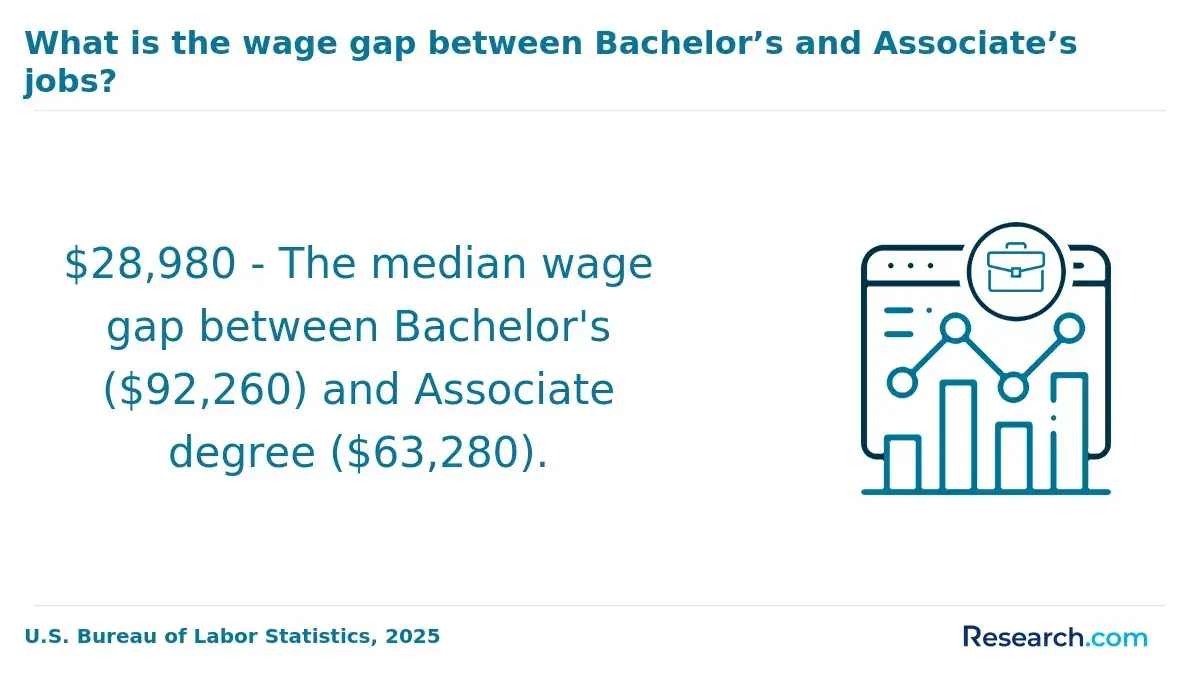
- Associate degrees deliver entry access costs averaging $8,000 less and 50% faster workforce entry than bachelor's pathways, but limit upward mobility and earning potential, compelling tradeoffs between short-term affordability and long-term career growth.
What does a legal studies degree cover, and how is it different from law school?
A legal studies degree curriculum compared to law school fundamentally shifts focus from professional qualification to foundational knowledge and applied support roles within the legal ecosystem. Legal studies prioritize understanding constitutional law, criminal justice, and civil procedures with an emphasis on critical analysis of legal issues through social, political, and ethical lenses. This creates pathways suited for compliance officers, paralegals, or policy analysts rather than licensed attorneys.
Graduates from legal studies programs typically enter government agencies or legal support positions without courtroom authority. In contrast, law school is a demanding professional graduate program designed to prepare students for the bar exam, enabling practice as a fully licensed lawyer. This distinction directly impacts hiring prospects and career growth, with the Bureau of Labor Statistics projecting about 31,500 annual openings for lawyers through 2034, reflecting steady demand for bar-qualified practitioners.
Legal studies students should weigh the accelerated entry and lower cost against limited upward mobility in legal practice. Employer preferences increasingly favor certificates and specialized skills beyond the undergraduate legal studies degree to remain competitive. For those assessing differences between legal studies programs and law school, career objectives relative to licensing requirements and practical skillsets are critical filters.
For prospective students seeking practical, cost-efficient programs, exploring the most affordable online general studies degree programs can provide relevant, accessible options aligned with legal studies interests.
What are typical salary ranges for legal studies majors in common entry-level jobs?
Entry-level legal studies graduates in the United States typically start with salaries ranging from $42,000 to $60,000 annually, shaped by job role, sector, and region. For example, legal assistants and paralegals often begin around $45,000, increasing to about $58,000 within a few years, while compliance analysts-especially in financial industries-may reach $62,000 due to market demand. These typical salary ranges for legal studies graduates in the United States highlight an important tradeoff: private sector roles tend to offer higher starting pay than government positions but often come with less stability.
Geographic differences also influence entry-level legal studies job salaries by region. Metropolitan centers like New York and Washington, D.C. adjust pay upward by 15-20% to offset higher living costs, while rural and smaller markets yield lower starting figures. Another critical factor is credentialing; candidates with certifications such as Certified Paralegal are usually compensated more competitively compared to those with just a degree.
Since salaries rarely surpass $60,000 immediately, strategic planning for certification or specialization within three years is essential to exceed the national average. Aligning employment with sectors experiencing regulatory growth can accelerate salary gains. For those considering specialized paths, exploring forensic career paths may offer alternative trajectories with distinct market dynamics and earning potential.
Which legal studies careers offer the highest earning potential over time?
Highest salary growth within legal studies careers disproportionately favors those who pursue specialization, with corporate law, intellectual property law, and compliance management roles dominating wage gains. Positions like merger and acquisition attorneys regularly surpass median salaries of $150,000 after five to seven years, a reality shaped by sustained demand for expertise in complex transaction law. This dynamic applies to legal studies careers with the highest salary growth, where hybrid roles embedding legal insight in regulated sectors such as financial services also command salaries north of $130,000, contingent on additional certifications and sector-specific knowledge.
By contrast, candidates who remain in generalized legal roles or administrative capacities often contend with median earnings between $50,000 and $70,000, reflecting slower upward mobility. Employers explicitly seek domain expertise that ties legal skill sets to measurable business outcomes, a tradeoff that graduates must weigh carefully when selecting paths.
For professionals targeting top-paying legal studies jobs in the United States, concentrations advising technology or pharmaceutical firms on intellectual property issues show particularly strong salary ceilings, frequently ranging from $140,000 to $160,000 in metropolitan markets. These roles emphasize portfolios of patents as critical assets, adding layers of complexity and demand for specialized knowledge.
Understanding these distinctions informs realistic expectations and strategic credentialing. As the legal landscape integrates more technology, cross-disciplinary skills are increasingly pivotal. Prospective students weighing options may find practical value in exploring options like a bachelor's in criminal justice for foundational knowledge, while being mindful that specialized credentials accelerate access to higher salary brackets.
What degrees and credentials do you need for legal studies-related careers?
Most entry-level positions within legal fields require a bachelor's degree in legal studies or closely related disciplines such as political science or criminal justice. Beyond foundational knowledge, employers increasingly prioritize candidates holding specialized certifications or associate degrees that provide targeted skills in legal software, document handling, and court procedures. For example, aspiring paralegals with a Certified Paralegal credential are more competitive but still face limitations without a broader degree. Those seeking attorney roles must obtain a Juris Doctor (JD) and pass the state bar, a demanding three-year investment that significantly raises earning potential, as evidenced by an average base salary of $102,100 reported in the 2025 Australian Legal Salary Survey influencing U.S. markets.
Strategically, candidates should weigh the tradeoffs between program length, cost, and career outcomes: certificates and associate degrees offer quicker workforce entry but restrict upward mobility, while a JD unlocks full licensure and higher compensation but requires substantial time and tuition commitments. Working professionals pivoting careers may explore part-time or online legal studies programs offering flexibility and employer recognition, similar to how some choose from fast-paced options like online architecture programs.
Employers value candidates who augment academic credentials with practical experience such as internships or legal clinics, signaling readiness beyond theoretical understanding. Navigating degrees required for legal studies careers and certifications and credentials for legal studies jobs entails aligning educational choices with realistic labor market demands and personal circumstances.
How do online legal studies programs compare to campus options for cost and outcomes?
Online legal studies programs often present a lower upfront cost but come with significant constraints that affect employability and wage potential compared to traditional campus-based law degrees. Texas Law's Class of 2025 reports a median salary of $123,963 for graduates employed full time in long-term roles, a figure tied to education emphasizing in-person networking, internships, and career services-elements largely missing from online formats.
For professionals shifting careers or unable to relocate, online legal studies offer flexible scheduling and cost savings but trade off critical employer-preferred credentials and connections. Hiring managers for bar-required legal roles or elite firms typically prioritize graduates with traditional law school credentials. Likewise, advancement in public sector or corporate legal departments often hinges on reputation and alumni networks absent in many online tracks.
- Job opportunities for online grads cluster in compliance, paralegal, or contract management, with median salaries 20-40% below traditional law degree holders, according to workforce data.
- The lack of experiential learning and on-site access to legal markets limits competitive positioning for licensed attorney roles.
Decision-making should reflect these workforce realities: candidates pursuing high-earning licensed attorney positions need traditional campuses, despite cost and disruption. Conversely, those targeting moderate-salary legal support roles may find online programs a financially pragmatic option, provided they weigh transparent salary and employment outcomes carefully.

What courses and skills are taught in accredited legal studies programs?
Legal studies programs accredited by recognized bodies focus on imparting foundational knowledge paired with practical skills that align closely with employer expectations. Core coursework covers civil procedure, contract and criminal law, constitutional matters, and legal research techniques. Graduates develop an essential framework for understanding courtroom operations and the analytical rigor needed to draft legal documents such as briefs, memoranda, and contracts.
These programs prioritize skill development beyond theory, emphasizing critical thinking, oral advocacy, negotiation, and ethics-competencies indispensable in roles ranging from paralegals to litigation support. For example, healthcare law paralegals must navigate regulatory complexities while maintaining confidentiality and precise case management. Such real-world application requires more than academic knowledge; it demands consistent accuracy and adaptability.
Proficiency with legal technology-including research databases, case management software, and e-discovery tools-is increasingly non-negotiable. Candidates lacking these skills risk diminished hiring prospects in competitive corporate counsel or litigation environments where efficiency and precision are critical.
Considering the American Bar Association's data indicating a 19.2% wage increase for lawyers between 2021 and 2023, prospective students should weigh program outcomes like employer connections and practical internships over prestige alone. The legal studies pathway offers distinct advantages but also requires clear-eyed assessment of specialization options, market demand, and skill acquisition for meaningful workforce entry and advancement.
How long does it take to complete a legal studies degree, and what does it cost?
Completing a legal studies degree requires a significant financial and time investment, with full-time undergraduate programs generally spanning four years. Public universities charge between $9,000 and $25,000 annually for in-state students, while private institutions often exceed $40,000 per year. Additional costs such as textbooks, fees, and living expenses can add upwards of $5,000 annually, pushing total expenditures higher. Part-time enrollment extends completion to six years or more, increasing opportunity costs and delaying entry into legal careers.
For working professionals, online and hybrid options offer scheduling flexibility but frequently come with higher tuition rates, challenging the balance between education affordability and career advancement speed.
Students targeting roles like legal assistant, paralegal, or compliance specialist must weigh the practical experience valued by many employers against the time and money needed to complete the degree. Delays in finishing studies not only inflate debt but can also reduce cumulative earnings over time.
Financial aid, scholarships, and employer tuition assistance can mitigate upfront costs but require careful planning aligned with eligibility. Loan burdens should be assessed relative to potential earnings, which vary widely by sector. For instance, Texas Law's Class of 2025 data shows public defenders earning a mean salary of $78,807-well below the school's median of $123,963-illustrating how governmental or nonprofit employment may offer lower returns on educational investment compared to private sector opportunities.
How can you verify that a legal studies program is properly accredited and respected?
Accreditation status profoundly impacts employability and earning potential for legal studies graduates. A program recognized by the U.S. Department of Education or the Council for Higher Education Accreditation signals external validation, often required by employers and graduate schools. Specialized recognition from the American Bar Association or state bar associations further ensures a curriculum aligned with professional legal standards, critical for roles like paralegals or compliance officers.
Prospective students should assess transparency in outcomes data such as graduation rates, bar passage rates when applicable, and employment placement. For example, programs reporting that 60% of graduates secure relevant jobs within six months provide a tangible gauge of market value, unlike those omitting such metrics. This clarity assists navigation of legal salary distribution, where approximately half of earnings lie between $55,000 and $100,000 according to National Association for Law Placement data.
Many employers favor candidates with documented practicum or internship experience from accredited programs. Choosing non-accredited options often results in restricted job prospects and lower compensation due to questions about curriculum rigor and practical readiness. Beyond accreditation, alignment with state or industry professional standards matters significantly; programs lacking this may leave graduates underprepared for the complexities of real legal environments, undermining career competitiveness.
Verification through official accreditation databases or regulatory bodies, rather than institutional claims, is essential. Legal studies education must therefore be evaluated not only on credentials but also on measurable outcomes and relevance to legal workforce demands.
What is the job outlook for legal studies graduates in the U.S. labor market?
The labor market for legal studies graduates in 2026 exhibits modest growth concentrated in specialized sectors like corporate compliance and regulatory affairs. While the Bureau of Labor Statistics projects a 5% growth in related legal support roles, practical hiring often hinges on additional certifications and targeted expertise, such as Certified Regulatory Compliance Manager (CRCM) credentials for finance or healthcare compliance positions.
Graduates entering roles as paralegals or legal assistants should expect salary caps significantly below licensed attorneys; the top 10% of lawyers earn above $239,200, exposing a stark income gap and increased competition for advanced legal roles. Employers emphasize skills in legal research, document management, and industry-specific regulations rather than general legal knowledge alone.
Realistically, entry-level opportunities are more accessible in government agencies and smaller law firms, but sustainable advancement demands continuous professional development and often supplementary legal qualifications. This poses a strategic tradeoff: legal studies provide a flexible foundation but rarely grant direct access to high-earning positions without further credentialing or specialization.
- Growth areas include corporate, compliance, and regulatory sectors with robust certification requirements.
- Legal studies graduates face a lower earnings ceiling compared to licensed lawyers.
- Success depends on acquiring niche skills aligned with employer expectations.
- Entry-level roles are prevalent but upward mobility is limited without additional qualifications.
How do you choose a reputable legal studies school that aligns with your career goals?
Choosing a legal studies program demands scrutiny beyond accreditation and curriculum. Graduates seeking roles in corporate legal support, for example, should prioritize schools emphasizing contract law, compliance, and business litigation, paired with internships in relevant industries. Conversely, aspiring criminal justice assistants benefit from programs focused on trial procedures, evidence, and partnerships with law enforcement, ensuring alignment with job realities.
Flexible formats like online or evening classes suit working professionals pivoting careers but require verification that instructional quality remains consistent to avoid diminished employability. Additionally, programs collaborating with local courts, law firms, or government agencies provide critical experiential learning, mentorship, and networking-elements often underrepresented but vital for workforce integration.
Employment outcomes matter-average starting salaries between $60,500 and $69,200 for graduate lawyers, as documented in Prosple's Australian graduate salary report, serve as a practical benchmark. While international, these figures hint at market valuation standards paralleling those in U.S. settings, emphasizing the importance of tangible job placement and salary transparency over institutional prestige.
Faculty expertise rooted in active legal practice rather than purely academic backgrounds significantly impacts the currency of instruction. Prospective students should also investigate licensure pathways and certifications, which vary widely and influence career mobility.
- Verify regional accreditation recognized by the U.S. Department of Education.
- Evaluate graduate employment rates and salary data to estimate return on investment.
- Assess program alignment with specific legal career paths and local industry connections.
- Balance education cost and duration against realistic timelines and financial capacity.
Other Things You Should Know About Legal Studies
Yes, practical experience such as internships, externships, or clinic work is crucial for standing out in the legal studies job market. Employers prioritize candidates who demonstrate applied skills over purely theoretical knowledge. Programs lacking structured experiential learning can limit your ability to navigate real-world legal environments, which often delays career advancement. Prioritize programs with strong partnerships offering hands-on placements to maximize your employability.
A broad curriculum offers versatility, which benefits graduates in uncertain job markets or when career goals evolve. However, specialization in areas like compliance, forensics, or paralegal studies enhances expertise and can access niche roles with higher earning potential. Choose specialization only if you have a clear career path; otherwise, a broad foundation allows adaptability and easier transitions across roles within legal settings.
Employers expect legal studies graduates to manage substantial administrative workloads alongside analytical tasks, stressing attention to detail, research skills, and technological proficiency. Candidates who only focus on academic theory without developing time management and software skills face slower integration. It's critical to gain competency in legal technology platforms and multitasking to meet employer demands effectively from day one.
In 2027, the average salary for graduates with a Bachelor's degree in Legal Studies is approximately $57,000 annually. Those with advanced degrees, such as a Master's, can expect to earn around $74,000 annually. Salaries may vary by geographical location, industry, and specific job role.
References
- Best Online Master of Studies in Law Programs for 2025 https://www.princetonreview.com/law-school-rankings/best-online-master-studies-in-law-programs
- 5 Highest Paid Types of Lawyers | What Lawyers Make the Most Money? https://www.collegesoflaw.edu/blog/2024/02/19/lawyer-types-highest-paid-career-paths/
- How Long Does It Take to Become a Lawyer in California? https://www.purduegloballawschool.edu/blog/law-student-life/how-long-law-school-california
- Accredited Programs https://onlinemasteroflegalstudies.com/mls-degrees/accredited/
- The Best Law School for You https://www.lsac.org/choosing-law-school/best-law-school-you
- 10 jobs you can do with a law degree https://www.lawsociety.com.au/resources/resources/career-hub/10-jobs-you-can-do-law-degree
- The Importance of Accreditation https://paralegal.edu/blog/the-importance-of-accreditation/
- Careers in Law - OJEN https://ojen.ca/en/youth-corner/careers-in-law/
- Recruitment https://www.nalp.org/search
- Paralegal vs. Lawyer: Legal Studies & Programs Explained https://www.allcriminaljusticeschools.com/blog/paralegal-vs-legal-studies/