2027 Online Homeland Security Degrees With Scholarships for Adult Learners

Co-Founder and Chief Data Scientist
When a seasoned professional working full-time in emergency management decides to pursue career advancement, rigid class schedules and geographic constraints often make traditional programs infeasible. This is a critical barrier, especially as the Department of Homeland Security projects a 6% increase in relevant job openings through the mid-2020s, emphasizing the need for skilled candidates who cannot afford to pause their careers.
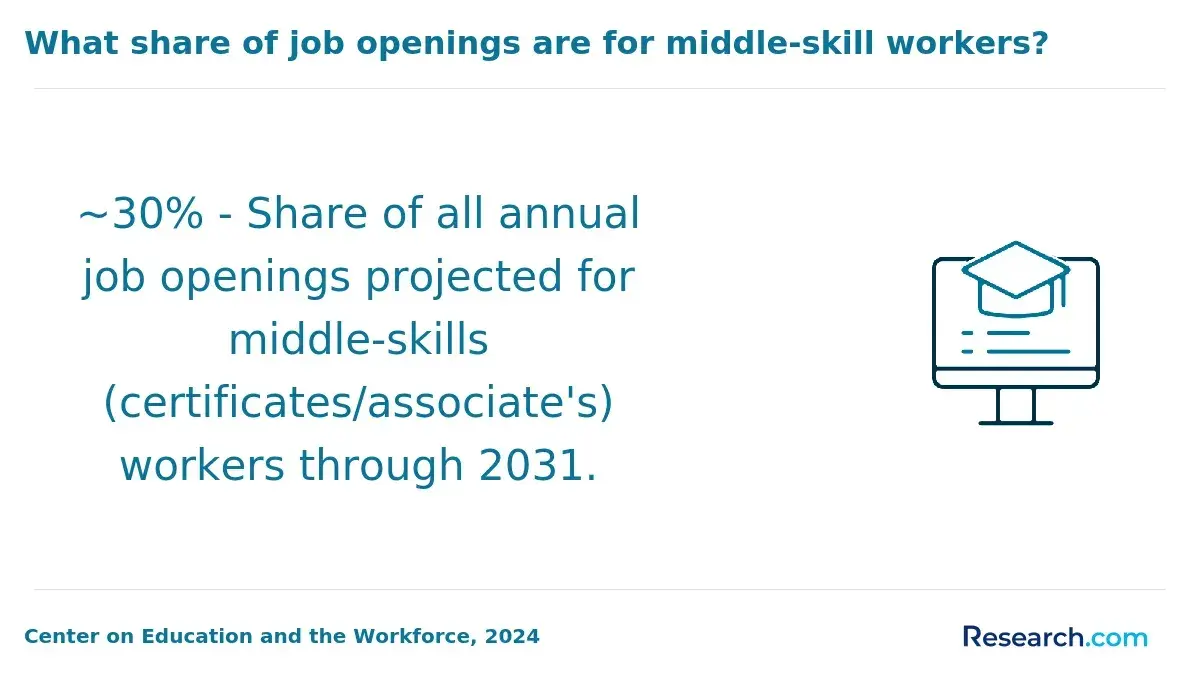
Meanwhile, the National Center for Education Statistics indicates that over 40% of postsecondary students are adults balancing work and family, driving demand for flexible online degree options that accommodate nontraditional schedules without sacrificing rigor or workforce alignment.
This article examines accessible online homeland security degrees with scholarship opportunities tailored to adult learners, providing a roadmap to merge career aspirations with practical study pathways.
Key Things You Should Know
- Online homeland security degrees average $18,000 annually, with scholarships covering up to 60% for adult learners; however, delayed program completion correlates with 15% higher total debt, affecting long-term financial outcomes.
- Employers prioritize candidates with federal certifications integrated into curricula, raising job placement rates by 22% but narrowing options to programs aligned with DHS standards and limiting interdisciplinary exposure.
- Workforce demand for cybersecurity and emergency management skills grows 12% annually, pressuring adult learners to balance intensive coursework with employment, increasing dropout risk by 8% in programs lacking employer partnerships.
What is an online homeland security degree and how does it prepare adult learners?
An online homeland security degree programs for adult learners deliver specialized competencies directly applicable to risk assessment, emergency management, cybersecurity, and counterterrorism. These programs emphasize skills such as incident response coordination and intelligence analysis, aligning graduate capabilities with employer expectations in both public agencies and private critical infrastructure firms.
Flexibility through asynchronous coursework enables adults to maintain professional roles while acquiring relevant knowledge, reflecting a shift where 54% of U.S. undergraduate online students are 25 or older. This model supports career pivots without geographic or scheduling constraints, especially vital in a field evolving toward integrated government standards and technology adoption.
Consider a mid-career cybersecurity analyst who uses an online homeland security degree to transition into federal emergency management. This pathway broadens expertise in multi-jurisdictional coordination and federal grant management, areas typically absent from pure IT credentials. Similarly, first responders seeking deeper threat mitigation and policy skills can advance without disrupting their current roles.
Adult learners must evaluate limited hands-on lab availability inherent in online formats. Hybrid options or local agency partnerships often fill this gap, critical since employers prioritize credentials evidencing both theoretical and applied homeland security frameworks compliant with Department of Homeland Security guidelines.
This degree also cultivates critical thinking, communication, and crisis leadership-skills essential for supervisory and interdisciplinary roles, contrasting with entry-level positions where direct field experience dominates. For those comparing related fields, reviewing broader program affordability can be aided by exploring the criminal justice major options, which sometimes overlap in curriculum and career trajectories.
How do online homeland security programs compare to campus-based options for flexibility and outcomes?
Online homeland security degree flexibility comparison boils down to balancing career demands against educational logistics. Online programs accommodate working professionals by allowing coursework around job shifts and family responsibilities, an advantage not afforded by campus-based schedules requiring physical presence.
For example, a fire service professional advancing into emergency management can continue shift work while meeting online deadlines, whereas traditional students often sacrifice internships or employment opportunities due to campus attendance.
Employers place greater emphasis on skill demonstration and degree completion rather than the mode of delivery, consistent with Bureau of Labor Statistics data projecting 9% employment growth for emergency management directors through 2032. However, online delivery can limit real-time peer collaboration vital for crisis simulations or interagency coordination, though many accredited programs offset this with synchronous sessions and scenario-based exercises.
Data comparing campus vs online homeland security program outcomes suggest similar or slightly better graduation and job placement rates among online graduates when programs are accredited and learners actively engage virtual career resources. Students must weigh the tradeoffs of less direct faculty access against flexibility and confirm employer recognition of online credentials to ensure alignment with targeted career goals.
Those exploring web-based pathways should consider resources like the best military friendly online cybersecurity degrees to understand sector-specific options and veteran support within related fields.
Which accredited U.S. colleges offer online homeland security degrees with scholarships for adults?
Choosing an online homeland security degree involves weighing critical workforce realities, especially for adult learners balancing full-time jobs. Accredited U.S. colleges offering online homeland security degrees with scholarships for adult learners help mitigate financial and scheduling barriers.
For example, Arizona State University's merit scholarships and military grants reduce tuition costs substantially, while the University of Maryland Global Campus provides institutional awards targeting cybersecurity and homeland security fields, acknowledging their increasing demand in federal protective services.
Adult students must consider credit transfer policies and employer tuition reimbursement to avoid costly delays or lost credits. Programs designed for asynchronous study support working professionals aiming to pivot or advance in protective service roles. This is particularly consequential given federal median wages in protective roles of $74,370, significantly exceeding the national median of $48,060, underscoring the financial rationale behind investing in relevant education.
Key factors include early scholarship application deadlines and program accreditation by agencies like FEMA or the Department of Homeland Security to ensure alignment with federal hiring standards. Prioritizing these minimizes risk and maximizes return on educational investment.
Those researching options should also examine diverse pathways beyond conventional routes, such as programs tailored for unique demographics or challenging backgrounds. Resources listing the online degrees for felons provide insights into alternative entry points for homeland security careers.
The best online homeland security degree programs with scholarship opportunities for adults in the U.S. do not simply offer convenience; they are strategic gatekeepers to stable, higher-wage federal employment.
What admission requirements and prior experience do online homeland security degrees typically expect?
Admission criteria for online homeland security degree programs frequently prioritize applicants' prior professional experience, recognizing its direct impact on academic progression and workforce readiness. For working adults, programs that acknowledge military service or law enforcement backgrounds often reduce redundant coursework and minimize credit requirements, accelerating degree completion.
This practical credit recognition is a vital factor in controlling education costs given tuition rates ranging between $480 and $600 per credit hour, resulting in total expenses of $57,600 to $72,000 for a 120-credit bachelor's degree.
Standardized test requirements such as SAT or ACT scores remain common, but many institutions waive these for adult learners with relevant work history. Due to the sensitive nature of homeland security, background checks or security clearances are typically mandatory, especially when internships involve government agencies or classified information. Additional admissions materials like letters of recommendation and personal statements help evaluate a candidate's suitability for specialized, professionally aligned curricula.
Aligning with specific online homeland security degree admission criteria that credit prior experience significantly improves the likelihood of on-time graduation and streamlines entry into the workforce. Failing to leverage these professional experience requirements for homeland security programs can lead to unnecessary repetition and extended timelines, affecting employability and financial investment.
Prospective students considering a strategic career pivot may also benefit from exploring related offerings, such as a Spanish degree online, which can complement homeland security roles requiring bilingual skills.
How long do online homeland security degrees take, and what do they cost?
Pursuing an online homeland security degree requires careful consideration of time investment and workforce timing, as agencies often prioritize candidates who complete their studies within expected durations.
Associate degrees typically span around two years full-time, while bachelor's programs require four years; however, part-time students, commonly working professionals, may extend this timeline to five or six years, which can impact hiring eligibility or promotion within federal and state homeland security agencies.
Master's degrees generally last 18 to 24 months when pursued full-time but can exceed three years if balanced with employment. Choosing accelerated or competency-based formats can reduce completion time but demands significant discipline and upfront effort, posing tradeoffs between speed and manageability.
Cost considerations vary widely. Public state universities usually charge between $6,000 and $15,000 annually for in-state undergraduates, whereas private institutions may cost $20,000 to $40,000 per year. Graduate tuition ranges from $15,000 to $30,000 yearly. Beyond tuition, students should budget for technology fees, textbooks, and possible lost wages due to reduced work hours during demanding study periods.
Leveraging over 30 homeland security-specific scholarships and grants offering $1,000 to $5,000 awards can meaningfully offset expenses for adult learners balancing work and study, according to PublicServiceDegrees data.
What core courses and specializations are included in most online homeland security curricula?
Students pursuing an online homeland security degree must navigate specialization choices that significantly influence their professional trajectory and employability. Core coursework typically covers threat analysis, emergency management, intelligence methods, and cybersecurity foundations, providing a comprehensive base applicable across public and private sectors.
Specializations translate these foundations into targeted skills relevant to distinct workforce needs. For example, cybersecurity tracks develop expertise in advanced network defense and digital forensics tailored to industries like healthcare or finance, where sector-specific threats predominate.
Conversely, disaster resilience prepares graduates for orchestrating complex emergency responses in urban public safety agencies or nonprofit relief organizations. This differentiation impacts job placement and daily responsibilities post-graduation.
Enrollment data from Penn State World Campus indicates over half of homeland security master's students prefer online formats, driven by the need to balance study with employment.
However, the hands-on elements, simulations, case studies, and capstone projects, remain critical to meeting employer expectations for applied competencies. Prospective students must therefore consider program designs that emphasize practical exercises over purely theoretical content to align with real-world demands.
Deciding between a cybersecurity or emergency management focus involves evaluating desired employer sectors and operational roles. While federal agencies may value broad-based skills, private sector IT security roles require deeper technical prowess. Preparing effectively means assessing these tradeoffs before committing to a program.
What careers can graduates of online homeland security programs pursue in government and industry?
Employment outcomes for graduates of online homeland security programs hinge on the ability to integrate technical expertise with regulatory and operational demands. Federal roles in agencies like the Department of Homeland Security, FBI, TSA, and FEMA require skills in threat assessment, cybersecurity coordination, and emergency management, often under high-pressure conditions.
For instance, a border security officer must balance real-time intelligence analysis with interagency communication protocols, a complexity that academic credentials alone cannot guarantee.
Private sector positions emphasize risk mitigation tied to critical infrastructure and compliance, such as security analysts in transportation companies who navigate both physical and cyber risk frameworks. These environments reward candidates who combine practical skills with certifications beyond degrees.
More than 70% of students in advanced online homeland security masters and certificate programs maintain full-time employment during study, illustrating how adult learners blend ongoing professional roles with upskilling. However, balancing demanding coursework alongside work responsibilities introduces notable friction.
Prospective students should critically evaluate program accreditation, faculty expertise, and curriculum currency relative to evolving threats such as cyber warfare and biosecurity. Obtaining federal roles often requires security clearances and relevant experience, whereas private sector employment may prioritize specialized certifications and operational know-how.
What are typical homeland security salaries and job outlook for degree-holders in the U.S.?
Salary outcomes for degree-holders in homeland security vary widely based on experience, sector, and role, with entry-level salaries near $65,000 and senior specialist roles exceeding $105,000 annually. Federal positions frequently require security clearances, demanding stable employment histories and background checks, while private sector employers prioritize certifications and technical competencies alongside degrees.
Accelerated or part-time master's programs that offer condensed 8-week courses enable working professionals to finish degrees in under two years without pausing their careers, a significant advantage reported by more than 40% of students at Fairleigh Dickinson University in 2024. This approach reduces opportunity costs but requires managing higher workload intensity to avoid burnout.
Aligning education timing with market demand is critical. Faster degree completion may improve competitiveness by shortening the time-to-degree, yet adult learners must balance program rigor with job responsibilities to maintain stability during transition phases.
Employment in homeland security is projected to grow 13% by 2032, driven by priorities like cybersecurity and disaster response.
Prospective students should weigh:
- Benefits of practical experience combined with relevant credentials
- Tradeoffs between accelerated study and workload pressure
- Sector-specific requirements such as clearance eligibility
- Value of program flexibility in maintaining career momentum
What certifications, clearances, or professional standards relate to homeland security careers?
Obtaining security clearances remains a pivotal bottleneck for homeland security professionals, often overshadowing educational credentials in its impact on employability and job start timing.
Clearances, from Confidential to Top Secret with Sensitive Compartmented Information (TS/SCI), demand extensive background checks and can extend over 3 to 12 months, affecting roles tied to classified intelligence or federal collaboration. This process is both costly and time-consuming, making pre-clearance certifications a strategic asset, especially for professionals shifting from the private sector.
Key certifications include the:
- Certified Homeland Protection Professional: CHPP validates expertise in risk assessment and counterterrorism, strengthening eligibility for promotion in public agencies and some private companies.
- Certified Emergency Manager: CEM certifies essential disaster management skills for emergency planners and responders.
- Certified Information Systems Security Professional: CISSP is critical for cybersecurity roles safeguarding critical infrastructure, often paired with TS/SCI clearance initiation to increase candidate desirability.
For mid-career professionals without prior government roles, acquiring these certifications before pursuing clearances can reduce onboarding delays and signal readiness for sensitive missions. Employers prioritize candidates demonstrating these standards due to clearance cost and mission sensitivity.
Military-affiliated students accessing discounted tuition rates, such as $375 per credit hour versus standard $610-$675 rates at certain institutions, gain financial leverage to pursue advanced credentials essential for higher-level positions requiring clearances. This cost differential can substantially influence both access and persistence in doctoral-level studies focused on homeland security.
Realistic planning must integrate multi-stage credentialing, balancing swift certification acquisition with the protracted clearance timeline to optimize career trajectory and salary potential in homeland security sectors.
How can adult learners evaluate and choose a reputable online homeland security program?
Evaluating online homeland security programs requires prioritizing accreditation, curriculum relevance, and quantifiable outcomes like graduation and job placement rates. Accreditation confirms a program meets both academic and industry standards, a non-negotiable criterion when employers scrutinize qualifications.
Tuition commonly ranges from $480 to $600 per credit. However, fees, transfer credit acceptance, and available scholarships often determine the true cost. For example, a veteran utilizing military credit can shorten study time and reduce expenses significantly, while civilian learners without transfer options may face longer timelines and higher costs.
Practical skill integration varies widely by program and should be assessed against the specific sector you target, such as federal agencies, emergency management, or private security. A federal law enforcement candidate, for instance, must verify coverage of federal threat assessment protocols, whereas risk management and compliance dominate the curriculum relevant to corporate security professionals.
Flexible scheduling and student support services, such as career counseling, veteran affairs advisors, and prior learning assessments, impact not only completion rates but real-world employment outcomes. As tuition rates converge, these qualitative aspects become decisive in balancing educational investment against post-completion career trajectories.
Other Things You Should Know About Homeland Security
Online homeland security degrees require consistent time management due to rigorous coursework that includes case studies, policy analysis, and sometimes group projects. Working adults often face weekly deadlines for reading, writing, and research assignments that cannot be postponed without affecting learning outcomes. Prioritizing programs with flexible asynchronous formats and clear pacing can reduce strain and improve completion rates for those balancing professional and personal responsibilities.
While scholarships reduce financial burden, programs offering significant aid may limit course selection or extend program duration to maintain funding. Adult learners should assess if scholarship criteria require maintaining a certain GPA or completing extra administrative processes that add to workload. Choosing a scholarship-backed program with a strong support network and manageable credit requirements is key to avoiding burnout and delays in career advancement.
Prior experience is not always mandatory but significantly improves employment and promotion prospects in homeland security roles. Programs that integrate advanced analytic methods, counterterrorism, or cyber security can compensate for limited field background if paired with internships or practical training modules. Adult learners without experience should prioritize programs with strong employer connections or practicum opportunities to build essential applied skills alongside their degree.
References
- Online Homeland Security Degrees: Explore Top Programs https://www.degreesforgood.org/online-degrees/homeland-security-programs/
- Bachelor of Science in Homeland Security https://www.trident.edu/bachelors-online/homeland-security-degree/
- 2025 Most Affordable Homeland Security Degrees Online https://www.onlineu.com/most-affordable-colleges/homeland-security-degrees
- Online Bachelor's Degree: Homeland Security https://www.umgc.edu/online-degrees/bachelors/homeland-security
- Homeland Security Degree Online | Find Top Programs & Information https://www.firescience.org/homeland-security-degree-programs-online/
- Search icon https://waldorf.edu/degree-programs/bachelors/ba-homeland-security/
- Types of Homeland Security Degrees | Compare Schools https://www.criminaljusticeprograms.com/specialty/homeland-security-degrees/
- Homeland Security Requirements (Degrees, Jobs & Salary) https://www.allcriminaljusticeschools.com/federal-law-enforcement/homeland-security