2027 College Application Guide for Career Changers

Co-Founder and Chief Data Scientist
Changing careers often means choosing a college program while balancing work, family, income risk, and long-term payoff. NCES data published in 2024 show that adults age 25 and older account for roughly one-third of U.S. undergraduate enrollment, so colleges increasingly serve learners with prior experience, transfer credits, and practical goals.
This guide is for mid-career professionals deciding whether to pursue a degree, certificate, or training pathway. You will learn how to compare programs, reduce cost, avoid weak options, and choose an education path that supports a realistic career move.
Key Things You Should Know
- Career changers should start with the target job, not the school: compare required credentials, licensure rules, employer preferences, and whether a certificate, bachelor's, master's, or doctoral route is truly necessary.
- College Board's 2024 pricing data show published tuition and fees ranging from about $4,050 at public two-year colleges to about $43,350 at private nonprofit four-year colleges, before aid, making total cost and time-to-completion central ROI factors.
- Recent BLS wage data show strong variation by field, with median pay above $100,000 in roles such as data science, software development, and health services management, but salaries depend on region, experience, prior skills, and credential fit.
How can a mid-career professional strategically plan a successful college application for a career change?
A successful college application for a career change begins with a career map. Instead of asking, "What program can I get into?" start with, "What role am I trying to enter, what credential does it require, and what proof of skill will employers or licensing boards expect?" This keeps you from overpaying for a credential that is too broad, too slow, or misaligned with the job you want.
Use the planning process below to convert a career idea into an application strategy. The goal is to create a short list of programs that match your timeline, budget, transfer credits, and employment target.
- Define one primary target role and one backup role so your application list is focused but not fragile.
- Review job postings in your region and note recurring degree requirements, tools, certifications, portfolio expectations, and experience levels.
- Separate nonnegotiable requirements from preferences; for example, nursing licensure requires an approved program, while many analytics roles may accept degrees in several quantitative fields.
- Audit your previous college credits, military training, employer training, certifications, and work experience for possible transfer or prior learning credit.
- Estimate the total cost of attendance, including fees, books, technology, travel, childcare, lost work hours, and required exam or licensure costs.
- Contact admissions, financial aid, academic advising, and career services before applying to test how responsive the school is to adult learners.
- Apply to a balanced mix of programs: one affordable option, one best-fit option, and one accelerated or flexible option if time is your biggest constraint.
Common mistakes include choosing a program because it sounds prestigious, applying before checking transfer credit policies, and assuming a degree alone will compensate for no relevant experience. A stronger approach is to build a "credential plus evidence" plan: coursework, projects, internships, supervised practice, certifications, and a clear career story in your application essay.
| Planning question | Why it matters for career changers | What to verify before applying |
| Does the target job require a specific credential? | Some fields require approved degrees or licensure, while others value skills and portfolios. | State board rules, job postings, certification requirements, and employer preferences. |
| Will previous credits transfer? | Transfer credits can shorten the timeline and reduce cost. | Official transfer evaluation, residency requirements, and expiration rules for science or technical courses. |
| Can the schedule fit your current life? | Adult learners often need evening, asynchronous, hybrid, or part-time options. | Class meeting times, clinical or internship schedules, exam proctoring, and attendance policies. |
| Does the school support career transition? | Career changers need more than classes; they need positioning, networks, and applied experience. | Career coaching, employer partnerships, internship access, alumni outcomes, and portfolio support. |
Which degrees, certificates, or training pathways best support a career change into a new field?
The best pathway depends on how far your current experience is from the new field. A former project manager moving into business analytics may need targeted technical training, while a retail manager pursuing nursing, teaching, or counseling may need a formal degree that meets state requirements. Career changers should compare speed, credibility, cost, and whether the credential creates access to the intended job.
Certificates are often useful when the new field rewards demonstrable skills and does not require a full degree for entry. If your goal is a faster pivot into technology, healthcare support, business operations, or skilled administrative roles, reviewing certificate programs that pay well can help you identify shorter pathways with labor-market relevance.
The table below compares common education pathways for adult career changers. Use it to decide whether you need a full degree, a bridge credential, or specialized training.
| Pathway | Typical fit | Strengths | Limitations |
| Undergraduate certificate | Adults testing a new field or adding technical skills | Shorter, focused, often stackable into a degree | May not qualify for roles requiring a degree or license |
| Associate degree | Career changers entering healthcare, IT, paralegal studies, or transfer pathways | Lower average tuition and practical coursework | Some advancement paths still require a bachelor's degree |
| Bachelor's degree completion | Adults with prior credits who need a four-year credential | Broad employer recognition and access to many graduate programs | Can take longer if few credits transfer |
| Post-baccalaureate certificate | Bachelor's degree holders entering a new technical or professional area | More advanced than undergraduate certificates without committing to a full master's | May not be enough for licensed professions |
| Master's degree | Professionals moving into leadership, analytics, education, counseling, public health, or specialized business roles | Can signal advanced expertise and support higher-level roles | Higher cost and opportunity cost if the field does not require it |
| Doctoral or professional degree | Career changers pursuing advanced clinical, academic, research, or executive roles | Necessary for some regulated or senior paths | Longer timeline, selective admissions, and significant cost |
As a rule, choose the shortest credible pathway that meets the job requirement. Choose a degree when the field requires it, when your current education blocks advancement, or when the program includes strong applied experience. Choose a certificate when you need targeted skills, want to test the field, or already hold a degree that employers respect.
How should adult career changers choose between online, hybrid, and campus-based college programs?
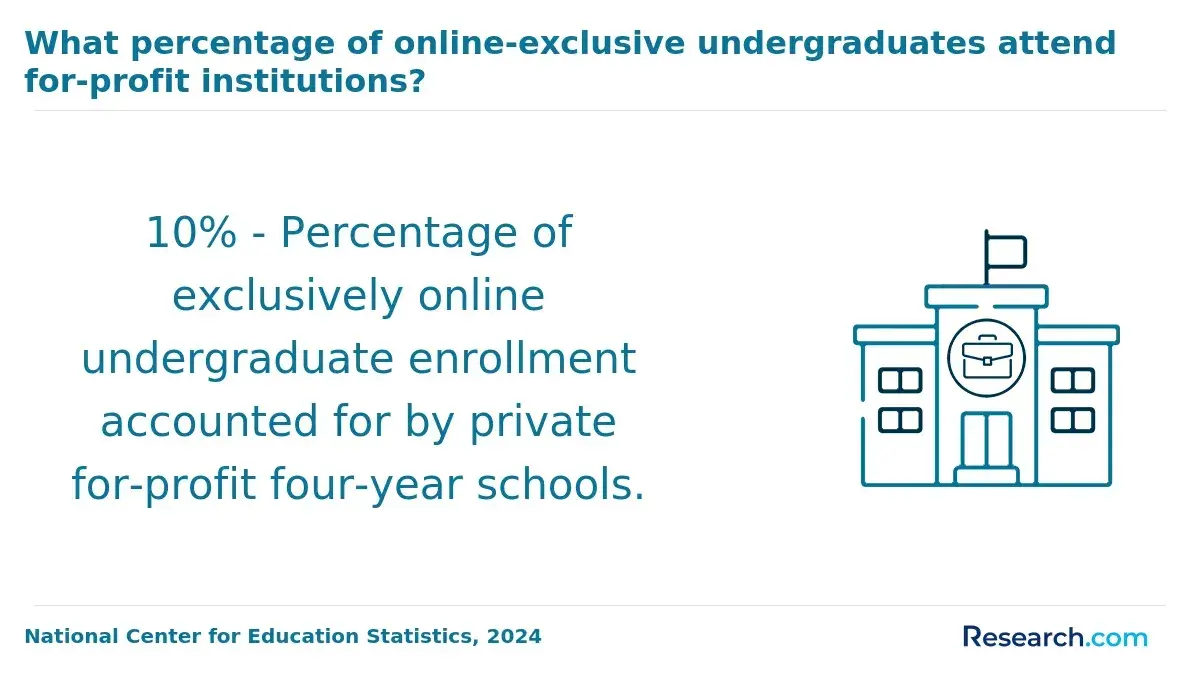
Online, hybrid, and campus-based programs can all work for career changers, but the right format depends on the field and your life constraints. Online programs are often best for working adults in business, technology, education, criminal justice, and healthcare administration. Hybrid or campus-based formats are often more practical for clinical, lab, studio, or hands-on fields.
Format choice should be based on learning needs, scheduling reality, and professional requirements. Veterans and active-duty learners may also want to compare military support services, transfer policies, and tuition assistance compatibility when reviewing an online military college.
The table below summarizes the major trade-offs. Use it to avoid choosing a format that is convenient at admission but difficult to complete.
| Program format | Best for | Advantages | Watch-outs |
| Fully online asynchronous | Working adults with unpredictable schedules | Maximum flexibility and no commute | Requires strong self-management and may offer fewer live networking moments |
| Online synchronous | Learners who want structure without relocating | Live interaction with faculty and classmates | Fixed meeting times may conflict with work shifts |
| Hybrid | Fields with labs, clinicals, simulations, or networking needs | Combines flexibility with hands-on practice | Travel requirements can be underestimated |
| Campus-based | Students who need immersive support or access to facilities | More direct access to labs, faculty, peers, and campus recruiting | Less flexible and often harder to fit around full-time work |
Before enrolling, ask whether online students receive the same faculty access, career services, internship support, tutoring, library resources, and alumni networking as campus students. Also confirm whether the transcript or diploma identifies the delivery format; in many cases it does not, but policies vary by institution.
What accreditation, program quality, and rankings matter most when selecting colleges for a career shift?
Accreditation is one of the highest-stakes checks for career changers because it affects credit transfer, financial aid eligibility, licensure, employer recognition, and graduate school options. Institutional accreditation should come from an accreditor recognized by the U.S. Department of Education or the Council for Higher Education Accreditation. Programmatic accreditation matters when the profession requires specialized approval, such as nursing, counseling, social work, education, engineering, dietetics, or some business and healthcare programs.
Rankings can be useful, but they should not replace fit. A highly ranked program may still be a poor choice if it lacks evening courses, rejects transfer credits, has weak placement support for adults, or does not meet licensing rules in your state. Use rankings as one signal among several, not as the decision itself.
The following quality indicators are especially important for nontraditional applicants. They help you separate strong programs from programs that mainly market convenience.
- Confirm institutional accreditation through official federal or accreditor databases, not only the school's website.
- Check whether the specific program has required programmatic accreditation for your field.
- Ask for licensure exam pass rates when the career requires an exam, such as nursing, teaching, counseling, or allied health.
- Review retention, graduation, and job placement information, while remembering that outcomes may differ for adult, transfer, online, and part-time students.
- Look for faculty with current industry, clinical, or applied experience in the field you are entering.
- Evaluate employer partnerships, internship pipelines, capstone projects, and career coaching for career changers.
Red flags include pressure to enroll immediately, vague accreditation language, unclear tuition and fee disclosures, limited access to faculty, no published curriculum, and admissions representatives who cannot explain licensure eligibility. If the program is tied to a regulated profession, get written confirmation that it meets requirements in the state where you plan to work.
What admission requirements do colleges have for adult learners and nontraditional applicants changing careers?
Adult learners often have different admissions profiles from recent high school graduates. Colleges may evaluate prior college transcripts, professional experience, military training, certifications, essays, resumes, prerequisite coursework, and placement assessments. Some programs are open admission, while selective programs may require minimum GPAs, prerequisite grades, interviews, portfolios, background checks, or entrance exams.
For career changers, the strongest application explains why the new field makes sense given your past experience. Admissions committees and program directors want evidence that you understand the field, can handle the academic workload, and have a realistic plan for completing required practical experiences.
Most adult applicants should prepare the materials below early because delays in transcripts, prerequisites, and financial aid documents can push enrollment back by a full term.
- Official transcripts from every college previously attended, even if you did not finish a degree.
- A current resume showing transferable skills, leadership, technical tools, compliance experience, customer service, training, or industry knowledge.
- A focused personal statement that connects your prior career to your target field without sounding like you are escaping your current job.
- Documentation for transfer credit, military credit, professional certifications, or prior learning assessment if the school offers it.
- Prerequisite course plan for selective programs in nursing, allied health, education, business analytics, counseling, or STEM fields.
- Financial aid documents, employer tuition benefit forms, and scholarship applications submitted before priority deadlines.
Admissions policies vary widely, so do not assume a low undergraduate GPA will automatically block you. Some colleges weigh recent coursework, professional maturity, certifications, or a strong prerequisite record more heavily for adult learners. If your academic record is uneven, consider taking one or two prerequisite or nondegree courses first to show readiness.
How long do common degree programs take, and what tuition, fees, and financial aid should career changers expect?
Program length and cost are central to the career-change decision because adult learners often face both tuition and opportunity cost. College Board's 2024 Trends in College Pricing reported average published tuition and fees of about $4,050 for public two-year in-district students, $11,610 for public four-year in-state students, and $43,350 for private nonprofit four-year students. These are sticker prices, not net prices, but they show why transfer credits, public options, and employer benefits can materially change ROI.
Career changers considering graduate education should compare total program cost, not just per-credit tuition. Lists of affordable master degree programs can be a useful starting point, but you should still verify accreditation, fees, course availability, and career alignment.
The table below gives typical U.S. timelines and major cost drivers. Actual time varies based on transfer credits, course load, prerequisites, program sequencing, and whether you study full time or part time.
| Credential | Common completion time | Main cost drivers | Best cost-control strategy |
| Short certificate | Several months to 1 year | Tuition, exam fees, software, tools, or lab materials | Choose stackable programs connected to employer-recognized skills. |
| Associate degree | 2 years full time; longer part time | Tuition, books, program fees, clinical or lab costs | Use community college pathways and transfer agreements. |
| Bachelor's completion | 1 to 3 years depending on transfer credit | Credit requirements, residency rules, upper-division tuition | Request an official transfer evaluation before committing. |
| Master's degree | 1 to 3 years | Per-credit tuition, fees, practicums, travel, and reduced work hours | Compare total credits, not just tuition per credit. |
| Doctoral or professional degree | 3 or more years in many fields | Tuition, research or clinical requirements, residencies, and opportunity cost | Confirm the credential is required for your target role before enrolling. |
Financial aid can include federal grants, loans, work-study, state grants, institutional scholarships, employer tuition assistance, military education benefits, workforce development funding, and payment plans. The maximum Federal Pell Grant for the 2024-25 award year was $7,395, which can meaningfully reduce cost for eligible undergraduates but usually will not cover the full cost of attendance.
To reduce cost before applying, complete these checks in order. They help you compare the real price of programs instead of relying on advertised tuition.
- Request a transfer credit estimate before enrolling, not after acceptance.
- Ask whether the program charges online course fees, technology fees, clinical fees, graduation fees, or proctoring fees.
- Compare net price after grants and scholarships rather than sticker price alone.
- Check whether employer tuition assistance requires repayment if you leave the company.
- Avoid borrowing for living expenses unless you have modeled the monthly repayment against realistic entry-level pay.
What coursework, internships, and experiential learning should career changers prioritize to be job-ready?
Career changers need evidence that they can perform in the new field. Coursework matters, but employers often look for applied proof: projects, supervised practice, internships, labs, simulations, portfolios, or fieldwork. The best programs help you translate prior experience into a new professional identity while building current technical and industry skills.
Short training can also be useful when you need a practical bridge before committing to a degree. For example, 6-month certificate programs may help some learners test a field, build employable skills, or qualify for entry-level roles while continuing to evaluate longer-term education options.
The right experiential learning depends on the field. Use the examples below to identify what "job-ready" evidence should look like in your target area.
| Target field | High-value coursework | Experiential learning to prioritize | Job-ready evidence |
| Data analytics or technology | Programming, databases, statistics, cloud tools, cybersecurity basics | Capstone projects, GitHub or portfolio work, employer-sponsored projects | Portfolio, technical assessment results, certifications, and project explanations |
| Healthcare | Anatomy, physiology, patient care, healthcare systems, ethics | Clinical rotations, simulations, labs, supervised practice | Clinical hours, licensure eligibility, competencies, and references |
| Business or management | Accounting, operations, analytics, strategy, leadership, finance | Consulting projects, internships, case competitions, employer projects | Project outcomes, leadership examples, measurable business impact |
| Education or counseling | Human development, assessment, ethics, methods, diversity | Practicum, student teaching, supervised fieldwork | Observation evaluations, hours completed, exam readiness, and licensure documentation |
| Design or communications | Writing, UX, visual design, media tools, audience research | Client projects, portfolio studios, internships | Portfolio, campaign results, design process notes, and client feedback |
AI and automation are changing what counts as job-ready. In many fields, employers increasingly expect graduates to use digital tools responsibly, interpret data, protect privacy, and communicate clearly across teams. Career changers should look for programs that teach current tools while also emphasizing judgment, ethics, domain knowledge, and problem-solving.
Before enrolling, ask who is responsible for finding internships or clinical placements. Some programs place students directly, while others expect students to secure sites themselves. That difference can be manageable in a flexible business program but risky in a regulated healthcare, counseling, or education program where hours are required for graduation or licensure.
Which careers, job roles, and industries are most accessible and rewarding for college-educated career changers?
The most accessible and rewarding careers for college-educated career changers tend to share three traits: they value transferable skills, have clear entry points, and offer advancement after the first credential. The best fit depends on your prior experience. A former teacher may move naturally into instructional design or training, while a logistics supervisor may be well positioned for operations analytics or supply chain management.
BLS May 2024 wage data show the median annual wage for data scientists at $112,590, which explains why analytics remains attractive to many career changers. However, competition can be strong, and applicants usually need evidence of technical skills through projects, internships, or related work experience.
The table below highlights career areas that commonly attract adult learners. It is not a ranking; it is a comparison of accessibility, education fit, and role type.
| Career area | Common entry or transition roles | Typical education pathway | Why it can fit career changers |
| Data, analytics, and business intelligence | Data analyst, reporting analyst, business intelligence analyst | Certificate, bachelor's completion, or master's in analytics, information systems, or statistics | Builds on business knowledge, quantitative ability, and process experience. |
| Healthcare and allied health | Registered nurse, radiologic technologist, health information specialist, healthcare administrator | Associate, bachelor's, or master's depending on role | Offers structured pathways, but many roles require clinical training or licensure. |
| Technology | Software developer, cybersecurity analyst, systems analyst, cloud support specialist | Certificate, bachelor's, bootcamp-style training, or master's depending on employer and role | Skills-based hiring can benefit applicants with strong portfolios and problem-solving experience. |
| Education and training | Teacher, instructional designer, corporate trainer, academic advisor | Bachelor's, post-baccalaureate licensure, master's, or certificate | Prior industry expertise can become classroom, curriculum, or training value. |
| Business, finance, and operations | Project manager, operations analyst, accountant, HR specialist, supply chain analyst | Bachelor's completion, certificate, MBA, M.S. in accounting, or specialized master's | Many adults already have leadership, budgeting, customer, or process improvement experience. |
| Social services and public sector | Case manager, public health coordinator, policy analyst, nonprofit program manager | Bachelor's or master's depending on responsibility level | Mission-driven work may reward communication, resilience, and community experience. |
Career changers should be cautious about choosing a field based only on high median salaries. A better test is whether you can reach the first role without excessive debt, whether your prior experience gives you an advantage, and whether the field has clear advancement steps after entry.
What salary ranges, advancement opportunities, and return on investment can career changers expect after graduation?
Return on investment depends on total cost, time out of the workforce, salary movement, job stability, and whether the credential is required for the role. A low-cost certificate with a modest raise may outperform an expensive graduate degree if it gets you into the field quickly. A more expensive degree may be worthwhile when it unlocks licensed practice, leadership eligibility, or a field with strong long-term demand.
For professionals planning a high-level academic, research, clinical, or executive shift, a PhD online or other doctoral pathway may be worth exploring, but only if the role genuinely requires doctoral preparation or the credential supports a clear advancement plan.
BLS May 2024 wage data report a median annual wage of $117,960 for medical and health services managers, a role often associated with healthcare administration education and experience. For a career changer, that figure should be treated as labor-market context rather than a predicted starting salary; many people enter through coordinator, analyst, supervisor, or department-level roles first.
The table below shows how to think about ROI by credential level. It focuses on decision factors rather than promising specific outcomes.
| Credential level | Potential ROI advantage | Primary risk | Best-fit scenario |
| Certificate | Lower cost and faster entry into skill-based roles | May have limited value if not recognized by employers | You already have a degree or related experience and need targeted skills. |
| Associate degree | Can open licensed or technical roles at a lower tuition level | May require further education for advancement | You are entering a structured technical, healthcare, or transfer pathway. |
| Bachelor's degree | Broad employer recognition and access to many professional tracks | Can be costly if few prior credits transfer | You lack a four-year credential and target roles commonly require one. |
| Master's degree | Can support specialization, leadership, or professional transition | Debt can outweigh benefit if the field does not reward the degree | You are moving into a field where graduate training is expected or strongly preferred. |
| Doctoral or professional degree | May be required for advanced clinical, research, academic, or top-level roles | Long time horizon and high opportunity cost | Your target role clearly requires doctoral preparation or licensure. |
To evaluate ROI realistically, compare the monthly loan payment against conservative entry-level salary estimates, not top salaries. Also consider non-salary returns, such as remote-work access, schedule stability, lower physical strain, advancement potential, mission fit, or a move into a more resilient industry.
How do licensing, certification, and professional exams affect college choices for regulated careers?
Licensing and certification rules can determine whether a college program is useful or unusable for your target career. Regulated careers often require an approved curriculum, supervised hours, background checks, exams, and state-specific applications. This is especially important for career changers using online programs because a program based in one state may not automatically meet requirements in another.
Certifications differ from licenses. A license is legal permission to practice in a regulated occupation, usually granted by a state board. A certification is typically a professional credential issued by an industry body, employer, or association to show competence. Some certifications are optional but valuable; others are effectively expected by employers.
Before choosing a program for a regulated career, complete the checks below. They can prevent a costly mismatch between your education and your legal ability to work.
- Identify the state where you plan to work, not only the state where the school is located.
- Find the official licensing board requirements for degree type, accreditation, supervised hours, exams, and background checks.
- Ask the school for written confirmation of whether the program meets educational requirements in your state.
- Confirm whether online, hybrid, clinical, practicum, or student-teaching placements are available near you.
- Review exam pass rates, placement support, and any limits on eligibility for students with prior convictions or disciplinary records.
The table below shows examples of fields where licensing or certification should shape your college choice. Requirements vary by state and can change, so always verify with the appropriate board or credentialing organization.
| Field | Why program choice matters | What to verify |
| Nursing | Graduates generally need to complete an approved program and pass the required licensing exam. | State board approval, clinical placements, NCLEX preparation, and pass rates. |
| Teaching | Teacher certification requirements are state-specific and often include approved preparation and student teaching. | State authorization, endorsement areas, testing requirements, and field placement support. |
| Counseling and social work | Licensure often depends on accredited programs, supervised hours, and postgraduate requirements. | Programmatic accreditation, practicum hours, state alignment, and supervisor qualifications. |
| Accounting | CPA eligibility depends on state rules for credits, accounting coursework, ethics, and exams. | Total credit hours, required accounting courses, state board rules, and exam preparation. |
| Cybersecurity and IT | Licensure is usually not required, but certifications may influence hiring. | Alignment with industry certifications, labs, projects, and employer-recognized tools. |
A common mistake is assuming "accredited" means "licensure-approved." Institutional accreditation is important, but it may not be enough for fields with program-level or state-specific rules. When in doubt, rely on official board requirements and written school documentation rather than verbal assurances.
Other Things You Should Know About
No. Many colleges have adult learner pathways, rolling admissions, online terms, and degree-completion programs. The key is choosing a program tied to a realistic career target, not applying simply because you want a change.
Choose a degree if the target role requires one, leads to licensure, or needs broad academic preparation. Choose a certificate if you already have relevant education or experience and need focused skills for a faster transition.
Often, but policies vary. General education credits may transfer more easily than technical, science, or professional courses. Always request an official transfer evaluation before enrolling.
Show a clear connection between your past work and future goal. Use your resume, essay, prerequisites, certifications, volunteer work, or projects to prove readiness and explain why the program is the right next step.
References
- ROI Of College Majors By Early And Mid-Career Salaries | Bankrate https://www.bankrate.com/loans/student-loans/roi-mid-career-by-major/
- Trade School vs College: What You Need to Know - Tlingit & Haida https://tlingitandhaida.gov/news/trade-school-vs-college-what-you-need-to-know/
- CourseCareers https://coursecareers.com/blog-posts/college-vs-online-career-training
- Adult career changer's guide: Benefits of going back to college https://news.newmanu.edu/adult-career-changers-guide-benefits-of-going-back-to-college/
- Online and hybrid college programs explained. Flexibility, risk, and the real value equation | CG https://collegegrind.org/posts/online-and-hybrid-college-programs-explained/
- Adult learners: who they are and what they want out of college | EAB https://eab.com/resources/blog/adult-education-blog/adult-learners-who-they-are-what-they-want-college/
- Best Careers for Career Changers: Top Roles and How to Switch https://accesscoursesonline.com/blogs/news/best-careers-for-career-changers
- 10 in-demand careers for the future https://www.vu.edu.au/about-vu/news-events/vu-blog/10-in-demand-careers-for-the-future
- How to Calculate the Return on Investment in your Career https://www.opportunitiesworkshop.com/blog/how-to-calculate-the-return-on-investment-in-your-career
- How Occupational Licensing Requirements Affect Access to Middle-Skills Pathways - R Street Institute https://www.rstreet.org/