2027 College Application Guide for Community College Students

Co-Founder and Chief Data Scientist
Applying to community college can be the fastest route to a lower-cost degree, career certificate, or transfer pathway, but the steps vary by school and student status. The cost difference is significant: College Board reported average public two-year in-district tuition and fees of $4,050 for 2024-25, far below public four-year in-state tuition.
This guide is for first-time, transfer, adult, online, and returning students. You will learn how applications work, what documents to prepare, how aid and residency affect cost, and how to choose a program that supports your next goal.
Key Things You Should Know
- Most community colleges use open-access admissions, but selective health, nursing, public safety, and technical programs may require prerequisites, minimum GPAs, background checks, or separate applications.
- For 2024-25, College Board placed average public two-year in-district tuition and fees at $4,050, making residency classification, grants, and transfer planning major cost drivers.
- The strongest applicants choose a program before applying, submit transcripts early, complete placement or advising requirements, and verify accreditation before enrolling.
How does the community college application process work from start to finish?
The community college application process is usually simpler than applying to a selective four-year university, but it still has important deadlines and decision points. Most applicants move through admission, placement, advising, financial aid, registration, and orientation before the first day of class.
A good application starts with a goal. You may be applying for an associate degree, a short-term certificate, a workforce credential, dual enrollment, or a transfer pathway. If you are still comparing long-term academic directions, reviewing the best college degrees for the future can help you choose a community college program that connects to stable transfer and career options.
The process generally follows this sequence:
- Choose the student type that fits you, such as first-time college student, transfer student, returning student, adult learner, dual enrollment student, international student, or non-degree student.
- Select a program or pathway, even if the college allows undecided admission, because program choice affects prerequisites, financial aid eligibility, advising, and course sequencing.
- Submit the online application through the college website or a state community college application portal, and check whether the school charges an application fee.
- Send required transcripts from high school, GED or HiSET records, previous colleges, military training, or other institutions that may award transfer credit.
- Complete financial aid steps, including the FAFSA if you are eligible, state grant applications, scholarship forms, and any verification documents requested by the aid office.
- Establish residency for tuition purposes by submitting proof such as a state ID, lease, tax record, utility bill, or other documents required by the college or state system.
- Complete placement, advising, or orientation requirements so the school can place you in college-level math, writing, English, English as a second language, or developmental support courses if needed.
- Register for classes, confirm payment arrangements, buy or rent materials, and review the academic calendar for add/drop, withdrawal, and refund deadlines.
Many community colleges accept applications close to the start of a term, but waiting can cost you better course times, access to competitive programs, and financial aid processing time. Applicants for nursing, dental hygiene, radiography, aviation, cybersecurity cohorts, and other limited-enrollment programs should look for separate priority deadlines several months earlier.
This table summarizes what typically happens at each stage, so you can see where delays most often occur.
| Application stage | What happens | Why it matters |
| Pre-application planning | You identify your program, start term, student type, and campus or online preference. | The wrong program choice can affect aid eligibility, prerequisites, and transfer planning. |
| Admission application | You submit personal, academic, residency, and program information. | Most open-access programs admit quickly, but selective programs may not. |
| Document review | The college evaluates transcripts, test scores if used, residency documents, and prior credits. | Missing records can delay placement, financial aid, and registration. |
| Advising and placement | You meet placement, orientation, and first-semester advising requirements. | Correct placement helps you avoid unnecessary courses and protects transfer timelines. |
| Registration and payment | You select classes and finalize aid, payment plans, employer benefits, or self-payment. | Your schedule is not secure until registration and payment requirements are satisfied. |
What admission requirements do community colleges have for new, transfer, and adult students?
Community college admission requirements depend on your student category and program. General admission is often open access, meaning students with a high school diploma, GED, or qualifying age status can enroll, but open access does not mean every course or program is automatically available.
New students are usually asked to show proof of high school completion or an approved equivalent. Some colleges also admit students without a diploma into adult education, English language learning, workforce training, or ability-to-benefit pathways, but eligibility rules vary by state and aid program.
Transfer students typically submit official transcripts from every college previously attended. This helps the school determine academic standing, award transfer credit, check prerequisites, and decide whether the student must meet satisfactory academic progress standards for financial aid. Students who left a previous college on probation or suspension may need additional advising before registration.
Adult and returning students may have extra documentation to collect, especially if they have changed names, attended multiple schools, completed military training, or earned industry credentials. Many colleges offer credit for prior learning, but the process is not automatic and may require exams, portfolio review, certifications, or faculty evaluation.
Selective or career programs often add requirements beyond general admission. Common examples include:
- Minimum GPA or prerequisite grades in science, math, writing, or technical courses.
- Program-specific application windows separate from the college admission application.
- Entrance exams, skills assessments, interviews, portfolios, auditions, or fitness standards.
- Background checks, drug screening, immunization records, CPR certification, or clinical site clearance.
- Proof of professional liability insurance, uniforms, tools, equipment, or required technology.
The most common mistake is assuming that admission to the college means admission to the program. If your goal is nursing, dental hygiene, emergency medical services, radiologic technology, aviation maintenance, or law enforcement, read the program page before applying and ask whether seats are limited.
This comparison shows how requirements differ by applicant type.
| Applicant type | Typical baseline requirement | Possible extra requirement |
| First-time college student | High school transcript, diploma, GED, or approved equivalent | Placement, orientation, advising, or first-year seminar |
| Transfer student | Official transcripts from prior colleges | Academic standing review or course-by-course transfer evaluation |
| Adult learner | Prior education records or adult education placement | Credit for prior learning documentation or career advising |
| Dual enrollment student | High school approval and grade-level eligibility | Parent or guardian consent and college readiness criteria |
| Selective program applicant | General college admission plus program prerequisites | Separate application, test, interview, background check, or clinical requirements |
How can community college students build a strong application and meet key deadlines?
A strong community college application is not about writing the most impressive essay; it is about submitting the right materials early and choosing courses that match your academic or career plan. The best-prepared applicants reduce delays by treating the application as a checklist with deadlines.
Use this sequence to stay on track:
- Start with the academic calendar and identify the application, registration, tuition payment, refund, and financial aid priority dates for your intended term.
- Request official transcripts as soon as possible, especially if you attended more than one high school, college, adult education center, or military training program.
- Review the exact program requirements, not just the college admission page, because competitive programs may close before general enrollment deadlines.
- Complete the FAFSA and state aid applications early if you plan to use grants, loans, work-study, or need-based scholarships.
- Check your student portal at least weekly after applying because colleges often request missing documents through the portal rather than by phone.
- Meet with an advisor before registering, especially if you plan to transfer, need developmental support, or want to balance school with full-time work.
Deadlines matter most when a program uses cohorts, clinical placements, limited lab seats, or sequence-based courses. For example, missing a fall-only anatomy prerequisite can delay a health program application by a full year, even if the college itself admits students every semester.
Applicants should also avoid overloading the first term. A full-time schedule can speed completion, but it may not be realistic for students working long hours, caring for family, or returning after a long break. Part-time enrollment can be a smart decision if it protects grades in prerequisite courses that selective programs will evaluate.
Common application mistakes include:
- Submitting an application but not activating the student portal or college email.
- Using unofficial transcripts when the college requires official records sent directly from the issuing institution.
- Waiting until registration opens to ask about residency, transfer credits, or financial aid verification.
- Choosing random general education courses without confirming they apply to the intended degree or transfer institution.
- Assuming online classes are easier than campus classes, even when they require strong time management and technology access.
A strong application is ultimately a complete application. If you are unsure what is missing, contact admissions, records, financial aid, and your academic department separately because each office may control a different requirement.
What is the difference between applying to community college and four-year universities?
Applying to community college is usually less selective, less essay-driven, and less test-dependent than applying to a four-year university. However, the planning burden can be just as important because students often use community college to reduce cost, improve academic standing, earn a job credential, or transfer credits.
Community colleges typically focus on access and placement, while four-year universities often focus on selection and institutional fit. That difference changes what applicants should prioritize.
| Factor | Community college application | Four-year university application |
| Admission model | Often open access for general programs | May be selective or highly competitive |
| Essays and recommendations | Usually not required for general admission | Often required or recommended, especially at selective institutions |
| Standardized tests | Usually not required for admission, though placement may be assessed | Policies vary; many schools are test-optional, test-flexible, or test-required |
| Program admission | Some career programs require a separate competitive application | Major admission may occur at entry or after prerequisites |
| Cost structure | Often lower tuition, especially for in-district students | Higher tuition and more residential costs in many cases |
| Transfer planning | Critical for students seeking a bachelor's degree later | Usually focused on completing the bachelor's program at the same institution |
Community college makes sense when you want a lower-cost start, need flexible scheduling, want to improve your academic record, or are pursuing a local workforce credential. It may not be the best first step if your target four-year program accepts very few transfer students, requires a highly sequenced first-year curriculum, or offers major-specific scholarships only to first-time freshmen.
Four-year universities may also provide more residential life, research opportunities, competitive honors programs, and direct-entry majors. Community colleges may offer smaller class sizes, local employer connections, practical technical labs, and support for adult learners. Neither option is automatically better; the right choice depends on your goal, budget, timeline, and transfer requirements.
The key trade-off is flexibility versus early specialization. Community college can give you time and affordability, but only if your credits apply cleanly to the credential or transfer destination you want.
How do online, hybrid, and campus-based community college programs compare?
Online, hybrid, and campus-based community college programs can all lead to credible credentials when they are properly accredited and aligned with your goals. The best format depends on your schedule, learning style, technology access, and whether your program requires labs, clinical hours, shop work, or hands-on equipment.
Online education is now a mainstream part of community college enrollment, but format quality varies. Students considering remote-friendly careers should compare program outcomes, internship options, and software requirements; a broader look at the best degrees for remote work can also help you connect your program format to long-term job flexibility.
This table compares the major formats so you can decide which one fits your life and program requirements.
| Format | Best fit | Trade-offs to consider |
| Fully online | Students with strong self-management, reliable internet, and work or family constraints | Less in-person support; some programs still require proctored exams, practicums, or campus visits |
| Hybrid | Students who want flexibility but still need labs, clinical practice, or structured meetings | Campus days may be fixed, making work scheduling important |
| Campus-based | Students who learn best in person or need hands-on labs, studios, shops, or clinical preparation | Commute time, parking, and schedule availability can add hidden costs |
| HyFlex or mixed delivery | Students who need occasional choice between live, online, and recorded participation | Quality depends heavily on instructor design and technology support |
Online programs are not automatically easier or faster. In many courses, students must complete the same assignments, exams, labs, and learning outcomes as campus students. The difference is how instruction is delivered and how much independence the student must manage.
Before choosing an online or hybrid program, ask practical questions:
- Does the program require campus visits, labs, clinical placements, internships, or proctored exams?
- Are courses asynchronous, live online, or scheduled at fixed meeting times?
- Will the school help arrange local clinical or internship sites if you live outside the district?
- What technology, software, webcam, internet speed, or equipment is required?
- Are tutoring, advising, library services, disability accommodations, and career services available online?
A major red flag is an online program that sounds convenient but does not explain hands-on requirements. This matters most in healthcare, education, public safety, trades, and licensure-related fields where state rules or employer requirements may limit fully online completion.
What documents, transcripts, and residency proof are needed for community college applications?
Community college applications often stall because documents arrive late, are unofficial, or do not match the name used on the application. Preparing records before you apply can speed admission, placement, financial aid, residency classification, and transfer credit review.
Most applicants should expect to gather the following materials:
- Government-issued photo identification, such as a driver's license, state ID, passport, or other accepted document.
- High school transcript, GED, HiSET, homeschool record, or other proof of secondary completion if required.
- Official transcripts from all previously attended colleges, even if you withdrew, failed courses, or do not plan to transfer credits.
- Proof of residency for tuition classification, such as state ID, lease, utility bill, voter registration, tax record, vehicle registration, or dependent documentation, depending on state rules.
- Immunization records if required by the state, program, or campus policy.
- Military transcripts, Joint Services Transcript, industry certifications, or prior learning documentation if you want credit evaluation.
- Program-specific documents such as background check consent, CPR certification, health forms, clinical clearance, portfolio materials, or test scores.
Residency proof is especially important because tuition may differ for in-district, out-of-district, in-state, and out-of-state students. A student who recently moved, depends financially on parents in another state, or attends online from outside the college's service area should ask the residency office how classification works before budgeting.
Transcript rules also matter. "Official" usually means the record is sent directly from the issuing school or approved transcript service to the community college. Uploading a copy may be useful for advising, but it may not satisfy admission, financial aid, or transfer credit requirements.
This table explains common documents and why colleges ask for them.
| Document | Primary purpose | Common issue |
| High school or equivalency record | Confirms eligibility for college-level admission or aid pathways | Records may be delayed if the school closed or the student used a different name |
| College transcript | Determines transfer credit, prerequisites, GPA, and academic standing | Students sometimes omit a prior college, which can delay evaluation |
| Residency proof | Determines tuition rate | State rules may require multiple documents or proof of duration |
| Placement information | Helps place students into appropriate math, writing, reading, or ESL courses | Applicants may not know whether high school GPA, prior coursework, or placement tests are used |
| Program clearance documents | Confirms eligibility for clinical, safety-sensitive, or regulated training | Deadlines may be earlier than general registration deadlines |
How much does community college cost, and what financial aid can applicants receive?
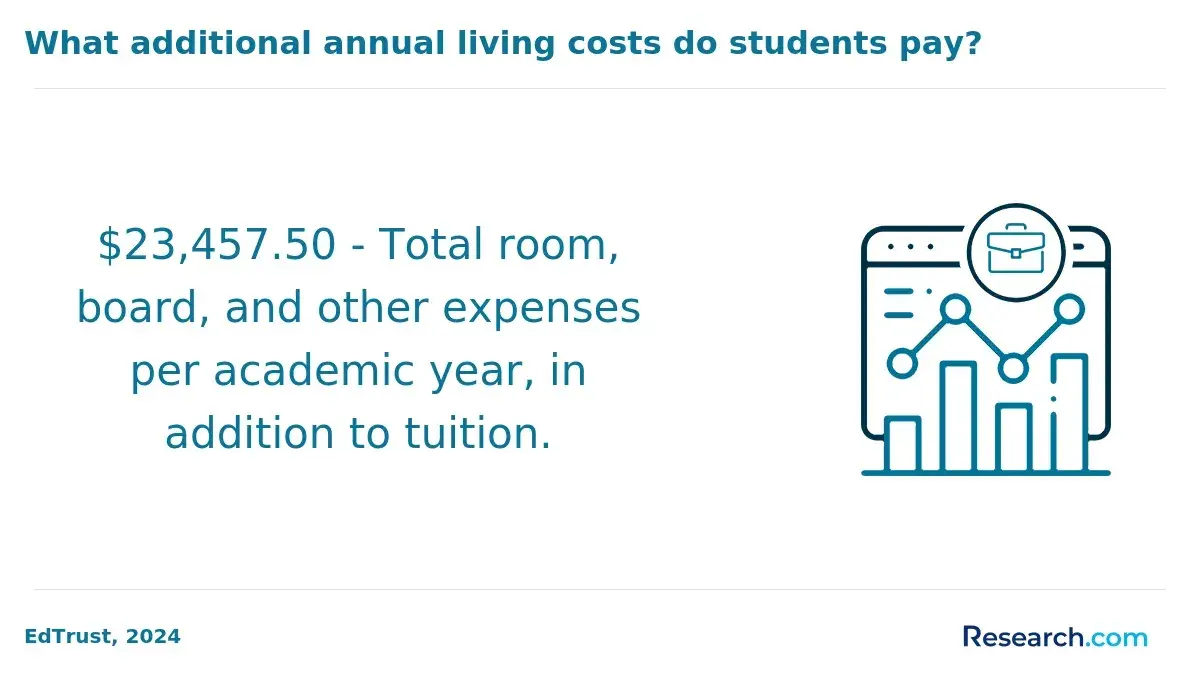
Community college cost depends on tuition classification, credit load, program fees, books, supplies, transportation, technology, childcare, and lost work hours. Tuition is only one part of the budget, but it is still a major reason students begin at a two-year college.
College Board reported average public two-year in-district tuition and fees of $4,050 for 2024-25. For applicants, that figure is useful as a national benchmark, but your actual bill may be higher or lower depending on residency, state funding, program fees, and whether you attend full time.
Applicants can often combine several types of aid. The main options include:
- Federal Pell Grants for eligible undergraduate students with financial need.
- Federal student loans, which must be repaid and should be borrowed cautiously.
- Federal Work-Study, if offered and included in the student's aid package.
- State grants, promise programs, or last-dollar scholarships that may cover tuition after other aid is applied.
- Institutional scholarships from the community college foundation or academic departments.
- Employer tuition assistance, workforce development funds, union benefits, or apprenticeship sponsorships.
- Veterans education benefits, military tuition assistance, or dependent benefits for eligible students.
Shorter credentials can reduce cost if they lead directly to employment or stack into a degree. Students comparing lower-cost, skills-focused options may also want to research certificates I can get online, especially if they need a faster credential before committing to an associate or bachelor's pathway.
This table shows common cost categories beyond tuition, which helps applicants build a realistic budget.
| Cost category | Why it matters | How it can vary |
| Tuition and mandatory fees | Base cost for enrollment | Depends on in-district, out-of-district, in-state, or out-of-state status |
| Program fees | Supports labs, equipment, clinical placement, testing, or specialized instruction | Often higher in healthcare, trades, aviation, culinary, and technical programs |
| Books and supplies | Required for course completion | May include access codes, software, tools, uniforms, or kits |
| Transportation and parking | Affects total attendance cost for campus or hybrid students | Depends on commute distance, public transit, parking fees, and fuel costs |
| Technology | Essential for online and many campus courses | May include laptop, webcam, software, broadband, or course platforms |
| Living and personal expenses | Affects how many credits students can realistically take | Depends on housing, food, childcare, healthcare, and work schedule |
The best financial decision is not always the cheapest sticker price. A program with slightly higher fees may be worthwhile if it has strong completion support, licensure alignment, transfer agreements, and local employer connections. A cheaper program can become expensive if credits do not transfer or required courses are unavailable when you need them.
What degree, certificate, and transfer pathways can start at community college?
Community college can lead to several different credentials, and each pathway serves a different goal. Choosing the right one before you enroll helps you avoid excess credits, missed prerequisites, and transfer problems.
The main credential pathways are:
- Workforce certificate: A short program focused on a specific job skill, such as welding, medical assisting, bookkeeping, HVAC, cybersecurity support, or logistics.
- Career or technical associate degree: An associate of applied science or similar degree designed mainly for employment after graduation.
- Transfer associate degree: An associate of arts, associate of science, or state transfer degree designed to apply toward a bachelor's program.
- Stackable credential: A certificate that counts toward a higher certificate or associate degree, allowing students to work while continuing school.
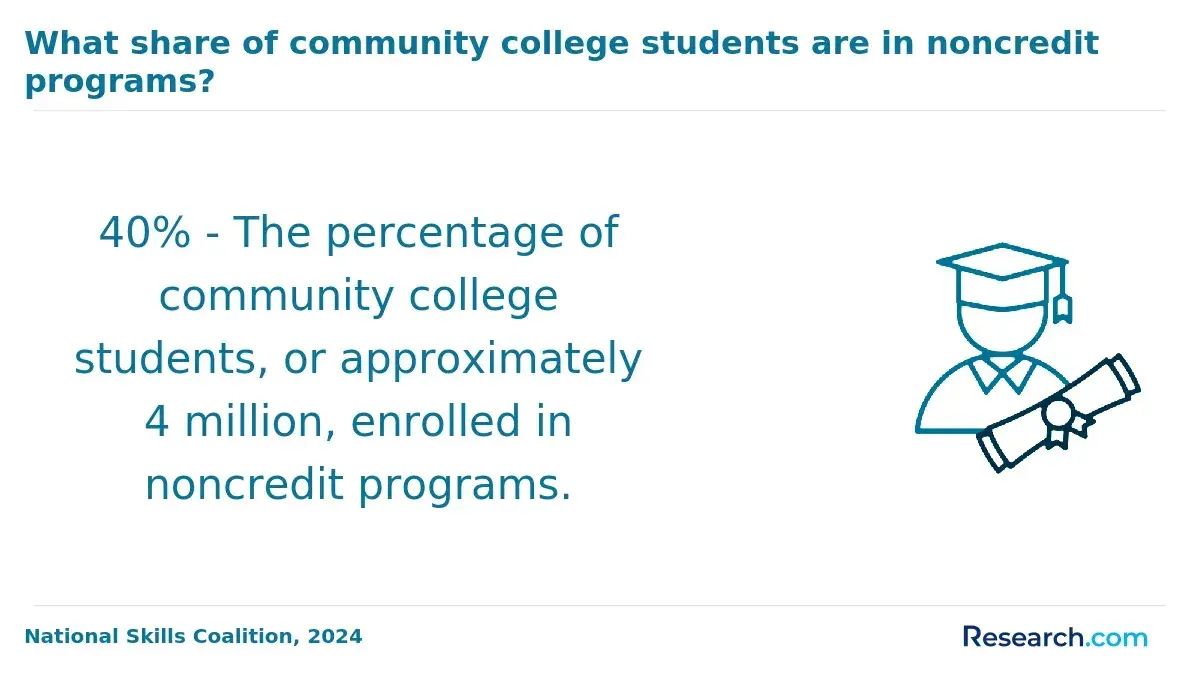
- Noncredit workforce training: Short-term training that may prepare students for an industry exam but may not carry college credit.
If you plan to earn a bachelor's degree later, transfer planning should start in your first advising appointment. Ask whether your college has articulation agreements, guaranteed admission pathways, common course numbering, or transfer maps with your target university. Students who eventually want graduate education can also use community college strategically; for example, some transfer students later compare bachelor's-to-master's timelines, including fast masters degrees, after completing the required undergraduate foundation.
This table compares common pathways by purpose and risk.
| Pathway | Best for | Main risk if chosen poorly |
| Certificate | Students seeking a faster job-focused credential | Credits may not apply to a degree unless the certificate is stackable |
| Associate of applied science | Students seeking employment in a technical or professional field | Some courses may not transfer cleanly to a bachelor's program |
| Associate of arts or science | Students planning to transfer to a four-year university | Choosing the wrong electives can leave major prerequisites unmet |
| Transfer agreement pathway | Students with a known target university and major | Changing majors or universities may reduce credit applicability |
| Noncredit training | Students needing a quick skill, employer training, or exam preparation | May not qualify for federal aid or college credit |
The most important transfer question is not "Will my credits transfer?" but "Will my credits apply to the degree I want?" A course can transfer as elective credit and still fail to satisfy a major requirement. That is why students should save syllabi, follow transfer maps, and confirm course equivalencies before registration.
What careers, salaries, and job outlooks are available with community college credentials?
Community college credentials can support entry into healthcare, skilled trades, information technology, business operations, public safety, education support, legal services, and advanced manufacturing. Outcomes vary widely by region, license requirements, employer demand, and whether the credential is a short certificate or an associate degree.
BLS wage data shows why program choice matters. In 2024, the median pay for dental hygienists was $94,260, while many other associate-level or certificate-supported occupations had lower but still competitive wage profiles. This does not mean every student will earn that amount; it means some community college pathways connect to occupations with strong labor-market value when licensure, clinical training, and local hiring demand align.
Students who later continue beyond an associate degree may qualify for broader advancement paths in management, analytics, healthcare administration, engineering technology, education, or specialized professional fields. If graduate school is part of the long-term plan, comparing the most lucrative masters degrees can help you understand how an early community college pathway may fit into a longer education strategy.
This table highlights examples of career areas that commonly connect to community college credentials. Salary and outlook should always be verified for your state and target employer before enrolling.
| Career area | Typical community college pathway | Work you may prepare for |
| Healthcare | Certificate or associate degree with clinical requirements | Nursing support, dental hygiene, radiography, respiratory care, medical assisting, emergency medical services |
| Information technology | Certificate or associate degree plus vendor certifications | Help desk, networking support, cybersecurity support, cloud support, systems support |
| Skilled trades | Certificate, apprenticeship, or applied associate degree | Welding, HVAC, electrical, machining, automotive, industrial maintenance |
| Business and accounting support | Certificate or associate degree | Bookkeeping, payroll, office administration, logistics, customer operations |
| Legal and public service | Associate degree or certificate | Paralegal support, criminal justice support, emergency dispatch, public safety roles |
| Education and human services | Certificate or associate degree | Early childhood education, teacher aide roles, social service support, community outreach |
AI and automation are changing employer expectations, especially in office support, IT, manufacturing, and healthcare administration. Applicants should look for programs that teach current software, data literacy, digital communication, cybersecurity awareness, and problem-solving rather than narrow tool use only.
Career fit matters as much as salary. Healthcare can offer strong demand but may require licensing, physical stamina, and shift work. Skilled trades may offer paid apprenticeships but require safety training and hands-on work. IT can support remote or hybrid jobs, but entry-level competition may require certifications, projects, and internships. The smartest path is the one that matches your strengths, local labor market, and willingness to meet licensing or certification requirements.
How can applicants verify accreditation and choose a reputable community college program?
Accreditation is one of the most important checks before applying. It signals that a college has been reviewed by a recognized accrediting agency for academic quality, governance, student support, and financial stability. It also affects federal financial aid eligibility, credit transfer, employer recognition, and licensure pathways.
In the U.S., reputable community colleges are usually institutionally accredited by an agency recognized by the U.S. Department of Education or the Council for Higher Education Accreditation. Some programs also need specialized accreditation or approval, especially in nursing, dental hygiene, radiologic technology, respiratory care, surgical technology, emergency medical services, aviation, automotive technology, and education-related fields.
Applicants should verify accreditation and quality before enrolling by checking several sources:
- Search the college in the U.S. Department of Education's Database of Accredited Postsecondary Institutions and Programs.
- Confirm that the accreditor listed on the college website matches the recognized accreditor in the database.
- For licensure programs, check the state licensing board or professional accreditor to confirm the program meets exam or practice requirements.
- Review transfer agreements with public universities and ask whether credits apply to your intended major, not just whether they transfer generally.
- Compare graduation, transfer, licensure exam, job placement, and student loan default information where available.
- Ask employers, workforce boards, or apprenticeship partners whether they recognize the credential.
Red flags include pressure to enroll immediately, vague accreditation claims, missing program outcome data, unclear refund policies, unusually high fees for a short credential, or promises of guaranteed jobs and salaries. Be especially cautious with programs that advertise national online access but cannot explain state licensure eligibility.
Use this table to distinguish accreditation-related terms that are often confused.
| Term | What it means | Why applicants should care |
| Institutional accreditation | Review of the college as a whole | Often required for federal aid and widely considered in transfer decisions |
| Programmatic accreditation | Review of a specific program or department | May be required or preferred for licensure, certification, or employment |
| State approval | Authorization from a state agency or board | Important for regulated fields such as nursing, public safety, and education |
| Articulation agreement | Formal transfer arrangement between institutions | Helps students follow courses that apply to a bachelor's degree |
| Industry certification alignment | Curriculum prepares students for an external certification exam | Can improve employability when employers value the certification |
A reputable program should be transparent about accreditation, costs, completion requirements, transfer outcomes, and job preparation. If admissions staff cannot answer these questions clearly, ask to speak with a department chair, program director, financial aid counselor, or transfer advisor before committing.
Other Things You Should Know About
Yes, many community colleges allow undecided students to apply. However, choosing a broad pathway early is still important because financial aid, advising, prerequisites, and transfer planning depend on your program of study.
Most community colleges do not require SAT or ACT scores for general admission. Some may use test scores, high school GPA, prior coursework, or placement assessments to decide which math, writing, reading, or English courses you should take first.
Apply as early as possible before your intended term, especially if you need financial aid, transfer credit evaluation, residency review, or a selective program application. General admission may stay open late, but course seats and aid processing time can run out.
Yes, many students start at community college and transfer. The safest approach is to choose a transfer pathway, follow the target university's major requirements, meet regularly with advisors, and confirm that each course applies to the bachelor's degree you want.
References
- How to Apply for Community College: 9-Step Guide · PrepScholar https://blog.prepscholar.com/how-to-apply-for-community-college
- Community College Financial Assistance » CCSmart https://ccsmart.org/financial-assistance/
- The community college route to a US bachelor’s degree - ISC Research https://iscresearch.com/the-community-college-route-to-a-us-bachelors-degree/
- The Summer Advantage: How to Get Ahead Before College Application Season Begins https://www.custom-college.com/the-summer-advantage-how-to-get-ahead-before-college-application-season-begins
- Average Cost of Attending Community College in 2026 https://www.credible.com/student-loans/how-much-is-community-college
- Hybrid class vs. online: Choosing the best for your student https://www.asuprepdigital.org/blog/hybrid-class-vs-online/
- How To Apply For Community College (And Why You Should) - Unmudl https://unmudl.com/blog/apply-community-college
- College admissions for community college transfer students | The College Grind https://collegegrind.org/posts/college_admissions_for_community_college_transfer_students/
- How Prospective Families Weigh Online and Hybrid College Options https://www.ruffalonl.com/blog/enrollment/how-prospective-families-weigh-online-and-hybrid-college-options/
- A Comprehensive Guide to Navigating College Admissions Deadlines | My College Corner https://mycollegecorner.com/2024/09/27/a-comprehensive-guide-to-navigating-college-admissions-deadlines/